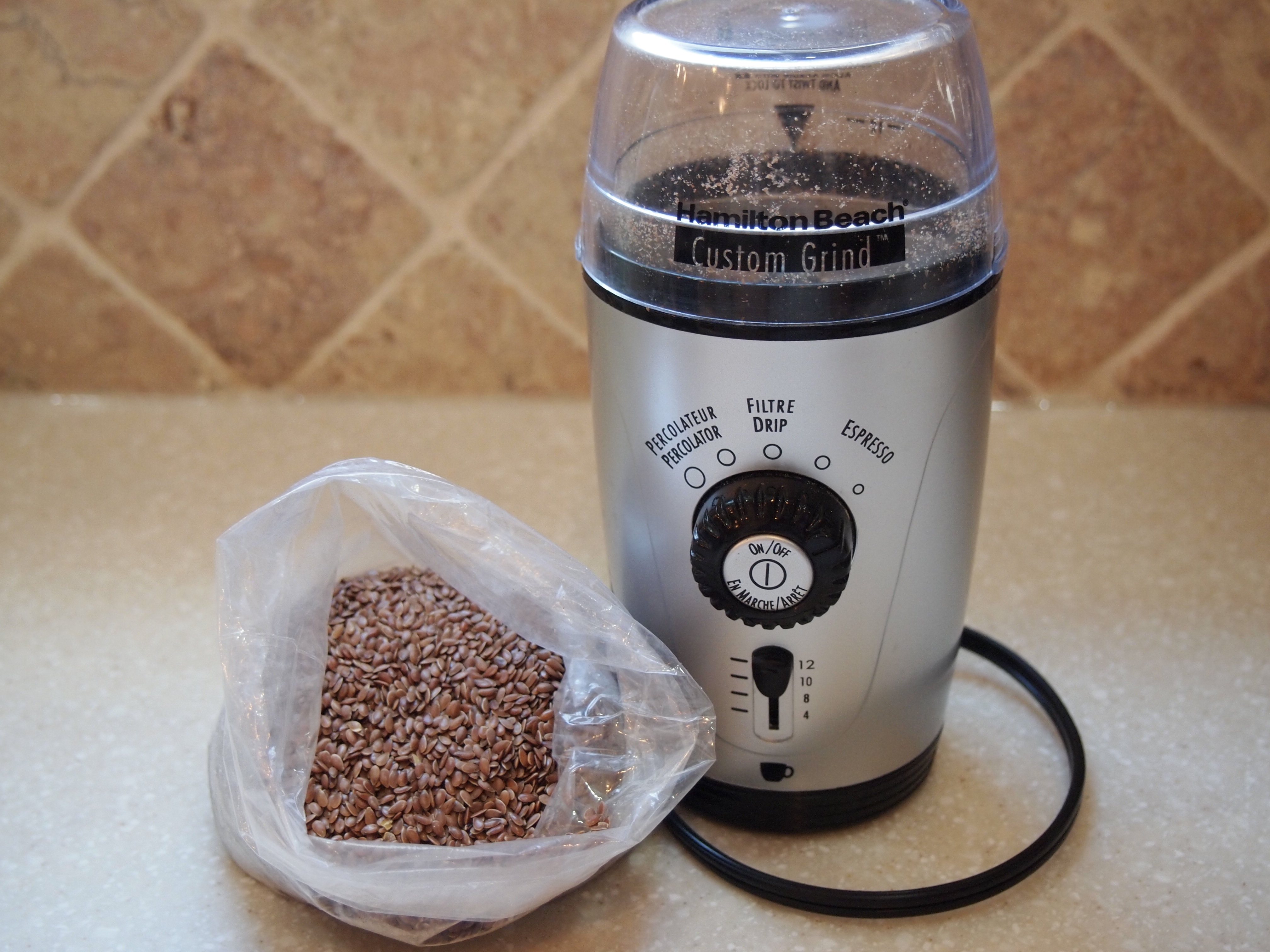
To grind flax seeds in a blender, use dry whole seeds and short pulses until they become a coarse, even meal.
For home cooks in the United States, a blender can turn whole flax seeds into fresh flaxseed meal without needing a dedicated grinder. The key is to keep the seeds dry, use short blending bursts, and stop before the natural oils make the mixture pasty.
Ground flaxseed is easier for the body to digest than whole flaxseed because grinding breaks the hard outer seed coat. USDA and Mayo Clinic guidance also notes that freshly ground flaxseed can provide useful fiber and alpha-linolenic acid, a plant-based omega-3 fat. Grinding only what you need can also help preserve freshness because ground flaxseed is more exposed to oxygen than whole seeds.
You only need whole flax seeds, a clean blender, a dry container, and a clean storage container if you are making more than you will use immediately. Brown and golden flax seeds can both be ground, and there is little nutritional difference between the two varieties.
Do not add water, milk, oil, or another liquid when making dry flaxseed meal. Liquid changes the task from grinding seeds into making a paste or other preparation.
A blender can work, but it is not necessarily the most efficient tool for very small amounts. A coffee or spice grinder is often better suited to small batches. If a blender is what you already have, however, a pulse-and-shake method can produce useful flaxseed meal.
Source: dishbydish.net
Whole flax seeds
Use dry brown or golden flax seeds intended for food use.
Blender
Use a clean, dry blender with blades appropriate for dry ingredients according to the appliance instructions.
Dry storage container
Have an airtight container ready if you will not use all the ground flaxseed immediately.
Should You Wash or Soak Flax Seeds First?
For dry grinding, do not soak the seeds first. Moisture can make the seeds cling together and makes it harder to produce a dry meal. If the seeds need cleaning, follow the food package guidance and make sure they are completely dry before grinding.
Keep the seeds dry
Dry seeds move more freely through the blender and are better suited to producing dry flaxseed meal.
Avoid unnecessary heating
Use a cool, dry blender jar rather than one that is still warm from washing.
How to Grind Flax Seeds in a Blender
The most practical blender method is to grind in short pulses rather than running the blender continuously. Short bursts give the seeds repeated contact with the blades while reducing the chance of overheating or overprocessing the oily seeds.
The exact blending time varies with the blender, blade design, batch size, and desired texture, so use the appearance of the meal as the main stopping point rather than relying on one universal time.
Source: Premeditated Leftovers
1. Measure the seeds
Start with a modest batch rather than filling the blender jar unnecessarily. The seeds need enough room to move so the blades can reach them.
2. Check the blender
Make sure the jar, lid, and blades are clean and completely dry.
3. Add the flax seeds
Place the whole seeds into the blender jar. Do not add liquid for dry flaxseed meal.
4. Pulse briefly
Use short pulses at a suitable speed. Avoid immediately running the blender continuously for a long period.
5. Shake or stir
Stop the blender, secure the lid, and shake the jar if the appliance design allows it safely. Otherwise, unplug the blender and use an appropriate utensil to redistribute the seeds.
6. Pulse again
Repeat short pulses until the meal reaches the texture you want.
7. Transfer and clean
Transfer the finished meal to a clean container and clean the blender promptly because flaxseed contains oil that can leave a coating.
How Long Should You Blend Flax Seeds?
There is no single correct blending time for every blender. Some home methods use several short pulses, while other methods run a blender for longer periods. The better endpoint is texture: stop when most of the seeds have become a consistent meal with no large whole seeds remaining.
If the mixture begins sticking together, becoming noticeably oily, or forming a paste, stop blending. Continued processing can push the mixture beyond dry meal into a more paste-like consistency.
For coarse meal
Use fewer pulses and stop as soon as the majority of the seeds are cracked and ground.
For finer meal
Continue with additional short pulses, checking the texture between cycles.
For a paste
Do not keep blending once the seeds release enough oil to make the mixture sticky unless a paste is specifically what you intend to make.
What Should Ground Flaxseed Look Like?
Freshly ground flaxseed should look like a loose, sandy meal rather than a smooth flour. A few slightly larger particles are normal with home grinding. For smoothies, yogurt, oatmeal, and many baked recipes, a reasonably even meal is generally more useful than chasing an extremely fine powder.
Good result
The mixture is loose, mostly uniform, and contains few or no intact seeds.
Too coarse
Many whole seeds remain, so use a few more short pulses.
Overprocessed
The mixture looks wet, clumps together, or begins turning into a paste.
How Much Flaxseed Should You Grind at Once?
The best batch size depends on the blender and the amount you expect to use. A small batch is convenient when you want fresh meal for one or two servings, while a larger batch saves preparation time if you regularly add flaxseed to foods.
Do not assume that a larger batch will always grind better. If there are too few seeds for the blade geometry, they may simply move around the bottom of the jar. If there are too many, the seeds may not circulate evenly. Follow your blender manufacturer’s instructions for dry ingredients and use the smallest practical batch that allows the seeds to move properly.
Source: kitchenarylab.com
Small amount
Useful when you want the freshest possible meal and only need a tablespoon or two.
Medium batch
Useful for several servings when your blender can circulate the seeds effectively.
Large batch
Convenient for meal preparation but should remain within the blender’s stated limits for dry ingredients.
Why Batch Size Affects the Result
Blender blades do not grind every seed equally at the same moment. Seeds need to circulate into the blade path. A batch that is poorly matched to the container can leave some seeds whole while others become very fine. Pulsing and redistributing the seeds helps reduce this unevenness.
Too little
A thin layer may sit below or around the effective blade path instead of circulating well.
Too much
The seeds can pack together and reduce circulation, producing a mixture with inconsistent particle sizes.
How to Get a Finer or More Even Flaxseed Meal
If your first batch is uneven, do not immediately increase the total blending time. Instead, redistribute the seeds and use several additional short pulses. This approach gives the larger pieces another chance to reach the blades without continuously processing the already-fine particles.
For recipes that require a very specific flour-like texture, a dedicated spice or coffee grinder may be more appropriate than a full-size blender. A blender is most useful when you already own one and want a convenient way to make ordinary flaxseed meal.
Source: storables.com
Pulse instead of continuously blending
Short cycles help you monitor texture and reduce the risk of turning the oily seeds into a paste.
Redistribute the seeds
Shaking or safely stirring between cycles can bring larger pieces back toward the blades.
Check before every extra cycle
Stop as soon as the meal reaches the texture required by your recipe.
What If the Flax Seeds Are Not Grinding?
If the seeds are simply spinning without breaking down, the problem is often circulation rather than insufficient blending time. Stop the appliance and check whether the batch is too small, too large, or sitting in a layer that does not reach the effective blade path. Redistribute the seeds and try another short pulse.
Seeds stay whole
Check batch size and redistribute the seeds before adding more blending time.
Only some seeds grind
Pause and mix the contents so larger pieces can return to the blade area.
Meal becomes sticky
Stop processing. The seeds have released enough oil to change the texture.
How to Store Ground Flaxseed
Ground flaxseed needs more careful storage than whole flaxseed because grinding breaks the protective seed coat and exposes more of the oil to oxygen. For that reason, grind only what you expect to use soon when practical.
For leftover ground flaxseed, use an airtight container and keep it refrigerated or frozen. Mayo Clinic guidance recommends refrigeration in an airtight, opaque container, while AICR gives a refrigerator storage period of up to 30 days or freezer storage of up to four months. These are practical storage guidelines rather than a guarantee that every batch will remain fresh for exactly that long.
Source: blenderjunkie.com
Use an airtight container
Limit exposure to air and moisture after grinding.
Refrigerate for short-term storage
A refrigerator is a practical option when you expect to use the meal within the coming weeks.
Freeze for longer storage
Freezing can slow quality loss when you have made more ground flaxseed than you will use soon.
Check freshness
Discard flaxseed if it develops an unpleasant rancid odor, unusual taste, or other obvious signs of spoilage.
Why Ground Flaxseed Goes Stale Faster
Whole flaxseed has a protective outer coating around its oil-rich interior. Grinding disrupts that barrier, increasing exposure to oxygen. Because flaxseed contains unsaturated fats, limiting exposure to air, heat, and light helps preserve quality.
Whole seeds
Generally keep their quality longer because the intact seed coat provides protection.
Ground seeds
Lose freshness more quickly because more of the oil is exposed after grinding.
Common Mistakes When Grinding Flax Seeds in a Blender
Most unsuccessful batches come from using the wrong amount, adding moisture, blending continuously for too long, or expecting every blender to produce the same texture. The fix is usually simple: keep the seeds dry, use an appropriate batch size, pulse, redistribute, and stop when the desired meal is reached.
Source: www.youtube.com > FroothieTV
Adding liquid
Liquid is unnecessary for dry flaxseed meal and can produce a paste instead.
Blending continuously
Long continuous blending makes it harder to control the texture and can encourage oily clumping.
Using an unsuitable batch size
Too few or too many seeds can interfere with circulation and leave the grind uneven.
Grinding far beyond the required texture
Once the meal is fine enough for its intended use, additional processing usually provides little practical benefit.
Leaving ground flaxseed at room temperature for extended periods
Ground flaxseed is more vulnerable to oxidation, so cool storage is preferable for leftovers.
When a Blender Is Not the Best Tool
A blender is convenient, but a dedicated coffee or spice grinder can be easier for very small amounts. If you regularly need a very fine meal, a tool designed for small dry ingredients may give you better control. A food processor is another alternative for larger quantities.
Choose a blender
Best when you already own one and need a convenient way to make ordinary flaxseed meal.
Choose a coffee or spice grinder
Useful for smaller amounts and when finer grinding is important.
Choose a food processor
Useful when processing a larger quantity and when a coarse-to-medium meal is acceptable.
How to Use Freshly Ground Flaxseed
Freshly ground flaxseed works well in foods where a mild, nutty flavor and slightly grainy texture are acceptable. Common uses include oatmeal, yogurt, smoothies, cereals, sauces, and baked goods. Add it according to the recipe rather than assuming that ground flaxseed can replace flour or another ingredient at a one-to-one ratio in every recipe.
Grinding flaxseed does not make it a medical treatment. Flaxseed contains fiber, alpha-linolenic acid, and lignans, but research on health effects varies by preparation and condition. Anyone using flaxseed for a specific medical purpose should discuss that use with a qualified health professional.
Source: www.pinterest.com
Smoothies
Blend ground flaxseed into a smoothie for a simple way to incorporate it into the diet.
Oatmeal and cereal
Stir the meal into hot or cold cereal after preparation or according to the recipe.
Yogurt
Mix ground flaxseed into yogurt for added texture and fiber.
Use it in recipes specifically designed to include flaxseed meal.
Safety and Practical Limits
Food preparation with flaxseed is generally straightforward, but larger amounts can cause digestive discomfort because flaxseed is high in fiber. Increase intake gradually if your diet contains little fiber, and drink adequate fluids unless a healthcare professional has told you to restrict fluids.
Flaxseed may also affect the absorption of some medications. If you take prescription or over-the-counter medicines regularly, ask a pharmacist or healthcare professional about appropriate timing rather than assuming that flaxseed is harmlessly interchangeable with other foods.
Use food-grade flaxseed intended for consumption and follow the package instructions. NCCIH also advises against eating raw or unripe flaxseeds because they may contain potentially toxic compounds.
Source: dishbydish.net
Start with a modest serving
Large increases in dietary fiber can cause bloating, fullness, or diarrhea in some people.
Consider medication timing
Flaxseed can affect medication absorption, so people taking medicines regularly should seek individualized guidance.
Use food-grade seeds
Choose flaxseed sold for food use and follow its preparation and storage instructions.
Do not use raw or unripe flaxseeds
NCCIH advises avoiding raw or unripe flaxseeds because of potentially toxic compounds.
Signs You Should Stop Using Stored Ground Flaxseed
Do not try to mask a rancid smell or unpleasant taste with other ingredients. If stored flaxseed develops a noticeably stale, rancid, or otherwise abnormal odor or flavor, discard it and grind a fresh batch.
Rancid odor
An unpleasant stale or rancid smell is a reason to discard the meal.
Abnormal taste
Do not consume ground flaxseed that tastes noticeably rancid or spoiled.
Frequently Asked Questions
Q
Can you grind flax seeds in a regular blender?
Yes. A regular blender can grind whole flax seeds into meal when the batch size and blade design allow the seeds to circulate. Use short pulses and redistribute the seeds between cycles rather than relying on one long continuous blend.
Q
Do you need to soak flax seeds before blending?
No. If your goal is dry flaxseed meal, use dry seeds. Soaking adds moisture and can make the mixture sticky rather than producing a loose meal.
Q
Why does my ground flaxseed turn into a paste?
Flax seeds contain oil. Extended processing can release enough of that oil for the particles to stick together. Stop blending once the meal reaches the required texture and use short pulses instead of continuous blending.
Q
Is ground flaxseed better than whole flaxseed?
Ground flaxseed is generally easier to digest because grinding breaks the seed’s hard outer coating. Whole seeds may pass through the digestive tract without being fully broken down, which can limit access to some of their nutrients.
Q
How should I store freshly ground flaxseed?
Place leftover ground flaxseed in an airtight container and refrigerate it for short-term storage or freeze it when you want to keep it longer. Ground flaxseed is more vulnerable to oxidation than whole flaxseed because grinding exposes more of its oil to air.
✦ Wrapping Up
Conclusion
Grinding flax seeds in a blender is a simple process when you keep the seeds dry, choose a practical batch size, and use short pulses. Check the texture after each cycle and redistribute the seeds when necessary. The goal is a loose, reasonably even meal, not an endlessly processed powder.
Because ground flaxseed is more exposed to oxygen than whole flaxseed, make only what you need when possible. Store leftovers in an airtight container in the refrigerator or freezer, and discard the meal if it develops an unpleasant rancid smell or taste.
💡 Key Takeaway
For the next batch, start with dry whole flax seeds, pulse in short bursts, redistribute between cycles, stop when the meal reaches your desired texture, and refrigerate or freeze any leftovers.