Let soup stop boiling, use a blender approved for hot liquids, fill the jar only as directed, vent steam safely, and blend in small batches.
Across American kitchens, homemade tomato soup, creamy pumpkin soup, and potato soup often go straight from the stove to the blender. That step can save time and help create a smooth texture, but hot soup needs more care than a cold smoothie. Steam builds pressure inside a closed blender jar, and a loose lid or sudden splash can send hot liquid onto your hands and face.
The safest method depends on your blender. A standard countertop blender may not be suitable for hot liquids, while some models have heat-safe jars and specific venting instructions. An immersion blender can reduce the need to transfer soup, but it still requires care to prevent splashes and burns. Always check your appliance manual before blending hot food.
Hot soup can release steam as soon as it enters a blender jar. When the lid traps that steam, pressure may rise inside the container. If the lid has no safe vent or the blender is not designed for hot liquids, pressure and moving liquid can force the lid upward or push soup through an opening.
A splash of hot soup can cause a serious burn. The risk grows when the jar is overfilled, the soup is still boiling, or the blender starts at a high speed. Thick soups can also move unevenly, which may leave pockets of hot liquid beneath a layer of vegetables or foam.
The goal is not just to make soup smooth. It is to control heat, steam, liquid movement, and the amount of soup in the jar. A safe setup helps you blend evenly without putting your hands near a running blade or hot spray.
Source: stripedspatula.com
Steam pressure
Steam needs a safe path to escape. A fully sealed lid can allow pressure to build, so follow the venting instructions for your exact blender.
Hot splashes
Fast blade movement can throw soup against the lid. Overfilling and starting too fast make spills more likely.
Heat damage
A jar, lid, seal, or blade assembly that is not rated for hot food may warp, crack, or fail.
Hidden heat
Thick soup may look still while hot liquid moves below the surface. Keep your face away from the jar opening and do not stir by hand while the blender runs.
Can You Put Boiling Soup Directly Into a Blender?
Do not pour boiling soup into a blender unless the manufacturer explicitly permits that temperature and provides instructions for doing so. Many household blenders require hot ingredients to cool first, and some are intended only for cold or room-temperature mixtures.
For most home cooks, letting the soup stop boiling and cool somewhat is the safer starting point. The right temperature depends on the appliance, the jar material, the soup, and the manufacturer’s directions. There is no single temperature that is safe for every blender.
If the soup is bubbling hard
Turn off the stove and let the bubbling settle before transferring or blending it.
If the manual gives a maximum temperature
Stay within that limit. If the temperature rating is unclear, do not assume the jar can tolerate boiling soup.
What to Check Before You Start
Take a moment to check the appliance, work area, and soup before blending. These small steps help prevent spills and make the process easier to control. If the manual is missing, look up the instructions for the exact model before using it with hot food.
Set the blender on a dry, flat, stable counter away from the edge. Keep towels, loose sleeves, cords, and other items clear of the blade area. Have a heat-safe ladle, a stable pot, and a clear place to set the jar ready before you begin.
Source: blenderjunkie.com
Read the manual
Confirm that the blender can process hot liquids and learn its maximum fill level, temperature limits, speed guidance, and lid or vent requirements.
Inspect the jar and lid
Do not use cracked, chipped, badly scratched, or warped parts. Check that the lid and seal fit as intended.
Check the soup consistency
Large chunks can make blending uneven. Let the soup settle, then remove oversized pieces if needed before transferring it.
Protect your hands
Use a heat-safe ladle or suitable oven mitts to handle warm cookware. Keep children and pets away from the work area.
Prepare small batches
Plan to blend in several rounds instead of filling the jar to the top. Follow the hot-liquid fill line if the manufacturer provides one.
Which Blender Is Best for Hot Soup?
A countertop blender designed for hot liquids can be useful when you want a very smooth soup. Its jar may allow controlled venting, and the manual explains how to process warm ingredients. The important factor is the model’s documented suitability, not simply its power or price.
An immersion blender is often convenient because you can blend soup in the cooking pot. It reduces the need to move a heavy pot of hot liquid, though the blade can still spray soup if it is exposed near the surface. A regular cold-use blender should not be treated as heat-safe just because its jar looks sturdy.
Heat-rated countertop blender
Useful for large batches and fine purees when the model supports hot liquids and has a specified venting procedure.
Immersion blender
Useful for soup in a pot. Keep the blade head submerged, move it slowly, and switch it off before lifting it.
Cold-only blender
Do not use it for hot soup unless the manufacturer confirms that the model supports hot liquids.
How To Blend Hot Soup In Blender Safely Step by Step
The safest process is to control the soup temperature, transfer only a small amount at a time, use the correct lid position, and start slowly. Follow your appliance’s instructions whenever they differ from general guidance in this article.
Do not rush the transfer from stove to blender. A few extra minutes to let the soup settle and prepare the jar can help prevent a painful spill. Keep your face and body away from the top of the jar throughout the process.
Source: theculinarygene.com
Step 1: Stop the boil
Turn off the heat and wait until active bubbling stops. Let the soup cool further if your blender manual requires it.
Step 2: Set up the blender
Place the clean, dry blender on a stable counter. Check that the jar, blade assembly, seal, and lid are correctly fitted.
Step 3: Add a small batch
Use a ladle to transfer soup carefully. Keep the amount below the hot-liquid limit or fill line in the manual. Leave enough space for the soup to circulate and steam to escape.
Step 4: Fit the lid as directed
Use the manufacturer’s specified hot-liquid vent or lid insert method. Never improvise by removing a lid part if the manual does not permit it, and never run the blender with an unstable lid.
Step 5: Start at low speed
Begin with the lowest suitable speed and increase it gradually only if the instructions allow. Keep one hand away from any vent where hot steam may emerge.
Step 6: Blend in short checks
Run the blender only as long as needed to break down the ingredients. If the soup is thick or stops moving, switch off the motor before adjusting the contents.
Step 7: Stop before opening
Turn off the blender and wait for the blades and liquid to stop moving. Keep your face away from the lid, then open it carefully according to the manufacturer’s directions.
Step 8: Transfer and repeat
Pour or ladle the blended soup into a suitable pot or heat-safe bowl. Repeat with the next small batch, taking care not to overfill the receiving container.
How Much Hot Soup Should You Put in the Jar?
Use the hot-liquid fill limit in your blender manual rather than guessing. A blender’s general maximum capacity may not be the same as its safe capacity for hot soup. Steam, foam, and the movement of thick ingredients can take up space that looks empty when the jar is still.
For example, if a hypothetical blender manual limits hot liquids to 2 cups per batch, process no more than 2 cups at a time, even if the jar holds much more. That example is only a calculation; it is not a universal fill recommendation. Check your own model’s instructions.
Leave headspace
Do not fill to the rim. Soup needs room to move without pushing hot liquid toward the lid.
Reduce the batch if foam rises
Foamy soups and starchy mixtures may need even more room than thin broth.
How to Vent a Blender Jar Safely
Venting lets steam escape through an opening designed for that purpose. Some blenders use a removable center cap; others have a different lid design. Follow the exact method stated in the manual, because removing the wrong part or leaving the lid loose can create a spill hazard.
If your model requires a vented lid insert, position it as directed and keep your hands away from the opening. Do not hold a cloth over a vent, since the cloth can obstruct steam flow or become soaked with hot soup. If the appliance has no approved method for blending hot liquids, allow the soup to cool or use a suitable alternative.
Use only the approved vent
Do not assume every blender’s center cap or lid can be removed safely.
Keep your face back
Hot steam can escape upward even when the soup itself stays inside the jar.
Never force the lid down
If pressure seems to lift the lid, stop the motor and let the soup settle before handling the jar.
How to Blend Hot Soup With an Immersion Blender
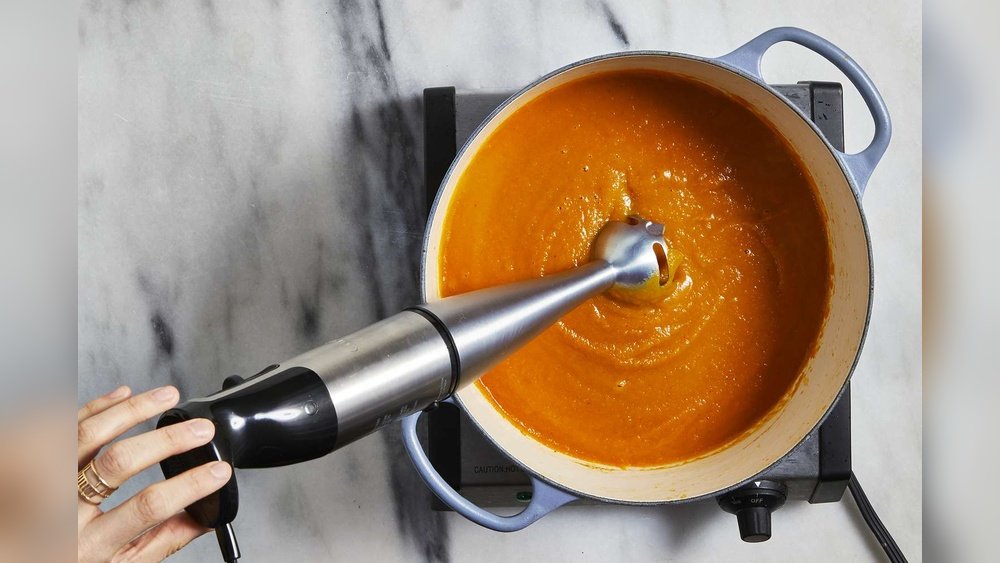
An immersion blender lets you puree soup in the pot, so you can avoid lifting and pouring a heavy container of hot liquid. It is a useful option for vegetable soups, lentil soups, and many smooth sauces, provided the tool is rated for the food temperature and used as directed.
The main risk is splashback. If the blade head sits near the surface, it can throw hot soup onto your hands, arms, or face. A deep pot and a steady, controlled motion help keep the soup contained.
Source: ansoup.com
Step 1: Remove the pot from direct heat
Set the pot on a stable, heat-safe surface before blending. Do not let the cord or handle hang over the counter.
Step 2: Check the immersion blender
Confirm that its shaft and blade head can handle the soup temperature. Follow any maximum immersion depth or continuous-use limit.
Step 3: Submerge the blade head
Place the blade guard fully below the soup surface before switching the motor on. Keep the head away from the bottom if the manual requires it.
Step 4: Blend slowly
Use a low setting at first and move the blender gently through the soup. Avoid lifting the blade head while the motor is running.
Step 5: Turn off before moving it
Switch off and wait for the blade to stop before lifting or repositioning the tool. Unplug it before cleaning or removing food caught near the blade.
How to Avoid Splashes With an Immersion Blender
Keep the blade head below the surface and tilt the pot slightly only if it remains stable. Use a pot deep enough to contain the soup as it circulates. If the soup level is too low to cover the blade guard, transfer it to a narrower, suitable vessel or use another method rather than running the blade partly exposed.
Do not stir with a spoon while the motor is running. If a chunk blocks the blade, turn the unit off, unplug it, and wait for the blade to stop before clearing the obstruction. Keep hot liquid away from electrical parts and never immerse the motor housing unless the manufacturer specifically permits it.
Keep the blade below the surface
This limits spray and helps the blender pull soup through the blade guard.
Move with control
Use slow up-and-down or circular motions without bringing the spinning blade above the liquid.
Choose a suitable pot
A deep, stable pot gives you more control than a shallow pan with little room for splashes.
How to Get Smooth Soup Without Overheating It
Smooth soup comes from even blending, not from forcing the blender to run at maximum speed for a long time. Cook firm vegetables until tender enough for the blade to break them down, and cut very large pieces into smaller ones before blending. A suitable amount of cooking liquid also helps the ingredients move through the blade.
Start slowly, then increase speed only as needed and as the manual allows. If the mixture stops circulating, switch the blender off before scraping the sides or loosening thick food. Never insert a spoon or spatula into a running blender, even if the blades appear to be moving slowly.
Source: ansoup.com
Cook vegetables until tender
Soft carrots, squash, potatoes, and similar vegetables usually puree more easily than firm, undercooked pieces.
Use enough liquid
A little broth or water can help a thick mixture move, but add it only when the blender is stopped.
Blend in stages
Begin with a short low-speed run, check the texture after stopping, and repeat if needed.
Avoid long continuous runs
Follow the motor’s duty-cycle guidance. Stop if the blender smells hot, slows unexpectedly, or shows signs of strain.
What to Do About Lumps or Fibers
If the soup still has lumps, stop the blender and check whether the pieces are too large or too firm. Let the mixture settle before opening the lid, then break up large pieces with a utensil while the motor is off. If the soup contains stringy vegetable fibers, a suitable fine-mesh strainer can help after blending.
Do not keep increasing the speed if the ingredients are stuck or the blades are not moving the mixture. Thick soups may need more liquid or smaller batches. Make any changes only with the motor off, and keep hands clear of the blade assembly.
Large chunks remain
Cook them until tender or cut them smaller after the soup has cooled enough to handle safely.
The mixture will not circulate
Stop the motor and reduce the batch or add a small amount of liquid if the recipe allows.
Fine fibers remain
Strain the finished soup if a silkier texture is needed.
Common Mistakes That Can Cause Burns or Damage
Most hot-soup blending problems begin with an unsafe appliance choice, too much liquid, or an incorrect lid setup. Avoid shortcuts that seem convenient but leave hot steam trapped inside the jar. If the blender is not rated for hot liquids, use a suitable immersion blender or let the soup cool before processing it in an approved appliance.
A warning sign deserves attention. If the lid moves, soup escapes, the jar makes an unusual sound, or the motor struggles, stop rather than trying to finish the batch. Wait for the blades and liquid to settle before inspecting the equipment.
Source: stripedspatula.com
Sealing the lid without an approved vent
Trapped steam can raise pressure. Use the exact lid and vent setup specified for hot liquids.
Filling the jar to the top
There is little room for movement or foam. Reduce the batch to the model’s hot-liquid limit.
Starting at full speed
A sudden burst of blade movement can push liquid toward the lid. Begin slowly when the manual permits it.
Holding the lid with bare hands
Hands can be exposed to heat and escaping liquid. Do not rely on hand pressure to keep an unsuitable lid in place.
Using a damaged jar
Cracks and chips can weaken the container. Replace damaged parts with approved replacements before use.
Opening the jar immediately
Steam may still be escaping and the liquid may still be moving. Turn off the motor and wait before opening it carefully.
Leaving the blender unattended
Stay nearby so you can stop the motor if the jar shifts, the mixture surges, or the machine shows signs of strain.
What If Hot Soup Starts Leaking From the Lid?
Switch off the blender immediately if you can do so without reaching through hot liquid or touching a moving part. Step back from the jar and allow the blades to stop and the contents to settle. Do not try to push the lid down while the motor is running.
Once the appliance is off and stable, give the contents time to cool before handling the lid. Check whether the jar was overfilled, the seal was fitted incorrectly, or the model was used outside its hot-liquid instructions. If the lid, jar, or seal is damaged, do not use it again until the affected part is replaced or the appliance is checked.
Do not reopen a pressurized jar
Wait for the soup to settle and for any pressure to dissipate according to the manufacturer’s guidance.
Do not restart to test a leak
Correct the cause first. If you cannot confirm the setup is safe, stop using the blender for hot liquids.
What to Do If Your Blender Is Not Rated for Hot Liquids
You can still make smooth soup without pouring it into a blender that is unsuitable for heat. Let the soup cool to the temperature permitted by the appliance manual, then blend it in small batches. If the soup needs to be served hot, return the puree to the pot and reheat it gently while stirring.
An immersion blender may be another option if its manual permits use with hot soup. It avoids transferring the full pot into a countertop jar, but you must still prevent splashes and keep the motor housing dry. Do not assume a metal shaft or plastic guard alone proves that the whole tool is safe for hot food.
Source: kitchenwink.com
Cool before countertop blending
Wait until the soup reaches the temperature allowed by the blender, then use small batches and the correct lid setup.
Use a compatible immersion blender
Check its temperature and immersion limits before placing it in the pot.
Reheat after pureeing
Warm the blended soup in a pot over low to medium-low heat, stirring often to reduce sticking and uneven heating.
Choose another texture method
A potato masher or food mill can soften some soups without a powered blender, although the result may be less smooth.
Will Cooling the Soup Ruin Its Texture?
Cooling soup before blending does not automatically ruin its texture. Some soups become thicker as starches and other ingredients cool, so you may need to add a little broth during blending. Add liquid gradually with the motor off and stop when the soup reaches the texture you want.
If you cool a large pot for later use, do not leave it sitting at room temperature for an extended period. Divide it into shallow containers and refrigerate it promptly, following current food-safety guidance. Reheat it thoroughly before serving, and use clean utensils when handling the finished soup.
Soup becomes too thick
Add a small amount of broth or water, then blend again using the appliance’s safe procedure.
Soup needs to be served hot
Reheat it gently in a pot after blending and stir so the heat spreads evenly.
How to Clean the Blender After Hot Soup
Let the jar and blade assembly cool before cleaning them. Sudden temperature changes may damage some materials, and handling a hot jar can cause burns. Follow the cleaning directions for the exact model, especially if the blade assembly or lid contains removable seals.
Unplug the blender before removing food stuck around the blades or cleaning parts that could move. Keep the motor base and electrical cord away from water unless the manual gives specific cleaning instructions. Never reach into a jar with exposed blades while the appliance is connected to power.
Source: ansoup.com
Let the parts cool
Wait until the jar, lid, and blade assembly can be handled safely.
Follow the model’s cleaning method
Use only approved washing, dishwasher, and self-cleaning methods.
Clean the seals and lid
Soup residue can collect around the lid, vent, and gasket. Remove and wash parts only as directed.
Dry and inspect
Check for cracks, loose seals, or unusual wear before storing the blender.
Can You Clean a Blender by Running Soapy Water?
Some blender manuals allow a cleaning cycle with water and a small amount of dish soap, while others require a different method. Use that approach only if it is approved for your model, and never use hot water in a way that exceeds the jar’s temperature limits.
Do not place a lid on a jar of soapy water and run the blender using the same assumptions you would use for a cold smoothie. Follow the stated fill limit, lid position, and speed instructions, then rinse and dry the parts as directed.
Check the manual first
Confirm whether a self-cleaning cycle is allowed and what water temperature and amount to use.
Avoid blade contact
Unplug the appliance before using a brush or cloth near the blade assembly.
Quick Safety Checklist Before Blending
Use this checklist each time you puree soup, especially when switching between a countertop blender and an immersion blender. The main decision is whether the appliance is approved for the soup’s temperature and whether you can follow its required venting and fill limits.
If any part of the setup is uncertain, pause and check the manual instead of testing the blender with a full batch. A small delay is better than a hot spill or damaged appliance.
Source: reviewmast.com
Appliance
The exact model is rated for the soup temperature and the jar, lid, seal, and blade parts are undamaged.
Soup
The soup is no longer boiling hard and is within the temperature limits in the manual.
Batch size
The amount is below the hot-liquid fill line, with space for movement and foam.
Lid and vent
The lid is fitted correctly and the approved venting method is in place.
Speed
You can begin at a suitable low setting and increase speed only as allowed.
Work area
The counter is stable, the cord is clear, and children and pets are kept away.
After blending
The motor is off and the blades have stopped before you open, pour, stir, or clean.
Frequently Asked Questions
Q
Can I blend hot soup in a regular blender?
Only if the manufacturer says your exact model can handle hot liquids and explains how to vent the jar. Some regular blenders are designed mainly for cold mixtures, so their jars and lids may not be suitable for hot soup. Check the manual before adding warm or boiling ingredients.
Q
Should I let soup cool before blending?
Yes, unless your blender‘s instructions clearly permit blending at the soup’s current temperature. At minimum, let active boiling stop, then follow the model’s temperature and venting requirements. Cooling the soup further is a sensible option when the appliance is not approved for hot liquids.
Q
Why does hot soup make a blender lid pop off?
Steam can build pressure inside a sealed jar, while the spinning blades push liquid toward the lid. Overfilling, a poor seal, or using a blender without an approved hot-liquid vent can make the problem worse. Stop the motor, step back, and do not try to hold down the lid while it runs.
Q
Is an immersion blender safer for hot soup?
An immersion blender can reduce the risk involved in transferring soup from a pot to a countertop jar. However, it can still splash hot liquid if the blade head is partly exposed or lifted while running. Use a compatible model, keep the blade head submerged, and switch it off before moving it.
Q
Can I blend soup while it is still in the cooking pot?
Yes, if you use an immersion blender that is approved for the soup temperature and the pot is stable. Remove the pot from direct heat first unless the tool’s instructions specifically allow another method. Keep the blade head below the soup surface and the motor housing clear of liquid.
Q
Can hot soup crack a blender jar?
It can damage a jar that is not designed for hot liquids or is exposed to a temperature change beyond its limits. Glass, plastic, and composite jars all have model-specific care requirements. Check the manufacturer’s temperature guidance, inspect the jar for damage, and avoid sudden heating or cooling.
Q
How do I make hot soup smooth without a blender?
Cook the ingredients until tender, then use a potato masher or food mill if the recipe suits that method. These tools may leave more texture than a powered blender, but they avoid running hot soup through an unsuitable appliance. Let the soup cool enough for safe handling before using a manual tool.
Q
What should I do if hot soup splashes onto my skin?
Move away from the blender and cool the burn under cool running water for 20 minutes. Remove jewelry and clothing near the burn if they are not stuck to the skin. Do not apply ice, butter, or greasy creams. Seek urgent medical care for deep or large burns, burns on the face or hands, or any burn that causes serious concern.
✦ Wrapping Up
Conclusion
Blending hot soup safely comes down to a few habits: use an appliance designed for the temperature, let active boiling stop, work in small batches, and follow the correct lid and vent instructions. Start slowly, keep your face away from the jar, and stop the motor before opening, stirring, or cleaning.
An immersion blender can make the job easier because the soup stays in the pot, but it still needs a steady hand and a submerged blade head. If your countertop blender is not approved for hot liquids, let the soup cool before blending or choose another method. Always put the appliance manual ahead of general advice.
💡 Key Takeaway
Before blending your next pot of soup, check the manual for hot-liquid use, fill limits, temperature limits, and venting instructions. Then blend a small batch at a time and stop the motor before handling the lid.