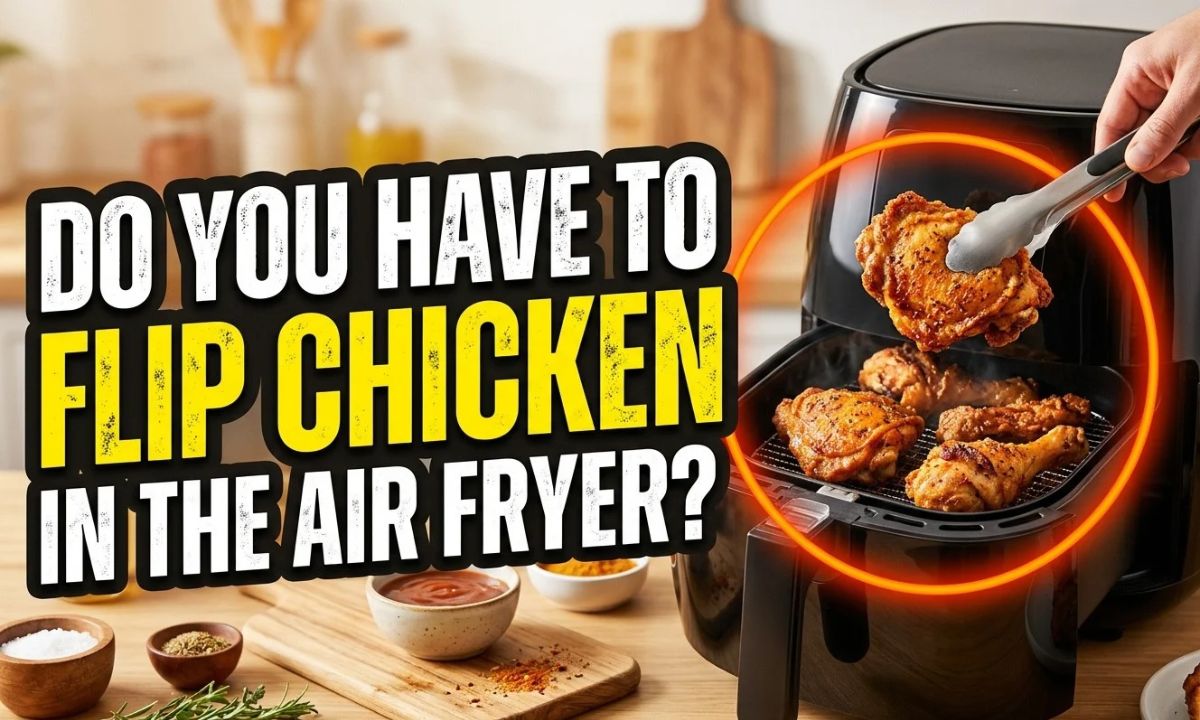
You do not always have to flip chicken in an air fryer, but flipping it halfway through cooking usually helps it brown and cook more evenly.
For U.S. home cooks, the most important rule is not whether the chicken was flipped but whether it reaches a safe internal temperature. The USDA Food Safety and Inspection Service recommends cooking all poultry to a minimum internal temperature of 165°F, measured with a food thermometer. Air fryer recipes often recommend flipping because the side closest to the basket can brown more quickly while the exposed side benefits from the circulating hot air.
Whether flipping is necessary depends on the chicken cut, its thickness, the amount in the basket, the air fryer’s design, and the result you want. Boneless chicken breasts, breaded cutlets, thighs, and whole chickens can all behave differently. A single flip halfway through cooking is a useful default for many chicken pieces, but it is not a universal requirement.
No, flipping is not always mandatory. An air fryer circulates hot air around food, so chicken can cook without being turned. However, the side resting closer to the basket can receive more direct heat, while the upper surface is exposed to circulating hot air. Turning the chicken can help both sides receive more comparable heat and exposure.
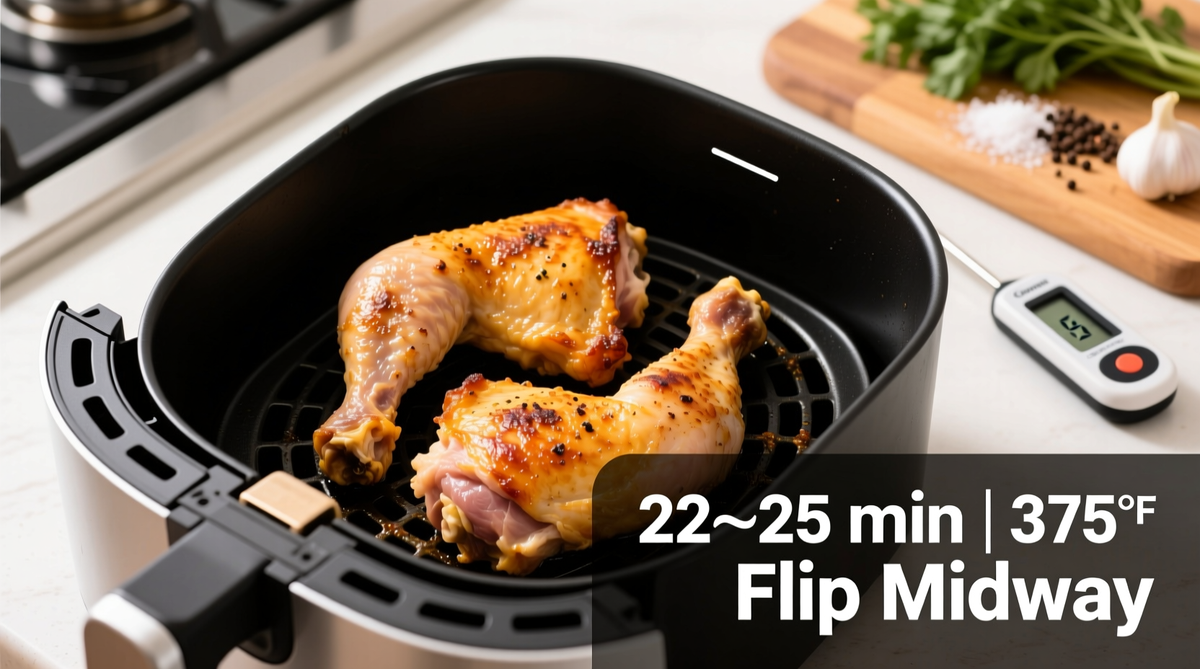
For many boneless chicken breasts, tenders, breaded chicken pieces, and thighs, flipping once around the halfway point is a practical way to improve color and surface texture. Recipes from air fryer manufacturers and recipe developers commonly include a halfway flip for chicken. The exact timing still depends on the appliance and the size of the chicken.
The key distinction is between cooking and browning. Flipping may improve the appearance and crispness of both sides, but it does not replace temperature checking. Chicken is safely cooked when the thickest part reaches 165°F.
Source: myfussyeater.com
Flip when even browning matters
Turn chicken if you want both sides to develop a more similar golden color or crisp texture.
Skip the flip when the recipe or appliance does not require it
Some air fryers circulate heat effectively enough that chicken cooks and browns adequately without turning.
Always check doneness
Use a food thermometer rather than relying on color, juices, or the timer alone.
Why Does Flipping Chicken Help?
Flipping changes which surface of the chicken faces the basket and the heating airflow. That can reduce the difference between a darker underside and a paler upper surface. It can be especially useful when the chicken has a coating that needs to crisp on both sides.
Flipping can also help when the chicken is thick enough that the outside starts browning before the center finishes. Turning the piece does not guarantee even internal cooking, but it can distribute surface exposure more evenly while the center continues heating.
More even browning
Each side gets time exposed to the air stream and basket-side heat.
Better crisping
Breaded or seasoned surfaces can develop a more consistent crust when both sides are exposed.
Useful for thicker pieces
Turning can help manage surface browning while the center continues to cook.
When Should You Flip Chicken in an Air Fryer?
For chicken that benefits from flipping, a good starting point is the halfway point of the recipe’s estimated cooking time. For example, if a recipe calls for 16 minutes, check and turn the chicken at about 8 minutes. This is a starting point rather than a rule because actual cooking speed varies with thickness, quantity, temperature, and air fryer design.
Do not wait for a specific number of minutes if the recipe provides a different instruction. Manufacturer recipes may specify a particular halfway point, and some models use different heating patterns. Follow the appliance instructions when they conflict with a generic timing guideline.
Source: skinnytaste.com
Start with the recipe’s halfway point
For a 16-minute recipe, begin checking around 8 minutes and turn the pieces if the recipe calls for it.
Use appearance as a cue, not proof of doneness
A browned surface tells you about browning, not whether the center has reached a safe temperature.
Check the thickest area
Insert an instant-read thermometer into the thickest part of the chicken without touching bone.
Should You Flip Chicken Breast?
Chicken breast is one of the cuts that often benefits from a halfway flip. Boneless breasts can be relatively thick, and their broad surfaces can brown differently depending on how they sit in the basket. Turning once can help both sides develop a more even exterior.
Thickness matters more than weight alone. A thin cutlet can finish much sooner than a thick whole breast even when their weights are similar. If the breast is very thick at one end, gently pounding it to a more even thickness can promote more uniform cooking.
Thin chicken breast
May cook quickly and may need only one brief turn or, depending on the air fryer, no turn.
Thick chicken breast
Usually benefits from a halfway flip and careful temperature checking.
Breaded breast
Flipping can help the coating crisp on both sides without leaving one side noticeably pale.
Should You Flip Chicken Thighs and Drumsticks?
Chicken thighs and drumsticks can also benefit from turning, particularly when you want more even browning. Bone-in pieces have irregular shapes, so the surface touching the basket may brown differently from the exposed surface.
For skin-on thighs, starting skin-side down and turning later can be useful in recipes designed to render and crisp the skin. The exact method varies by recipe, so the recommended orientation and timing should take priority over a generic halfway-flip rule.
Bone-in thighs
Often benefit from turning because their irregular shape can create uneven contact with the basket.
Drumsticks
Turning can help distribute browning around the curved surface.
Skin-on chicken
Follow the recipe’s recommended starting position because skin crisping may depend on which side faces the heat first.
How to Flip Chicken Safely in an Air Fryer
Flipping chicken is simple, but it is worth handling the basket carefully because the air fryer and food can be extremely hot. Use heat-resistant utensils such as tongs rather than your bare hands.
If the chicken has a fragile breading or sticky coating, grip the piece gently and turn it once instead of repeatedly moving it around. Excessive handling can disturb a developing crust.
Source: fitplatenutrition.com
Pause the cooking program
Open or pause the air fryer according to your model’s instructions before removing the basket.
Use tongs
Lift and turn each chicken piece carefully to avoid burns and reduce contact with the hot basket.
Keep the pieces separated
Return chicken to a single layer with space around the pieces so hot air can circulate.
Resume cooking promptly
Close the basket and continue cooking according to the recipe.
How Do You Know the Chicken Is Done?
The safest way to determine whether chicken is done is to measure its internal temperature with a food thermometer. USDA FSIS recommends a minimum internal temperature of 165°F for all poultry. Check the thickest part of the meat and avoid touching bone with the thermometer probe.
Color is not a reliable substitute for temperature. Chicken can look browned before its center is fully cooked, and some fully cooked chicken may retain a little pink color depending on the cut and cooking conditions. A thermometer gives you a more dependable answer.
Safe minimum temperature
Cook poultry to 165°F as measured with a food thermometer.
Check the thickest section
Measure where the meat is thickest because that area is usually the slowest to reach the target temperature.
Do not rely on clear juices alone
Juice color and visual appearance are less reliable than a properly used thermometer.
When You May Not Need to Flip Chicken
Flipping is less important when the chicken is thin, the air fryer has strong airflow around the food, or the recipe is designed for a single orientation. Some air fryer baskets and racks expose food to heat and circulating air from multiple directions, reducing the need for manual turning.
A very small amount of chicken in a spacious basket can also cook more evenly than a crowded basket. The opposite is true when pieces overlap or sit tightly together. Crowding can restrict airflow and cause some surfaces to remain pale or moist.
If you are following a tested recipe for your specific air fryer and it does not call for flipping, there is usually no reason to add unnecessary handling. Instead, monitor the food and confirm the final temperature.
Source: myorganizedchaos.net
Thin chicken pieces
Thin cutlets and tenders may cook quickly enough that flipping has little practical benefit.
Strong airflow
Some air fryers distribute hot air effectively around the food, reducing differences between the upper and lower surfaces.
Recipe-specific methods
A recipe developed for a particular appliance may intentionally use one orientation throughout cooking.
Does Flipping Make Chicken Cook Faster?
Not necessarily. Flipping primarily changes surface exposure and browning. It should not be treated as a shortcut that guarantees a shorter cooking time.
The center of the chicken still needs enough heat exposure to reach 165°F. If the chicken is thick, changing its orientation halfway through does not eliminate the time needed for heat to travel into the center.
Flipping is mainly about even exposure
Turning can improve browning and surface consistency without necessarily reducing total cooking time.
Thickness controls the center
A thick piece still needs sufficient time for heat to reach the middle.
Common Air Fryer Chicken Mistakes
Many air fryer chicken problems are caused by factors other than whether the chicken was flipped. Overcrowding, inconsistent thickness, excessive cooking time, and failure to check the internal temperature can all affect the result.
If your chicken is pale on one side, flipping once during cooking may help. If the outside is dark but the center is undercooked, lower the cooking temperature or adjust the cooking method rather than simply flipping more often. If the chicken is dry throughout, check whether it was cooked well beyond the point of doneness.
Source: dinedreamdiscover.com
Overcrowding the basket
Too many pieces can restrict airflow and produce uneven browning. Cook in batches when necessary.
Using the timer as the only test
Air fryer performance varies, so confirm that chicken reaches 165°F rather than assuming the listed time is exact.
Cutting chicken open repeatedly
Frequent cutting releases juices and does not provide as reliable a doneness check as a thermometer.
Flipping too frequently
Repeated handling can disturb breading and adds little benefit compared with one well-timed turn.
Ignoring piece thickness
Two chicken breasts with different thicknesses can require noticeably different cooking times even at the same temperature.
What If One Side Is Pale?
If one side of the chicken is pale while the other side is browned, turn the pieces and continue cooking. Also check that the chicken is arranged in a single layer and that air can circulate around it.
If the chicken repeatedly browns unevenly even after turning, your air fryer may have a strong hot spot or uneven airflow. Rotate the basket or reposition the pieces according to the appliance instructions, and avoid placing all pieces against one side of the basket.
Turn once
A halfway flip is usually enough to improve surface exposure.
Leave space
Air needs room to move around the chicken.
Check appliance hot spots
If one area consistently browns faster, reposition food during the cooking process.
A Simple Rule for Flipping Different Chicken Cuts
There is no single flip rule that works for every chicken preparation. The following guide is a practical starting point for common air fryer chicken cuts. The exact cooking time should come from the recipe and your appliance, while 165°F remains the USDA safety endpoint.
The main decision is whether the chicken needs more even surface exposure. If the answer is yes, flip once around halfway through the expected cooking time. If the recipe is specifically designed without a flip and the chicken is browning evenly, you can generally leave it alone.
Source: myorganizedchaos.net
Boneless chicken breast
Usually worth flipping once for even browning, especially when the breast is thick.
Chicken tenders
Often benefit from a halfway flip, although very thin tenders may cook evenly without one.
Chicken thighs
Often benefit from turning, particularly for even browning of skin-on or bone-in pieces.
Chicken drumsticks
Turning can improve browning around the curved surface.
Breaded chicken
A halfway flip can help both sides develop a crisp coating.
Whole chicken
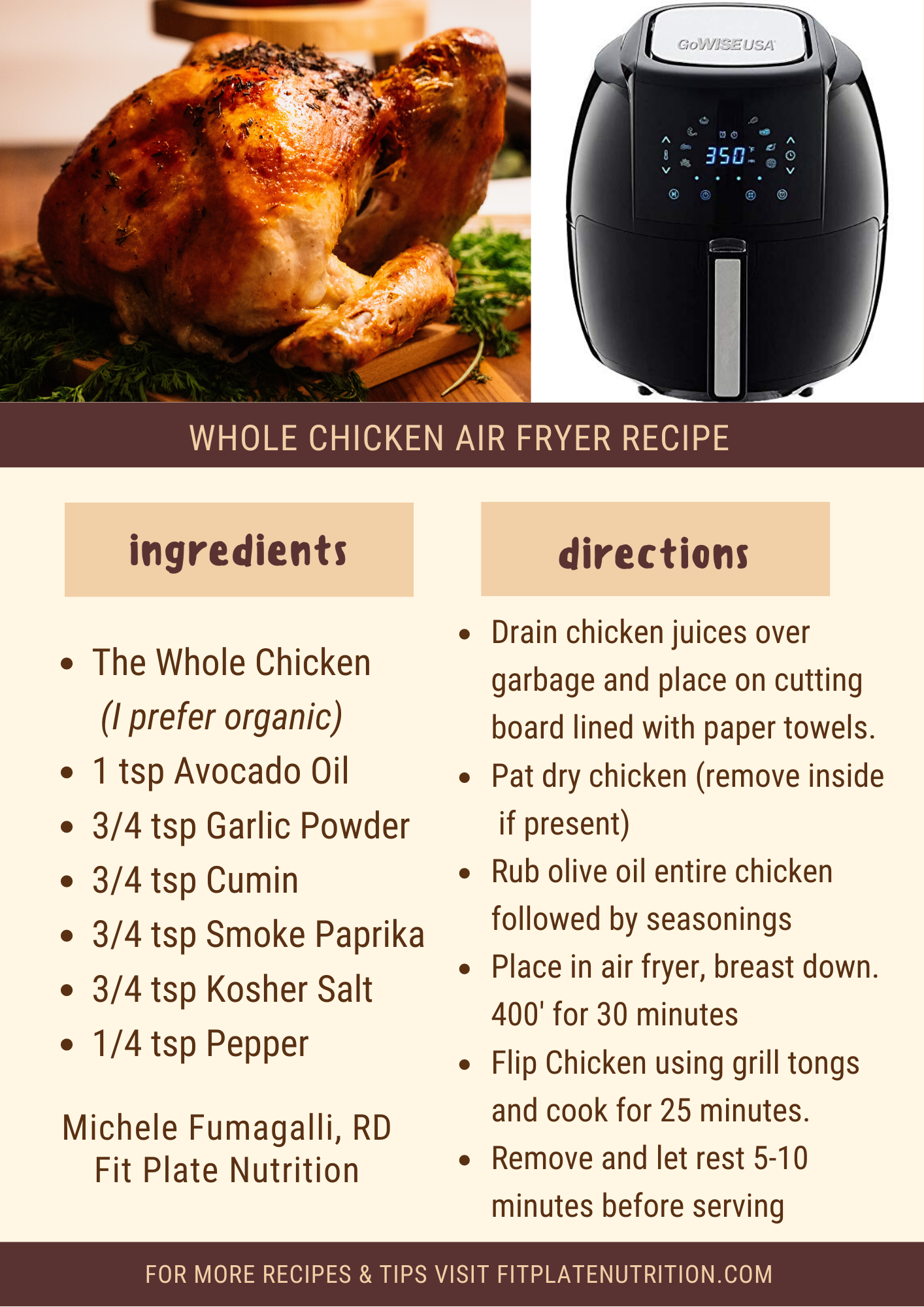
Some recipes deliberately start breast-side down and then turn the bird to promote even browning and cooking. Follow the recipe because whole birds require more careful handling.
Why Whole Chicken Is Different
A whole chicken is substantially different from individual pieces because its shape creates several thicknesses and surfaces. Some air fryer whole-chicken recipes start breast-side down and then flip the bird halfway through. This can help the breast and skin receive different heat exposure during the cook.
Whole chicken also requires careful temperature checking in multiple locations. USDA FSIS advises checking the innermost thigh and wing and the thickest part of the breast for a whole bird. Make sure the entire bird reaches the safe minimum temperature.
Use sturdy tongs
A whole chicken is heavy and awkward to turn when hot, so use appropriate heat-resistant tools and work carefully.
Follow the specific recipe
Whole-chicken cooking depends heavily on bird size, basket capacity, and appliance design.
Check multiple areas
Measure the breast and other thick areas as directed rather than checking only the easiest spot.
Frequently Asked Questions
Q
What happens if I do not flip chicken in the air fryer?
The chicken can still cook safely if it reaches 165°F internally, but the two surfaces may brown differently. One side may become darker or crispier while the other remains lighter. Whether that difference is noticeable depends on the chicken cut and your air fryer.
Q
How many times should you flip chicken in an air fryer?
For most chicken recipes that call for flipping, once halfway through cooking is enough. Repeatedly turning the chicken usually is not necessary and can disturb breading or slow the cooking process when the basket is repeatedly opened.
Q
Do you flip chicken wings in the air fryer?
Chicken wings may not require a flip if the air fryer circulates heat effectively around them and the wings are arranged with sufficient space. However, turning or shaking them can help expose different surfaces and promote more even browning. Follow the specific wing recipe for the best result.
Q
Do you flip chicken thighs in an air fryer?
Usually, flipping chicken thighs is helpful for more even browning, especially with bone-in or skin-on pieces. A recipe may start the thighs skin-side down and instruct you to turn them later. Regardless of orientation, check the thickest part with a food thermometer.
Q
Can chicken be cooked in an air fryer without preheating?
Some air fryer recipes are designed to start in a cold appliance, while others use a preheated basket. Preheating can affect how quickly browning begins, but it is not a universal requirement for every air fryer. Follow the recipe or appliance instructions and adjust cooking time if your model starts from cold.
Q
What temperature should chicken reach in an air fryer?
Chicken should reach a minimum internal temperature of 165°F according to USDA FSIS guidance. Measure the thickest part of the chicken with a food thermometer. The air fryer’s set temperature and the chicken’s internal temperature are different measurements, so do not use the appliance temperature as a substitute for checking the meat.
✦ Wrapping Up
Conclusion
You do not have to flip chicken in an air fryer in every situation, but flipping once halfway through cooking is a useful habit for many chicken cuts. It can help both sides brown more evenly and is particularly helpful for thicker breasts, thighs, drumsticks, tenders, and breaded pieces.
The bigger priority is safe doneness. Flipping does not determine whether chicken is safe to eat. Use a food thermometer and make sure the thickest part reaches 165°F. Keep the chicken in a single layer, avoid overcrowding, and adjust cooking time for the thickness and amount of food in your particular air fryer.
If your chicken is browning evenly without a flip, you do not need to turn it simply because another recipe does. If one side stays pale, a single halfway flip is an easy adjustment that can improve the final texture and appearance.
💡 Key Takeaway
For most air fryer chicken, start with one flip halfway through cooking, then verify the thickest part reaches 165°F before serving.