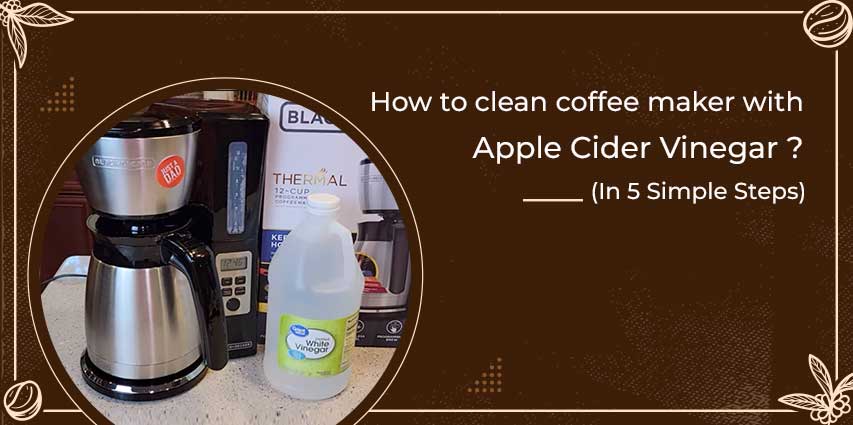
Yes, apple cider vinegar can help clean some coffee makers, but plain white vinegar or the cleaner listed in your coffee maker manual is usually the safer and more predictable choice.
If you are cleaning a coffee maker in the United States, the first thing to check is the care guide for your exact model. Many coffee maker manufacturers in the U.S. describe descaling with plain white vinegar or a branded descaling solution. That matters because coffee makers differ in their materials, filters, heating systems, and cleaning cycles.
Apple cider vinegar is acidic, so it can help loosen mineral deposits inside a coffee maker. However, it also contains compounds that give it its color and flavor. Those extra compounds are one reason I would not treat apple cider vinegar as a direct substitute for white vinegar when the manufacturer specifically calls for white vinegar.
The safest approach is simple: check the manual first, use the recommended cleaner when one is specified, and rinse the machine thoroughly before brewing coffee. If your manual allows vinegar but does not specifically mention apple cider vinegar, white distilled vinegar is generally the more practical option.
Can You Safely Use Apple Cider Vinegar in a Coffee Maker?
You can use apple cider vinegar in some coffee makers, but I would not call it universally safe for every model. The key issue is not simply whether vinegar is acidic. The issue is whether the manufacturer permits vinegar for the internal cleaning or descaling process and what type of vinegar it specifies.
Apple cider vinegar contains acetic acid, the same general acid responsible for vinegar’s sour character. That acidity can help loosen calcium and mineral deposits left behind by water. However, apple cider vinegar is not as clean and neutral in composition as distilled white vinegar.
For a U.S. household coffee maker, the best order of preference is to follow the exact manual first, use the manufacturer’s descaler when required, and use plain white vinegar only when the manufacturer allows it. Apple cider vinegar should be considered a fallback only when the machine’s instructions support vinegar cleaning.
Source: coffeenutty.com
Why it may work
The acidity in vinegar can help loosen mineral deposits that build up inside water pathways and heating components.
Why it is not the first choice
Apple cider vinegar contains color and flavor compounds that can leave more odor, taste, or residue than plain distilled white vinegar.
What determines safety
The coffee maker manufacturer’s cleaning instructions matter more than a general vinegar recipe found online.
What Does Vinegar Actually Clean?
The main target is mineral scale. Water can leave calcium and other mineral deposits inside a coffee maker, especially when the machine is used often or the household has hard water.
Vinegar does not replace normal washing. Coffee oils, grounds, dust, and removable parts still need regular cleaning with water and mild dish soap when the manufacturer permits it.
Mineral scale
Acidic cleaning solutions can help loosen calcium and mineral deposits inside the water path.
Coffee residue
Coffee oils and grounds should be handled through normal cleaning of removable parts rather than relying on vinegar alone.
Why White Vinegar Is Usually Better Than Apple Cider Vinegar
Plain distilled white vinegar is the type commonly named in coffee maker cleaning instructions. That is useful because it gives you a known cleaning method without the extra color and flavor compounds found in apple cider vinegar.
For example, current cleaning guidance from several U.S. coffee maker manufacturers uses plain white vinegar for descaling or internal cleaning. Some instructions specify a measured amount of vinegar followed by two or more cycles of clean water. Other machines call for a proprietary descaling solution instead.
This difference is important. A general internet cleaning recipe cannot override a model-specific instruction. If your manual says to use a branded descaler, use that product rather than assuming apple cider vinegar is an acceptable substitute.
Source: cleanerprofy.com
White distilled vinegar
Usually clear, simple in composition, and commonly specified in coffee maker cleaning instructions.
Apple cider vinegar
Acidic and potentially useful for mineral buildup, but it contains additional compounds and is less commonly specified by coffee maker manufacturers.
Manufacturer descaler
The preferred option when the manual specifically requires or recommends a dedicated descaling product.
Can Apple Cider Vinegar Damage a Coffee Maker?
There is not a sound basis for saying that apple cider vinegar will damage every coffee maker, just as there is not a sound basis for saying it is safe for every model. Materials, seals, coatings, filters, pumps, and cleaning programs vary.
The bigger practical concern is using an unapproved cleaner or leaving an acidic solution in the machine longer or at a higher concentration than the manual allows. Follow the manufacturer’s process instead of increasing the amount or contact time.
Do not make it stronger
More vinegar does not automatically mean better cleaning. Use the concentration and cycle specified for your machine.
Do not leave it sitting indefinitely
Follow the manufacturer’s stated contact time and cleaning cycle.
How to Clean a Coffee Maker With Vinegar Safely
If your coffee maker’s instructions permit vinegar cleaning, the safest process is controlled and simple. The exact amount should come from the manual because reservoirs and cleaning programs vary.
Before starting, empty the coffee maker, remove any coffee grounds, and remove a water filter if the manual tells you to do so. Do not put vinegar into a machine that specifically says to use a dedicated descaling solution instead.
Source: pinterest.com
1. Check the manual
Confirm that vinegar is permitted and identify the recommended type, amount, and cleaning cycle.
2. Remove coffee and filters
Empty the basket and carafe. Remove a replaceable water filter if the cleaning instructions require it.
3. Add the approved solution
Use the exact vinegar mixture or descaling solution specified for your coffee maker.
4. Run the cleaning cycle
Use the machine’s CLEAN or DESCALE function when available. Otherwise, follow the manual’s normal brewing procedure for cleaning.
5. Allow the required contact time
If the instructions tell you to pause the cycle, wait for the specified period rather than guessing.
6. Empty and rinse
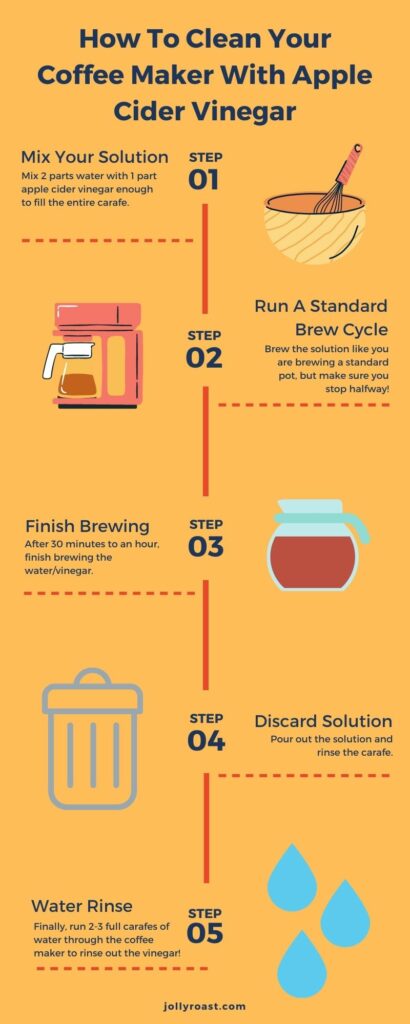
Discard the cleaning solution and rinse the carafe or collection container.
7. Run clean water
Run the number of fresh-water cycles specified by the manufacturer. Several U.S. coffee maker instructions call for two or three clean-water cycles.
What If You Specifically Want to Use Apple Cider Vinegar?
If the manual simply allows vinegar and does not prohibit apple cider vinegar, it may be possible to use it, but I would still choose plain white distilled vinegar when available. Apple cider vinegar can leave a stronger smell or taste, so thorough rinsing becomes especially important.
If the manual specifically says plain white vinegar, treat that instruction as a limit and use white vinegar instead. If it says to use a manufacturer-approved descaler, follow that requirement.
Use the manual first
Do not substitute apple cider vinegar when the manufacturer specifies another cleaning product.
Keep the mixture controlled
Do not improvise a concentrated solution or extend the cleaning time.
Rinse thoroughly
Run clean-water cycles until the vinegar smell and taste are gone.
How Much Apple Cider Vinegar Should You Use?
There is no single safe amount of apple cider vinegar for every coffee maker. Reservoir sizes, internal designs, cleaning programs, and manufacturer instructions differ, so a universal recipe would be misleading.
As a useful reference point, some U.S. coffee maker instructions for plain white vinegar use measured mixtures such as equal parts vinegar and water, while other machines specify a particular volume of undiluted white vinegar. Those instructions are model-specific and should not be converted into an apple cider vinegar recipe without checking the manual.
If your machine does not provide a vinegar cleaning procedure, the safest next step is to use the manufacturer’s recommended descaling product or obtain the correct manual for your model.
Source: jollyroast.com
Small coffee maker
Use the manufacturer’s measured quantity rather than estimating from the reservoir size.
Large drip machine
Do not assume a full reservoir should contain a full bottle of vinegar. Follow the documented cleaning ratio or volume.
Single-serve machine
Follow the model’s cleaning or descaling instructions because internal water paths can differ substantially.
Why More Vinegar Is Not Better
A stronger solution may produce a stronger smell and can make rinsing more difficult. The goal is to follow a tested cleaning procedure, not to maximize acidity.
If mineral buildup remains after a correct cleaning cycle, check the manual for a repeat procedure or a dedicated descaling product instead of repeatedly increasing vinegar concentration.
Correct concentration
Use the manufacturer’s stated mixture when vinegar cleaning is approved.
Correct contact time
Keep the solution in the machine only as long as the instructions direct.
How to Know the Coffee Maker Is Properly Rinsed
The machine should be rinsed until there is no noticeable vinegar smell or taste in the water coming through the system. A single rinse may not be enough, particularly after a strong-smelling cleaning solution.
Manufacturers commonly instruct users to run two or three cycles of clean water after vinegar cleaning. Follow your model’s instructions, and use additional clean-water cycles if a vinegar odor or flavor remains.
Do not make coffee immediately if the first rinse still smells strongly of vinegar. The goal is a clean internal water path with no noticeable cleaning-solution residue.
Source: mtnlyoncafe.com
Check the smell
The water should not have a strong vinegar odor after the required rinse cycles.
Check the taste
If a test of plain brewed water has a noticeable vinegar flavor, continue rinsing before making coffee.
Check the machine
If the coffee maker still shows a cleaning or descale warning, follow the model-specific troubleshooting instructions.
What If Coffee Tastes Like Vinegar After Cleaning?
The most likely practical explanation is that the cleaning solution has not been fully flushed from the internal water path. Run additional clean-water cycles and empty the carafe between cycles.
If the taste remains after the manufacturer’s recommended rinsing procedure, stop using the machine and check the manual for model-specific cleaning instructions. A persistent problem may require a different descaling method or service.
Run another water cycle
Use clean water only and repeat until the odor and taste disappear.
Wash removable parts
Clean the carafe, basket, lid, and other removable components according to the manufacturer’s care instructions.
Common Mistakes to Avoid When Cleaning With Vinegar
Most problems come from treating every coffee maker as if it uses the same cleaning method. A drip coffee maker, pod brewer, espresso machine, and specialty brewer may have very different internal systems.
A safe cleaning routine also means separating internal descaling from everyday washing. Vinegar may help with mineral scale, but it does not remove every type of coffee residue from removable parts.
Source: perfectcoffeemakers.com
Skipping the manual
Do not assume that a vinegar recipe found online applies to your exact coffee maker.
Using too much vinegar
A stronger solution is not automatically more effective and can make rinsing harder.
Skipping rinse cycles
Residual vinegar can affect the smell and flavor of your next coffee.
Mixing cleaners
Never mix vinegar with bleach or other household cleaning chemicals.
Ignoring removable parts
Wash removable components separately according to the manufacturer’s instructions.
Cleaning while powered or hot
Unplug and allow the machine to cool when the manufacturer’s cleaning instructions call for it.
Never Mix Vinegar With Bleach
Vinegar and bleach should never be mixed. The combination can produce hazardous chlorine gas. Use one cleaning method at a time, rinse the machine thoroughly, and never combine household cleaning chemicals in the reservoir.
Also keep the coffee maker’s electrical base, plug, and cord away from water unless the manufacturer specifically provides instructions for cleaning those components.
Use one cleaner at a time
Do not combine vinegar with bleach, ammonia, or other household cleaners.
Protect electrical components
Do not immerse the coffee maker base, cord, or plug in water.
Frequently Asked Questions
Q
Can I use apple cider vinegar instead of white vinegar to clean my coffee maker?
Possibly, but only if your coffee maker’s instructions allow vinegar and do not require plain white vinegar or a dedicated descaler. White distilled vinegar is the more predictable option.
Q
Will apple cider vinegar remove mineral buildup from a coffee maker?
Its acidity can help loosen mineral deposits, but the effectiveness and approved use depend on the coffee maker. Follow the manufacturer’s cleaning procedure rather than relying on a general vinegar recipe.
Q
How many times should I rinse a coffee maker after vinegar cleaning?
Follow your model’s instructions. Many U.S. coffee maker guides call for two or three clean-water cycles, and additional cycles may be useful if a vinegar smell or taste remains.
Q
Can apple cider vinegar damage a coffee maker?
There is no universal answer because coffee makers use different materials and cleaning systems. Avoid it when the manufacturer specifies another cleaner, and never use a stronger mixture than instructed.
Q
Is white vinegar better than apple cider vinegar for cleaning a coffee maker?
Usually, yes for practical cleaning because plain white vinegar is commonly specified by coffee maker manufacturers and has fewer color and flavor compounds. The exact manual still takes priority.
✦ Wrapping Up
Conclusion
So, can you use apple cider vinegar to clean a coffee maker safely? It can work as an acidic cleaner in some machines, but it should not be treated as a universal substitute for the cleaning method in your coffee maker’s manual.
For most U.S. coffee maker owners, plain distilled white vinegar is the more practical vinegar option when the manufacturer allows vinegar cleaning. Some machines instead require a dedicated descaling solution, so checking the model instructions is the safest first step.
Whichever approved method you use, remove coffee grounds, follow the correct concentration and contact time, protect the electrical parts, and run enough clean-water cycles to remove the cleaning solution before brewing coffee again.
💡 Key Takeaway
Check your coffee maker manual first. If vinegar cleaning is approved, use the exact specified method and prefer plain white distilled vinegar over apple cider vinegar unless your manufacturer specifically permits the latter.