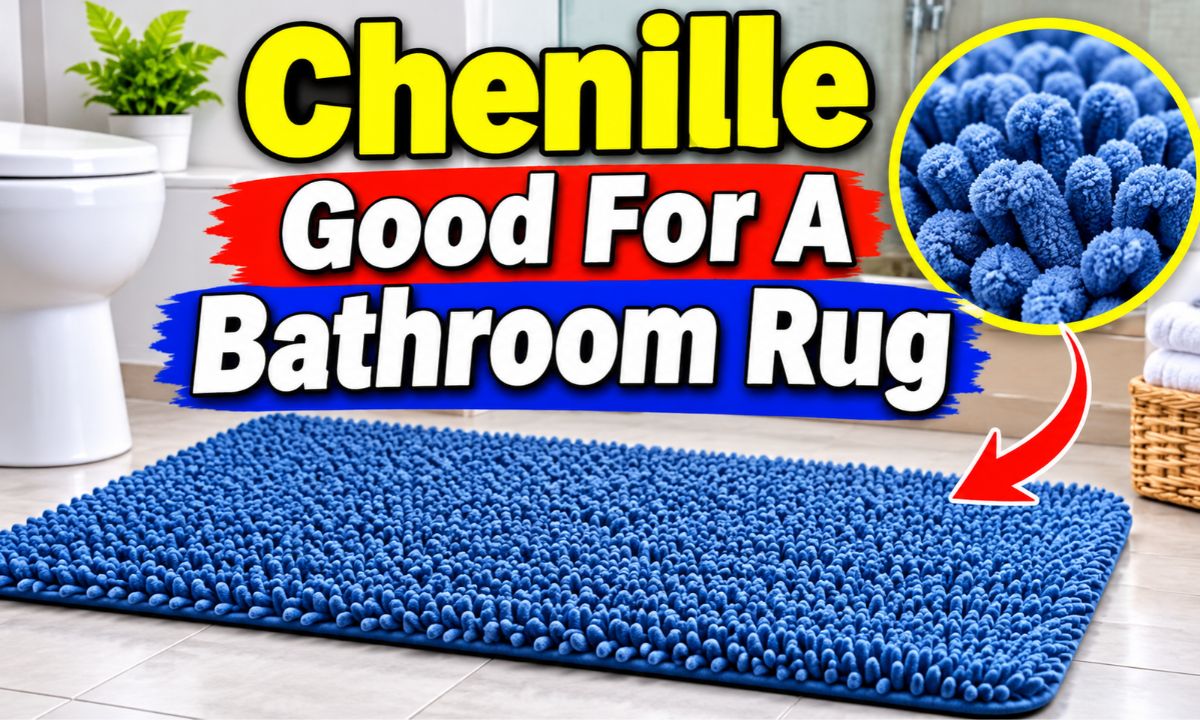
Yes, chenille is a good material for a bathroom rug because it feels soft, absorbs water, and adds comfort underfoot. However, its drying time, backing, and cleaning needs matter.
In American homes, a bathroom rug does more than decorate the space. It gives your feet a soft place to land after a shower, helps catch water near the tub, and makes cold tile floors more comfortable. Whether you live in a small apartment in New York, a family home in Texas, or a house in Florida, the right bath rug can make your daily routine easier.
Chenille is a popular choice for this job. Its soft, raised fibers create a plush surface that feels comfortable against bare feet. Many chenille bath rugs also use microfiber, which can absorb water and help keep bathroom floors from getting wet. Still, not every chenille rug performs the same way. Some dry slowly, collect dirt, or lose their shape after repeated washing.
Before choosing one, it helps to understand what chenille is, how it handles water, and what makes one design better than another. The backing is also important because a soft rug is not useful if it slides across a smooth bathroom floor. This guide explains the benefits, drawbacks, care needs, and practical features to check before buying.
What Is Chenille, And Why Is It Used For Bathroom Rugs?
Chenille is a type of yarn known for its soft, fuzzy surface. The word describes the yarn’s construction and appearance rather than one single fiber. Manufacturers can make chenille using polyester, cotton, rayon, or other fibers.
The yarn has short fibers that stand out around a central core. These fibers give chenille its soft feel and textured look. When manufacturers use chenille yarn to make a bath rug, they create a surface that feels pleasant under bare feet.
Many modern bathroom rugs use polyester microfiber chenille. These rugs often have thick strands that look like small noodles. The raised fibers create many contact points for water and help cushion your feet.
Soft surface
The fuzzy pile feels gentle on bare feet and makes hard bathroom floors more comfortable.
Textured design
The raised fibers give the rug a plush appearance and add texture to a plain bathroom.
Different fiber options
Chenille can be made from different materials, so the fiber label matters when comparing products.
Flexible construction
Chenille rugs come in different pile heights, shapes, sizes, and backing designs.
Is Chenille The Same As Microfiber?
No. Chenille describes a yarn construction, while microfiber describes very fine synthetic fibers. A chenille rug may use microfiber, but not every chenille rug is a microfiber rug.
This difference matters when shopping. A polyester microfiber chenille mat may offer a soft feel and good water pickup. A cotton chenille rug has different care and drying needs. Check the material label instead of relying only on the word chenille.
Microfiber chenille
Often used for plush, noodle-style bath mats. It can collect moisture across its raised surface.
Cotton chenille
Offers a natural fiber option but may need more time to dry, depending on its thickness and weave.
Is Chenille Good For A Bathroom Rug?
Yes, chenille is a good choice for many bathrooms. It combines a soft surface with useful moisture absorption, making it comfortable to use outside a shower or bathtub.
Its main strength is the feel underfoot. When you step onto a thick chenille mat after a shower, the raised fibers cushion your feet instead of leaving them on cold, hard tile. This can make a small comfort difference that you notice every day.
Chenille can also collect water from your feet. Its fibers provide a textured surface that catches moisture as you step onto the rug. This helps reduce water left on the floor, although it does not make a bathroom waterproof.
However, chenille is not automatically the best material for every home. A thick rug can stay damp if you leave it flat on the floor all day. A poorly made backing can also crack, peel, or lose its grip.
Best for comfort
Choose chenille if you want a soft, cushioned surface beside your bathtub or shower.
Best for moisture pickup
A well-made microfiber chenille rug can collect water from wet feet after bathing.
Less suitable for damp rooms
A very thick mat may remain wet longer in a bathroom with poor ventilation.
Requires regular care
The pile and backing need proper cleaning and drying to remain in good condition.
When Chenille Makes The Most Sense
Chenille works well beside a shower, bathtub, or bathroom vanity. These are places where people often stand with bare or damp feet and appreciate a soft surface.
It can also suit a guest bathroom. A clean, attractive chenille mat adds comfort without requiring a major change to the room. Choose a size that fits the available floor space and does not block doors or walkways.
Shower entrance
A chenille mat can collect water from your feet as you leave the shower.
Bathtub area
Its soft pile provides a comfortable place to stand after a bath.
Vanity area
A smaller rug can make daily tasks such as brushing your teeth or washing your face more comfortable.
Benefits Of Using A Chenille Bathroom Rug
The biggest advantages of chenille are comfort, texture, and moisture pickup. These features make it a practical option for people who want more than a decorative bathroom floor covering.
Still, each benefit depends on the rug’s construction. Fiber type, pile density, backing, and thickness can change how a mat performs. Here are the main reasons people choose chenille.
1. Soft And Comfortable Underfoot
Chenille has a fuzzy surface that feels gentle against bare feet. Its raised pile also provides a cushioned feel on hard floors. This is useful during cold mornings or after a warm shower.
2. Good Water Absorption
Many microfiber chenille rugs can collect water from wet feet. Their raised fibers provide a large surface for moisture pickup. This can help reduce small puddles around a shower or tub.
3. Attractive Appearance
Chenille comes in many colors and textures. You can find neutral shades, darker colors, and plush designs that work with different bathroom styles.
4. Comfortable On Cold Floors
A thick chenille mat adds a layer between your feet and cold tile. It can make getting ready in the morning more pleasant.
5. Available In Many Sizes
Manufacturers offer small mats for sinks, larger rugs for shower exits, and longer designs for double vanities. This makes it easier to fit different bathroom layouts.
6. Easy Routine Cleaning
Many polyester chenille bath mats are machine washable. This can make regular care simple when the product label allows machine washing.
7. Can Help Protect The Floor From Small Splashes
A chenille rug can catch some water before it spreads across the bathroom floor. You should still wipe up larger spills and standing water promptly.
Does Chenille Feel Better Than Flat Cotton?
That depends on what you value most. Chenille usually feels plusher because its fibers stand above the base of the rug. Flat cotton mats often feel thinner and less cushioned.
If you like stepping onto a soft surface after a shower, chenille may be more comfortable. If you prefer a simple, lightweight rug that is easy to handle, flat cotton may suit you better.
Choose chenille
When softness, cushioning, and a plush appearance are your main priorities.
Choose flat cotton
When you prefer a simpler surface and want to avoid a thick pile.
Drawbacks Of Chenille Bathroom Rugs
Chenille has several useful features, but it also has limitations. Its thick surface can hold moisture, collect hair, and need more attention than a thin woven mat.
These drawbacks do not make chenille a poor choice. They simply mean you should match the rug to your bathroom and cleaning routine.
Slow Drying In Some Bathrooms
Thick chenille fibers can hold moisture inside the pile. If the bathroom has poor airflow, the mat may stay damp between uses.
Hair And Dirt Can Collect
The raised fibers can trap loose hair, dust, and small pieces of lint. Regular shaking and washing help remove this buildup.
Pile Can Flatten
Repeated foot traffic and improper washing may cause the fibers to lose their fluffy shape. Some mats recover after gentle cleaning and shaking, but permanent wear is possible.
Backing Can Wear Out
Rubber, latex, PVC, or other backing materials can break down with age and unsuitable heat exposure. A damaged backing may cause the rug to slide.
Not Ideal For Every Floor
A rug with a rough or unsuitable backing may damage some floor finishes. Always check the manufacturer’s floor compatibility advice.
Why Does A Chenille Rug Stay Wet?
A chenille rug may stay wet because its pile holds water after repeated use. A thick mat can collect more moisture than it can release quickly, especially when it sits flat against a cool floor.
Poor ventilation makes the problem worse. A bathroom without a working exhaust fan or open window may take longer to dry after a shower. Leaving the mat in the same place can also limit airflow beneath it.
To help, hang the mat over a suitable rack after use when its construction allows it. Keep the bathroom ventilated and let the rug dry fully before placing it back on the floor.
Check the room
Use the bathroom exhaust fan during and after showers when available.
Lift the rug
Allow air to reach both sides instead of leaving the wet mat flat on tile.
Reduce water exposure
Use a shower curtain or door properly to limit water splashes outside the shower.
Is Chenille More Absorbent Than Other Bathroom Rug Materials?
Chenille can absorb water well, especially when it uses polyester microfiber. However, it is not automatically more absorbent than cotton, memory foam, or other bathroom rug materials.
The result depends on the fiber, pile structure, weight, and construction. A thick rug may hold a lot of water but also take longer to dry. A thinner mat may hold less water but dry sooner.
The best choice is the one that balances water pickup with drying time. A bathroom rug should collect moisture without staying wet for too long.
Chenille Vs. Cotton Bathroom Rugs
Chenille usually offers a plusher feel than a basic flat cotton mat. Microfiber chenille can also pick up water from wet feet effectively. Cotton, however, is a familiar natural fiber and comes in many easy-care woven and terry designs.
A thick cotton bath rug can also take time to dry. Therefore, do not assume that every cotton rug dries faster than every chenille rug. Compare the thickness, care label, and construction.
Chenille advantage
A soft, raised pile that feels comfortable and can collect moisture.
Cotton advantage
A natural fiber option with many simple woven and terry designs.
Chenille Vs. Microfiber Bathroom Rugs
These terms can overlap. Many chenille rugs are made from microfiber, so the comparison is not always between two separate materials.
A flat microfiber rug may have a different feel from a noodle-style chenille rug. The flat design may be easier to vacuum or shake, while the chenille design may feel softer and more cushioned.
Chenille microfiber
Best when you want a soft, raised surface.
Flat microfiber
Worth considering when you prefer a lower pile that is easier to manage.
Chenille Vs. Memory Foam Bathroom Rugs
Memory foam rugs are designed to provide a cushioned feel through a foam layer. Chenille gets much of its softness from its raised fibers instead.
Memory foam can feel supportive, but some designs need careful cleaning and longer drying. Chenille may be easier to wash when the full mat is machine washable. Always check the care instructions.
Choose chenille
If you want a soft fabric surface and a washable design.
Choose memory foam
If you prefer a foam-based cushioned feel and can follow its specific care requirements.
How To Choose A Good Chenille Bathroom Rug
The best chenille bathroom rug is not always the thickest or softest one. You should look at its backing, material, size, wash instructions, and ability to dry in your bathroom.
A useful way to shop is to check the product from top to bottom. The surface gives you comfort, but the backing and construction affect how the mat behaves during everyday use.
1. Check The Material
Look for the exact fiber content. Polyester microfiber is common in plush chenille bath mats, while cotton chenille offers a different feel and care profile.
2. Inspect The Backing
Look for a suitable nonslip backing and clear care instructions. A mat without grip may need a compatible rug pad.
3. Consider The Thickness
Choose a pile height that feels comfortable without blocking doors or creating a raised edge that may catch your feet.
4. Read The Washing Instructions
Check whether the complete rug can go in the washing machine and whether the backing permits tumble drying.
5. Pick The Right Size
Measure the area before shopping. The rug should fit the space without folding, bunching, or blocking bathroom doors.
6. Check The Edges
Look for secure seams and evenly attached fibers. Loose edges or heavy shedding may shorten the useful life of the rug.
Which Backing Is Best For A Chenille Bath Mat?
The backing should help keep the mat in place without damaging the floor. Common options include latex, rubber, PVC, and thermoplastic rubber. Each design has different care and wear characteristics.
Do not judge a backing only by the product’s nonslip claim. A rug can lose grip when the underside becomes dirty, wet, cracked, or worn. Follow the floor and product care instructions.
Some manufacturers recommend air drying even when the top fabric can tolerate a low dryer setting. This is why the backing’s care requirements should guide your decision.
Rubber or latex
Can provide grip, but heat and age may cause deterioration. Follow the manufacturer’s drying instructions.
PVC
Common in bath mat construction. Check its wash and heat limits.
TPR
Used in some nonslip designs. Do not assume every TPR backing is dryer safe.
Fabric backing
May need a separate compatible nonslip pad, especially on smooth tile.
What Size Chenille Rug Should You Buy?
A small rug can work in front of a bathroom sink, while a larger design may cover the shower exit. A long runner can suit a double vanity if the bathroom has enough open floor space.
Measure the floor area and check the space beneath doors. Leave enough room for safe walking and avoid placing the rug where its edges can fold.
Small bathroom
Choose a compact mat that fits near the shower or sink without filling the entire walkway.
Large bathroom
Consider a larger mat or runner for the main drying area.
Double vanity
A longer rug can cover the shared standing area if it does not interfere with cabinet doors.
How To Wash And Maintain A Chenille Bathroom Rug
Regular cleaning helps a chenille bathroom rug stay fresh and comfortable. It also removes hair, dust, skin residue, and soap that can build up in the pile.
Before washing, check the care label. A polyester chenille mat and a cotton chenille mat may have different washing needs. The backing can also limit the water temperature and drying method.
Step 1: Shake Out Loose Dirt
Take the rug outside or to a suitable area and shake away loose hair, dust, and debris.
Step 2: Check The Backing
Look for cracks, peeling, sticky areas, or loose pieces. A damaged backing may not be suitable for machine washing.
Step 3: Use A Gentle Wash
If the label permits machine washing, use the recommended water temperature, a gentle cycle, and mild detergent.
Step 4: Skip Fabric Softener
Fabric softener can leave a coating on fibers and reduce moisture pickup. Avoid it unless the manufacturer specifically recommends it.
Step 5: Dry Carefully
Follow the label. Air drying is a suitable choice for many rugs with nonslip backing. Use a dryer only when the complete product permits it.
Step 6: Restore The Pile
Once dry, shake the rug gently to loosen and lift the fibers.
Can You Put A Chenille Bathroom Rug In The Dryer?
Sometimes, yes. Some polyester chenille bath mats allow low-heat tumble drying, but others require air drying because of their backing.
The backing is often the limiting part. High heat can damage rubber, latex, or other bonded materials. This can lead to cracking, peeling, or loss of grip.
If the care label says to air dry, do not use the dryer. Place the mat over a suitable drying rack and allow both sides to dry fully.
Low heat
Use only when the manufacturer allows it for the complete mat.
Air dry
A sensible option for many backed rugs when the label does not permit machine drying.
Avoid high heat
It may flatten the pile or damage the backing.
How Often Should You Wash A Chenille Bath Rug?
A practical starting point is to wash a regularly used bath mat about once a week or every two weeks. The right schedule depends on how many people use the bathroom, how wet the rug gets, and how quickly it dries.
A shared family bathroom may need more frequent cleaning than a guest bathroom. Wash it sooner if you notice a musty smell, visible dirt, stains, or persistent dampness.
Weekly cleaning
Consider this schedule for a heavily used family bathroom.
Every one to two weeks
May work for a less heavily used bathroom when the mat dries fully between uses.
Extra cleaning
Wash sooner after spills, visible dirt, or other contamination, following the product label.
Does Chenille Bathroom Rug Hold Bacteria Or Develop Mold?
Chenille is not automatically antibacterial or mold resistant. Like other fabric bathroom rugs, it can collect moisture and dirt. If it remains damp for long periods, it can develop an unpleasant smell and may support microbial growth.
The material alone does not determine hygiene. How often you wash the mat, how well it dries, and how much moisture reaches it all matter.
A clean chenille rug that dries fully between uses is easier to maintain than one that stays wet on the floor. However, no ordinary fabric mat should be treated as a substitute for regular bathroom cleaning.
Keep it dry
Lift the mat after use when needed so air can reach the underside.
Wash it regularly
Use the care instructions to remove dirt and moisture-related buildup.
Ventilate the room
Use an exhaust fan or open a suitable window after showering.
Replace damaged mats
Do not keep using a mat with persistent odor, severe backing damage, or mold that cannot be removed through proper cleaning.
Why Does A Chenille Bathroom Rug Smell Musty?
A musty smell often points to moisture that has not dried fully. Water can remain inside a thick pile or beneath the rug, where airflow is limited.
Start by checking the underside and the floor. Wash the rug according to its label, clean the floor, and dry both surfaces completely before putting the mat back.
If the smell returns quickly despite proper cleaning and drying, inspect the backing and consider replacing the mat. A persistent odor may mean moisture or contamination remains trapped in the material.
Wet underside
Lift the rug and check whether the floor below it remains damp.
Poor airflow
Improve bathroom ventilation and dry the rug in an open area.
Dirty pile
Wash the mat with a suitable detergent and follow its care instructions.
Is Chenille Safe For Bathroom Floors?
Chenille can be suitable for bathroom floors, but the surface fabric does not make a rug slip resistant. Safety depends on the backing, the condition of the floor, and whether the mat stays flat.
Water beneath a rug can reduce its grip. Even a mat advertised as nonslip may move if the floor is dirty, wet, or unsuitable for its backing.
This matters on smooth ceramic tile, porcelain tile, and other hard surfaces. Check the rug before every use and do not assume that a nonslip label guarantees that it cannot move.
Choose suitable backing
Look for a product designed for your floor type.
Keep the floor dry
Dry the surface beneath the rug before placing it down.
Check for movement
Test the mat carefully before stepping onto it.
Replace worn backing
Remove a rug from use if its backing cracks, peels, or loses its grip.
Is Chenille Good For Seniors?
A chenille rug can feel comfortable for older adults, but softness should not be confused with safety. A thick pile or raised edge may create a tripping concern for someone with limited balance or mobility.
For a senior’s bathroom, prioritize a flat, stable mat with a backing suitable for the floor. Keep the walkway clear and make sure the mat does not bunch or move. A qualified occupational therapist can help assess specific bathroom safety needs.
Avoid excessive thickness
Choose a low-profile design that does not create a large raised edge.
Check the grip
Make sure the mat remains stable on the actual bathroom floor.
Keep walkways clear
Do not place loose rugs where someone must step over them.
Can You Use A Chenille Rug Inside The Shower?
No. A regular chenille bathroom rug is designed for use outside the shower or bathtub, not as a shower floor mat.
The pile can become saturated, and the backing may not be designed for constant water exposure. Use a shower mat specifically designed for wet, standing-water conditions instead.
Outside the shower
Use a regular chenille bath rug on a suitable dry bathroom floor.
Inside the shower
Choose a purpose-made wet-area mat designed for that use.
Who Should Choose Chenille And Who Should Avoid It?
Chenille is a strong option for people who value softness and a plush surface. It is especially useful in bathrooms where a mat can dry between uses.
It may not suit people who want a very thin, low-maintenance rug or those whose bathrooms remain damp throughout the day. The right decision depends on your room, habits, and cleaning routine.
Choose chenille if you want softness
Its raised pile gives your feet a comfortable place to land after bathing.
Choose chenille if you need moisture pickup
Many microfiber versions can collect water from wet feet.
Consider another material if drying is difficult
A thinner, lighter rug may be easier to dry in a poorly ventilated bathroom.
Consider another design if safety is a concern
A low-profile, stable mat may be more suitable than a thick chenille rug for some users.
A Simple Bathroom Rug Decision Guide
Use this comparison to narrow your choice. It is a general material guide, not a claim that every product made from one fiber performs the same way.
Softness
Chenille is a good option when a plush feel matters most.
Simple construction
Flat cotton is worth considering if you prefer a lighter surface.
Cushioning
Memory foam may suit people who prefer a foam-based feel.
Low pile
A thin woven rug may be easier to handle and dry.
Common Mistakes To Avoid When Buying A Chenille Bath Rug
A few small shopping mistakes can make a chenille rug less useful. Checking the full construction before buying helps prevent problems with cleaning, drying, and floor safety.
Buying Only For Appearance
A beautiful rug may still have poor backing or unsuitable washing instructions. Check the practical features first.
Assuming Every Chenille Rug Is Machine Washable
Some products have delicate fibers or backing that cannot handle a washing machine. Follow the care label.
Choosing The Thickest Available Rug
More pile can feel comfortable, but it may also hold more moisture and take longer to dry.
Ignoring The Underside
The backing has a major effect on grip and maintenance. Inspect it before buying and during regular cleaning.
Using Too Much Detergent
Excess detergent can leave residue in the fibers. Use the recommended amount.
Using High Dryer Heat Without Checking
High heat can damage some backings and flatten the pile. Check the full product’s instructions first.
Leaving The Rug Wet On The Floor
A wet mat can keep the floor beneath it damp. Lift it and allow both surfaces to dry.
Research Findings And Next-Question Gap Map
The main reader question is whether chenille works as a bathroom rug. Product information and care guidance support a qualified yes: chenille can provide a soft, moisture-catching surface, but the full product construction determines how well it works.
The reviewed pages include product descriptions from MUJI USA, Nestl, Costco, and Gorilla Grip, along with a general chenille rug guide from Chenille.org. They discuss softness, water pickup, backing, and washing, but product claims should not be treated as independent performance tests.
The useful distinction is between the chenille surface and the complete bath mat. A soft pile does not establish that the backing is safe for every floor, and a washable top does not prove that the whole mat can go in a hot dryer.
Reviewed page: MUJI USA
https://www.muji.us/products/chenille-bath-mat-14-2-x-23-6-jjae5a6a. The listing identifies a 100% cotton chenille mat and warns that it has no anti-slip protection. It also advises washing before first use.
Reviewed page: Nestl
https://nestl.com/products/chenille-bath-mat. The product listing describes polyester pile, moisture absorption, PVC backing, and machine-care instructions. These are manufacturer claims, not independent comparative tests.
Reviewed page: Costco
https://www.costco.com/p/-/chenille-noodle-bath-mat/4000279841. The listing identifies a polyester chenille pile, anti-slip backing, and cold gentle machine washing.
Reviewed page: Gorilla Grip
https://gorillagrip.com/products/chenille-bath-rug. The product page describes a thick chenille surface, textured backing, and care instructions. Its performance statements remain manufacturer claims.
Reviewed page: Chenille.org
https://chenille.org/chenille-rug/. The guide discusses raised pile, moisture pickup, pile flattening, and backing checks. Its general care advice should still be checked against the specific rug label.
Next-Question Gap Map
The following questions are inferred next needs based on the main buying and maintenance decision. They are not presented as verified search-volume findings.
Does a chenille mat dry quickly?
Reader stage: after purchase. Basis: inferred next need. Reviewed coverage: partial. Reader benefit: explains why thickness and ventilation matter. Placement: drying and maintenance sections.
Can every chenille rug go in the dryer?
Reader stage: maintenance. Basis: inferred next need. Reviewed coverage: partial. Reader benefit: prevents backing damage. Placement: washing and drying section.
Is chenille safe for seniors?
Reader stage: choosing a mat. Basis: inferred next need. Reviewed coverage: not fully addressed across the inspected product listings. Reader benefit: highlights pile height, edges, and floor grip. Placement: bathroom safety section.
Why does a chenille mat smell musty?
Reader stage: troubleshooting. Basis: inferred next need. Reviewed coverage: shallow in the inspected product pages. Reader benefit: gives practical drying and cleaning steps. Placement: hygiene section.
Does chenille need a separate rug pad?
Reader stage: purchase and setup. Basis: inferred next need. Reviewed coverage: partial. Reader benefit: clarifies the difference between backed and unbacked mats. Placement: backing section.
Evidence Limits
The reviewed material is mainly product documentation and editorial care guidance. No controlled side-by-side laboratory test of chenille, cotton, and memory foam bath rugs was established for this article.
Actual absorbency, drying time, shedding, and useful life vary by product. These should not be assigned universal measurements without a documented test method and comparable samples.
Documented
The named product listings identify their stated fibers, backing types, and care instructions.
Analysis
A mat’s thickness, backing, and drying environment affect its practical usefulness.
Not established
No universal claim that chenille absorbs more water or lasts longer than every competing bathroom rug material is supported.
Frequently Asked Questions
Q
Is chenille a good material for a bathroom rug?
Yes. Chenille is a good option for many bathroom rugs because it offers a soft surface and can absorb moisture from wet feet. It works best when the mat has suitable backing and can dry fully between uses.
Q
Does chenille absorb water?
Yes, many chenille bath mats absorb water, especially those made with polyester microfiber. Their raised fibers help collect moisture from your feet. The actual amount depends on the fiber, pile, and rug construction.
Q
Does chenille dry faster than cotton?
Not always. A thin chenille rug may dry faster than a thick cotton rug, while a dense chenille mat may hold moisture for longer. Fiber type, thickness, airflow, and room humidity all affect drying time.
Q
Can chenille bathroom rugs be machine washed?
Many can, but you should check the care label first. Use the recommended temperature and cycle. Avoid fabric softener unless the manufacturer permits it, and follow the backing’s drying restrictions.
Q
Is chenille better than microfiber for a bath mat?
The comparison can be misleading because many chenille bath mats are made from microfiber. A noodle-style chenille mat offers a raised, plush surface, while flat microfiber may have a lower profile and different care needs.
Q
Does chenille hold odors?
Chenille can develop odors if it stays damp or collects dirt. Regular washing, good bathroom ventilation, and complete drying help reduce this problem. Replace a mat if persistent odors remain after proper care.
Q
Is chenille good for hardwood bathroom floors?
It can work if the backing is approved for the floor finish and the rug does not trap moisture underneath. Keep the floor dry and check the manufacturer’s instructions. Do not leave a wet mat sitting on hardwood.
Q
How long does a chenille bathroom rug last?
There is no reliable universal lifespan. Quality, washing frequency, foot traffic, backing material, and drying habits all affect durability. Replace the rug when the pile becomes badly worn or the backing cracks, peels, or loses grip.
Q
Can I use a chenille rug in a bathroom with no window?
Yes, but drying needs more attention. Use a working exhaust fan if available, lift the mat after use, and allow both sides to dry fully. If the bathroom stays damp, a thinner and faster-drying mat may be a better choice.
✦ Wrapping Up
Conclusion
Chenille is a good material for a bathroom rug when comfort, softness, and moisture pickup are your main priorities. Its raised fibers make it pleasant under bare feet, and many microfiber chenille designs can collect water after a shower or bath.
However, it is not the right choice for every bathroom. Thick rugs may dry slowly, the pile can collect hair and dirt, and some backing materials need special care. A mat that stays damp or slides across the floor can create more problems than it solves.
Before buying, check the fiber content, pile height, backing, size, and washing instructions. Choose a rug that fits your bathroom and your cleaning routine. With proper care and enough airflow, chenille can be a comfortable and practical addition to your bathroom.
💡 Key Takeaway
Choose a washable chenille bathroom rug with a suitable nonslip backing, a manageable pile height, and care instructions that fit your bathroom. Keep it clean, lift it when wet, and let it dry fully before using it again.