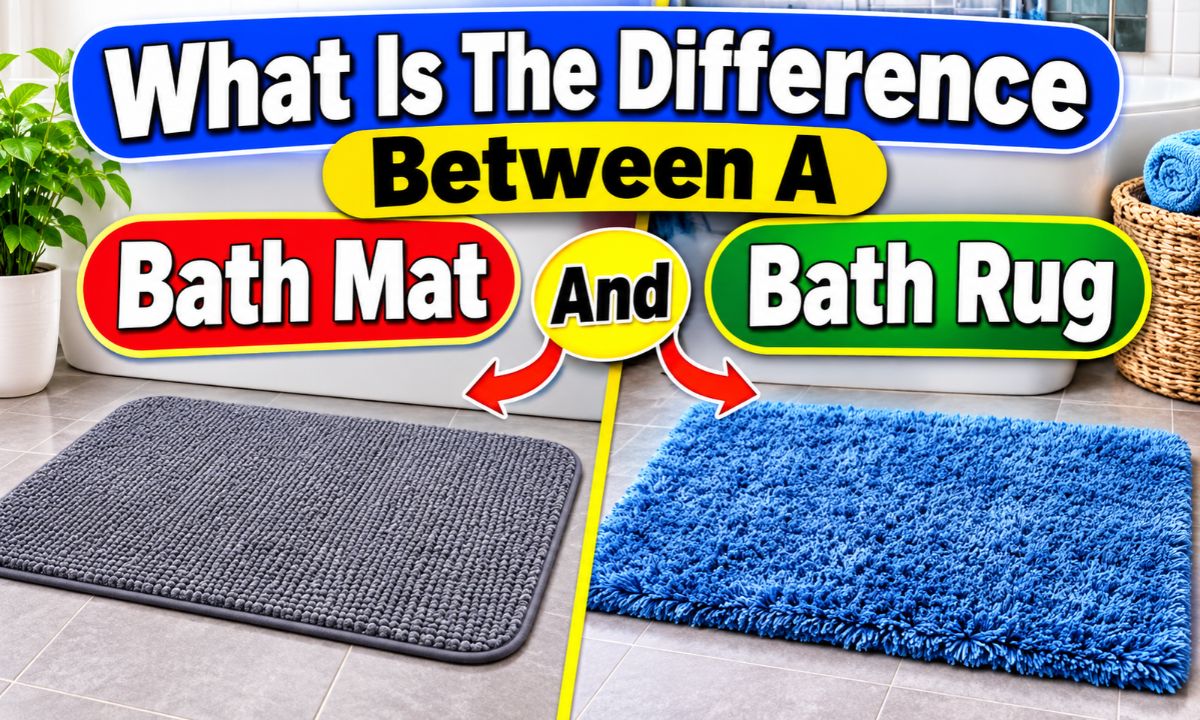
A bath mat mainly absorbs water after a shower, while a bath rug adds softness, comfort, and style to your bathroom floor.
In American homes, a bath mat is a common sight beside a bathtub or shower. It catches water from wet feet and helps keep hard bathroom floors dry. A bath rug, on the other hand, adds a soft place to stand while getting dressed, brushing your teeth, or using the vanity. Although these two items look much alike, their main jobs can be quite different.
The confusing part is that many US stores use the words bath mat and bath rug for similar products. Some bath mats are thick and fluffy, while some bath rugs are made with highly absorbent cotton. So, the name alone does not tell you how well an item will work. You should also check its fabric, backing, thickness, care label, and intended use before buying.
This guide explains the real differences, how each item works, and where to place them. You will also learn how to choose the right option for a small bathroom, a busy family bathroom, or a space where slip resistance matters. By the end, you can decide whether you need a bath mat, a bath rug, or both.
A bath mat is a floor covering designed mainly to manage water and give you a comfortable place to step after bathing. You usually place it just outside a bathtub or shower. Its job is to catch drops from your feet before they reach the rest of the bathroom floor.
Most fabric bath mats use cotton, microfiber, or another absorbent material. Some have a flat, towel-like surface, while others have loops or a short pile. Many also have a backing or other feature meant to help the mat stay in place.
A bath mat can help keep water off the floor, but it cannot guarantee that someone will not slip. Its performance depends on the material, backing, floor surface, and how well you care for it.
Source: designtobuildblog.com
Water absorption
An absorbent bath mat takes in water from wet feet and helps limit puddles around the shower or tub.
Practical design
Many bath mats have a simple shape and a surface made for regular contact with water.
Easy care
Many cotton and microfiber models can go in a washing machine, although the care label should always guide cleaning.
Daily use
A bath mat is useful in a busy bathroom where people take showers throughout the day.
Common Types of Bath Mats
Cotton bath mats are soft, absorbent, and often feel like thick towels. They are a familiar choice for everyday bathrooms and can be easy to wash. However, thick cotton can take time to dry if it stays flat on the floor.
Microfiber bath mats use fine synthetic fibers to absorb moisture. They often feel soft and may dry faster than some thick cotton designs. Actual drying time depends on the pile, backing, room airflow, and amount of water absorbed.
Rubber bath mats are a different type. Many are designed to sit inside a bathtub or shower, where suction cups or textured surfaces help provide grip. These are not the same as fabric mats placed outside the shower.
Cotton
A good option when you want a washable, absorbent surface.
Microfiber
Useful when you prefer a soft synthetic fabric and easy routine care.
Rubber
Designed for certain wet-area uses, including inside some tubs and showers. Follow the product’s placement instructions.
What Is a Bath Rug?
A bath rug is a soft floor covering that adds comfort and style to a bathroom. It often has a thicker pile than a basic towel-style bath mat. You may place one in front of a bathroom vanity, beside a sink, or in another area where people stand.
Bath rugs come in many colors, patterns, shapes, and sizes. They can help make a bathroom feel warmer and more welcoming. They also provide a softer surface than bare tile, stone, or vinyl flooring.
Some bath rugs are made to absorb water well, while others focus more on looks and comfort. A plush rug should not be assumed to handle heavy water exposure just because it is sold for bathroom use.
Source: whatsmyrugsize.com
Comfort
A thick or cushioned surface can feel pleasant under bare feet, especially on cold bathroom tile.
Style
Bath rugs offer many colors, patterns, textures, and shapes to match bathroom decor.
Floor coverage
Some designs cover a wider area and work well beside long vanities or double sinks.
Decorative use
A rug can make a bathroom feel more like a finished living space rather than a purely functional room.
Popular Bath Rug Materials
Chenille is known for its soft, raised texture. Its yarn loops create a plush feel underfoot. Chenille rugs can absorb moisture, but thick designs may hold water and need enough time to dry.
Cotton bath rugs offer a natural fabric feel and can be highly absorbent. Their care needs depend on the weave, thickness, and backing. A simple cotton rug may be easier to wash than a thick rug with a special base.
Memory foam bath rugs have a cushioned layer that compresses when you stand on them. They can feel comfortable near a sink or vanity. However, the foam and outer fabric need proper care, and not every design is suitable for a very wet shower exit.
Polyester and microfiber rugs can offer soft textures and a wide range of colors. Their water absorption and drying speed vary by construction.
Chenille
Best known for a plush, soft feel and textured appearance.
Cotton
A useful choice for comfort, moisture absorption, and washable designs.
Memory foam
Offers cushioning for people who spend time standing at a vanity.
Polyester
Provides a wide choice of styles and textures, with care needs that vary by product.
Bath Mat vs. Bath Rug: Main Differences
The main difference is the intended job. A bath mat usually focuses on water absorption and practical use near a shower or bathtub. A bath rug usually focuses on softness, appearance, and floor comfort.
However, there is no universal rule that every bath mat must be thin or every bath rug must be thick. Some products have the same fabric, size, and backing but use different names. That is why checking the actual construction is more useful than relying on the product title.
The table below compares the common features of each type. Treat these as general patterns rather than fixed rules for every product.
Source: housediamond.com
Purpose
A bath mat is generally chosen for moisture control. A bath rug is often chosen for comfort and bathroom style.
Thickness
Many bath mats have a flatter surface, while bath rugs often have a deeper or more cushioned pile.
Placement
Bath mats are commonly placed near a tub or shower. Bath rugs are often placed near vanities or in drier parts of the room.
Maintenance
Both need regular cleaning and complete drying. The right routine depends on the fabric and backing.
Side-by-Side Comparison
Use this comparison to narrow down your choice. Remember that a product’s materials and care instructions can matter more than the name printed on its packaging.
Primary purpose
Bath mat: moisture control and a practical step-out surface. Bath rug: comfort, softness, and decor.
Typical texture
Bath mat: often flat or moderately textured. Bath rug: often plush, fluffy, or cushioned.
Water handling
Bath mat: often designed for direct contact with wet feet. Bath rug: water handling depends on the material and construction.
Common materials
Bath mat: cotton, microfiber, and rubber for different uses. Bath rug: cotton, chenille, polyester, microfiber, and memory foam.
Appearance
Bath mat: often simple and practical. Bath rug: often offers more decorative choices.
Best location
Bath mat: outside the shower or tub. Bath rug: near a vanity or in another suitable bathroom area.
Why the Names Can Be Confusing
American retailers do not always use bath mat and bath rug in the same way. A thick cotton product may be listed as a mat in one store and a rug in another. Some brands use bath rug for almost every fabric floor covering made for bathrooms.
For this reason, look beyond the name. Check whether the product is designed for wet feet, whether its backing is suitable for your floor, and whether you can clean it as often as your bathroom needs.
Read the product details
Look for clear information about fabric, backing, intended placement, and washing.
Check the construction
A low-pile absorbent mat may work better near a shower than a thick decorative rug.
Which One Absorbs More Water?
A bath mat made for shower use is often the better choice for absorbing water from wet feet. Its fabric and construction are usually selected for that task. A simple cotton bath mat can soak up moisture in much the same way as a thick towel.
A bath rug can also absorb water, especially if it uses cotton, chenille, or microfiber. However, a deep pile may hold moisture for longer. Some rugs also have backing that limits airflow, which can slow drying.
Do not judge absorbency by thickness alone. A thick rug may feel soft but may not manage water as well as a flatter, purpose-built mat. Check the product details and consider how much water the item is likely to receive each day.
Source: i.ytimg.com
For heavy shower use
Choose an absorbent fabric mat that can handle regular wet feet and frequent washing.
For light moisture
A washable bath rug may work well near a vanity where the floor gets occasional splashes.
For quick drying
Consider fabric thickness, backing, ventilation, and the manufacturer’s care instructions.
What Happens When a Bath Rug Stays Wet?
A rug that stays damp can develop an unpleasant smell. Trapped moisture can also encourage mold or mildew growth, especially when the room has poor airflow. This is why a bathroom rug should not stay wet on the floor for long periods.
After a shower, hang the rug or lift it so air can reach the underside, if the care instructions allow it. Let the floor beneath it dry as well. If the rug remains damp between uses, consider a thinner design or a better drying location.
Lift it after use
Do not leave a soaked rug flat on the floor when it can be aired out.
Improve airflow
Use bathroom ventilation and allow both sides of the rug to dry.
Wash when needed
Follow the care label and clean the rug when it becomes dirty or develops an odor.
Which Is Better for Bathroom Safety?
Neither a bath mat nor a bath rug is automatically safe just because it is made for a bathroom. A loose floor covering can slide, bunch up, or create a trip hazard. The right choice needs a stable fit, suitable backing, and proper care.
For the area outside a shower, choose a floor mat with a backing designed to grip your type of flooring. Make sure the floor is clean and dry before placing it. Check the backing often for wear, damage, or loss of grip.
A bath rug can also have a non-slip backing. If it does, check the product instructions for compatible surfaces. Some rubber or latex backings may not suit every vinyl or finished floor, and some materials can leave marks or cause damage over time.
If you need support for an older adult or someone with limited mobility, do not rely on a decorative rug as the main fall-prevention measure. Use appropriate bathroom safety equipment, such as properly installed grab bars and a suitable tub or shower mat. A qualified occupational therapist can help assess individual needs.
Source: cdn.shopify.com
Choose a suitable backing
Check whether the backing is compatible with ceramic tile, porcelain, vinyl, laminate, or your particular floor finish.
Keep the floor dry
Water under a floor mat can make the area slippery and may affect some flooring materials.
Check for movement
Replace or repair a mat that slides, curls, or develops damaged backing.
Avoid loose edges
Choose a size that lies flat and does not block doors or create a raised edge in a walking path.
Can a Bath Rug Prevent Slipping?
A bath rug may help provide a more comfortable surface, but its ability to prevent slipping depends on its backing and the floor below it. A soft surface alone does not provide reliable grip.
If a rug moves when you step on it, stop using it until you can correct the problem. A compatible non-slip rug pad may help some products, but it must be designed for both the rug and floor. Do not place a loose towel underneath as a substitute.
Test stability
Check that the rug does not move during normal use.
Inspect the backing
Look for cracks, peeling, hardened areas, and worn grip.
Use the right safety equipment
A floor rug cannot replace a properly designed bath or shower safety aid.
Where Should You Place a Bath Mat or Bath Rug?
Placement should match the amount of water an area receives. Put a suitable absorbent bath mat near the shower or bathtub. Use a bath rug in a drier area where comfort and appearance matter more.
In a small American bathroom, there may not be enough room for two floor coverings. In that case, choose one product that fits the available space, handles the expected moisture, and does not interfere with the door or other fixtures.
Measure the floor before buying. A mat that is too large can bunch against a toilet, cabinet, or door. A very small one may leave the main step-out area uncovered.
Source: housediamond.com
Outside the shower
Place an absorbent mat where you naturally step after bathing.
A soft bath rug can make standing at the sink more comfortable.
Near a double sink
A longer runner or two smaller rugs may provide useful coverage if both lie flat.
Choosing the Right Size
There is no single bath mat size that fits every bathroom. Many common floor mats are around 17 by 24 inches or 20 by 30 inches, while larger runners cover more space. These are examples, not required dimensions.
Measure the shower opening, tub exit area, and available floor space. Leave enough room for doors to open and for people to walk without catching their feet on an edge.
For a double vanity, measure the distance between cabinets and other fixtures before choosing a runner. The rug should fit the area without pressing against the toilet or blocking access.
Small bathroom
A compact rectangular mat may provide enough coverage without crowding the floor.
Large bathroom
A larger rug can add warmth, while a separate absorbent mat handles the shower exit.
Double vanity
Consider a runner or two separate rugs, depending on the room layout.
How to Choose Between a Bath Mat and a Bath Rug
The best choice depends on where you plan to use the item and what you need it to do. Start with the wettest area of your bathroom. Then think about comfort, cleaning, floor type, and the amount of space you have.
If you take several showers each day or share a bathroom with family members, a washable and absorbent mat may be the more practical option. If you want a soft surface near a vanity, a rug may suit that area better.
You do not need to choose based on appearance alone. A beautiful rug that stays wet can become a source of odor and extra cleaning. A plain mat that dries well may be more useful near the shower.
Source: yorkshirebedding.co.uk
Choose a bath mat if
You need a practical surface to catch water from wet feet, especially near a frequently used shower or bathtub.
Choose a bath rug if
You want a soft, decorative covering for a vanity area or another part of the bathroom that receives less water.
Choose both if
You have enough floor space and want separate products for shower moisture and everyday comfort.
Best Choice for a Small Bathroom
A small bathroom needs a floor covering that fits well and does not create a walking obstacle. A compact absorbent mat is often a practical starting point because it serves the area where water is most likely to collect.
If you want more softness, choose a design that provides cushioning without becoming too thick. Check that the door clears it and that the mat does not overlap the toilet base or cabinet.
Measure first
Check the available floor space and door clearance.
Keep it simple
Choose a washable design that is easy to lift and dry.
Best Choice for a Family Bathroom
A family bathroom often needs frequent cleaning. Choose a product that can handle repeated use and regular washing. A cotton or microfiber mat may work well outside the shower if its backing and care instructions suit your floor.
For a family with children, check that the mat stays flat and does not move easily. Keep the floor around the bathtub clear of extra rugs and objects that could cause trips.
Prioritize washing
Choose a product that fits your regular laundry routine.
Check the grip
Make sure the backing works with the bathroom floor.
Best Choice for a Luxury Bathroom
A larger bath rug can add a soft, finished look to a spacious bathroom. Chenille, cotton, and cushioned styles can work well near a vanity or in a lower-moisture area.
You can pair it with a separate absorbent mat beside the shower. This lets the decorative rug stay away from the heaviest water exposure while the mat handles wet feet.
Match the decor
Choose a color and texture that work with the towels, cabinets, and shower curtain.
Protect the rug
Keep plush rugs away from areas where they receive repeated heavy splashes.
How to Clean and Maintain Both
Bath mats and bath rugs need regular cleaning because they collect water, dust, hair, skin oils, and dirt. A clean appearance does not always mean the underside is dry or free from buildup.
The best cleaning method depends on the material and backing. Always read the care label before putting a mat or rug in the washing machine or dryer. High heat can damage some rubber, latex, foam, and synthetic backing materials.
After each shower, allow the floor covering to dry fully. Lift it when possible so air can reach the underside. If it develops a lasting musty smell, inspect the backing and the floor below it rather than simply adding fragrance.
Source: uniquedesignblog.com
Wash fabric products
Use the washing method and water temperature listed on the care label.
Dry completely
Do not put a damp mat back on the floor or store it while wet.
Check the backing
Look for peeling, cracks, discoloration, and loss of grip.
Clean the floor
Lift the rug and clean underneath it to prevent trapped dirt and moisture.
How Often Should You Wash a Bath Mat or Bath Rug?
A frequently used bath mat may need washing about once a week, especially in a shared family bathroom. A rug in a lightly used guest bathroom may need less frequent washing if it stays clean and dry. These are practical starting points rather than fixed rules.
Wash the item sooner if it smells, looks dirty, feels damp for too long, or has visible buildup. Homes with children, pets, or several daily showers may need a more frequent cleaning schedule.
Do not rely on washing alone. Proper drying between uses is just as important. If a mat is repeatedly damp, improve ventilation or choose a product that is easier to dry.
Regular use
Consider weekly washing as a starting routine.
Light use
Adjust cleaning based on dirt, moisture, and the number of users.
Visible odor or dirt
Clean the item promptly and make sure it dries fully before reuse.
When Should You Replace One?
Replace a bath mat or rug when it no longer stays in place, has damaged backing, or cannot be cleaned properly. Persistent odor, mold growth, torn fabric, and worn areas are also signs that it may be time for a new one.
Do not keep using a floor covering that slips or curls at the edges. Its original appearance matters less than whether it still lies flat and works as intended.
Damaged backing
Replace an item if its grip layer is peeling or no longer works.
Persistent musty smell
Replace it if proper cleaning and drying do not resolve the odor.
Worn fabric
Replace a rug that has holes, loose fibers, or damaged edges.
Common Mistakes to Avoid
Choosing the wrong bathroom floor covering can lead to extra laundry, trapped moisture, and avoidable safety problems. A few simple checks can help prevent these issues.
The biggest mistake is assuming that every product sold as a bath mat or bath rug has the same features. Two products with similar names may behave very differently when exposed to water.
Source: whatsmyrugsize.com
Choosing by appearance alone
A thick, attractive rug may not be suitable for a shower exit. Check its absorbency and drying needs.
Ignoring the backing
A rug can move even if its top surface feels soft. Check the backing and floor compatibility.
Leaving it wet
A damp rug can develop odors and moisture problems. Lift it and allow it to dry.
Buying the wrong size
A rug that blocks a door or curls around fixtures can create a trip hazard.
Using a fabric rug inside the tub
An ordinary bath rug is not designed for use inside a bathtub or shower. Use a suitable product made for that wet area.
Ignoring care instructions
Washing or drying at the wrong temperature may damage fibers, foam, or backing.
Can You Use a Bath Rug Instead of a Bath Mat?
Yes, you may use a bath rug outside the shower if it is absorbent, washable, stable, and suitable for the amount of water it receives. Some bathroom rugs are made with the same practical features as bath mats.
However, a decorative rug without suitable moisture control may not be a good choice for a wet shower exit. If it stays damp or moves underfoot, choose a different product.
Check absorbency
Make sure the fabric can handle the amount of water that reaches it.
Check stability
The rug should lie flat and remain in place on your floor.
Check maintenance
Choose a rug that you can clean and dry as often as needed.
Should You Buy a Bath Mat or a Bath Rug?
If you need one item for the area outside your shower, start with an absorbent bath mat that has suitable floor grip and is easy to clean. This is usually the more practical choice for handling wet feet.
If your main goal is to make the bathroom feel softer and more inviting, a bath rug may be a better fit. Place it in a lower-moisture area, such as in front of the vanity, and choose a design that can be maintained easily.
If you have enough room and want both benefits, use two separate floor coverings. Put the absorbent mat near the shower and the decorative rug near the sink. This simple arrangement lets each item do the job it is best suited for.
Source: housediamond.com
For water control
Choose an absorbent, washable bath mat.
For softness
Choose a plush bath rug with suitable backing.
For a balanced bathroom
Use a functional mat near the shower and a decorative rug in a drier area.
Frequently Asked Questions
Q
Are bath mats and bath rugs the same thing?
Not always. A bath mat is generally designed to absorb water and provide a practical surface outside a shower or bathtub. A bath rug is often designed to add softness, warmth, and style to the bathroom.
However, many retailers use the two names interchangeably. Always check the material, backing, absorbency, and care instructions before buying.
Q
Can I use a bath rug outside my shower?
Yes. You can use a bath rug outside your shower if it can handle moisture, stays in place, and dries properly. A washable rug with suitable backing can work well in this area.
Avoid using a decorative rug that becomes soaked or stays damp for long periods. A purpose-built absorbent bath mat may be more practical for heavy daily shower use.
Q
Which is better for a bathroom, a bath mat or a bath rug?
A bath mat is generally better for managing water near a shower or bathtub. A bath rug is often better for adding comfort and style near a vanity or in a drier area.
Neither is better for every situation. Your choice should depend on moisture levels, floor type, cleaning needs, and how much comfort you want.
Q
Do bath rugs absorb water?
Yes. Many bath rugs use cotton, chenille, or microfiber, which can absorb water. However, their absorbency varies with the fabric, pile, and backing.
A thick rug may also hold moisture for longer. If you plan to use one near a shower, check that it is made for regular wet use and can dry fully between showers.
Q
Can I put a bath mat inside the bathtub?
Only use a mat specifically designed for inside a bathtub. These products often have suction cups or another design intended to help them stay in place on a suitable tub surface.
An ordinary fabric bath mat or bath rug is not a substitute for a tub mat. Follow the manufacturer’s instructions and check that the mat is suitable for your tub.
Q
Are memory foam bath mats better than cotton bath mats?
Memory foam mats offer a cushioned feel, which some people prefer when standing at a vanity. Cotton mats are often more absorbent and have a familiar towel-like texture.
The better option depends on your needs. Compare washing instructions, drying time, backing, and floor compatibility before choosing.
Q
How do I stop my bath rug from sliding?
Start by cleaning and drying the floor beneath the rug. Check the backing for wear and make sure the rug is suitable for your floor type.
If the product allows it, use a compatible non-slip rug pad. Replace a rug that continues to move or has damaged backing. Do not rely on a loose towel underneath to hold it in place.
Q
Can I wash a bath mat and a bath rug in the washing machine?
Many fabric bath mats and rugs are machine washable, but not all of them are. Cotton and some microfiber designs may be washable, while products with foam or special backing may need gentle care.
Check the care label before washing. Use the recommended water temperature and drying method, and avoid high heat if the backing or foam could be damaged.
✦ Wrapping Up
Conclusion
The main difference between a bath mat and a bath rug is their usual purpose. A bath mat is generally made to absorb water and provide a practical surface near a shower or bathtub. A bath rug is often designed to add softness, comfort, and style to a bathroom.
Still, the names do not tell the whole story. Some bath rugs absorb water well, and some bath mats have a thick, decorative design. Always check the fabric, backing, thickness, care label, and intended placement before making your choice.
For most bathrooms, using both can be a useful solution. Place an absorbent bath mat outside the shower and a soft bath rug near the vanity. This gives you a practical place for wet feet and a comfortable surface for everyday bathroom routines.
💡 Key Takeaway
Before buying, measure your bathroom floor, decide how much water the item will receive, and check its backing and care instructions. Choose a washable, stable bath mat for the shower exit and a soft bath rug for a drier area when space allows.