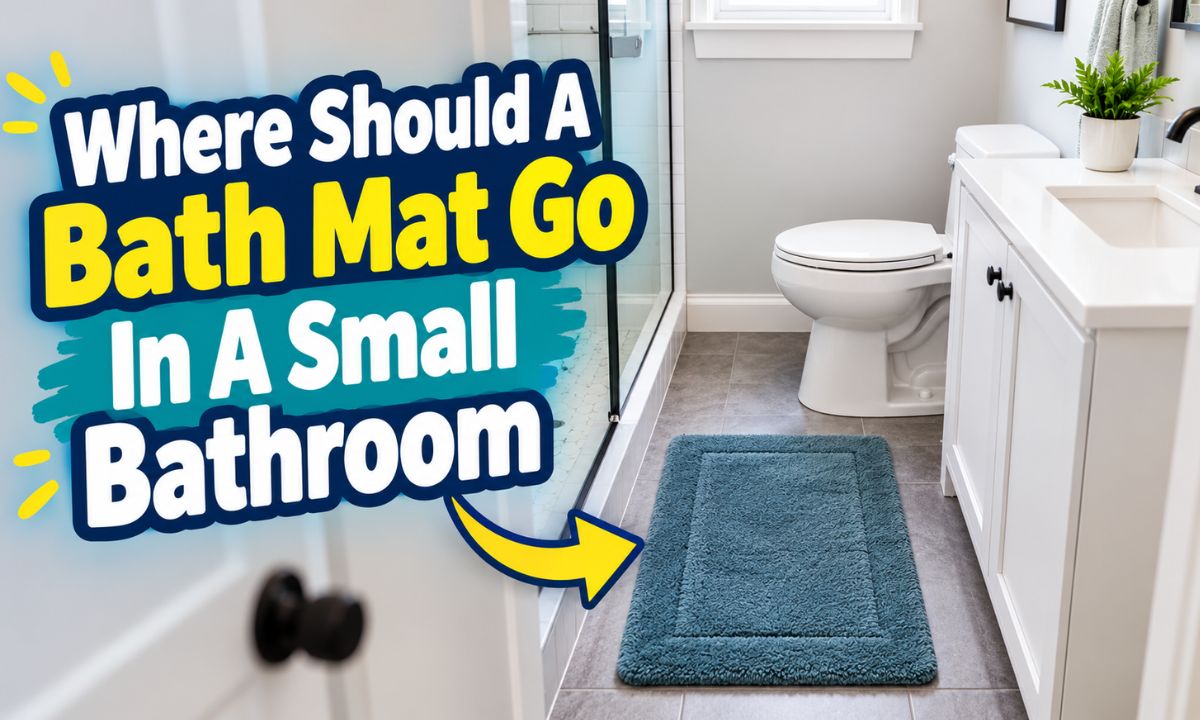
Place your bath mat directly outside the shower or bathtub, where your feet land when you step out. Keep it away from door swings, toilets, and narrow walkways.
Small bathrooms are common in American homes, apartments, condos, and older houses. When space is tight, even a simple bath mat can make the room feel crowded. The trick is to put it where it catches water without getting in the way of your daily routine.
The best spot is usually right outside the shower or bathtub. This gives you a dry place to stand after bathing and helps catch drips before they spread across the floor. If you have enough room, you can add a smaller mat in front of the sink, but one well-placed mat is often all a small bathroom needs.
Before choosing a spot, think about how you move through the room. You need space to open the door, reach the toilet, stand at the sink, and step out of the shower. A bath mat should make these tasks easier, not create another obstacle.
The right placement also depends on the shower opening, door swing, vanity size, and floor material. A compact, flat mat can work better than a large, fluffy rug that covers most of the available floor. A little planning can make a small bathroom feel more open, neat, and comfortable.
1. Place the Bath Mat Outside the Shower or Bathtub
The best place for a bath mat in most small bathrooms is directly outside the shower or bathtub. Position it near the opening so you can step onto it as soon as you leave the wet area. This is where the mat can do its most useful job.
Water often drips from your feet when you leave the shower. Without a mat, those drops can spread across tile, vinyl, or other hard flooring. A properly placed bath mat helps absorb that water and gives you a more comfortable place to stand.
Do not push the mat too far away from the shower. If you need to take several steps across a wet floor before reaching it, the placement is not very useful. Instead, center the mat near the point where your feet naturally land.
Also consider the shower door. If it opens outward, make sure the mat does not sit in the door’s path. A door that catches the edge can push the mat out of place, fold it, or create a tripping hazard.
Source: idealhomeadvice.com
For a walk-in shower
Place a rectangular mat just outside the shower opening. Center it where you normally step out.
For a bathtub with a shower
Position the mat along the side where you enter and leave the tub. Choose a spot that gives you a stable landing area.
For a sliding shower door
Place the mat outside the door’s track and leave enough room to open and close the door.
For a narrow shower entrance
Use a compact mat that fits the available landing area without extending into the main walkway.
How Far Should a Bath Mat Be From the Shower?
There is no single required distance for every bathroom. The best position is close enough that your first step out of the shower lands on the mat. The shower opening and the amount of free floor space will determine the exact placement.
For example, if your shower door opens toward a narrow strip of floor, a small mat placed just beyond the door may work better than a large rug. If the shower has a wide opening, you may have room for a wider rectangular mat.
Check the mat from your normal standing position. Open the shower door, step out carefully, and see where your feet land. Adjust the mat until it covers that area without creating an obstacle.
2. Use Only One Main Mat in a Very Small Bathroom
If your bathroom has limited floor space, one main bath mat is usually the smartest choice. A single mat near the shower can handle the most important wet area without filling the room with fabric. It also leaves more visible floor space, which can make the bathroom feel less crowded.
Several small rugs may look attractive in a large bathroom, but they can create problems in a compact one. Their edges may overlap, move underfoot, or block the path between the shower, toilet, and sink. They also give you more fabric to wash and dry.
Think of your bath mat as a useful landing spot rather than a decorative floor covering. Its main job is to catch water and provide a comfortable place to stand. If it can do both without interfering with movement, you have chosen a good location.
A second mat is not always wrong. It can work if there is a separate sink area with enough open floor. However, do not add one simply because a matching set comes with several pieces. Let your actual bathroom layout guide the decision.
Source: byquincyaura.com
Choose one rectangular mat
A simple rectangular shape is easy to position outside most shower openings and bathtubs.
Avoid oversized rugs
Large rugs can cover useful walking space and may bunch against cabinets or other fixtures.
Keep floor edges visible
Leaving some bare floor around the mat makes it easier to move through the room and clean the floor.
Skip unnecessary matching pieces
A toilet contour mat or extra decorative rug is optional, especially when the bathroom is already crowded.
Can One Bath Mat Cover the Shower and Sink Areas?
Sometimes. If the shower and vanity are close together, a small runner may cover both standing areas. This can reduce the need for two separate rugs, but only if the runner fits the floor and stays flat.
Do not stretch a mat across a doorway or place it where the toilet base interrupts its surface. A mat that cannot lie flat is not a good solution, even if it appears to save space.
If one runner cannot cover both areas safely, give priority to the shower exit. The sink area can remain uncovered until you have enough room for a separate small mat.
3. Should You Put a Bath Mat in Front of the Sink?
You can place a second bath mat in front of the sink if the bathroom has enough open floor space. This spot can catch water from handwashing, face washing, and brushing your teeth. It can also make standing on a hard floor more comfortable.
However, the sink should be your second priority in a very small bathroom. The shower exit usually needs more attention because wet feet and dripping water can make the floor slippery. A mat near the sink is useful, but it should not block the route from the shower to the door.
If your vanity is close to the shower, look at the available floor between the two fixtures. A small, low-profile mat may fit there. Make sure the mat does not touch the toilet base or fold against the cabinet.
For a narrow bathroom with a single sink, you may not need a separate mat at all. A well-sized mat near the shower may provide enough coverage for your normal routine. Keeping the floor open can be more practical than trying to cover every standing area.
Source: i.pinimg.com
Use a small mat
Choose a size that covers the area where you stand without reaching into the walkway.
Center it on the sink
Place the mat in front of the main standing area rather than pushing it toward one side.
Check cabinet clearance
Make sure vanity doors and drawers can open without catching the mat.
Leave room to move
Keep enough clear floor between the sink, toilet, and shower for easy movement.
What If the Sink Is Directly Beside the Shower?
When the sink and shower are very close, one mat may be enough. Position it where you step out of the shower, then check whether it also covers the area where you stand at the sink.
If the mat becomes too long or interferes with the vanity, do not force it into place. A smaller mat near the shower is often more useful than a long runner that makes the floor difficult to walk across.
4. Keep the Bath Mat Away From the Toilet and Bathroom Door
A bath mat should never interfere with the toilet or the bathroom entrance. These areas need clear floor space so you can move comfortably. A mat that catches your feet or blocks a door can create more problems than it solves.
The bathroom door is especially important. In many small American bathrooms, an inward-opening door takes up a large part of the available floor. If the mat sits inside its swing path, the door may push it into a fold or bunch it against the wall.
The toilet also needs enough open space around it. Avoid placing a regular rectangular mat partly under the toilet base. It may not lie flat, and the trapped fabric can be harder to clean.
A U-shaped toilet mat is an optional choice for a bathroom with enough space. However, it is not essential. If your bathroom is narrow, leaving the floor around the toilet uncovered may be the more practical choice.
Source: idealhomeadvice.com
Check the door swing
Open and close the bathroom door fully. The mat should not touch the bottom of the door or move when it opens.
Keep the toilet area clear
Do not force a standard mat around the toilet base or into a narrow gap.
Avoid overlapping mats
Two mats placed too close together can overlap and create raised edges.
Protect the main walkway
Keep a clear route between the entrance, shower, toilet, and sink.
Is a Toilet Mat Necessary in a Small Bathroom?
No. A toilet mat is optional and should not take priority over a useful shower mat. In a tight bathroom, it is often better to leave the toilet area uncovered.
If you want one, measure the available space first. A contour mat should fit around the toilet without touching the door or interfering with your feet when you sit and stand.
Choose a washable style and clean it regularly. Since this area needs careful hygiene, do not let a decorative mat become a place where moisture, dust, and dirt collect.
5. Choose the Right Bath Mat Size for a Small Bathroom
The right size depends on the open floor area, shower opening, and door position. A mat should be large enough to catch the first few steps after bathing but small enough to lie flat without blocking nearby fixtures.
A common compact bath mat size is around 17 by 24 inches. A larger option may measure about 20 by 32 inches. These are examples of common sizes, not fixed rules for every bathroom.
Before buying a mat, measure the space where you plan to place it. Do not measure only the shower opening. Also check the distance to the vanity, toilet, door, and any nearby cabinet.
If your bathroom has an unusual shape, use paper or a towel to mark the proposed mat size on the floor. This simple check can help you see whether the mat will fit before you spend money on it.
Source: byquincyaura.com
Small mat
Around 17 by 24 inches. Useful for a very narrow shower exit or a tight bathroom layout.
Medium mat
Around 20 by 32 inches. A practical option when there is enough floor outside a shower or tub.
Long runner
Useful for a narrow bathroom with a longer open strip of floor, provided it does not obstruct movement.
Large area rug
Usually unnecessary in a small bathroom because it can cover too much of the usable floor.
How to Measure Before Buying a Bath Mat
Start by measuring the width of the open floor outside your shower. Then measure the distance from the shower opening to the nearest fixture or wall. These measurements show the maximum space available for the mat.
Next, check the bathroom door. Open it fully and note where its bottom edge travels. The mat must stay outside that path.
Finally, measure the space around the toilet and vanity. Look for cabinet doors, drawers, and other moving parts that may catch the mat. Choose a size that leaves enough room for these items to work normally.
Step 1
Measure the available width outside the shower or tub.
Step 2
Measure the distance between the shower and the nearest fixture.
Step 3
Open the bathroom door and check its full swing path.
Step 4
Check whether vanity doors, drawers, or toilet fixtures will touch the mat.
Step 5
Compare the measurements with the mat dimensions and choose one that lies flat.
Example of a Small Bathroom Layout
Imagine a narrow bathroom with a shower along the back wall, a toilet beside it, and a small vanity near the entrance. There is only a short strip of open floor between the shower and the other fixtures.
In this layout, a compact rectangular mat outside the shower is a sensible choice. A second rug in front of the sink may leave too little room to walk. The toilet area can remain uncovered.
This example shows why measuring matters more than choosing a popular mat size. The best mat is the one that fits your actual floor plan.
6. Select a Bath Mat That Works With Your Bathroom Floor
The material and backing matter just as much as the location. A bath mat may fit perfectly but still move around if its backing does not grip your floor. Choose a product designed for your flooring type and follow its care instructions.
Tile, porcelain, vinyl, laminate, and natural stone floors can all have different needs. Some rubber or latex backings may react with certain flooring finishes or leave marks. Check the flooring manufacturer’s guidance before placing a backed mat on a sensitive surface.
A low-pile cotton or microfiber mat can be useful in a small bathroom because it is easier to fit under nearby doors. Thick, fluffy mats may feel soft, but they can become an issue when a door has very little clearance.
The mat should also dry between uses. A thick mat that stays wet for long periods can develop an unpleasant smell. Choose a material that suits how often the bathroom is used and how easily you can wash and dry it.
Source: i.pinimg.com
Cotton
Absorbs water well and feels comfortable underfoot. It may take longer to dry than some synthetic materials.
Microfiber
Often dries quickly and feels soft. Check the product’s washing instructions and backing.
Chenille
Has a soft, textured surface that can absorb water. Its thickness may be unsuitable for doors with very low clearance.
Memory foam
Offers a cushioned feel. Make sure the mat is suitable for bathroom use and can dry properly.
Bamboo or wood slats
Can provide an alternative to fabric, but the mat needs stable feet and a suitable floor surface.
Should a Bath Mat Have Non-Slip Backing?
A stable bath mat is important because bathroom floors can become wet and slippery. Look for a mat with backing that is suitable for your floor type, and check that it stays in place during normal use.
Do not assume every product labeled non-slip will work on every surface. Dust, soap residue, moisture, and incompatible floor finishes can affect how well a backing grips.
Place the mat on a clean, dry floor and check it before use. If it slides, curls, or has damaged backing, stop using it until the problem is fixed or the mat is replaced.
Can a Thick Bath Mat Go in a Small Bathroom?
Yes, if there is enough clearance around the door and nearby fixtures. However, a thick mat is not always the most practical choice for a tight layout.
A low-profile mat may be easier to position and less likely to catch under a door. It can also leave the bathroom looking less crowded.
If you prefer a thick mat, test its position with the bathroom door fully open and closed. Also check that its edges stay flat when you walk across it.
7. Arrange the Bath Mat Based on Your Bathroom Layout
Not every small bathroom has the same shape. Some have a walk-in shower, while others have a bathtub, a corner shower, or a narrow vanity. The best placement depends on where the wet area sits and how much clear floor remains.
Instead of copying a bathroom photo, look at your own fixtures. A mat that works beside a wide bathtub may not fit outside a compact shower. Your goal is to create a dry landing area without making the room harder to use.
The following layouts offer simple starting points. Adjust them to suit your shower opening, floor dimensions, and door position.
Source: idealhomeadvice.com
Narrow bathroom
Place one compact rectangular mat directly outside the shower. Avoid adding a second rug if it narrows the walking path.
Small bathroom with a bathtub
Position the main mat along the side where you step out of the tub. Keep it away from the toilet and door.
Bathroom with a walk-in shower
Center the mat outside the shower entrance. Leave enough space for the shower door or screen.
Bathroom with a corner shower
Place a small mat in front of the corner opening, where your feet land after leaving the shower.
Bathroom with a long vanity
Use one narrow runner only if the shower exit and walking path remain clear. Otherwise, prioritize the shower.
Best Placement for a Very Narrow Bathroom
A very narrow bathroom usually benefits from a single mat near the shower. Place it along the open side of the shower entrance, leaving enough floor to walk toward the toilet and vanity.
Avoid using a wide rug that reaches from one wall to the other. It may look like it covers more floor, but it can make movement awkward and leave little room to step around its edges.
A slim rectangular mat is often easier to manage. Choose one that fits the available width and stays flat against the floor.
Best Placement in a Small Bathroom With a Double Vanity
If your bathroom has two sinks, a runner may work in front of the vanity. However, the shower exit should still receive priority.
A long runner can cover both standing spots if the bathroom has enough open floor. If the room is tight, use the main shower mat first and leave the vanity floor uncovered.
Do not allow the runner to extend into the toilet area or block cabinet doors. The goal is to keep the floor useful, not to cover every empty section.
8. Keep the Bath Mat Clean and Dry After Placement
A bath mat needs regular care because it collects water, soap residue, dust, and dirt. Even a well-placed mat can become unpleasant if it stays damp for too long. Good placement should make it easy to lift, clean, and dry.
After showering, hang the mat over a towel bar or another suitable drying spot if its care instructions allow it. You can also lift it to let the floor underneath dry. This helps prevent moisture from remaining trapped between the mat and the floor.
Wash fabric mats according to their care labels. Some can go in a washing machine, while others need gentle hand washing. Avoid using high heat unless the manufacturer specifically allows it, especially when the mat has rubber or latex backing.
Check the underside from time to time. If the backing becomes cracked, sticky, brittle, or detached, the mat may no longer stay in place. Replace it if it cannot remain flat and stable.
Source: byquincyaura.com
Lift it after use
Allow the floor beneath the mat to dry rather than leaving moisture trapped underneath.
Wash it regularly
Follow the care label and adjust the washing schedule based on how often the bathroom is used.
Dry it fully
Do not put a damp mat back on the floor if it can be dried first.
Inspect the backing
Check for cracks, peeling, curling, and loss of grip.
Clean the floor
Remove dirt and residue from the floor before replacing the mat.
How Often Should You Wash a Bath Mat?
The washing schedule depends on how often the bathroom is used, how much water the mat absorbs, and how quickly it dries. A frequently used family bathroom may need more frequent washing than a guest bathroom.
Check for visible dirt, a musty smell, or a damp underside. These are signs that the mat needs attention. If several people use the same bathroom, check it more often.
Always follow the care label. Some mats can be machine washed, while others need a different cleaning method. Dry the mat completely before putting it back in place.
What If the Floor Under the Bath Mat Stays Wet?
First, lift the mat and dry the floor. Then check whether water is collecting near the shower, leaking from a fixture, or spreading from a wet mat.
If the mat remains damp because it is too thick or does not dry between uses, consider a thinner material or a mat that is easier to hang. You may also need to improve bathroom ventilation.
Do not leave a mat on a wet floor and assume its backing will keep it safe. Dry the surface before replacing it, and check that the mat remains stable.
9. Common Bath Mat Placement Mistakes to Avoid
A small bathroom leaves little room for placement mistakes. A mat that is too large, too thick, or poorly positioned can interfere with normal movement. Avoiding a few common problems will help keep the room neat and usable.
The biggest mistake is choosing a mat based only on its appearance. A beautiful rug may not fit the shower exit or the available floor. Always consider its size, backing, thickness, and care needs before deciding where it belongs.
Another common problem is using a fabric bath mat inside the shower. A regular fabric mat is designed for the floor outside the wet area. Use a suitable shower mat or non-slip strips inside the tub or shower instead.
Source: i.pinimg.com
Putting the mat too far from the shower
This leaves the first steps on a wet floor uncovered. Move the mat closer to the shower exit.
Choosing a mat that is too large
An oversized mat may touch the toilet, vanity, or door. Measure the available space before buying.
Blocking the bathroom door
A mat caught under a door can fold or move. Check the full door swing before settling on a location.
Using several overlapping mats
Overlapping edges can curl and create obstacles. Keep separate mats apart or use one suitable mat.
Ignoring the floor material
Some backing materials may not suit certain floors. Check compatibility with the flooring manufacturer.
Leaving the mat wet all day
Trapped moisture can cause odor and damage. Lift and dry the mat and the floor beneath it.
Putting a fabric rug inside the shower
Use a product made for wet shower or tub surfaces instead of an ordinary fabric floor mat.
How to Tell If Your Bath Mat Is in the Wrong Place
Watch how the mat behaves during your normal routine. If the door pushes it, its corners curl, or you need to step around it, the placement needs to change.
Also check where water collects. If the floor is still wet between the shower and the mat, move the mat closer to the exit or choose a more suitable size.
A good placement should feel natural. You should be able to leave the shower, stand comfortably, and move toward the sink or toilet without adjusting the mat each time.
10. Make a Small Bathroom Feel More Open With Smart Mat Placement
A bath mat can affect how large or small a bathroom feels. Too many rugs break up the visible floor and make the room look busy. A single mat in the right place can provide comfort without taking over the space.
Choose a color that works with your floor and wall colors. A mat that blends with the surrounding surfaces can create a calmer look. If you prefer contrast, use a simple color rather than a large, busy pattern.
Shape also matters. Rectangular mats are easy to fit beside showers and tubs. Round mats may work in some layouts, but their curved edges can leave gaps in narrow spaces.
Keep the rest of the floor clear. Store spare towels on hooks, use wall shelves for small items, and avoid leaving baskets near the shower exit. A clean floor plan makes the bathroom easier to use and maintain.
Source: idealhomeadvice.com
Use a simple color
Neutral shades can help the mat blend into a small bathroom.
Choose a practical shape
A rectangular mat is often easier to fit into a narrow shower landing area.
Keep the floor visible
Avoid covering every open section with rugs or storage items.
Use wall storage
Hooks and shelves can free up floor space for safer movement.
Choose easy-care fabric
A mat that washes and dries easily is more practical for daily bathroom use.
Should a Small Bathroom Have a Runner or a Regular Bath Mat?
A regular rectangular mat is usually the simpler option for a very small bathroom. It can cover the shower exit without taking up too much floor space.
A runner may work in a long, narrow bathroom where the open floor extends along the shower and vanity. However, it must not block the toilet or bathroom door.
Choose based on the floor plan rather than appearance alone. If the runner makes the walking path narrow, use a smaller mat instead.
Frequently Asked Questions
Q
Where is the best place to put a bath mat in a small bathroom?
The best place is directly outside the shower or bathtub, where your feet land when you step out. This position helps catch water and gives you a dry place to stand. Keep the mat clear of the bathroom door, toilet, and main walkway.
Q
Should a bath mat go in front of the toilet or shower?
The shower or bathtub exit should usually come first. This is where wet feet and dripping water create the greatest need for a mat. A toilet mat is optional and should only be added if enough floor space remains.
Q
Can I put a bath mat in front of the bathroom door?
You can place a mat near the entrance if the door clears it completely. Check whether the door catches the mat when it opens or closes. If the mat moves, curls, or blocks the entrance, choose another location.
Q
How many bath mats should a small bathroom have?
One main bath mat is often enough for a very small bathroom. Place it outside the shower or tub. If you have extra floor space, you can add a smaller mat in front of the sink, but avoid filling the walking path with rugs.
Q
What size bath mat is best for a small bathroom?
A compact mat around 17 by 24 inches or 20 by 32 inches can work, depending on the layout. Measure the open floor before buying. The mat should cover the main landing area without touching the door, toilet, or vanity.
Q
Should a bath mat touch the shower?
The mat can sit close to the shower entrance, but it should remain outside the wet shower area. Leave enough room for the shower door or screen to move. The goal is to catch water as you step out without putting the mat inside the shower.
Q
Can I use two bath mats in a small bathroom?
Yes, if there is enough open floor space. One can sit outside the shower and another in front of the sink. Keep them separate, flat, and clear of the main walking path. If they make the room feel crowded, use just one.
Q
Should the bath mat be inside or outside the shower?
A regular fabric bath mat should go outside the shower. It absorbs water when you step out. Inside the shower or bathtub, use a suitable suction-style bath mat or a properly fitted non-slip surface designed for wet conditions.
Q
Is a thick bath mat suitable for a small bathroom?
It can be suitable if the bathroom door and nearby fixtures have enough clearance. However, thick mats may catch under doors or create raised edges. A low-profile mat is often easier to fit into a compact layout.
Q
How do I stop a bath mat from sliding on tile?
Start with a clean, dry floor and use a mat with backing suitable for your tile and floor finish. Check the backing regularly for wear and damage. If the mat still moves, stop using it until you find a suitable replacement or compatible non-slip solution.
✦ Wrapping Up
Conclusion
The best place for a bath mat in a small bathroom is directly outside the shower or bathtub. Position it where your feet land when you step out, so it can catch water and provide a comfortable place to stand. This location gives the mat a clear purpose without taking up unnecessary floor space.
If your bathroom is very small, start with one compact rectangular mat. Add another one in front of the sink only if you have enough room. Keep the toilet area, door swing, and main walkway clear so the room remains easy to use.
Remember that placement is only part of the decision. Choose a suitable backing, check the mat’s thickness, and make sure it dries between uses. A mat that stays flat, absorbs water, and fits your floor plan is a better choice than a large decorative rug that gets in the way.
Before buying a new mat, measure the shower exit and the open floor around it. Check the bathroom door and nearby fixtures, then choose a size that fits those measurements. This simple step can help you create a cleaner, safer, and more comfortable small bathroom.
💡 Key Takeaway
Place one compact, stable bath mat directly outside your shower or tub. Check the door clearance, keep the toilet and walkway open, and make sure the mat can dry fully between uses.