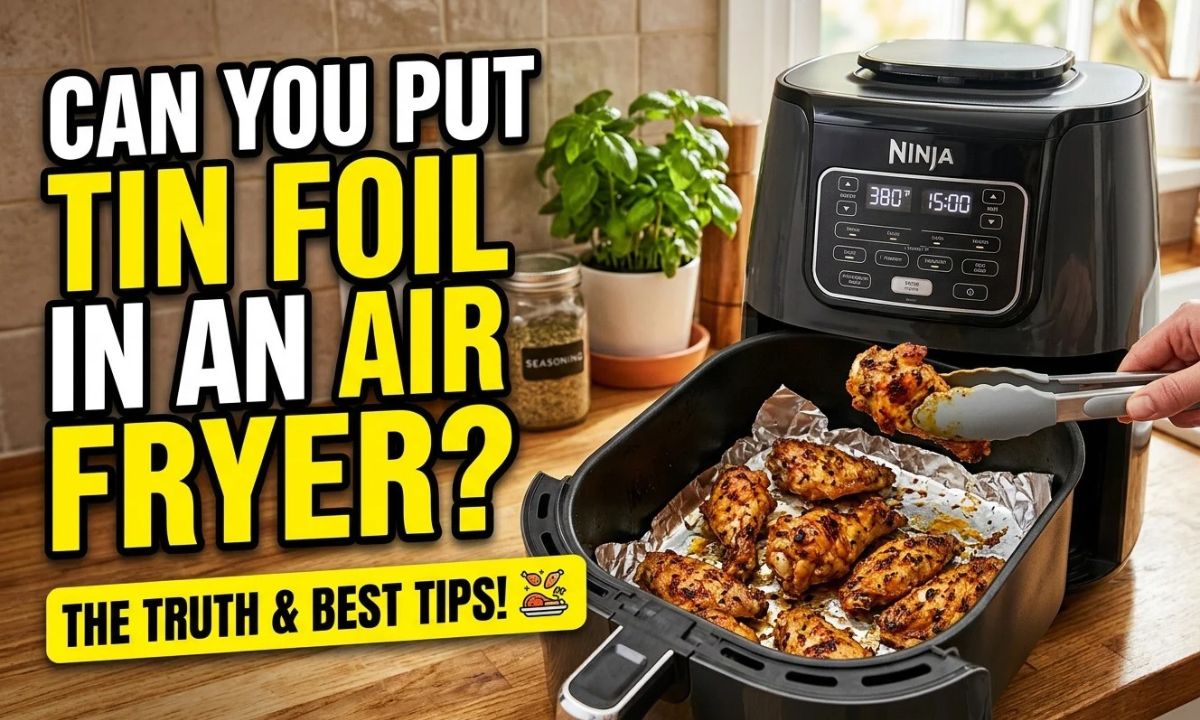
Yes, you can usually put aluminum foil in an air fryer, but you need to use it correctly. Keep the foil secure, leave room for hot air to circulate, and never let loose foil reach the heating element.
If you are cooking in a typical air fryer in the United States, you may have wondered whether the roll of aluminum foil in your kitchen drawer can go into the basket. The short answer is yes for many air fryers, but the way you use it matters more than simply whether foil is allowed.
The U.S. Department of Agriculture describes air fryers as countertop convection ovens that depend on rapid hot-air circulation. Covering too much of the basket can interfere with that airflow, so foil should never be used in a way that blocks the cooking path. Your specific air fryer’s owner manual should also take priority because designs and manufacturer instructions vary.
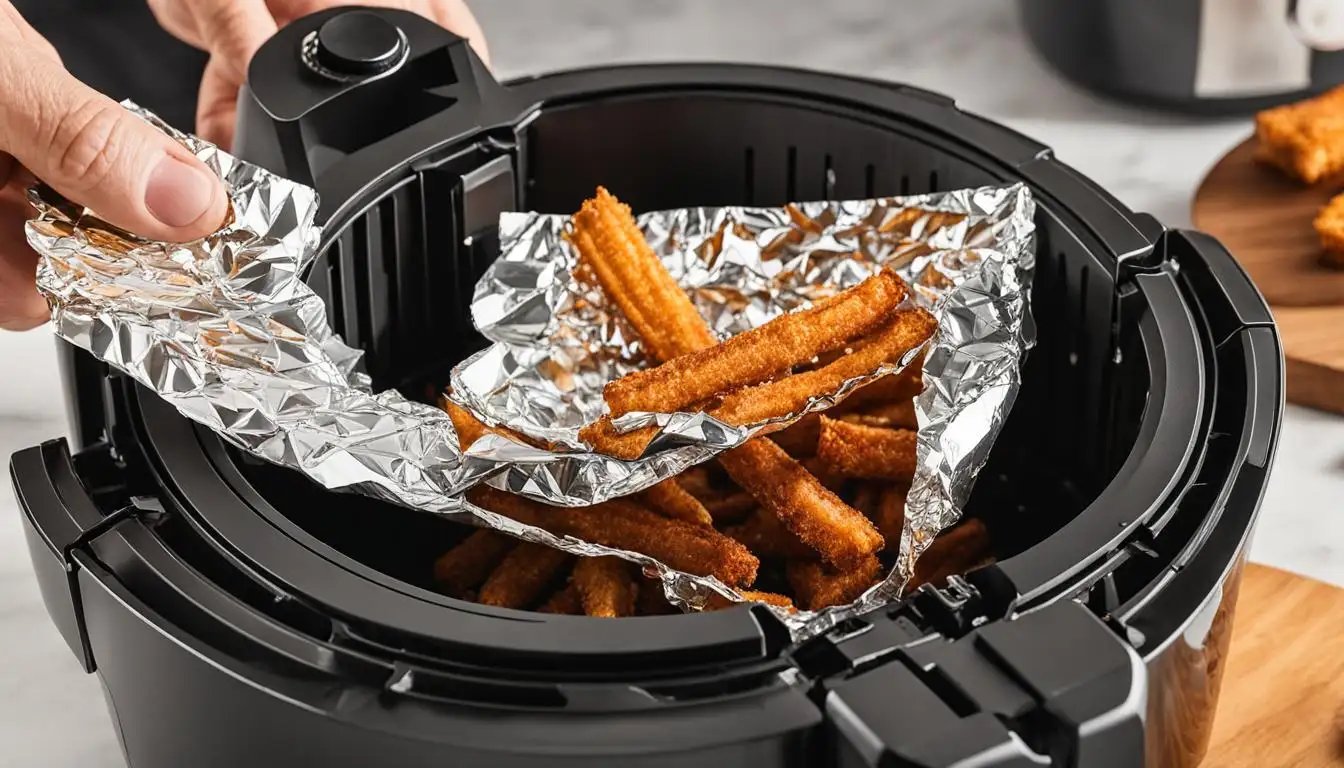
For most everyday uses, a small, secure piece of foil can help contain drips, protect delicate food, or make cleanup easier. The safest approach is to keep the foil flat or firmly held down by food, keep it away from the heating element, and avoid covering the entire basket.
Yes. In many air fryers, aluminum foil can be used during cooking when it is placed correctly. The key issue is airflow. An air fryer cooks by moving very hot air around the food, so a large sheet of foil that covers the basket can reduce circulation and affect cooking.
Tin foil and aluminum foil are commonly used to mean the same thing in everyday American kitchen language. Modern household foil is aluminum foil, and it can tolerate the temperatures normally used for air frying. However, safe use depends on the air fryer’s design, the manufacturer’s instructions, the amount of foil, and how securely it is positioned.
Think of foil as a small cooking aid rather than a full basket liner. A piece that supports a particular food or catches a limited amount of grease is very different from completely covering the basket.
Source: airfryeraid.com
Usually acceptable
A small, secure piece of aluminum foil can be suitable when the air fryer manufacturer permits it and airflow remains open.
Potential problem
A loose or oversized sheet can move during cooking, restrict airflow, or get too close to the heating element.
Always check first
Your air fryer’s owner manual is the most specific source for what the manufacturer allows in that particular model.
Why Does Airflow Matter So Much?
Air frying is based on rapid circulation of hot air. When foil covers too much of the basket or blocks openings designed for circulation, hot air may not reach the food as intended.
That can lead to uneven browning, longer cooking, less crisp food, or areas that do not cook as expected. This is especially relevant for foods that depend on exposed surfaces for browning, such as fries, vegetables, chicken wings, and breaded foods.
Leave airflow paths open
Do not use foil to seal off the basket or cover vents and openings that are part of the cooking system.
Use less foil
A smaller piece generally creates fewer airflow problems than a sheet covering most of the basket.
How to Use Aluminum Foil Safely in an Air Fryer
The safest method is simple: check the manual, cut only the amount of foil you need, secure it with food, and keep the heating element and airflow openings clear.
You do not need to line every inch of the basket. In fact, doing so can work against the way an air fryer cooks. If your goal is simply easier cleanup, use the smallest practical piece of foil or consider an air-fryer-safe liner recommended by the manufacturer.
Source: alsothecrumbsplease.com
1. Check the owner’s manual
Look for instructions about aluminum foil, liners, parchment, the basket, and the heating element before using foil.
2. Cut a suitable piece
Use only enough foil to support the food or catch drips. Avoid large sheets that extend up the sides or cover most of the basket.
3. Put the foil where it is needed
Keep the foil inside the cooking area and away from exposed heating elements and vents.
4. Add food before cooking
Food can help hold the foil in place. Never run an air fryer with loose foil sitting inside an empty basket.
5. Keep airflow open
Do not create a sealed foil platform that prevents hot air from moving around the food.
6. Check the food during cooking
If the food is browning unevenly or cooking differently than expected, check whether the foil is blocking airflow.
What Does Safe Foil Placement Look Like?
For a food such as salmon, a modest sheet of foil can sit beneath the fish while leaving space around it. For a small portion that releases liquid, foil can help contain some of the drips without turning the basket into a completely covered tray.
The exact placement depends on the air fryer. Basket-style models and toaster-oven-style air fryers have different layouts, so do not assume that a method that works in one machine is appropriate for another.
Good placement
Foil is stable, contained within the cooking area, and does not touch the heating element.
Poor placement
Foil is loose, reaches toward the heating element, covers ventilation openings, or hangs outside the basket.
When Is Aluminum Foil Useful in an Air Fryer?
Foil is most useful when you need to contain a small amount of liquid, protect a delicate surface, or make cleanup easier without interfering with airflow.
It can be helpful for foods that release juices or sauces. A properly sized piece can also reduce direct contact between a food and the basket. Still, foil is not automatically the best option for every recipe because it can change how the food browns and crisps.
Source: runningtothekitchen.com
Messy foods
Foil can help catch some drips from foods that release fat, juices, or small amounts of sauce.
Delicate foods
A suitable piece of foil may help support fragile foods that could otherwise stick to or fall through parts of a basket.
Cleanup
Foil can reduce residue on some surfaces, although it should not be used if it interferes with the air fryer’s required airflow.
Does Foil Make Air-Fried Food Less Crispy?
It can. Crisping depends partly on hot air reaching the food’s surface. If foil covers an area where air needs to circulate, the food may brown or crisp differently.
For foods where a crisp bottom is important, avoid creating a solid foil barrier underneath the entire portion. A perforated air-fryer liner or another accessory specifically designed for your appliance may provide a better fit when the manufacturer permits it.
For maximum crisping
Keep as much of the food surface exposed to circulating hot air as practical.
For easier cleanup
Use foil only where it solves a real cleanup problem instead of covering the entire basket.
When Should You Avoid Tin Foil in an Air Fryer?
Avoid foil when your air fryer’s manufacturer specifically says not to use it, when the foil could contact the heating element, or when using it would block important airflow. These conditions matter more than a general rule that foil is either always safe or always unsafe.
You should also think about the food itself. Aluminum can react with highly acidic, salty, or spicy foods. The USDA notes that acidic and salty foods can cause pitting or other reactions in aluminum foil. That does not automatically mean the food is dangerous, but it can affect the foil and the appearance of the food.
Source: leravi.org
Never use loose foil
Circulating air can move an unsecured sheet toward the heating element.
Do not cover vents
Blocking designed airflow paths can interfere with cooking and may create an unsafe operating condition.
Avoid full-basket coverage
A solid sheet across the entire basket can prevent the air circulation that gives an air fryer its cooking effect.
Be cautious with acidic foods
Tomatoes, vinegar-based sauces, citrus, and other acidic foods can react with aluminum. Consider another suitable cooking surface when appropriate.
Can Foil Touch the Heating Element?
No. Keep aluminum foil away from the heating element. The heating element becomes extremely hot, and loose or improperly positioned foil can create a serious appliance and fire hazard if it contacts the element.
If foil has shifted upward during cooking, turn off the appliance and allow it to cool before attempting to remove it. Do not reach into a hot air fryer to reposition foil.
Before cooking
Make sure the foil is secure and clearly separated from the heating element.
If foil moves
Stop the appliance, allow it to cool, and correct the setup before using it again.
Aluminum Foil vs. Parchment Paper in an Air Fryer
Foil and parchment can both be useful, but they solve different cooking problems. Aluminum foil is a metal sheet that can contain juices and tolerate high oven-style cooking temperatures. Parchment is useful when you want a nonstick cooking surface and easier food release, provided the parchment is rated and approved for the temperature and appliance.
Neither material should simply be placed loose in an operating air fryer. Air circulation can move lightweight material toward the heating element. The material must be secured appropriately, and the air fryer’s instructions should always be followed.
Source: tasteofhome.com
Aluminum foil
Useful for containing drips, supporting some foods, and reducing mess when used without blocking airflow.
Parchment
Useful for reducing sticking and helping with food release when the parchment is designed or approved for air-fryer use.
No liner
Often the simplest choice when the basket is easy to clean and the food benefits from maximum air circulation.
Which Should You Use?
Choose based on the cooking job rather than assuming one material is universally better. If you mainly want to contain juices, foil may be useful. If sticking is the main concern, an appropriate parchment liner may make more sense.
For foods that need strong airflow underneath them to become crisp, leaving the basket uncovered can produce a better result than covering it with either material.
Choose foil when
You need limited liquid containment or a small protective surface and your appliance allows foil.
Choose parchment when
You want easier release and are using parchment that is appropriate for the air fryer and cooking temperature.
Choose neither when
The food needs maximum airflow and the basket can handle the cooking without a liner.
Common Mistakes People Make With Foil in an Air Fryer
Most problems come from using too much foil or placing it where the appliance needs unobstructed airflow. The goal is not simply to keep foil away from the heating element; it also needs to stay out of the way of the air circulation system.
Another common mistake is treating every air fryer as though it has the same design. Basket-style air fryers, oven-style air fryers, and combination appliances can have different heating elements, racks, fans, and airflow patterns.
Source: theconsciousplantkitchen.com
Covering the whole basket
A large solid sheet can restrict airflow and change how food cooks.
Using foil without food on top
Lightweight foil can shift when the fan starts, especially if it is not secured.
Letting foil stick above the basket
Exposed edges can move toward hot components and create unnecessary risk.
Ignoring the manual
General advice cannot replace instructions written for the exact air fryer model.
Assuming foil improves every recipe
Foil can change browning, crisping, and moisture movement, so some foods may cook better without it.
What If the Food Is Not Cooking Evenly?
First check whether the basket is overcrowded. The USDA recommends avoiding overcrowding because insufficient air circulation can contribute to uneven cooking and undercooking.
Next, check the foil. If it covers too much of the basket or sits beneath a large portion of the food, it may be reducing airflow. Remove or resize the foil if your appliance instructions permit, then continue following the recipe and manufacturer guidance.
Check the load
Reduce overcrowding and cook in batches when necessary.
Check the foil
Make sure the foil is not acting as a full solid barrier beneath the food.
Check doneness
For meat and poultry, use a food thermometer rather than relying only on color or cooking time.
How to Tell If Your Air Fryer Setup Is Working Properly
A good setup allows the air fryer to operate normally, keeps the foil stable, and produces food that cooks according to the recipe and appliance instructions. The foil should not move toward the heating element, and the basket should not be packed so tightly that air cannot circulate.
If the food is cooking unevenly, taking much longer than expected, or failing to crisp as usual, reconsider the amount and position of the foil. These signs do not prove that foil is the cause, but restricted airflow is one practical thing to check.
Source: runningtothekitchen.com
Stable foil
The foil remains in its intended position while the fan operates.
Open airflow
The foil does not cover vents or create a sealed surface across the cooking area.
Normal cooking
The food cooks according to the expected method without unexplained changes caused by the foil setup.
Safe temperature
Foods that require temperature checks reach their appropriate safe internal temperature.
What Should You Do If the Foil Starts Moving?
Turn the air fryer off and wait for it to cool before touching the foil. Do not try to push loose foil back into place while the appliance is operating.
Once cool, inspect the setup. If the foil cannot remain securely positioned without interfering with airflow or the heating element, remove it and use another method that the manufacturer allows.
Stop first
Turn off the appliance rather than reaching into a hot cooking chamber.
Cool completely
Allow hot surfaces and the foil to cool before handling them.
Frequently Asked Questions
Q
Can you put aluminum foil in an air fryer basket?
Yes, many air fryers allow aluminum foil in the basket when it is used correctly. Keep it secure, use only what you need, and do not block airflow or allow it to contact the heating element.
Q
Can tin foil catch fire in an air fryer?
Aluminum foil itself does not normally ignite at typical air-fryer cooking temperatures, but loose foil can become dangerous if it moves into contact with the heating element. Always keep foil secured and away from hot components.
Q
Can you wrap food completely in foil in an air fryer?
You should not assume that completely wrapping food is appropriate. A sealed foil packet changes airflow and cooking behavior, so follow the air fryer’s instructions and the recipe’s directions before using this method.
Q
Can you put foil in an air fryer with chicken?
Foil can be used with chicken in many air fryers if the manufacturer permits it and airflow remains open. Cook poultry to a safe internal temperature of 165°F and verify it with a food thermometer.
Q
Is parchment paper better than aluminum foil in an air fryer?
Neither is always better. Foil can help contain drips, while suitable parchment can help with sticking and food release. For maximum airflow and crisping, using neither may be preferable for some foods.
✦ Wrapping Up
Conclusion
So, can you put tin foil in an air fryer? In many cases, yes. The important part is how you use it. Aluminum foil should be secure, limited to the area where it is useful, and positioned so it does not touch the heating element or interfere with airflow.
For the safest approach, check your specific air fryer’s manual before using foil. If the manufacturer permits it, use a small piece and keep the food and foil arranged so hot air can circulate. If foil is not allowed or does not suit the recipe, use another method recommended for your appliance.
Remember that foil is only one part of safe air-fryer cooking. Avoid overcrowding, follow the appliance and recipe instructions, and use a food thermometer when cooking meat or poultry that requires a verified internal temperature.
💡 Key Takeaway
Before your next air-fryer recipe, check the manual, use the smallest practical piece of foil, secure it with the food, keep the heating element and vents clear, and remove the foil if it cannot stay safely in position.