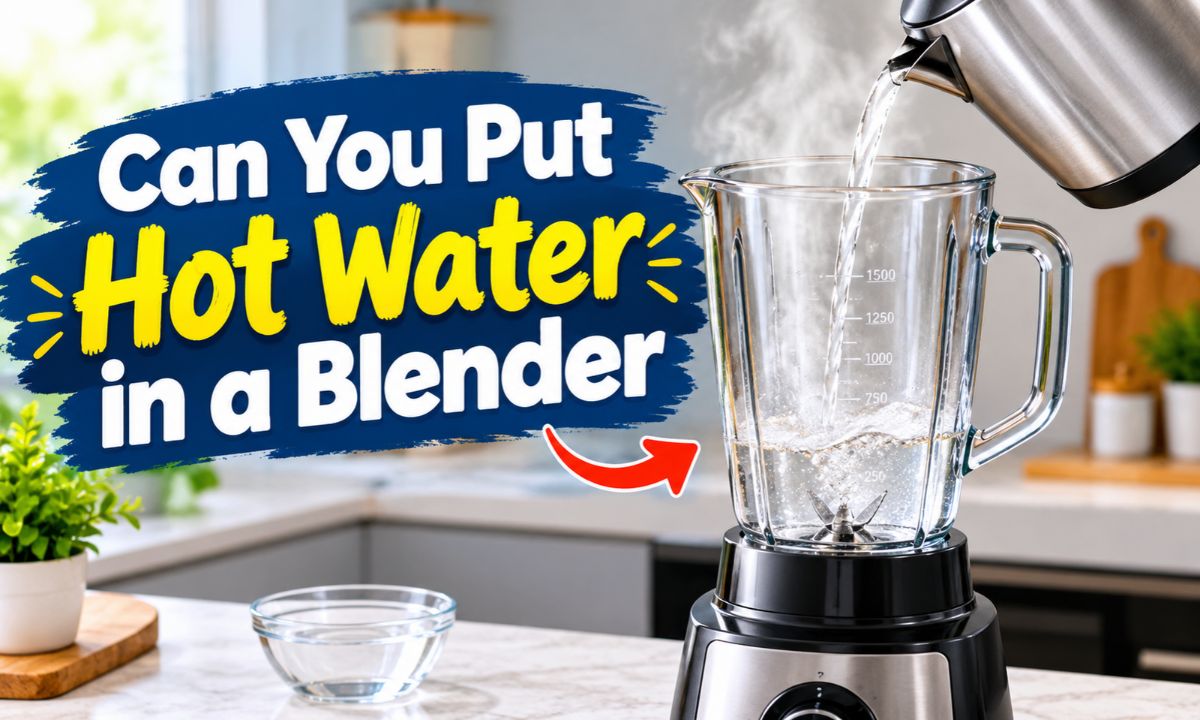
Yes, you can put hot water in some blenders, but only if the manufacturer allows hot liquids and you follow its safety instructions. Boiling water can cause burns if steam and pressure build under the lid.
In American kitchens, hot water often goes straight from a kettle or stovetop pot into recipes for soup, gravy, oatmeal, and sauces. A blender can help mix these foods, but the right method depends on the blender jar, its temperature limits, and whether the liquid is still boiling.
The safest approach is to check your blender manual before adding hot water. Some blenders are designed for hot ingredients, while others have jars, seals, lids, or motors that are not suited to them. Even with a heat-safe model, never assume that a tightly sealed lid makes hot blending safe. Steam needs a safe way to escape, and the liquid must stay below the fill limit.
Yes, if your specific blender is designed to handle hot liquids. A heat-safe kitchen blender can mix warm water with ingredients for soup, sauce, or other recipes, provided you stay within the maker’s temperature and fill limits.
However, hot water is not safe for every blender. A plastic jar may have a lower heat limit than a heat-resistant glass jar, and a blender intended for cold drinks may not have a lid that can safely vent hot steam. The appliance’s design matters more than its general label as a blender.
There is also a difference between hot tap water, warm water, freshly boiled water, and water that has cooled after boiling. Each can expose the jar and its parts to a different level of heat. If the manual does not clearly allow hot liquids, let the water cool before blending.
Source: storage.googleapis.com
Warm water
Usually presents less heat stress than boiling water, but the jar and lid must still be suitable for the temperature.
Hot water
May be suitable for a blender approved for hot liquids. Follow the exact instructions for temperature, volume, and venting.
Boiling water
Creates a greater risk of burns, steam pressure, and heat damage. Do not use it unless the manufacturer explicitly permits the intended method, and never seal it in a nonventing container.
What Makes Hot Water Risky?
Heat can soften some plastics, affect seals, and cause sudden temperature changes in certain materials. If a cold jar receives very hot water, the rapid change can also stress the container, especially if it has scratches or existing damage.
Steam creates another hazard. When hot liquid is blended, moving blades can send liquid toward the lid and create more steam. If that steam cannot escape, pressure may rise and force hot liquid out when the lid moves or the blender is opened.
Pressure under the lid
A sealed lid can trap steam. The resulting pressure may push the lid upward or force hot liquid through an opening.
Heat damage
A jar, gasket, or lid that is not rated for high temperatures may warp, crack, or lose its seal.
Scalding
Hot water and steam can cause serious burns if they escape toward your hands or face.
Can You Put Boiling Water in a Blender?
Do not pour boiling water into an ordinary blender and start blending without checking the manual. Boiling water is near 212 degrees Fahrenheit at sea level, and its heat can exceed the limits of some jars, lids, and seals.
The main concern is not only whether the jar can tolerate heat. Blending moves the liquid, creates splashes, and sends steam toward the lid. A sealed lid can trap that steam, while an open or poorly controlled opening can allow hot liquid to escape.
If a recipe calls for boiling water, you usually do not need to blend it while it is still boiling. Let it cool to a temperature permitted by your appliance, then blend according to the manual. For many soups and sauces, you can also blend the other ingredients first and stir in hot water afterward.
Source: storage.googleapis.com
Why a Sealed Lid Can Be Dangerous
A sealed container may seem safer because it keeps liquid from splashing out. With hot liquids, though, sealing the container can trap steam and allow pressure to build. When you loosen the lid, that pressure can release suddenly and send hot liquid upward.
Do not remove a lid from a running blender or try to hold down a lid that is lifting. If the appliance behaves abnormally, switch it off and unplug it when safe. Allow the liquid and container to cool before handling them, following the manufacturer’s instructions.
Do not rely on lid strength alone
A sturdy lid does not prove that the container can safely handle steam pressure.
Do not improvise a vent
Use only the vent or lid arrangement specified by the manufacturer. Do not remove parts or create openings that the manual does not permit.
How to Tell Whether Your Blender Can Handle Hot Water
The owner’s manual is the best place to confirm whether your blender can handle hot liquids. Look for a hot-liquid warning, maximum liquid temperature, jar material, fill limit, and directions for venting steam.
Do not assume that a high-powered motor makes a blender safe for hot water. Motor power describes the appliance’s ability to drive its blades; it does not establish the heat tolerance of the jar, seals, lid, or other parts.
If you cannot find the manual, search the manufacturer’s official support site using the exact model number. If the instructions do not clearly approve hot liquids, treat that as a reason to avoid blending them until the maker confirms the limits.
Source: bottlefirst.com
Check the model number
Find the number on the base, label, or product paperwork. Similar-looking models can have different jars and instructions.
Inspect the jar
Look for cracks, chips, deep scratches, cloudy areas, or other damage. Do not use a damaged container for hot liquids.
Read the lid instructions
Confirm whether the lid has a vent or removable center cap and how the manufacturer says to use it with hot ingredients.
Check the fill limit
Hot liquids may need more headroom than cold mixtures. Use the lower hot-liquid limit if the manual gives separate limits.
Does Glass or Plastic Make a Difference?
Yes, jar material matters, but material alone does not settle the question. Some glass containers tolerate heat well, while others can crack from thermal shock. Plastic containers vary in their heat resistance and may soften or deform when exposed to temperatures beyond their design limits.
A heat-resistant glass jar is not automatically safe for boiling water, and a plastic jar is not automatically unsafe for every hot liquid. The complete appliance, including its lid and seals, must be rated for the intended use. Follow the model-specific instructions rather than relying on a general rule about glass or plastic.
Glass jars
Avoid sudden temperature changes unless the manufacturer confirms that the jar can tolerate them. Never use a chipped or cracked jar.
Plastic jars
Check the stated temperature limit and intended use. Heat can affect some plastics, lids, and seals.
Personal blender cups
Many are designed for cold smoothies and shakes. Do not add hot water unless the manufacturer specifically approves it.
How to Blend Hot Liquids Safely
If your blender is approved for hot liquids, prepare the ingredients and work in small batches. Keep your hands and face away from the lid, and follow the manual’s exact directions for the vent and maximum fill level.
Never pour hot liquid into the jar and assume that a standard smoothie routine will work. Hot mixtures can splash differently from cold ones, and thick soups may hold heat and steam. Take time to check each step before turning on the motor.
Source: bottlefirst.com
Step 1: Read the Instructions Before Filling the Jar
Confirm that the model supports hot liquids and identify its maximum permitted temperature. If the manual says not to blend hot ingredients, let the liquid cool or use a method that does not require blending it while hot.
Success sign
You can identify the approved temperature, fill level, and lid arrangement from the manual.
If the instructions are unclear
Contact the manufacturer or use a different method. Do not guess about a safety limit.
Step 2: Let the Liquid Cool When Needed
If the water has just boiled, allow it to cool until it falls within the blender’s approved range. There is no single cooling time that works for every pot, room, quantity, or appliance, so use a thermometer when the temperature matters.
Avoid sudden temperature changes
Do not pour boiling water into a cold jar unless the manufacturer explicitly allows that use.
Do not guess by appearance
Water can remain very hot after visible bubbling stops. Check the temperature when needed.
Step 3: Use a Small Batch
Add only the amount permitted for hot blending. Leave the headspace required by the manual, because steam and moving liquid need room. If the recipe makes a large pot of soup, blend it in several batches rather than filling the jar to the top.
Why smaller batches help
They reduce the amount of hot liquid in motion and make it easier to stay within the appliance’s fill limit.
What to avoid
Do not fill to the cold-liquid maximum if the maker specifies a lower hot-liquid limit.
Step 4: Set Up the Lid and Vent as Directed
Use the lid and vent arrangement approved for hot liquids. If the manufacturer says to remove a center cap, use the specified method to control splashes without sealing the opening. Never cover a vent with your hand or a cloth if doing so could trap steam or expose you to hot liquid.
Keep your face back
Position yourself away from the top of the jar before starting the motor.
Keep children away
Hot blending should take place on a stable surface, away from children and pets.
Step 5: Start Only as the Manual Allows
Follow the manufacturer’s recommended speed and blending method. If the manual permits variable speed, use its instructions rather than switching straight to the highest setting without guidance. Do not leave the appliance unattended.
Stop if the jar leaks
Turn off the appliance if hot liquid escapes, the lid shifts, or the jar shows signs of damage.
Stop if pressure seems abnormal
Do not force the lid open. Switch off the appliance and allow it to cool before you investigate.
Step 6: Turn Off the Blender Before Handling the Jar
Switch off the motor and wait until the blades stop fully before removing the jar. Keep your face away from the lid as you open it, and follow the maker’s instructions for releasing any remaining steam. Pour slowly into a heat-safe bowl or pot.
Check before pouring
Make sure the lid can be removed safely and that no trapped pressure remains.
Clean after cooling
Allow the jar and blade assembly to cool to a safe handling temperature before washing them.
Can You Blend Hot Soup in a Blender?
You can blend hot soup in a blender that is specifically approved for hot liquids, but soup needs extra care. It may be thicker than water, hold heat for longer, and create splashes when the blades start moving.
If your blender is not designed for hot ingredients, let the soup cool first or use a suitable immersion blender according to its manual. An immersion blender can reduce the need to transfer a full pot of hot soup, but the device still needs to be rated for the temperature and used as directed.
For a countertop blender, transfer a small batch carefully with a ladle. Do not carry a heavy pot of boiling soup across the kitchen if you can let it cool first. Keep the jar stable and use the hot-liquid instructions provided for your model.
Source: blenderscolony.com
What If the Soup Is Too Thick?
A thick mixture can strain the motor and may move unevenly around the blades. If the manufacturer allows hot blending, add only the amount of warm liquid the recipe needs and stay within the stated fill limits. Stop the blender before adjusting ingredients or using a tamper, and use a tamper only if the maker supplies or approves one for that model.
Do not shake a running blender, remove the lid while the blades turn, or use a spoon to push food toward the blades. If the mixture does not move, switch off the motor and follow the manual’s troubleshooting steps.
A Safer Option for Large Pots of Soup
An immersion blender may be more practical for a large pot, as long as the tool is rated for hot liquids. Keep the blade head submerged as directed to limit splashes, and use a pot with enough depth and space to work safely.
If neither blender is suitable for hot food, let the soup cool and blend it in approved batches. You can then reheat it on the stove in a suitable pot. This takes more time, but it avoids exposing an unsuitable jar to heat.
What About a Blender Bottle or Personal Blender?
A blender bottle is often a shaker cup used to mix protein powder, drink mixes, and other ingredients by hand. It is not the same as a countertop blender, and its ability to hold a warm drink does not mean it can safely hold boiling water or withstand pressure.
If you mean an electric personal blender with a small cup, check its manual before adding any hot liquid. Many personal blender cups are designed for cold drinks and are not intended for hot blending. The small size can also leave little room for steam and moving liquid.
If you mean a manual shaker bottle, never shake hot water in a closed bottle unless its maker clearly approves that exact use. Steam can build pressure inside the sealed container and cause the cap to pop open or hot liquid to spray out.
Source: bottlefirst.com
Can You Put Hot Water in a Protein Shaker?
Do not assume that a protein shaker can safely hold hot water just because it is made from durable plastic or stainless steel. The cap, seal, and bottle body must all be suitable for the temperature, and the bottle must be approved for the way you intend to use it.
For protein powder, a safer option is usually to follow the product instructions and use cool or room-temperature water. If you want a warm drink, prepare it in a heat-safe cup and stir it with a spoon rather than shaking hot liquid in a sealed bottle.
Common Mistakes to Avoid When Blending Hot Water
Most hot-liquid blending hazards come from using the wrong appliance, trapping steam, overfilling the jar, or handling the mixture too soon. A few simple checks can prevent a recipe from turning into a burn or cleanup problem.
Source: dxoananen.blob.core.windows.net
Assuming every blender is heat-safe
Different models have different temperature limits. Check the exact model rather than relying on general advice.
Filling the jar to the top
Hot liquids need room to move and release steam. Follow the specific hot-liquid fill limit.
Sealing in steam
Do not use a closed lid in a way that traps pressure. Use only the vent arrangement the manufacturer specifies.
Pouring boiling water into a cold jar
Sudden temperature changes can damage some jars. Confirm the approved temperature range and avoid thermal shock.
Holding the lid down with your hands
This can expose your hands to hot liquid and steam. Follow the manual’s approved method instead.
Opening the jar immediately
Wait for the blades to stop and handle any steam as directed. Keep your face away from the lid.
Ignoring cracks or worn seals
A damaged jar or lid may fail under heat or movement. Replace damaged parts with compatible manufacturer-approved parts.
What to Do If Hot Water Leaks or the Jar Looks Damaged
If hot water leaks while the blender is running, switch it off immediately if you can do so without touching the liquid. Unplug it only when it is safe to reach the plug without stepping into a spill or contacting wet electrical parts. Keep others away from the area.
Do not pick up a leaking jar while the blades are moving, and do not try to tighten the lid during operation. Allow the appliance to cool before checking it. If the jar is cracked, warped, or leaking around a damaged seal, stop using it until the affected part has been replaced or the appliance has been assessed.
What Can You Do If Your Blender Cannot Handle Hot Water?
You still have several ways to prepare smooth soups, sauces, and drinks if your blender is not approved for hot liquids. The best method depends on the recipe and whether you need the ingredients blended while hot.
Source: bottlefirst.com
Let the liquid cool first
Allow the water or soup to cool to a temperature within the appliance’s stated limit. Blend in small batches, then reheat the finished mixture in a suitable pot if needed.
Blend cold or room-temperature ingredients
For some recipes, you can blend ingredients with cool water first and heat the mixture on the stove afterward.
Use a suitable immersion blender
Choose a model whose instructions allow hot liquids, and follow its limits for depth, temperature, and use.
Stir by hand
For simple mixtures, a whisk or spoon may be enough. This avoids running hot liquid through an unsuitable appliance.
Which Method Should You Choose?
For smooth vegetable soup, cooling and blending in batches is a practical fallback. For a thin sauce, a whisk may be enough. For a large pot that needs to be pureed while hot, a suitable immersion blender may save the effort of moving several batches, provided its manual allows that use.
Do not choose a method only because it is faster. The right method is the one that matches the equipment, the liquid temperature, and the recipe without exposing you to unnecessary burns.
Quick Guide to Hot Water and Different Blender Types
Use this table as a starting point, not as permission to ignore the manual. The exact model and its approved temperature range determine whether hot water is suitable.
Countertop blender rated for hot liquids
Hot water may be suitable within the stated temperature, fill, and venting limits.
Countertop blender intended only for cold ingredients
Do not add hot water unless the manufacturer confirms that the model supports it.
Glass-jar blender
Check the exact jar’s heat rating and thermal-shock limits. Glass alone does not establish safety.
Personal electric blender
Many models are intended for cold drinks. Follow the specific cup and lid instructions.
Manual shaker bottle
Do not shake hot liquid in a sealed bottle unless the manufacturer explicitly permits that use.
Immersion blender
It may work for hot soup if approved for hot liquids and used within the stated limits.
The Safest Rule to Remember
If the manual does not clearly permit hot water, do not use the blender for that task until you verify the instructions. Never assume that a jar’s material, motor power, or lid design alone proves that it can safely handle boiling liquid.
Research Notes and Important Limits
This guide focuses on the practical safety question: whether a blender can handle hot water and how to reduce the risk of burns, pressure release, and damage. No single temperature limit applies to all blenders, so model-specific instructions take priority over general guidance.
The article does not claim that a particular blender was tested for this guide. It also does not assign a universal safe blending temperature, because jar materials, lid designs, and manufacturer directions differ. When an exact limit is needed, the owner’s manual or official manufacturer support is the appropriate source.
The key reader need is to make a safe decision before filling the jar. The most useful next step is to identify the model, confirm its hot-liquid rating, and follow its stated method for filling, venting, blending, and opening.
Evidence type
The guidance is based on general heat, steam, and appliance-use principles. It is not a report of hands-on testing.
Model-specific uncertainty
Exact temperature limits, batch sizes, and venting methods must be verified in the manufacturer’s instructions.
Practical priority
Preventing burns and pressure release matters more than saving a few minutes during food preparation.
Frequently Asked Questions
Q
Can I put hot water in a blender to make a smoothie?
You usually do not need hot water to make a smoothie. Cool or room-temperature water is the simpler choice, especially for personal blenders designed for cold drinks. If a recipe requires warm liquid, check the manual and let the water cool to the approved temperature before blending.
Q
Can hot water crack a glass blender jar?
Yes, some glass jars can crack when exposed to a sudden temperature change. This is known as thermal shock. A glass jar’s appearance does not prove that it can handle boiling water, so check the manufacturer’s temperature limits and avoid using damaged glass.
Q
Can I blend hot water with protein powder?
Only use a blender that is approved for the water temperature and follow the powder’s preparation directions. For a protein shaker bottle, do not shake hot water in a sealed container because steam pressure may force the cap open. A heat-safe cup and spoon are safer for mixing a warm drink.
Q
How long should I wait before blending boiling water?
There is no single waiting time that makes boiling water safe for every blender. The cooling time depends on the amount of water, the container, and the room conditions. Use a thermometer if needed, and wait until the liquid is within the temperature limit stated in your blender’s manual.
Q
Can I pour hot water into a blender to clean it?
Use the cleaning method in the owner’s manual. Some blenders allow warm water with a small amount of dish soap, while others have limits on water temperature or require the jar to be washed separately. Never put hot water into the motor base, immerse an electric base in water, or run a cleaning cycle that the manufacturer does not approve.
Q
Can I blend hot soup with the lid on?
Use the lid arrangement specified for hot liquids by the blender manufacturer. Some models require a vent to remain open during hot blending, while others use a different approved design. Do not seal hot soup inside a container that cannot release steam safely, and do not remove the lid while the blades are moving.
✦ Wrapping Up
Conclusion
You can put hot water in a blender when the exact model is designed for hot liquids and you follow its instructions. The main risks are trapped steam, hot splashes, burns, and damage to a jar or lid that cannot tolerate the temperature.
Boiling water needs extra care, and a blender bottle or personal smoothie cup should not be treated like a hot-liquid kitchen blender. If you cannot confirm the appliance’s temperature limit, let the liquid cool and choose a method that fits the equipment.
💡 Key Takeaway
Before adding hot water, check the model’s manual for its temperature limit, hot-liquid fill level, and lid-venting method. If those instructions are unavailable or unclear, do not blend the liquid while hot.