
I’ll be honest—this started on a lazy morning when I just wanted pancakes and had no all-purpose flour left. So I thought, can I make pancakes with bread flour and still get that soft, fluffy bite?
I’ve cooked in humid kitchens and dry ones, and small things like flour type really change texture, moisture, and even how batter spreads on the pan. After a few tries (and one slightly chewy batch), I figured out what works—and what doesn’t.
Can You Really Make Pancakes With Bread Flour?
I tried this on a slow Sunday morning. I had no all-purpose flour left. I still wanted pancakes. So I thought, can I make pancakes with bread flour and keep it simple?
Yes, you can. I tried it, and it worked. The pancakes were good. Not the same, but still nice and warm.
Bread flour has more protein. That means more gluten. I saw this fast. The batter felt thick. It did not pour as smooth. I had to pause and check the mix.
When I cooked them, I saw a clear change:
- Bread flour pancakes felt a bit chewy and more full
- Regular pancakes feel soft and light
The first bite felt new. Not bad. Just more like bread. The middle was firm. The top held butter well. Syrup stayed in place, which I liked.
From what I saw, this works best when:
- You want a full, rich bite
- You do not mind a slight chew
It may not work well when:
- You want very soft, fluffy pancakes
- You mix too much (they turn tough fast)
So yes, it works. Just expect a small change. On that quiet day, it still tasted really good.
What Happens When You Use Bread Flour in Pancakes?
The first bite felt… different. Not bad at all. Just a bit more “bready” than I expected. I remember standing by the stove, still in my pajamas, thinking, okay, this is not my usual pancake—but it’s not a fail either.
When I tried to make pancakes this way, I noticed a few clear changes right away.
Texture Changes You’ll Notice
The texture was the first thing I picked up on.
- The pancakes had a slight chew
- They were less airy and fluffy
- They felt more firm and held their shape well
I could press the top lightly, and it bounced back more than usual. It felt closer to soft bread than a light cake. Not bad, just different.
Flavor Differences
The taste also changed a bit, in a good way.
- The flavor felt a bit richer
- There was a mild, deep taste
- I noticed a slight nutty note when the edges browned
When I added butter, it melted slowly into the surface. The taste felt warm and simple, like comfort food on a calm day.
Cooking Behavior
Cooking these pancakes felt a little different too.
- The batter was thicker in the bowl
- It spread less on the pan
- The pancakes browned faster than I expected
- I had to lower the heat to avoid burning
One batch got too dark on the outside while still soft inside. After that, I kept the heat low and slow, and it worked much better.
So if you’re wondering, can I make pancakes with bread flour and what will happen, this is it. You’ll get a pancake that is a bit chewy, a bit rich, and a little more filling. Not the classic fluffy kind, but still very good in its own way.
Can I Substitute Bread Flour for All-Purpose Flour in Pancakes?
This was the exact question in my head one morning. I stood in my kitchen and looked at the empty jar of all-purpose flour. The only thing left on the shelf was bread flour. So I asked myself again, can I make pancakes with bread flour and just swap it in?
From my own test in the pan, the swap does work. I used bread flour in the same amount as all-purpose flour. The pancakes cooked fine and tasted good. So yes, a 1:1 swap can work when you need a quick fix.
But I also learned something after that first batch. Bread flour acts a little different in pancake batter. It has more protein, which means more gluten. That can make the batter thicker and the pancakes a bit chewy if you are not careful.
A few small tweaks helped me a lot:
- I added 1–2 tablespoons of extra milk to loosen the batter
- I mixed the batter very gently so the gluten did not get too strong
The first time, I mixed too fast and too long. The pancakes came out a bit tough. They were still edible, but not my best work.
One simple trick helped the most. I let the batter sit on the counter for a short rest.
- Rest the batter for about 5–10 minutes
During that time, the flour absorbs the liquid. The batter gets smoother. When I poured it on the pan, it spread better and cooked more evenly.
So from what I’ve seen in my own kitchen, you really can substitute bread flour for all-purpose flour in pancakes. The key is to add a little extra liquid, mix with care, and give the batter a short rest before cooking.
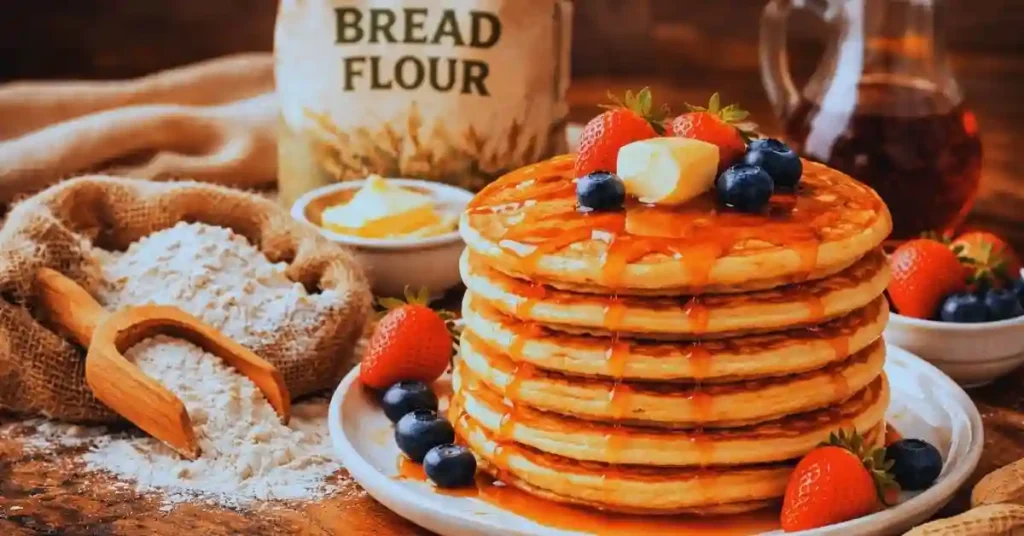
Simple Pancake Recipe With Bread Flour (Tested at Home)
This is the exact mix I now use when I only have bread flour at home. I made this one early in the morning, still a bit sleepy, just wanting something warm and easy. And honestly, after a few tries, this version gave me the best result.
If you’re still wondering, can I make pancakes with bread flour and keep them soft, this simple recipe works well. It’s not perfect like classic pancakes, but it comes close.
Ingredients
Here’s what I used from my kitchen:
- 1 cup bread flour
- 1 tbsp sugar
- 1 tsp baking powder
- 1/2 tsp baking soda
- A small pinch of salt
- 1 cup milk
- 1 egg
- 1 tbsp melted butter
Instructions
I kept the steps very simple, like I always do on a slow day:
- I mixed all the dry items in one bowl
- Then I added the milk, egg, and melted butter
- I stirred it gently, not too much
- I let the batter sit for a few minutes
- I heated the pan on medium-low
- I poured the batter and waited for bubbles
- Then I flipped and cooked the other side
The smell at this point was so nice. Warm, a bit toasty, almost like fresh bread on a pan.
Pro Tips From Experience
I made a few mistakes at first, so these tips really helped me:
- Do not overmix. A few lumps are okay
- Add a bit more milk if the batter feels too thick
- Cook on lower heat so the inside cooks well
One time I rushed and used high heat. The outside got dark too fast, and the inside was still soft. After that, I slowed down, and the pancakes turned out much better.
So from what I’ve learned, this simple method makes bread flour pancakes easy and reliable. It may feel a bit different, but it still gives you a warm, tasty plate in the end.
Banana Pancakes With Bread Flour (My Favorite Twist)
I made this on a rainy afternoon. I was at home, a bit bored, and had one ripe banana sitting on the counter. I already knew can I make pancakes with bread flour works, but I wanted them softer this time. So I added the banana—and that small change made a big difference.
The smell while cooking was amazing. Sweet, warm, and a bit like baked bread. The pancakes came out softer and more tender than before. That slight chew from bread flour was still there, but much less.
Why Banana Works Well
From what I saw in my own kitchen, banana really helps balance bread flour.
- It adds extra moisture to the batter
- It reduces the chewy texture
- It gives natural sweetness, so you need less sugar
The inside felt softer. Almost like a mix of pancake and cake. It was a nice surprise.
Quick Add-In Idea
This is all I did, nothing fancy:
- Mash 1 ripe banana into the batter
- Mix it in gently
- Use a little less milk so the batter is not too thin
That’s it. Simple and quick.
If you’re asking again, can I make pancakes with bread flour and make them softer, this is one of the best ways I’ve tried. It feels easy, a bit fun, and the taste is really comforting—especially on a slow, rainy day.
What Type of Flour Is Best for Pancakes?
I have tried many flours at home. Most days are slow and simple. I just use what I have. After I tested can I make pancakes with bread flour, I saw it works. But I do not use it all the time.
On a normal day, I like soft and fluffy pancakes. So I pick a flour that gives that feel. Still, each flour gives a new result.
Best Flour Options
Here is what I saw in my own kitchen:
- All-purpose flour gives soft and fluffy pancakes
- Cake flour makes them very soft and light
- Whole wheat flour feels more full and has a nutty taste
- Bread flour makes them a bit chewy and firm
One day, I used cake flour by chance. The pancakes were very soft. They almost broke when I flipped them. But they still tasted good.
What Flour Can You Use to Make Pancakes?
You can use many types of flour. Pancakes are easy to change.
- Oat flour gives a soft and mild sweet taste
- Almond flour feels light but can break
- Gluten-free blends work, but cook them slow
Each flour acts in its own way. Some spread fast. Some stay thick. Some cook fast. Some need more time.
So when I think now, can I make pancakes with bread flour or use another flour, it just depends on what I want that day.
Can You Use Gluten-Free Bread Flour for Pancakes?
I tried this one day for a friend who does not eat gluten. I had some gluten-free bread flour at home, so I thought, can I make pancakes with bread flour like this too? I gave it a try, and it worked—but it was not as easy as the regular version.
The batter felt a bit different right away. It was softer, but also a bit loose. When I cooked the first pancake, it looked fine, but it felt more fragile when I tried to flip it.
From what I saw, it does work, but the results can change based on the mix you use.
- Some pancakes came out soft
- Some broke a bit when I flipped them
- The texture was lighter, but less firm
I also learned that some gluten-free flours need extra help to hold shape.
- You may need a binding agent like xanthan gum
- Some blends already have it, some do not
The first time, I did not check the mix. The pancakes broke easily. The next time, I used a blend with a binder, and it worked much better.
Cooking also needs a bit more care:
- Keep the heat low
- Let the pancake cook well before flipping
- Flip slowly and gently
So yes, you can use gluten-free bread flour. But from my experience, it needs a bit more patience. The pancakes can be soft and tasty, just a little more delicate than usual.
Can a Prediabetic Have Pancakes?
This came up one morning when I was cooking for a family member who was trying to cut sugar. I stood in the kitchen and thought, can I make pancakes with bread flour and still keep them safe for blood sugar? I did not want to skip pancakes. I just needed a better way.
From what I tried, pancakes can still work. You just need to make a few smart changes. The goal is to keep them simple, not too sweet, and a bit more balanced.
Smart Adjustments
Here’s what helped me in my own kitchen:
- I used whole grain or low-carb flour when I could
- I cut the sugar down, or skipped it
- I added more protein like eggs or a spoon of yogurt
The batter felt a bit different. It was not as sweet. But it still cooked well. The pancakes came out soft and warm. They also felt more filling, which helped a lot.
Better Topping Choices
Toppings made a big difference for me:
- Fresh berries added light sweetness
- Nut butter gave a rich taste and kept me full
- Greek yogurt made it creamy without extra sugar
One time, I used syrup like I normally do. It tasted good, but it felt too sweet. The next time, I switched to berries and yogurt. It felt lighter and more balanced.
So from what I’ve seen, yes, you can enjoy pancakes, even with prediabetes. You just need to keep things simple, watch the sugar, and build a better mix. It still feels like a treat, just a smarter one.
Common Mistakes When Using Bread Flour for Pancakes
I learned this the hard way on my first try. I thought, can I make pancakes with bread flour and keep them soft? I rushed the process. The result was not great. The taste was fine, but the texture felt off. So if you try this, these small mistakes matter a lot.
- Overmixing → tough pancakes
I mixed the batter too much. I wanted it smooth. Big mistake. The pancakes turned chewy and a bit hard. Now I mix slow and stop early. A few lumps are okay. - Cooking on high heat → burns outside, raw inside
I was hungry, so I used high heat. The outside got dark fast. The inside stayed soft and undercooked. Now I keep the heat low and steady. It cooks better. - Not adding extra liquid → too dense
The first batter felt thick, but I ignored it. The pancakes came out heavy and dry. Now I add a bit more milk. The batter flows better and cooks soft. - Skipping rest time → uneven texture
One day, I poured the batter right away. The pancakes looked rough and cooked uneven. Now I let it rest for a few minutes. It makes a big difference.
From what I’ve seen, if you avoid these, bread flour pancakes turn out much better. It’s still simple. You just need a bit more care.
When Should You Use Bread Flour for Pancakes?
I did not plan to use bread flour again at first. But one evening, I wanted something more filling after a long day. So I thought, can I make pancakes with bread flour and enjoy that heavier bite? I tried it again, and this time, it made sense.
From my own kitchen tests, bread flour pancakes work best when you want a bit more than the usual soft stack. They feel more solid. They hold toppings better. And they keep you full longer.
When I choose bread flour pancakes:
- I want pancakes that feel more filling
- I like a slight chew instead of a soft bite
- I plan to add heavy toppings like nut butter or fruit
I noticed the texture helps a lot here. The pancakes do not fall apart. Syrup, yogurt, or peanut butter stays on top without sliding off too fast. That small thing made breakfast feel more satisfying.
But I also learned when not to use it.
When I avoid bread flour pancakes:
- When I want light, fluffy pancakes
- When I want that classic soft breakfast feel
- When I need something quick and airy
One morning, I made them for a relaxed weekend breakfast. I expected soft and fluffy. Instead, they felt a bit dense. Not bad, just not what I wanted that day.
So from what I’ve seen, bread flour pancakes are not wrong—they are just different. If I want comfort and a fuller bite, I use them. If I want light and fluffy, I switch back.
Final Thoughts (Real Kitchen Verdict)
I’ll be honest. This started on a slow morning. I had no all-purpose flour. I still wanted pancakes. So I thought, can I make pancakes with bread flour?
I tried it. It worked. Not the same, but still good.
The pancakes felt a bit more firm. They had a light chew. They were more filling. But they still tasted warm and nice. I ate them with butter and syrup, and it felt just right.
One time, I rushed. I used high heat. The outside got dark fast. The inside stayed soft. That batch was not great. The next time, I went slow. I added a bit more milk. I let the batter rest. That one turned out much better.
From what I’ve seen, small changes help a lot. You do not need to do much. Just keep it simple.
So if you are in your kitchen and thinking, can I make pancakes with bread flour, the answer is yes. It works. It tastes good. Just a bit different.
Mix the batter slow. Do not overmix. Add a little more liquid if it feels thick. Cook on low heat.
That’s it.
You may not get soft, fluffy pancakes every time. But you will still get warm, tasty pancakes. And for me, that is enough.
FAQs: Can I Make Pancakes With Bread Flour?
Can I make pancakes with bread flour instead of all-purpose flour?
Yes, you can make pancakes with bread flour. It works as a 1:1 swap. The texture will be a bit chewy, but still tasty and filling for a simple breakfast.
Why are my bread flour pancakes chewy?
Bread flour has more protein, which makes more gluten. This gives pancakes a chewy bite. Mix less and add more liquid to keep them softer.
How do I make bread flour pancakes softer?
Add 1–2 tbsp more milk and mix gently. Let the batter rest for 5–10 minutes. This helps the flour absorb liquid and gives a softer texture.
Can I make fluffy pancakes with bread flour?
You can, but they will not be as fluffy as regular pancakes. Use less mixing, add a bit more liquid, and cook on low heat for better results.What is the best way to cook pancakes with bread flour?
Cook on medium-low heat and go slow. Bread flour pancakes brown fast. Flip when bubbles form and cook evenly for a soft inside and golden top.
To Get More About Home & Kitchen Product You Can Visit Our Site. If You Found our Posts Helpful Leave a Comment Below