

Meal prep can save a busy weeknight—or ruin dinner if you get it wrong. I’ve asked myself, Can I Marinate Chicken For 24 Hours, especially before a big cookout in humid Florida or a cold winter dinner in the Midwest. From my own kitchen tests, the answer is yes—but timing, acid, and food safety all matter if you want juicy chicken and not a mushy mess.
Yes—Can You Marinate Chicken for 24 Hours?
I do this all the time on busy weeks. Usually it’s a Tuesday night thing in my kitchen. I know Wednesday will be hectic, so I prep the chicken early and let it sit in the fridge overnight. It feels great the next day when dinner is half done before I even start cooking.
So, can you marinate chicken for 24 hours? Yes—you can. But whether it turns out amazing or disappointing depends on what is in that marinade.
The short answer
Yes, you can marinate chicken for 24 hours—but it depends on the marinade.
I learned this the hard way.
A simple garlic and olive oil marinade? That usually works beautifully after a full day. The chicken smells rich and savory when it hits the pan. The flavor gets deeper. Every bite tastes seasoned, not just the outside.
A yogurt marinade also holds up well. I love this for chicken thighs. After 24 hours, the meat often feels extra tender and juicy. It reminds me of Tandoori chicken style marinades—soft, flavorful, and hard to mess up.
But acid-heavy marinades are different.
If your marinade has lots of lemon juice, vinegar, or even pineapple, be careful. I once left chicken breasts in a lemon marinade too long—about a full day. They looked fine. Then I cooked them. The texture was oddly soft. Almost mushy. Not great.
That’s why how long to marinate chicken depends on the ingredients, not just the clock.
Why people choose a full 24-hour marinade
Honestly, there are a few good reasons I do it.
- Better flavor inside the meat
A quick 30-minute soak helps, but 24 hours gives the seasoning time to move deeper. - Easier meal prep for busy weekdays
If tomorrow is packed, tonight’s prep feels like a gift. - Less work the next day
Future-you opens the fridge and smiles. Dinner is ready to go.
For me, that’s the real win. On a humid summer day in Florida or a cold weeknight in the Midwest, having marinated chicken ready makes dinner feel a lot easier.
How Long to Marinate Chicken for Best Results
This is where many people get tripped up.
I used to think more time always meant more flavor. It sounds logical, right? Just leave the chicken longer and let the marinade work.
But after plenty of weeknight dinners—and a few kitchen mistakes—I learned that how long to marinate chicken depends on three things. The cut matters. The size matters. And what is in your marinade matters most.
A thin chicken breast behaves very differently than thick chicken thighs. One can turn mushy fast. The other can sit longer and still come out juicy.
That’s why timing matters.
Quick marinating guide by chicken cut
Here’s the simple timing guide I use in my own kitchen now.
Chicken breasts usually do best with 2 to 12 hours. They are lean, so they soak up flavor quickly. Too much time can change the texture.
Chicken thighs handle 6 to 24 hours really well. This is my favorite cut for longer marinating because it stays tender and forgiving.
Chicken wings need about 2 to 12 hours. That is usually plenty before grilling or baking.
Whole chicken can handle 12 to 24 hours. If I’m roasting one for a Sunday family dinner, this is often my sweet spot.
Chicken tenders only need 30 minutes to 4 hours. They are small and absorb marinade fast, so I never leave them too long.
This timing works well whether I am using garlic and olive oil, a yogurt blend, or even prepping Barbecue chicken for a backyard cookout.
A personal kitchen note
One Friday night, I tossed chicken thighs into a garlic-herb marinade and slid the bowl into the fridge.
Then life happened.
By Saturday evening, I realized they had been sitting there for almost 22 hours. I honestly thought, “Well, this might be ruined.”
It was not.
They turned out amazing. The smell hit first—warm garlic, fresh herbs, and that rich roasted chicken aroma filling my kitchen. The meat stayed juicy. The flavor went all the way through.
A week later, I tried the same timing with a lemon-heavy marinade.
That did not go as well.
The chicken looked normal, but after cooking, the texture felt oddly soft. Almost mushy. It was edible, but not something I wanted seconds of.
That moment taught me something important. When people ask, can I marinate chicken for 24 hours, the better question is what kind of marinade they are using—because that changes everything.
Is 24 Hours Too Long to Marinate Chicken?
This is the question I hear most from friends and family.
After trying this many times in my own kitchen, I can say this with confidence—24 hours is not always too long for chicken. But sometimes it absolutely is.
I’ve had chicken sit in the fridge for nearly a full day and come out juicy, rich, and packed with flavor. I’ve also had batches turn oddly soft after the same amount of time. Same fridge. Same cook. Different marinade.
That taught me something important. When people ask is 24 hours too long to marinate chicken, the real answer depends on what is inside the marinade bowl.
When 24 hours is perfectly fine
Some marinades hold up really well over a full day.
If I am using ingredients like olive oil, soy sauce, herbs, spices, garlic, mustard, or yogurt, I usually feel comfortable leaving the chicken overnight or close to 24 hours.
These ingredients are much gentler on the meat.
I do this often with chicken thighs during busy weeks. Sometimes I prep everything on a rainy Thursday evening, slide the bowl into the fridge, and cook it the next night after work. The chicken usually turns out deeply seasoned and juicy all the way through.
Oil-based marinades are especially forgiving. They help lock in moisture and spread flavor evenly. Yogurt marinades work nicely too. They tenderize chicken slowly, not aggressively, which is why they are common in dishes like Tandoori chicken.
That is why can I marinate chicken for 24 hours is often a yes when the marinade is balanced and not overloaded with acid.
When 24 hours is too long
This is where things can go sideways.
I get careful anytime a marinade contains a lot of lemon juice, lime juice, vinegar, pineapple juice, or papaya. Those ingredients break down protein quickly.
At first, that sounds like a good thing. Tender chicken sounds great.
But too much time can push the texture too far.
I remember making a citrus marinade one summer afternoon with lemon, lime, garlic, and herbs. By the next evening, the chicken smelled amazing when I opened the fridge.
Then I cooked it.
The outside looked normal, but the texture inside felt strange. Soft. Slightly stringy. Almost mushy.
Not unsafe. Just disappointing.
That is what strong acid can do when it sits too long. It starts changing the surface of the meat before cooking even begins, almost like Ceviche works with fish.
And once chicken gets mushy, there is really no fixing it.
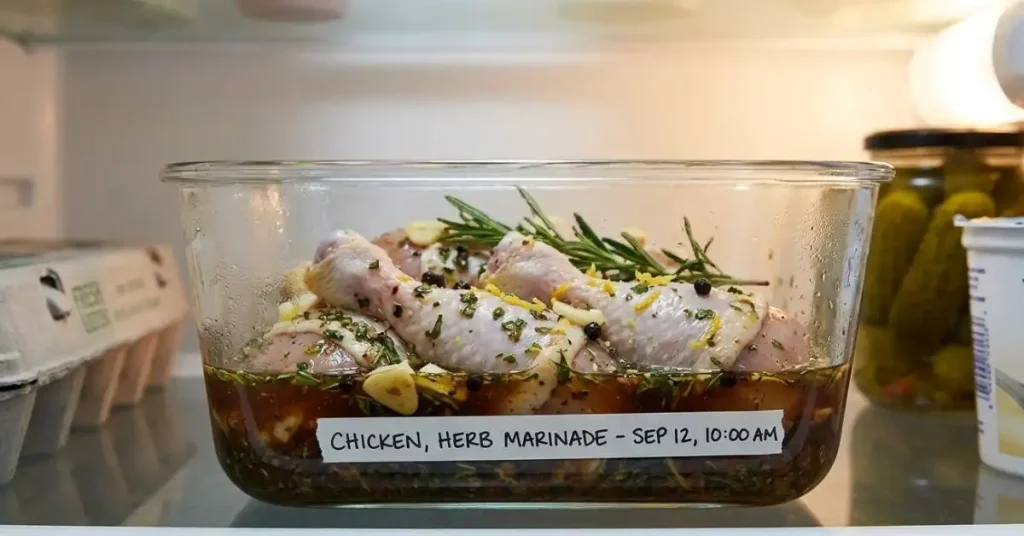
Now, if my marinade is heavy on citrus or vinegar, I usually keep the marinating time closer to 8 to 12 hours. That gives me good flavor without ruining the texture.
How Marinade Ingredients Affect Chicken
From my own kitchen tests, I learned something simple but important—what’s in the bowl matters more than how long the chicken sits. I used to think time was the main factor. But after a few good dinners and a couple of disappointing ones, I realized the marinade ingredients affect chicken more than anything else.
Some days I prep chicken after work in a rush. Other days I plan ahead for the next day. Either way, the result always comes down to what I mix in the bowl.
Oil-based marinades
These are the ones I trust the most for longer marinating, especially when I’m aiming for up to 24 hours.
When I use oil, the chicken usually stays juicy and forgiving. I’ve left chicken thighs overnight many times, and they still come out tender instead of dry or strange.
Examples I often use:
- Italian dressing
- Garlic herb oil
- Chili oil blends
What I noticed in my kitchen:
- The chicken holds moisture better
- Flavor spreads more evenly
- It’s hard to “overdo” the timing
On busy weekdays, this is my safest go-to. I can prep it at night and not worry too much the next day.
Acid-based marinades
I learned this one the hard way. Acid can be great, but it needs respect.
I once left chicken in a lemon-heavy mix for too long, thinking “more time = more flavor.” It didn’t end well. The chicken tasted fine, but the texture felt off—too soft, almost mushy.
Examples:
- Citrus marinades (lemon, lime)
- Vinegar-based blends
- Wine marinades
What works best for me now:
- 30 minutes to 8 hours for light flavor
- Up to 12 hours max if the mix is mild
When I keep it short, the chicken stays firm and still picks up that bright, tangy taste I like.
Dairy-based marinades
This is my favorite category when I want really tender chicken.
I use yogurt or buttermilk when I want something soft and flavorful, especially for grilling or frying. It reminds me of the way Tandoori-style chicken turns out—juicy, lightly spiced, and very forgiving even after a full night in the fridge.
Examples:
- Yogurt marinades
- Buttermilk mixes
Why they work so well:
- They tenderize slowly and gently
- They don’t break down the meat too fast
- Great for grilled or fried chicken
When I’m unsure about timing, I usually pick a yogurt base. It rarely lets me down, even if the chicken sits a bit longer than planned.
After a lot of trial and error, I’ve learned to stop watching the clock so closely. Instead, I look at what I’ve mixed into the bowl. That small shift made a big difference in how my chicken turns out.
How Long Can You Marinate Chicken Safely?
I used to focus only on flavor when I first started marinating chicken. I would think, “If a little time is good, more must be better.” But after a few kitchen lessons—some good, some not so good—I realized safety matters just as much as taste.
There were nights I left chicken in the fridge overnight after a busy day, then forgot about it until the next evening. That’s when I started paying attention not just to flavor, but to how long chicken is actually safe to sit in a marinade.
USDA-style safety basics
Over time, I built a simple routine in my kitchen. It keeps things safe and removes the guesswork, especially when I’m doing meal prep for the next day.
When I marinate chicken for 24 hours or more, I always follow a few basic rules:
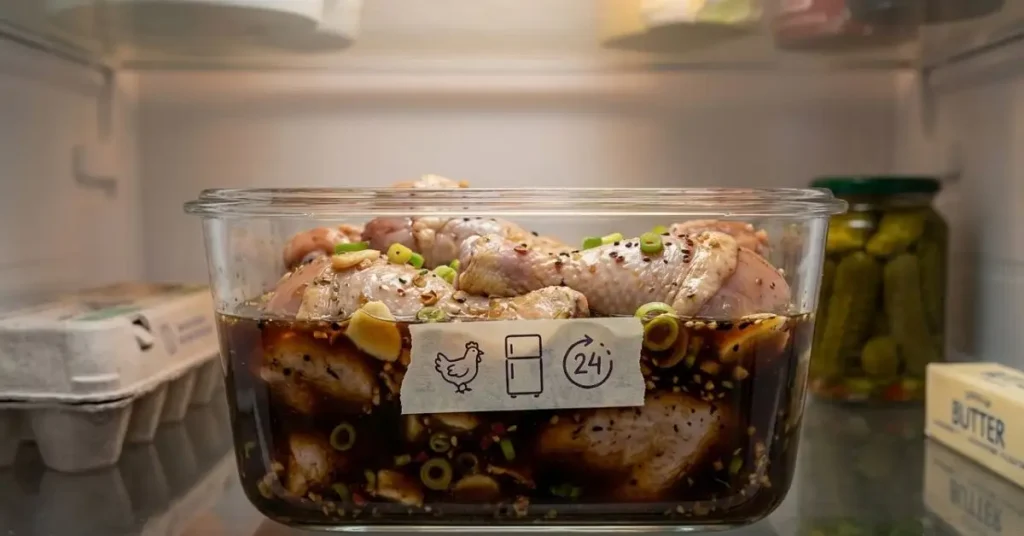
- I keep it in the refrigerator the entire time, never on the counter
- I make sure my fridge stays cold (below 40°F / 4°C)
- I try to use the marinated chicken within 1 to 2 days
I learned this after one weekend when I left a bowl of chicken thighs tucked in the back of the fridge during a busy schedule. It was still fine the next day, but it made me realize how important consistent refrigeration really is. Even a small mistake with temperature can change everything.
Now, I treat marinating like part of my meal prep routine. I set it up at night, usually after dinner, so I know exactly how long it has been sitting. It makes the whole process feel more controlled and less “guess and hope.”
Never reuse raw marinade
This is another thing I learned the hard way early on.
I remember thinking I could save time by brushing leftover marinade onto cooked chicken. It looked and smelled amazing in the bowl, so it felt like a waste to throw it away. But I later found out that raw marinade carries bacteria from the raw chicken.
Now my rule is simple:
- I never reuse marinade straight from raw chicken
- If I want to use it as a sauce, I always boil it first
One time I actually did this properly—boiled the leftover marinade while grilling chicken outside on a warm evening. The smell was incredible, but more importantly, I felt confident serving it because I knew it was safe.
That small step changed how I think about food safety. It’s not complicated, just something you can’t skip.
After a few mistakes and a few good habits, I’ve learned that safe marinating isn’t about strict rules—it’s about small, consistent choices. Once those become part of your routine, you don’t really think about them anymore.
Signs Your Chicken Has Marinated Too Long
I’ve had a few moments in my kitchen where I opened the fridge, looked at the chicken, and instantly thought, “Hmm… this might be a little too far.” It doesn’t always happen with a clear timer mistake. Sometimes life just gets busy, and the chicken sits longer than planned.
Over time, I started trusting what I see and smell more than the clock when I marinate chicken for 24 hours. My eyes and hands usually tell me before I even start cooking.
Watch for these clues
When I’m checking chicken that has been sitting in a marinade too long, I look for a few simple signs:
- Pale or gray surface
I notice this especially with chicken breasts. Instead of a fresh pink tone, the meat can look dull and lifeless. - Overly soft texture
I’ve touched chicken before cooking and felt it almost fall apart. That’s usually a warning sign that the marinade went a bit too far. - Edges look “cooked”
This one confused me the first time. The outside can look slightly opaque, almost like it’s already been heated, even though it hasn’t. - Strong sour smell (not just tangy)
A light tang is normal, especially with yogurt or citrus. But once it smells sharp or unpleasant, I don’t take chances.
I remember one time I left chicken in a lemon-garlic mix a bit too long during a busy week. It looked okay at first glance, but when I picked it up, it felt too soft and slightly slippery. That was enough for me to pause and rethink it.
Now I follow a simple rule in my kitchen—if it looks off, feels strange, or smells stronger than expected, I don’t try to “fix it” with cooking. I just trust that instinct and move on.
Best Marinades for a 24-Hour Chicken Marinade
After trying different marinades in my own kitchen, I’ve noticed something simple—when I leave chicken for a full 24 hours, not every recipe behaves the same. Some turn out rich and juicy. Others can go a bit too far if I’m not careful.
Over time, I started building a small list of “safe” marinades I trust when I know I’ll be busy the next day. These are the ones that have worked for me on real weeknights, especially when I prep dinner late and cook it after a long day.
Great choices
Here are the best marinades I personally rely on when I marinate chicken for 24 hours:
- Garlic + olive oil + rosemary
This is my go-to when I want something simple. I’ve left chicken thighs in this overnight many times, and they usually come out juicy and deeply flavored without any strange texture changes. - Soy sauce + honey + ginger
I like this one on days when I want a slightly sweet and savory taste. I remember using it during a rainy evening when I just wanted something warm and comforting the next day. It held up really well after a full night. - Yogurt + cumin + paprika
This is the one I trust most for tenderness. I often use it when I want that soft, almost Tandoori-style result. Even after 24 hours, the chicken stays moist and easy to cook. - Buttermilk + hot sauce
I tried this for fried chicken prep on a weekend, and it surprised me. The chicken stayed tender, and the flavor felt balanced—not too spicy, just right. - BBQ dry rub + a little oil
This one is my lazy-day favorite. I once prepped it before a busy workday, and by dinner the next night, the chicken was packed with smoky flavor and ready for the grill.
After a few experiments, I realized that the best 24-hour marinades are usually the ones that are balanced—not too acidic, not too aggressive. When I stick to these, I don’t have to second-guess anything the next day.
Common Mistakes People Make
When I started marinating chicken regularly, especially trying longer times like 24 hours, I made a few mistakes that I didn’t even notice at first. Some were small. Others affected the final dish more than I expected.
Now, after a lot of trial and error in my own kitchen, I can usually spot these issues before they ruin dinner. And honestly, even experienced home cooks run into them when they’re busy or rushing.
Avoid this list
Here are the common mistakes I’ve personally made (and learned from) when I marinate chicken for 24 hours:
- Using too much acid
I used to think more lemon or vinegar meant better flavor. One time, I went heavy on citrus for chicken breasts and left it overnight. The texture came out too soft. Now I keep acid in balance, especially for longer marinating. - Marinating at room temperature
I once left chicken out on the counter while prepping other ingredients. It wasn’t a long time, but it made me nervous afterward. Now I always go straight to the fridge. No shortcuts. - Forgetting the time (“wait… was that yesterday?”)
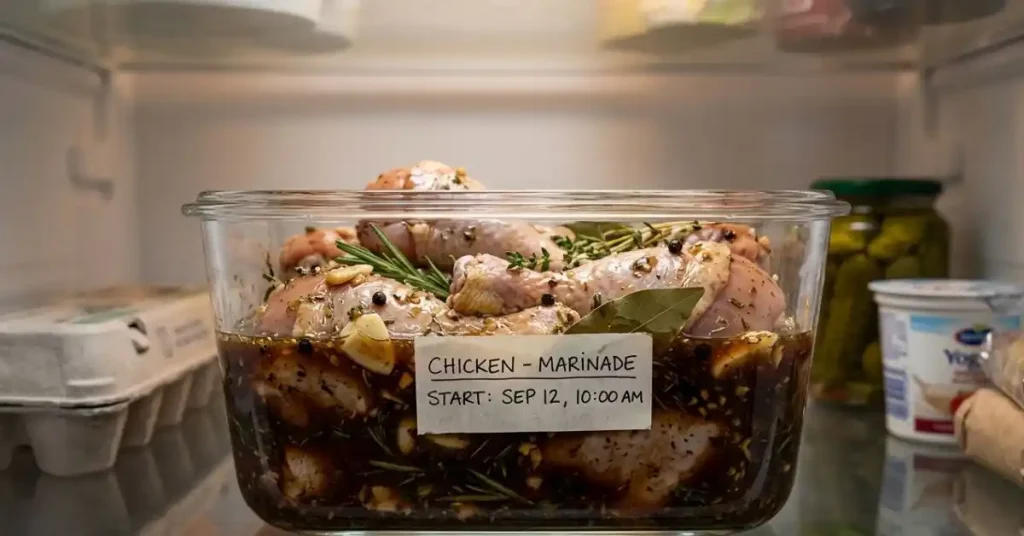
This one happens more than I like to admit. I’ve opened the fridge and had to pause and think when I actually started it. Now I set a simple reminder on my phone so I don’t guess. - Using metal bowls with reactive marinades
I learned this after a vinegar-heavy marinade tasted a little off once. Now I stick to glass or food-safe plastic. It just feels safer and more consistent. - Not patting chicken dry before cooking
This was a big one for me. I used to throw wet chicken straight into the pan, wondering why it never browned well. Now I always pat it dry first—it makes a huge difference in texture and color.
That last step surprised me the most. Once I started drying the chicken properly, I noticed a much better sear and deeper flavor. It’s a small habit, but it changed how my chicken turns out every time.
Final Article Flow Suggestion
When I put this article together on Can I Marinate Chicken For 24 Hours, I tried to keep the flow simple and practical—just like how I actually cook at home. I’ve learned that readers don’t want confusion. They want a quick answer, then real details they can trust when they’re standing in their kitchen.
For me, the best structure always feels like it follows a real cooking day. First, the straight answer. Then the safety side. After that, the timing rules and ingredient behavior. And finally, the small lessons I picked up after a few “oops” moments with over-marinated chicken.
Here’s how this article naturally covers the topic:
What this guide already answers clearly
- The main question: Can I marinate chicken for 24 hours?
- When 24 hours works well (oil, yogurt, balanced marinades)
- When it goes wrong (too much acid, texture changes)
- Safe marinating habits from real kitchen use
- Practical timing by chicken cut
- Real mistakes I’ve made and learned from
I also kept the focus on related search intent like how long to marinate chicken, how long can you marinate chicken, and the common concern: is 24 hours too long to marinate chicken or marinade chicken?
In the end, my goal was simple—help someone feel confident enough to prep chicken at night, open the fridge the next day, and know exactly what they’re going to get.
FAQs About Can I Marinate Chicken For 24 Hours?
Can I marinate chicken for 24 hours safely?
Yes, you can marinate chicken for 24 hours if it stays in the fridge below 40°F (4°C). In my experience, safe storage matters more than exact time.
Is 24 hours too long to marinate chicken?
Not always. I’ve seen good results with oil or yogurt marinades. But acid-based mixes can make chicken soft or mushy if left too long.
How long can I marinate chicken in the fridge?
You can marinate chicken for up to 24 hours for most cuts. I usually aim for 8–24 hours depending on the marinade and chicken type.
What happens if I over marinate chicken for 24 hours?
Over marinating can change texture. I’ve had chicken turn too soft or slightly stringy when strong acids like lemon sit too long.
What is the best marinating time for chicken?
In my kitchen, 2–12 hours works for breasts, while thighs can go up to 24 hours. This gives good flavor without hurting texture.
To Get More About Kitchen Accessories Product You Can Visit Our Site. If You Found our Posts Helpful Leave a Comment Below