

Can I marinate chicken overnight? I’ve asked that same question many times while prepping dinner after a long day. In my kitchen—whether it’s a humid summer night in Florida or a cold winter day in the Midwest—overnight marinating has helped me make juicier, more flavorful chicken with less stress. Let’s look at how long is safe, what works best, and how to avoid mushy chicken.
Yes—Can You Marinate Chicken Overnight?
I asked myself this the first time I meal-prepped chicken on a rainy Tuesday night. I wanted dinner ready fast for Wednesday. So I mixed a quick marinade, tossed the chicken in the fridge, and hoped for the best.
The next day, it smelled amazing when I opened the container. The garlic and herbs had soaked in. The chicken cooked up juicy and full of flavor. Since then, I’ve done it many times.
So, can I marinate chicken overnight? Yes—you can. In many cases, it actually works better.
But there is one catch. Not every marinade should sit that long.
The short answer
Yes, chicken can marinate overnight if you keep it in the refrigerator.
That part matters most.
Leaving it overnight helps the flavor move deeper into the meat. The outside tastes good, but the inside tastes better too. That is why so many home cooks do it.
Still, some marinades need caution.
If your marinade has a lot of:
- Lemon juice
- Vinegar
- Pineapple juice
…the chicken can turn soft or mushy by morning. I learned that the hard way once with a lemon-heavy batch. It looked fine, but the texture felt strange.
Lesson learned.
Why people marinate chicken overnight
Honestly, I do it because life gets busy.
On weeknights, it helps a lot.
Here’s why overnight marinating works so well:
- Saves time the next day
Dinner feels easier when the prep is already done. - Builds deeper flavor
The seasoning has more time to soak in. - Helps lean cuts stay juicy
This matters a lot for chicken breast, which can dry out fast. - Makes meal prep easier
I often marinate on Sunday night for Monday lunches.
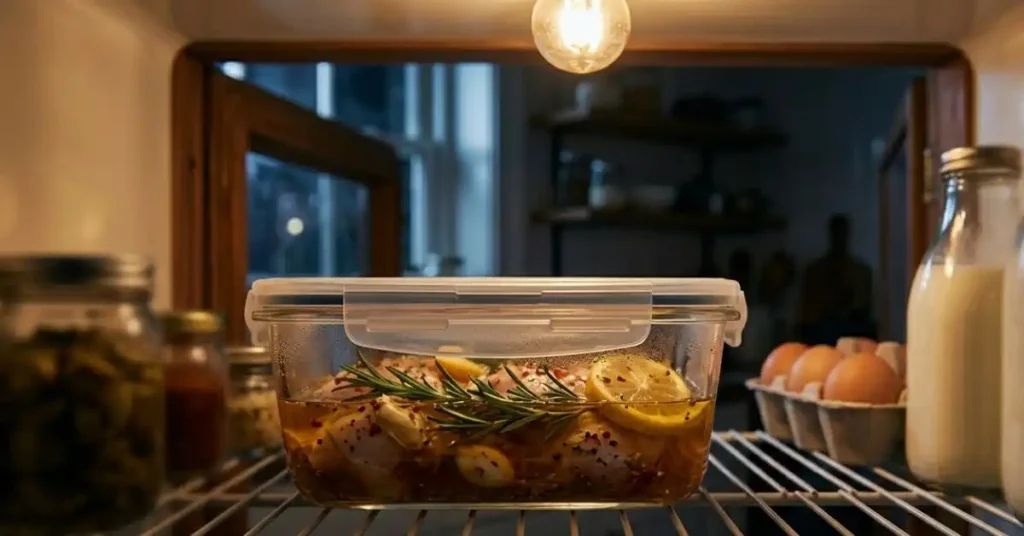
It also makes your kitchen smell great the next day—which is a nice bonus. Opening the fridge and getting that garlic-herb smell feels like future-you saying thanks.
How Long Can You Marinate Chicken?
This is where many people get stuck. I know I did.
The first time I made marinated chicken, I thought longer had to be better. So I left it in the fridge for almost two days. Big mistake. The flavor was strong, but the texture felt odd—too soft and a little mushy.
That taught me something important.
How long you marinate chicken depends on two things—the cut of chicken and what is in your marinade.
A thin Chicken breast acts very differently from juicy Chicken thighs. A mild olive oil marinade also behaves differently than one loaded with Lemon juice or Vinegar.
So, if you’re wondering how long can you marinate chicken, here’s what I’ve learned from many dinners—and a few mistakes.
Quick marinating guide by time
I use this simple guide all the time. It keeps things easy.
- 30 minutes to 2 hours
Good for light flavor. Great for small cuts like strips or cubes. - 2 to 6 hours
My go-to for most weeknight meals. Balanced flavor. Hard to mess up. - 6 to 12 hours
Best when I want deeper flavor, like before grilling on a Saturday. - Overnight (8–24 hours)
Usually the sweet spot. This is why marinating chicken overnight works so well. - More than 24 hours
Risky. Some marinades can start breaking the meat down too much.
A quick tip from my kitchen—if your marinade smells very sharp or sour, do not leave it too long. Your nose can tell you a lot.
Best marinating times by cut
Not all chicken cuts need the same time. This matters.
Chicken breast — 2 to 12 hours
This is lean meat, so it can dry out fast when cooked. A few hours helps a lot. Overnight works too, but I avoid heavy acid.
Chicken thighs — 4 to 24 hours
My favorite for overnight marinating. They stay juicy and handle bold flavors well.
Chicken wings — 2 to 12 hours
Wings soak up flavor quickly. I usually prep them in the morning for game night.
Whole chicken pieces — 8 to 24 hours
These need more time. Bigger pieces need more patience.
I learned this one snowy Sunday while making oven-baked chicken for family dinner. The thighs were perfect after 12 hours. The breasts? They needed less. That dinner taught me to stop treating every cut the same.
That small change made my chicken much better.
Is It OK to Marinate Chicken Overnight?
Yes, it is.
I do it all the time.
When I know dinner will be busy the next day, I prep the chicken the night before. I mix the marinade, seal the bag, and put it in the fridge.
The next day, dinner feels much easier.
And the chicken tastes better too.
The flavor goes deeper into the meat. The chicken stays juicy. That is why so many people like marinating chicken overnight.
But there is one thing to watch.
Not all marinades should sit that long.
When overnight marinating works best
Some marinades do very well overnight.
These are my favorites:
- Oil-based marinades
Olive oil, garlic, and spices work great. They add flavor and help keep the chicken moist. - Herb marinades
Fresh herbs need time. Overnight helps their flavor grow. - Yogurt marinades
Yogurt makes chicken soft and juicy. I use this often. - Mild citrus marinades
A little Lemon juice is fine. It adds a fresh taste.
These are safe choices for overnight marinating.
When overnight is too long
I learned this the hard way.
One time, I left chicken in a strong lemon marinade all night.
The taste was good.
The texture was not.
It felt too soft. Almost mushy.
That can happen with strong acids.
Be careful with these:
- Heavy lemon juice
Too much can change the texture fast. - Strong vinegar
Vinegar can work too fast. - Pineapple juice
Pineapple juice has enzymes that break down meat. - Papaya enzymes
These are very strong too.
My rule is simple.
If the marinade tastes very sour, I do not leave it overnight.
That small step has saved many dinners.
How Long Should You Marinate Chicken for the Best Flavor?
I asked myself this after a few kitchen mistakes.
At first, I thought more time always meant more flavor.
It does not.
I learned that how long you should marinate chicken depends on what you want. Do you want light flavor? Bold flavor? Or very tender chicken?
That changes the answer.
Now, before I mix any marinade, I ask one simple question—what kind of dinner do I want tonight?
That makes the choice much easier.
For mild flavor
Some nights, I want a light taste.
Maybe I am making wraps for lunch. Or adding chicken to a salad.
In that case, I marinate for 1 to 3 hours.
That gives the chicken good flavor, but it does not overpower the dish.
Best for:
- Sandwiches
- Salads
- Quick grilling
This is also great when kids are eating. The flavor stays simple and easy.
For bold flavor
This is my favorite for weekends.
If I am making BBQ or roasted chicken, I want bigger flavor.
That is when I marinate for 8 to 12 hours.
That extra time helps the flavor move deeper into the meat.
Best for:
- BBQ
- Roasted chicken
- Meal prep
I often do this on Friday night. By Saturday, the smell in the fridge tells me it is ready.
For tender chicken
Sometimes, flavor is not the main goal.
Sometimes, I just want soft, juicy chicken.
That is when I use:
- Yogurt
- Buttermilk
- Light oil blends like Olive oil
These work slowly.
They make the chicken tender without making it mushy.
I use this a lot with Chicken breast because it can dry out fast.
The result is simple.
Better texture. Juicier bites. A much happier dinner table.
Does Overnight Marinating Make Chicken Better?
I’ve asked myself this many times after late-night meal prep in my kitchen.
Some nights I’m tired, I just mix the marinade, toss the chicken in a bag, and leave it in the fridge. Next day, I cook it without overthinking. Other times, I wonder if I left it too long.
So from my experience, does overnight marinating make chicken better? Sometimes yes. Sometimes no. It really depends on what I used in the marinade and how long it sat.
That might sound confusing, but it gets clearer once you’ve done it a few times.
Benefits of marinating chicken overnight
When everything is balanced right, overnight marinating can really improve the result.
I notice a few things every time I get it right:
- The flavor goes deeper into the meat, not just the surface
- The chicken stays more juicy after cooking
- I save time the next day, which helps on busy mornings
- Cooking feels easier because most of the work is already done
There is also a simple life benefit I didn’t expect at first. When I open the fridge the next day and already see prepped chicken, it feels like I planned my future a little better. Less stress, fewer decisions.
Possible downsides
But I’ve also had nights where it didn’t go well.
Over time, I learned that longer is not always better.
Here’s what I’ve personally run into:
- The texture can get too soft if it sits too long
- Salt-heavy marinades can dry out the edges
- Strong acids can start breaking down the surface too much, almost like it is partially “cooking” the chicken
I once left a lemon-heavy mix overnight after a long day, thinking it would taste amazing. The flavor was fine, but the texture was off. Not terrible, just not what I wanted for dinner.
That’s when I realized overnight marinating works best only when the ingredients are balanced.
Now I keep it simple, watch the time, and trust what I’ve learned from a few mistakes in my own kitchen.
What Happens If You Leave Marinated Chicken Overnight?
I’ve done this more times than I can count after late-night cooking in my kitchen.
Most of the time, I prep chicken after dinner, place it in the fridge, and forget about it until the next day. And honestly, when it stays cold, nothing bad happens. In fact, marinating chicken overnight in the fridge usually makes the flavor better and deeper.
But I also learned one important lesson early on. The moment chicken is left out at room temperature, things change fast—and not in a good way.
So from my own experience, what happens really depends on how you store it.
Safe storage rules
Over time, I built a few simple habits to keep things safe and stress-free.
I always make sure to do these:
- Keep the chicken in the fridge at below 40°F (4°C)
- Use a sealed container or a zip bag so nothing leaks or dries out
- Store it on the bottom shelf so it does not drip on other food
- Keep it away from anything ready-to-eat, like salad or fruit
I follow these steps almost automatically now. It makes overnight marinating feel easy, not risky.
Never do this
I learned these the hard way, mostly from rushed nights when I wasn’t thinking clearly.
There are a few things I avoid completely now:
- Never leave marinated chicken sitting at room temperature
- Never reuse raw marinade unless I boil it first
- Never freeze and thaw the same chicken multiple times
I once left a bowl on the counter while answering a phone call, and that was enough time to make me rethink my habits. Now I treat food safety like part of the recipe, not an extra step.
When handled properly, marinated chicken overnight is simple and safe. But when it is not, it is not worth the risk at all.
Best Ingredients for Overnight Chicken Marinades
From my own kitchen tests, I’ve noticed something simple—overnight chicken marinades work best when the ingredients are balanced. Not everything needs to sit for 12 hours. Some flavors get better, and some get too strong if you’re not careful.
Over time, I learned this the easy way and the messy way. A few marinades made my chicken super juicy. A few others turned the texture softer than I liked. So now I keep it simple.
Some ingredients are just made for overnight chicken marinades, especially when you want deep flavor without ruining the texture.
Great overnight choices
These are the ingredients I personally trust the most for marinating chicken overnight in the fridge:
- Olive oil
This is my base most of the time. It keeps the chicken moist and helps the spices stick. - Garlic
I use a lot of garlic. It gets stronger overnight, in a good way. The smell the next day? Always worth it. - Soy sauce (like Kikkoman)
Adds deep, salty flavor fast. I usually balance it with a little honey so it doesn’t get too intense. - Plain yogurt
This one surprised me at first. It makes the chicken soft and juicy without turning it mushy. I use it a lot for chicken breast. - Honey
I like adding just a little. It balances salt and gives a light glaze when cooked. - Fresh herbs
Things like parsley, thyme, or rosemary. They don’t overpower the chicken, but they slowly release flavor overnight.
These are the ingredients I reach for when I want safe, predictable results. Nothing fancy—just reliable.
Use carefully
Some ingredients can work well, but only if you don’t leave them too long. I’ve made mistakes here, so now I’m more careful:
- Lemon juice
Fresh and bright, but overnight it can break down the chicken too much if you use a lot. - Vinegar
Works fast. I only use a small amount if I’m marinating overnight. - Pineapple juice
This one is powerful. It can make chicken too soft if it sits too long.
My simple rule now is this: if the ingredient tastes very sharp or acidic on its own, I don’t let it sit overnight without balance.
Over time, I’ve realized that the best overnight chicken marinades aren’t about adding more ingredients—they’re about choosing the right ones and letting them work slowly in the fridge.
Best Containers for Marinating Chicken Overnight
When I first started marinating chicken overnight, I honestly didn’t think the container mattered much. I used whatever bowl was in the kitchen and called it a day. But over time, I learned that the container can quietly change everything—flavor, smell, and even cleanup the next day.
One time, I used a cheap plastic bowl for a paprika-heavy marinade. It worked fine… until I realized the orange stain stayed there for two weeks. That was the moment I started paying attention.
Now, I keep things simple, but I choose more carefully when I’m doing marinating chicken overnight for better flavor and safer storage.
Best options
These are the containers I personally trust now after a lot of real kitchen use:
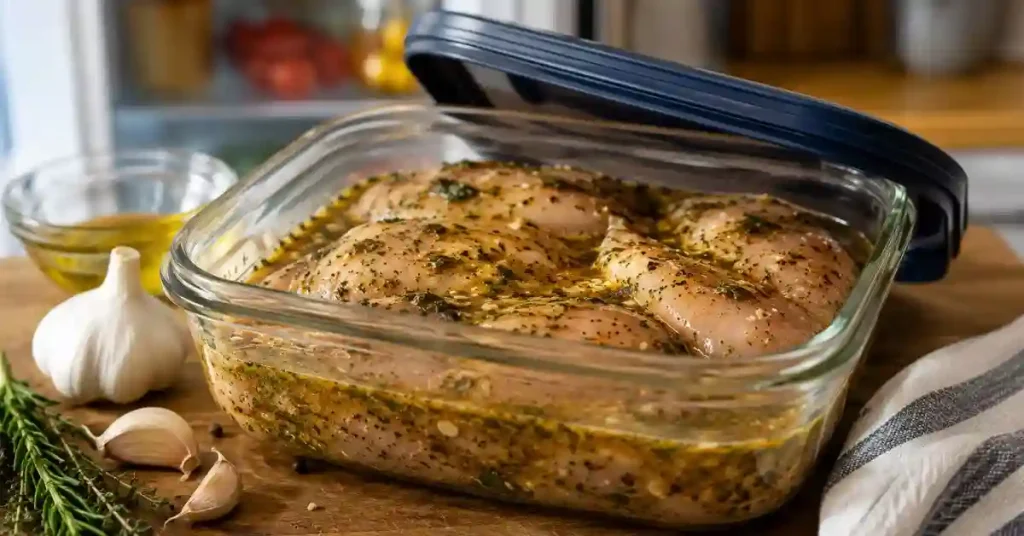
- Glass containers
This is my first choice most of the time. They don’t hold smell, don’t stain easily, and I can clearly see the chicken soaking in the marinade. It just feels cleaner. - Food-safe plastic containers
Good for busy days. They’re light and easy to stack in the fridge. I use them when I’m meal prepping for the week. - Resealable freezer bags
Honestly, this is what I use most for overnight marinating chicken. Less mess, better coating, and it saves fridge space. I just press out the air and lay it flat. - Stainless steel (non-reactive)
Solid option when I want something durable. It keeps flavors neutral, but I don’t use it as often because I can’t see inside.
Avoid
I’ve also made mistakes here, so now I stay away from a few things:
- Aluminum bowls
I learned the hard way that strong ingredients like lemon or vinegar don’t mix well with aluminum. It can affect both taste and safety. - Open plates with plastic wrap
I used this once on a rushed night. It dried out the edges of the chicken and made a mess in the fridge. Not worth it. - Wooden bowls
They absorb smells and liquids. After one use, I could still smell garlic in the wood days later.
From my experience, the right container doesn’t just hold the chicken—it protects the flavor you’re trying to build overnight. And when you’re already waiting hours for that marinated chicken overnight, the last thing you want is a bad container ruining the result.
Signs Your Marinated Chicken Has Gone Bad
When I started doing marinated chicken overnight, I made one mistake early on—I didn’t always check the chicken properly the next day. I just assumed “it’s in the fridge, so it must be fine.” That assumption is not always safe.
Over time, I learned to slow down and trust my senses. Now, before I cook anything that’s been sitting overnight, I always do a quick check. It takes less than a minute, but it has saved me from a bad meal more than once.
Trust your senses. They are usually right.
Look for these warning signs
Here’s what I personally watch for when checking marinated chicken overnight:
- Sour smell
This is the first thing I notice. Fresh marinade smells like herbs, garlic, or spices. If it smells sharp, sour, or “off,” I don’t cook it. - Slimy texture
I’ve touched chicken that felt slightly sticky or slimy after sitting too long. That’s a clear warning sign for me. Fresh chicken should feel smooth, not slippery. - Gray color
Raw chicken should look pink or light. If it turns dull gray or looks uneven, I don’t take the risk. - Excess liquid bubbles
Sometimes I open a container and see strange bubbles or foamy liquid. That usually means it has started to spoil or ferment in a bad way.
If I ever feel even a little unsure, I don’t try to “save it.” I just throw it away. I’ve learned that one wasted meal is better than a bad stomach later.
With marinated chicken overnight, safety matters just as much as flavor. Once you get used to checking these signs, it becomes a quick habit—almost like checking if your coffee is still warm before drinking it.
Common Mistakes When Marinating Chicken Overnight
When I first started doing marinated chicken overnight, I thought it was almost impossible to mess up. Just mix, store, and wait—that was my mindset. But after a few dinners that didn’t turn out the way I expected, I realized small mistakes can quietly change everything.
Some nights the chicken was too soft. Other times, it tasted way too salty. And once, I even forgot it in the fridge a little too long after a busy day. That’s when I started paying closer attention.
Small mistakes can ruin dinner, especially when you’re relying on marinating chicken overnight to make life easier the next day.
Easy mistakes to avoid
These are the common mistakes I’ve personally made—and now try to avoid every time:
- Using too much acid
I once went heavy on lemon juice thinking it would boost flavor. Instead, the chicken turned too soft by morning. Now I always keep acidic ingredients light. - Forgetting the fridge
This is a big one. I made this mistake once during a late-night prep. I left the chicken on the counter and only realized it hours later. Now I always double-check it goes straight into the fridge. - Over-salting
I used to think more salt meant more flavor. But overnight, salt really concentrates. One time my chicken came out way too salty to enjoy. - Marinating too long
I’ve left chicken in marinade for nearly two days before. The flavor was strong, but the texture felt off. Now I stick closer to the safe time range for marinated chicken overnight. - Using too little marinade
I’ve also underdone it. When the chicken isn’t fully coated, parts stay bland. Now I always make sure everything is evenly covered in the bag or container.
Over time, I’ve learned that marinated chicken overnight works best when you keep things balanced—not too much of anything, and never rushing the basics. It’s those small habits that make the difference between “just okay” and a really good meal the next day.
Frequently Asked Questions About Marinating Chicken Overnight
Can I leave marinated chicken overnight?
Yes. You can leave marinated chicken overnight in the fridge. Keep it below 40°F (4°C). This helps flavor soak in safely.
Is it better to marinate chicken overnight?
Most of the time, yes. Marinating chicken overnight gives deeper flavor and juicier meat. But avoid strong acids like lemon for long hours.
How long is too long for marinated chicken overnight?
Over 24 hours is often too long. The meat can turn soft. For best results, stay within safe overnight marinating chicken time.
Can I marinate chicken overnight at room temperature?
No. That is unsafe. Always keep marinated chicken overnight in the fridge. Room temp can grow harmful bacteria fast.
Do I need to rinse chicken after marinating overnight?
No. Do not rinse. Just pat dry if needed. This keeps flavor from overnight chicken marinade and avoids spreading bacteria.
To Get More About Kitchen Accessories Product You Can Visit Our Site. If You Found our Posts Helpful Leave a Comment Below