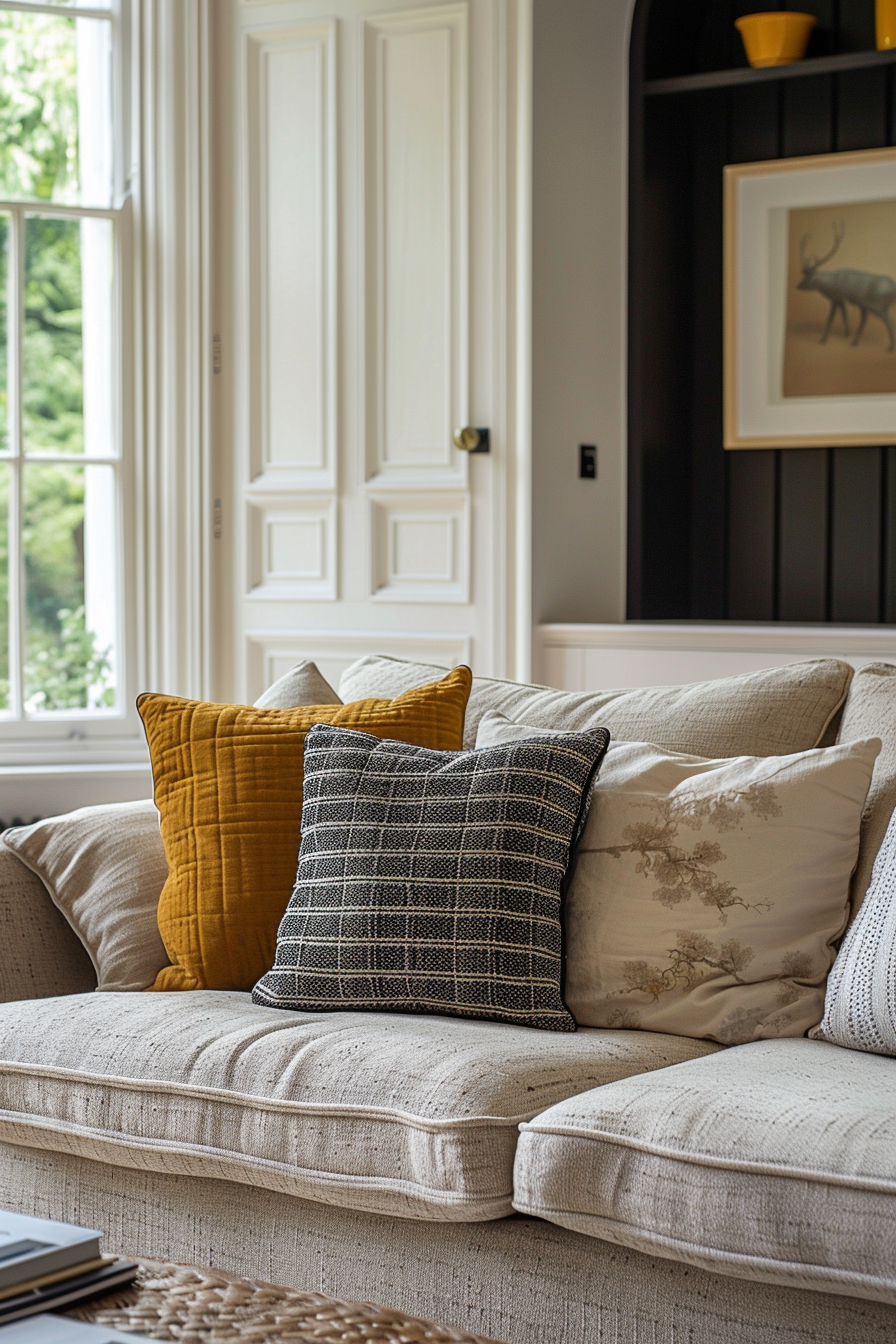
Cream, mustard, sage green, navy blue, blush pink, terracotta, and rust cushions all look great with a grey sofa. The best choice depends on your sofa’s shade, undertone, and living room style.
A grey sofa is a common choice in American homes. It fits well in apartments, family rooms, open-plan living spaces, and cozy suburban homes. It also gives you plenty of freedom when decorating. You can change your cushions, throws, and other small accents without replacing your main furniture.
The trick is to choose colors that work with your sofa rather than simply picking shades you like. A light grey couch can look fresh with navy, sage, or dusty pink cushions. A dark charcoal sofa can look warmer with cream, mustard, rust, or soft beige. The right mix can make your room feel calm, bright, cozy, or bold.
Think about the other colors in your room, too. Your wall paint, area rug, curtains, coffee table, and floor all affect how cushions look. A color that looks warm in a store may appear different under the natural light in your living room. Before buying a full set, compare a few cushion covers with your sofa during the day and evening.
This guide explains the best cushion colors for grey sofas, how to mix shades and patterns, and what to choose for different sofa styles. You will also find simple color combinations you can copy, along with practical tips for creating a balanced living room.
1. Cream and Ivory Cushions for a Soft, Timeless Look
Cream and ivory are among the easiest colors to pair with a grey sofa. They soften the cool look of grey and make a living room feel warm and welcoming. This combination works with light grey, medium grey, and charcoal upholstery.
Cream is a great choice if you want a relaxed and cozy space. It looks lovely with natural wood, beige rugs, woven baskets, and soft curtains. Ivory gives a slightly cleaner look while still feeling warmer than bright white.
You can use cream cushions as the main color and add one darker accent. For example, two cream cushions with one caramel or sage cushion can make a simple grey couch look thoughtfully styled.
Source: covermycushion.com
Cream
Choose cream for a warm, soft look. It works especially well with warm grey sofas and rooms with wooden furniture.
Ivory
Use ivory to brighten a charcoal sofa without creating the sharp contrast of pure white.
Oatmeal
Oatmeal adds a natural feel and works well with linen, cotton, wool, and woven textures.
How to Style Cream Cushions on a Grey Sofa
Start with two large cream cushions at the back of the sofa. Add a smaller beige or tan cushion in front. If you want more color, include one muted green or rust cushion.
For extra depth, choose different fabrics. A knitted cream cushion looks different from a smooth cotton one, even when both have similar colors. This small change helps a neutral arrangement feel rich rather than plain.
Best room style
Modern farmhouse, Scandinavian, classic, and minimalist interiors.
Best sofa shade
Light grey, medium grey, and dark charcoal.
2. Mustard Yellow Cushions Add Warmth and Energy
Mustard yellow cushions bring warmth to a grey sofa. Their golden tone stands out against grey without looking as bright as lemon yellow. This makes mustard a useful accent when your living room feels a little cold or plain.
The combination works especially well with medium grey and charcoal sofas. The darker upholstery gives mustard a strong background, allowing the color to stand out. On a light grey sofa, mustard creates a cheerful contrast that can make the whole room feel more lively.
Mustard also pairs well with wood furniture, cream throws, black metal lamps, and natural rugs. You do not need many yellow cushions to make an impact. One or two can be enough.
Source: cdn.shopify.com
Mustard velvet
A velvet cover gives the color a rich look and suits a modern or traditional living room.
Soft ochre
Choose muted ochre if you prefer a gentle accent instead of a strong yellow.
Golden yellow
Use a small amount of golden yellow for a brighter and more playful room.
What Colors Go With Mustard and Grey?
Mustard looks good with cream, charcoal, warm beige, and olive green. These shades help balance its strong golden tone.
For a simple arrangement, use two mustard cushions and two cream cushions. Add a small patterned cushion with grey and beige details to connect the colors.
Best room style
Mid-century modern, industrial, eclectic, and contemporary interiors.
Best sofa shade
Medium grey and charcoal, although it also adds contrast to light grey.
3. Sage Green and Olive Cushions Create a Natural Feel
Sage green and olive are lovely choices if you want your grey sofa to feel calm and connected to nature. These muted greens add color without taking over the room. They also work well with natural materials such as wood, jute, cotton, and linen.
Sage green is soft and light. It pairs especially well with pale grey sofas, white walls, and light wood furniture. Olive green is deeper and warmer, making it a good match for medium grey and charcoal upholstery.
Both shades are easy to combine with cream, beige, and off-white. You can also add leafy plants or botanical artwork to carry the green color around the room. This creates a more connected look without needing matching furniture.
Source: cdn.shopify.com
Sage green
A soft green that gives a light grey sofa a peaceful and fresh appearance.
Olive green
A deeper earthy shade that adds warmth to medium grey and charcoal upholstery.
Forest green
A rich option for a dramatic look, especially when used with cream or brass accents.
How to Mix Green Cushions With Grey
Try two sage cushions with one cream cushion and one patterned cushion that includes green. This creates a relaxed arrangement with enough variety to keep the sofa interesting.
For a richer look, combine olive or forest green with beige and warm white. A wooden coffee table and a natural rug can help bring the whole scheme together.
Best room style
Scandinavian, organic modern, farmhouse, and nature-inspired interiors.
Best sofa shade
Sage suits light and medium grey. Olive and forest green work well with medium and dark grey.
4. Navy Blue Cushions Give a Grey Sofa a Classic Look
Navy blue is a strong choice if you want a clean and elegant living room. It adds depth to grey upholstery and creates a classic color combination that does not feel too busy.
Navy works particularly well with light and medium grey sofas. The darker blue gives the sofa a clear contrast, while the grey keeps the room from feeling too dark. With a charcoal sofa, choose lighter blue or ivory cushions to keep the arrangement visible.
You can pair navy cushions with white, cream, pale blue, or silver-grey accents. Striped and geometric patterns are also useful when you want a little more detail.
Source: cdn.shopify.com
Navy blue
A deep shade that creates a polished and classic appearance.
Dusty blue
A softer shade that makes the sofa area feel relaxed and bright.
Teal blue
A richer blue-green tone that brings more color and personality to grey upholstery.
The Best Colors to Pair With Navy
Navy and cream make a balanced combination. Navy adds depth, while cream brings light into the arrangement. You can also introduce a pale blue patterned cushion to connect the two shades.
For a more modern look, use navy with white and charcoal. Keep the rest of the room fairly simple so the cushions remain the main accent.
Best room style
Coastal, traditional, modern, and transitional living rooms.
Best sofa shade
Light grey and medium grey, with lighter accents on charcoal.
5. Blush Pink Cushions Add a Soft and Welcoming Touch
Blush pink is a gentle way to add color to a grey sofa. It softens the look of grey and gives the room a warm, relaxed feel. Unlike bright pink, blush is muted enough to work with many decorating styles.
This color is especially attractive with light grey and silver-grey sofas. It also works with charcoal when you choose a deeper dusty pink or a fabric with a little texture.
Blush pink pairs well with ivory, beige, taupe, and muted gold. These colors help create a soft palette that feels balanced rather than overly sweet.
Source: cdn.shopify.com
Pale blush
A light pink that creates a gentle contrast with light grey upholstery.
Dusty rose
A deeper muted pink that works well with medium grey and charcoal.
Muted mauve
A pink-purple shade that adds a slightly richer look to a neutral room.
How to Keep Pink Cushions From Looking Too Sweet
Balance pink with a natural neutral. For example, use two blush cushions with one oatmeal cushion and one charcoal or taupe accent.
Choose linen, cotton, or textured velvet instead of shiny fabrics if you prefer a relaxed look. Natural wood and simple artwork can also help keep the room grounded.
Best room style
Contemporary, soft minimalist, romantic, and transitional interiors.
Best sofa shade
Light grey, silver grey, and medium grey.
6. Terracotta and Rust Cushions Bring an Earthy Warmth
Terracotta and rust cushions are excellent if you want to make a grey sofa feel warmer. These earthy shades add a cozy touch and create a noticeable contrast without looking overly bright.
Terracotta has an earthy orange-brown tone. Rust is usually deeper and more reddish. Both work well with medium grey and charcoal sofas, although softer terracotta can also look attractive against light grey.
These colors suit rooms with wooden furniture, leather details, woven rugs, and warm white walls. They are also a good way to bring an autumn-inspired look into your living room throughout the year.
You can use terracotta as the main accent and add cream or beige to soften the arrangement. A patterned cushion with small rust and grey details can help connect the colors.
Source: roomes.co.uk
Terracotta
A warm clay shade that creates a relaxed, earthy atmosphere.
Burnt orange
A stronger accent that stands out against medium and dark grey.
Rust
A deeper orange-red shade that gives grey upholstery a rich and cozy look.
How to Style Rust Cushions With Grey Upholstery
Start with two rust cushions and one cream cushion. Add a smaller patterned cushion with warm brown or grey details if you want more visual interest.
A warm wood coffee table, beige rug, and soft lighting can complete the look. You do not need to use orange in every part of the room. A few repeated accents are enough.
Best room style
Boho, rustic, industrial, eclectic, and modern farmhouse interiors.
Best sofa shade
Medium grey, charcoal, and cool grey.
7. Beige and Taupe Cushions Create a Warm Neutral Palette
Beige and taupe are great choices when you want your grey sofa to look stylish without adding strong colors. They bring warmth to grey upholstery and create a calm space that is easy to update.
Beige is generally lighter and warmer, while taupe can have grey, brown, or purple undertones. Both shades can work with grey sofas, but the exact tone matters. A warm beige often suits a warm grey sofa, while a cooler taupe can complement a blue-grey sofa.
This combination is useful in rooms where you already have neutral walls, wooden floors, or cream curtains. Different fabric textures can prevent the whole arrangement from looking too similar.
Source: citizenside.com
Warm beige
Adds a soft golden warmth to cool and medium grey upholstery.
Taupe
Creates a subtle connection between grey and brown tones.
Camel
Adds a richer natural color that looks attractive with charcoal and medium grey.
How to Avoid a Flat Neutral Look
Avoid choosing every cushion in almost the same shade. Instead, combine a light beige cushion with a deeper taupe one and add a textured cream design.
You can also introduce a small pattern with beige, white, and grey. The different tones will create depth while keeping the room peaceful.
Best room style
Minimalist, transitional, contemporary, and modern farmhouse interiors.
Best sofa shade
Warm grey, greige, medium grey, and charcoal.
8. White Cushions Make a Grey Sofa Look Bright and Fresh
White cushions create a fresh and simple look against grey upholstery. They are especially useful if you have a dark grey sofa and want to brighten the seating area.
Pure white gives a crisp contrast, while off-white and warm white create a softer effect. If your room has warm wood floors and cream walls, off-white may blend more naturally than a very bright white.
White cushions can also make a small living room feel more open. Pair them with one darker accent or a gentle color such as sage or dusty blue to avoid an overly plain arrangement.
Source: covermycushion.com
Bright white
Creates a clean and sharp contrast with dark grey.
Off-white
Offers a softer look and works with both warm and cool grey.
White with patterns
Adds visual detail through stripes, small geometric prints, or subtle woven designs.
Are White Cushions Practical for Family Rooms?
White cushions can show dirt and stains more easily than darker covers. If you have children, pets, or a busy family room, check the fabric care label before buying.
Removable covers can make upkeep easier. You may also prefer ivory, oatmeal, or light beige if you want a similar bright look with a little less concern about everyday marks.
Best room style
Modern, coastal, minimalist, and Scandinavian interiors.
Best sofa shade
Medium grey and charcoal, as well as pale grey when the cushions have enough texture.
9. Burgundy and Deep Red Cushions Create a Rich Look
Burgundy and wine-red cushions bring depth and warmth to a grey sofa. These shades are richer than bright red and can make a living room feel more refined.
Burgundy works especially well with medium and dark grey. It also pairs nicely with cream, taupe, charcoal, and muted gold accents. If you prefer a softer appearance, choose dusty wine or muted berry rather than a very dark red.
A little burgundy can go a long way. Use one or two cushions and let neutral shades balance the arrangement. This keeps the room from feeling too heavy.
Source: cdn.shopify.com
Burgundy
A deep red shade that creates a classic and rich accent.
Wine red
A slightly softer option for traditional and modern living rooms.
Muted berry
Adds a gentle red-purple tone without overwhelming the sofa.
What Goes With Burgundy Cushions?
Try burgundy with ivory and warm beige for a balanced look. If you like a richer style, add a small amount of forest green or dark brown.
Velvet and woven fabrics can make deep red cushions feel more layered. Keep patterns simple if you already have several strong colors in the room.
Best room style
Traditional, transitional, vintage-inspired, and elegant contemporary interiors.
Best sofa shade
Medium grey and charcoal.
10. Black and Charcoal Cushions Create a Modern Contrast
Black and charcoal cushions can create a sharp and modern look with a grey sofa. This combination works best when there is a clear difference between the sofa and the cushions.
Black cushions stand out against light grey upholstery. Charcoal cushions can add depth to a pale grey couch without introducing a completely different color. However, dark cushions may disappear against a sofa that is already charcoal.
To keep the arrangement from feeling too dark, mix black or charcoal with cream, white, or pale grey. A textured black cushion can also add interest without making the room feel busy.
Black
Creates a strong, graphic look against light grey upholstery.
Charcoal
Adds a subtle dark layer and works well in a tonal color scheme.
Black and white patterns
Introduce contrast and detail without adding another major color.
How to Stop a Black and Grey Room From Looking Cold
Add a warm neutral such as cream, beige, or oatmeal. Natural wood furniture can also soften the contrast between black and grey.
Use different textures to make the cushions feel inviting. A knitted cushion, a soft cotton cover, and a smooth velvet design can create variety while keeping the same simple palette.
Best room style
Industrial, minimalist, modern, and monochrome interiors.
Best sofa shade
Light and medium grey.
11. Best Cushion Colors for Light, Medium, and Dark Grey Sofas
The shade of your sofa makes a big difference when choosing cushions. A pale grey sofa gives you a light background, so both dark and bright accents can stand out. A charcoal sofa has more visual weight and often looks better with cushions that add light or warmth.
Medium grey sits between these two extremes. It is flexible enough to work with warm earthy colors, cool blues, soft greens, and neutral shades.
The following table gives you a simple starting point. These are useful combinations rather than strict rules, so feel free to adjust them to match your walls, floors, and personal style.
Check the contrast
Choose cushions that are clearly lighter or darker than the sofa so their shape and color remain visible.
Consider the room
Use the colors already present in your rug, curtains, and furniture to guide your choice.
Cushion Color Guide by Sofa Shade
For a light grey sofa, navy, mustard, sage, blush, and charcoal create attractive contrast. Cream and beige offer a softer result, especially when the cushions have a different texture from the upholstery.
For medium grey, you can choose almost any of the colors in this guide. Terracotta, olive, navy, and dusty pink are especially useful when you want a noticeable but balanced accent.
For dark grey or charcoal, cream, ivory, oatmeal, mustard, and rust can brighten the sofa. If you prefer cool colors, try pale blue or sage rather than several dark blue cushions.
Light grey
Try navy, sage, mustard, blush pink, cream, or charcoal.
Medium grey
Try terracotta, olive, navy, beige, dusty pink, or mustard.
Dark grey
Try ivory, cream, rust, ochre, pale blue, or warm beige.
Blue-grey
Try sage, teal, navy, blush, and warm cream.
Warm grey
Try camel, taupe, olive, terracotta, and oatmeal.
12. How to Tell Whether Your Grey Sofa Has Warm or Cool Undertones
Not all grey fabrics look the same. Some have a blue or silvery cast, while others lean toward beige, brown, or taupe. These subtle differences are called undertones, and they can affect how cushion colors look beside your sofa.
A cool grey sofa often looks crisp and slightly blue in natural daylight. A warm grey sofa may look softer, with a hint of brown or beige. Knowing which type you have can help you choose colors that look connected rather than out of place.
Cool grey
Often pairs naturally with navy, dusty blue, sage, teal, blush, and crisp white.
Warm grey
Often pairs naturally with cream, camel, mustard, rust, olive, and terracotta.
A Simple Way to Check Your Sofa’s Undertone
Place a sheet of plain white paper next to the sofa in natural daylight. Look closely at the fabric rather than judging the color from memory.
If the grey looks blue or silvery beside the paper, it likely has a cool undertone. If it looks beige, brown, or slightly taupe, it likely has a warm undertone.
Repeat the check in the evening under your regular lamps. Warm indoor bulbs can change how grey upholstery appears, so it helps to see the fabric in both types of light.
Useful tip
Compare cushion fabric samples directly with the sofa instead of relying only on online product photos.
Avoid this mistake
Do not judge your sofa’s undertone from a phone or computer screen alone.
13. How to Mix Cushion Colors Without Making the Sofa Look Messy
Mixing cushion colors is a simple way to give a grey sofa more personality. The key is to keep the color palette small and repeat a few shades across the arrangement.
A useful starting point is two main colors and one neutral. For example, use sage green as your main accent, cream as your neutral, and a small amount of beige in a patterned cushion.
You can also use different shades of one color. Light blue, navy, and grey create a layered blue palette, while rust, terracotta, and cream create a warmer look.
Limit the main colors
Choose two main colors and one neutral for a simple arrangement.
Repeat accent colors
Use the same accent shade in at least two places on the sofa or elsewhere in the room.
Mix cushion sizes
Combine large square cushions with smaller squares or a rectangular lumbar cushion.
Leave room to sit
Avoid filling every seat with cushions that need to be moved before someone can relax.
Three Easy Color Combinations to Copy
If you are unsure where to start, use one of these simple palettes. Each one works with a different decorating mood.
Warm and cozy
Combine cream, rust, and mustard. This palette is a good fit for rooms with warm wood furniture and beige rugs.
Fresh and calm
Combine sage, ivory, and dusty blue. This works well with light walls, natural fabrics, and plants.
Classic and elegant
Combine navy, cream, and charcoal. This creates a clean contrast that suits modern and traditional spaces.
Soft and romantic
Combine blush pink, beige, and ivory. This palette adds gentle color without making the room feel busy.
Earthy and natural
Combine olive, terracotta, and oatmeal. This creates a relaxed look with a strong connection to natural materials.
14. Choose Cushion Fabrics That Add Texture
Color is only one part of a good cushion arrangement. Fabric also matters because different surfaces catch light in different ways. Even cushions in the same color can look very different when one is smooth and another is knitted or woven.
If your grey sofa has smooth upholstery, textured cushions can add warmth and depth. If the sofa already has a strong woven texture, smoother cushion covers may create a more balanced result.
Think about how you use the room, too. A decorative cushion for a formal living room may not need the same level of easy care as one used every day in a family room.
Velvet
Velvet adds a soft, rich surface and works especially well with mustard, navy, burgundy, and emerald.
Linen
Linen has a relaxed look and suits cream, beige, sage, and earthy color schemes.
Cotton
Cotton is a flexible everyday option available in many colors and patterns.
Knitted fabric
Chunky knit adds a cozy feel and works well with neutral and warm accent colors.
Boucle
Boucle adds a nubby texture that can make a simple grey sofa feel more layered.
How to Mix Textures Successfully
Try pairing a smooth cotton cushion with a knitted design and a velvet accent. Keep the colors connected so the different surfaces do not compete.
For example, a grey sofa can carry one cream linen cushion, one sage velvet cushion, and one cream knitted cushion. The colors stay simple, but the textures make the arrangement more interesting.
For everyday use
Look for covers that can be removed and cleaned according to their care labels.
For a decorative sofa
Consider richer fabrics and more detailed textures when easy cleaning is less important.
15. How Many Cushions Should You Put on a Grey Sofa?
The right number of cushions depends on your sofa’s size and how much seating space you want to keep free. A small sofa can look crowded with too many cushions, while a large sectional may need more pieces to feel balanced.
For many sofas, three to five cushions are a practical starting point. You can use two large cushions at the back, smaller accents in front, and a rectangular cushion to add variety.
Do not feel that you need to follow an exact number. Comfort comes first. If you regularly move cushions out of the way to sit down, your arrangement may be too full.
Two-seat sofa
Try two or three cushions, depending on the sofa’s width.
Three-seat sofa
Try three to five cushions with a mix of sizes.
Large sectional
Try five to seven cushions spread across the seating areas.
Small loveseat
One or two cushions may be enough to add color without taking up too much space.
An Easy Cushion Arrangement for a Three-Seat Grey Sofa
Place two large neutral cushions at the back, one at each end. Add two medium accent cushions in front, then finish with one smaller patterned or rectangular cushion.
Keep the colors connected. For example, use two cream cushions, two sage cushions, and one patterned cushion with cream and sage details.
This arrangement creates balance without making the sofa look like a display shelf. You can also remove the center cushion when you need more room.
Large cushions
Use these as the main background layer.
Medium cushions
Use these to introduce your main accent color.
Small accent cushion
Use one patterned or contrasting piece to finish the arrangement.
16. Common Cushion Styling Mistakes to Avoid
Even attractive colors can look wrong when the arrangement does not suit the sofa or room. A few small changes can help you avoid common decorating problems.
The goal is not to make every cushion match. It is to create a clear connection between the cushions, sofa, and other items in the room.
Using too many colors
Several unrelated shades can make the sofa look busy. Start with a small palette and add more only when the colors connect naturally.
Choosing cushions that disappear
Cushions that match the sofa too closely may blend into the upholstery. Use a clear difference in color, shade, or texture.
Ignoring the room’s lighting
A color can look different in daylight and under warm lamps. Check samples in both settings.
Mixing too many patterns
Several large prints can compete for attention. Use a few plain cushions to give the eye a place to rest.
Choosing style over comfort
Large or stiff cushions may take up useful seating space. Choose shapes and fillings that suit how you use your sofa.
Forgetting practical care
Light-colored covers may need more frequent cleaning. Check washing instructions before choosing fabrics for busy homes.
What If Your Cushion Colors Do Not Look Right?
First, remove one or two cushions and look at the sofa again. Sometimes the problem is not the colors themselves but the number of pieces or patterns in the arrangement.
Next, add a neutral cushion such as cream, beige, or ivory. This can help separate strong colors and make the group feel more balanced.
If a cushion still looks out of place, compare it with your room’s other fabrics. It may work better in another room, or you may need a different shade of the same color.
Too dark
Add cream, ivory, or oatmeal to brighten the arrangement.
Too plain
Add one textured or patterned cushion.
Too colorful
Remove one accent shade and keep the strongest color.
Too cold
Add rust, beige, mustard, or warm cream.
17. How to Match Grey Sofa Cushions With Rugs, Curtains, and Walls
Your cushions should work with the whole living room, not just the sofa. Rugs, curtains, wall paint, and furniture all help shape the final color scheme.
You do not need every item to match exactly. Instead, repeat one or two cushion colors in other parts of the room. A sage cushion can connect with a plant or artwork, while a rust cushion can pick up the warm tones in a rug.
This approach makes the room feel connected without creating a perfectly matched set.
With cream rugs
Try sage, rust, navy, or mustard cushions for a little contrast.
With beige curtains
Try olive, terracotta, caramel, or dusty pink.
With white walls
Try almost any accent color, including navy, green, mustard, and burgundy.
With dark walls
Use cream, ivory, pale blue, or muted pink to keep the sofa area from feeling too heavy.
With wooden furniture
Try warm colors such as camel, terracotta, olive, and oatmeal.
Should Cushions Match the Area Rug?
No. Your cushions do not need to match your rug exactly. It is usually enough for them to share one color or a similar tone.
For example, if your rug has cream and rust details, you can use cream cushions with one plain rust cushion. This creates a connection without making the room look overly coordinated.
Simple rule
Repeat one color from the rug in at least one cushion, throw, or decorative item.
18. How to Choose the Right Cushions Before Buying
Before ordering new cushions, take a little time to compare colors, sizes, and fabrics. This can save you from buying covers that look different from what you expected.
Start by looking at your sofa in natural daylight. Then take a photo of the room and note the main colors in the rug, curtains, walls, and furniture. Use these details to narrow down your choices.
If possible, order fabric samples or use cushion covers you already own to test the color. Place them on the sofa and look at them from different parts of the room.
Choose a material that suits your sofa’s texture and your daily needs.
Read the care label
Check whether the cover is machine washable, hand washable, or dry-clean only.
Test the color
Compare your preferred shades in daylight and evening light.
Start with a small group
Buy one or two accent cushions first if you are unsure about the final color scheme.
A Simple Shopping Plan
Choose your main cushion color first. This should be the shade that gives your sofa the mood you want, such as sage for a calm look or rust for warmth.
Next, select a neutral cushion that balances the main color. Finish with one patterned or textured cushion if you want extra detail.
Once everything arrives, arrange the cushions on the sofa and remove any piece that feels unnecessary. A simple group often looks better than one with too many competing colors.
First choice
Select the main accent color.
Second choice
Add a neutral shade for balance.
Final choice
Add one pattern or texture to complete the look.
Frequently Asked Questions
Q
What is the best single cushion color for a grey sofa?
Cream is one of the most flexible choices because it works with light, medium, and dark grey sofas. It adds warmth and contrast without taking over the room. If you want a stronger accent, mustard, navy, and sage are also useful options.
Q
What color cushions go with a dark grey sofa?
Cream, ivory, beige, mustard, rust, and pale blue all work well with a dark grey sofa. These shades create contrast and help brighten the seating area. You can also use sage or blush pink for a softer look.
Q
What color cushions go with a light grey sofa?
Light grey sofas look attractive with navy, charcoal, mustard, sage green, dusty pink, and terracotta. Cream and beige are good choices if you prefer a gentle and neutral style. Try to include at least one shade that differs clearly from the sofa.
Q
Can you put grey cushions on a grey sofa?
Yes. Grey cushions can look stylish on a grey sofa when you use different shades and textures. For example, pair pale grey cushions with charcoal upholstery, or use darker charcoal cushions on a light grey couch. Add cream or another accent color if the arrangement feels too plain.
Q
Do green cushions go with a grey sofa?
Yes. Sage, olive, and forest green all pair well with grey upholstery. Sage creates a soft and fresh look, while olive adds warmth and forest green creates a richer contrast. Add cream or beige if you want a more balanced color scheme.
Q
Do brown cushions go with a grey sofa?
Yes. Brown, camel, tan, and caramel cushions can warm up grey upholstery. They work especially well with warm grey sofas, wooden furniture, and natural rugs. Choose a lighter brown for charcoal upholstery if you want more contrast.
Q
How many cushions should I put on a grey sofa?
A two-seat sofa can look good with two or three cushions, while a three-seat sofa can usually carry three to five. Large sectionals may need five to seven, depending on their shape. Keep enough open seating space for comfort.
Q
Should cushions be lighter or darker than a grey sofa?
Either option can work. Lighter cushions create contrast on dark grey upholstery, while darker cushions stand out against light grey. The most important thing is to create enough difference in shade, color, or texture so the cushions do not disappear.
Q
What patterns look good on a grey sofa?
Stripes, simple geometric prints, botanical designs, and subtle abstract patterns can all work well. Choose patterns that include at least one color already used in your cushion arrangement or room. If you use several plain cushions, one patterned cushion can add enough detail.
Q
What cushion colors make a grey sofa look warmer?
Mustard, rust, terracotta, caramel, camel, and warm cream can make a grey sofa feel warmer. These shades work especially well when paired with wood furniture, warm lighting, and natural fabrics.
✦ Wrapping Up
Conclusion
Choosing cushions for a grey sofa is easier when you start with the look you want. Cream, ivory, and beige create a soft and timeless style. Mustard, rust, and terracotta bring warmth, while navy and sage offer a fresh and balanced finish. Blush pink and burgundy are useful when you want something softer or richer.
Your sofa’s shade and undertone should guide your choice. Light grey can handle bold contrasts, while charcoal often benefits from lighter accents. Medium grey gives you plenty of room to experiment with warm and cool colors.
You do not need a large collection of cushions to make your sofa look good. Start with two main colors and one neutral, then add a mix of textures or a simple pattern. Most importantly, choose covers that feel comfortable and suit your everyday life.
💡 Key Takeaway
For an easy starting point, place two cream cushions and two sage or rust cushions on your grey sofa. Add one small patterned cushion that includes both colors. Test the arrangement in your room’s natural light, adjust the balance, and keep the cushions that make your living space feel comfortable and welcoming.