

A blender can be loud, powerful, and still leave you with a lumpy mess. If you are asking, “Why is my blender not blending smoothly?”, the problem is often simple. Too little liquid, too much food, dull blades, or the wrong blending order can all cause it.
I have learned that blender problems are often blamed on the motor first. That is not always fair. Before replacing the blender, it is worth checking how the food sits around the blades, how much liquid you use, and how full the jar is. These small things can make a big difference.
Why Is My Blender Not Blending Smoothly?
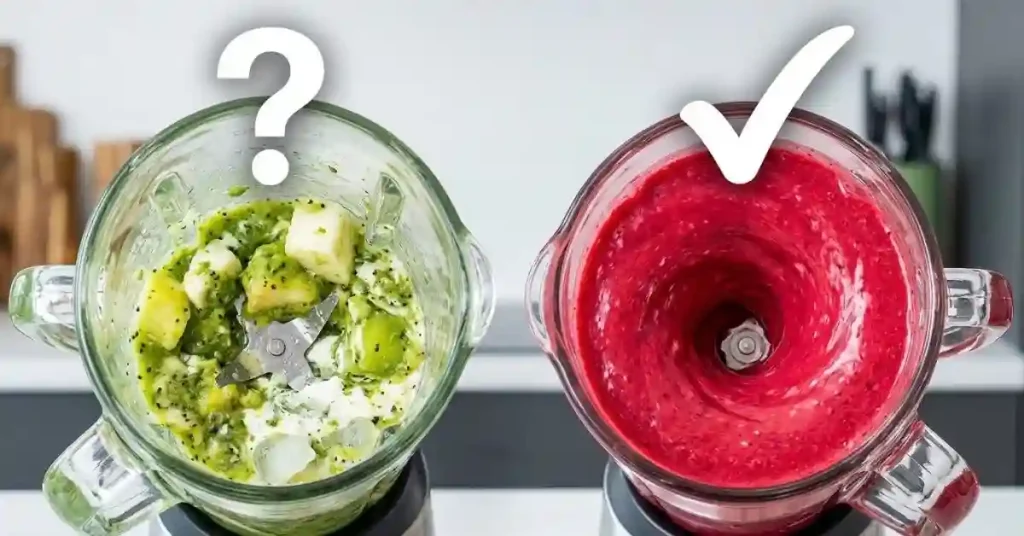
The most common reason is poor food movement inside the blender jar. The blades need food to move down toward them and then back up around the sides. When the mixture is too thick, too dry, or packed too tightly, that cycle breaks.
Here are the main causes I would check first:
| Symptom | Likely cause |
| Food stays above the blades | Mixture is too thick or dry |
| Large chunks remain | Food pieces are too big |
| Blender spins but food barely moves | Air pocket or food stuck around blades |
| Smooth at first, then stops | Jar is too full |
| Warm, slow motor | Heavy load or long blending time |
This is why adding more power is not always the answer. A strong blender can still struggle if the ingredients cannot reach the blades.
Too Little Liquid Can Stop Smooth Blending
This is one of the easiest mistakes to make.
When I want a smooth soup, smoothie, sauce, or puree, I make sure there is enough liquid for the ingredients to move. A dry mix can sit in place while the blades spin underneath it.
You do not always need a lot of liquid. Start with a small amount and add more as needed. This is better than flooding the mixture and ending up with something too thin.
| Food | What usually helps |
| Smoothies | Milk, water, or juice |
| Soups | Broth or cooking liquid |
| Sauces | Water, stock, or oil |
| Nut mixtures | Small amounts of liquid or oil |
The right amount depends on the food and blender. A smoothie needs different liquid than hummus or nut butter.
Is Your Blender Jar Too Full?
Overfilling is another common reason a blender does not blend well. The top layer may not move down, even while the blades are spinning fast.
I used to think filling the jar saved time. In practice, it can make blending slower. You may need several long runs, and the result can still be uneven.
A good rule is to leave room for the ingredients to circulate. If the jar is packed to the top, remove some of the mixture and blend it in smaller batches.
| Problem | Better approach |
| Jar is packed full | Blend in two batches |
| Food sits on top | Add a little liquid |
| Thick food forms a mound | Stop and stir safely |
| Bottom blends first | Reduce the load |
Always check your blender manual for its maximum fill line. Some foods also expand while blending, so extra space can matter.
Why Smaller Batches Often Work Better
A smaller batch gives the blades more access to the food. It also lets the ingredients move around the jar more freely.
This matters a lot with frozen fruit, cooked vegetables, thick dips, and chunky sauces. If your blender works well with half a jar but struggles with a full jar, the batch size is a strong clue.
Are Your Ingredients Too Large or Too Hard?
Large pieces can make smooth blending much harder. This is especially true with carrots, apples, frozen fruit, ice, and firm vegetables.
Cut food into smaller pieces before adding it. You do not need perfect cubes. You just want pieces that are small enough for the blades to catch easily.
| Ingredient | Easier preparation |
| Carrots | Cut into small pieces |
| Apples | Remove the core and chop |
| Frozen fruit | Use smaller pieces when possible |
| Cooked vegetables | Cut into chunks |
| Ice | Use the amount your blender allows |
I also avoid putting one huge piece into a jar with softer food. The blade may simply push it around.
Frozen Food Can Be a Special Problem
Frozen ingredients are useful for smoothies, but they can create a very thick mix. They may also form air pockets around the blades.
If your blender struggles, let some frozen food soften for a few minutes. You can also add liquid before adding the frozen ingredients.
Do not assume that adding more frozen food will make a thicker smoothie better. At some point, the blender needs enough liquid to keep everything moving.
Is an Air Pocket Trapping the Food?
Sometimes the blender is working, but the food is not reaching the blades. This can happen when thick food forms a hollow space around the blade area.
You may hear the motor running while the ingredients barely move. This is a classic sign that the mixture needs help.
| What you notice | What it may mean |
| Blade spins freely | Food may not be reaching it |
| Food sticks to jar walls | Mixture is too thick |
| Top stays still | Circulation has stopped |
| Loud motor with little progress | Load may be too heavy |
Turn the blender off before checking the jar. Never put your hand near moving blades.
For a thick mixture, use the blender’s tamper if it came with one. Otherwise, unplug the blender and use a safe utensil to move the food only when the blades have fully stopped.
Could the Blades Be Dull or Damaged?
Blender blades do not stay perfect forever. Heavy use can wear them down. They can also become damaged if the blender is used in ways the manufacturer does not allow.
A dull blade may still spin. That can make the problem confusing. You may hear the motor and see the blade moving, yet the food stays chunky.
Before blaming the blades, check the other causes first. A blade cannot fix a mixture that is too dry or overloaded.
Look for Changes in Blending Performance
If the blender used to make smooth drinks quickly but now takes much longer, pay attention to the change.
A sudden drop in performance may point to a blade, motor, coupling, or other mechanical issue. A gradual problem that only happens with thick foods may be more about the recipe or load.
Do not try to sharpen blender blades yourself unless the manufacturer specifically supports that process. Replacing the blade assembly may be safer.
Are You Adding Ingredients in the Wrong Order?
Ingredient order can affect how well a blender works. This is especially clear with smoothies and thick mixtures.
A simple approach is to put liquid near the blades first. Then add softer foods and finish with harder or frozen ingredients.
| Add first | Add next | Add last |
| Liquid | Soft fruit and vegetables | Frozen or hard food |
| Milk or juice | Yogurt | Ice |
| Broth | Cooked vegetables | Frozen fruit |
This is not a universal rule for every blender. Some models have their own instructions. Still, giving the blades access to liquid can help create better movement.
Does Your Blender Need a Different Speed?
Running a blender at one speed from start to finish does not always give the best result.
For many mixtures, starting slowly can help pull the ingredients toward the blades. Once the food starts moving, increasing the speed can help finish the job.
Pulse mode can also help break up stubborn chunks. It is useful when large pieces are sitting above the blade area.
| Mixture | Useful approach |
| Smoothie | Start low, then increase |
| Chunky salsa | Use short pulses |
| Soup puree | Blend steadily |
| Thick dip | Use short runs and check often |
Your blender may have preset programs. If it does, those settings can be useful because the machine may change speed during the cycle.
Why Does My Blender Blend the Bottom but Not the Top?
This usually means the food is not circulating properly.
The blades may be creating a small vortex at the bottom while the upper food stays almost still. This can happen with thick mixtures, large batches, or too little liquid.
I find this is one of the clearest signs that the mixture needs better movement rather than simply more blending time.
Try stopping the blender, checking the mixture, and adding a little liquid if the recipe allows it. If the jar is very full, remove some food and blend a smaller amount.
Why Is My Blender Leaving Chunks?
Chunks can come from several different problems. The most common are large ingredients, hard ingredients, low liquid, and poor circulation.
Do not keep running the blender for five or ten extra minutes and hope the chunks disappear. That can put extra heat and stress on the motor.
| Chunky result | First thing to try |
| Fruit chunks | Cut fruit smaller |
| Vegetable chunks | Cook or chop first |
| Ice chunks | Use smaller amounts |
| Thick sauce | Add a little liquid |
| Nut mixture | Use the correct blender setting |
If the same recipe stays chunky every time, change one thing at a time. This makes it much easier to find the real cause.

Common Blender Mistakes I Would Avoid
A few habits can make blending harder than it needs to be. These are easy to overlook because the blender still appears to be working.
| Mistake | Better approach |
| Filling the jar to the top | Leave room to circulate |
| Using no liquid | Add enough for movement |
| Adding huge food chunks | Chop first |
| Blending thick food for too long | Stop and adjust the mix |
| Ignoring the manual | Follow the model’s limits |
One mistake I would especially avoid is treating every blender like a high-powered commercial machine. A blender has limits. A recipe that works well in one model may be too thick for another.
What Should You Do If Your Blender Still Won’t Blend Smoothly?
If you have fixed the food size, liquid level, batch size, and ingredient order but the blender still struggles, look at the machine itself.
Check whether the blade assembly is fitted correctly. Look for visible damage. Check the jar, lid, blade area, and drive connection for problems.
If the motor smells hot or the machine gets unusually warm, stop using it and let it cool. Repeatedly forcing a struggling blender can turn a small problem into a bigger one.
| Check | What you are looking for |
| Blade assembly | Damage or poor fit |
| Jar | Cracks or damage |
| Motor | Overheating or unusual smell |
| Base connection | Loose or worn parts |
If the blender is under warranty, it is better to follow the manufacturer’s service instructions than to take the motor apart yourself.
How I Would Troubleshoot a Blender That Is Not Blending Smoothly
When a blender gives me a poor result, I would not change five things at once. That makes troubleshooting harder.
Instead, work through the problem in a simple order.
First, reduce the batch. Then check the food size. Add a little liquid if the recipe allows it. Start the blender again and watch how the ingredients move.
If that fixes the problem, you have learned something useful. If it does not, then check the blade and machine.
A Simple Blender Troubleshooting Order
This approach can save a lot of wasted time:
- Stop the blender.
- Check whether the jar is too full.
- Look for food stuck above the blades.
- Check whether the mixture needs more liquid.
- Reduce large food pieces.
- Restart at a lower speed.
- Increase the speed as the mixture begins to move.
- Check the blade and machine if the issue continues.
The key is to change one variable at a time. That gives you a much better idea of what actually solved the problem.
Can a Blender Be Too Powerful for a Recipe?
More power is helpful, but power alone does not guarantee a smooth result.
A powerful motor can spin the blades very fast while the food remains poorly positioned. If the mixture is too thick or the jar is overloaded, even a strong blender can struggle.
This is why I would focus on food movement rather than wattage alone. The best result comes from the right mix of speed, liquid, batch size, ingredient size, and blade action.
| Factor | Why it matters |
| Motor power | Helps handle tough loads |
| Blade design | Cuts and moves ingredients |
| Liquid | Helps food circulate |
| Jar shape | Affects food movement |
| Batch size | Controls how freely food moves |
Final Thoughts on Why Is My Blender Not Blending Smoothly?
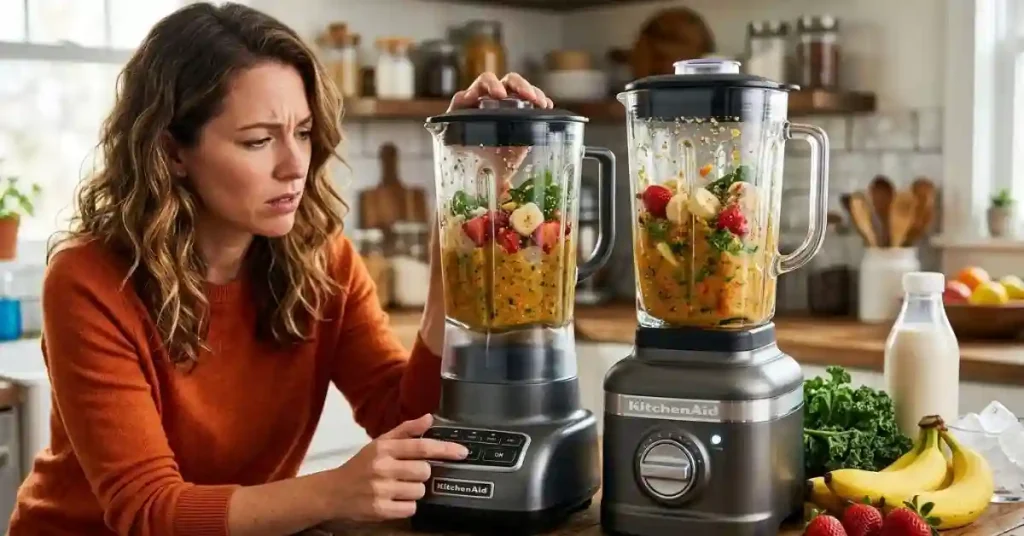
If you are wondering why your blender is not blending smoothly, do not assume the motor is broken right away. In many cases, the real issue is too much food, too little liquid, large pieces, or poor circulation around the blades.
My main lesson is simple: give the blades a fair chance to do their job. Use sensible batch sizes, cut hard foods into smaller pieces, add liquid when needed, and avoid forcing a thick mixture for too long.
If the same problem continues with different foods and smaller batches, then it makes sense to inspect the blade assembly and the blender itself. That is when a mechanical problem becomes more likely.
To Get More About Home, Kitchen Accessories Product You Can Visit Our Site. If You Found our Posts Helpful Leave a Comment Below