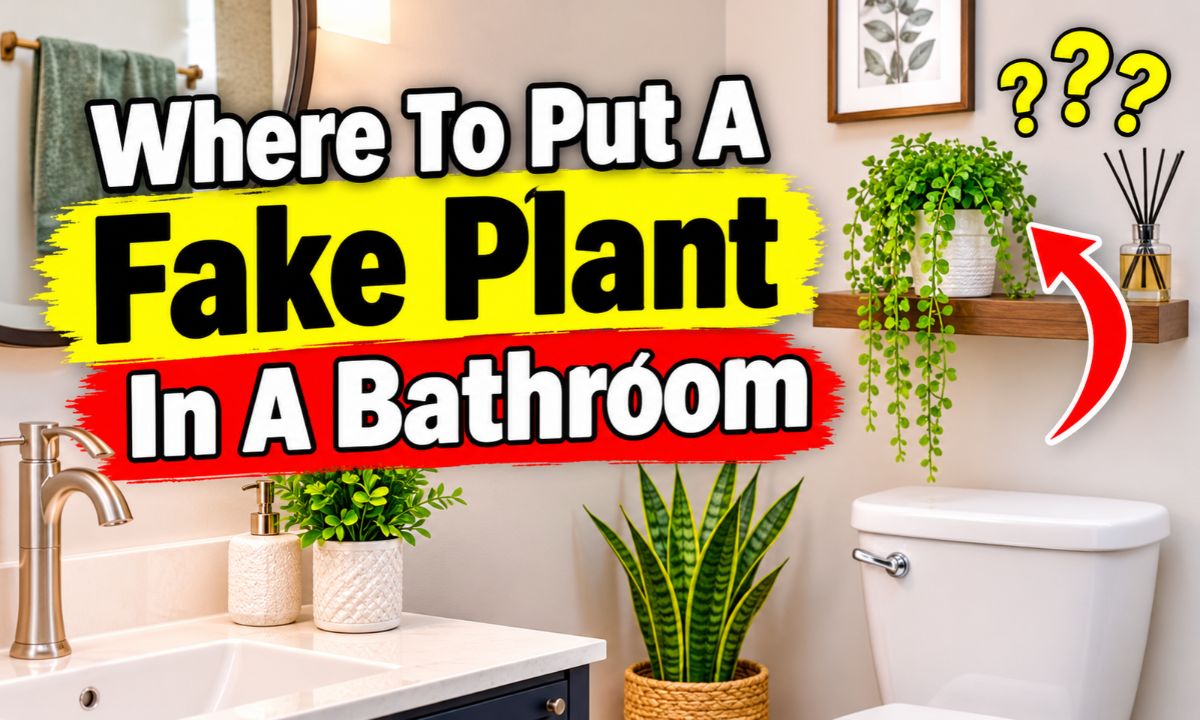
Put a fake plant on a bathroom vanity, open shelf, windowsill, toilet tank tray, or an empty corner. Choose a stable spot away from direct water spray, electrical fixtures, and ventilation openings.
In American homes, bathrooms range from small powder rooms and apartment bathrooms to large primary bathrooms with double sinks and walk-in showers. Each layout offers different ways to add greenery. A fake plant can bring color and a softer look to a room without needing sunlight, soil, or a watering routine.
The best place depends on the space you have and how you use the bathroom. A small succulent can brighten a vanity, while a trailing faux vine can soften an empty shelf. A tall artificial plant can also fill an unused corner in a larger bathroom.
However, a good display should do more than look pretty. It should stay out of the way, remain easy to clean, and avoid areas that get soaked during daily use. Think of artificial greenery as a finishing touch rather than something that should take over useful bathroom space.
1. Place a Small Fake Plant on the Bathroom Vanity
The bathroom vanity is one of the easiest places to display a fake plant. It is easy to see, works in most bathroom layouts, and gives a plain countertop a touch of color. A small plant beside the sink can make the room feel warmer without taking up much space.
Choose a spot at the back corner of the vanity rather than beside the faucet. This keeps the plant away from regular splashes and leaves enough room for soap, toothbrushes, and other daily items. A small ceramic or plastic pot can help the display look neat.
For a double-sink vanity, consider placing one small plant at an outer corner. You can also use two matching plants if the counter is wide enough. Leave the middle area open so the arrangement does not interfere with everyday tasks.
Best plant shapes
Small succulents, faux aloe, compact ferns, and short leafy plants work well on bathroom counters.
Best container
Use a small ceramic, resin, or plastic pot with a flat base that will not wobble.
Placement tip
Keep the plant away from faucet splashes and leave enough room to wipe the countertop.
How to Style a Plant Beside the Sink
Start with one plant and place it on a small tray if you want to group it with a soap dispenser or a decorative jar. Keep the items low so they do not block the mirror or make the sink area feel crowded. A simple arrangement often looks better than a large group of decorations.
If your vanity is narrow, choose a plant with upright leaves instead of wide branches. This adds greenery without taking up the space you need for hand washing and grooming.
For a modern vanity
Choose a compact snake plant or a simple artificial succulent in a matte pot.
For a soft, natural look
Use a small faux fern or leafy plant in a neutral planter.
2. Use Floating Shelves for Decorative Greenery
A floating shelf is a useful place for a fake plant when you want to add greenery without using valuable counter space. It works especially well in small bathrooms where every inch of the vanity matters. The plant can also add color to a plain wall.
Place a small potted plant at one end of the shelf. Leave the other end open or use one simple item, such as a folded hand towel or a small storage jar. This creates balance without making the shelf look crowded.
Trailing artificial vines are another option. Their leaves can hang slightly over the edge and soften the straight lines of bathroom tiles and shelves. Keep the vines short enough that they do not touch the sink, toilet, light fittings, or other fixtures.
Best choices
Artificial pothos, ivy, compact ferns, and small leafy arrangements suit floating shelves.
Best position
Choose a shelf that is easy to reach for cleaning and is not directly exposed to shower spray.
Important detail
Check the shelf’s weight limit and make sure the planter sits securely.
Where to Put a Plant on a Bathroom Shelf
A shelf beside or below the bathroom mirror can be a good choice if it does not interfere with the mirror or lighting. A shelf above the toilet can also work when it is firmly installed and high enough to stay clear of normal movement.
Avoid putting a plant where you must stand on a wet tub edge or toilet to reach it. You should be able to remove it safely when it needs cleaning.
Narrow shelf
Use one small upright plant.
Wide shelf
Use a medium plant with one or two simple decorative items.
3. Decorate an Empty Bathroom Corner
An empty bathroom corner is a good place for a larger fake plant. It can fill an unused area and make a spacious bathroom feel more welcoming. This idea works best in a large primary bathroom or a room with enough open floor space.
Choose a tall artificial plant with a shape that suits the room. A faux palm, upright leafy plant, or artificial fiddle-leaf-style tree can add height. A slim plant is usually better than a wide arrangement if the bathroom has limited floor space.
Place the pot against a wall or beside a vanity cabinet where it will not block the door, shower entrance, toilet access, or walking path. Use a stable planter that will not tip if someone brushes against it.
For large bathrooms
Try a tall faux palm or a leafy artificial floor plant.
For narrow corners
Choose a slim upright plant with a compact base.
For added style
Use a simple floor planter that matches the bathroom’s colors and finishes.
How to Keep a Floor Plant from Looking Out of Place
Match the plant’s height to nearby furniture and open wall space. A very small plant may look lost in a large corner, while an oversized plant can make a modest bathroom feel cramped.
You can place a waterproof tray beneath the pot to protect the floor from cleaning water or condensation. Check the tray from time to time and remove any moisture that collects beneath the planter.
Wood-look bathroom
A leafy plant in a neutral or stone-look pot can complement warm floor tones.
White bathroom
Green foliage in a simple dark or light planter creates a clear contrast.
4. Put a Small Fake Plant on the Toilet Tank
The top of the toilet tank can hold a small decorative plant when the surface is flat and the arrangement does not interfere with the toilet. This spot is useful in powder rooms and compact bathrooms where there may be little room for extra shelves.
Choose a lightweight plant in a stable pot. A small succulent, short fern, or compact leafy plant can add color without making the tank look crowded. A narrow tray can keep the arrangement together and make it easier to move when cleaning.
Do not place a large or heavy planter on the tank lid. It may fall when someone uses or cleans the toilet, and it can make access to the tank more difficult. Keep the flush handle, buttons, and any service access clear.
Good option
A small faux succulent or a compact plant in a lightweight pot.
Avoid
Heavy ceramic sculptures, wide branches, and unstable containers.
Keep it clean
Move the plant when cleaning the tank and wipe the surface beneath it.
Should You Put a Plant Behind the Toilet?
Yes, if the toilet has a wide, stable tank lid and the plant does not interfere with the flush controls. For a tankless toilet, use a nearby shelf instead. Do not balance a planter on a narrow pipe cover or an unstable ledge.
A small display is usually enough. The aim is to add a little color, not turn the toilet area into a storage shelf.
Best size
Choose a compact arrangement that leaves most of the tank lid clear.
5. Use a Bathroom Windowsill
A bathroom windowsill can be a lovely place for artificial greenery. It gives the plant a natural setting and makes use of a surface that may otherwise stay empty. This can work in both small and large bathrooms.
Choose a pot that fits the sill without touching the window or blocking its operation. A small faux succulent, aloe-style plant, or compact leafy arrangement can work well. If the sill is narrow, avoid plants with wide leaves that extend into the room.
Unlike a real plant, artificial greenery does not need sunlight to grow. However, strong direct sunlight can fade some artificial materials over time. If the window receives intense sun, choose foliage labeled as UV-resistant or move the plant to a less exposed spot.
Best choices
Small succulents, faux aloe, and compact leafy plants.
Check the window
Make sure the plant does not block the window lock, opening panel, or blinds.
Protect the sill
Use a suitable tray if the sill is exposed to condensation.
What If Your Bathroom Has a Frosted Window?
A frosted window can still provide a pleasant backdrop for a fake plant. Since the plant does not depend on daylight, you can choose it based on shape, size, and color rather than growing needs.
Leave enough room to open the window when needed. Easy access matters more than filling every part of the sill.
6. Hang Artificial Plants from a Secure Wall or Ceiling Hook
Hanging fake plants are useful when bathroom counters and floors are already full. A hanging planter can add greenery above eye level and keep the main surfaces clear. It can also soften a plain wall or an unused upper corner.
A trailing faux pothos or ivy is a common style for this purpose. Place it where the leaves can hang freely without touching the sink, toilet, shower controls, or a person’s head. Keep the arrangement away from exhaust vents and light fittings.
Use a hook and mounting method that suit the plant’s weight and the wall or ceiling material. Follow the hardware instructions and check the attachment from time to time. Do not rely on a weak adhesive hook for a heavy planter, especially in a humid room.
Good location
An open upper wall corner or a suitable shelf bracket area away from fixtures.
Good plant style
A lightweight artificial vine with flexible leaves.
Safety check
Make sure the hook is secure and the plant cannot swing into a person or block access.
Are Adhesive Hooks Suitable for Bathroom Plants?
They may work for very light decorations when the hook is approved for the surface and bathroom conditions. The surface must be clean and dry during installation, and the stated weight limit must be followed.
For heavier planters, use suitable mechanical fixings installed according to the wall or ceiling material. If you rent, check your lease or ask before drilling.
7. Add Greenery to a Bathroom Storage Shelf or Cabinet
An open storage shelf or the top of a bathroom cabinet can provide a practical home for fake greenery. This is a good option if you want decoration without losing space beside the sink. It also works well when the bathroom has built-in storage.
Place a small plant beside neatly folded towels or a storage basket. Keep the arrangement simple and leave room to reach items you use every day. If the cabinet is high, choose a lightweight plant that you can safely remove for cleaning.
Avoid placing a planter where it can fall when a cabinet door opens or where it blocks access to stored items. Keep the display away from strong cleaning products that may spill or damage the foliage.
For open shelves
Use a compact plant beside towels or a small storage basket.
For cabinet tops
Choose a lightweight arrangement with a stable base.
For a tidy look
Use one plant as an accent instead of filling every shelf.
8. Choose the Right Fake Plant for Each Bathroom Location
The shape and size of a fake plant should match the surface where you plan to put it. A plant that looks attractive on a wide shelf may be too large for a small vanity. Likewise, a tiny succulent may look lost in a large floor corner.
Think about the plant’s height, leaf spread, pot size, and material. Plastic or polyethylene foliage is often easier to wipe than delicate fabric leaves, but the care instructions still depend on the exact product. Some artificial plants have coatings or internal parts that should not be soaked.
The following table is a practical starting point. It compares common bathroom spots with suitable plant styles and the main thing to check before placing one.
Small spaces
Choose compact plants with upright or narrow leaves.
Large spaces
Use a taller floor plant or a wider arrangement where it will not block movement.
High shelves
Choose lightweight foliage that is easy to remove safely.
Bathroom Plant Placement Guide
Use this comparison to narrow down your choice. The best spot is the one that gives the room a finished look while keeping daily bathroom tasks easy.
Vanity
Small succulent or compact leafy plant; keep clear of faucet splashes and grooming space.
Floating shelf
Small potted fern or trailing vine; check the shelf rating and leave room for cleaning.
Toilet tank
Lightweight compact plant; keep flush controls and tank access clear.
Windowsill
Small faux aloe or succulent; avoid blocking the window and consider sun fading.
Floor corner
Tall, slim artificial plant; keep doors, walkways, and fixtures clear.
Hanging display
Light trailing vine; use secure hardware and keep it away from lights and vents.
Cabinet top
Small or medium lightweight plant; make sure it cannot fall when the cabinet is used.
9. Keep Fake Plants Away from These Bathroom Areas
Not every open surface is a good place for artificial greenery. Bathrooms contain water, electrical fixtures, moving doors, and areas that need regular cleaning. A decorative plant should never make these parts harder or less safe to use.
Avoid putting a plant directly under a showerhead or beside a faucet where it receives repeated water spray. Even if the leaves are washable, constant wetting can leave mineral marks, soap residue, or moisture trapped in the pot and decorative filler.
Keep plants clear of electrical outlets, switches, lights, heaters, and other electrical equipment. Do not cover an exhaust fan or air grille. Good ventilation helps remove moisture, and decoration should not reduce airflow.
Direct shower spray
Repeated soaking can make cleaning harder and may damage some foliage, glue, or internal supports.
Electrical fixtures
Keep decorative items away from outlets, switches, lights, and heaters. Follow local electrical safety rules.
Walkways and door swings
Do not place floor plants where people may trip or doors may hit the planter.
Ventilation openings
Never block exhaust fans or air grilles with leaves, hanging vines, or pots.
Can You Put a Fake Plant Inside the Shower?
It is usually better to place a fake plant outside the direct shower area. A decorative item inside a shower can collect soap, mineral deposits, and residue, and it may get in the way of normal movement.
If you choose a product specifically made for wet environments, follow its care and installation instructions. Keep it out of the spray path when possible, secure it firmly, and make sure it does not cover the drain or interfere with shower controls.
Why Bathroom Ventilation Still Matters
Fake plants do not absorb bathroom moisture or improve air quality. They are decorative objects, not a substitute for an exhaust fan or an openable window. Run the bathroom exhaust fan as recommended for your home and keep its grille clear.
If a bathroom stays damp for long periods, address the ventilation or moisture problem rather than trying to hide it with decorations. A faux plant should not sit on a surface that remains wet or shows signs of mold.
10. How to Make Fake Plants Look Natural in a Bathroom
A fake plant looks more convincing when its size, color, and container suit the room. A realistic plant in a simple pot often looks better than a large artificial arrangement with shiny leaves and too many decorative extras.
Start by choosing one main spot. Then select a plant that fits the room’s style. Soft trailing leaves can suit a relaxed bathroom, while upright foliage may work better in a clean, modern space.
Vary the height only when you have enough room. For example, a medium plant on a shelf can sit beside a short storage jar. Avoid placing several tiny plants in a row unless the shelf is wide enough to make the grouping look intentional.
Match the planter
Use ceramic, resin, or plastic pots that suit the bathroom’s colors and finishes.
Avoid too much shine
Choose foliage with a natural-looking finish instead of very glossy leaves when possible.
Shape the branches
Gently arrange flexible stems according to the manufacturer’s instructions.
Keep the display simple
One well-placed plant can have more impact than several crowded decorations.
Match Fake Plants to Bathroom Styles
For a modern bathroom, use a simple upright plant in a plain planter. For a rustic room, choose a softer leafy shape in a textured-look pot, provided the material can handle the bathroom environment.
A spa-style bathroom can suit a small faux fern or a trailing plant near folded towels. In a colorful powder room, a plant with fuller green leaves can balance patterned wallpaper or bold wall color.
Modern
Upright foliage and a simple matte planter.
Rustic
Soft greenery and a water-resistant planter with a natural finish.
Spa-inspired
A small fern or trailing vine beside neatly folded towels.
Minimalist
One compact plant with plenty of open space around it.
11. How to Clean and Care for Fake Bathroom Plants
Fake plants need occasional cleaning even though they do not need water for growth. Dust, lint, soap film, and moisture can collect on the leaves in a bathroom. A quick cleaning routine helps the plant keep its color and shape.
First, check the manufacturer’s care instructions. Plastic foliage may tolerate a slightly damp cloth, while fabric, silk, flocked, or coated leaves may need gentle dry cleaning. Do not soak the whole arrangement unless the manufacturer says it is safe.
Remove the plant from its display spot before cleaning when practical. This lets you wipe the shelf or counter and check whether moisture has collected under the pot.
Dust the leaves
Use a soft microfiber cloth, feather duster, or clean soft brush.
Wipe washable foliage
Use a lightly damp cloth only when the plant’s care instructions allow it.
Clean the planter
Wipe away dust and residue from the outside and base.
Dry before replacing
Let cleaned parts dry fully and make sure the shelf or counter is dry.
What If a Fake Plant Develops a Musty Smell?
A musty smell may come from moisture trapped inside the pot, decorative filler, or the surface beneath the plant. Remove the arrangement and inspect the container, stems, and display area. Do not cover the odor with fragrance.
Clean the parts according to their material instructions and let them dry fully. If the pot contains damp foam, damaged filler, or visible mold that cannot be safely cleaned, replace the affected parts or the whole arrangement.
Check the base
Look for trapped water, damp filler, or residue beneath the pot.
Improve the location
Move the plant away from repeated splashes and surfaces that stay wet.
Replace damaged parts
Discard materials that remain musty, moldy, or difficult to clean.
12. How to Choose the Best Spot for a Small Bathroom
In a small bathroom, the best plant location is usually a surface that is already available rather than a new piece of furniture. A vanity corner, narrow shelf, or compact windowsill can add greenery without making the room harder to use.
Look at the room from the doorway. Notice which surfaces are empty and which ones you use every day. Choose a spot that does not interfere with the sink, towel access, toilet, shower entrance, or storage.
A small plant with upright leaves often works better than a wide arrangement. If every counter and shelf is already in use, it may be better to skip the plant than force it into an unsafe or inconvenient place.
Tiny powder room
Use one small plant on a toilet tank tray or a narrow vanity corner.
Apartment bathroom
Try a compact floating shelf or a small windowsill arrangement.
Bathroom with no window
Use artificial greenery on a shelf or vanity; it does not need natural light.
Bathroom with limited storage
Consider a lightweight hanging display only if it can be mounted securely and kept clear of fixtures.
A Simple Placement Test
Before settling on a spot, place the plant there temporarily and use the bathroom as normal. Open the doors, turn on the faucet, reach for towels, and move around the room. If the plant gets in the way or is likely to be knocked over, choose another location.
Check the spot after a shower as well. If water collects there or the surface stays damp, move the plant to a drier area.
Pass
The plant is stable, easy to reach, and does not block anything.
Move it
The plant gets splashed, blocks access, or makes cleaning difficult.
Frequently Asked Questions
Q
Can you put fake plants in a bathroom with no windows?
Yes. Fake plants do not need sunlight, so they can work well in a windowless bathroom. Place one on a vanity, shelf, or cabinet where it will not get direct water spray. Keep the room ventilated and clean the foliage from time to time.
Q
Is it okay to put a fake plant on top of the toilet tank?
Yes, if the tank lid is flat and stable and the plant is small and lightweight. Keep the flush controls clear and avoid heavy pots or wide arrangements that could fall. Move the plant when cleaning the tank.
Q
Can fake plants get mold in a bathroom?
The artificial leaves themselves do not grow like living plant tissue, but moisture and dirt can collect on foliage, pot surfaces, and decorative filler. If these parts stay damp and dirty, mold may develop on suitable materials. Keep the arrangement clean and dry, and address bathroom moisture.
Q
What type of fake plant looks best in a bathroom?
Small faux succulents, artificial aloe, compact ferns, and trailing vines are useful choices. The best option depends on the available space and the style of the room. Choose realistic-looking foliage and a planter that can handle the bathroom environment.
Q
Should fake plants be placed near a bathroom shower?
They can sit near a shower if they remain outside the direct spray and do not block access or ventilation. Repeated soaking can leave residue and may damage some materials. A shelf or corner outside the splash zone is usually easier to maintain.
Q
How often should I clean a fake bathroom plant?
Clean it whenever dust or residue becomes visible. A light dusting every few weeks may be enough in some bathrooms, while a frequently used or poorly ventilated room may need more care. Follow the plant’s cleaning instructions and dry it before putting it back.
✦ Wrapping Up
Conclusion
The best place for a fake plant in a bathroom is a spot that adds color without taking away useful space. A vanity corner, floating shelf, windowsill, toilet tank tray, or empty floor corner can all work when the size and style suit the room.
For a small bathroom, choose one compact plant and keep the main surfaces clear. For a larger bathroom, a tall floor plant or a hanging arrangement can fill unused space. In every layout, keep greenery away from direct shower spray, electrical fixtures, ventilation openings, and busy walkways.
Remember that artificial plants still need care. Dust the leaves, clean the planter when needed, and check for trapped moisture. A clean, secure display will look more natural and stay easier to manage.
💡 Key Takeaway
Choose one unused bathroom surface, test a plant there before making it permanent, and check that it stays stable, dry, easy to clean, and clear of fixtures.