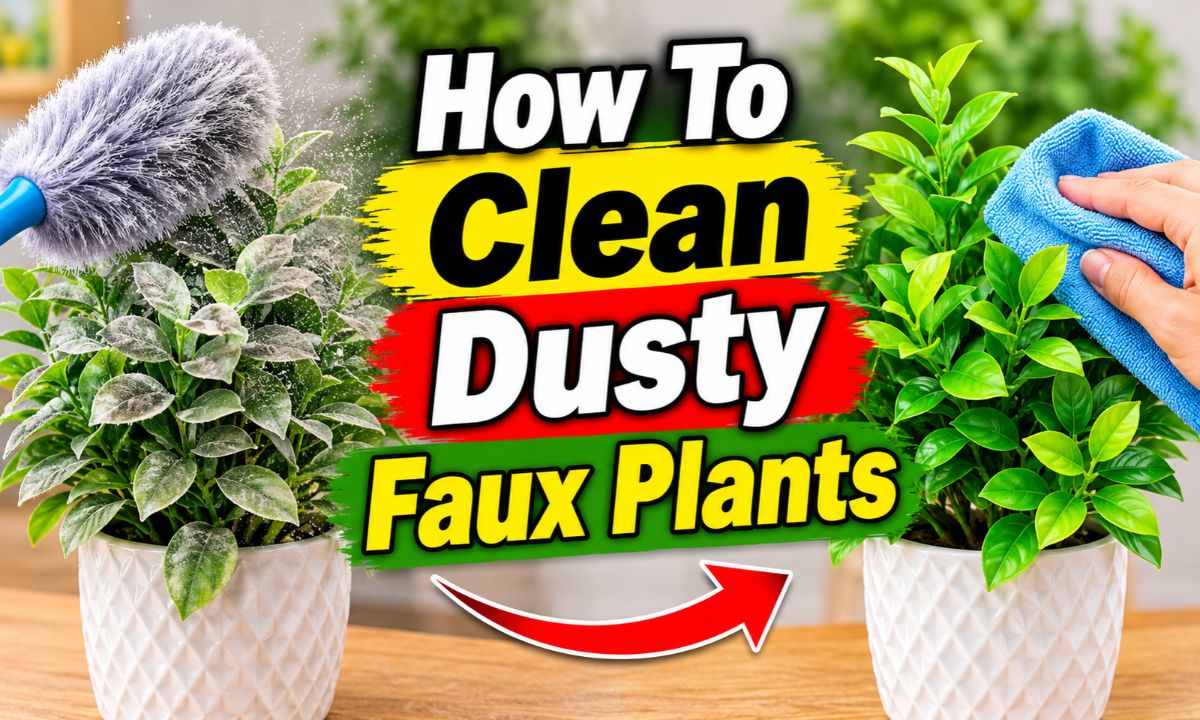
Clean dusty faux plants with a soft microfiber cloth, feather duster, or soft brush. Use a slightly damp cloth only when the plant material allows it.
Across homes in the United States, faux plants are a popular way to add greenery to living rooms, bedrooms, offices, and entryways. They need no watering or sunlight, but they do need an occasional clean. Dust from open windows, heating systems, cooking, and everyday activity can settle on their leaves and stems.
The good news is that cleaning artificial greenery does not need to be hard. A few gentle tools can remove most dust without harming the leaves. The key is to check what your plant is made of before using water, soap, or cleaning sprays.
A silk fern needs different care from a plastic snake plant. Some faux leaves have a soft coating, while others have fabric petals, wire stems, or glued details. Choosing the right method helps protect the color, shape, and finish of your decor.
This guide explains how to remove loose dust, deal with stubborn dirt, clean plants that cannot be moved, and care for different materials. You will also learn which cleaning habits to avoid and how to keep dust from building up again.
Faux plants collect dust because their leaves sit in one place for long periods. Unlike live plants, they do not grow new leaves or shed old ones as part of normal growth. Fine dust can settle on their surfaces and stay there until someone removes it.
Dust can enter through open doors and windows. Heating and air conditioning can also move small particles around a room. In kitchens, airborne cooking grease may mix with dust and leave a dull or slightly sticky film on nearby decor.
The shape of a plant also matters. Large, smooth leaves are easy to wipe, but ferns, palms, and dense vines have many small surfaces where dust can hide. Plants near a busy doorway or kitchen may need attention more often than those on a quiet bedroom shelf.
Open rooms
Air movement can carry dust from outside and from other parts of the home.
Cooking areas
Grease in the air can help dust cling to leaves and stems.
Dense foliage
Small leaves and tight spaces make dust harder to reach with a cloth.
Long periods without care
Dust becomes more noticeable when it builds up over several cleaning cycles.
How Can You Tell When a Faux Plant Needs Cleaning?
Look at the leaves in natural daylight. A dusty plant may look dull, gray, or uneven in color. You may also see a visible layer along the leaf edges, on the stems, or near the center of a dense arrangement.
Run a clean fingertip gently over a small, hidden section. If it picks up dust, the plant needs cleaning. If the surface feels sticky, there may be grease or another residue that dry dusting alone will not remove.
Visible dust
A light coating appears on the upper sides of the leaves.
Dull appearance
The plant looks less bright than it did when it was clean.
Sticky surfaces
Dust may have mixed with cooking residue or other household grime.
What You Need Before Cleaning Dusty Faux Plants
Gather a few gentle cleaning tools before you begin. You do not need a large collection of products or a strong household cleaner. Soft tools are usually the best choice because artificial leaves can bend, scratch, fade, or lose their finish when handled roughly.
Choose your tools based on the size and shape of the plant. A microfiber cloth works well on broad leaves, while a soft makeup brush can reach tiny leaves and narrow gaps. A clean feather duster is useful for a quick pass over a large display.
If you plan to use water, keep a small bowl of cool or lukewarm water nearby. Add mild dish soap only if the plant’s care instructions allow it and there is sticky dirt to remove. Do not assume that a product labeled as artificial greenery can be washed.
Microfiber cloth
Lifts loose dust from broad leaves without the rough feel of an abrasive cloth.
Soft makeup or paintbrush
Reaches between small leaves, flower petals, and detailed stems.
Feather duster
Removes a light layer of dust from larger arrangements.
Small bowl of water
Provides moisture for plants that are approved for damp cleaning.
Mild dish soap
Can help remove greasy dirt from suitable plastic foliage when used in a weak solution.
Clean dry towel
Blots moisture and supports leaves while you finish cleaning.
Prepare the Area Before You Start
Move a small faux plant to a clear table or counter if it is safe to lift. Place an old towel underneath it to catch dust. For a large floor plant, clean the surrounding area first and use a clean cloth or sheet to catch falling dust.
Turn off nearby fans while dusting. Moving air can send loose particles back onto the leaves or across the room. If the plant is fragile, take a moment to check for loose stems, cracked leaves, exposed wire, and weak glued joints before handling it.
Protect nearby surfaces
Use a towel or sheet under the plant to catch loose dust and moisture.
Check for damage
Avoid pulling or bending parts that already feel loose or weak.
Read care instructions
Follow the maker’s advice when it gives material-specific cleaning limits.
How To Clean Dusty Faux Plants Step by Step
The safest starting point is dry dusting. Remove loose particles before using a damp cloth, because wet dust can spread across a leaf and form a muddy film. Work slowly and support delicate parts with your free hand.
For most small and medium artificial plants, a microfiber cloth or soft brush is enough. Begin at the top and work downward so dust from upper leaves does not settle on sections you have already cleaned. Pay attention to the underside of leaves, where dust may collect out of sight.
Step 1: Inspect the plant
Identify fabric, plastic, coated, and delicate parts. Look for loose pieces and check the care label.
Step 2: Remove loose dust
Use a soft duster or brush with light strokes. Start at the highest point and work down.
Step 3: Wipe broad leaves
Support each leaf and move a dry microfiber cloth gently from the center toward the edge.
Step 4: Clean small details
Use a soft brush to remove dust from narrow gaps, leaf joints, and flower centers.
Step 5: Treat stubborn dirt carefully
If the material allows moisture, test a hidden area before wiping with a well-wrung damp cloth.
Step 6: Dry and reshape
Blot moisture, allow the plant to dry fully, and gently return bent leaves to their natural positions.
Method 1: Use a Microfiber Cloth
A microfiber cloth is one of the easiest tools for cleaning broad artificial leaves. Its soft fibers pick up loose dust without needing a spray or strong pressure. Use a clean, dry cloth for the first pass.
Hold the leaf near its base so it does not bend too far. Wipe from the center toward the outer edge, then turn the leaf gently and clean the other side if needed. Use a fresh part of the cloth as it becomes dusty.
Do not rub hard or pull on narrow stems. If a leaf resists movement, clean the part you can reach rather than forcing it into a new position.
Best for
Large plastic leaves, broad faux tropical foliage, and smooth artificial greenery.
Avoid
Hard rubbing on thin fabric petals, delicate coatings, and brittle leaves.
Method 2: Use a Soft Brush for Small Leaves
A soft makeup brush or clean artist’s brush works well on plants with many tiny leaves. Ferns, artificial grasses, and small flower arrangements can be hard to wipe one leaf at a time. A brush helps lift dust from narrow spaces without pulling at the foliage.
Use short, gentle strokes. Move the brush from the center of the plant toward the outer leaves, then clean the stems and joints. Shake dust from the brush outdoors or wipe it on a clean cloth before using it again.
Best for
Ferns, small vines, dense foliage, and detailed flower centers.
Avoid
Stiff bristles that can scratch a coating or bend fragile leaves.
Method 3: Use a Feather Duster
A feather duster is useful when a plant has only a light layer of dust. Move it slowly across the upper leaves and along the stems. Do not push it deep into the plant, as that can bend branches or knock loose decorative pieces.
A duster is a good choice for regular upkeep, but it may not remove sticky dirt or dust packed into tight spaces. Follow up with a soft brush or cloth if you still see a film.
Best for
Quick cleaning of large, open arrangements and lightly dusty foliage.
Avoid
Using a dirty duster that may spread dust from one plant to another.
Method 4: Use a Vacuum With Care
A vacuum can remove dust from sturdy artificial plants, but strong suction may pull leaves out of shape or damage thin stems. Use a soft brush attachment and the lowest practical suction setting. Keep the nozzle slightly away from the foliage rather than pressing it against the leaves.
Test the method on a hidden area first. If the leaves move sharply or the plant begins to shake, stop and use a hand brush instead. A vacuum is not a good choice for fragile silk flowers or loose decorative details.
Best for
Sturdy plants with firm plastic leaves and a stable base.
Avoid
High suction, rotating brush heads, and direct contact with fragile parts.
Method 5: Use Cool Air for Hard-to-Reach Dust
A hair dryer on its cool, lowest airflow setting can loosen dust from dense foliage. Hold it at a distance and direct air gently across the plant. Work in short passes so you can see how the leaves respond.
Hot air can soften some plastics, affect coatings, or weaken adhesive joints. Never use a hot setting to speed up cleaning or drying. Compressed air may also help with small crevices, but use short bursts and follow the can’s safety instructions.
Best for
Dense artificial foliage and gaps that a cloth cannot reach.
Avoid
Hot airflow, strong pressure, and spraying compressed air close to delicate leaves.
How To Clean Faux Plants With Water
Use water only when the plant’s material and care instructions allow it. Some plastic leaves can handle a damp wipe, while silk, paper, foam, and coated foliage may stain, lose shape, or suffer damage. If you cannot identify the material, begin with a dry method.
For a suitable plant, dampen a soft microfiber cloth with cool or lukewarm water. Wring it out until it no longer drips. Wipe one small area first, then check for color transfer, texture changes, or a cloudy finish before cleaning the rest.
Do not spray water directly into the center of a plant or its pot. Moisture can collect around wire stems, glued joints, foam inserts, and decorative filler. These parts may not dry as quickly as the leaves.
Use a lightly damp cloth
It should feel moist rather than wet, with no water running from it.
Test a hidden spot
Check the underside of a leaf or another area that is not normally visible.
Wipe gently
Clean small sections and avoid soaking seams, joints, and flower centers.
Dry completely
Leave the plant in a dry, well-ventilated place before putting it back on display.
Can You Use Dish Soap on Artificial Plants?
A weak dish soap solution may help remove greasy dirt from washable plastic foliage. Mix a small amount of mild dish soap into cool water, then dampen a cloth with the mixture. Do not pour soap directly onto the plant.
Wipe a hidden area first and watch for changes to the finish. If the test area looks dull, sticky, faded, or different in texture, stop. If it passes, clean the suitable leaves with a lightly damp cloth and use another cloth dampened with plain water to remove soap residue.
Avoid dish soap on fabric leaves, delicate flowers, and real-touch coatings unless the maker specifically allows it. More soap does not mean a better clean. A small amount is easier to remove and less likely to leave a film.
Suitable use
Some washable plastic leaves with stubborn surface grime.
Not a default method
Do not use it on unknown materials or delicate finishes without checking first.
Should You Rinse a Faux Plant in the Shower?
Do not put a faux plant in the shower unless its care instructions clearly allow rinsing. A shower can force water into the pot, wire joints, foam, and glued sections. It may also bend delicate foliage or cause color changes.
A sturdy, washable outdoor plastic plant may tolerate a gentle rinse if the maker permits it. Keep the water cool, use low pressure, and let the plant dry fully in a shaded, well-ventilated place. Never treat a fabric or silk plant this way by default.
Check first
Confirm that the whole plant, not just its leaves, is suitable for rinsing.
Keep water gentle
Avoid high-pressure spray and hot water.
Dry before display
Do not return a damp plant to a dark corner or closed cabinet.
How To Clean Faux Plants by Material
The material is the main factor that determines how you should clean a faux plant. A method that works on molded plastic may damage a fabric leaf or a soft-touch coating. When a plant combines several materials, use the gentlest method that is safe for every part.
Check the product label, packaging, or maker’s care page if you still have it. If no care details are available, dry dusting is the safer starting point. Test any new method in a hidden area before using it across the plant.
Plastic foliage
Often suitable for dry dusting and, when permitted, a damp cloth.
Silk and fabric foliage
Usually best cleaned with a soft, dry brush or duster.
Real-touch foliage
Needs gentle handling because its surface coating may be sensitive to cleaners.
Paper or dried decorative parts
Keep dry and remove dust with a soft brush.
Plastic Faux Plants
Plastic plants are often easier to maintain than fabric plants. Their firm leaves may tolerate a dry cloth, a soft brush, or a damp wipe. Some washable designs may also tolerate mild soap and water, but check the maker’s instructions first.
Avoid strong cleaners, rough pads, and hot water. These can dull the surface, affect the color, or change the shape of thin leaves. Dry the plant fully before returning it to a planter or shelf.
Recommended first step
Remove loose dust with a dry microfiber cloth.
For sticky dirt
Use a well-wrung cloth with mild soapy water only if the plant allows it.
Silk and Fabric Faux Plants
Silk and other fabric plants need a lighter touch. Their petals and leaves can lose shape when wet, and dyes or surface treatments may react to moisture. Start with a soft brush or a dry microfiber cloth.
Brush along the fabric rather than scrubbing across it. If the maker permits damp cleaning, test a hidden area and use very little moisture. Do not soak fabric flowers or place them under a shower unless the product instructions specifically approve that method.
Recommended first step
Use a clean, soft brush to lift surface dust.
Avoid
Soaking, wringing, hard rubbing, and strong cleaning sprays.
Real-Touch Faux Plants
Real-touch plants have a coating designed to give leaves or petals a more natural feel. That coating is part of the look and texture, so strong cleaners or solvents may change it. Use a soft dry cloth first.
If the maker allows damp cleaning, use plain water on a well-wrung cloth and test a hidden section. Do not use alcohol, bleach, abrasive cleaners, or oil-based polish unless the care instructions specifically approve them.
Recommended first step
Dust gently with a soft cloth.
Important limit
Do not assume a real-touch coating is waterproof or safe for household cleaners.
Paper, Foam, and Dried Decorative Parts
Paper leaves, foam flowers, and dried decorative pieces are usually poor candidates for wet cleaning. Water can soften, stain, or deform them. A dry brush is the better choice for removing loose dust.
Use light strokes and support delicate pieces as you work. If dust is stuck to the surface, do not scrape it away. A small mark may be less noticeable than damage caused by trying to remove it.
Recommended first step
Use a soft dry brush or gentle cool air from a distance.
Avoid
Water, steam, wet wipes, and firm pressure.
How To Remove Stubborn Dust and Sticky Grime
Stubborn grime needs a different approach from loose dust. In a kitchen, dust may mix with cooking oil and form a film that does not brush away easily. First identify whether the plant can tolerate moisture, then choose a gentle cleaning method.
Do not use extra force when a stain will not lift. Repeated rubbing can damage a leaf’s surface or remove printed details. If a spot remains after a careful clean, it may be safer to leave it than to risk damaging the plant.
For loose dust
Use a microfiber cloth, soft brush, or feather duster.
For oily residue
Try a weak soap solution on washable plastic after a hidden-area test.
For trapped debris
Use a soft brush or clean tweezers without pulling on the leaves.
For unknown stains
Check the care instructions and avoid mixing cleaning products.
Remove Dust Mixed With Cooking Grease
Greasy dust often feels tacky and may gather on plants near a stove or kitchen window. A dry cloth may move the film around instead of lifting it. If the foliage is washable plastic, test a small area with a lightly soapy cloth.
Wipe gently in small sections, then remove soap residue with a separate cloth dampened with plain water. Dry each leaf with a clean towel or allow it to air dry fully. Keep the plant away from cooking splashes while it dries.
Do not use cooking oil
Oil can leave a sticky surface that attracts more dust.
Do not use strong degreasers
Household degreasers may damage color, coatings, or glued parts.
Remove Hair, Lint, and Small Debris
Hair and lint can wrap around stems or collect between leaves. Lift loose strands with your fingers or clean tweezers, taking care not to pull on the plant. A soft brush can loosen small bits trapped around leaf joints.
Avoid pressing a sticky lint roller onto delicate foliage. Its adhesive may pull off printed details, fabric fibers, or small decorative parts. If you use one on a sturdy plastic leaf, test a hidden section first and lift it gently rather than rolling with pressure.
Use tweezers carefully
Lift debris without gripping or bending the stem.
Brush trapped lint
Use soft bristles and short strokes.
How To Clean Large Faux Plants That Cannot Be Moved
A large artificial tree or floor plant can be cleaned in place. Start by protecting the floor and nearby furniture with a sheet or towel. Turn off fans and nearby air vents if practical, so loose dust does not spread while you work.
Use a long-handled duster for the upper sections only if you can control it safely. For broad leaves, a microfiber cloth gives you more control. Work in small sections from the top down, and use a stable step stool only when needed and safe to do so.
Do not climb on a chair or stretch over a heavy planter. If the plant is too tall or unstable to reach safely, ask for help or clean the accessible areas only. There is no need to risk a fall for a decorative item.
Protect the floor
Place a sheet or towel around the base to catch dust and any moisture.
Work in sections
Clean the upper leaves first, then move to the middle and lower branches.
Support each branch
Hold the branch near its base while wiping broad leaves.
Clean the planter
Wipe the outside of the pot and remove loose dust around the base.
Check the trunk
Use a dry cloth on textured trunks and avoid wetting natural wood or exposed joints.
How To Clean a Faux Plant With Dense Foliage
Dense plants can trap dust deep inside the canopy. A cloth may reach only the outer leaves, so use a soft brush to work between branches. A gentle stream of cool air may help loosen dust in areas that are difficult to reach.
Do not force the branches apart. Clean the spaces that are easy to access, then gently reshape the foliage. If the plant is very dense, cleaning it in several short sessions may be easier than trying to reach every hidden leaf at once.
Use a brush first
Lift dust from inner leaves without pulling the branches apart.
Use cool air carefully
Keep airflow low and avoid blowing debris toward people or pets.
How Often Should You Clean Faux Plants?
Clean faux plants when you can see or feel dust rather than following a rigid schedule. A quick check every few weeks is a useful starting point for indoor displays. Plants in busy rooms, kitchens, entryways, or near open windows may need more frequent dusting.
A light regular clean is easier than removing a thick layer that has built up over time. Add a quick plant check to your usual home dusting routine. If the leaves still look clean, there is no need to wipe them again just because a calendar says so.
Low-traffic rooms
Check every few weeks and dust when a visible layer appears.
Living rooms and entryways
Check more often if doors and windows are used frequently.
Kitchens
Inspect regularly for a mix of dust and greasy residue.
Dense plants
Check inner leaves as well as the outer surface.
A Simple Faux Plant Cleaning Routine
A simple routine can prevent heavy buildup. When you dust shelves or tables, look at the leaves and remove any visible loose dust. Clean the planter and the area around it at the same time.
Once the plant has a heavier layer of dirt, use a more careful material-specific clean. There is no need to wash a plant every month if dry dusting keeps it clean. Frequent wet cleaning can create unnecessary wear.
Regular check
Look for visible dust, dull leaves, and sticky patches.
Light upkeep
Use a dry cloth, soft brush, or duster when needed.
Deeper clean
Use moisture only when the material and care instructions allow it.
Common Mistakes to Avoid When Cleaning Faux Plants
The biggest cleaning mistake is treating every artificial plant as if it were made from the same material. Some can handle a damp wipe, while others should stay dry. A gentle method that matches the material is more useful than a strong cleaner that promises fast results.
Take care with heat, pressure, and chemical products. Artificial foliage may contain coatings, dyes, foam, wire, and adhesives that react differently to cleaning. If you are unsure, stop and use a soft dry brush instead.
Soaking every plant
Water can damage fabric, paper, foam, glued joints, and parts that cannot dry well.
Using hot air
Heat may soften plastic, affect coatings, or weaken adhesive connections.
Scrubbing with rough pads
Abrasive tools can scratch leaves and remove printed color or surface details.
Using bleach or strong chemicals
These products may cause fading, discoloration, or surface damage.
Applying oil for shine
Oil may leave residue that attracts more dust and changes the intended finish.
Putting damp plants away
Trapped moisture can affect materials and create an unpleasant smell.
Why You Should Avoid Furniture Polish on Faux Leaves
Furniture polish is not a general-purpose cleaner for artificial foliage. It may leave an oily or glossy film that changes the appearance of matte leaves. That residue can also make future dust harder to remove.
Use a clean cloth and a material-approved cleaning method instead. If the plant has lost color or its coating has worn away, cleaning cannot always restore its original finish.
Skip oil-based shine
Do not use olive oil, vegetable oil, or furniture polish unless the maker specifically approves it.
Keep the original finish
A clean, natural-looking surface is usually better than an added shiny coating.
What to Do If Your Faux Plant Still Looks Dusty
If the plant still looks dirty after cleaning, check whether the remaining marks are dust, grease, fading, or damage. A gray film may be loose dust, while a sticky patch may need a suitable damp clean. A pale or uneven leaf may be faded rather than dirty.
Do not repeat a cleaning method with more pressure if it has not worked. Check the material, test a different gentle method if allowed, and stop if the finish begins to change. Some stains and signs of wear cannot be removed safely.
Dust remains in small gaps
Use a clean soft brush and work gently around the leaf joints.
Leaves feel sticky
Check whether the plant is washable plastic before trying a weak soap solution.
Color transfers to the cloth
Stop immediately and avoid further moisture or rubbing.
Leaves look faded
Cleaning may not restore color lost through light exposure or material aging.
Leaves remain misshapen
Gently reshape only if the material is flexible and the stems are secure.
How to Know When a Faux Plant Needs Replacement
Cleaning can remove dirt, but it cannot repair every form of damage. Cracked leaves, peeling coatings, exposed wire, broken stems, and permanent color changes may remain after a careful clean.
If only one small section is damaged, check whether the maker offers replacement stems or parts. If the plant has widespread damage or unstable wire, replacing it may be the more practical option. Handle exposed wire carefully because sharp ends can cause cuts.
Permanent fading
The original color does not return after dust and residue are removed.
Broken structure
Several stems or branches no longer stay in place.
Peeling surface
The leaf coating or printed finish has started to come away.
How to Keep Faux Plants Dust-Free for Longer
You cannot stop all dust from settling on artificial plants, but you can make upkeep easier. Keep them away from areas where cooking grease, open windows, and heavy foot traffic add extra dirt. A small change in placement can reduce how quickly the leaves look dusty.
Regular light dusting is also useful. It removes loose particles before they mix with grease or become packed into dense foliage. Clean the shelf, planter, and nearby surfaces as well, so dust does not move straight back onto the leaves.
Choose a practical location
Keep delicate faux plants away from cooking splashes and high-dust areas.
Dust nearby surfaces
Clean shelves, tables, and planters during the same routine.
Handle plants gently
Avoid unnecessary movement that can bend leaves or loosen stems.
Store spare plants well
Use a clean, dry storage box or cover to limit dust buildup.
Avoid direct harsh sunlight
Strong sunlight may fade some materials, and cleaning cannot reverse that damage.
Should You Use an Anti-Static Spray?
Some products are sold for cleaning or treating artificial flowers and foliage. Their suitability depends on the plant material and the product instructions. Do not assume that an anti-static spray or fabric treatment is safe for every faux plant.
If you want to try one, check that its label names the material you have. Test a hidden spot first and follow the directions. Avoid spraying near pets, food, or delicate surfaces unless the product label says that use is suitable.
Check compatibility
Make sure the product is intended for the exact type of artificial foliage.
Test before use
Look for changes in color, texture, and shine in a hidden area.
Follow the label
Use the stated amount and ventilation precautions.
Frequently Asked Questions
Q
Can I clean dusty faux plants with a damp cloth?
Yes, if the plant material and care instructions allow moisture. Use a soft microfiber cloth that is damp rather than wet, and test a hidden area first. For silk, paper, foam, and delicate coated foliage, dry dusting is usually the safer choice.
Q
Can I use a hair dryer to remove dust from fake plants?
You can use a hair dryer on its cool setting with low airflow if the plant is sturdy enough. Hold it at a distance and use gentle, short passes. Never use hot air, as heat may affect plastic, coatings, and glued parts.
Q
Can I wash artificial plants in the shower?
Only do this if the manufacturer says the entire plant can be rinsed. Shower water may enter the pot, wire joints, foam, and glued sections. Fabric and silk plants should not be rinsed unless their care instructions specifically allow it.
Q
How do I clean faux plants without damaging the leaves?
Start with a dry microfiber cloth or soft brush. Support each leaf while cleaning and avoid hard rubbing. If you need moisture, check the material, test a hidden area, and use a well-wrung cloth only when the plant allows damp cleaning.
Q
How often should I dust artificial plants?
Check indoor faux plants every few weeks and dust them when you see a buildup. Plants near kitchens, windows, entryways, and busy rooms may need more frequent care. The best schedule depends on the room and the amount of dust.
Q
Can I use vinegar to clean fake plants?
Do not use vinegar as a default cleaner for faux plants. Its effect depends on the material, finish, and dye. Use the manufacturer’s recommended method, or begin with a dry brush and a soft cloth. Avoid testing vinegar on an entire plant before checking a hidden area.
Q
Why do my artificial plants look dull after cleaning?
A plant may look dull because dust remains in small gaps, soap residue was not removed, or the surface has faded or worn. Wipe suitable plastic foliage with a clean cloth dampened with plain water to remove leftover soap, then dry it. If the finish itself has changed, cleaning may not restore it.
✦ Wrapping Up
Conclusion
Cleaning dusty faux plants is simple when you match the method to the material. Start with a dry microfiber cloth, feather duster, or soft brush to remove loose dust. Use water only when the care instructions allow it, and test a hidden area before cleaning the whole plant.
Avoid soaking delicate foliage, using hot air, scrubbing with rough tools, or applying oily polish. These shortcuts can cause more harm than the dust itself. A little care and a quick check every few weeks can help artificial greenery stay neat and attractive.
If a plant still looks dull after cleaning, check for fading, worn coatings, or permanent damage. Cleaning can remove dirt, but it cannot restore every finish. Knowing when to stop is part of caring for your decor.
💡 Key Takeaway
Start today by checking one dusty faux plant, identifying its material, and cleaning a small hidden area with a dry microfiber cloth or soft brush. Use moisture only if the plant passes the care check.