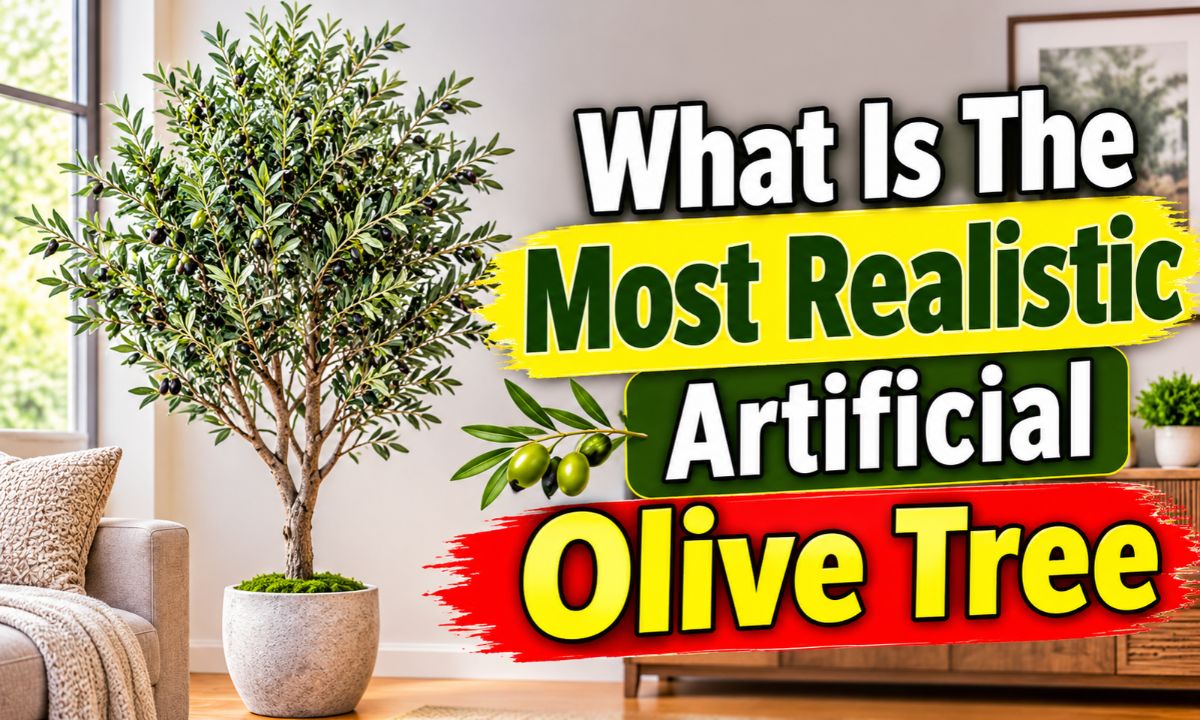
The most realistic artificial olive tree has a textured natural wood trunk, narrow two-tone leaves, varied branches, and a slightly uneven canopy.
Across American homes, artificial olive trees have become a useful way to add greenery to living rooms, entryways, dining spaces, and home offices. They offer the soft look of a Mediterranean tree without the need for sunlight, water, pruning, or special plant care. However, some faux trees look much more convincing than others.
The most realistic choice is usually a tree with a natural wood trunk and carefully shaped foliage. Its leaves should have muted green tops and lighter, silvery undersides. The branches should spread at different angles rather than form a perfect ball. These small details help create the look of a real olive tree, even when someone sees it from close range.
There is no single brand or model that can be called the most realistic for every home. The right choice depends on the tree’s materials, size, shape, viewing distance, and finish. A tree that looks lovely in a large entryway may feel too full in a small apartment.
This guide explains what to look for before buying, how to compare different materials, and how to make an artificial olive tree look more natural after it arrives. It also covers placement, pot choices, cleaning, and common buying mistakes.
A realistic artificial olive tree copies the details that make a living olive tree easy to recognize. These include narrow leaves, muted colors, a rough trunk, and branches that spread in an uneven way. The tree should look natural rather than perfectly arranged.
The trunk and leaves deserve the most attention. A wide room may hide small flaws in the foliage, but a smooth plastic trunk or shiny leaves can still make the whole tree look fake. For this reason, check close-up product photos before judging a tree by its full-room image.
Realism also depends on the final shape. Even a well-made tree can look artificial if its branches stay tightly packed after shipping. A little shaping helps the foliage spread and creates a more natural outline.
Source: hacartificialtree.com
Natural trunk texture
Look for real wood or a well-made trunk with uneven bark details. Natural variations in color and texture help the tree look less like a plastic decoration.
Two-tone leaves
Olive leaves have a muted green upper surface and a much lighter underside. A realistic faux tree should show a similar difference.
Natural branch spacing
Branches should point in several directions. A little open space between them helps create the loose shape of a mature olive tree.
Matte foliage
Avoid leaves with a strong plastic shine. A soft, low-sheen finish is closer to the look of real olive foliage.
Uneven canopy
A slightly asymmetrical shape looks more natural than a perfectly round or evenly trimmed canopy.
Why the Trunk Matters So Much
The trunk is often the first detail that separates a premium artificial olive tree from a cheap one. Mature olive trees can have rough, twisted, and uneven trunks. Some also develop deep grooves as they age.
A real wood trunk gives a faux tree a natural base. It may have small changes in color, texture, and shape that are difficult to copy with molded plastic. This is especially useful when the tree stands beside a sofa, near an entryway, or in another place where people can see it up close.
A molded trunk can still work if it has realistic bark details and does not show repeated patterns. Check the area where the smaller branches join the main trunk. Visible glue, plastic collars, and rough seams can reduce the overall effect.
Best close-up choice
A natural wood trunk is usually the strongest option for rooms where guests can stand close to the tree.
Budget-friendly choice
A textured molded trunk can work well when the tree will be viewed from several feet away.
The Right Leaf Color Makes a Difference
Olive foliage is not a bright, flat green. Its leaves usually have a muted gray-green appearance, with a lighter silver tone underneath. This contrast gives the tree a soft look when light reaches the foliage.
When shopping online, zoom in on photos that show both sides of the leaves. If every leaf has the same shade and shine, the tree may look more like generic plastic greenery than an olive tree.
Also check the leaf shape. Olive leaves are long, narrow, and gently tapered. Broad, round leaves do not match the natural appearance of an olive tree.
Look for muted shades
Choose gray-green, sage, and soft olive tones instead of bright artificial green.
Check the undersides
Pale or silvery leaf backs add depth and help the foliage look more natural.
Avoid strong shine
A matte or lightly textured surface is usually more convincing than glossy plastic.
Which Materials Make the Most Realistic Faux Olive Tree?
The best material depends on the part of the tree. A good artificial olive tree may use several materials rather than one material for every branch and leaf. The trunk, main stems, small branches, and foliage each play a different role.
Polyethylene, often called PE, is a common material for molded artificial leaves. It can hold a three-dimensional shape and show details such as veins and curved edges. Silk-style foliage, which is often made from polyester fabric rather than natural silk, can create thin leaves with a softer appearance.
Neither material guarantees realism by itself. A poorly shaped PE leaf can look artificial, while a carefully made fabric leaf can look natural. Always judge the finished leaf, not just the material name in the product description.
PE leaves can hold their shape and display molded details. They are a useful choice when the leaves have realistic color variation and a natural finish.
Silk-style leaves
Fabric foliage can look thin and delicate. It may suit an airy olive canopy, although low-quality fabric can look flat or collect dust.
PVC leaves
PVC is another type of plastic used in artificial greenery. Its appearance varies by product, so inspect the leaf surface and thickness rather than relying on the material name.
Natural wood
Real wood provides an irregular trunk texture that can be difficult to reproduce with synthetic materials.
Metal wire
Wire inside the branches allows you to bend and shape the canopy. It should remain hidden beneath the foliage.
PE Leaves Versus Silk Leaves
PE and silk-style leaves can both be good choices, but they create different effects. PE can provide more structure and defined leaf shapes. Fabric leaves can appear thinner and softer, which may help create a delicate canopy.
For an olive tree, the most important details are the narrow leaf shape, subtle color differences, and low-shine finish. A product made with PE leaves is not automatically better than one made with fabric foliage.
If you cannot see the leaf edges, veins, and undersides in the listing photos, ask the seller for close-up images before buying. This is more useful than choosing a tree based only on a claim such as premium or realistic.
Choose PE for structure
Consider PE when you want clearly shaped leaves that hold their form.
Consider fabric for a soft look
Fabric foliage may suit a light, airy arrangement when the leaves have fine edges and natural colors.
How to Choose the Right Artificial Olive Tree Size
The right tree size depends on the room, ceiling height, and amount of floor space available. A tall tree can create a lovely focal point in a large living room, but the same tree may overwhelm a small bedroom or apartment.
Measure the space before ordering. Check the tree’s full height and its branch spread, not just the height printed in the product name. A six-foot tree with a wide canopy may need more room than a taller tree with a narrow shape.
Remember that product photos may show the branches fully opened. The tree may arrive compressed, so its final shape can change after assembly and shaping. Leave enough space for the branches to spread without blocking doors or walkways.
Source: oakco.com
Four to five feet
This size can work beside a small console, in a bedroom corner, or in a compact apartment. It adds greenery without taking over the room.
Five to six feet
This is a useful middle size for many living rooms, home offices, and dining areas with standard furniture.
Six to seven feet
A taller tree can fill an empty corner beside a sofa or large window. Check the ceiling clearance before ordering.
Seven feet and taller
Large entryways, open living areas, and rooms with high ceilings may suit a statement tree. A stable base becomes especially important.
Measure Before You Buy
Start by measuring from the floor to the ceiling. Then decide how much open space you want above the tree. The tree should not look squeezed against the ceiling or hanging light fixture.
Next, measure the floor area around the intended location. Include the widest branch spread in your estimate. If the tree will stand beside a sofa, leave enough room so the branches do not interfere with people sitting down.
For example, imagine a room with an eight-foot ceiling. A six-foot tree may leave a comfortable amount of open space above it, depending on the planter and canopy shape. This is only a planning example; check the actual product height and your room measurements.
Measure the ceiling
Check the full height of the tree, including the decorative planter if it adds height.
Measure the branch spread
Look for the widest listed dimension so the canopy does not crowd nearby furniture.
Check the shipping dimensions
Some trees arrive in sections. Confirm the package size and assembly needs before ordering.
How to Make an Artificial Olive Tree Look More Natural
Even a realistic artificial olive tree may look flat when it first comes out of its shipping box. Branches are often folded or packed close together to reduce the size of the package. Taking time to shape the tree can make a noticeable difference.
Before starting, place the tree on a stable surface and read the assembly instructions. If the product has separate trunk sections or branch sockets, connect them as directed. Do not force a branch into a fitting that does not match.
Once the tree is assembled, spread the branches gently. Aim for a loose shape with some open space between the leaves. The goal is to create a natural canopy, not a perfectly round decorative ball.
Source: hacartificialtree.com
Open the branches
Gently bend the wired branches outward and upward to give the canopy more space.
Vary the angles
Point some branches slightly upward and others outward or downward. This creates a less uniform appearance.
Create a natural lean
If the design allows it, give the canopy a slight uneven shape rather than making both sides identical.
Hide visible gaps
Move nearby branches to cover empty areas around the main trunk without packing all the foliage into one spot.
Step back and check
Look at the tree from the doorway and from the sofa. Adjust any sections that appear too flat or crowded.
Use a Better Planter
The small pot that comes with an artificial olive tree is often made for shipping and basic support. It may not look attractive enough for a finished living room display. A larger decorative planter can make the tree look more complete.
Choose a pot that suits the tree’s height and canopy width. A very small planter can make a tall tree look unstable, while an oversized pot may make a narrow tree look out of balance.
You can place the original pot inside a larger decorative container if the dimensions allow it. Fill the space around the inner pot with suitable packing material or a secure support, then cover the top with decorative stones or preserved moss. Do not use loose materials that could spill easily in homes with pets or young children.
Check that the tree remains upright after styling. A decorative planter should not hide a weak base or make an unstable tree more likely to fall.
Ceramic planters
A ceramic pot can give the display a clean, finished look. Choose one with enough room for the original base.
Woven baskets
A woven basket can suit relaxed, rustic, and coastal interiors. Check that it supports the tree securely.
Stone-look containers
A stone-look planter can create a simple Mediterranean feel and pair well with muted foliage.
Decorative top dressing
Moss or fixed decorative stones can cover an exposed plastic base and make the arrangement look more finished.
Use Lighting to Your Advantage
Lighting can change how artificial leaves look. Soft daylight helps reveal the differences between green leaf tops and pale undersides. Very harsh lighting can make shiny plastic surfaces stand out.
A spot near a bright window can work well for an indoor display, even though the faux tree does not need sunlight to survive. However, sunlight can fade some artificial materials over time, so check the manufacturer’s care instructions.
If the tree sits in a darker corner, use normal room lighting to keep the foliage visible. Avoid placing a lamp so close that it heats the leaves or nearby synthetic materials.
Soft natural light
Place the tree where it receives comfortable room light without prolonged exposure to strong direct sun.
Avoid harsh glare
Move the tree if direct lighting makes the leaves look unusually shiny.
Use safe lamp placement
Keep lamps and heat sources at a safe distance from synthetic leaves and branches.
Where Should You Place a Realistic Artificial Olive Tree?
An artificial olive tree works best where its height and open shape can fill an empty area without blocking the room. Its soft foliage can add interest to both modern and traditional American interiors.
A living room corner is one of the easiest places to use a faux olive tree. It can soften the space beside a sofa, fill an empty area near a fireplace, or add height beside a media console. Keep the branches clear of walkways and television screens.
Entryways and dining rooms are also useful spots. A tree near an entry console can create a welcoming look, while one near a dining area can add greenery without taking up table space.
Source: sinleenplants.com
Living room
Place a tall olive tree beside a sofa or in an unused corner. Choose a canopy that does not crowd nearby furniture.
Entryway
Use a medium or tall tree near a console table to add height and soften a plain wall.
Dining room
Place the tree near a wall or empty corner rather than where its branches interfere with chairs.
Home office
A faux olive tree can add a natural decorative touch to an office without needing a watering routine.
Bedroom
A smaller tree can fill a corner near a dresser or seating area. Avoid placing it where branches interfere with movement.
Does an Artificial Olive Tree Need Sunlight?
No. An artificial olive tree does not need sunlight, water, soil, or fertilizer. You can place it in a hallway, shaded room, or office where a living olive tree would struggle.
However, sunlight can still affect artificial materials. Strong direct sun may cause some leaves to fade, become brittle, or change color over time. The risk depends on the materials and any UV protection provided by the manufacturer.
If the tree will sit near a sunny window, check whether it is labeled UV-resistant or UV-stabilized. Do not assume that every artificial plant can handle long periods of direct sunlight.
Low-light rooms
Artificial trees are useful in rooms that do not receive enough light for a living olive tree.
Bright windows
Check the manufacturer’s fading guidance before placing the tree in strong direct sunlight.
Outdoor spaces
Use an outdoor-rated model if you plan to place the tree on a patio or exposed porch.
How to Clean and Maintain an Artificial Olive Tree
An artificial olive tree needs occasional cleaning to keep its leaves looking fresh. Dust can collect on narrow leaves, branch joints, and the top of the trunk. If the foliage becomes dull, the whole tree may look less realistic.
Start with a soft microfiber cloth, a feather duster, or a gentle brush. Work from the upper branches toward the lower trunk so dust does not settle on areas you have already cleaned. Support each branch while cleaning to avoid bending or damaging it.
Do not soak the tree or use strong cleaning products unless the manufacturer says they are safe. Some foliage has a special finish that may be damaged by water, alcohol, or household cleaners.
Source: oakco.com
Dust regularly
Use a soft duster to remove loose dust before it builds up on the leaves.
Clean small areas gently
Use a lightly damp microfiber cloth only when the material instructions allow it.
Avoid harsh chemicals
Bleach, strong detergents, and abrasive cleaners may damage leaf color or surface finishes.
Check the branches
Look for loose connections and damaged wires when cleaning the tree.
Keep the base stable
Check the planter and support from time to time, especially if the tree is tall.
What If the Leaves Look Dull?
Dull foliage may simply be covered with dust. Try gentle dry cleaning first. If the leaves still look dull, check whether the material has faded or whether its original finish is naturally matte.
Do not apply cooking oil, furniture polish, or random shine sprays to make the leaves look brighter. These products may leave a sticky surface that attracts more dust. They can also change the intended appearance of the foliage.
If the leaves have faded after long exposure to sunlight, cleaning may not restore their original color. Moving the tree to a less exposed location can help prevent further fading.
Dust buildup
Remove loose dirt with a soft duster or suitable microfiber cloth.
Sun fading
Move the tree away from strong direct sunlight and check its UV protection.
Surface damage
Contact the seller if the foliage has peeled, cracked, or lost its finish soon after purchase.
Common Mistakes When Buying an Artificial Olive Tree
The biggest buying mistake is choosing a tree because it looks attractive in one product photo. Lighting, camera angles, and digital editing can make foliage appear fuller or more natural than it looks in person.
A better approach is to compare close-up photos, dimensions, material details, and customer images. Look for photos that show the trunk, leaf surfaces, branch joints, and base. These details help you judge the actual construction.
It is also worth checking the seller’s return policy. A tree may look different from your expectations once it is assembled in your room. A clear return policy gives you a way to address a poor fit or damaged item.
Source: hacartificialtree.com
Choosing only by price
A low price may mean thinner foliage, a lightweight base, or a simple molded trunk. Compare the materials and construction before deciding.
Ignoring the leaf undersides
The back of an olive leaf is an important part of its appearance. Check whether the product shows lighter leaf surfaces.
Buying the wrong height
A tree that is too tall or too wide can make a room feel crowded. Measure before placing an order.
Ignoring the planter
A basic shipping pot may need to be hidden inside a decorative container. Include this extra purchase in your budget.
Expecting it to look perfect straight away
Many artificial trees need assembly and branch shaping. Check the instructions and allow time to arrange the foliage.
Assuming it is weatherproof
Indoor artificial trees may fade or become damaged outdoors. Check the product’s intended use before placing it outside.
Check the Product Listing Before Ordering
A useful product listing should explain the tree’s height, width, foliage material, trunk material, pot size, and assembly needs. If important details are missing, ask the seller before buying.
Look for photographs from more than one angle. A full-length photo shows the overall shape, while close-up images reveal leaf texture and branch construction. Customer photographs can also help you see how the tree looks in a normal home.
Finally, check whether the product arrives in one piece or several sections. This can affect setup time, storage, and the final appearance.
Dimensions
Confirm the full height, canopy width, and included pot measurements.
Materials
Find out whether the trunk is natural wood, molded plastic, or another material.
Assembly
Check whether the branches need to be attached or shaped after delivery.
Returns
Read the return period, shipping terms, and rules for assembled decorative products.
UV protection
Confirm whether the tree is suitable for a sunny window, covered porch, or outdoor location.
How to Compare Artificial Olive Trees Before Buying
A simple comparison can help you avoid buying a tree that looks good in a listing but does not suit your room. Focus on the details that affect realism and daily use rather than relying on a product’s marketing label.
The table below gives a practical way to judge common construction features. These are buying guidelines, not laboratory test results or ratings for individual brands.
Source: sinleenplants.com
Best for close-up realism
Choose a tree with a natural wood trunk, well-shaped leaves, and realistic branch connections.
Best for a limited budget
Look for a detailed molded trunk, muted PE foliage, and bendable branches.
Best for small rooms
Choose a narrow canopy and a height that leaves comfortable space below the ceiling.
Best for large rooms
Consider a taller tree with a broad, open canopy and a stable base.
A Practical Realism Comparison
Use this comparison when two artificial olive trees seem similar in price or appearance. The stronger option is usually the one that performs well across several details rather than relying on one attractive feature.
Trunk
Natural wood is generally the better choice for close viewing. Detailed molded bark can be a reasonable alternative.
Foliage
Narrow, muted, two-tone leaves are more convincing than broad, bright, uniform leaves.
Branch design
Adjustable branches with varied angles provide more control over the final shape.
Base
A secure, stable base matters more than a decorative cover alone.
Maintenance
A finish that can be gently dusted and cleaned according to the manufacturer’s instructions is easier to maintain.
Is an Expensive Artificial Olive Tree Always More Realistic?
No. A higher price can reflect a natural wood trunk, more detailed foliage, a heavier base, or a larger size. However, price alone does not prove that a tree looks more realistic.
A less expensive tree with muted leaves and a well-shaped canopy may look convincing from across a room. A premium tree with a smooth plastic trunk may still look artificial when placed beside a sofa.
Think about where you plan to use the tree. If guests will see it at close range, it may be worth spending more on the trunk and leaf details. If it will sit in the back of a large room, overall shape and fullness may matter more.
Spend on visible details
Prioritize trunk texture and leaf quality when the tree will be close to people.
Match the tree to the room
A modest tree can work well in a small space, even if it does not have premium construction.
Include the planter cost
A decorative pot may add to the final price, so consider the full display before comparing products.
Frequently Asked Questions
Q
What is the most realistic artificial olive tree?
The most realistic artificial olive tree usually has a natural wood trunk, narrow two-tone leaves, and an uneven canopy. Look for muted green foliage with silvery undersides and branches that spread at different angles.
There is no single model that is best for every room. Compare close-up photos, materials, dimensions, and customer images before choosing.
Q
Are PE leaves or silk leaves better for artificial olive trees?
Both can look realistic when they are well made. PE leaves can hold a defined shape and show molded details, while silk-style fabric leaves can create a thinner, softer appearance.
Focus on leaf shape, color variation, and surface finish. A realistic leaf should not look overly shiny or have the same flat green color on both sides.
Q
How tall should an artificial olive tree be?
The best height depends on your ceiling, furniture, and available floor space. A tree around four to five feet can suit a small room, while a six- or seven-foot tree may work better in a larger living room or entryway.
Measure the full tree height and branch spread before ordering. Leave enough room above the canopy and around the branches.
Q
Can I put an artificial olive tree outside?
Only use a tree that the manufacturer identifies as suitable for outdoor use. Indoor foliage may fade, crack, or become damaged after exposure to strong sunlight, moisture, and changing weather.
For a patio or uncovered porch, look for UV-resistant materials and outdoor-rated construction. A covered location can offer some protection, but it does not make every indoor tree suitable for outdoor use.
Q
How do I make a fake olive tree look less artificial?
Start by spreading the branches and creating an uneven canopy. Move some branches outward, vary their angles, and leave small spaces between sections of foliage.
Next, place the original pot inside a suitable decorative planter. Cover the exposed top with appropriate decorative material and position the tree where its shape and leaf colors look natural.
Q
Do artificial olive trees attract dust?
Yes. Like other decorative objects, artificial olive trees collect dust on their leaves and branches. The narrow foliage can make cleaning a little time-consuming.
Use a soft duster or microfiber cloth to remove dust. Follow the care instructions before using water or cleaning products.
Q
Are artificial olive trees safe around pets and children?
A faux tree may contain small detachable olives, plastic leaves, wire, and other parts that can become hazards if chewed or swallowed. Check the product construction before placing it within reach of young children or pets.
Use a stable base and secure the tree where it cannot easily tip over. Keep small decorative pieces out of reach, and supervise pets that tend to chew artificial plants.
Q
Does an artificial olive tree need watering or sunlight?
No. An artificial olive tree does not need water, sunlight, fertilizer, or soil. This makes it useful for indoor areas where a living olive tree would not receive enough light.
It still needs occasional dusting. Also, strong sunlight may fade some artificial materials, so check the product’s UV protection before placing it beside a sunny window.
✦ Wrapping Up
Conclusion
The most realistic artificial olive tree is one that gets the small natural details right. Look for a textured trunk, narrow gray-green leaves, pale undersides, and branches that spread in an uneven pattern. These features help create a tree that looks convincing from across the room and holds up better when viewed close up.
Material quality matters, but the final shape matters just as much. A well-made tree can still look flat when it arrives, so take time to spread the branches and arrange the foliage. A suitable decorative planter can also give the display a more finished appearance.
Before buying, measure your space, inspect close-up product photos, check the trunk and foliage materials, and read the care instructions. If you plan to use the tree outdoors, confirm that it is rated for that purpose rather than assuming all artificial greenery can handle the weather.
💡 Key Takeaway
Before choosing an artificial olive tree, compare its trunk texture, two-tone leaves, branch shape, full dimensions, and base stability. Choose the tree that looks natural at the distance where people will see it most, then finish the display with careful branch shaping and a suitable decorative planter.