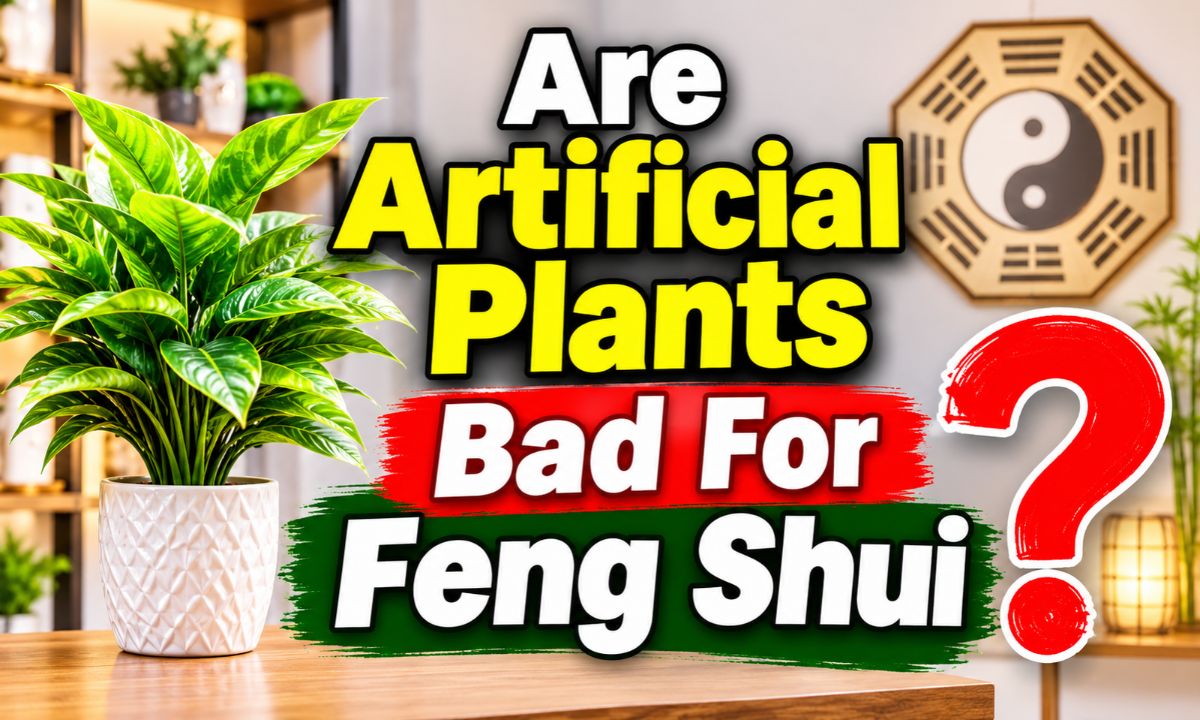
Artificial plants are not automatically bad for feng shui, but traditional principles generally favor healthy living plants because they represent growth and the Wood element.
From apartments in New York City to family homes in Texas and small houses in California, greenery is a popular way to make an American home feel warm and inviting. But if you follow feng shui, you may wonder whether that beautiful faux fiddle-leaf fig or silk orchid is helping your space or bringing the wrong kind of energy. The answer is not as strict as some decorating advice suggests.
Many feng shui practitioners prefer real plants because they grow, change, and represent living energy. Artificial plants cannot offer the same qualities. However, some practitioners accept realistic, well-maintained faux plants when natural light is limited or caring for a living plant is not practical. Anjie Cho, a feng shui educator and architect, has explained that realistic artificial plants can be acceptable in homes, although living plants are preferable for specific feng shui adjustments.
The important difference is between using a fake plant as a decorative symbol and using a living plant as a traditional Wood-element remedy. These are not always interchangeable. A clean, attractive artificial plant in a dark hallway may be a sensible decorating choice, while a thriving real plant may be more appropriate when you specifically want to represent growth and living energy.
In this guide, you will learn what feng shui says about artificial greenery, where to place it, which mistakes to avoid, and how to decide whether a real or fake plant is right for each room. You do not need to throw away your favorite artificial tree to create a balanced home.
Feng shui does not have one universal rule that says every artificial plant must be removed from a home. Different schools and practitioners interpret artificial greenery in different ways. Some prefer living plants in nearly every situation, while others accept realistic faux plants as decorative symbols.
The main reason many practitioners favor real plants is their connection to the Wood element. In feng shui, Wood is associated with growth, vitality, flexibility, creativity, and new beginnings. A growing plant expresses these qualities through its living form.
An artificial plant can copy the shape, color, and appearance of a real plant, but it cannot grow new leaves or respond to its environment. For this reason, it may provide a visual reminder of nature without representing living growth in the same way.
Feng Shui Solutions, in its guidance on the Wood element and live plants, explains that a fake plant cannot replace a living plant when a specific adjustment requires the Wood phase. However, an artificial plant can still act as a physical object that changes the layout or buffers a direct line between openings.
This distinction makes the answer easier to understand. A fake plant can improve the appearance of a room, soften a bare corner, and introduce natural-looking shapes. It simply should not be assumed to provide every traditional benefit associated with a healthy living plant.
Living plants
They represent active growth and are commonly preferred when a feng shui adjustment specifically calls for the Wood element.
Artificial plants
They provide color, shape, and a natural appearance but do not have the same living qualities as real greenery.
Dried plants
They are a separate category. Their meaning varies among practitioners, so they should not automatically be treated as identical to artificial plants.
Why Does Feng Shui Prefer Living Greenery?
Living plants change as they grow. They produce new leaves, develop roots, and respond to sunlight and water. These visible changes make them natural symbols of progress and renewal.
A healthy plant can also encourage you to care for your surroundings. Watering it, trimming damaged leaves, and giving it enough light create a small routine of attention. This can make a home feel more connected to nature.
Artificial plants do not offer this growing process. Their value is mainly visual and decorative. That does not make them useless, but it does explain why many traditional practitioners prefer living greenery.
Does Every Feng Shui School Reject Fake Plants?
No. The advice is not completely uniform. Some practitioners view artificial plants as objects that only imitate living Wood, while others accept them as practical substitutes for visual greenery.
In a 2018 discussion about fake plants, Anjie Cho explained that realistic faux plants can be acceptable, especially in locations without enough natural light or in second homes without regular plant care. She also distinguishes decorative use from using a plant for a specific energy adjustment.
This is why it helps to understand your purpose before deciding. If you simply want a beautiful green accent, a realistic artificial plant may be suitable. If you are following a particular traditional remedy, ask whether that adjustment requires a living plant.
Why Some People Consider Artificial Plants Bad Feng Shui
The concern about artificial plants mainly comes from their lack of living growth and the way neglected decorations can affect a room. Some traditional interpretations connect lifeless objects with stagnant or inactive energy.
A plastic plant cannot grow, produce new leaves, or show signs of vitality. If you use it to represent fresh growth, the symbolism may feel less convincing than a healthy living plant.
Another concern is maintenance. Artificial leaves collect dust, fade in sunlight, and may become damaged over time. A dusty plant sitting in a forgotten corner can make the whole space look neglected.
However, these concerns do not establish that artificial plants bring bad luck or cause harmful energy. Feng shui is a traditional approach to arranging spaces, not a scientifically established method for measuring luck or invisible energy. Its ideas about plants should be understood within that cultural and design context.
The practical lesson is simple: avoid using damaged or dirty decorations to represent freshness and growth. If a faux plant no longer looks attractive, clean it, repair it, replace it, or remove it.
They do not grow
Artificial greenery cannot provide the visible growth and renewal associated with living plants.
They can collect dust
Dusty leaves and dirty pots can make an otherwise attractive room feel neglected.
They may look unnatural
Cheap-looking foliage, shiny plastic, and unrealistic colors can make a room feel visually cluttered.
They cannot replace every living plant remedy
A practitioner who recommends living Wood energy may not consider a fake plant an equivalent substitute.
Do Artificial Plants Bring Negative Energy?
There is no established scientific evidence that artificial plants create negative energy, bad luck, or problems in a household. These ideas come from particular feng shui interpretations rather than proven physical effects.
Some practitioners associate lifeless or neglected objects with stagnant qi. In that view, an artificial plant that looks dirty, faded, or broken may send an undesirable visual message.
You can avoid this concern by choosing greenery that looks natural and keeping it clean. A well-maintained decorative object is generally more pleasant to live with than a neglected one.
Are Dusty Artificial Plants Worse Than No Plants?
A dusty artificial plant can look worse than an empty but clean corner. It adds visual clutter without providing the fresh appearance you wanted in the first place.
If your faux leaves have become gray with dust, remove the plant from its display area and clean it according to its material. Check the stems, pot, and base for damage before returning it.
If the plant has faded badly or lost its shape, replacing it may be better than trying to hide its condition with more decorations.
Are Artificial Plants Good for Feng Shui in Certain Rooms?
Artificial plants can be useful in rooms where living greenery would struggle. A windowless bathroom, dim hallway, or office without a suitable window may not provide the conditions a real plant needs.
The best approach is to consider what the room needs. A faux plant can introduce a softer shape, a touch of green, and a natural-looking focal point without requiring sunlight or watering.
However, placement still matters. Do not let a decorative tree block a doorway, crowd a narrow walkway, or make a small room feel cramped. Feng shui aims to create a comfortable relationship between objects and the people who use the space.
The following room-by-room suggestions are practical design applications. They are not universal rules shared by every feng shui school.
Living Room
The living room is one of the easiest places to use an artificial plant. It often has enough space for a larger decorative tree, a leafy floor plant, or a small arrangement on a side table.
Choose a plant that suits the scale of your furniture. A tall faux tree can soften an empty corner beside a sofa, while a smaller arrangement may work better on a shelf or console.
Avoid placing large artificial leaves where they block views or interfere with conversation. Keep the main walking routes open so the room feels comfortable and welcoming.
If you have good natural light and can care for a real plant, consider using living greenery as the main feature and artificial foliage as a smaller decorative accent.
Good choice
A realistic leafy tree in an unused corner that does not obstruct movement.
Avoid
Several oversized fake plants crowded around the sofa or television.
Bedroom
Artificial plants can be a reasonable decorative option in bedrooms because they offer greenery without watering, fallen leaves, or the need to manage a living plant near the bed.
Some feng shui practitioners prefer quieter bedroom arrangements with less active plant imagery. Others accept small plants or botanical artwork as a way to bring natural shapes into the space.
A small faux plant on a dresser or shelf can add softness without making the room feel crowded. Choose rounded foliage and gentle colors if you want a restful look.
Keep large arrangements away from areas where they make the bed feel enclosed. Your bedroom should remain easy to clean and comfortable to move around.
Good choice
A small, realistic plant on a dresser or an uncluttered shelf.
Avoid
Oversized artificial trees that crowd the bed or create visual clutter.
Bathroom
Bathrooms are practical places for artificial greenery, especially when they have no windows. Many living plants need more light than a windowless bathroom can provide.
A small faux fern, trailing vine, or leafy arrangement can soften the hard surfaces of tile, glass, and ceramic. It can also make a plain vanity feel warmer.
Keep artificial plants away from areas where they will interfere with cleaning or become coated in moisture and residue. Bathrooms can have high humidity, so inspect the leaves and pot regularly.
If the bathroom has enough light for a suitable living plant, you can use one instead. Choose a species that tolerates the actual conditions in the room rather than relying on appearance alone.
Good choice
A small faux plant on a stable shelf or vanity away from direct splashes.
Avoid
Artificial foliage that stays wet, collects residue, or blocks access to bathroom fixtures.
Home Office
A home office can benefit from greenery because natural shapes help soften a space filled with desks, screens, storage, and other hard surfaces.
A small artificial plant beside a monitor or on a shelf can add color without taking up valuable desk space. A larger arrangement may work in a corner if it does not interfere with movement.
If you are using feng shui to encourage growth and creativity, a living plant may be more appropriate when your office has enough light. A healthy plant also gives you a natural reminder to take breaks from work.
Avoid placing large foliage directly in front of your screen or where it distracts you. Keep the workspace functional first.
Good choice
A small, tidy arrangement that adds greenery without reducing useful desk space.
Avoid
Large artificial plants that block light, storage, or your working area.
Entryway and Hallway
An entryway sets the tone when you enter your home. A carefully placed artificial plant can make the area look warmer and more welcoming.
Choose a size that leaves enough room for the front door to open fully. A slim plant beside a console table may work better than a large floor arrangement in a narrow entrance.
Long hallways can also benefit from a small touch of greenery. However, avoid using plants to fill every empty space. An open path is more useful than a collection of decorations that make walking difficult.
Keep the entrance bright, clean, and easy to use. These simple design choices can make the home feel more inviting.
Good choice
A modest artificial plant beside an entry console, outside the door’s swing and walking path.
Avoid
A large plant that blocks the entrance, hides a step, or narrows the hallway.
Where Should You Place Artificial Plants According to Feng Shui?
The best location for an artificial plant depends on the room, the amount of available space, and the feng shui method you follow. Some approaches use the Bagua map to connect areas of a home with different parts of life.
In common Bagua interpretations, the East is linked with family and health, while the Southeast is associated with wealth and abundance. Both areas are connected with the Wood element in many popular feng shui applications.
However, the Bagua is not applied in exactly the same way by every school. Some methods align the map with the front entrance, while compass-based approaches use actual directions. Do not assume that every room has the same placement rules.
Also remember that an artificial plant does not become a living Wood-element remedy simply because you place it in the Southeast. Its position may support your decorative plan, but its symbolic function remains different from that of a thriving plant.
East
Often associated with family and health. Living greenery is commonly used here to represent growth and vitality.
Southeast
Commonly linked with wealth and abundance in popular Bagua applications. A healthy living plant may be used as a Wood-element symbol.
Living room corners
A useful decorative location for a faux plant when it softens an empty space without blocking movement.
Dark areas
A practical location for artificial greenery when natural plants cannot receive enough light.
Can You Put Artificial Plants in the Wealth Corner?
Yes, you can place an artificial plant in an area you use as your wealth corner if it fits your decorating plan. However, it is important to understand what that placement means.
Some feng shui approaches use healthy plants in the Southeast to represent growth and abundance. A faux money tree may imitate the appearance of a living plant, but it does not offer the same living Wood qualities.
If your goal is specifically to follow a traditional living-plant adjustment, choose a real plant that can thrive in the available light. If your goal is simply to create an attractive green display, a realistic artificial tree can still serve a decorative purpose.
A plant does not guarantee financial success. Keep practical matters such as budgeting, saving, and financial planning separate from symbolic home arrangements.
Should Artificial Plants Face the Front Door?
An artificial plant can sit near the front door, but it does not need to face the entrance in a particular direction. Focus on making the entry feel open and welcoming.
A small arrangement beside the door may work well. Avoid placing a large pot directly in the path, where it could make entering and leaving awkward.
Open the door fully and walk through with a bag or other everyday items. If the plant catches your clothing or blocks movement, choose another location.
How to Choose Artificial Plants That Support a Balanced Home
If you decide to use faux greenery, choose a plant that looks natural, fits the room, and is easy to maintain. A convincing artificial plant can improve the visual balance of a space without pretending to be a living plant.
You do not need the most expensive option. Pay attention to the quality of the leaves, the shape of the stems, the color, and the pot. These details often make a greater difference than the size of the arrangement.
Try to choose greenery that looks appropriate for your home. A realistic-looking fern may suit a bathroom shelf, while a tall artificial tree may look better in a spacious living room.
The aim is to create a natural visual effect without adding unnecessary clutter. One well-chosen plant can often do more for a room than several small decorations.
Choose realistic foliage
Look for natural leaf shapes, varied shades of green, and stems that do not look overly shiny or stiff.
Check the size
Select a plant that fits the room and leaves enough space for doors, furniture, and walkways.
Use suitable containers
A ceramic, terracotta, or simple neutral pot can help an artificial plant look more natural.
Avoid damaged leaves
Bent, torn, faded, or broken foliage can make the arrangement look neglected.
Consider the room’s purpose
Use softer arrangements in restful rooms and choose more substantial greenery for larger shared spaces.
Are Silk Plants Better Than Plastic Plants?
Silk plants are often considered a more attractive option because their leaves can have a softer, more natural appearance. However, the term silk plant is also used broadly for artificial arrangements made from several materials.
Plastic plants can vary greatly in quality. Some have realistic textures and natural colors, while others have shiny leaves that look artificial from a distance.
From a feng shui perspective, neither silk nor plastic becomes a living plant. The main difference is appearance, material, and how well the arrangement suits the room.
Choose the material that looks best, fits your budget, and can be cleaned without damage.
Silk and fabric foliage
Can offer a softer look but may need careful dusting and protection from moisture.
Plastic foliage
Can be durable and easy to wipe, although low-quality versions may have an unnatural shine.
Mixed-material plants
May combine fabric leaves with plastic stems for a more detailed appearance.
Should You Choose Rounded or Pointed Leaves?
Many feng shui practitioners prefer rounded, soft, or gently curved leaves for shared and restful spaces. These shapes are often associated with a softer visual feeling.
Pointed leaves and sharp spines are sometimes linked with sha qi, a traditional term for harmful or cutting energy. This is one reason some practitioners recommend keeping very spiky plants away from places where people sit or sleep.
For artificial greenery, a rounded-leaf arrangement can be an easy choice if you want a gentle, balanced appearance. However, leaf shape alone does not determine whether a plant is good or bad for every room.
Consider the overall shape and how the plant interacts with the furniture. A soft, flowing arrangement may look more suitable beside a sofa than a large arrangement of sharp, rigid leaves.
Artificial Plants vs. Real Plants: Which Is Better for Feng Shui?
Real plants are generally the stronger choice when you want to follow feng shui principles that specifically call for living greenery. Artificial plants are more practical when the main goal is decoration or when the environment cannot support a living plant.
The right choice depends on light, care requirements, room conditions, and your reason for adding greenery. A living plant that receives enough light and proper care may be a better fit than a fake one. A neglected or dying real plant, however, may not create the appearance of growth you want.
A realistic artificial plant can be more sensible than repeatedly buying living plants that cannot survive in a dark room. You can still create a calm, nature-inspired space through color, texture, natural materials, and good arrangement.
Use this comparison to decide which type of greenery makes the most sense for your home.
Comparison of Real and Artificial Plants
The table below compares the practical and symbolic differences between real and artificial plants. It is a general guide rather than a universal rule for every feng shui school.
Living energy
Real plants grow and are commonly associated with living Wood energy. Artificial plants offer a visual representation rather than living growth.
Maintenance
Real plants need suitable light, water, and care. Artificial plants mainly need dusting and occasional cleaning.
Light requirements
Real plants need conditions suited to their species. Artificial plants can be displayed in areas without natural light.
Appearance
Both can look attractive. Real plants change naturally, while artificial plants retain their manufactured shape.
Traditional feng shui use
Real plants are generally preferred for adjustments that call for living Wood. Artificial plants are more commonly accepted as decorative substitutes.
Long-term care
Real plants may need pruning, repotting, and pest management. Artificial plants may need replacement when they fade or become damaged.
When Should You Choose a Real Plant?
Choose a real plant when the room has enough light and you can provide the care it needs. This is especially useful if your intention is to represent living growth rather than simply add a green decoration.
Begin with a plant that suits your conditions. A low-maintenance species may be more practical than a delicate plant that needs frequent attention.
Consider the mature size, watering needs, temperature, and whether the plant is safe around children and pets. Check the botanical name and reliable plant-care information before bringing an unfamiliar species home.
A thriving plant should look healthy and have a suitable place to grow. Do not keep it in a dark corner simply because an online feng shui chart recommends that location.
When Should You Choose an Artificial Plant?
Choose an artificial plant when natural light is insufficient, you travel often, or you cannot provide consistent plant care. It can also be a practical option for decorative areas that are difficult to access.
For example, a windowless hallway may not be suitable for a living plant. A realistic artificial arrangement can add color and softness without requiring you to keep a plant in conditions where it cannot survive.
Artificial greenery can also be helpful in a second home or rarely used room. You can keep the area attractive without worrying about watering schedules during long periods away.
The important thing is to maintain the arrangement. A faux plant should not become an excuse to ignore dust, clutter, or damaged decorations.
How to Keep Artificial Plants Feng Shui-Friendly
You can make artificial plants fit more comfortably into a feng shui-inspired home by choosing them carefully and maintaining them regularly. The goal is to make your surroundings feel fresh, organized, and pleasant.
You do not need complicated rituals or expensive decorations. A clean plant, an appropriate pot, and a suitable location are enough to improve the appearance of most spaces.
Use the following steps whenever you add new artificial greenery or want to improve an arrangement you already own.
Step 1: Choose a suitable location
Find a place where the plant adds visual softness without blocking a doorway, window, walkway, or useful surface.
Step 2: Select a realistic plant
Choose natural-looking leaves, balanced colors, and a shape that fits the room.
Step 3: Use an attractive pot
Place the plant in a stable container that matches your furniture and overall decorating style.
Step 4: Clean the foliage
Remove dust and dirt using a cleaning method suitable for the plant’s material.
Step 5: Check the arrangement
Make sure the plant is upright, balanced, and not creating visual or physical obstacles.
Step 6: Review it regularly
Replace damaged or faded foliage and remove the plant if it no longer improves the room.
How Often Should You Clean Artificial Plants?
Clean artificial plants whenever you notice visible dust. The right frequency depends on the room, air movement, and how close the plant is to windows, kitchens, or other areas where dust collects.
A soft microfiber cloth can work well for broad leaves. For detailed foliage, a soft brush may help reach small spaces between the leaves and stems.
If the manufacturer’s instructions allow it, you may be able to use a lightly damp cloth. Avoid soaking fabric leaves or using strong cleaning products that could damage the finish.
Always let the plant dry fully before returning it to a display area. Keep the pot clean as well, since dust and dirt around the base can make the whole arrangement look neglected.
Broad leaves
Wipe gently with a soft cloth, following the manufacturer’s care instructions.
Small leaves
Use a soft brush to remove dust from hard-to-reach areas.
Fabric leaves
Use a gentle dry-cleaning method unless the manufacturer confirms that moisture is safe.
Plant containers
Wipe the pot and surrounding surface so the entire display looks clean.
How Can You Make a Fake Plant Look More Natural?
A few small changes can make an artificial plant look much more convincing. Start by adjusting the leaves and stems so they do not all point in the same direction.
Use a pot that looks suitable for the plant. A simple ceramic or terracotta container can make an inexpensive artificial arrangement look more polished.
You can also cover visible plastic bases with decorative stones or suitable natural-looking pot filler. Make sure the materials are stable and do not create a mess around the plant.
Avoid overcrowding the container with extra decorations. A simple arrangement often looks more natural than one filled with unnecessary accessories.
Common Artificial Plant Feng Shui Mistakes to Avoid
Even a beautiful artificial plant can become a poor decorating choice when it is used without considering the room. The most common problems involve neglect, overcrowding, poor proportions, and treating faux greenery as a universal feng shui cure.
A balanced room does not need a plant in every corner. Too many decorations can make a space feel busy and leave little room for everyday activities.
Focus on the condition and purpose of each plant. If an arrangement no longer looks attractive or makes the room harder to use, move it or remove it.
Keeping dusty plants
Dusty foliage makes a decorative feature look neglected. Clean it or replace it when necessary.
Using too many artificial plants
Excessive greenery can make a room look crowded and reduce the sense of openness.
Choosing unrealistic colors
Very shiny leaves or unnatural colors can make an arrangement look out of place.
Blocking doorways
Large plants should never interfere with safe and comfortable movement through the home.
Ignoring room conditions
A plant should fit the room’s purpose, available space, and cleaning needs.
Expecting guaranteed luck
Artificial greenery cannot guarantee wealth, health, success, or better relationships.
Mistake 1: Keeping Broken or Faded Artificial Plants
A damaged artificial plant can make a room feel less cared for. Torn leaves, bent stems, missing pieces, and faded colors are easy to notice when the arrangement sits in a visible area.
Inspect your plants every few months. If a stem can be repaired and the leaves still look good, you may be able to restore the arrangement.
If the damage is extensive, replace the plant or remove it. Keeping something only because you spent money on it can make your home feel cluttered.
Mistake 2: Using Artificial Plants to Replace Every Living Plant
Artificial plants are useful, but they do not need to replace all living greenery. If you enjoy caring for plants and have suitable conditions, a mixture can be a better option.
Use living plants in rooms where they can thrive. Reserve artificial arrangements for spaces with limited light or locations where regular plant care would be difficult.
This approach creates a balance between practical decoration and the traditional symbolism of living growth.
Mistake 3: Following Plant Placement Rules Without Checking the Room
Online feng shui advice often recommends placing particular plants in particular directions. However, different schools may use different methods to map a home.
A plant that looks appropriate in one room may be awkward in another. A large arrangement in a small hallway, for example, can create more problems than it solves.
Understand the method you are following and check the actual layout before moving furniture or buying new decorations.
Mistake 4: Ignoring Practical Safety
Decorative choices should never make a home harder or less safe to use. Tall artificial trees should have stable bases, especially in homes with children or pets.
Do not place heavy pots on unstable shelves or use decorative plants to hide electrical outlets, heating equipment, or important switches.
Keep exits, stairways, and walkways clear. A comfortable and functional home is more useful than a decorative arrangement that creates an obstacle.
Can You Mix Artificial and Real Plants in the Same Home?
Yes, you can mix artificial and living plants in the same home. There is no general need to choose only one type of greenery.
A mixed arrangement can be a practical solution. Real plants can occupy bright areas where they receive enough light, while artificial plants can decorate darker corners and rooms where living plants would struggle.
The key is to make the two types look intentional rather than scattered. Use similar pots, complementary colors, and suitable sizes to create a consistent decorating style.
For example, you might place a living pothos near a bright window and use a realistic artificial fern in a windowless bathroom. Both can contribute to the overall appearance of your home, even though their traditional symbolic roles are different.
Use living plants where they can grow
Give real greenery the light and care it needs rather than forcing it into an unsuitable location.
Use artificial plants in difficult areas
Place realistic faux greenery in rooms that lack natural light or receive little regular attention.
Keep the style consistent
Choose pots and arrangements that work together without making every room look identical.
Maintain both types
Water and care for living plants while keeping artificial leaves and containers clean.
Can Artificial Plants Replace Dead Real Plants?
If a real plant has died, remove it rather than leaving it in its pot as a permanent decoration. Dead leaves and decaying roots can create an unpleasant appearance and may attract pests or develop mold.
You can replace the plant with another living species that better suits the room. If you cannot provide suitable growing conditions, a clean artificial arrangement is a practical alternative.
Some feng shui practitioners consider a well-maintained fake plant preferable to a dying real one. This reflects the importance of the overall condition of the space, although it does not make the fake plant an equal substitute for living Wood energy.
What If You Cannot Keep Real Plants Alive?
You do not need to feel guilty if you struggle to maintain houseplants. Different homes have different light levels, temperatures, and care routines.
Start by checking whether the plant was suitable for its location. A plant that needs bright indirect light may struggle in a dark hallway, regardless of how often you water it.
If you prefer not to care for living plants, use artificial greenery, botanical artwork, green textiles, or natural wood details to bring nature-inspired elements into the room.
Feng shui should help you create a comfortable space, not make home decoration feel like a constant source of stress.
What Are the Best Alternatives to Artificial Plants for Feng Shui?
If you do not want artificial plants but cannot maintain living greenery, several decorating options can bring natural colors and shapes into your home.
These alternatives can support a nature-inspired design without requiring you to care for a houseplant. They may also be more suitable when you want a simple, uncluttered look.
Feng Shui Solutions suggests that a noticeable use of green color, such as wall color, fabric, rugs, or artwork, can approach the visual role of a real plant when living greenery is not practical. However, these items do not become living plants or provide the same biological qualities.
Botanical artwork
Pictures of leaves, trees, and natural landscapes can introduce organic shapes and green tones.
Green cushions and fabrics
Use green pillows, curtains, blankets, or bedding to create a soft nature-inspired look.
Natural wood furniture
Wooden shelves, tables, and decorative objects can introduce natural materials and warm textures.
Green wall colors
A green accent wall or carefully chosen paint color can add a natural visual element.
Nature photography
Images of forests, gardens, and plants can create a connection with the outdoors.
Are Pictures of Plants Good Feng Shui?
Botanical pictures can be a pleasant alternative when you want greenery without adding a real or artificial plant. They bring natural forms and colors into a room while taking up very little physical space.
Choose images that make the room feel comfortable. A peaceful forest scene may suit a quiet sitting area, while a bright botanical print may work well in a home office.
The artwork should match the purpose of the room and your personal taste. Avoid treating a picture as a guaranteed replacement for a specific living-plant remedy.
Can Green Decor Represent the Wood Element?
In common feng shui applications, green is associated with the Wood element. Green fabrics, artwork, and wall colors can therefore be used as symbolic design choices.
However, the Wood element has more associations than color alone. The material, shape, direction, and purpose of an object can also matter, depending on the method being followed.
If you want to add Wood symbolism without plants, natural wooden furniture or suitable wood objects may be useful. A qualified practitioner can help if you are following a specific traditional adjustment.
Frequently Asked Questions
Q
Are artificial plants bad for feng shui?
No, artificial plants are not automatically bad for feng shui. Some practitioners prefer living plants because they represent growth and the Wood element, while others accept realistic faux greenery as decoration.
The best approach is to keep artificial plants clean, attractive, and properly placed. Use living plants when a specific feng shui adjustment calls for living energy.
Q
Do fake plants attract bad luck?
There is no established scientific evidence that fake plants attract bad luck. The belief comes from traditional interpretations that associate lifeless or neglected objects with stagnant energy.
A clean, realistic artificial plant can be a perfectly reasonable decorative choice. Avoid damaged, faded, or dusty arrangements if you want your home to feel fresh and organized.
Q
Are artificial plants good for positive energy?
Artificial plants can improve the visual atmosphere of a room by adding green color, organic shapes, and a natural appearance. These features may help a space feel warmer and more inviting.
However, they do not provide the same living qualities that traditional feng shui associates with healthy plants. Their main benefit is decorative rather than biological or energetic.
Q
Can I put artificial plants in my bedroom?
Yes. A small artificial plant on a dresser, shelf, or side table can add greenery without requiring sunlight or watering.
Choose a soft, natural-looking arrangement and avoid overcrowding the room. Some feng shui practitioners prefer quieter bedroom decor, so a small plant or botanical artwork may be a suitable choice.
Q
Can artificial plants be placed in the wealth corner?
Yes, you can place an artificial plant in the area you identify as your wealth corner. However, a faux money tree does not provide the living Wood energy associated with a healthy real plant.
If your chosen feng shui method specifically calls for a living plant, use a suitable real species. Remember that symbolic placement does not guarantee financial success.
Q
Are silk flowers bad feng shui?
Silk flowers are not universally considered bad feng shui. Some practitioners accept realistic, well-maintained arrangements, while stricter approaches favor fresh living plants and flowers.
Keep silk flowers clean and replace them when they fade or become damaged. Also, distinguish artificial flowers from dried flowers, since different practitioners may interpret them differently.
Q
Is it better to have a fake plant or no plant?
It depends on your goal. A realistic artificial plant may be better for a dark room where a real plant would repeatedly die, especially if the main purpose is decoration.
If you are following a traditional adjustment that specifically requires living Wood energy, a clean empty space or another suitable element may be preferable to treating a fake plant as an equal replacement.
Q
Can I use artificial plants in a bathroom with no windows?
Yes. A realistic artificial plant is a practical decorative option for a windowless bathroom because it does not need sunlight to survive.
Keep it away from direct splashes, clean it regularly, and make sure it does not interfere with bathroom use. A small arrangement on a stable shelf can add color without creating clutter.
Q
Are artificial bamboo plants good feng shui?
Artificial bamboo can be attractive and can represent the appearance and symbolism associated with bamboo. However, it is not a living plant and does not provide the same living Wood qualities.
If you want the traditional symbolism of a growing bamboo plant, choose a healthy living arrangement that suits your room. If you simply enjoy the appearance, a clean artificial version can work as decoration.
Q
How many artificial plants should I have in my home?
There is no universal feng shui number for artificial plants. The right amount depends on the size of your rooms, your decorating style, and how much open space you want to maintain.
Start with one or two well-placed arrangements. Add more only when they improve the room rather than making it feel crowded.
✦ Wrapping Up
Conclusion
So, are artificial plants bad for feng shui? Not necessarily. While many traditional approaches prefer living plants because they represent growth, renewal, and the Wood element, realistic artificial greenery can still have a place in a well-designed home.
The most important distinction is how you use it. A faux plant can add natural-looking color to a dark bathroom, soften an empty living room corner, or brighten an office where real greenery would struggle. However, it should not be treated as an equal replacement when a particular feng shui adjustment specifically requires a living plant.
Pay attention to the condition, appearance, and placement of your decorations. Keep artificial leaves clean, avoid damaged arrangements, and make sure every plant leaves enough room for comfortable movement.
You can also combine real and artificial greenery throughout your home. Give living plants suitable light and care, and use faux arrangements in places where natural plants are not practical. If you prefer not to keep plants at all, botanical artwork, green fabrics, and natural wood details can offer other ways to create a nature-inspired space.
Ultimately, feng shui should help you make your home feel balanced, welcoming, and comfortable. You do not need to remove every artificial plant to achieve that goal. Choose decorations that support the way you live and maintain a space that feels good to come home to.
💡 Key Takeaway
Walk through your home and inspect each artificial plant. Clean the dusty ones, remove damaged arrangements, move anything blocking a walkway, and consider replacing one faux plant with a healthy living plant in a suitable bright location. Keep artificial greenery where it makes practical sense, and use it as decoration rather than a guaranteed feng shui cure.