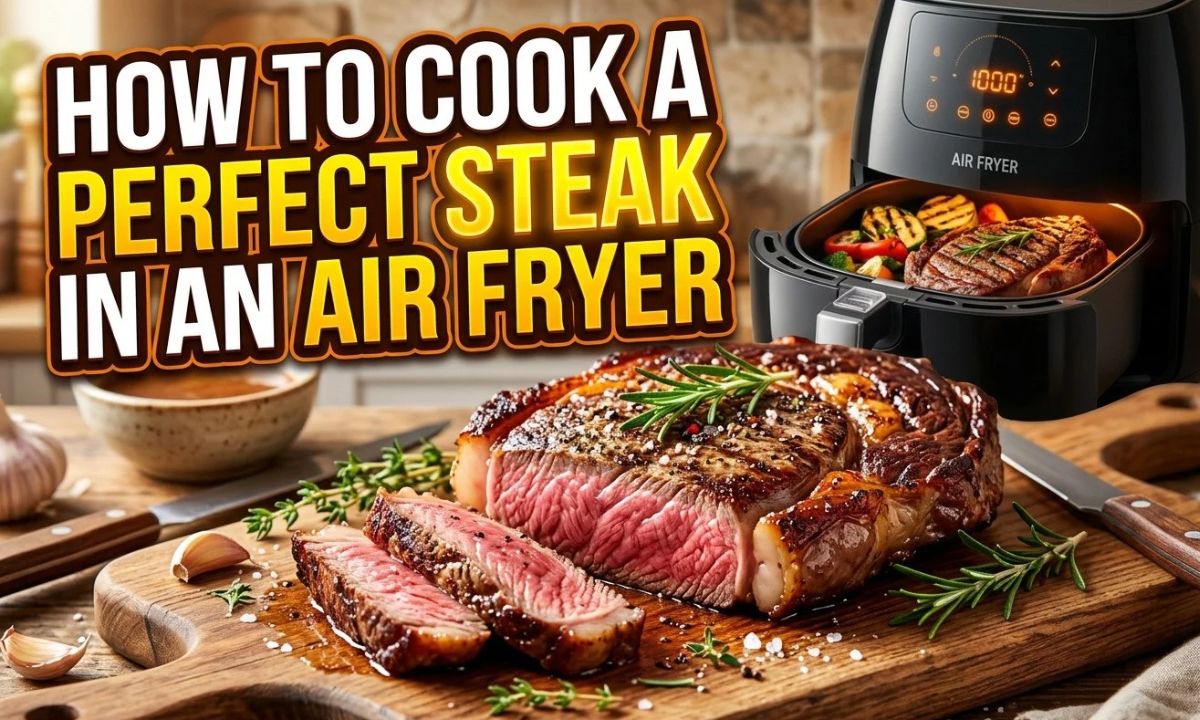
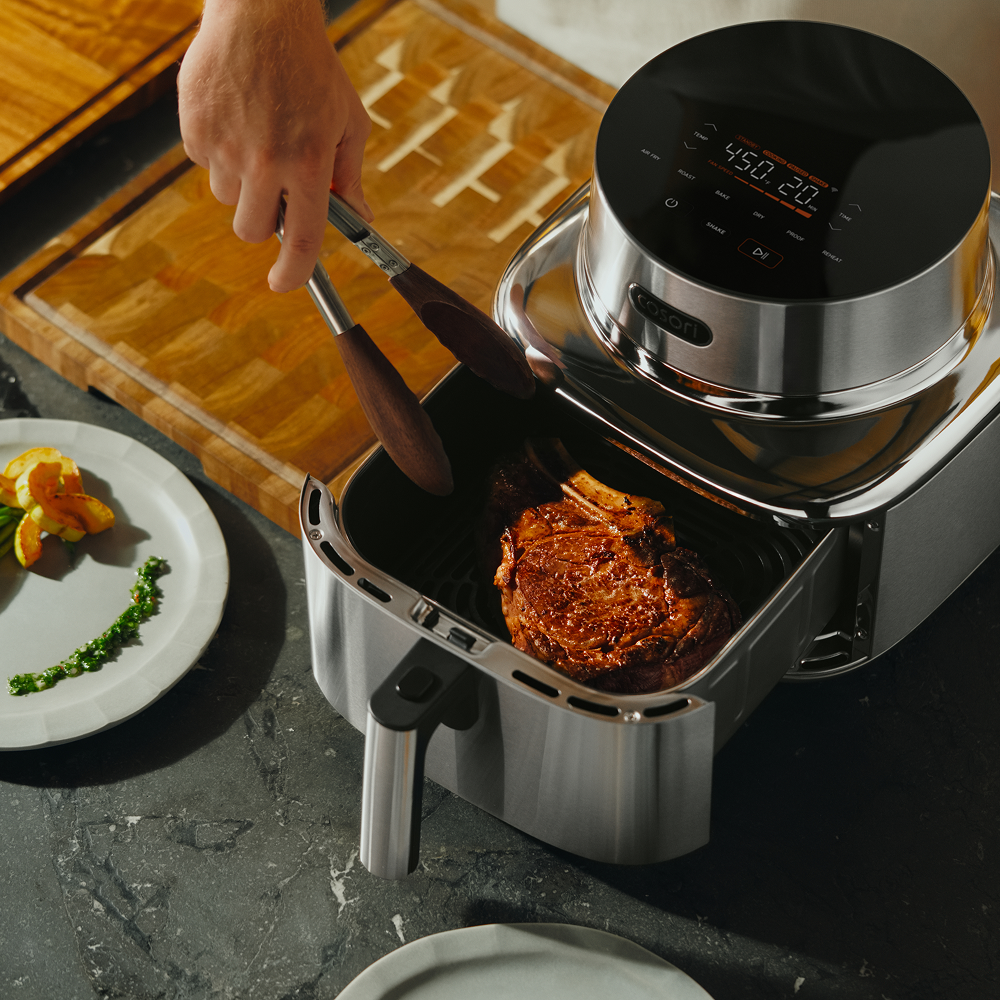
For a juicy air fryer steak with a browned exterior, use a steak about 1 inch thick, pat it dry, season it simply, preheat the air fryer to 400°F, cook it in a single layer, flip it halfway through, and use an instant-read thermometer instead of relying only on cooking time.
If you are cooking steak at home in the United States, an air fryer can be a practical alternative to a skillet or outdoor grill, especially when you want less splatter and a relatively simple cleanup. The key is not a magic number of minutes. Steak thickness, cut, air fryer design, starting temperature, and desired doneness can all change the result.
For a reliable method, start with a well-trimmed steak that is about 1 inch thick, dry the surface thoroughly, season just before cooking, and give the air fryer enough time to heat up. Recipes from established cooking sources commonly use about 400°F and recommend turning the steak during cooking. Because air fryers vary substantially, an instant-read thermometer is the most useful tool for judging when the steak is ready.
For U.S. food-safety guidance, the USDA recommends cooking whole beef steaks to a minimum internal temperature of 145°F, measured with a food thermometer, followed by at least a 3-minute rest. That safety target should take priority over a recipe’s suggested cooking time or a preferred visual level of doneness.
A good air fryer steak does not require a long ingredient list. The most important components are the steak, salt, pepper, a small amount of oil, and a reliable food thermometer. Garlic powder, paprika, steak seasoning, or dried herbs can be added if you want more flavor, but simple seasoning lets the beef remain the focus.
For two servings, choose two steaks that are approximately 1 inch thick. Ribeye, New York strip, sirloin, and similar tender cuts can work well. Ribeye has more intramuscular fat, while sirloin is generally leaner. The cut changes the flavor and texture, but thickness has a particularly large effect on cooking time.
An instant-read thermometer is more useful than trying to memorize a cooking time. Air fryer heating elements, basket shapes, fan speeds, and wattages differ, so two machines set to the same temperature can cook the same steak at different rates.
Source: c5n.com
Steak
Choose two steaks around 1 inch thick. Ribeye, New York strip, and sirloin are practical options.
Oil
Use a light coating of a suitable high-heat cooking oil to encourage surface browning.
Seasoning
Kosher salt and freshly ground black pepper are enough for a classic steak. Add garlic powder, paprika, or steak seasoning if desired.
Equipment
You need an air fryer, tongs, a plate or cutting board for resting, and preferably an instant-read food thermometer.
Which Steak Cut Is Best For An Air Fryer?
There is no single best cut for every cook. Ribeye is forgiving because its marbling provides plenty of fat and flavor, while New York strip offers a firmer texture and a strong beef flavor. Sirloin is often leaner and can be a good choice when you want a less fatty steak. The most important starting point is a reasonably thick, tender steak rather than a very thin cut that can overcook before it develops much browning.
Ribeye
Rich and well marbled, making it a flavorful choice for high-heat cooking.
New York strip
A balanced option with a pronounced beef flavor and a firmer bite.
Sirloin
Generally leaner and often less expensive, but it benefits from careful temperature control.
How To Cook A Perfect Steak In An Air Fryer
The most dependable method is straightforward: dry the steak, season it, preheat the air fryer, cook at high heat, flip once, check the internal temperature, and rest the steak before cutting. A cooking time of roughly 8 to 12 minutes is a useful starting range for a 1-inch steak at 400°F, but it should never replace temperature checking.
Some established recipes use shorter or longer times depending on the steak thickness, air fryer, and desired doneness. That variation is exactly why the thermometer matters. Begin checking earlier than you think you need to, particularly if your air fryer is powerful or the steak is thinner than 1 inch.
Source: fptshop.com.vn
1. Bring the steak toward room temperature
Let the steak sit out for about 20 to 30 minutes before cooking if convenient. Do not leave raw meat at room temperature for extended periods.
2. Pat the steak completely dry
Use paper towels to remove surface moisture from both sides. A dry surface is better suited to browning than a wet one.
3. Lightly coat with oil
Brush or rub a thin layer of cooking oil over both sides. You do not need to soak the steak.
4. Season generously but simply
Season both sides with salt and black pepper. Add other dry seasonings if you want a stronger flavor profile.
5. Preheat the air fryer
Set the air fryer to 400°F and preheat according to the appliance’s instructions. A hot cooking chamber helps the steak begin browning immediately.
6. Place the steak in a single layer
Put the steak in the basket with space around it. Avoid stacking or overcrowding because unrestricted airflow helps the surface brown.
7. Cook and flip halfway
For a 1-inch steak, begin checking the temperature after several minutes. Flip once around the halfway point and continue cooking until the steak reaches the appropriate internal temperature.
8. Rest before slicing
Transfer the steak to a clean plate or cutting board. For food safety, whole beef steaks should reach at least 145°F before removal from the heat and rest for at least 3 minutes.
A Practical 400°F Cooking Starting Point
For a steak around 1 inch thick, 400°F is a useful starting temperature. Many published air-fryer steak recipes land somewhere around 10 to 14 minutes for a steak in this thickness range, while other recipes reach medium-rare sooner. Treat those times as starting points rather than guarantees. Begin checking early and let the internal temperature determine when you stop cooking.
If the outside is browning quickly while the center is still far below your target, continue cooking but check frequently. If the center reaches your target before the surface develops enough color, the air fryer may not be providing the browning you want, or the steak may have had too much surface moisture.
Thin steak
Start checking earlier because it can move from undercooked to overcooked quickly.
1-inch steak
Use 400°F as a starting point and begin checking the internal temperature well before the end of the expected cooking window.
Thick steak
Expect a longer cooking time and check the center regularly. A thick steak can brown before its center reaches the desired temperature.
Steak Temperature And Doneness Guide
Internal temperature is the most reliable way to control steak doneness. Recipe writers may use labels such as rare, medium-rare, medium, medium-well, and well-done, but those labels are not perfectly standardized across every kitchen. A thermometer gives you a measurable result.
For U.S. food safety, the USDA recommends that whole beef steaks reach a minimum internal temperature of 145°F before they are removed from the heat source, followed by at least a 3-minute rest. That recommendation is different from culinary temperature charts that list lower temperatures for rare or medium-rare steak. If food safety is the priority, follow the USDA minimum rather than a lower culinary target.
Source: lezzet.com.tr
USDA safety minimum
145°F internal temperature for whole beef steaks, measured with a food thermometer before removing the steak from the heat, followed by at least 3 minutes of rest.
Medium preference
Many cooks associate medium steak with an internal temperature around 140 to 145°F, but the exact result depends on carryover cooking and measurement technique.
Higher doneness
Cooking beyond 145°F produces a more fully cooked center but can also make lean steaks drier, so careful timing becomes more important.
Lower culinary targets
Published recipe charts may list rare and medium-rare temperatures below 145°F. Those targets are culinary preferences and do not replace the USDA’s recommended safe minimum for whole beef steaks.
Where To Put The Thermometer
Insert the thermometer probe into the thickest part of the steak, aiming toward the center rather than touching the air fryer basket. For a thinner steak, insert the probe from the side so the tip can reach the center. Take the reading in more than one spot if the steak is unevenly shaped.
Do not judge safety by color alone. A brown exterior and a pink interior cannot reliably tell you whether the steak has reached a safe internal temperature.
Check the thickest section
The center of the thickest area is the part most likely to lag behind the surface.
Avoid the basket
The thermometer tip should measure meat, not touch the hot metal basket.
Check more than once
If the steak is irregular in thickness, take readings in several areas before deciding it is finished.
How To Get A Better Crust On Air Fryer Steak
The biggest obstacle to a deeply browned steak in an air fryer is often moisture. Air fryers circulate hot air effectively, but a damp steak surface has to lose that moisture before it can brown efficiently. Patting the steak dry immediately before cooking is therefore one of the simplest improvements you can make.
A preheated basket can also help the steak begin cooking aggressively when it goes into the air fryer. Keep the steak in a single layer and leave space around it. Crowding the basket can interfere with airflow and make browning less even.
If your particular air fryer consistently cooks the center correctly but leaves the exterior lighter than you want, you may need to adjust your expectations. An air fryer can brown steak well, but the crust may not exactly match the intense sear produced by direct contact with a very hot cast-iron skillet or grill grate.
Source: finedininglovers.it
Dry the surface
Use paper towels before seasoning to remove excess moisture.
Preheat first
A hot air fryer helps the steak start cooking immediately instead of spending part of the cooking cycle warming the basket.
Use a thin layer of oil
A small amount of oil can support browning without making the steak greasy.
Avoid crowding
Leave room for hot air to circulate around the steak.
Should You Flip Steak In An Air Fryer?
Yes, flipping halfway through is a useful default. It exposes both sides to the hot circulating air and can encourage more even browning. Some air fryer designs circulate heat effectively enough that a flip is less critical, but it is a simple step that costs very little.
Flip once
A single halfway flip is usually sufficient for a steak.
Use tongs
Tongs let you turn the steak without piercing it repeatedly.
Common Air Fryer Steak Problems And How To Fix Them
Most air fryer steak problems come down to temperature, thickness, surface moisture, overcrowding, or cooking by time alone. The good news is that each problem has a practical adjustment.
If your first steak does not turn out exactly as expected, use it as information about your specific air fryer. Record the steak’s thickness, the cooking temperature, the approximate time, and the internal temperature. That gives you a much better baseline for the next attempt than simply adding or subtracting several minutes.
Source: thereciperebel.com
The steak is undercooked in the center
Continue cooking in short intervals and check the internal temperature frequently. A thicker steak may simply need more time.
The steak is overcooked
Start checking earlier next time. Thin steaks can cook much faster than 1-inch steaks.
The outside is pale
Pat the steak drier, preheat the air fryer, use a light coating of oil, and avoid overcrowding.
The steak is dry
Check the internal temperature sooner and avoid cooking substantially beyond your target unless a higher level of doneness is desired.
One side browns more than the other
Flip the steak halfway through and make sure the basket is not obstructed or overcrowded.
The steak cooks much faster than expected
Your air fryer may run hotter or circulate air more aggressively than the appliance used in the recipe you followed. Trust the thermometer and start checking earlier.
Why Cooking Time Alone Is Unreliable
A recipe might say that a steak takes 10 minutes, but that number is tied to the recipe’s specific steak thickness, appliance, starting temperature, and desired doneness. Changing any of those variables can change the result. Temperature is therefore the better final control point.
This is especially useful when switching between air fryer models. A recipe developed in a compact basket air fryer may not behave exactly the same way in a larger oven-style air fryer.
Thickness changes everything
A thicker steak takes longer for heat to reach the center.
Air fryer design matters
Basket size, heating-element placement, fan strength, and wattage can affect cooking speed.
Starting temperature matters
A steak straight from the refrigerator and one that has rested briefly before cooking may progress differently.
How To Rest And Slice Air Fryer Steak
Resting the steak after cooking gives you time to finish the meal and helps the temperature stabilize before slicing. For U.S. food safety, USDA guidance calls for at least 3 minutes of rest after a whole beef steak reaches 145°F. Many cooking recipes recommend a somewhat longer rest for quality, often around 5 to 10 minutes.
Place the cooked steak on a clean plate or cutting board. If you want to keep it warm, cover it loosely rather than wrapping it tightly. Then slice across the grain instead of parallel to the visible muscle fibers. Cutting across the grain shortens the muscle fibers in each bite and can make the steak feel more tender.
Source: finedininglovers.it
Rest at least 3 minutes
This is the USDA minimum rest period after a whole beef steak reaches the recommended safe temperature.
Use a clean surface
Transfer the cooked steak to a clean plate or cutting board rather than returning it to a surface that held raw beef.
Slice across the grain
Look for the direction of the muscle fibers and cut perpendicular to them.
Serve promptly
Steak is generally at its most appealing shortly after resting, while the crust is still warm and the interior remains juicy.
What To Serve With Air Fryer Steak
Because the air fryer is already handling the main protein, simple sides work especially well. A baked potato, roasted vegetables, asparagus, green beans, a crisp salad, or a small portion of mashed potatoes can turn the steak into a complete dinner. Garlic-herb butter is another easy finishing option, added after cooking rather than during the high-heat air-frying stage.
Classic
Baked potato, green beans, and a simple pan or air-fryer vegetable.
Lighter
Steak with a crisp green salad, asparagus, or roasted vegetables.
Rich
Finish the rested steak with a small amount of garlic-herb butter and serve with potatoes.
Food Safety Tips For Air Fryer Steak
Steak should be handled like any other raw beef. Wash your hands and clean preparation surfaces after handling raw meat, keep raw beef separate from ready-to-eat foods, and use a clean plate for the cooked steak. A food thermometer is the most dependable way to verify the cooking temperature.
The USDA recommends that raw beef steaks reach a minimum internal temperature of 145°F, measured with a food thermometer before removing them from the heat source, followed by at least a 3-minute rest. This is the U.S. safety benchmark used in this guide. People who prefer rarer steak should understand that culinary preference temperatures below 145°F do not meet that USDA recommendation.
Do not rely on the color of the center to determine whether steak is safe. A steak can remain pink after reaching a safe temperature, while color alone cannot establish the actual internal temperature.
Source: cosori.com
Use a thermometer
Measure the internal temperature rather than judging doneness from color or cooking time alone.
Reach 145°F for whole beef steaks
USDA guidance recommends a minimum internal temperature of 145°F before removing the steak from the heat source.
Rest for at least 3 minutes
Allow the steak to rest for at least 3 minutes after reaching the recommended temperature.
Prevent cross-contamination
Keep raw beef away from cooked foods and use clean utensils and plates for serving.
What If The Steak Is Mechanically Tenderized?
If a steak has been mechanically tenderized, punctured, or otherwise processed so that bacteria on the surface may have been moved into the interior, temperature control becomes especially important. Follow the USDA’s applicable safe-cooking guidance and the package instructions when provided. When in doubt, use the food thermometer rather than relying on appearance.
Check the label
Look for statements indicating that the steak has been mechanically tenderized or blade tenderized.
Prioritize measured temperature
Use a thermometer to verify the internal temperature instead of assuming an intact-looking steak is safe.
Frequently Asked Questions
Q
How long does it take to cook a steak in an air fryer?
A 1-inch steak at about 400°F commonly falls in an approximately 8- to 14-minute range in published recipes, but the exact time varies by air fryer, steak thickness, starting temperature, and desired doneness. Begin checking the internal temperature early instead of treating the cooking time as a guarantee.
Q
What temperature should I set my air fryer for steak?
About 400°F is a practical starting temperature for air fryer steak. It is high enough to encourage browning while allowing the center to cook relatively quickly. Always follow your appliance’s instructions and adjust based on how quickly your particular model cooks.
Q
Do I need to preheat the air fryer before cooking steak?
Preheating is useful because it gives the steak an immediate exposure to a hot cooking environment and can help with browning. Many published air fryer steak recipes use a preheated air fryer, although exact preheating instructions vary by appliance.
Q
Can I cook a frozen steak in an air fryer?
It is possible to air fry some steaks from frozen, but frozen cooking changes the timing and can make it harder to develop an even crust while controlling the center. For the most predictable result, thaw the steak safely in the refrigerator before using the standard method in this guide.
Q
Should I put butter on steak before air frying?
For a simple air fryer method, use a small amount of cooking oil before cooking and add butter after the steak has finished cooking. Garlic-herb butter can melt over the rested steak without spending the entire cooking cycle exposed to high heat.
Q
Why is my air fryer steak tough?
The most common causes are overcooking, using a naturally less-tender cut, slicing with the grain, or skipping the resting period. Use an internal thermometer, avoid cooking substantially beyond the desired temperature, rest the steak after cooking, and slice across the grain.
✦ Wrapping Up
Conclusion
Cooking a great steak in an air fryer is mostly about controlling a few variables rather than following a rigid number of minutes. Start with a reasonably thick steak, dry the surface, season it simply, preheat the air fryer to about 400°F, cook in a single layer, and flip halfway through.
The most important upgrade is using an instant-read thermometer. Air fryers differ in how quickly they transfer heat, so a recipe’s cooking time is only a starting point. For U.S. food safety, whole beef steaks should reach at least 145°F internally before removal from the heat and rest for at least 3 minutes.
Once the steak reaches the desired temperature, give it time to rest, then slice across the grain. With those habits in place, you can adjust the cooking time for your particular air fryer and steak thickness instead of relying on guesswork.
💡 Key Takeaway
For your next air fryer steak, use a 1-inch-thick steak, preheat to 400°F, pat it dry, season and lightly oil it, flip halfway through cooking, begin checking the internal temperature early, and follow the USDA minimum of 145°F plus a 3-minute rest for whole beef steaks.