
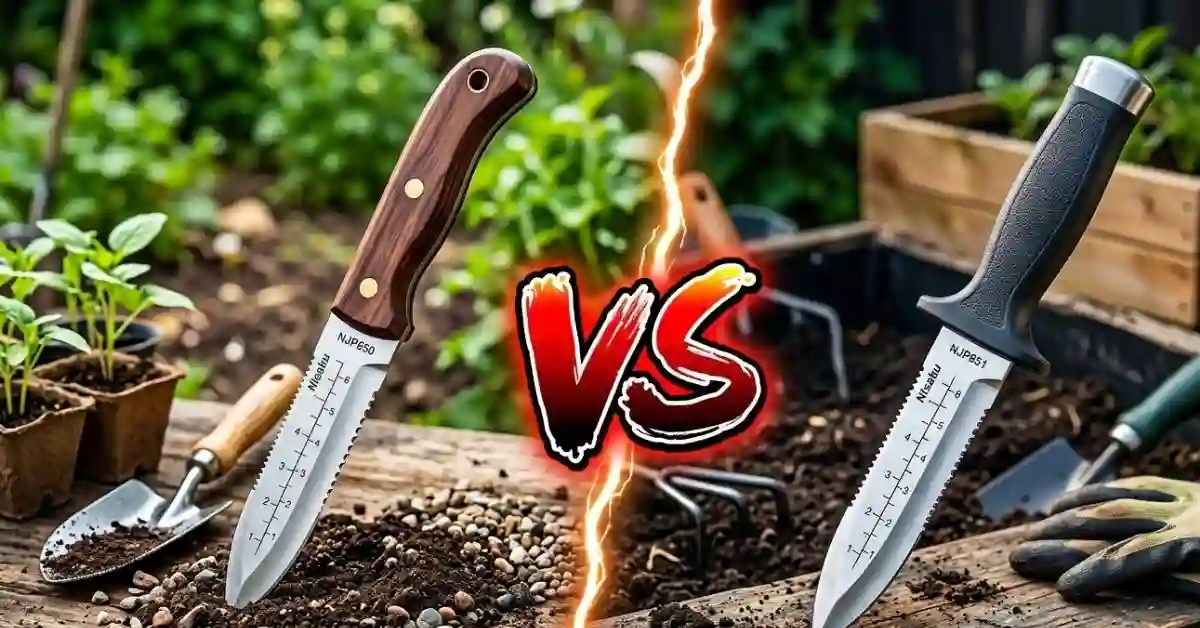
I spent entire weekends fighting rocky soil and stubborn weeds in my backyard. Standard hand tools kept bending, dulling, or snapping right at the handle when I pulled hard.
I needed one tough tool that could dig, cut, and scoop without failing me mid-job. Here is my real experience using both options so you can choose the best one for your hands.
Moving from daily frustration to the right gear changed how I work outside every weekend.
Nisaku NJP650 Review
I picked up the Nisaku NJP650 when my old trowel snapped in hard dirt.
Right away, the smooth wood handle felt balanced and easy in my palm.
The curved blade cut right through deep roots and lifted tight soil fast.
It felt like an instant upgrade to my daily digging routine.
Here is a clear look at what made me smile and what gave me pause while using it.
Pros and Cons
| Type | Feature | My Experience |
| Pro | Sharp edges | Cut through thick roots on the first slice. |
| Pro | Depth marks | Helped me plant bulbs at the exact right depth. |
| Pro | Wooden grip | Felt comfortable during long digging sessions. |
| Con | Hard dirt dulling | Needed light sharpening after weeks in rocky soil. |
| Con | Sheath fit | The cover loop felt a bit stiff at first. |
After using this tool for two solid months, it became a main part of my weekly outdoor tasks.
Daily Usage and Long-Term Feel
I used this knife to dig planting holes, scrape weeds, and divide crowded flowers. The scooped shape held dirt well, so I did not drop soil everywhere while moving plants. Measuring depths with the stamped marks saved me time when setting new bulbs. My hands did not feel sore even after two hours of nonstop work.
I did hit a small bump when working near thick rocks. The edge took a tiny nick that needed a quick touch-up on a sharpening stone. Cleaning off wet mud was fast because the metal resists rust nicely. It remains a reliable partner for standard yard chores.
To help you decide quickly, here is how this model fits different types of workers.
Recommendation
| User Type | Recommendation | Reason |
| Regular gardeners | Good Fit | Very easy to handle for light digging and planting. |
| Bulb planters | Good Fit | Blade marks make depth checks simple and fast. |
| Heavy rock diggers | Not Ideal | Edge can dull faster in very stony ground. |
| Budget buyers | Good Fit | Great value for a durable hand tool. |
Stepping up to a harder steel build opened up a new level of strength for tough tasks.
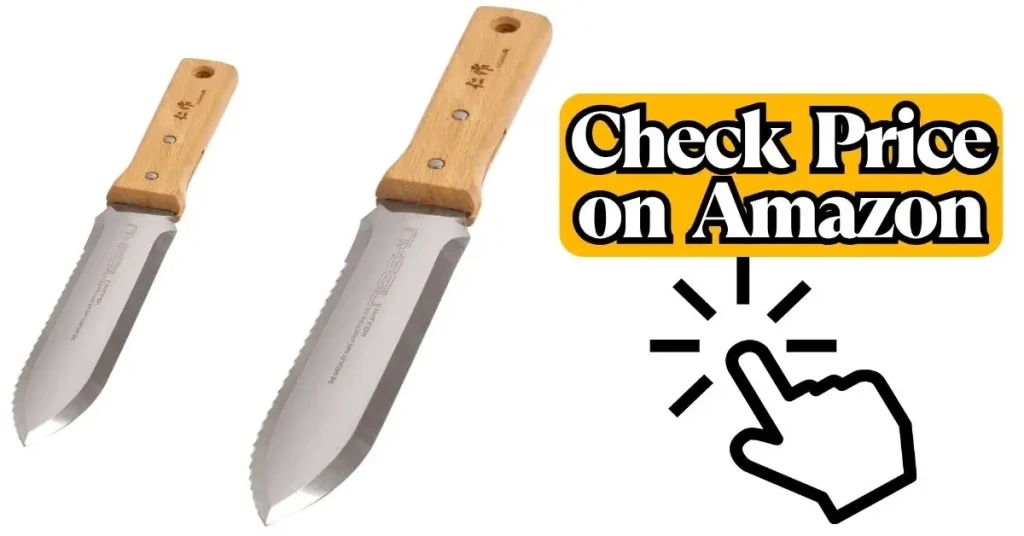
Nisaku NJP651 Review
I switched to the Nisaku NJP651 when I had to clear a patch of land full of hidden stones.
The hardened steel blade immediately felt stiffer and more heavy-duty in my hand.
It sliced through thick taproots that usually stop other blades cold.
Even after hitting small rocks repeatedly, the edge stayed surprisingly sharp.
It gave me extra confidence during heavy yard cleanups.
Let us break down the main strengths and minor drawbacks I noticed during testing.
Pros and Cons
| Type | Feature | My Experience |
| Pro | Hardened steel | Kept its razor edge even through rocky patches. |
| Pro | Strong build | Never flexed or bent when prying deep roots. |
| Pro | Clean slices | Sawed right through thick buried roots with ease. |
| Con | Higher price | Costs a bit more than standard options. |
| Con | Tougher to sharpen | Took more time on the stone to refresh the edge. |
Putting this tool through its paces over eight weeks revealed both its power and its limits.
Daily Usage and Long-Term Feel
I put this model to work on tough weeds with deep taproots and hard clay. The hardened edge cut through dry soil without dulling or chipping easily. I loved how I could leverage dense soil blocks without worrying about bending the metal. The wood handle felt solid and offered a firm grip during heavy pulls.
My only minor frustration came when it was time to sharpen the blade. Because the steel is so hard, refreshing the edge took extra patience and effort. But since it holds its edge far longer, I rarely had to sharpen it anyway. It truly shines when the work gets rough.
Here is my breakdown of who will love this model and who might want something simpler.
Recommendation
| User Type | Recommendation | Reason |
| Tough soil diggers | Good Fit | Hard steel withstands clay, rocks, and thick roots. |
| Daily heavy users | Good Fit | Retains a sharp edge longer between maintenance sessions. |
| Light weeders | Not Ideal | More strength than needed for soft pot soil. |
| Casual hobbyists | Not Ideal | Slightly higher cost for casual weekend use. |
Comparing both tools side by side makes it easy to see where each one truly excels.
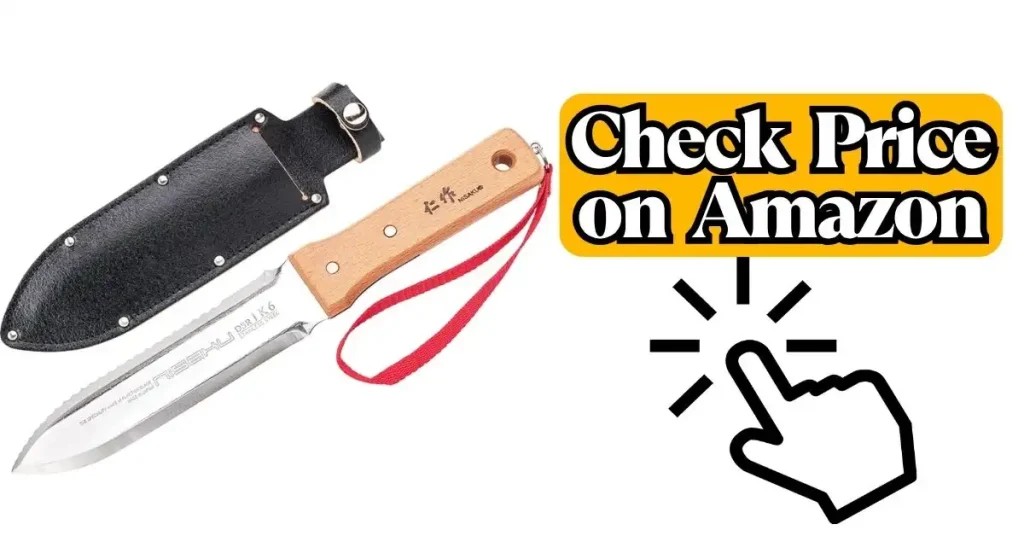
Detailed Comparison for Nisaku NJP650 VS NJP651
Choosing between these two models comes down to your soil and how hard you push your gear.
Both tools handle core digging tasks, but key differences in steel hardness affect daily performance.
Here is how they stack up across five key areas based on my hands-on testing.
Cutting power and digging force make a huge difference when you face stubborn soil.
Performance: Nisaku NJP650 VS NJP651
In soft soil and garden beds, both tools dig and scoop with ease. The Nisaku NJP650 handles routine weeding and bulb planting smoothly without any hassle. However, when I hit packed clay, the Nisaku NJP651 cut deeper with much less hand effort.
The hardened edge on the Nisaku NJP651 made a massive difference when cutting thick roots. While the Nisaku NJP650 required multiple saw strokes to get through, the Nisaku NJP651 sliced right through in fewer glides. It simply holds up better when you push it to its limits under heavy stress.
| Feature | Nisaku NJP650 | Nisaku NJP651 |
| Root cutting | Cuts medium roots easily | Slices thick roots faster |
| Clay digging | Requires extra push | Penetrates hard clay smoothly |
| Edge retention | Good for normal soil | Outstanding in rocky dirt |
| Overall power | Great for light duties | Exceptional for heavy work |
Nisaku NJP650 Rating: 8/10
Nisaku NJP651 Rating: 9.5/10
Comfort in the hand decides whether you can keep working all afternoon without hand fatigue.
Ease of Use: Nisaku NJP650 VS NJP651
Both tools share a comfortable wooden handle that feels natural in the palm. The weight distribution on the Nisaku NJP650 feels slightly lighter, making it easy to swing and flick dirt all day. My wrist felt zero strain during long planting projects.
The Nisaku NJP651 feels just a bit more solid in hand, giving you total confidence when levering out deep weeds. However, because it is built for tough work, it requires slightly more control when doing fine detail work in small pots. For standard yard tasks, both feel very user-friendly.
| Feature | Nisaku NJP650 | Nisaku NJP651 |
| Weight feel | Light and quick to maneuver | Solid and sturdy in hand |
| Small plant work | Excellent control in tight spaces | Good control with extra care |
| Handle comfort | Smooth and easy on palms | Smooth wood with strong grip |
| Fatigue level | Very low during long sessions | Low, though slightly heavier |
Nisaku NJP650 Rating: 9/10
Nisaku NJP651 Rating: 8.5/10
A durable tool must resist rust, withstand leverage, and keep its shape through seasons of work.
Build Quality: Nisaku NJP650 VS NJP651
The construction on both options is top-tier stainless steel attached to a tight wood handle. The Nisaku NJP650 showed no signs of bending during normal garden bed digging. Its rust resistance was fantastic, even when left covered in damp dirt overnight.
Where the Nisaku NJP651 steps ahead is its special hardened steel treatment. When I pried up heavy rocks, the blade remained completely stiff with no flex at all. The metal finish on the Nisaku NJP651 resists scratches much better when sliding against coarse gravel.
| Feature | Nisaku NJP650 | Nisaku NJP651 |
| Steel type | Quality stainless steel | Hardened HRC58 stainless steel |
| Flex resistance | Mild flex under heavy leverage | Zero flex under heavy load |
| Rust defense | Excellent rust protection | Excellent rust protection |
| Scratch resistance | Good against soft soil | Superior against rocks and gravel |
Nisaku NJP650 Rating: 8.5/10
Nisaku NJP651 Rating: 9.5/10
Keeping your blade sharp and clean ensures it stays ready for your next outdoor project.
Maintenance: Nisaku NJP650 VS NJP651
Taking care of the Nisaku NJP650 is quick and forgiving. Because the steel is slightly softer, sharpening the straight edge on a standard stone takes only a few simple strokes. It wipes clean fast under running water after a long day in the dirt.
On the other hand, the Nisaku NJP651 stays sharp much longer, so you sharpen it less often. However, when it finally comes time to hone the edge, the hardened steel demands a bit more stone work. Both models require basic oiling on the wood handle to stay fresh.
| Feature | Nisaku NJP650 | Nisaku NJP651 |
| Sharpening effort | Quick and simple to sharpen | Needs more time on whetstone |
| Edge longevity | Requires regular touch-ups | Holds edge for long periods |
| Cleaning speed | Wipes clean in seconds | Wipes clean in seconds |
| Handle care | Occasional oiling recommended | Occasional oiling recommended |
Nisaku NJP650 Rating: 9/10
Nisaku NJP651 Rating: 8/10
Balancing price against durability helps you get the most out of every hard-earned dollar.
Value for Money: Nisaku NJP650 VS NJP651
The Nisaku NJP650 offers incredible value if you need an everyday garden hand tool. It replaces trowels, weeders, and small saws at a very fair price point. For most backyards, it delivers way more utility than standard store tools.
The Nisaku NJP651 carries a slightly higher price tag due to its hardened steel build. If you face tough rocky ground or heavy roots, that extra cost pays for itself in saved time and effort. It is a long-term investment for serious outdoor work.
| Feature | Nisaku NJP650 | Nisaku NJP651 |
| Price point | Very affordable | Slightly higher investment |
| Ideal soil type | Soft soil, raised beds, normal yard | Rocky ground, clay, hard roots |
| Long-term value | High for casual gardeners | Maximum for heavy-duty users |
| Overall utility | Replaces multiple basic tools | Replaces multiple heavy tools |
Nisaku NJP650 Rating: 9/10
Nisaku NJP651 Rating: 8.5/10
Final thoughts on making the right pick for your own outdoor projects.
Conclusion
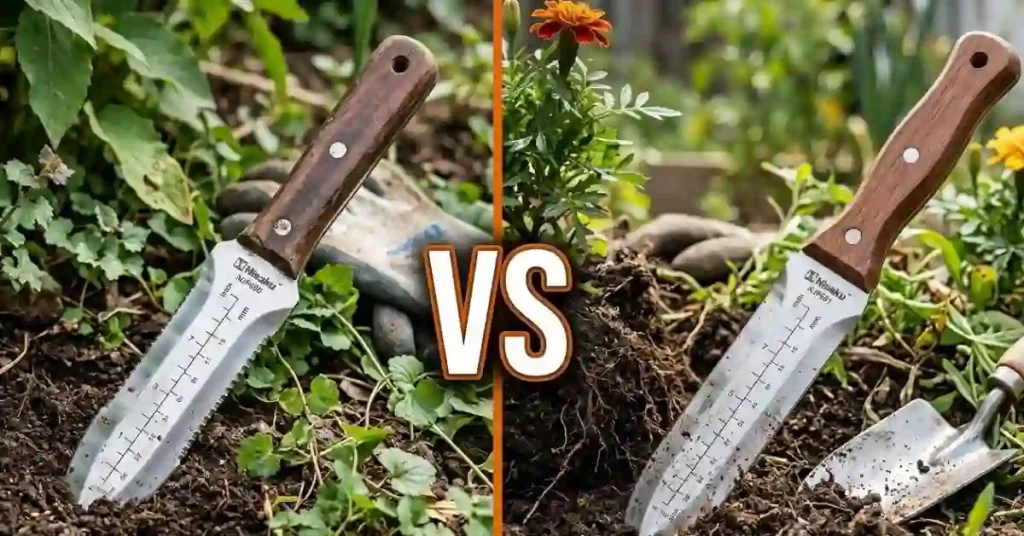
Both tools completely outclass standard hand trowels and make outdoor work enjoyable. If you want a light, easy tool for soft soil and flower beds, the Nisaku NJP650 is a fantastic choice. But if you deal with hard clay, rocks, or thick roots, the extra strength of the Nisaku NJP651 is well worth it. Choose the one that fits your dirt, and your hands will thank you.
To Get More About Home, Kitchen Accessories Product You Can Visit Our Site. If You Found our Posts Helpful Leave a Comment Below