
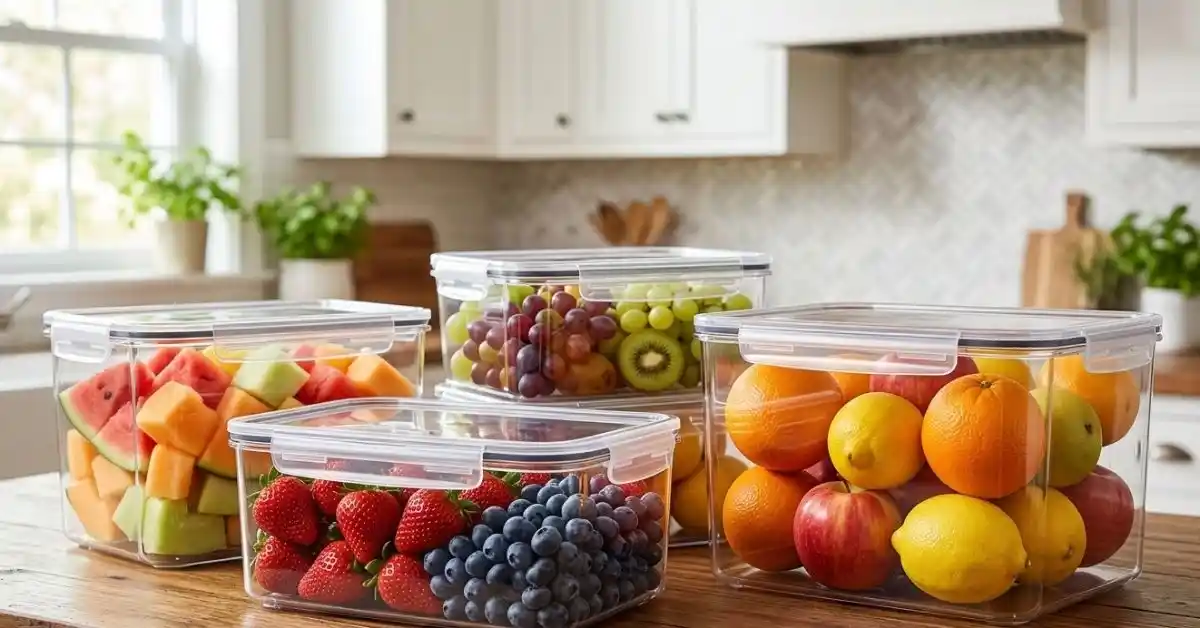
I used to think storing fruit was simple: put everything in a big container, close the lid, and move on. That sounds fine until the fruit comes home in a large batch. Then you notice the bruised apples, soft berries, trapped moisture, and that one banana somehow turning the whole container into a mess.
That is why Large Fruit storage Containers caught my attention. The right container can make a busy kitchen much easier to manage, but size alone is not enough. I learned that ventilation, shape, material, drainage, and how the fruit will actually be stored matter just as much. Here is what I would look for before buying one.
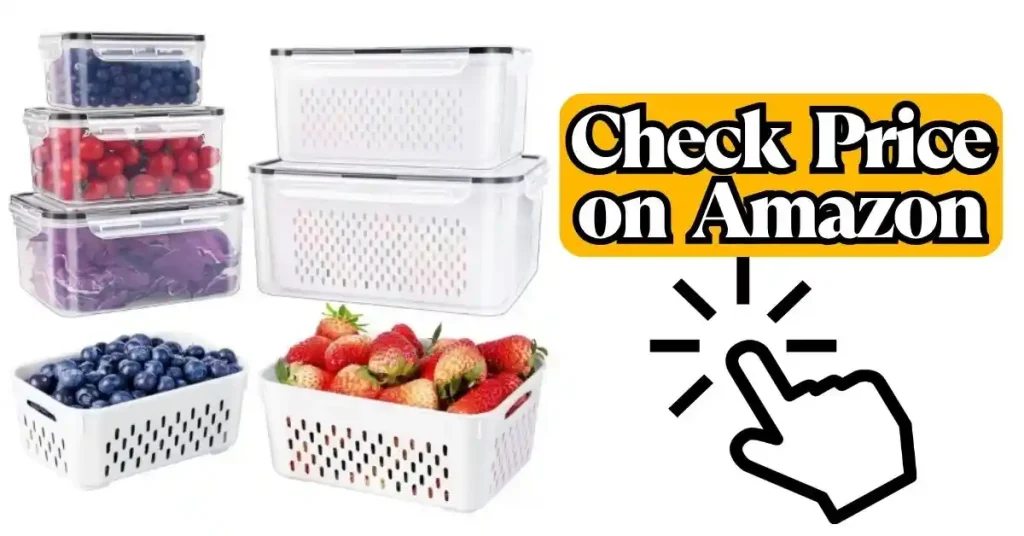
Why Large Fruit storage Containers Are More Useful Than They Look
A large fruit container is not just a bigger box. It solves a few everyday storage problems that smaller containers often create.
When I store a lot of fruit at once, I want to see what is inside without opening five different boxes. I also want enough room to lift fruit out without crushing the pieces at the bottom.
| Storage need | What helps most |
| Large fruit batches | Wide and deep container |
| Delicate fruit | Shallow design with gentle stacking |
| Wet fruit | Ventilation or drainage |
| Easy checking | Clear sides or lid |
The biggest lesson is that large should not mean extra deep. A huge container can hold plenty of fruit, but if you pile soft fruit several layers high, the fruit at the bottom can take a beating.
What I Like About a Large Fruit Container
The main benefit is organization.
Instead of leaving oranges, apples, pears, or other fruit scattered across the counter, I can keep them together in one easy-to-check space. A good container also helps make better use of a refrigerator shelf or pantry area.
But I would not put every kind of fruit into one container. Some fruit needs airflow. Some does better when kept dry. Some should stay away from other ripe fruit.
That small detail makes a surprisingly big difference.
How Big Should Large Fruit storage Containers Be?
There is no single perfect size. The best capacity depends on the type of fruit and how much you normally buy.
For bulky fruit, I prefer a wide container rather than one that is extremely tall. This gives the fruit more room and makes it easier to spot anything starting to spoil.
| Typical use | Better container shape |
| Apples and oranges | Wide, open interior |
| Berries and small fruit | Shallow with airflow |
| Mixed fruit | Large with sections or separate containers |
| Large batches | Wide base with moderate depth |
One mistake I would avoid is buying the biggest container simply because it seems like better value. Empty space is useful, but excessive depth can encourage overfilling.
A container should give your fruit breathing room, not turn it into a pile.
Wide or Deep: Which Is Better?
For most fresh fruit, I lean toward wide and moderately deep.
A wide container lets me spread fruit out. I can see what is underneath, and I am less likely to crush delicate pieces while searching for something.
Deep containers can work well for firm fruit, but I would be more careful with soft fruit. If I have to dig through the container to find something, the design is probably working against me.
Which Materials Work Best for Large Fruit storage Containers?
Most large fruit storage containers are made from plastic, glass, stainless steel, or a combination of materials.
Each has a place in the kitchen. I would choose based on how I plan to use the container rather than assuming one material is always best.
| Material | What I would consider |
| Plastic | Light, practical, easy to move |
| Glass | Clear, sturdy, but heavier |
| Stainless steel | Strong and durable, but not transparent |
For everyday kitchen use, lightweight plastic can be convenient. A large container filled with fruit can become surprisingly heavy, so that matters.
Glass is nice when I want to see the contents clearly. The downside is obvious: a large glass container full of fruit is not something I enjoy moving around often.
Is an Airtight Lid Always Better?
This is one area where I think people can get caught out.
An airtight lid sounds ideal because it keeps food protected. But fresh fruit can release moisture, and trapped moisture can become a problem.
For fruit that benefits from airflow, a container with ventilation may be more useful than a completely sealed box.
That does not mean airtight containers are bad. They can be useful for certain prepared or cut foods. I just would not assume that airtight automatically means better for fresh fruit.
Ventilation Matters More Than I Expected
When fresh produce sits in a closed space, moisture can build up. That is especially noticeable with fruit that has been washed and stored before it is completely dry.
I learned to pay much more attention to airflow.
A container with small vents, a raised insert, or a design that allows moisture to escape can be useful. The exact setup depends on the fruit.
| Problem | Useful feature |
| Moisture collecting inside | Ventilation |
| Fruit touching liquid | Raised tray or drain area |
| Condensation | Airflow around the fruit |
| Fruit becoming difficult to inspect | Clear, open design |
The important point is simple: do not seal wet fruit and hope for the best.
If I wash fruit before storing it, I make sure it is properly dried when appropriate. Otherwise, even a very good container cannot solve the moisture problem.
Large Fruit storage Containers for the Refrigerator
A large container can be especially useful in the refrigerator, but refrigerator space creates a different challenge.
The container may fit perfectly when empty and become awkward once filled. I always think about shelf height, door clearance, and whether I can remove it without moving half the refrigerator.
Leave Room Around the Fruit
Packing a container tightly may seem efficient, but it can make inspection harder.
I prefer enough room to move pieces around gently. This also makes it easier to remove one item without disturbing everything else.
For delicate fruit, I would rather use two smaller containers than one enormous one if the large container forces me to stack everything.
Which Fruit Should Not Be Stored Together?
This is an easy detail to overlook.
Different fruits ripen at different speeds, and some produce gases that can affect nearby produce. So a single giant container for every type of fruit is not always a smart idea.
| Storage situation | My approach |
| Firm apples and oranges | Can often share a suitable container |
| Delicate berries | Keep separate |
| Very ripe fruit | Check more often |
| Cut fruit | Use a clean, covered container |
I also avoid mixing fruit just because it looks nice together. A colorful mixed-fruit container might look great on the counter, but storage needs come first.
This is one of those cases where a few separate containers can actually be easier than one huge box.
Large Fruit storage Containers for Berries and Soft Fruit
Berries are where I would be especially cautious with large containers.
They are delicate, and piling them into a deep container can lead to crushed fruit at the bottom. Moisture is another concern.
For soft fruit, I prefer shallow storage with enough airflow and minimal pressure.
Why Shallow Storage Can Beat Large Capacity
A container can technically hold a huge amount of berries and still be a poor choice.
If the bottom layer carries the weight of several layers above it, damage can happen quickly. A shallow container spreads the fruit out and makes inspection easier.
This is a good example of why container capacity should not be the only buying factor.
What About Large Fruit storage Containers for Cut Fruit?
Cut fruit needs more care than whole fruit.
Once fruit is cut, the exposed surfaces can dry out or become contaminated more easily. Clean containers with secure lids are useful here.
I would also keep cut fruit separate from whole, unwashed produce.
| Fruit condition | Storage priority |
| Whole and dry | Airflow and easy access |
| Washed fruit | Good drying before storage |
| Cut fruit | Clean container and secure cover |
| Very soft fruit | Shallow storage |
I also make smaller portions when practical. A huge container of cut fruit often means opening and closing it repeatedly. Smaller portions can be easier to manage.
Common Mistakes I Would Avoid
Buying a large fruit container is easy. Using it well takes a little more thought.
I have found that most storage problems come from habits rather than the container itself.
| Mistake | Better approach |
| Filling it to the top | Leave useful space |
| Storing wet fruit | Dry it first when appropriate |
| Mixing every fruit | Separate fruit with different needs |
| Choosing maximum depth | Favor access and gentle stacking |
| Ignoring damaged fruit | Check and remove it regularly |
One habit I especially like is checking the container every day or two.
It takes less than a minute. If one piece looks damaged, I deal with it before it affects the rest.
That tiny habit can save a surprising amount of food.
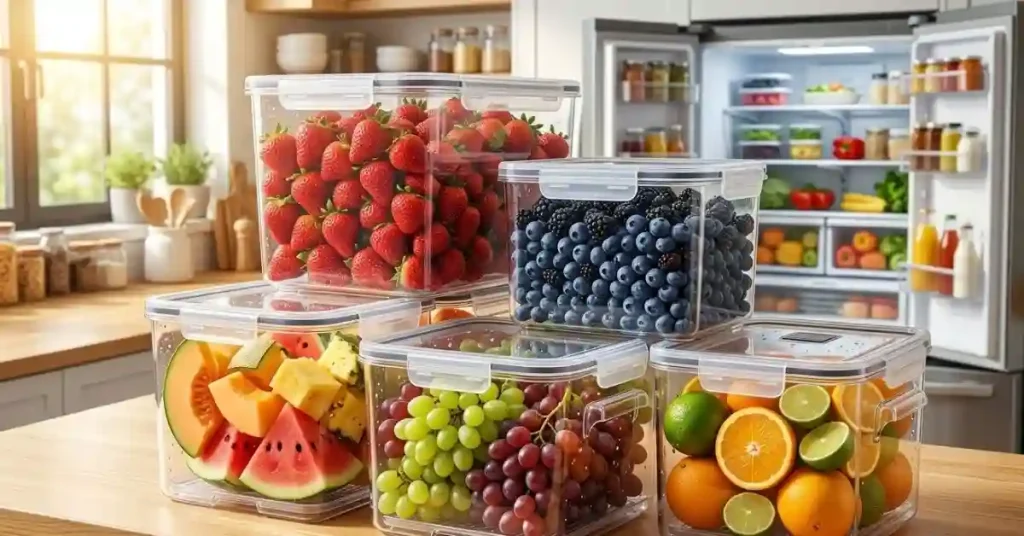
How I Would Choose a Large Fruit Storage Container
If I were choosing one today, I would start with the fruit I buy most often.
That sounds obvious, but it is easy to get distracted by capacity, clever lids, or attractive designs.
I would ask a few practical questions first.
Does It Fit My Refrigerator or Counter?
Measure the space before buying.
Check the width, height, and depth. Also check the opening. A container that technically fits may still be annoying if you cannot comfortably pull it out.
Can I See the Fruit Easily?
Clear sides are useful because they reduce unnecessary opening.
If I can see that the fruit is still fine, I do not need to keep lifting the lid. If something starts to spoil, I can spot it earlier.
Can I Clean It Properly?
This is more important than fancy features.
Fruit leaves behind juice, crumbs, moisture, and residue. I want a container that is easy to wash, especially around corners and lid seals.
| Feature | Why I value it |
| Smooth interior | Easier cleaning |
| Removable parts | Less trapped residue |
| Clear construction | Faster inspection |
| Secure but simple lid | Easy daily use |
A complicated lid may look clever in the product description. In real kitchen use, simple is often better.
Large Fruit storage Containers: Plastic vs. Glass
Both materials can work. The right choice depends on how the container will be used.
Plastic is easier to lift and move, especially when the container is large. Glass offers a solid feel and makes the contents easy to see, but weight becomes an issue.
I would choose plastic when portability matters. I would consider glass when the container will mostly stay in one place.
The best container is the one I will actually use consistently.
How to Clean Large Fruit storage Containers
Cleaning does not need to be complicated, but it should be regular.
I empty the container first and check for sticky spots, damaged fruit, or moisture hiding underneath. Then I wash the container according to its material and manufacturer’s care instructions.
I pay extra attention to the lid.
The lid is easy to ignore, yet moisture and residue can collect around edges, vents, and seals.
A Simple Cleaning Routine
| When | What I check |
| Daily | Remove damaged fruit |
| Every few days | Check moisture and residue |
| After emptying | Wash and dry the container |
| Before refilling | Make sure it is clean and dry |
I would not refill a container while it is still damp unless the container and the specific storage method are designed for that use.
Starting with a clean, dry container makes storage much easier.
Large Fruit storage Containers: Myths That Can Cause Problems
There are a few assumptions I would not rely on.
| Myth | Reality |
| Bigger is always better | Too much depth can damage soft fruit |
| Airtight is always best | Some fresh fruit benefits from airflow |
| One container suits every fruit | Different fruit has different storage needs |
| Washing first always helps | Wet fruit can create extra moisture |
| More features mean better storage | Simple designs can be easier to use |
The biggest myth is probably that the container itself keeps fruit fresh.
It does not.
A container can support good storage, but temperature, moisture, fruit condition, cleanliness, and handling still matter.
What I Would Look For Before Buying
If I were standing in a store or comparing large fruit containers online, I would focus on practical details first.
I would check the dimensions, interior shape, lid design, ventilation, cleaning instructions, and whether the container is suited to refrigerator use.
Then I would think about my actual fruit habits.
| Question to ask | Why it matters |
| What fruit do I store most? | Determines the ideal shape |
| Where will it sit? | Determines size |
| Do I store washed fruit? | Makes moisture control important |
| Will I move it often? | Makes weight important |
| How often will I clean it? | Determines whether simple design wins |
That last question is easy to skip.
A container can have a beautiful design, but if cleaning it is annoying, I know I will eventually stop using it properly.
The Small Storage Habit That Made the Biggest Difference
For me, the biggest improvement was not buying a larger container.
It was changing how I used the container.
I stopped treating it like a place to dump fruit. Instead, I started seeing it as part of a simple storage routine: inspect the fruit, remove anything damaged, avoid unnecessary moisture, leave enough space, and keep different types separate when needed.
That made the container much more useful.
I also stopped trying to maximize every inch of storage space. A little empty room is not wasted space if it protects the fruit and makes the container easier to use.
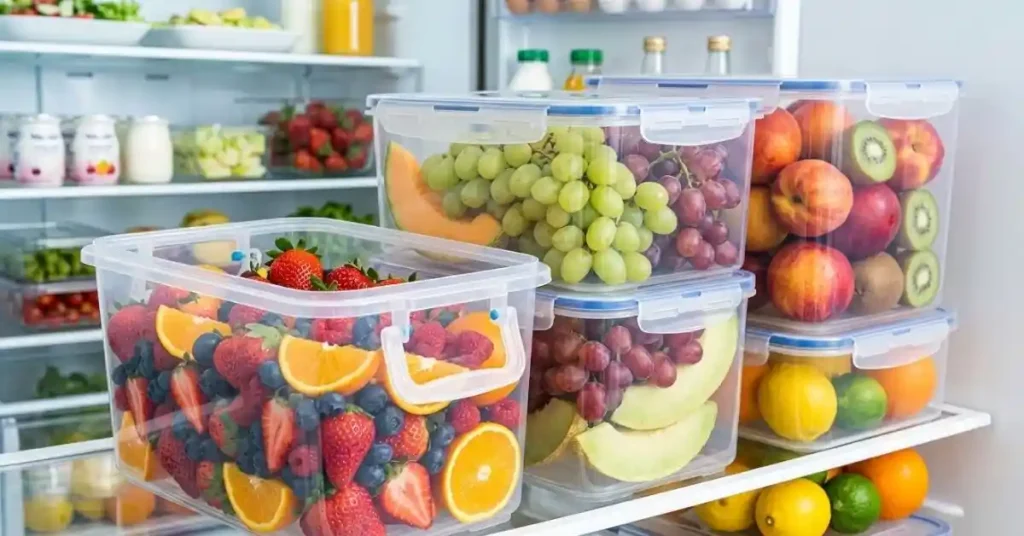
Final Thoughts
The best Large Fruit storage Containers are not necessarily the biggest or most expensive ones. For me, the useful features are much simpler: enough space, a practical shape, easy cleaning, good visibility, and the right amount of airflow for the fruit being stored.
My main lesson is to choose the container around your storage habits, not the other way around. If you mostly store firm fruit, a large general-purpose container may work well. If you regularly buy berries or other delicate fruit, several shallower containers may be a much better choice.
A good container will not magically make fruit last forever. But when the size, airflow, cleanliness, and storage routine all work together, it can make the kitchen less messy and help you waste less food. And honestly, that is what I would want from any storage container.
To Get More About Home, Product Reviews Product You Can Visit Our Site. If You Found our Posts Helpful Leave a Comment Below