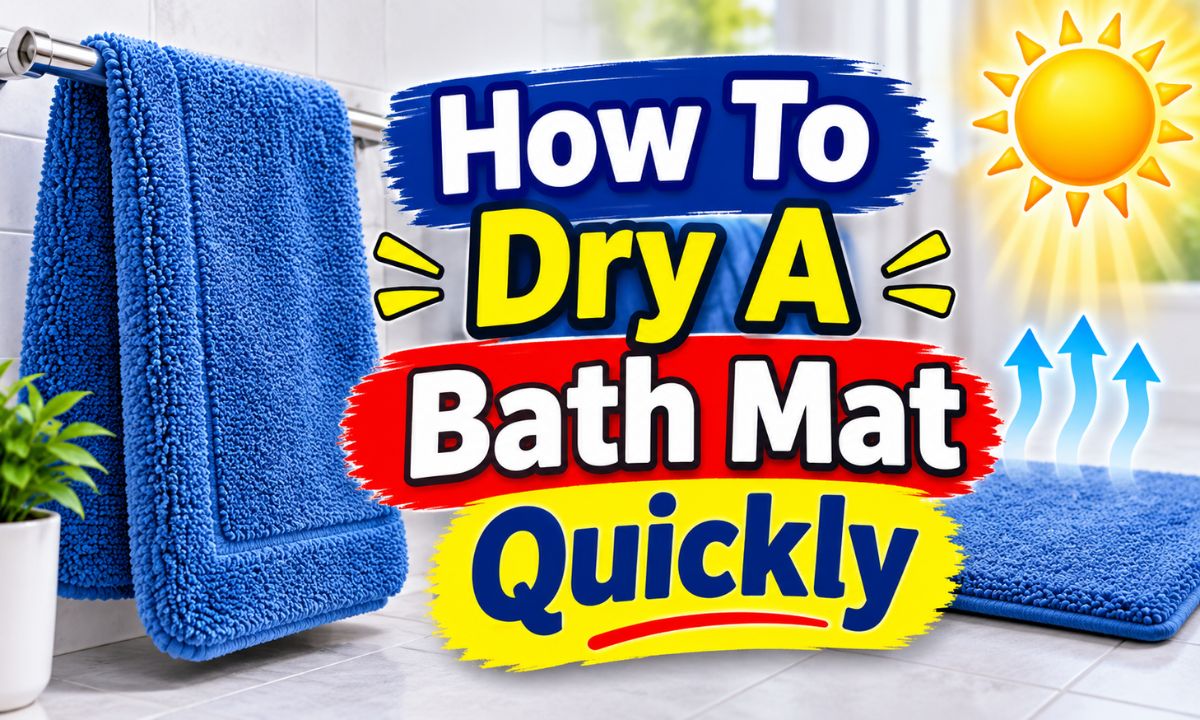
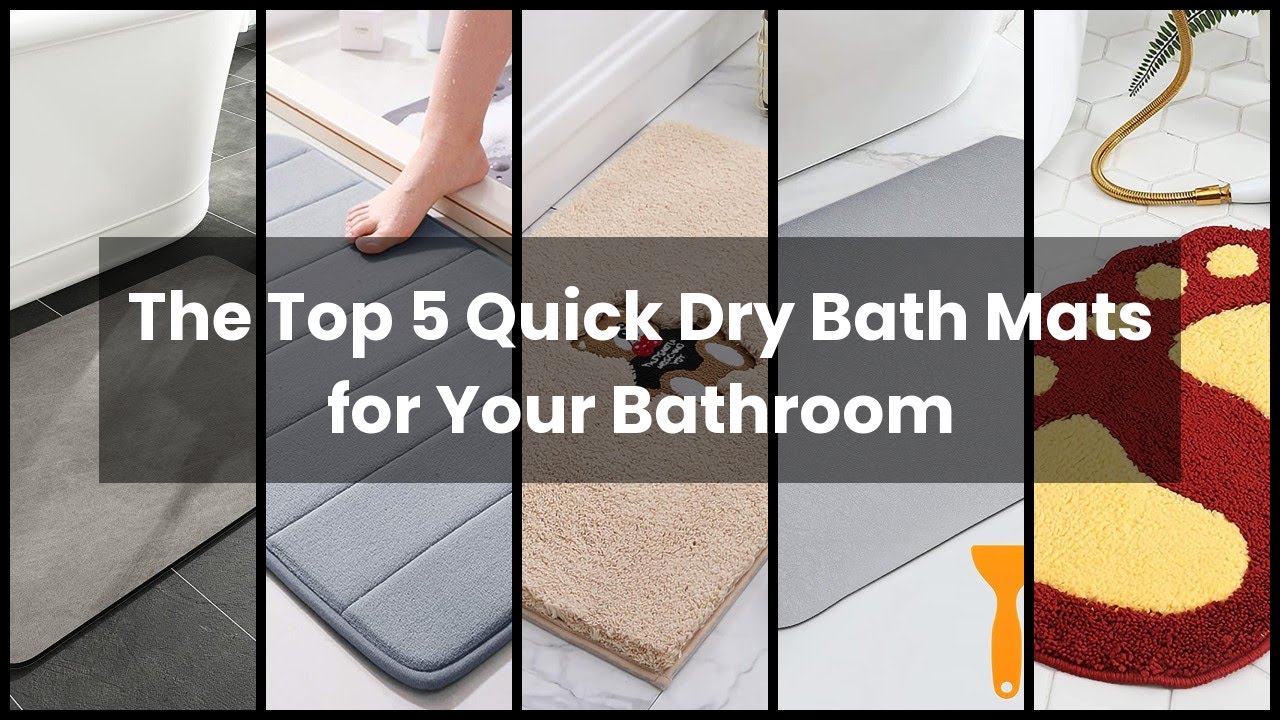
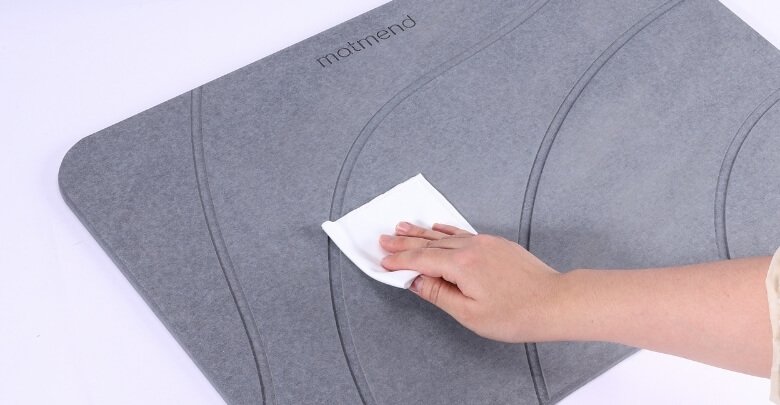
To dry a bath mat quickly, remove extra water with a clean towel, hang it where air can reach both sides, and use a fan or open window to improve airflow. Use a clothes dryer only when the care label allows it.
In American homes, bath mats often get wet several times a day. A busy family bathroom, a small apartment bathroom, or a guest bath with poor ventilation can leave a mat damp long after someone finishes a shower. This can make the floor feel cold and create an unpleasant musty smell.
The good news is that you do not need an expensive machine to speed up drying. A clean towel, a drying rack, and a small fan can make a big difference. The best method depends on the mat’s fabric, thickness, and backing.
Before you start, turn the mat over and check its care label. A plain cotton mat may tolerate a low-heat dryer cycle, while a rubber-backed or memory foam mat may need gentle air drying. Choosing the right method matters more than applying more heat.
A bath mat takes longer to dry when it holds a lot of water inside its fibers or padding. Thick cotton, plush microfiber, and chenille mats can trap moisture deep below the surface. Even when the top feels dry, the bottom may still be wet.
Air movement, room humidity, mat thickness, and the material all affect drying time. A mat spread across a warm, well-ventilated room will usually dry faster than one folded over itself in a damp bathroom.
The backing also matters. Rubber, latex, and foam layers can slow evaporation because they limit airflow through one side of the mat.
Source: thegadgetians.com
Thick fabric
Dense cotton and plush fibers can hold more water than thin woven mats.
Poor ventilation
Still, humid air slows evaporation and can leave the mat damp for hours.
Water-resistant backing
A rubber or latex layer can prevent moisture from escaping through the underside.
Too much water after washing
A mat that comes out of the washer very wet needs more time to dry than one with less remaining moisture.
Does the Material Affect Drying Speed?
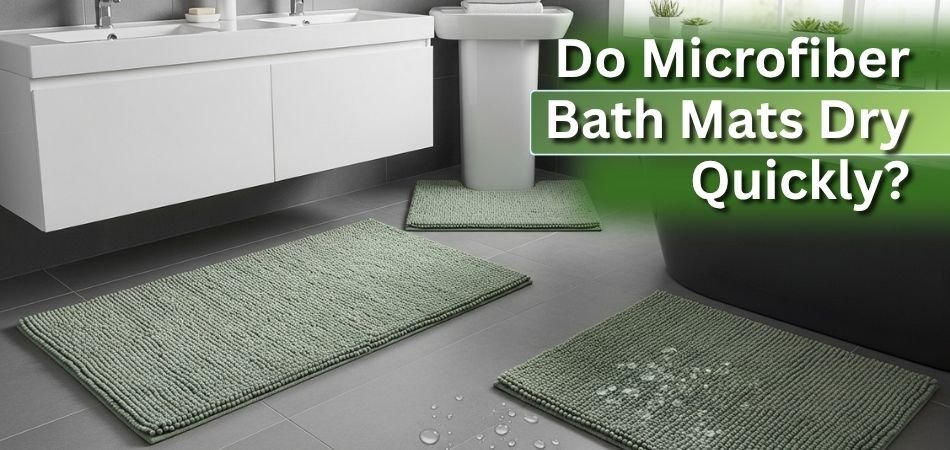
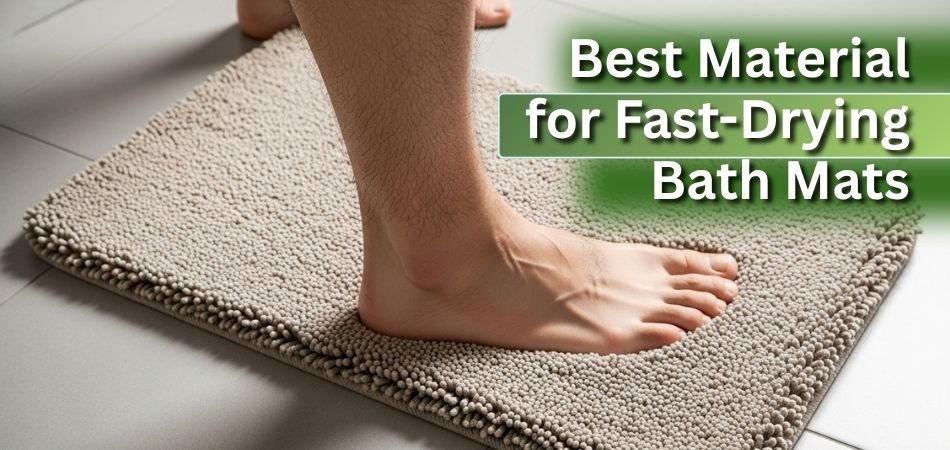
Yes. Different bath mat materials absorb and release water at different rates. Thin microfiber often releases surface moisture faster than a thick padded mat, but its actual drying time still depends on its construction.
Cotton can hold a lot of water, while memory foam may retain moisture inside its core. Rubber-backed mats need special care because heat can damage some backing materials.
Cotton
Absorbent and comfortable, but thick cotton mats can take longer to dry.
Microfiber
Often dries relatively quickly when spread out with good airflow.
Chenille
Its long, soft fibers can hold water and need space to dry.
Memory foam
Needs careful drying because moisture can remain inside the foam.
Rubber-backed fabric
Needs a label-approved air-drying method to protect the backing.
How to Dry a Bath Mat Quickly: 7 Easy Steps
The fastest safe approach starts with removing as much water as possible. Then spread the mat out and improve airflow around it. These steps work for many washable fabric mats, but the care label should always guide the drying method.
Gather a clean, dry bath towel, a drying rack or sturdy rail, and a fan if you have one. Make sure the drying spot is clean and has enough room for the mat to hang without folding over itself.
Source: storage.googleapis.com
Step 1: Remove the mat from the wet floor
Lift the mat as soon as possible after a shower or bath. Leaving it flat on wet tile traps moisture underneath and slows drying.
Step 2: Shake off loose water
Take the mat to a suitable area and give it a gentle shake. This helps remove loose water from the surface and opens up the fibers.
Step 3: Press out excess moisture
Place a clean, dry towel on the mat and press gently with your hands. You can roll the mat inside the towel for a short time if its construction allows it. Avoid twisting or wringing memory foam and delicate mats.
Step 4: Spread it on a drying rack
Place the mat over a rack or sturdy rail. Avoid folding it into several thick layers. Give the fabric enough room to let air move around it.
Step 5: Use a fan
Place a fan nearby and aim the airflow across the mat. Keep the fan and its electrical connection away from water, wet floors, and splashes.
Step 6: Turn the mat over
After the upper surface has dried, turn the mat so air can reach the other side. Check the edges and the center, where moisture may remain.
Step 7: Check before putting it back
Feel the fabric, seams, center, and backing. If any area feels cool or damp, keep drying it. Do not put a wet mat back on the bathroom floor.
How Do You Know When the Mat Is Fully Dry?
A dry surface does not always mean a dry mat. Press the thickest part between your fingers and check both sides. Pay extra attention to the center, stitched edges, and areas where the fabric meets the backing.
A fully dry mat should not feel cool or damp in its thicker sections. It should also have no stale, musty odor. If you notice moisture or an unusual smell, continue drying and check whether the bathroom needs better ventilation.
Check the center
Thick areas can hold moisture after the surface has dried.
Check the underside
Turn the mat over and inspect the entire backing.
Check the edges
Seams and folded borders may take longer to dry.
Use a Fan to Dry a Bath Mat Faster
A fan is one of the easiest ways to speed up air drying. Moving air helps carry away the moist air around the wet fabric. This allows more water to evaporate from the mat.
You do not need a special bathroom appliance. A regular household fan can help when used in a dry, safe location. Keep it on a stable surface and direct the airflow toward the hanging mat.
For better results, leave space between the mat and nearby walls. If the room is humid, moving the mat to a drier room may help more than running a fan in the same damp bathroom.
Source: thegadgetians.com
Choose a stable location
Place the fan on a level surface away from wet floors and water sources.
Allow airflow on both sides
Hang the mat so air can move around the fabric instead of blowing only against one folded section.
Keep the area ventilated
Open a window when outdoor conditions allow or use suitable room ventilation to help remove humid air.
Check the mat from time to time
Turn it over and check thicker areas rather than assuming the whole mat is dry.
Can You Use a Hair Dryer?
A hair dryer may remove a small amount of moisture from a limited fabric area, but it is not the best way to dry an entire bath mat. It takes time, requires close attention, and can expose delicate fibers or backing to concentrated heat.
Avoid using a hair dryer on rubber-backed mats, memory foam, or any material whose care instructions prohibit heat. Never use an electrical hair dryer near a wet floor, standing water, or a bathtub.
A fan is generally a better choice because it moves air across a wider area without applying concentrated hot air.
Best option
Use a fan for broad, gentle airflow.
Avoid concentrated heat
Do not hold a hot air stream close to rubber, foam, or delicate fabric.
Can You Put a Bath Mat in the Dryer?
Yes, some bath mats can go in a clothes dryer, but not all of them. The material and backing determine whether machine drying is suitable. Always check the care label and follow the dryer manufacturer’s instructions.
A plain cotton bath mat may allow tumble drying on low heat. Some synthetic mats also permit a low or no-heat cycle. However, rubber-backed and padded mats may need air drying instead.
Do not assume that a mat is dryer-safe just because its fabric feels similar to a bath towel. The backing, glue, foam, and decorative parts may have different heat limits.
Source: thegadgetians.com
Cotton mats
Use a dryer only if the care label permits it. Choose the approved heat setting and remove the mat promptly when dry.
Microfiber mats
Follow the product instructions. Some allow low heat, while others require air drying.
Rubber-backed mats
Avoid heated tumble drying unless the manufacturer clearly permits a specific setting. Air drying is often the safer choice.
Memory foam mats
Use the label-approved method. Many require gentle air drying to protect their shape and inner structure.
Why Can Dryer Heat Damage Rubber Backing?
Rubber and latex backing can lose strength when exposed to unsuitable heat. Depending on the material, heat may cause the backing to become brittle, crack, peel, or separate from the fabric.
A damaged backing may no longer grip the floor properly. This can make the mat slide when someone steps on it, which creates a fall risk.
If the label is missing or unreadable, do not guess. Air drying away from direct heat is a more cautious option. If the backing is already crumbling or peeling, consider replacing the mat.
Do not use high heat
Heat can weaken sensitive backing materials.
Inspect before drying
Look for cracks, flakes, sticky patches, and separation.
Follow the strictest instruction
If the mat label and appliance manual differ, follow the more restrictive instruction.
Can You Use an Air-Only Dryer Setting?
An air-only setting moves room-temperature air through the dryer without intentionally adding heat. It may be suitable for some items, but it is not automatically safe for every bath mat.
Check both the mat label and your dryer manual. If either one prohibits machine drying, use a drying rack instead. Never treat a low-heat cycle as the same thing as an air-only cycle.
Read both manuals
Confirm that the mat and appliance permit the selected cycle.
Keep the load loose
Do not pack the dryer with a bulky or saturated mat.
How to Dry Different Types of Bath Mats
The best drying method depends on how the mat is made. A thin cotton mat needs a different approach from a thick foam mat or a rubber-backed rug.
Use the following guide as a starting point, not a replacement for the manufacturer’s instructions. Some mats combine several materials, so the most heat-sensitive part should guide your decision.
Source: storage.googleapis.com
Cotton bath mats
Press out extra water with a towel. Hang on a rack or use a permitted low-heat dryer cycle.
Microfiber bath mats
Spread the mat out and use a fan. Follow the label if you want to use a clothes dryer.
Shake the fibers gently, remove excess water with a towel, and hang the mat with enough space around the pile.
Memory foam bath mats
Avoid twisting or squeezing hard. Dry flat or in the position recommended by the manufacturer, and allow the center to dry completely.
Rubber-backed bath mats
Air dry according to the care label. Keep them away from direct heat and inspect the backing before reuse.
Bamboo bath mats
Wipe away surface water and stand the mat so air can reach both sides. Avoid prolonged soaking.
How to Dry a Thick Memory Foam Bath Mat
Memory foam needs more care because water can remain inside its thick center. The outer fabric may feel dry while the foam underneath still holds moisture.
Start by pressing a dry towel against the mat. Do not twist it or try to wring the water out, as this may distort the foam. Place it flat in a clean, ventilated area if the care instructions call for flat drying.
Turn the mat when appropriate so air reaches both sides. Check the center before using it again. If it remains damp, give it more time rather than using a heater to force the process.
Use gentle pressure
A towel can absorb surface water without twisting the foam.
Protect its shape
Avoid folding, wringing, or hanging it in a way that stretches the padding.
Check the inner layer
Make sure the thick center is completely dry before putting the mat back.
How to Dry a Rubber-Backed Bath Mat
Rubber-backed mats should be dried with care because their backing may not tolerate high temperatures. After removing excess water, hang the mat over a rack or lay it flat in a ventilated area if the manufacturer’s instructions allow.
Avoid placing the rubber side against a hot radiator, heater, or other direct heat source. Allow air to reach the fabric and backing. Turn the mat as needed so moisture does not remain trapped against one side.
Before using it again, check whether the backing remains flexible and firmly attached. A mat with loose or crumbling backing should not be trusted to stay in place.
Keep away from heaters
Direct heat may damage the backing.
Allow both sides to breathe
Do not leave the wet mat folded or pressed against a solid surface.
Check its grip
Replace a mat that has lost its ability to stay in place.
How to Dry a Bath Mat After Washing
A freshly washed bath mat usually contains much more water than one that has only been used after a shower. Removing excess water before drying is the key to saving time.
Start by checking the care label. If the mat can be machine washed, use the recommended spin setting. A suitable spin cycle can remove some extra water before you move the mat to a drying rack.
If the mat must be washed by hand, press the water out gently. You can place it between clean towels and apply light pressure. Do not wring padded or delicate materials.
Remove the mat promptly
Do not leave a wet mat sitting in the washer or a laundry basket.
Use an approved spin cycle
Follow the mat and washer instructions. Avoid aggressive spinning if the mat’s construction does not allow it.
Use a dry towel
Press out remaining water before hanging the mat.
Spread it out
Use a rack or clothesline rather than leaving the mat in a heap.
Improve ventilation
Use a fan or a suitable open window to move humid air away.
Can You Put a Wet Bath Mat Outside in the Sun?
Yes, outdoor air and sunlight can help dry many fabric bath mats. A clean clothesline or drying rack gives the mat room to release moisture. A light breeze can also improve evaporation.
However, direct sunlight is not suitable for every material. Some dyes and synthetic components may fade or weaken with prolonged sun exposure. Rubber-backed mats may also be affected by heat and outdoor conditions.
Check the care label before leaving the mat outside. If direct sunlight is not recommended, choose a shaded outdoor area with good airflow.
Choose a clean rack
Avoid placing the wet mat directly on dirty outdoor surfaces.
Check the weather
Avoid outdoor drying when rain or high humidity will keep the mat wet.
Avoid excessive sun
Use shade when the manufacturer warns against prolonged direct sunlight.
How to Dry a Bath Mat in a Small Apartment
A small apartment bathroom may not have a window, a large drying rack, or enough floor space for a wet bath mat. In that case, use vertical space and move the mat to a room with better airflow.
A folding drying rack can fit beside a laundry area or near a window. You can also use a sturdy, clean rail if the mat can hang safely without touching the floor.
Avoid hanging a soaking wet mat over furniture that could be stained or damaged. Place a towel underneath a drying rack if water may drip onto the floor.
Use a folding rack
It can be stored away when the mat is dry.
Hang it over a sturdy rail
Make sure the rail can support the mat’s weight when wet.
Move it to a ventilated room
A bedroom or laundry area may have better airflow than a small bathroom.
Use a portable fan
Direct airflow toward the mat without placing electrical equipment near water.
What If Your Bathroom Has No Window?
A bathroom without a window can stay humid after showers. If you have an exhaust fan, use it as directed to remove moist air. Keep the bathroom door open after showering when privacy and household conditions allow.
If the exhaust fan is not working, consider having it checked. For the mat itself, use a drying rack in a separate, ventilated room. This helps prevent the mat from sitting in the same humid air that made it wet.
Use the exhaust fan
Run it according to its instructions to help remove moisture from the bathroom.
Open the door
Allow air to move through the room when practical.
Dry the mat elsewhere
Choose a dry room with better airflow.
How to Prevent a Bath Mat From Staying Wet
The easiest way to avoid a long drying process is to stop the mat from staying flat and wet after every shower. A simple daily habit can reduce trapped moisture and keep the bathroom floor cleaner.
Hang the mat after use instead of leaving it on the tile. Make sure it has enough room to spread out, and avoid folding it over itself. If several people share one bathroom, give the mat time to dry between showers.
You can also keep a second mat available. This lets you use a dry replacement while the first one dries or goes through the laundry.
Hang it after every shower
Do not leave it flat on the wet floor.
Improve bathroom ventilation
Use an exhaust fan or suitable airflow to reduce indoor humidity.
Wash it regularly
Clean away dirt, body oils, and residue according to the care label.
Avoid too much detergent
Excess detergent can remain in the fibers and make rinsing more difficult.
Keep a spare mat
A second mat gives the first one time to dry fully.
Does a Musty Smell Mean the Mat Is Still Wet?
A musty smell can be a sign that moisture has remained in the fabric for too long. It can also point to trapped soap residue, dirt, or poor drying conditions.
Wash the mat according to its care instructions and dry it fully before reuse. If the odor remains after proper cleaning and drying, inspect the backing and inner padding for damage or persistent contamination.
A mat that has a lasting odor, damaged backing, or visible mold may need to be replaced. Do not cover the smell with fragrance and put the mat back on a wet floor.
Check for trapped moisture
Feel the center and underside, not just the top.
Wash away residue
Use a suitable detergent and rinse according to the product instructions.
Replace damaged mats
Persistent odor or deteriorating backing may mean the mat is no longer suitable for use.
Common Mistakes to Avoid When Drying a Bath Mat
Trying to dry a bath mat as fast as possible can cause damage if you use the wrong method. More heat does not always mean better results.
A safe drying routine protects the fabric, backing, and bathroom floor. Avoid the following mistakes, especially when dealing with thick, padded, or non-slip mats.
Using high heat without checking the label
High heat can shrink some fabrics and damage rubber, latex, or foam components.
Leaving the mat folded
Folded sections trap moisture and slow evaporation.
Putting a damp mat back on the floor
Moisture trapped beneath the mat can contribute to odors and may affect some flooring materials.
Using a radiator as a drying rack
Direct heat may damage sensitive materials and create a fire or appliance safety concern.
Using an unsafe electrical setup
Never place a fan, extension cord, or hair dryer where water can reach electrical parts.
Ignoring damaged backing
Cracked or peeling backing may no longer provide reliable grip.
Assuming the surface is dry
Thick padding and seams may hold moisture after the outer fabric feels dry.
What Should You Do If the Mat Still Feels Damp?
If the mat still feels damp after several hours, check the drying setup before applying more heat. It may be folded, hanging too close to a wall, or sitting in a room with high humidity.
Move it to a better-ventilated area, spread it out, and direct a fan across both sides. If the mat is thick, check its center again after more drying time.
If the mat continues to smell musty despite proper washing and complete drying, inspect its inner material and backing. Persistent odor or visible deterioration may mean it is time for a replacement.
Poor airflow
Move the mat away from walls and give air more room to circulate.
Excess water
Use a clean towel to press out more moisture if the material permits it.
Thick padding
Give the mat more time and check the center before reuse.
Persistent odor
Wash and inspect the mat, then replace it if the odor or damage remains.
How Long Does It Take a Bath Mat to Dry?
There is no single drying time for every bath mat. A thin mat in a dry, breezy room may dry much sooner than a thick padded mat in a humid bathroom.
The following table gives broad planning guidance rather than guaranteed drying times. Actual results depend on the amount of water, fabric thickness, airflow, temperature, and humidity.
Thin cotton mat
May dry relatively quickly when spread out in a well-ventilated area.
Thick cotton mat
Usually needs more drying time because its fibers can hold more water.
Microfiber mat
Can dry relatively quickly with good airflow, depending on its backing.
Memory foam mat
May take considerably longer because water can remain inside the padding.
Rubber-backed mat
Needs careful air drying and may take longer if airflow cannot reach both sides.
What Makes Drying Time Faster or Slower?
The amount of water in the mat is one of the biggest factors. A mat that has been washed and spun according to its care instructions may contain less water than one that has been hand-rinsed and left dripping.
Airflow also matters. A fan can help move moist air away from the fabric, while a humid, enclosed bathroom can slow the process. A mat spread out on a rack will usually dry more evenly than one left in a heap.
Use these factors to improve the process rather than relying on a fixed number of minutes or hours. Always check the actual mat before putting it back on the floor.
Less remaining water
Gentle towel pressing or an approved washer spin can reduce the water that must evaporate.
More airflow
A fan and a well-ventilated drying location can help moisture escape.
Suitable drying space
A dry room is often better than a humid bathroom.
Thinner construction
Less dense materials generally have fewer layers in which water can remain trapped.
A Simple Bath Mat Drying Routine for Every Day
You can avoid most slow-drying problems with a short routine after each shower. It takes little effort and helps your bath mat stay fresh between washes.
First, lift the mat from the floor. Shake it gently and hang it where air can reach both sides. If the bathroom stays humid, use the exhaust fan or move the mat to a ventilated room.
Before the next shower, check that the mat is dry and that its backing still grips the floor. A dry mat is more comfortable and helps prevent moisture from remaining trapped against the flooring.
After each shower
Hang the mat rather than leaving it on the wet floor.
During the day
Allow air to circulate and turn the mat when needed.
Before the next use
Check the center, underside, and backing.
On laundry day
Wash and dry the mat according to its care label.
Frequently Asked Questions
Q
How can I dry a bath mat in 30 minutes?
Start by pressing a clean, dry towel against the mat to remove extra water. Hang it over a rack and direct a fan toward it. A thin mat may become noticeably drier in 30 minutes, but a thick or padded mat may need much longer.
Do not use high heat just to meet a time limit. Always check the mat’s care instructions.
Q
Can I dry a bath mat with a fan overnight?
Yes, a fan can help dry many fabric bath mats overnight. Hang the mat so air can reach both sides, and keep the fan on a stable surface in a dry location.
Keep electrical equipment away from water and follow the appliance instructions. Check the entire mat before using it again.
Q
Should I hang my bath mat or lay it flat to dry?
For many ordinary fabric mats, hanging them over a drying rack allows air to reach both sides. However, memory foam and other padded mats may need to dry flat to protect their shape.
Follow the manufacturer’s instructions. The best position is the one that allows the mat to dry fully without stretching or damaging its construction.
Q
Can I put a rubber-backed bath mat in the dryer?
Only do so if the mat’s care label and dryer manual clearly allow it. Some rubber or latex backing materials can crack, peel, or deteriorate when exposed to unsuitable heat.
When the instructions are missing or unclear, air drying is the more cautious option. Keep the mat away from direct heaters and inspect its backing before reuse.
Q
Why does my bath mat stay wet underneath?
The underside may stay wet because the mat lies flat against the floor or has a backing that limits airflow. Thick padding can also hold water inside.
Lift the mat after each shower and place it on a rack or in another position that allows air to reach both sides. Use a fan if the room is humid.
Q
Does sunlight help dry a bath mat faster?
Sunlight and outdoor airflow can help dry many fabric mats. However, prolonged direct sunlight may fade some fabrics or affect sensitive materials.
Check the care label before placing your mat outside. A shaded, breezy location is a useful alternative when direct sunlight is not recommended.
Q
How do I dry a bath mat without a dryer?
Press a clean towel against the mat to remove extra moisture. Then hang it on a drying rack or sturdy rail in a ventilated room.
Use a fan to improve airflow and turn the mat when needed. Check the center, seams, and backing before putting it back on the floor.
Q
Why does my bath mat smell after drying?
A musty smell may mean that moisture remained inside the mat or that dirt and detergent residue have built up in the fibers. Poor bathroom ventilation can also contribute to the problem.
Wash the mat according to its care instructions and let it dry fully. If the smell remains after proper cleaning and drying, inspect the padding and backing. Replace the mat if the odor persists or the material is damaged.
✦ Wrapping Up
Conclusion
Drying a bath mat quickly does not require a complicated setup. Remove extra water with a clean towel, hang the mat where air can reach both sides, and use a fan to improve airflow. These simple steps can help many fabric mats dry more efficiently.
The most important part is choosing a method that suits the material. Cotton and some microfiber mats may allow low-heat tumble drying, while rubber-backed and memory foam mats often need a gentler approach. Always check the care label before using a dryer or applying heat.
Make drying part of your daily bathroom routine. Lift the mat after each shower, give it room to breathe, and make sure it is completely dry before putting it back on the floor. This helps reduce musty odors and keeps the mat in better condition.
💡 Key Takeaway
For a quick and safe result, press your wet bath mat with a dry towel, hang it on a rack, aim a fan toward it, and check both sides before reuse. Follow the care label and never risk damaging the backing just to save drying time.