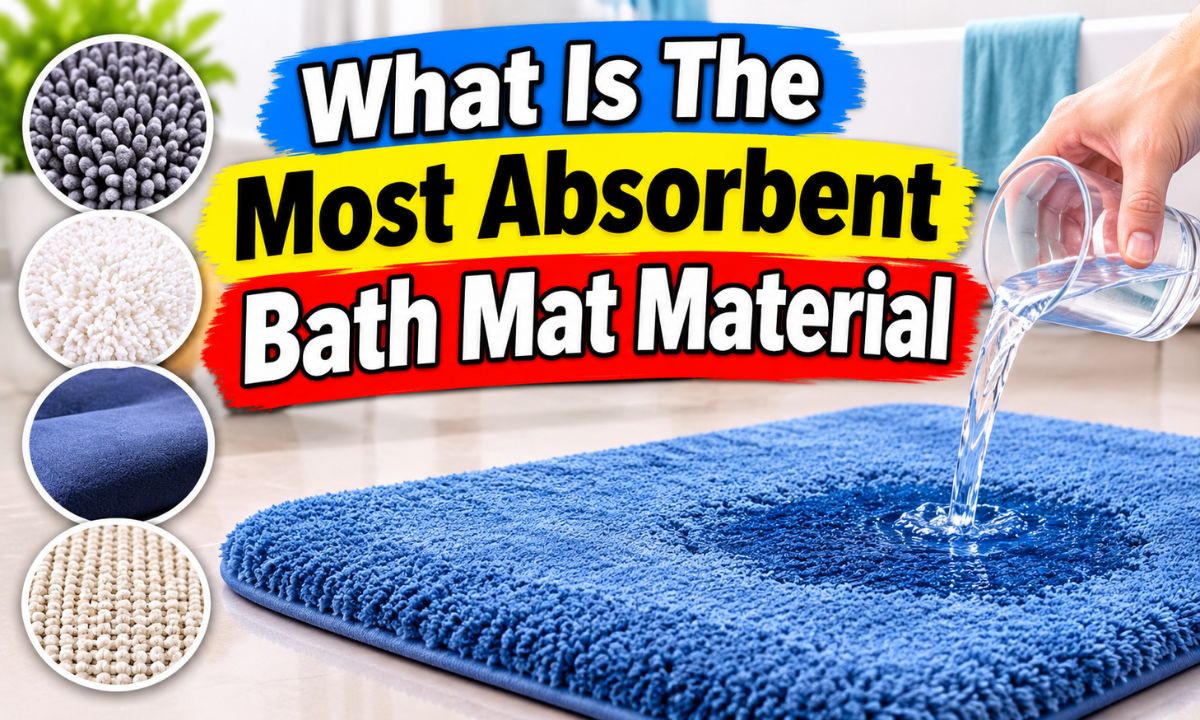
Cotton, especially thick terry cotton, is generally the most absorbent soft bath mat material because its natural fibers hold large amounts of water.
After a shower in an American home, the last thing anyone wants is a wet bathroom floor. Water drips from your feet, collects near the shower, and can spread across tile or vinyl. A good bath mat catches that water before it reaches the rest of the room. However, not every mat handles moisture in the same way.
Cotton is a strong choice when your main goal is to soak up as much water as possible. Its natural fibers attract and hold moisture. Microfiber and chenille are also good choices because their soft fibers pull water from wet feet. Diatomaceous earth stone mats work differently. They take in surface moisture and release it through evaporation, so they can feel dry much sooner.
The best choice depends on more than how much water a mat can hold. You should also think about drying time, floor grip, comfort, washing, and the amount of moisture in your bathroom. A thick cotton mat may absorb more water but stay damp longer. A thinner microfiber mat may hold less water but be easier to dry between showers.
Cotton is generally the most absorbent material for a traditional fabric bath mat. Its cellulose fibers attract water and allow moisture to move into the spaces between the fibers. This helps a cotton mat soak up water from your feet instead of leaving it on the surface.
Terry cotton is especially useful because it has many small loops. These loops create more surface area and provide space for water to collect. A dense cotton mat can therefore hold a large amount of moisture while still feeling soft underfoot.
However, absorbency and drying speed are two different things. A mat that holds more water may take longer to dry. This matters in bathrooms where several people shower each day or where fresh air does not move well.
Microfiber is another strong option. It uses very fine synthetic fibers that can spread water through the fabric. Chenille microfiber has a soft, raised pile that makes it comfortable and helps collect water from wet feet.
Diatomaceous earth is worth considering if you want a surface that becomes dry quickly. It absorbs water into its porous mineral structure and releases that moisture into the air. It does not provide the same soft, water-holding feel as cotton.
Source: indiamart.com
Best for maximum water absorption
Dense terry cotton is a dependable choice when you want a soft mat that can soak up plenty of water.
Best for a balance of absorption and comfort
Microfiber and chenille provide a soft surface and useful water pickup without the feel of a heavy cotton rug.
Best for a quick-drying surface
Diatomaceous earth takes in surface moisture and allows it to evaporate without a washing cycle.
Why Does Cotton Absorb So Much Water?
Cotton has natural cellulose fibers that interact well with water. When water touches the fabric, it spreads between the fibers and moves into the yarn. The small spaces in a cotton weave help hold that moisture.
This process is useful when you step out of a shower with wet feet. Instead of allowing water to drip onto the floor, the cotton fibers take it in. Terry loops add even more surface area, which makes this type of construction useful for bath mats.
Cotton also feels soft and familiar. It is often used in bath towels, washcloths, and other items that need to absorb water. A cotton bath mat follows the same basic idea, although its thickness and weave affect how much moisture it can hold.
Natural water attraction
Cotton fibers have a natural affinity for water, helping moisture move into the fabric.
Looped construction
Terry loops create more space for water to collect.
Washable design
Most cotton bath mats can be washed, although the care label should always guide the cleaning method.
Comparing the Most Common Bath Mat Materials
Cotton, microfiber, chenille, and diatomaceous earth all handle water differently. Some materials hold moisture inside their fibers, while others draw water into a porous surface and let it evaporate. Understanding this difference makes it easier to choose a mat that suits your bathroom.
The table below gives a practical comparison. These are general material characteristics, not results from a controlled test of specific bath mats. The exact performance depends on the product’s construction, thickness, backing, and care.
Source: storage.googleapis.com
Cotton
High water absorption, soft feel, easy routine washing, but thick versions can take longer to dry.
Microfiber
Good water pickup, soft texture, and often faster drying than heavy cotton, depending on pile and thickness.
Chenille
Soft raised fibers that collect water well and provide a plush feel underfoot.
Diatomaceous earth
A porous mineral surface that takes in moisture and releases it through evaporation.
Memory foam
Provides cushioning, but the foam core may retain moisture and take longer to dry.
Bamboo and wood
Usually allow water to drain through or around the slats rather than absorb it.
Cotton Bath Mats
Cotton is a good choice for people who want strong water absorption and a familiar fabric feel. It works well in a main bathroom where people step out of the shower onto the same mat each day.
Terry cotton has a looped surface, while flat-weave cotton has a smoother and often thinner structure. Terry usually offers more space for moisture, but flat-weave styles may be easier to hang and dry.
The main drawback is that cotton can stay wet after repeated use. A thick mat may hold moisture deep inside its pile. If the bathroom is humid, you may need to hang it up or use a second mat while the first one dries.
Main advantage
Strong water absorption and a comfortable surface.
Main drawback
Heavy or thick cotton can take longer to dry.
Microfiber Bath Mats
Microfiber bath mats are made from very fine synthetic fibers, often polyester or a polyester blend. Their small fibers create a large surface area that helps pull moisture away from wet feet.
Many microfiber mats feel light and soft. They can be useful in busy bathrooms because they often dry more readily than thick cotton rugs. Still, not every microfiber mat has the same performance. A thick pile, dense foam layer, or waterproof backing can slow drying.
Microfiber is also easy to find in different shapes and sizes. You can choose a small mat for a shower entrance or a larger rug for a double vanity. Always check the care label before washing.
Main advantage
A soft surface with good moisture pickup and practical everyday care.
Main drawback
Some designs can hold odors or moisture when they remain damp for too long.
Chenille Bath Mats
Chenille bath mats have a raised, textured surface made from soft yarns. Many modern versions use polyester microfiber. Their thick, noodle-like fibers provide many points of contact with wet feet.
This construction can collect water well while giving your feet a cushioned feel. It is a useful option for families who want a soft rug near the bathtub or shower.
The main thing to check is the base. Some chenille mats have a rubber or latex backing. This can help limit movement, but the backing must remain in good condition and should not trap moisture against the floor.
Main advantage
A plush surface that combines comfort with useful water pickup.
Main drawback
The thick pile can take time to dry, especially in a poorly ventilated room.
Diatomaceous Earth Bath Mats
Diatomaceous earth bath mats are made from a porous mineral material. Their surface takes in water through tiny pores and allows moisture to spread through the material before evaporating.
This makes them different from fabric mats. Cotton and microfiber hold water in their fibers, while a stone mat takes in water and gradually releases it into the air. The top may feel dry sooner, even while some moisture remains inside the material.
Stone mats are firm and can feel cold under bare feet. They also need careful handling because rigid slabs can crack if dropped or placed on an uneven surface. Follow the maker’s cleaning and maintenance instructions.
Main advantage
A surface that can become dry without a regular machine-washing cycle.
Main drawback
Hard underfoot, less forgiving than fabric, and not suitable for machine washing.
What Makes a Bath Mat More Absorbent?
The material is only one part of a bath mat’s ability to absorb water. Its thickness, fiber density, surface design, and total size also matter. Two cotton mats can perform quite differently even when both are made from the same basic fiber.
A dense mat with a useful looped surface can hold more water than a thin, flat mat. However, more fabric does not always mean a better bathroom experience. A very thick mat may become heavy when wet and take longer to dry.
Look at the complete construction rather than relying on a label that says super absorbent. Product descriptions can use broad claims without explaining how the mat was tested.
Source: walmart.com
Fiber type
Cotton naturally attracts water, while synthetic microfiber uses fine fibers to collect and spread moisture.
Fabric thickness
A thicker mat can provide more material for holding water, but it may also need more time to dry.
Surface design
Terry loops and raised chenille fibers create more surface area for collecting moisture.
Mat size
A larger mat offers more coverage, but size alone does not prove that the material is more absorbent.
Backing
A waterproof or dense backing may limit airflow through the bottom of the mat.
Does Higher GSM Mean Better Absorbency?
GSM means grams per square meter. It describes the weight of a fabric over a set area. A higher GSM often indicates a heavier or denser fabric, but it does not provide a direct measurement of how much water a bath mat can absorb.
For example, a dense cotton terry mat may have a high GSM and a large number of loops. A flat cotton mat with a similar weight may have a different structure and water-holding capacity. Fiber type and construction still matter.
Use GSM as one clue when comparing similar products. Do not treat it as a guarantee that one mat will absorb more water than every lighter option.
Useful comparison
Compare GSM between mats made from similar fibers and similar constructions.
Important limit
GSM measures fabric weight, not a direct water absorption result.
Why Do Terry Loops and Chenille Fibers Matter?
Terry loops and chenille fibers create a textured surface. This gives water more places to move and collect than a smooth, flat surface may offer.
When you step onto a looped cotton mat, the loops touch your feet and help draw away moisture. Chenille uses raised yarns to create a similar soft contact surface, although the yarn itself is often synthetic.
The best construction depends on how you use the mat. If you want a traditional towel-like feel, choose terry cotton. If you prefer a soft, fluffy surface, consider chenille.
Terry cotton
A practical option for strong absorption and a familiar towel-like texture.
Chenille
A plush option with raised fibers that collect water from wet feet.
Absorbency vs. Drying Speed: Which Matters More?
Absorbency tells you how well a mat takes in and holds water. Drying speed tells you how quickly that moisture leaves the mat. These qualities are related, but they are not the same.
A thick cotton mat can absorb a large amount of water and still remain damp for hours. A porous stone mat can take in surface moisture and feel dry much sooner because water spreads through the material and evaporates.
Your bathroom conditions can change the result. A sunny, well-ventilated room may help a cotton mat dry more quickly. A small bathroom with poor airflow and high humidity can keep even a lighter fabric mat damp.
Choose high absorbency
Pick dense cotton terry when soaking up water is your main goal and you can dry the mat properly.
Choose a balance
Pick microfiber or chenille when you want softness, good water pickup, and manageable care.
Choose a fast-drying surface
Consider a suitable diatomaceous earth mat when quick surface drying matters more than softness.
Why Can a Highly Absorbent Mat Stay Wet for So Long?
A highly absorbent fabric stores water within its fibers and spaces. The water must then evaporate into the surrounding air. A thick pile creates a deeper area where moisture can remain.
If the mat sits flat on a cold tile floor, airflow may be limited underneath it. This can slow drying and leave the backing damp. Repeated use before the mat dries can make the problem worse.
The answer is not always to buy a thinner mat. You can also improve airflow by hanging the mat after use, opening a window when conditions allow, or using a bathroom fan.
Lift the mat
Hang it over a suitable rack or towel bar so air can reach both sides.
Allow full drying
Do not place a damp mat back on the floor and assume the top surface tells the whole story.
Rotate mats
Keep a spare mat available when one needs more time to dry.
How to Choose the Most Absorbent Bath Mat for Your Bathroom
Start by thinking about how much water your bathroom receives and how often the mat gets used. A main family bathroom has different needs from a small guest bathroom. The best material should handle your daily routine without becoming a constant cleaning problem.
If you have good ventilation and want maximum water pickup, cotton terry is a strong choice. If several people use the shower close together, microfiber or chenille may offer a useful balance. If your bathroom stays damp, think carefully about drying time and whether a stone mat fits your needs.
For a family bathroom
Choose a washable cotton or microfiber mat that can handle regular use and frequent cleaning.
For a guest bathroom
Choose a comfortable cotton or chenille mat that can be washed and fully dried between visits.
For a humid bathroom
Consider a lighter fabric mat that can be hung easily or a suitable stone mat that releases moisture through evaporation.
For a luxury feel
Choose dense cotton terry or plush chenille if comfort is a major part of your decision.
For a small bathroom
Choose a size that covers the main stepping area without blocking doors or creating a trip hazard.
Check the Backing Before You Buy
A bath mat can absorb plenty of water and still create a safety problem if it slides across the floor. This is why the backing matters as much as the top fabric.
Look for a backing that suits your floor type. Rubber or latex backing may help a fabric mat grip, but some backing materials can react poorly to certain floor finishes or trap moisture underneath. Follow the flooring and mat manufacturer’s guidance.
Never assume that every non-slip label guarantees a secure grip. Keep the floor clean and dry, inspect the backing for wear, and replace a mat that moves easily when you step on it.
Tile floors
Use a mat with a suitable grip system and check that the floor beneath it stays dry.
Vinyl floors
Check compatibility with the flooring maker because some rubber-backed products can stain or affect certain surfaces.
Hardwood floors
Choose a backing approved for wood floors and lift the mat often to check for trapped moisture.
Measure the Bathroom Before Choosing a Size
A large mat can cover more of the floor, but it must fit the room. Measure the area outside your shower or bathtub before buying. Leave enough room for doors to open and for people to walk without catching their feet on the edges.
For a double vanity, a longer runner may cover the main standing area. For a single shower, a smaller rectangular mat may be enough. The material should still be your main concern when comparing water absorption.
Also consider whether you can lift and wash the mat without difficulty. A very large, heavy cotton rug may be hard to handle when wet.
Small shower area
Choose a compact mat that covers the natural stepping point.
Double vanity
Consider a runner that fits the available floor space and does not block drawers or doors.
Large family bathroom
Choose a washable size that offers useful coverage but remains easy to lift and dry.
How to Keep an Absorbent Bath Mat Clean and Dry
A good bath mat needs regular care to stay fresh. Water, soap residue, skin oils, and dirt can collect in the fibers over time. If the mat stays wet between uses, it may develop an unpleasant smell.
The care method depends on the material. Most fabric mats need washing and complete drying. Stone mats need surface cleaning and proper airflow. Following the correct routine helps protect both the material and the bathroom floor.
Source: encompassrl.com
Shake out loose dirt
Remove hair, dust, and loose debris before washing a fabric mat.
Follow the care label
Use the recommended wash temperature and drying method for the fabric and backing.
Avoid fabric softener when possible
Softener residue can coat textile fibers and reduce their ability to absorb water.
Dry both sides
Make sure the underside and backing are fully dry before returning the mat to the floor.
Clean the floor underneath
Lift the mat regularly and wipe away trapped moisture and dirt.
How Often Should You Wash a Cotton or Microfiber Bath Mat?
Wash a frequently used bath mat about once a week as a practical starting point. A mat used by several people may need more frequent washing, especially if it gets heavily wet or dirty.
If the bathroom stays humid, do not wait for the weekly wash to deal with moisture. Hang the mat after each use and let it dry fully. If it develops a musty smell, clean it according to its care label and check the backing and floor underneath.
Avoid using too much detergent. Soap residue can remain in the fibers and affect how the mat handles water. Rinse well and make sure the mat dries completely.
Routine care
Wash regularly based on use, soil, and the manufacturer’s instructions.
Extra care
Clean sooner if the mat becomes visibly dirty, smells unpleasant, or stays wet for too long.
How to Care for a Diatomaceous Earth Bath Mat
A stone bath mat does not go into a regular washing machine. Most models need to be wiped or rinsed according to the manufacturer’s directions and then allowed to dry fully.
Some products allow light sanding when the surface becomes less absorbent. This can remove a clogged surface layer, but you should only do it if the maker permits it. Use the specified method and avoid creating unnecessary dust.
Keep the mat on a flat, suitable surface. Do not drop it, bend it, or place heavy objects on it. Check it for cracks and damage before use.
Clean the surface
Use the cleaning method recommended for the exact stone mat.
Allow airflow
Give the material enough time to release moisture.
Inspect for damage
Stop using a cracked or unstable mat that may create a sharp edge or trip hazard.
Common Mistakes When Buying an Absorbent Bath Mat
A bath mat should do more than feel soft in a store or look attractive beside a bathtub. Some buying mistakes can lead to a mat that stays wet, slides across the floor, or becomes difficult to clean.
The most useful approach is to compare the material, construction, backing, and care needs together. A mat that performs well in one bathroom may not suit another.
Choosing by softness alone
A very soft memory foam mat may feel comfortable but may not absorb water as effectively as dense cotton terry.
Assuming thicker always means better
A thick mat can hold more water but may take longer to dry and become heavy when wet.
Ignoring the backing
A poor grip or damaged backing can allow the mat to move on a smooth floor.
Leaving the mat flat while wet
This limits airflow and can allow moisture to collect underneath.
Using too much fabric softener
Residue may coat fibers and reduce their ability to take in water.
Buying without checking care instructions
Some mats cannot handle high heat or regular machine washing, especially those with special backing or foam layers.
Can a Bath Mat Be Too Absorbent?
A mat can hold more water than is practical for your bathroom. If it becomes soaked after one shower and cannot dry before the next person uses it, you may end up with a damp rug that needs constant care.
This does not mean high absorbency is bad. It means you should match the mat’s water capacity to your household routine. A thick cotton mat may work well in a bathroom with good airflow, while a lighter microfiber option may be easier to manage in a busy space.
The goal is to keep water off the floor while allowing the mat to dry fully between uses.
Watch for saturation
If the mat feels wet after every shower, consider a second mat or a material that dries more readily.
Improve ventilation
Use an exhaust fan or suitable airflow to help moisture leave the room.
When Should You Replace a Bath Mat?
Replace a bath mat when it no longer performs its job or cannot be cleaned properly. Persistent musty smells, damaged backing, loose fibers, torn edges, and poor grip are signs that it may be time for a new one.
There is no single replacement date that fits every bath mat. A mat used by a large household may wear faster than one in a guest bathroom. Cleaning habits, washing frequency, material quality, and drying conditions all affect its useful life.
If the backing becomes brittle, sticky, cracked, or detached, do not keep using the mat simply because the top fabric still looks good. A mat that slides can create a fall risk.
Persistent odor
Replace the mat if an unpleasant smell remains after proper cleaning and drying.
Damaged backing
Replace it if the grip layer peels, cracks, or no longer holds the mat in place.
Worn fabric
Replace it when the pile becomes badly flattened, the seams open, or the material starts shedding.
Which Bath Mat Material Should You Choose?
The right choice depends on what you want the mat to do. If maximum water pickup is your priority, cotton terry is the strongest general recommendation among soft fabric options. It offers good absorption, a comfortable feel, and straightforward washing.
If you want a softer, lighter option that can be easier to dry, microfiber or chenille may suit your bathroom better. If your main concern is a surface that dries quickly after collecting water, consider diatomaceous earth, provided you are comfortable with a hard surface and its special care needs.
There is no single material that wins every category. A good bath mat should absorb or manage water effectively, remain stable on the floor, and fit your cleaning routine.
Choose cotton terry if
You want strong water absorption, a towel-like feel, and a mat that can be washed regularly.
Choose microfiber if
You want a lightweight, soft mat with good everyday moisture pickup.
Choose chenille if
You prefer a fluffy, cushioned surface that collects water from wet feet.
Choose diatomaceous earth if
You want a firm surface that takes in moisture and dries through evaporation.
Choose memory foam if
Comfort and cushioning matter more than maximum water absorption.
Frequently Asked Questions
Q
Is cotton or microfiber more absorbent for a bath mat?
Cotton, especially dense terry cotton, is generally the stronger choice when you want a soft fabric mat that holds a large amount of water. Its natural fibers attract and retain moisture.
Microfiber can also collect water well and may dry faster in some designs. The actual difference depends on fiber quality, thickness, pile, and construction. Compare the complete mat rather than relying on the material name alone.
Q
Are chenille bath mats more absorbent than cotton?
Not always. Chenille bath mats often use polyester microfiber, and their raised fibers create a soft surface that collects water well. Dense terry cotton generally has an advantage when the main goal is holding a large amount of water.
Chenille may be a better choice if you prefer a fluffy texture and want a balance between comfort and moisture pickup. The exact result depends on the mat’s fiber content and construction.
Q
What is the fastest-drying bath mat material?
Diatomaceous earth is known for taking in surface moisture and releasing it through evaporation. Its surface can become dry sooner than a fabric mat, although moisture may still remain inside the material.
Among fabric options, lightweight microfiber can be a practical choice. Thick cotton and deep chenille pile may take longer to dry, especially in a humid bathroom.
Q
Are stone bath mats more absorbent than cotton mats?
They absorb water in different ways, so a simple comparison can be misleading. Cotton holds water within its fibers and can store a substantial amount of moisture. A diatomaceous earth mat takes in water through its porous structure and gradually releases it through evaporation.
If you want a soft mat with strong water-holding capacity, choose cotton. If you want a firm surface that can become dry quickly, stone may be a better fit.
Q
Does a thick bath mat absorb more water?
A thicker mat often has more material available to hold water, but thickness alone does not guarantee better absorption. Fiber type, fabric density, and surface construction also matter.
A thick mat may also take longer to dry. Compare similar materials and check the care instructions before choosing a heavy or deep-pile design.
Q
Can I use a microfiber bath mat in a humid bathroom?
Yes. Microfiber can be a practical option in a humid bathroom because many designs are relatively light and easy to hang for drying. However, it still needs proper airflow and regular cleaning.
Do not leave it flat on a wet floor after every shower. Lift it, allow both sides to dry, and check the backing for trapped moisture.
Q
Are rubber bath mats absorbent?
Rubber bath mats are generally designed for grip and water management, not absorption. Water may remain on their surface until it drains or evaporates.
They are often used inside showers or bathtubs to provide a textured stepping surface. If you want to dry your feet after bathing, use an absorbent fabric mat outside the shower.
Q
How can I make my bath mat absorb more water?
Start by keeping the mat clean. Detergent and fabric softener residue can build up on textile fibers and affect how they take in moisture. Wash the mat according to its care label and rinse it well.
If the mat is old, coated with residue, or made from a low-absorbency material, cleaning may not fully restore its performance. Replacing it with a dense cotton terry or suitable microfiber mat may be a better solution.
Q
Is a memory foam bath mat good for absorbing water?
Memory foam mats are mainly valued for their soft, cushioned feel. Some have absorbent fabric covers, but the foam core can hold moisture and may take longer to dry.
Choose memory foam when comfort is your main priority. If maximum water absorption is more important, a dense cotton terry mat is usually a better option.
Q
How often should I wash an absorbent bath mat?
For a frequently used household bath mat, washing about once a week is a useful starting point. You may need to wash it sooner if several people use it, if it becomes heavily soiled, or if it develops an unpleasant smell.
Always follow the care label. More importantly, allow the mat to dry fully between uses and check the floor underneath for trapped moisture.
✦ Wrapping Up
Conclusion
Cotton terry is generally the most absorbent material for a traditional soft bath mat. Its natural fibers attract and hold water, while the looped surface provides extra space for moisture. It is a practical choice for people who want a comfortable mat that can soak up water after a shower.
Microfiber and chenille are also useful options. They offer good moisture pickup, a soft feel, and practical everyday care. Diatomaceous earth is different because it absorbs surface moisture and releases it through evaporation, making it useful when a quick-drying surface matters more than softness.
Before buying, consider your bathroom’s ventilation, how many people use it, the mat’s backing, and how easy it will be to wash and dry. A highly absorbent mat is only useful when you can keep it clean, dry, and stable on the floor.
💡 Key Takeaway
For maximum water absorption and a soft feel, start with a dense terry cotton bath mat. Check its thickness, construction, backing, and care label, then make sure you can hang it up and let it dry fully between uses.