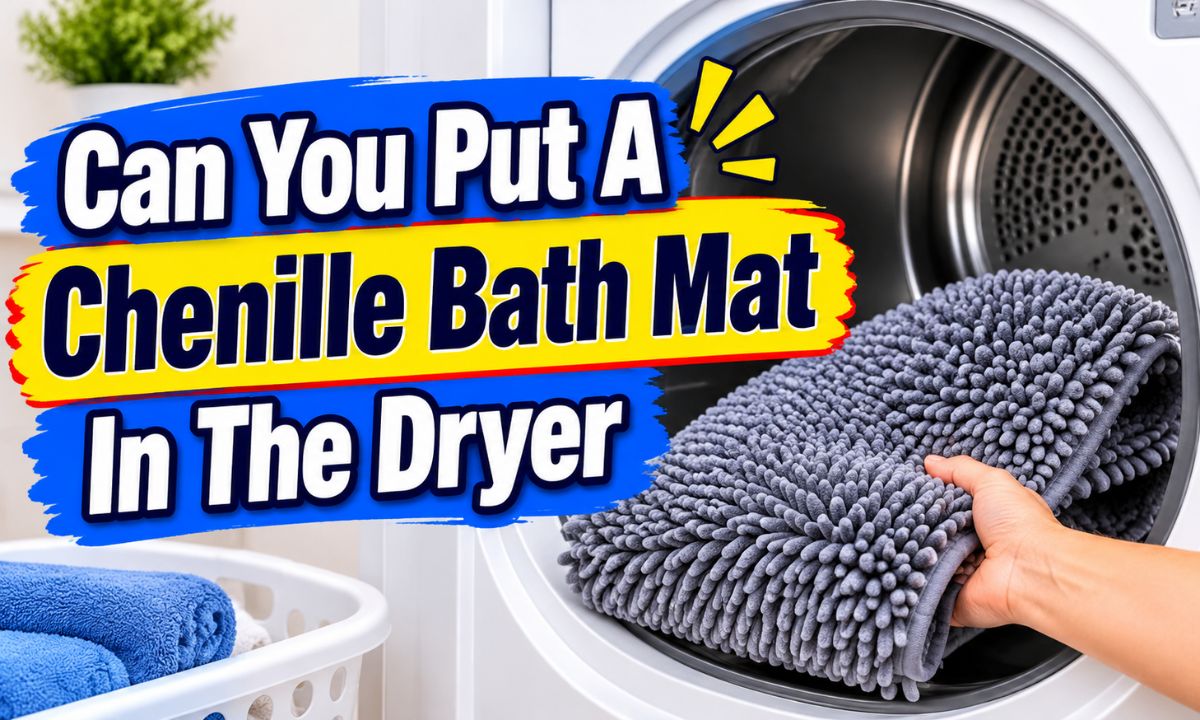
Yes, you can put some chenille bath mats in the dryer, but only when their care labels allow tumble drying. Use low heat for approved mats and air-dry mats with backing that cannot handle dryer heat.
After a shower in an American home, a wet bath mat can leave the bathroom floor damp for hours. This is common in busy households where family members share one bathroom. A soft chenille mat helps soak up water, but it also needs proper care to stay clean, fluffy, and fresh.
The good news is that some chenille bath mats are safe to dry in a clothes dryer. However, not every mat has the same design. Some have a polyester surface, while others have rubber, latex, PVC, or other non-slip backing. These parts can react to heat in different ways. Before placing your mat in the dryer, check its care label and inspect the underside. A little care can help prevent damage, protect your dryer, and keep your bathroom mat in good shape.
Yes, many chenille bath mats can go in the dryer. The safest choice depends on the fabric, backing, and care instructions. A mat made from polyester chenille may be suitable for low-heat tumble drying, while another mat with a sensitive backing may need to air dry.
Chenille bath mats often use soft microfiber strands. These strands form a thick, fluffy surface that feels gentle under your feet. Some mats also have a non-slip layer underneath. That second layer is important because it can change the way you should dry the mat.
For example, Gorilla Grip lists low-heat tumble drying in the care instructions for its chenille bath rug. Nestl also gives low-heat tumble drying as an option for its chenille bath mat. These are product-specific instructions, not a rule for every chenille mat.
The main rule is simple: follow the instructions for your exact mat. If the label allows low-heat drying, use that setting. If it says not to tumble dry, keep the mat out of the dryer.
Plain chenille mat
A mat without rubber or foam backing may be suitable for low-heat tumble drying when the care label permits it.
Chenille mat with non-slip backing
Check the exact backing material and care instructions. Do not assume that every non-slip mat can handle dryer heat.
Chenille mat with unclear instructions
Choose air drying until you can confirm the correct care method with the manufacturer.
Why Does The Backing Matter?
The underside of a bath mat can be made from rubber, latex, PVC, or thermoplastic rubber. These materials help the mat stay in place on a smooth bathroom floor. However, some backing materials can break down when exposed to heat.
Heat may cause the backing to become stiff, cracked, sticky, or brittle. It may also cause parts of the backing to separate from the fabric. A damaged backing may no longer hold the mat in place.
This is why two mats that look almost the same may need different drying methods. One maker may approve low-heat drying for a specific design, while another may require air drying.
Rubber backing
Can crack or lose its grip when exposed to unsuitable heat.
Latex backing
May weaken, peel, or become brittle if the drying method is too hot.
PVC or TPR backing
Care instructions vary by product. Check the manufacturer’s directions instead of guessing.
What Is The Safest Dryer Setting For A Chenille Bath Mat?
If the manufacturer allows tumble drying, choose the lowest suitable heat setting. Low heat is a better choice than medium or high heat for many chenille mats because it reduces exposure to intense temperatures.
A high dryer setting may flatten the soft pile or affect the fibers. It can also damage a backing that is not designed for heated drying. A gentle drying cycle helps reduce unnecessary stress on the mat.
Do not treat every dryer setting as the same. Some dryers offer a low-heat setting, a delicate cycle, and an air-only cycle. Read the settings on your machine and use the option that matches the mat’s care label.
Low heat
Use this setting when the manufacturer specifically permits tumble drying on low.
Air fluff or no heat
This may be suitable when the label permits a no-heat dryer cycle. It is not a substitute for air drying if the label prohibits tumble drying altogether.
Medium or high heat
Avoid these settings unless the manufacturer clearly gives instructions that allow them.
How Long Should A Chenille Bath Mat Stay In The Dryer?
There is no single drying time for every chenille bath mat. A small, thin mat may dry sooner than a large, thick one. The amount of water left in the fibers also affects the time.
Start with a short drying period if the care label allows it. Check the mat before deciding whether it needs more time. Avoid leaving it in the dryer for a long period without checking its condition.
When you remove the mat, feel the thickest parts. The center and the area near the backing may hold more moisture than the surface. If either part still feels damp, continue with an approved drying method.
Check the pile
The soft chenille surface should feel dry rather than cool and wet.
Check the underside
Look for moisture and signs of backing damage.
Avoid excessive drying
Remove the mat once it is dry enough instead of using extra heat without a reason.
How To Prepare A Chenille Bath Mat Before Drying
Proper preparation can help your bath mat dry more evenly. It also reduces the amount of loose dirt and hair that enters your dryer. Take a few minutes to inspect and prepare the mat before starting the drying process.
This step is especially useful for mats placed near showers, bathtubs, and bathroom sinks. These areas often collect loose hair, dust, soap residue, and small bits of dirt.
Check the care label
Read the washing and drying instructions before using any appliance.
Inspect the backing
Look for cracks, peeling, sticky areas, loose pieces, or other signs of damage.
Remove loose dirt
Shake the mat outdoors or over a suitable bin to remove dust and hair.
Remove excess water
Press the mat gently or allow excess water to drain. Do not twist or wring it unless the manufacturer allows this.
Check the dryer
Make sure the dryer drum is clean and free from loose debris.
Should You Wash A Chenille Bath Mat Before Drying It?
You do not need to wash a chenille bath mat every time it becomes slightly damp. Daily drying after use is often enough to remove moisture between washes. However, a mat that has collected dirt, body oils, soap residue, or odors may need cleaning.
If the mat needs washing, follow its washing instructions first. Many washable chenille mats allow cold-water washing on a gentle cycle with mild detergent. Do not assume that all mats have the same washing rules.
After washing, check how much water remains in the mat. If the washer has a suitable spin cycle approved for the mat, it may remove some excess water. Avoid forcing the mat through a cycle that could damage its backing.
Use mild detergent
Choose a detergent suitable for the mat’s fabric and color.
Avoid fabric softener when not recommended
Softener can leave a coating on some fibers and may affect their ability to absorb water.
Do not overload the washer
Give the mat enough room to move and rinse properly.
How To Dry A Chenille Bath Mat In The Dryer
When the care label clearly allows tumble drying, use a gentle method and check the mat during the process. The following steps help reduce the risk of excess heat and damage.
Step 1: Read the label
Confirm that the mat can go in a tumble dryer. Look for a low-heat drying instruction.
Step 2: Inspect the backing
Make sure there are no cracks, peeling sections, or loose backing pieces. If the backing is damaged, do not put the mat in the dryer.
Step 3: Remove excess water
Allow extra water to drain before loading the mat. A very wet, heavy mat may take longer to dry.
Step 4: Load the dryer properly
Give the mat enough room to tumble. Do not overload the drum with heavy towels or other bulky items.
Step 5: Select low heat
Choose the low-heat cycle approved by the manufacturer. Do not use high heat to speed up the process.
Step 6: Check the mat
Pause the cycle and inspect the mat if needed. Check the surface and backing for excess heat or changes in texture.
Step 7: Remove and inspect
Take the mat out when dry. Check its pile, shape, backing, and overall condition before using it again.
What Does A Properly Dried Chenille Mat Look Like?
A properly dried mat should feel dry across the surface and underneath. Its chenille strands should retain their normal texture. The backing should remain intact and should not feel sticky or unusually brittle.
The mat should also lie flat as designed. If it curls, separates, or develops rough patches after drying, stop using the same drying method. Check the manufacturer’s care instructions before the next wash.
Dry surface
There should be no wet or damp patches between the chenille strands.
Normal texture
The fibers should not feel melted, stiff, or badly flattened.
Sound backing
The underside should not show peeling, cracks, or loose pieces.
How To Air Dry A Chenille Bath Mat
Air drying is a useful option when a chenille bath mat cannot go in the dryer. It is also a good way to reduce heat exposure. This method takes longer, but it can help protect materials that are sensitive to high temperatures.
Choose a clean area with good airflow. A drying rack, clothesline, or suitable outdoor space can work. Make sure the mat has enough support and that air can reach both sides.
Step 1: Remove excess water
Press the mat gently to remove extra water without twisting its fibers or backing.
Step 2: Choose a suitable drying spot
Use a clean, well-ventilated area away from direct heat.
Step 3: Position the mat
Spread it flat on a suitable drying rack or hang it in a way that does not stretch or distort its shape.
Step 4: Allow air to circulate
Avoid folding the mat or placing it against a surface that traps moisture.
Step 5: Check both sides
Turn or reposition the mat when needed so the underside can dry too.
Step 6: Confirm it is dry
Check the thickest sections before placing the mat back on the bathroom floor.
Can You Air Dry A Chenille Bath Mat Outside?
Yes, you can air dry many chenille bath mats outdoors if the care instructions allow it. A shaded, breezy spot can help moisture escape without exposing the mat to intense heat.
Avoid leaving the mat in strong direct sunlight for long periods. Some colors may fade with prolonged sun exposure. Also, keep the mat away from rain, dirt, and dusty outdoor surfaces.
If outdoor humidity is high, drying may take longer. In that case, an indoor drying rack with a fan or good airflow may be a better option.
Choose shade
Reduce prolonged exposure to strong sunlight.
Use clean support
Keep the wet mat off dirty ground and surfaces.
Watch the weather
Bring the mat indoors if rain or heavy moisture is likely.
Chenille Bath Mat Dryer Safety: What You Need To Know
Dryer safety is not only about protecting the mat. It also involves protecting the appliance and the room around it. Some products contain rubber, vinyl, plastic, or similar materials that should not be exposed to unsuitable dryer heat.
Dryer manufacturer guidance warns that certain rubber and plastic items can melt or burn under heat. This is one reason to take backing materials seriously. A damaged mat may also release loose pieces that can collect inside the dryer.
Do not use a dryer when the care label prohibits it. If the label is missing and you cannot identify the backing, choose air drying instead. Contact the manufacturer if you need confirmation.
Never ignore a no-heat warning
A no-tumble-dry instruction means the mat should stay out of the tumble dryer.
Do not dry damaged mats
Cracked or peeling backing may break apart during washing or drying.
Avoid improvised heat
Do not place the mat on a radiator, heater, or other hot surface.
Stop if you notice a burning smell
Stop the dryer and follow the appliance manufacturer’s safety instructions. Do not continue drying an item that may be overheating.
Can A Rubber-Backed Chenille Bath Mat Go In The Dryer?
Some rubber-backed chenille mats have product-specific instructions that allow low-heat tumble drying. Others require air drying. There is no safe universal rule that applies to every rubber-backed mat.
For example, some chenille bath rug makers list low-heat drying for their own products. Other bath rug care guides advise air drying rubber-backed mats to protect the backing. These differences make the exact product label essential.
If the label says tumble dry low, follow the stated instructions and inspect the backing before each wash. If it says air dry, do not place the mat in the dryer, even on a low setting.
Backing is intact
Continue only with the drying method approved for the exact product.
Backing is cracked
Avoid the dryer and consider replacing the mat if it no longer stays securely in place.
Instructions are unclear
Contact the manufacturer or use a safe air-drying method while waiting for confirmation.
Can A Chenille Bath Mat Damage Your Dryer?
A suitable chenille mat should not damage a dryer when it is used according to the manufacturer’s instructions. However, a very heavy wet mat can place extra strain on an appliance if it exceeds the recommended load or creates an uneven load.
Loose rubber or backing pieces may also collect inside the drum or lint system. This is another reason to inspect the mat before washing and drying it.
Check your dryer’s manual for instructions on bulky items and load limits. If your mat is too large or heavy for the appliance, use another approved drying method.
Check the load
Do not exceed the dryer’s stated capacity.
Inspect for loose pieces
Remove damaged mats from the laundry process.
Keep the dryer clean
Follow the appliance manual for lint filter and drum care.
Common Problems When Drying Chenille Bath Mats
A chenille bath mat may not come out of the dryer in the same condition it went in. Excess heat, trapped moisture, and backing damage can all affect the final result. Knowing the warning signs can help you decide what to do next.
Problem: The chenille fibers look flat
Possible cause: Excessive heat or heavy pressure during drying. Solution: Stop using high heat. Follow the care label and gently separate the fibers by hand once the mat is cool and dry.
Problem: The backing is peeling
Possible cause: Heat exposure, age, or normal wear. Solution: Stop tumble drying. Replace the mat if the damaged backing affects its grip.
Problem: The mat smells musty
Possible cause: Moisture trapped inside the thick fibers or backing. Solution: Wash it according to the care label and dry it fully before use.
Problem: The mat remains damp
Possible cause: Thick pile, poor airflow, or high room humidity. Solution: Spread the mat out and improve airflow. Check the center and underside before putting it back.
Problem: The mat has loose fibers
Possible cause: Wear, washing damage, or excessive heat. Solution: Inspect the surface and stop using a mat that sheds badly or has damaged backing.
Problem: The mat has lost its shape
Possible cause: Excessive heat, stretching, or rough handling. Solution: Let it cool and dry flat if the care instructions permit. Do not pull or stretch it forcefully.
What If Your Chenille Bath Mat Is Still Wet After Drying?
Do not put a damp mat back on the bathroom floor. Moisture trapped underneath can spread to the floor and create unpleasant odors. In a humid bathroom, the mat may also take longer to dry than expected.
First, check whether the dryer cycle was suitable and whether the mat was overloaded. If the label allows another low-heat cycle, use it only as directed. Otherwise, spread the mat on a drying rack and let air reach both sides.
A small fan can help improve airflow in the room. Keep it at a safe distance from water and follow its electrical safety instructions. Do not use a heater to force the mat to dry faster.
Check the thick center
This area may hold more moisture than the outer edges.
Check the backing
Moisture may remain between the fabric and the backing.
Allow more airflow
Spread the mat out rather than folding or stacking it.
How To Keep A Chenille Bath Mat Soft And Fluffy
Good care helps a chenille bath mat keep its soft feel. You do not need expensive cleaning products or special equipment. Simple habits can reduce dirt, trapped moisture, and unnecessary wear.
The best routine starts after each shower and continues through regular washing. Keep the mat clean, let it dry fully, and avoid harsh cleaning methods that may affect its fibers.
Shake it regularly
Remove loose hair, dust, and small particles before they collect in the fibers.
Let it dry after use
Hang or spread the mat in a ventilated place when it becomes wet.
Wash it gently
Use the washing temperature and cycle listed on the care label.
Use suitable detergent
Avoid harsh products unless the manufacturer specifically allows them.
Avoid excessive heat
Use only the approved drying method and temperature.
Store it when fully dry
Do not fold or store a damp mat in a closed cabinet.
How Often Should You Wash A Chenille Bath Mat?
The right washing schedule depends on how often the mat is used and how quickly it dries. A bath mat used by several people may need more frequent washing than one used by a single person.
A weekly wash can be a practical starting point for a frequently used bathroom mat. However, this is not a fixed rule for every home. Wash it sooner if it becomes visibly dirty, smells unpleasant, or stays damp for too long.
Between washes, shake out loose dirt and hang the mat so both sides can dry. This simple habit helps reduce the buildup of moisture and dirt.
Frequent family use
Check the mat often and wash it when dirt or moisture builds up.
Light use
Wash when needed based on its condition and care instructions.
Humid bathroom
Give the mat more time to dry between showers and baths.
Dryer Versus Air Drying: Which Method Is Better?
Both methods can work well, but the right choice depends on the mat. A dryer can save time when the label allows low-heat tumble drying. Air drying reduces heat exposure and is often the better choice for mats with sensitive backing.
The table below compares the main differences so you can choose a suitable method for your chenille bath mat.
Comparison Of Drying Methods
Use this table as a practical guide, not as a replacement for the care label.
Tumble dry on low
Best for mats whose manufacturers approve low-heat drying. It can save time, but the wrong setting may damage fibers or backing.
Air dry indoors
A useful choice for mats that cannot go in the dryer. It needs good airflow and more time.
Air dry outdoors
Can help a mat dry in a breezy space. Protect it from dirt, rain, and long periods of direct sunlight.
No-heat dryer cycle
May be suitable only when the care instructions permit this type of machine drying.
Which Method Should You Choose?
Choose low-heat tumble drying if the care label clearly permits it and the mat is in good condition. Choose air drying when the label requires it, when the backing is heat-sensitive, or when the material is unknown.
If you are unsure, air drying is the more cautious choice. It avoids exposing an unknown backing to dryer heat.
For speed
Use an approved low-heat dryer setting.
For unknown backing
Choose air drying until the manufacturer confirms the correct method.
For damaged backing
Do not use the dryer. Consider replacing the mat if it is no longer safe to use.
Signs It Is Time To Replace Your Chenille Bath Mat
Even with good care, a chenille bath mat will wear out over time. Washing and drying cannot repair damaged fibers or restore a backing that has lost its grip. Knowing when to replace it helps keep the bathroom floor more comfortable and secure.
Pay close attention to the underside. A mat that no longer stays in place can create a slipping risk, especially on smooth tile floors.
Cracked backing
The backing has visible cracks or breaks and no longer provides reliable grip.
Peeling material
Pieces of rubber or other backing material are coming loose.
Persistent bad odor
The mat continues to smell unpleasant after proper washing and complete drying.
Severe fiber loss
The chenille surface sheds heavily or has large worn patches.
Poor floor grip
The mat moves easily when placed on a clean, dry bathroom floor.
Is A Chenille Bath Mat Safe To Use With Damaged Backing?
A chenille bath mat with damaged non-slip backing may move when someone steps on it. This can be risky when feet are wet. Do not rely on a damaged mat to provide the same grip it had when new.
If the backing has started to peel or crumble, stop using the mat until you can replace it. Cleaning or drying will not restore the original backing.
Remove the damaged mat
Do not continue using it if it slips or sheds backing pieces.
Check the bathroom floor
Make sure the floor is clean and dry before placing another mat.
Choose a suitable replacement
Check the backing material, care instructions, and floor compatibility.
Common Mistakes To Avoid When Drying Chenille Bath Mats
Small laundry mistakes can shorten the life of a bath mat. Some may damage the fibers, while others can affect the backing or leave moisture trapped inside. Avoid these common problems to keep your mat in better condition.
Using high heat
High heat can damage some chenille fibers and backing materials. Use only the temperature approved by the manufacturer.
Ignoring the care label
A generic online cleaning tip may not apply to your exact mat.
Drying a damaged mat
Loose or cracked backing can break apart during the drying process.
Putting a damp mat back on the floor
Trapped moisture can contribute to unpleasant odors and damp flooring.
Overloading the dryer
A crowded drum may prevent the mat from tumbling and drying properly.
Using a heater to speed up drying
Direct heat can damage the backing or create a fire risk. Use normal airflow instead.
Storing the mat while wet
A folded damp mat can hold moisture and develop a musty smell.
Frequently Asked Questions
Q
Can You Put A Chenille Bath Mat In The Dryer On Low Heat?
Yes, if the manufacturer’s care instructions allow it. Many polyester chenille bath mats can be tumble dried on low heat. However, some mats with rubber, latex, or other non-slip backing require air drying. Always check the label before using the dryer.
Q
Can You Put A Rubber-Backed Chenille Bath Mat In The Dryer?
It depends on the exact product. Some manufacturers approve low-heat tumble drying for specific rubber-backed or non-slip mats, while others require air drying. Never assume that all rubber-backed mats are dryer-safe. Follow the instructions for your mat.
Q
Can You Dry A Chenille Bath Mat Without Heat?
Yes, you can air dry a chenille bath mat if its care instructions permit it. Spread it on a clean drying rack or hang it in a well-ventilated area. A no-heat dryer cycle may also be suitable when the manufacturer allows machine drying without heat.
Q
Why Does My Chenille Bath Mat Smell After Drying?
A musty smell often points to moisture that remains trapped in the thick fibers or backing. It may also mean the mat needs washing. Clean it according to the care label, then make sure both sides dry fully before putting it back on the floor.
Q
Can High Heat Damage A Chenille Bath Mat?
Yes. High heat can flatten or damage some chenille fibers. It may also cause certain backing materials to crack, peel, or lose their shape. Use only the drying temperature approved by the manufacturer.
Q
Can You Put A Wet Chenille Bath Mat Directly In The Dryer?
Only if the care label allows tumble drying. First, remove excess water using an approved washing machine spin cycle or gentle pressing. Check the dryer’s load limits and avoid placing an extremely heavy wet mat in the appliance.
Q
How Do You Make A Chenille Bath Mat Fluffy Again?
Start by washing the mat according to its care instructions. After washing, use the approved low-heat drying method or air dry it. Once it is fully dry, gently separate the chenille strands with your fingers. Avoid pulling hard or using excessive heat.
Q
Can You Leave A Chenille Bath Mat Outside To Dry Overnight?
You can leave it outside overnight if the weather is dry and the area is clean and secure. However, high humidity, dew, rain, and dirt can make the mat wet again. Check the weather and bring it indoors if moisture is likely.
✦ Wrapping Up
Conclusion
So, can you put a chenille bath mat in the dryer? Yes, many chenille bath mats can go in the dryer, but the care label must allow it. Low heat is the usual choice for approved mats, while air drying is better for products that cannot handle tumble drying.
The most important detail is the backing. Rubber, latex, PVC, and other non-slip materials do not all respond to heat in the same way. Check the exact product instructions, inspect the underside, and never use high heat just to save time.
With gentle washing, proper drying, and regular checks, your chenille bath mat can stay soft, clean, and comfortable for longer. Most importantly, make sure it is completely dry and still grips the floor before using it again.
💡 Key Takeaway
Before your next laundry load, turn your chenille bath mat over and read its care label. If low-heat tumble drying is approved, use that setting. If the label says air dry or the instructions are unclear, spread the mat on a clean drying rack and let both sides dry completely.