
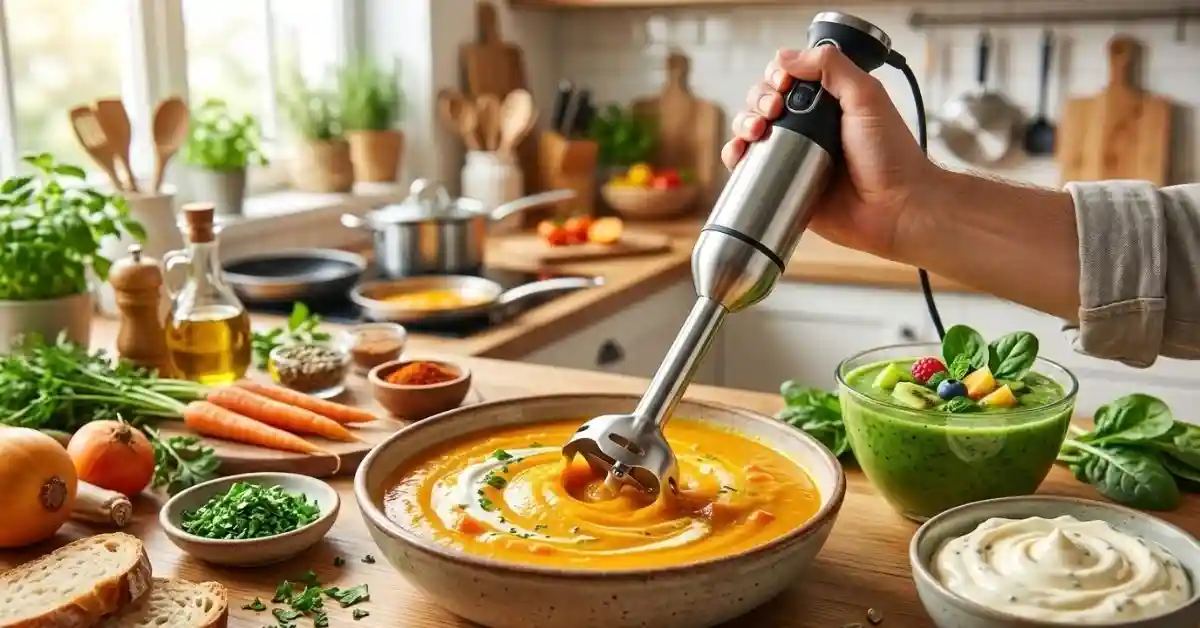
Are immersion blenders worth it, or are they just another kitchen tool that takes up space? I wondered the same thing before looking closely at how they work in real kitchens. A small blender can seem useful, but its value depends on what you cook and how often you use it.
After looking at their everyday uses, limits, and cleaning needs, I found that immersion blenders make some jobs much easier. They can blend soup in the pot, mix sauces, and handle small batches without pulling out a full-size blender. But they are not perfect for every task.
In this guide, I’ll explain when immersion blenders are worth it, when they are not, and what to consider before buying one. Let’s look at the practical side, not just the shiny product claims.
Are Immersion Blenders Worth It for Everyday Cooking?
Yes, an immersion blender can be worth it if you often make soups, sauces, smoothies, or small blended meals. Its main benefit is convenience. You can blend food right in the container where you cook it.
Unlike a countertop blender, an immersion blender has a long shaft with a small blade guard. You place the blending end into food and press a button.
That simple design can save time and dishes.
Why I Find Immersion Blenders Useful
The biggest benefit is that you do not need to transfer hot food to a separate blender jar.
I know how annoying it can be to move hot soup, wash a large jar, and clean splashes from the counter. An immersion blender can reduce that work.
Here are some common uses:
| Task | Why an Immersion Blender Helps |
| Blending soup | Blend right in the cooking pot |
| Making sauces | Mix small amounts with less mess |
| Mashed vegetables | Create a softer texture with care |
| Baby food | Blend small portions in a suitable container |
However, the result depends on the food, blade design, and motor power. A small tool does not always mean a perfect blend.
The Biggest Benefits of an Immersion Blender
An immersion blender is not just a smaller countertop blender. It works in a different way, and that changes how useful it feels in daily cooking.
I would focus on four main benefits: convenience, storage, cleanup, and control.
1. You Can Blend Food in the Pot
This is the feature that makes the biggest difference for many home cooks.
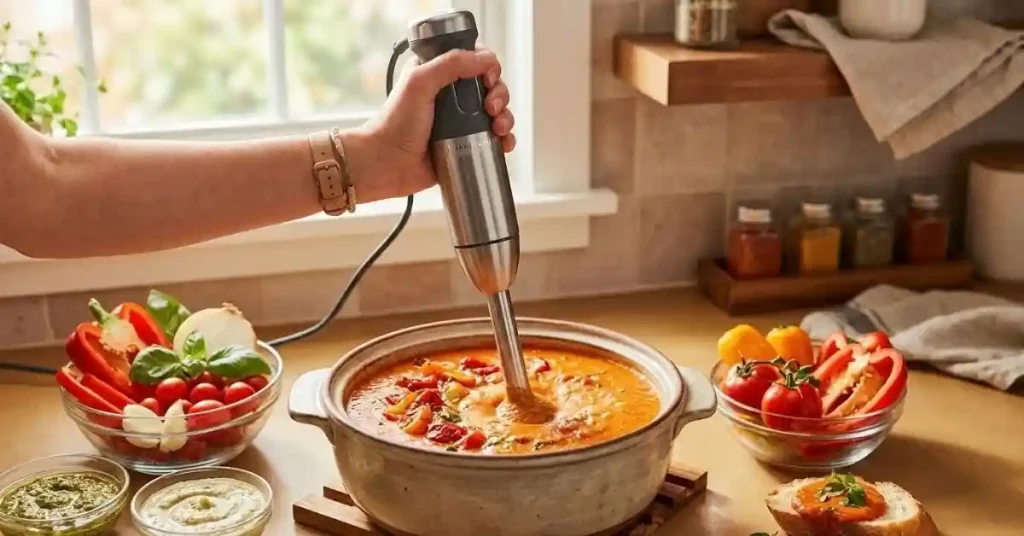
Imagine making tomato soup. You cook the tomatoes, onion, garlic, and stock in a pot. Once the vegetables soften, you can insert the immersion blender and blend the soup in place.
You avoid lifting a heavy pot or pouring hot liquid into a jar.
Safety tip: Follow the blender’s instructions for hot foods. Keep the blade end below the surface to reduce splashes. Use a deep pot and blend at a low speed when possible.
2. It Takes Up Less Space
Countertop blenders can be bulky. Some have large jars and wide bases that need a permanent spot.
An immersion blender is often easier to store in a drawer or cabinet. Some models also include a small blending cup.
This helps in a small kitchen where every inch of counter space matters.
| Kitchen Situation | Potential Benefit |
| Small apartment | Easier to store |
| Limited counter space | No large base needed |
| Occasional cooking | Less equipment to keep out |
Storage needs still vary. A model with a motor body, whisk, chopper, and extra accessories may take more room than expected.
3. Cleanup Can Be Faster
Most immersion blenders have a detachable blending shaft. Some shafts can go in the dishwasher, but you should check the manual first.
For simple jobs, cleanup may involve rinsing the blade area and washing the shaft.
That said, food can hide under the blade guard. Thick mixtures can also cling to the shaft. I would not assume every immersion blender is quick to clean just because it is small.
4. You Can Blend Small Portions
A full-size blender may struggle with very small amounts. The ingredients might sit below the blades or spread around the jar.
An immersion blender can work well for small batches of:
- Salad dressing
- Pesto-style sauces
- Baby food
- Small servings of soup
- Soft fruit mixtures
The container still matters. A narrow, deep cup often gives better results than a wide, shallow bowl.
When Are Immersion Blenders Not Worth It?
An immersion blender may not be worth buying if you already own a good countertop blender and rarely make foods that need blending.
It also has limits that can become frustrating. The small blade does not always create the same smooth results as a powerful countertop blender.
1. It May Not Make Ultra-Smooth Blends
This is one of the most important things to understand.
An immersion blender can make soup smooth, but the texture may still contain tiny bits of skin, seeds, or fibrous vegetables.
For example, a carrot soup may blend well after thorough cooking. A raw, fibrous vegetable mixture may need more power or a different tool.
| Food Type | Likely Experience |
| Cooked vegetables | Often blends well |
| Soft fruit | Usually suitable |
| Ice and frozen fruit | Depends on model and instructions |
| Fibrous raw vegetables | May leave bits |
Do not force the blender through tough ingredients. Check the manual for approved foods and operating limits.
2. It Can Splash
I learned that blending technique matters as much as motor power.
If you lift the blade guard above the food while the motor runs, the blades can throw liquid around. This is especially messy with thin soups and sauces.
A few habits help:
- Start at a low speed.
- Keep the blade end below the liquid.
- Use a deep container.
- Move the blender slowly.
- Turn it off before lifting it out.
These steps sound simple, but they make a real difference.
3. It Is Not Ideal for Every Smoothie
Some people buy an immersion blender for smoothies and then expect it to perform like a high-powered countertop model.
That can lead to disappointment.
Soft bananas, yogurt, and ripe berries may work well. Ice cubes, frozen fruit, and thick mixtures are more challenging. Some immersion blenders are not designed for these jobs.
Always check whether your model supports ice, frozen ingredients, or specific blending containers.
Immersion Blender vs. Countertop Blender
The right choice depends on your cooking habits. Neither tool wins every task.
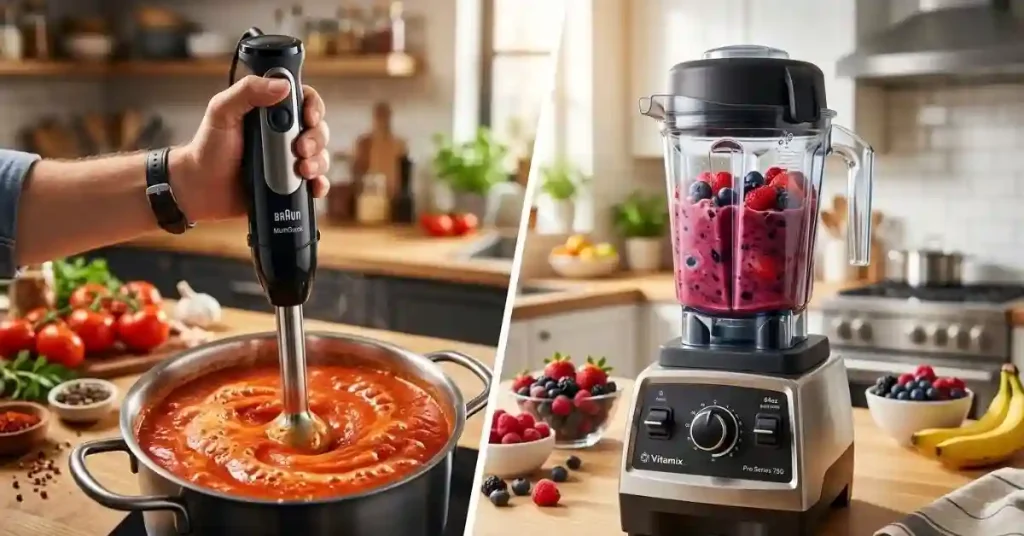
A countertop blender often offers a larger blending container and may provide more power. An immersion blender offers direct blending and easier storage.
Which Blender Fits Your Kitchen?
| Comparison Point | Immersion Blender | Countertop Blender |
| Hot soup | Often convenient in the pot | Usually requires transfer to an approved jar |
| Small portions | Often useful | May need enough food to blend properly |
| Storage | Usually compact | Often takes more space |
| Large smoothies | Model-dependent | Often better suited |
| Cleanup | Can be simple | Jar and base may need cleaning |
These are general differences. Actual performance depends on the model, ingredients, and how you use the tool.
When I Would Choose an Immersion Blender
I would choose an immersion blender for someone who:
- Makes homemade soups often.
- Wants to avoid transferring hot food.
- Has limited kitchen space.
- Makes small batches.
- Values quick setup.
For these tasks, convenience can matter more than having the most powerful motor.
When a Countertop Blender Makes More Sense
A countertop blender may be a better fit if you regularly make:
- Large smoothies
- Frozen drinks
- Nut butter
- Large batches of blended food
- Very smooth drinks
Some high-performance countertop blenders are designed for demanding tasks. An immersion blender may not offer the same capacity or results.
Are Immersion Blenders Good for Soup?
Yes, immersion blenders are often useful for soup, especially when the ingredients are cooked until soft.
This is one of the clearest reasons to consider buying one.
Blending Soup Directly in the Pot
Start by cooking your vegetables until they are tender. Add your liquid and let the mixture reach the texture needed for blending.
Then:
- Turn the heat down or follow the manufacturer’s instructions.
- Place the blade end into the soup.
- Start at a low speed.
- Blend in slow movements.
- Check the texture as you go.
Do not rush this step. Moving too fast can create splashes and uneven blending.
Which Soups Work Well?
| Soup Type | What to Expect |
| Tomato soup | Often blends easily after cooking |
| Potato soup | Can become thick and creamy |
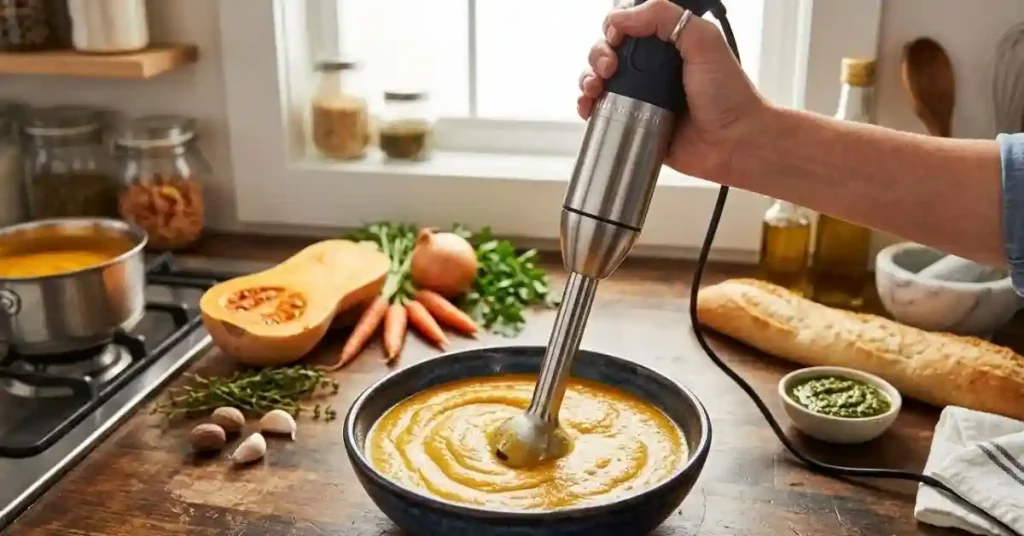
| Carrot soup | Usually works well when soft |
| Lentil soup | May blend well, depending on thickness |
Potato soup needs special care. Overblending potatoes can make them gluey because of the starch. Blend only as much as needed for your preferred texture.
A Mistake to Avoid With Hot Soup
Do not treat every immersion blender as automatically safe for boiling food.
Check the manufacturer’s instructions. Some models have specific temperature limits or usage rules.
If you need to blend very hot soup, use care and avoid sudden movements. Burns from hot liquid are not worth rushing the process.
Are Immersion Blenders Good for Smoothies and Sauces?
They can be, but the ingredients matter.
For a small smoothie with soft fruit and yogurt, an immersion blender may work well. For thick, icy, or frozen mixtures, results can vary.
Smoothies Need the Right Ingredients
Soft ingredients are usually easier to blend than hard ones.
| Ingredient | Practical Tip |
| Banana | Use ripe, soft fruit |
| Yogurt | Add enough liquid for movement |
| Berries | Fresh, soft berries may blend well |
| Ice | Check whether the model supports it |
I would not buy an immersion blender only for daily ice-based smoothies without checking its capabilities first.
A countertop blender may be a better fit for large or frozen smoothies.
Making Sauces and Dressings
Immersion blenders can be useful for sauces, especially when you want to mix a small amount.
They can help with:
- Mayonnaise-style sauces
- Salad dressings
- Tomato sauces
- Soft herb mixtures
- Simple dips
The container makes a difference. A tall, narrow container may help the ingredients stay near the blades.
For emulsions like mayonnaise, follow a reliable recipe and use the correct technique. Not every immersion blender will produce the same result.
Common Immersion Blender Mistakes
Small mistakes can make a useful tool seem ineffective. Most problems come from the ingredients, container, or technique rather than the blender alone.
Here are a few issues worth knowing.
Mistake 1: Using a Wide, Shallow Bowl
A wide bowl may spread the ingredients too far from the blade.
Better approach: Use a suitable deep container when the recipe allows it.
Mistake 2: Blending Too Much at Once
A small blade may struggle with a large batch of thick food.
Better approach: Work in smaller portions when needed.
Mistake 3: Expecting a Perfectly Smooth Texture
Some foods contain fibers, seeds, or skins that remain after blending.
Better approach: Cook ingredients until tender, use enough liquid, and strain the mixture if the recipe needs a very smooth result.
Mistake 4: Ignoring the Blade Guard
Food can collect around the blade guard, and thick mixtures can become hard to remove.
Better approach: Turn off and unplug the tool before cleaning around the blades. Follow the manufacturer’s cleaning instructions.
| Problem | Better Approach |
| Food splashes | Use low speed and a deep container |
| Uneven blending | Move the blade slowly |
| Motor struggles | Reduce the batch or add suitable liquid |
| Food sticks | Stop and clean safely |
What Features Matter When Buying an Immersion Blender?
You do not need every extra feature. Focus on the parts that affect how you cook.
A basic model may be enough for soup and simple sauces. A more advanced model may offer speed control and extra attachments.
Motor Power and Speed Control
Wattage can offer some insight, but it does not tell the whole story.
Blade design, motor quality, food texture, and speed control also affect results.
A variable-speed control can help when moving from gentle mixing to stronger blending.
Detachable Shaft
A detachable shaft can make storage and cleaning easier.
Check how it attaches and whether the parts are dishwasher-safe. A removable shaft is useful, but it does not guarantee that every area will be easy to clean.
Useful Attachments
Some immersion blenders include:
- Whisk
- Chopper bowl
- Measuring cup
- Extra blending accessories
These can add value if you will use them. Otherwise, they may simply create more parts to store.
Which Features Matter Most?
| Feature | Why It Matters |
| Variable speed | Helps control blending |
| Detachable shaft | May simplify cleaning |
| Comfortable grip | Makes longer tasks easier |
| Suitable accessories | Adds value for specific recipes |
I would rather choose a simple tool that fits my cooking habits than pay extra for attachments I rarely use.
How Long Do Immersion Blenders Last?
An immersion blender can last for years with proper care, but its lifespan depends on build quality, usage, and maintenance.
A tool used for light soup and sauce work may face less strain than one used for thick mixtures every day.
Habits That May Help Extend Its Life
- Follow the recommended operating time.
- Avoid ingredients that the manual does not support.
- Do not force the blade through thick food.
- Clean the shaft after use.
- Keep water away from parts that should not get wet.
- Store it in a dry place.
If the motor smells hot, makes unusual sounds, or struggles, stop using it and check the manual.
Do not assume a stronger push will solve a motor problem.
Are Immersion Blenders Worth It for Small Kitchens?
For a small kitchen, an immersion blender can be a practical choice.
It often needs less storage space than a countertop blender. It can also reduce the need for extra containers when making soups and sauces.
But compact size does not mean it replaces every kitchen appliance.
A Simple Decision Guide
| Your Cooking Habit | My Recommendation |
| Frequent homemade soup | Consider an immersion blender |
| Occasional sauces | A basic model may be enough |
| Daily frozen smoothies | Compare countertop blender options |
| Limited storage | Immersion blender may fit well |
The best choice depends on what you cook most often. A tool should solve a real problem in your kitchen, not create another chore.
Are Immersion Blenders Worth the Money?
The value depends on how often you use one and what it replaces.
If you make soup every week, an immersion blender may save time and reduce cleanup. If you already have a powerful blender and rarely make sauces or soups, the added value may be smaller.
Questions to Ask Before Buying
Think about these points:
- Do I make blended soups often?
- Do I have enough space for another tool?
- Do I need to blend hot food in the pot?
- Will I use the extra attachments?
- Do I need smooth frozen drinks?
- How easy is the model to clean?
These questions help you choose based on actual use rather than a long feature list.
Final Thoughts on Are Immersion Blenders Worth It?
So, are immersion blenders worth it? For many home cooks, yes, especially if soups, sauces, and small batches are part of their routine. Their biggest strength is convenience. You can blend food where you cook it, store the tool easily, and often reduce cleanup.
Still, an immersion blender is not a universal replacement for a countertop blender. It may struggle with large batches, frozen ingredients, and extra-smooth textures. Think about your real cooking needs before spending money.
My advice is simple: Choose an immersion blender if it solves a problem you face often. If you mainly make frozen smoothies or large batches, compare other blender types first. The best kitchen tool is the one you will use without feeling like it creates more work.
To Get More About Home, Kitchen Accessories Product You Can Visit Our Site. If You Found our Posts Helpful Leave a Comment Below