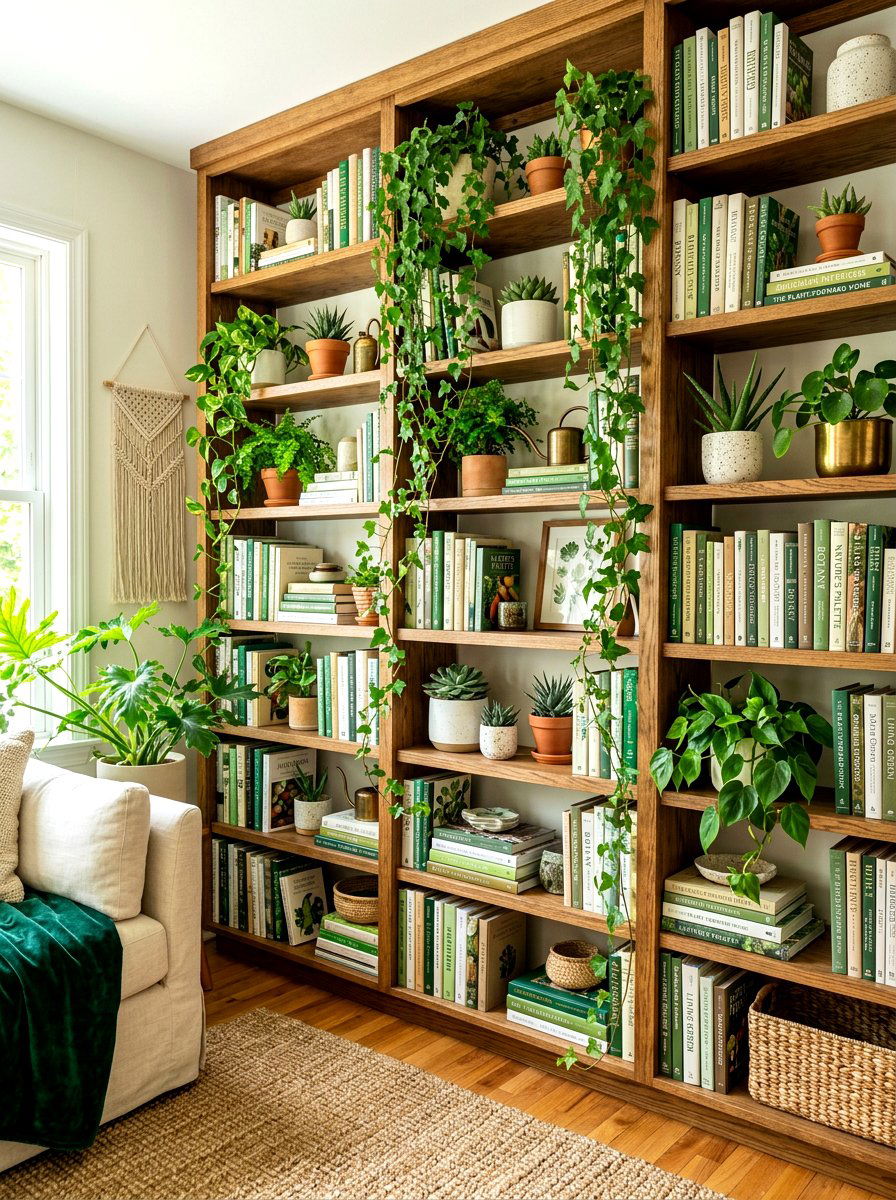
Style faux greenery on a bookshelf by mixing trailing vines, small potted plants, books, and decorative objects while leaving enough open space for a balanced display.
In American homes, bookshelves often serve more than one purpose. A living room bookcase may hold family photos, favorite novels, travel souvenirs, and storage baskets, while shelves in a home office may display work books and personal keepsakes. Adding faux greenery is an easy way to soften these displays without worrying about sunlight, watering, or changing leaves.
The best approach is to treat artificial plants as part of the whole shelf design. A trailing vine can soften a straight shelf edge, while a small potted fern can fill an empty corner. You can also mix greenery with books, framed art, ceramic pots, and wood accents to create a warm look that feels natural rather than crowded.
Whether you have a large built-in bookcase, a narrow apartment shelf, or a simple bookcase from a home furniture store, you can use the same basic ideas. Start with the books, choose a few plants that suit the available space, and adjust their position until the whole display feels balanced.
Faux greenery adds color, texture, and soft shapes to a bookshelf. Most shelves contain hard lines from book spines, frames, boxes, and wood panels. A leafy plant breaks up those lines and gives the display a more relaxed feel.
Artificial plants are also useful in places where live plants may struggle. A bookcase in a dim hallway, an interior corner, or a room with limited window space can still have a green touch. You do not need to move the plant around to find better light.
Another benefit is that faux plants do not need water or regular pruning. You can place them beside books, near framed photos, or on shelves that are hard to reach. They also avoid the risk of water spills on wood shelves and paper items.
The key is choosing greenery that looks suitable for the space. A realistic leaf shape, natural color, and flexible stem can make a big difference. Even a simple artificial plant can look attractive when it is styled with care.
Source: alderlight.com
No sunlight requirement
Artificial greenery can decorate a shelf in a dark corner, an interior room, or a home office without needing a sunny spot.
Easy placement
You can move and reshape faux plants whenever you change your books or other decorations.
Less daily care
There is no watering, feeding, or pruning. Occasional dusting is usually enough to keep the leaves looking neat.
Flexible decorating
Faux greenery works with modern, rustic, farmhouse, traditional, minimalist, and many other home styles.
Choose Greenery That Looks Natural
A realistic appearance starts with the leaves. Look for natural color changes, visible leaf details, and shapes that resemble real foliage. Plants with one flat shade of bright green may look artificial, especially when placed close to eye level.
Matte or lightly textured leaves can look more natural than very shiny ones. Also, check the stems and the base of the plant. A convincing leaf color cannot fully hide a poorly made stem or an exposed plastic base.
You do not need expensive greenery to create a pleasant display. A simple plant can work well if its size, shape, and color fit the rest of the shelf.
Natural color
Choose soft green, olive, muted sage, or mixed green leaves instead of an overly bright artificial shade.
Flexible stems
Bendable stems make it easier to spread the leaves and create a relaxed shape.
Detailed leaves
Look for visible veins, varied leaf sizes, and natural-looking edges.
Choose The Right Types Of Faux Greenery
The best bookshelf display usually includes more than one plant shape. Trailing greenery adds movement, upright plants add height, and compact plants fill small gaps. Combining these forms helps the whole bookcase look balanced.
Before choosing plants, measure the shelf height and depth. A plant that looks small in a large room may take up too much space on a narrow shelf. Think about how far its leaves will extend and whether they will block nearby books or decorations.
You can use one plant type throughout the bookcase for a simple look. However, mixing two or three related types often creates more visual interest. Keep the color tones connected so the plants still look like part of one display.
Source: gatheredgroup.com
Trailing faux vines
Artificial pothos, ivy, eucalyptus vines, and similar plants work well near shelf edges. Their hanging leaves soften the straight shape of a bookcase.
Small potted plants
Compact ferns, succulents, and leafy plants fit between books and decorative objects without taking over the shelf.
Upright greenery
Small artificial snake plants, palms, and upright leafy stems add height to a display that needs more vertical interest.
Artificial eucalyptus
Muted eucalyptus leaves offer a soft, understated appearance that works well with neutral books, wood, and ceramic accessories.
Mixed foliage
Plants with different leaf shapes can add texture, as long as their colors and overall sizes work together.
Use Trailing Plants To Soften Shelf Edges
Trailing greenery is one of the easiest ways to decorate a bookshelf. Place a small faux pothos or ivy plant near one end of a shelf and allow its vines to fall over the edge. The hanging leaves create a softer line and connect the shelf to the space below.
A trailing plant can also help a tall bookcase feel less rigid. Instead of arranging every object in straight rows, you introduce a natural curve that makes the display feel more relaxed.
Keep the vines away from important book titles, cabinet doors, and nearby walkways. If the stems are too long, tuck part of them behind the books or gently reposition them.
Best placement
Use the outer end of an upper or middle shelf where the vines have enough room to hang.
Best appearance
Spread the leaves along the vine instead of letting them form one tight clump.
Best balance
Use a second trailing plant on another level only when the first one does not make the bookcase feel crowded.
Add Small Plants To Fill Empty Spaces
Small artificial plants are useful when a shelf has an awkward gap. A tiny succulent or compact fern can sit beside a short stack of books or near a framed photo. It adds a touch of green without taking up much room.
These plants work especially well on narrow shelves. They can also fill the space between two larger objects when the display looks too empty. Choose a pot that fits the shelf depth and does not hang over the front edge.
For narrow shelves
Choose a small plant with a compact base and short leaves.
For book stacks
Place a lightweight plant beside or on a stable stack of books.
For decorative corners
Use a small plant to soften the space beside a picture frame or ceramic object.
Prepare Your Bookshelf Before Adding Greenery
A little preparation makes styling much easier. Rather than placing plants on top of an already crowded bookcase, clear the shelves and decide which items you want to keep. This gives you room to build a display with a clear purpose.
Start by removing books, picture frames, baskets, and decorative pieces. Dust the shelves and check for loose panels or unstable objects. If the bookcase is tall, make sure it is properly secured according to its manufacturer’s instructions before adding decorations.
Next, group your belongings. Put books together, collect small decorative objects, and separate the greenery you plan to use. This simple step helps you see how much space you have and prevents random decorating.
You do not have to return every item to the shelves. Some books or decorations may look better in another room. A well-styled bookshelf should still be useful, so keep the items you reach for most often easy to access.
Source: stockcake.com
Measure the shelves
Check the height, width, and depth of each space before choosing plants and pots.
Remove dust and loose dirt so the finished display looks fresh.
Sort your decorations
Group books, plants, frames, baskets, and other accessories before arranging them.
Remove extra items
Set aside objects that do not serve a purpose or add something meaningful to the display.
Plan The Layout Before You Decorate
A simple layout plan can save time. Look at the whole bookcase and identify shelves that need height, shelves that need color, and shelves that already have enough decoration. This helps you avoid placing a plant wherever you happen to find an empty spot.
Think about visual weight, too. A large group of dark books can make one shelf feel heavy. A leafy plant or a light-colored pot on another shelf may help balance the display.
Try arranging your larger pieces first. Once the main objects are in place, add greenery to the spaces that need softer shapes or more color.
Start with large items
Position book stacks, large frames, and larger decorative pieces first.
Add greenery second
Use plants to soften empty corners and balance areas that look too rigid.
Finish with small objects
Add small ornaments or compact pots only where they improve the overall arrangement.
How To Style Faux Greenery On A Bookshelf Step By Step
The easiest way to create a polished display is to build it in layers. Start with the largest items, add books, and then introduce greenery and smaller decorations. This gives every item a place instead of making the shelf look like a collection of unrelated objects.
You do not need to follow a strict decorating formula. Use the steps below as a starting point and adjust the arrangement to suit your bookcase, room, and personal taste.
Source: re-fabbed.com
Step 1: Place your books
Arrange some books vertically and others in horizontal stacks. This creates different heights and gives your plants a natural place to sit.
Step 2: Add your largest plant
Choose one noticeable piece of greenery and place it on a shelf where it has enough room. A trailing plant works well near an outer edge.
Step 3: Introduce smaller plants
Add compact greenery to selected gaps. Avoid placing a plant on every shelf.
Step 4: Add decorative objects
Use frames, ceramic vases, small sculptures, and baskets to create a personal display.
Step 5: Adjust the leaves
Spread the stems, bend the vines gently, and turn the leaves so they face in a natural direction.
Step 6: Check the whole bookcase
Step back and look at the arrangement from across the room. Move anything that makes one shelf feel too heavy or crowded.
Create A Natural Flow Between Shelves
A bookcase looks more connected when the eye can move from one shelf to another. You can create this effect by placing a trailing plant on an upper shelf and a compact plant on a lower level. Their green color creates a visual link without making the arrangement look repetitive.
Avoid lining every plant up in the same position. If one plant sits at the far left of an upper shelf, place the next one closer to the right on a lower shelf. This gentle shift creates a more relaxed layout.
You can also repeat a pot color or leaf style in different areas. Repetition makes the bookcase feel planned, while changes in height and shape keep it interesting.
Repeat selected colors
Use similar shades of green or matching pot finishes on different shelves.
Vary plant heights
Combine low plants, upright foliage, and hanging vines.
Avoid straight lines
Offset plants instead of placing them directly above one another.
Signs That Your Arrangement Is Working
A successful arrangement feels balanced from a distance and still looks attractive up close. Books remain easy to identify, decorative objects have room around them, and greenery adds texture without hiding everything else.
You should also be able to remove a book or clean the shelf without moving half the display. If the arrangement is difficult to use, simplify it until the shelf works for everyday life.
Balanced appearance
No single shelf or side of the bookcase feels much heavier than the rest.
Visible books
Important titles and frequently used books remain easy to reach.
Natural plant shapes
Leaves and vines look spread out rather than tightly packed.
Open space
There is enough room around the objects for the display to feel calm.
Mix Faux Greenery With Books And Decorative Objects
Greenery looks best when it works with the other items on your bookshelf. Books provide structure, plants add soft shapes, and decorative objects bring personality. Together, these elements can make a bookcase feel like part of the room rather than simple storage.
One easy arrangement is to place a small stack of books beside a potted plant. The books create a solid base, while the leaves add height and texture. You can also place a small ceramic object beside the plant to complete the group.
Try using objects with different shapes. A round bowl, a rectangular frame, and a leafy plant create more visual interest than several objects with the same outline. However, avoid adding so many accessories that the greenery gets lost.
Personal items can make the display feel more meaningful. A framed family photo, a favorite travel souvenir, or a small piece of handmade pottery can sit beside faux greenery. Choose items that reflect your home instead of filling every gap with generic decorations.
Source: suite101.com
Books and greenery
Place a small potted plant beside a vertical row of books or on top of a stable horizontal stack.
Frames and plants
Use a small faux plant near a framed photo to soften the straight edges of the frame.
Baskets and vines
Combine a woven basket with trailing greenery for a warm, relaxed look.
Ceramics and foliage
Pair a leafy plant with a simple ceramic vase or small decorative bowl.
Use Horizontal Book Stacks As Plant Stands
Horizontal book stacks are useful when a small faux plant needs extra height. Place two or three suitable books flat, then set a lightweight plant on top. This creates a small display without needing another shelf accessory.
Choose books with sturdy covers and make sure the stack is stable. Avoid placing heavy pots on delicate books or valuable editions. A lightweight artificial plant is generally easier to use for this type of arrangement.
You can also place a small decorative object beside the plant. Keep the group simple so the book stack remains visible and useful.
Use stable books
Choose books that sit flat and do not slide easily.
Keep the plant lightweight
A compact artificial plant is a better choice than a heavy decorative planter.
Check the proportions
The plant should not be so large that it hides the books underneath.
Create Small Decorative Groups
A few related objects can look more intentional when arranged as a group. For example, place a small plant beside a framed photo and a short stack of books. Each item has a different shape, but the group still feels connected.
Odd-number groupings can be a useful starting point, especially when combining objects of different heights. This is a decorating guideline rather than a strict rule. If two objects look better together, there is no need to add a third.
Choose a focal piece
Let one item, such as a plant or framed picture, lead the group.
Add supporting pieces
Use books or a small ornament to create balance around the main object.
Leave room around the group
Do not squeeze the objects together just to fill the entire shelf.
Choose Pots And Containers That Match Your Decor
The pot can change the whole appearance of a faux plant. A simple green plant in a well-chosen container may look more natural and polished than a larger plant in a poorly matched pot. Choose containers that suit the color and material of your bookshelf.
White ceramic pots work well with light shelves and simple decor. Terracotta-style containers add warmth to wood bookcases, while black or dark gray pots can suit modern rooms. Woven baskets bring a softer texture to rustic and farmhouse-inspired displays.
You do not need every pot to match exactly. Instead, choose a small group of related colors or materials. This gives the bookcase a connected look without making it feel too uniform.
If your faux plant comes in a basic plastic pot, you can place it inside a more attractive outer container. Make sure the inner pot fits securely and does not wobble when someone removes a nearby book.
Source: housedigest.com
White ceramic
A good choice for bright, simple, modern, and neutral bookshelf displays.
Terracotta
Adds an earthy color that works with wood, cream, beige, and warm decor.
Woven baskets
Bring texture and a relaxed feel to farmhouse, rustic, and natural room styles.
Black containers
Create contrast against light shelves and suit modern or industrial interiors.
Glass containers
Can give small artificial arrangements a light, simple appearance when the plant base is neatly concealed.
Match The Pot To The Bookshelf Material
Wooden bookshelves often look good with warm containers such as terracotta, cream ceramic, or woven materials. These finishes work with the natural grain and help the greenery feel connected to the furniture.
White bookcases offer more flexibility. You can use soft green plants with white pots for a calm display or add darker containers for contrast. For metal or black shelves, natural wood and neutral ceramics can help soften the overall look.
Think about the other furniture in the room as well. Repeating a material from a coffee table, side table, or picture frame can help the bookcase feel connected to the wider space.
Light wood
Try cream, beige, pale gray, or natural woven containers.
Dark wood
Use warm white, muted terracotta, or soft neutral pots.
White shelves
Choose natural wood, ceramic, or darker pots to add contrast.
Black shelves
Try light ceramic containers or warm woven textures.
Faux Bookshelf Greenery Ideas For Different Home Styles
The best greenery arrangement depends on the style of your room. A modern bookcase may need only one or two simple plants, while a farmhouse shelf can handle woven textures and fuller foliage. You can use artificial plants in almost any decorating style by changing the leaf shapes, pot finishes, and number of accessories.
Before decorating, look at the colors and materials already in your room. Your bookshelf should feel like part of the same space. You do not need to copy a showroom display or buy a completely new set of decorations.
Source: plusmood.com
Modern and minimalist
Use a few compact plants, simple ceramic pots, clean book arrangements, and plenty of open space.
Farmhouse
Combine trailing ivy, neutral pots, woven baskets, wood accents, and personal decorations.
Mix different leaf shapes, textured planters, colorful books, and collected decorative objects.
Coastal
Use soft green foliage with white, sandy beige, pale blue, and natural woven materials.
Style A Small Apartment Bookshelf
A small apartment bookshelf needs a lighter touch. Large artificial plants can take up valuable space and make the shelves feel cramped. Choose one small trailing plant and one compact potted plant instead.
Use vertical book arrangements to save room, then place a small horizontal stack where you want to add height. A few well-chosen decorations can make a narrow shelf look complete without taking away useful storage.
If your bookshelf is also used as a work or storage area, keep the most practical items within easy reach. Decorative greenery should not block folders, chargers, or frequently used books.
Choose compact plants
Look for small artificial succulents, ferns, or short trailing vines.
Use vertical space
Choose slim pots and avoid wide arrangements that take up the full shelf depth.
Keep the display simple
Limit extra ornaments so the bookcase remains useful.
Decorate A Large Built-In Bookcase
A large built-in bookcase gives you more room to create different display areas. Use a larger trailing plant on an upper shelf, smaller greenery in the middle, and a few decorative pieces near the bottom. This creates variation across the whole unit.
You can also leave some shelves mostly dedicated to books. Not every section needs a plant. The contrast between decorated shelves and simpler book-filled areas helps the whole bookcase feel more balanced.
For tall built-ins, check that the plants and decorations are secure. Avoid placing heavy pots near an unstable shelf edge, and use suitable support for any tall furniture that needs anchoring.
Use different levels
Place greenery on upper, middle, and lower shelves rather than grouping everything at one height.
Repeat plant styles
Use similar foliage or pot colors in different areas to connect the full bookcase.
Keep some shelves simple
Let books and open space provide a break between decorated sections.
How To Make Faux Greenery Look More Realistic
Even a good artificial plant can look stiff when you first take it out of its packaging. The leaves may be pressed together, and the stems may point in one direction. A little shaping can make the plant look fuller and more natural.
Start by checking the plant’s material and care instructions. Gently separate the leaves and bend flexible stems into a relaxed shape. Avoid pulling too hard, twisting delicate wires, or forcing stems that do not bend.
Think about how real plants grow. Leaves do not all face the same way, and vines do not usually form perfect circles. Turn some leaves toward the room, allow others to sit slightly behind the main foliage, and vary the direction of the stems.
The container also matters. Covering an exposed plastic base with a suitable decorative pot can improve the overall appearance. A small amount of natural-looking moss or decorative filler may help, provided it is appropriate for the planter and kept away from children and pets who might put it in their mouths.
Source: re-fabbed.com
Separate the leaves
Gently spread leaves that are pressed together so the plant has a fuller outline.
Vary the directions
Turn some leaves outward and let others sit at different angles.
Shape the vines
Create a relaxed curve instead of a tight loop or stiff straight line.
Hide the plastic base
Use a well-fitted outer pot or suitable decorative filler to create a cleaner finish.
Check the display from a distance
Look at the plant from the main seating area to see whether its shape appears natural.
Avoid An Overly Perfect Appearance
One common mistake is arranging every leaf in the same direction. This can make a plant look like a plastic decoration rather than a natural piece of greenery. Small differences in leaf position create a more relaxed effect.
You can also vary the amount of greenery showing around the pot. Let some leaves sit close to the container while others extend outward. Keep the overall shape loose without making the plant look messy.
If the plant still looks artificial, try moving it farther back on the shelf or placing it near books and other textured objects. The goal is not to hide it completely, but to make it fit naturally into the display.
Avoid identical leaf positions
Give each stem a slightly different direction when the material allows it.
Use natural color combinations
Combine muted greens with wood, cream, and neutral materials.
Keep the plant in proportion
Choose a plant that suits the shelf instead of forcing an oversized piece into a small space.
Common Faux Greenery Styling Mistakes To Avoid
The biggest bookshelf styling mistake is adding too many plants and decorations. Greenery should support the books and other objects, not hide them. If every shelf is filled with leaves, frames, baskets, and ornaments, the display can quickly feel crowded.
Another common issue is using plants that are too large for the available space. A wide plant may cover book titles or hang over the shelf edge in an awkward way. Check the full size of the foliage, not just the height of the pot.
Color is also worth considering. Several shades of green can look attractive together, but a mix of very bright artificial leaves and unrelated pot colors may feel disconnected. Choose a simple color direction and repeat it throughout the bookcase.
Finally, do not forget maintenance. Faux greenery does not need water, but dust can collect on its leaves. A dusty artificial plant can make even a carefully styled bookshelf look neglected.
Source: stockcake.com
Using too many plants
Give each plant room to stand out and leave some shelves without greenery.
Blocking book titles
Keep vines and large leaves away from the titles you want to read or display.
Ignoring shelf depth
Check that pots and leaves do not stick out far enough to get knocked over.
Mixing too many styles
Repeat a few related colors and materials to create a connected look.
Forgetting to dust
Clean the leaves and pots when dust becomes visible.
Overloading high shelves
Keep heavy objects secure and avoid unstable arrangements above head height.
What To Do When A Bookshelf Looks Too Crowded
If your bookshelf looks busy, remove a few items before buying anything new. Start with the smallest decorations and plants that seem to have no clear place. You may find that the display looks better with fewer objects.
Next, move the largest plants away from crowded book sections. A trailing vine can often create enough green detail without needing several small pots. Leave one or two shelves with more open space to give the eye a break.
If the problem continues, take a photo of the bookcase. A photograph can make uneven spacing and crowded areas easier to notice. Use it to decide which items should move or be removed.
Remove unnecessary accessories
Keep only the objects that add color, meaning, texture, or practical value.
Spread out the greenery
Move plants to different shelf levels instead of grouping them together.
Reduce overlapping shapes
Give frames, book stacks, and plants enough room to remain visible.
How To Clean And Maintain Faux Bookshelf Plants
Artificial plants need occasional cleaning to keep their color and texture looking fresh. Dust can settle on leaves, stems, and the top of decorative pots. This is especially noticeable on dark green foliage and plants placed near open windows or busy rooms.
For routine cleaning, use a soft microfiber cloth or a gentle brush. Wipe larger leaves carefully and use the brush to reach small spaces between the foliage. Hold delicate stems while cleaning so they do not bend or break.
Always check the manufacturer’s care instructions before using water or cleaning products. Some faux plants have fabric leaves, coated surfaces, or materials that may be damaged by moisture. If the plant is suitable for light damp cleaning, use a slightly damp cloth and allow it to dry fully before putting it back.
Avoid strong cleaners, bleach, and harsh scrubbing unless the manufacturer specifically permits them. These can damage coatings or change the color of the leaves. A gentle cleaning routine is usually a better choice.
Source: suite101.com
Use a microfiber cloth
Wipe broad leaves gently to remove loose dust.
Try a soft brush
Use a clean, soft brush to reach small leaves and tight spaces.
Check the material
Follow the care instructions before using water on fabric, plastic, or coated leaves.
Clean the pots
Remove dust from the outside and base of each decorative container.
Reshape after cleaning
Gently arrange the leaves and stems again if they have moved during cleaning.
How Often Should You Clean Artificial Greenery?
There is no single cleaning schedule for every home. A plant on an open bookshelf near a busy living room may collect dust faster than one inside a closed display cabinet. Check the leaves from time to time and clean them when you see visible dust.
A quick visual check during normal shelf cleaning is often enough. You can also clean the plants when you rearrange your bookcase or change seasonal decorations. This keeps the display neat without making plant care feel like another large household task.
Check for dust
Look at the upper and lower sides of leaves during routine room cleaning.
Inspect the stems
Check for bent, loose, or damaged parts that may need gentle adjustment.
Check the pot
Make sure the plant still sits securely inside its container.
Keep Faux Plants Away From Excessive Heat
Artificial plants can be affected by heat, depending on their materials. Avoid placing them directly against hot lamps, heating equipment, or other heat sources. Strong sunlight through a window may also fade some materials over time.
If your bookshelf is near a window, check the leaves occasionally for fading or changes in shape. Move the plant if the material begins to show damage. Follow the manufacturer’s guidance for the specific product.
Avoid hot surfaces
Keep artificial leaves and plastic pots away from heaters and hot lighting equipment.
Watch for fading
Check plants placed near sunny windows for color changes.
Follow product guidance
Check the material and care label before changing the plant’s location or cleaning method.
A Simple Faux Greenery Bookshelf Layout You Can Copy
If you are unsure where to start, try a simple layout with three types of greenery and a mix of books and decorations. This example works as a starting point for a medium-sized bookcase in a living room or home office. You can change the number of plants to fit your actual shelf space.
Use the upper shelf for a trailing plant and a few upright books. Let the vine hang slightly over one side. On the middle shelf, place a horizontal book stack beside a small potted fern and a framed photo.
For the lower shelf, use a compact plant beside a woven basket or a row of books. Keep the arrangement simple so you can still reach your belongings. The goal is to create a visual connection across the bookcase without repeating the same setup on every level.
Source: theturquoisehome.com
Upper shelf
Place one trailing faux plant near an outer edge, with upright books or a simple frame beside it.
Middle shelf
Combine a horizontal book stack, a small potted plant, and one personal decorative object.
Lower shelf
Use a small compact plant beside a storage basket or a row of favorite books.
Top of the bookcase
If the surface is stable and suitable, use one larger lightweight arrangement rather than several small decorations.
Adjust The Layout For A Narrow Bookcase
For a narrow bookcase, use one main plant and one or two small decorative pieces. A compact trailing vine can add enough movement without taking up the full shelf. Avoid wide pots and large leaves that extend into the space where you need to store books.
You can place a small plant on a short horizontal book stack if the books and plant are stable. Use a simple pot and leave enough room to remove books without disturbing the arrangement.
Use fewer plants
One well-placed plant may be enough for a narrow shelf.
Choose slim containers
Select pots that leave room for books and other useful items.
Keep vines short
Use a compact trailing plant that does not cover nearby shelves.
Adjust The Layout For A Wide Bookcase
A wide bookcase can support more than one display group. Use a trailing plant on one side and a small upright plant on another shelf. Fill the space between them with books, frames, and a few personal items.
Keep the greenery spread out so it creates a gentle rhythm across the furniture. A wide bookcase does not need a plant in every section. Some open areas will help the plants stand out.
Create separate groups
Divide long shelves into small sections with books and selected decorations.
Use varied heights
Mix tall plants, short pots, and horizontal book stacks.
Keep a clear color theme
Repeat a few pot finishes and shades of green across the bookcase.
Extra Questions To Consider Before Finishing Your Shelf
A few details can change how a faux greenery display works in daily life. The right arrangement depends on the shelf’s depth, the room’s use, the materials of the plants, and the people or pets who share the space. Thinking about these details before finishing can prevent common decorating problems.
For example, a bookshelf in a family room may need more stable pots and fewer small loose decorations. A bookcase in a quiet home office may have more room for delicate arrangements. These are practical choices, not strict design rules.
Source: gatheredgroup.com
Will the plant block anything?
Check whether leaves cover book titles, cabinet doors, artwork, or objects you use often.
Can the plant stay in place?
Make sure the pot has a stable base and does not wobble when nearby books move.
Is the material suitable?
Check the plant’s cleaning instructions and keep it away from heat sources.
Does the display fit the room?
Choose colors, pot styles, and foliage that connect with your existing furniture and decor.
What If You Have Children Or Pets?
If children or pets can reach the bookshelf, think about placement before choosing decorations. Keep small pots, loose filler, decorative stones, and detachable leaves out of reach when they could be swallowed. Some artificial plant materials may also have sharp wire stems or small parts.
Choose stable containers and avoid placing fragile pots near shelf edges. Keep taller furniture secured according to its manufacturer’s instructions. Do not assume an artificial plant is safe to chew or play with simply because it is not alive.
For homes with pets, check whether the plant contains small loose pieces or materials that may attract chewing. Choose a safer location or a different decoration when necessary.
Secure small decorations
Keep loose moss, stones, and detachable pieces away from young children and pets.
Choose stable pots
Avoid containers that tip easily when someone brushes against the shelf.
Check plant materials
Inspect for exposed wires, sharp edges, and small parts that could be pulled loose.
Can You Mix Real And Faux Plants?
Yes, you can combine live plants and artificial greenery on the same bookcase. This can create a varied display when you have suitable light and enough room to care for the real plants. Use faux plants in darker areas and reserve live plants for shelves that meet their light and care needs.
Keep in mind that real plants may need water, drainage, and occasional pruning. Place them in suitable containers and protect the shelf from moisture. Artificial plants can fill nearby spaces without adding the same care needs.
Try to keep the two types of greenery visually connected. Similar leaf colors and related pot styles can help the display feel consistent.
Use live plants where conditions suit them
Choose locations with suitable light and enough room for proper plant care.
Use faux plants in darker areas
Artificial greenery can fill spaces where a live plant would not receive the care it needs.
Protect the bookshelf
Use appropriate plant containers and prevent water from reaching books or wood surfaces.
Frequently Asked Questions
Q
How Many Faux Plants Should I Put On A Bookshelf?
The right number depends on the size of your bookcase and how many other items it holds. A small bookshelf may need only one or two plants, while a large built-in bookcase can support several plants spread across different shelves.
Start with one trailing plant and one compact plant. Add more only if the display still looks empty. It is better to have a few well-placed plants than to fill every shelf with greenery.
Q
Where Should I Put Faux Greenery On A Bookshelf?
Place trailing faux plants near the outer edges of upper or middle shelves. This gives their vines room to hang without hiding books. Small potted plants work well beside book stacks, picture frames, and other decorations.
You can also use a larger artificial plant on top of a bookcase if the surface is stable and the arrangement is secure. Spread plants across different heights to create a balanced look.
Q
How Do You Make Artificial Plants Look Real On A Shelf?
Choose plants with natural-looking leaf shapes, varied green tones, and flexible stems. Gently separate the leaves and adjust the stems so they do not all face the same direction.
Use attractive pots that hide the plastic base, and combine the plants with books and natural materials. Regular dusting also helps artificial greenery maintain a fresh appearance.
Q
Should Faux Greenery Match The Color Of My Bookshelf?
Faux greenery does not need to match the bookshelf exactly. The goal is to create a pleasant contrast that works with the furniture and room colors.
For a light wood bookcase, try soft green leaves with cream or beige pots. For dark wood, muted green foliage and light ceramic containers can create a balanced look. Choose colors that connect with other items in the room.
Q
Can Faux Plants Go On A Bookshelf With No Sunlight?
Yes. Artificial plants do not need sunlight to stay green because they do not grow or photosynthesize. This makes them useful for interior rooms, dark corners, and shelves away from windows.
However, some artificial materials can fade or change shape when exposed to strong sunlight or heat for long periods. Follow the product’s care instructions and keep the plants away from excessive heat.
Q
How Do I Keep Faux Greenery From Looking Dusty?
Use a soft microfiber cloth or a clean, gentle brush to remove dust from the leaves. For small spaces between leaves, a soft brush can help reach areas that are difficult to wipe.
Check the manufacturer’s instructions before using water or cleaning products. Some fabric and coated leaves need dry cleaning methods. Clean the pots and stems at the same time so the whole arrangement stays neat.
Q
Are Trailing Faux Plants Better Than Upright Plants For Bookshelves?
Neither type is always better. Trailing plants are useful for softening shelf edges and adding movement, while upright plants add height and fill empty corners.
Using both types can create a more varied display. If your shelves are narrow, choose compact upright plants or short vines. If you have a large bookcase, a longer trailing plant can create a noticeable focal point.
Q
Can I Put Faux Greenery On Top Of A Bookshelf?
Yes, a lightweight artificial plant can look attractive on top of a bookshelf. A trailing variety can soften the top edge, while an upright plant can add height.
Make sure the plant and its container sit securely. Avoid heavy or unstable decorations near the edge, especially if the bookcase is tall or placed in a busy area.
✦ Wrapping Up
Conclusion
Styling faux greenery on a bookshelf is a simple way to add color, texture, and warmth to your home. Trailing vines soften straight shelf edges, small potted plants fill empty spaces, and upright greenery adds height. When you mix these shapes with books, framed photos, baskets, and ceramic accessories, the bookcase can feel more personal and inviting.
The secret is to keep the arrangement balanced. Choose plants that suit your shelf size, use containers that match your decor, and leave enough open space for books and other items. You do not need a plant on every shelf or a large collection of decorations to create an attractive display.
Take time to shape the leaves, check the arrangement from across the room, and remove anything that makes the shelf feel crowded. Clean the plants when dust appears and keep them away from excessive heat. Small changes can make a noticeable difference without requiring a full room makeover.
💡 Key Takeaway
Start with one trailing faux plant, one small potted plant, and a few favorite books. Arrange them on different shelf levels, add one or two personal decorations, and step back to check the balance. Keep adjusting until your bookshelf feels natural, useful, and welcoming.