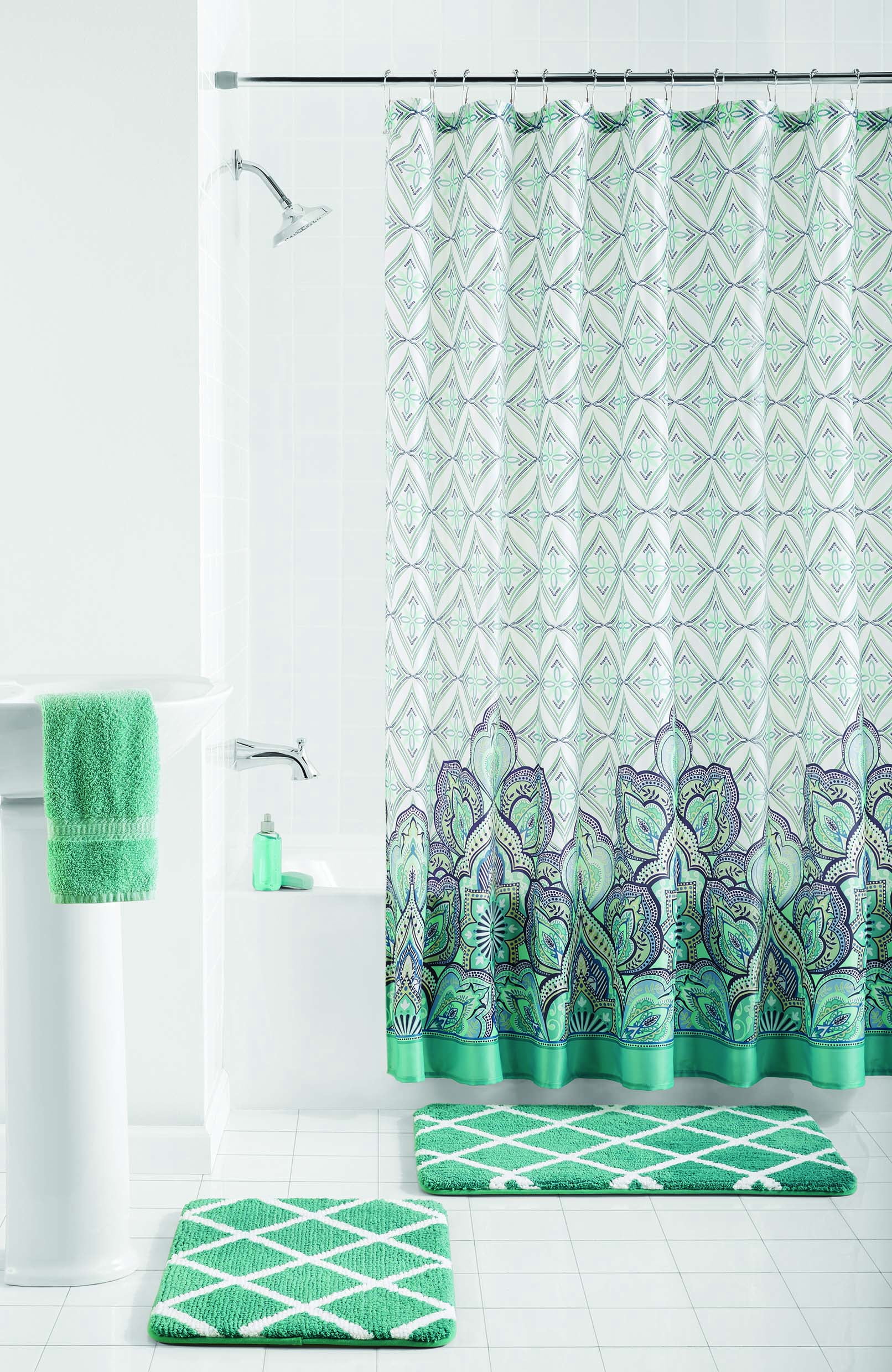
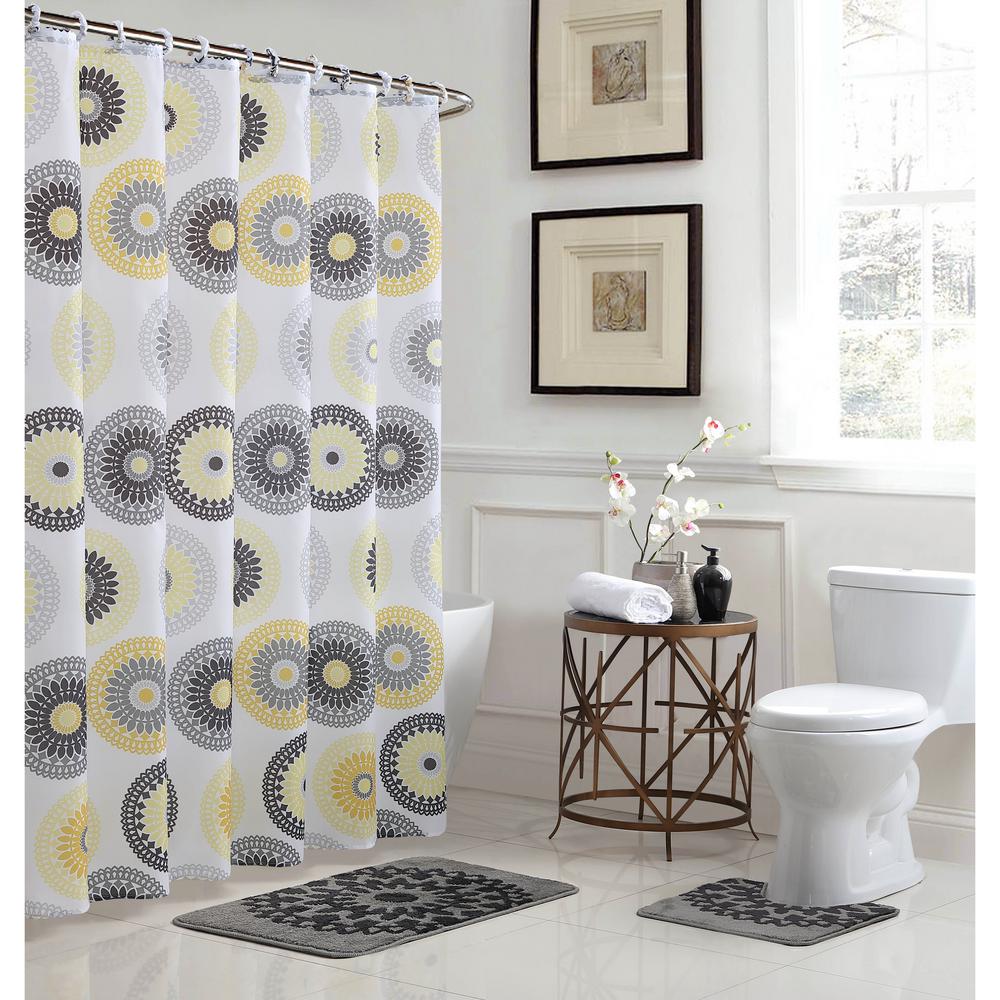
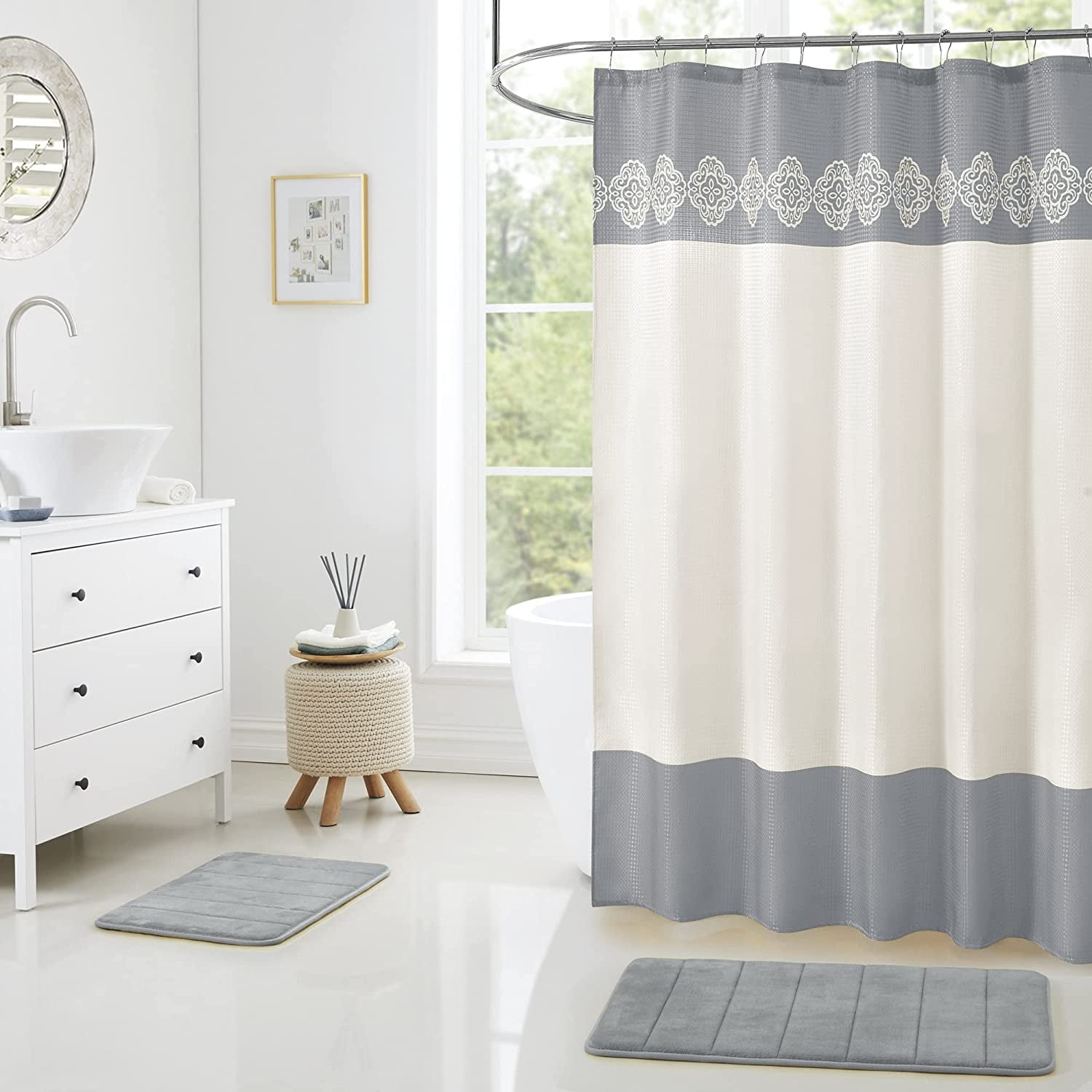
No. A bathroom rug does not have to match the shower curtain exactly. Coordinating colors, patterns, or textures is enough to create a neat and attractive space.
In American homes, bathrooms come in many styles. A small apartment bathroom may have a simple white shower curtain and a colorful rug. A large family bathroom may use a patterned curtain with soft neutral floor mats. Both can look great without using an exact matching set. The key is to make the main colors and design choices work together.
Your bathroom rug and shower curtain are two large parts of the room’s decor. They can help set the mood, add color, and make the space feel more complete. Still, buying the same pattern for both is not a rule. You can mix colors, use different patterns, or choose a plain rug that balances a bold curtain. This guide explains how to make those choices, with practical examples for small and large bathrooms.
Should a Bathroom Rug Match the Shower Curtain Exactly?
No, an exact match is not needed. Your rug and shower curtain should look good together, but they do not have to share the same print, color, or fabric. A common design link is enough to make the room feel planned.
Think of the shower curtain as a large wall of color and the rug as a smaller part of the floor. If both pieces use the same bold print, they may compete for attention. A rug in a color pulled from the curtain can give the room a calm and balanced look.
For example, a shower curtain with white, blue, and gray shapes can work with a solid blue rug. The rug does not copy the pattern, but it still connects with the curtain. This simple approach is often easier than trying to find two products with identical shades.
Source: prinzessingle.blogspot.com
Matching
Both pieces use the same color scheme or print. This creates a clear, planned look.
Coordinating
The rug and curtain use different designs but share one or more colors, tones, or style details.
Contrasting
The pieces use different colors on purpose. A clear contrast can look attractive when the rest of the room keeps the design balanced.
Why Coordination Often Looks Better Than Exact Matching
Coordination gives you more choice. You can pick a rug that fits your floor, feels good under your feet, and handles daily moisture. You do not have to reject a useful rug because its pattern is not part of a curtain set.
It also helps the room avoid a catalog-like look. A little variety can make the bathroom feel more personal. The goal is not to make every item identical. It is to make each item feel like it belongs.
More design freedom
You can mix a floral curtain with a plain rug or a striped curtain with a small geometric pattern.
Better practical choices
You can choose a rug for its backing, wash care, and size instead of focusing only on a matching print.
How to Coordinate a Bathroom Rug With a Shower Curtain
The easiest way to coordinate these two items is to choose one main color and one supporting color. Your shower curtain can guide the color choice, while your rug adds comfort and balance. You can then use towels, soap dispensers, and small accessories to link the two pieces.
Start by looking at the whole room. Check the wall paint, floor tile, vanity, bath towels, and metal finishes. A rug that looks good beside the curtain in a store may look different against your actual floor.
Source: curtainfordoor.blogspot.com
Pick one shared color
Find a color in the shower curtain and use it in the rug. It can be a main color or a small accent.
Keep one item simple
If the curtain has a large print, choose a solid rug. If the curtain is plain, a rug can add a small pattern.
Check the room’s fixed colors
Make sure the rug works with the floor, walls, vanity, and tile rather than matching the curtain alone.
Repeat the color once more
Use a towel, bath accessory, or small decor item to repeat the shared color and bring the room together.
Use the 60-30-10 Color Approach as a Guide
A simple way to plan bathroom colors is to use a dominant color, a supporting color, and a small accent. A common design guideline gives these colors roughly 60, 30, and 10 percent of the visual scheme. These are flexible design proportions, not strict rules or measured requirements.
For example, white walls and light gray tile could form the main background. A blue shower curtain could add the supporting color, while a small blue or navy rug could repeat it. A warm wood basket or brass detail could serve as a small accent.
Main color
Use this for large surfaces such as walls, tile, or a large neutral background.
Supporting color
Use this for a shower curtain, vanity detail, or other large decor item.
Accent color
Use a smaller amount in rugs, towels, art, or accessories.
Match the Undertones, Not Just the Color Names
Two items can both be called gray and still look wrong together. One gray may have a cool blue cast, while another may look warm or brown. The same issue can happen with white, beige, cream, and green.
Compare the rug and curtain in your bathroom’s light before you buy. Natural daylight, warm bulbs, and cool LED bulbs can change how a color looks. If possible, place a sample or product photo beside your tile and towels under the light you use most.
Warm colors
Cream, sand, warm beige, and some soft browns often work well together.
Cool colors
Blue, cool gray, and some clean whites can create a calm, fresh look.
Mixed colors
Warm and cool colors can work together, but repeat each tone with care so the mix looks deliberate.
Should You Match Colors, Patterns, or Textures?
You can coordinate through color, pattern, texture, or a mix of these features. You do not need to match all of them. In many bathrooms, one shared feature is enough to make the decor feel connected.
Color is usually the easiest link. Pattern is useful when you want more character, while texture can add depth without adding another strong color. Choose the link that best suits the size and style of your bathroom.
Source: storage.googleapis.com
Color
Repeat one shade from the curtain in the rug, towels, or accessories.
Pattern
Use similar shapes or themes, such as stripes, leaves, or simple geometric lines.
Texture
Pair a smooth curtain with a soft-looking rug, or use natural textures for a relaxed style.
When to Choose a Solid Bathroom Rug
A solid rug is a strong choice when your shower curtain already has a lot going on. Large flowers, bold stripes, tropical leaves, and busy geometric prints can draw the eye. A plain rug gives the eyes a place to rest.
For example, a white curtain with large green leaves can pair with a dark green, cream, or light beige rug. Each option picks up part of the curtain without copying its print. The best shade will depend on the floor and wall colors.
Bold floral curtain
Try a plain cream, sage, or muted green rug.
Striped curtain
Try a solid rug in one stripe color.
Multicolor curtain
Choose one quiet color from the print rather than adding another multicolor pattern.
When a Patterned Rug Can Work
A patterned rug can work well with a plain or lightly textured curtain. It adds interest near the floor and can help a simple bathroom feel less bare. Keep the scale of the pattern in mind.
If the curtain has thin vertical stripes, a rug with a small geometric design may work better than another large stripe pattern. You can also mix patterns that have different sizes but share a color. This gives the room variety without making every surface compete.
Plain white curtain
A small patterned rug can add color and detail.
Soft neutral curtain
A subtle diamond, stripe, or woven design can add texture.
Bathroom Rug and Shower Curtain Color Combinations
Some color pairs are easy to work with because they create a clear link without looking too uniform. Your floor and wall colors still matter, so treat these combinations as starting points rather than fixed rules.
The table below gives practical ideas for common bathroom styles. Each rug choice can be adjusted to suit the room’s tile, paint, and light.
Source: www.pinterest.com
White and gray
A white curtain with a light gray rug creates a simple, calm look. Add charcoal details if you want more contrast.
Blue and white
A blue curtain can pair with a white, navy, or pale blue rug. This works well in bathrooms with light walls.
Green and beige
A leafy green curtain can pair with a sand or beige rug for a soft, natural look.
Black and white
A black-and-white curtain can work with a plain white, black, or gray rug. Use the floor color to decide which one feels balanced.
Pink and cream
A soft pink curtain can pair with a cream or pale neutral rug. This keeps the room gentle rather than overly bright.
Quick Color Pairing Table
Use this table when you want a quick starting point. It focuses on the visual link between the two pieces, not on a rule that every bathroom must follow.
Blue patterned curtain
Rug: solid navy, pale blue, or white. Best for: a fresh look with a clear color link.
Beige curtain
Rug: cream, taupe, or soft brown. Best for: a warm and quiet room.
Green botanical curtain
Rug: sage, cream, or muted olive. Best for: a natural theme.
Black-and-white curtain
Rug: white, charcoal, or a small black-and-white pattern. Best for: a clean modern style.
Plain white curtain
Rug: almost any color that works with the floor. Best for: adding a clear accent.
How Bathroom Size Affects Your Rug and Curtain Choice
The size of your bathroom can change how much color and pattern you should use. A small room may feel crowded when both the curtain and rug have large, bold prints. A larger room can often handle more pattern because the visual details have more space.
This does not mean small bathrooms must be plain. You can still use color and pattern. The trick is to give the eye a clear place to rest and avoid adding too many competing designs.
Source: curtainidea.blogspot.com
Small bathroom
Use a simple rug with a patterned curtain, or choose two pieces with soft colors and small prints.
Medium bathroom
Mix a solid rug with a lightly patterned curtain, or use two patterns with different scales.
Large bathroom
You have more room to use a bold rug or curtain, but keep at least one shared color.
Best Approach for a Small Apartment Bathroom
In a small apartment bathroom, the shower curtain may take up a large part of the visible space. A plain rug can help keep the room from feeling busy. Light colors may also help the room feel more open, though they can show dirt more easily than darker shades.
A white curtain with a pale gray rug is one simple option. If you want color, try a muted blue or green rug and repeat that shade in a hand towel. Keep the floor area clear so the room remains easy to use.
Use fewer strong prints
Choose one main pattern and let the other piece stay simple.
Avoid oversized rugs
Leave enough clear floor space for safe movement and easy cleaning.
Best Approach for a Large Primary Bathroom
A large primary bathroom may have a double vanity, a separate tub, or a wide shower area. You can use more than one rug if each one has a clear purpose and the pieces share a color or style.
For example, a neutral shower curtain can pair with a patterned rug near the vanity. A second, smaller mat near the tub can repeat one color from the first rug. Avoid placing several mats so close together that their edges become a trip hazard.
Repeat a color
Use the same accent shade in the rug near the vanity and the mat near the tub.
Keep the floor clear
Do not fill every open area with a rug. Clear walking paths are more useful than extra decor.
Should the Bathroom Rug Match the Towels and Other Accessories?
No, every bathroom item does not need to match. It is often enough to repeat one or two colors across the rug, towels, curtain, and accessories. This creates a link between the pieces without making the room look like everything came in one box.
Towels are useful because they can repeat a color from the shower curtain or rug. Soap dispensers, storage baskets, shower hooks, and small wall art can do the same job. You can keep larger items neutral and use small pieces for stronger color.
Source: curtainfordoor.blogspot.com
Towels
Use towels in one color from the curtain or rug. You do not need the exact same pattern.
Soap dispensers
Choose a simple finish or color that works with the main scheme.
Shower hooks
Metal finishes can link with taps, handles, and other bathroom hardware.
Storage baskets
Natural materials can soften a room with cool tile and plain surfaces.
How Many Colors Should a Bathroom Have?
There is no fixed number, but a small color plan is easier to manage than many unrelated shades. Start with the colors already in the room, then add one or two decor colors. If you want a more colorful bathroom, repeat each new shade in more than one place.
For example, a white bathroom with gray tile could use navy as the main decor color and a small amount of tan as an accent. The curtain, rug, and towels can use different designs while still following the same plan.
Start with fixed finishes
Work around the tile, countertop, vanity, and wall color.
Add one main decor shade
Use it in the shower curtain or another large item.
Repeat it in smaller items
Use towels, a rug, or accessories to create a visual link.
Practical Factors Matter More Than an Exact Color Match
A bathroom rug must work well on the floor. It should suit the area where you plan to place it, stay in place as intended, and be easy to clean. A rug that matches the curtain but stays damp or slides across the tile is not a good choice.
Bathrooms often have wet floors, high humidity, and limited space for drying. Check the rug’s care label and backing before buying it. Also think about who uses the bathroom and whether anyone needs a clear, stable walking path.
Source: walmart.com
Grip
Look for a backing suited to your floor type. Follow the care instructions, since some backings can wear or lose grip over time.
Absorbency
Choose a rug that can handle the water likely to reach it. A decorative rug may not be designed for heavy water use.
A rug that dries well between uses is easier to keep fresh in a damp room.
Size and placement
Choose a size that fits the space without blocking doors or creating raised edges in the walking path.
Choose a Rug That Suits Your Floor
Different floors need different care. A rug backing that works on one surface may not work well on another. Follow the rug maker’s instructions and the floor maker’s care advice, especially with vinyl, wood, laminate, or delicate finishes.
Do not assume that a non-slip label makes a rug safe on every floor. Keep the floor and the underside of the rug clean and dry as directed. Replace a rug if its backing becomes damaged or it no longer stays in place.
Tile
Check that the rug lies flat and has a suitable backing for the tile surface.
Vinyl or laminate
Check the floor maker’s guidance on rug backings, since some materials may affect the finish.
Wood
Avoid leaving moisture trapped under a rug. Check the floor finish and dry the area as needed.
Think About Older Adults and Children
A bathroom rug can create a trip or slip risk if it curls, shifts, or has a raised edge. This matters even more in a home where an older adult, a young child, or someone with limited mobility uses the bathroom.
Choose a low-profile rug that lies flat, has suitable grip, and does not sit across a narrow walking route. A loose decorative mat is not a replacement for properly installed grab bars or other needed bathroom safety features.
Avoid curled corners
Replace or remove rugs that will not lie flat.
Keep paths open
Do not place rugs where a person must step over an edge to reach the toilet, shower, or door.
Check the rug often
Look for worn backing, loose threads, dampness, and movement.
Common Bathroom Decorating Mistakes to Avoid
The most common mistake is focusing on matching colors while ignoring the rest of the room. A rug may look good beside a curtain but clash with the floor or make the space feel too busy. Look at the full room before making the final choice.
A second mistake is putting style ahead of daily use. A bathroom rug needs regular cleaning and enough time to dry. A beautiful rug that stays wet or moves underfoot can cause more trouble than it is worth.
Source: prinzessingle.blogspot.com
Using the same bold print twice
Two large prints may compete for attention. Keep one piece simple or choose patterns with different scales.
Ignoring the floor color
A rug that clashes with the tile can make the whole room feel disconnected.
Choosing a rug that is too large
A large mat can block a door, cover useful floor space, or create an awkward walking route.
Buying only for appearance
Check grip, wash care, absorbency, and drying needs before choosing a design.
Using too many accent colors
Several unrelated shades can make a small bathroom feel cluttered. Repeat a small color scheme instead.
What If the Rug and Curtain Look Wrong Together?
You do not always need to replace both items. First, check whether the problem is color, pattern, or scale. A neutral towel, a simple bath accessory, or a different rug may be enough to bring the room back into balance.
If the curtain is the piece you love, keep it and choose a rug in one of its quieter colors. If the rug is more useful or comfortable, keep it and choose a simpler curtain that works with its shade.
Too many patterns
Replace one patterned piece with a solid color.
Colors look too different
Find a shared shade or choose a neutral rug that works with the floor.
Room feels too dark
Try a lighter rug or curtain, while considering how easy the color will be to keep clean.
Room feels too plain
Add one patterned item or a stronger accent color rather than changing everything.
Should You Buy a Matching Bathroom Rug and Shower Curtain Set?
A matching set can be a useful choice if you want a quick, coordinated look. It saves time because the pieces are designed to share a color scheme or pattern. Sets may also include extra items such as smaller mats or hooks, depending on the product.
However, a matching set is not always the best value or the best fit. The rug may be the wrong size, the curtain may not suit your bathroom, or the materials may need care that does not fit your routine. Check each item on its own before buying the full set.
Source: curtainfordoor.blogspot.com
Choose a set when
You like the full design, the rug fits your floor, and the care instructions suit your needs.
Buy separate pieces when
You want a better rug material, a different size, or more control over the room’s colors.
Compare the full cost
Check what the set includes and whether you would use every item.
A Simple Checklist Before Buying
Before you buy a matching set, check the product details and compare them with your bathroom. A coordinated look is useful only if the items work in the space and suit your daily needs.
Measure first
Measure the floor area and check the curtain size against your shower or tub.
Read care labels
Check washing, drying, and backing care for the rug.
Review the material
Make sure the rug and curtain materials suit the moisture and use in your bathroom.
Check the full design
Look at the set’s colors beside your wall, floor, and vanity finishes.
Frequently Asked Questions
Q
Should a bathroom rug be the same color as the shower curtain?
No. The rug can use a different color as long as it works with the curtain and the rest of the room. A good approach is to choose one shade from the curtain and repeat it in the rug, or use a neutral rug that balances a bold print.
Q
Can I use a patterned rug with a patterned shower curtain?
Yes, but make sure the patterns do not compete. Try using different pattern sizes and a shared color. For example, a curtain with large leaves may work with a rug that has a small geometric print in a similar green or neutral shade.
Q
What color bathroom rug goes with almost any shower curtain?
White, cream, beige, and some shades of gray can work with many curtain colors. The best neutral depends on your floor and wall tones. A warm beige may look out of place beside cool gray tile, so compare the undertones before choosing.
Q
Should the bathroom rug match the bath towels too?
It does not have to match the towels exactly. You can use the same color in the rug and towels, or let the towels repeat a shade from the curtain. Keeping one or two colors consistent is usually enough to make the room feel coordinated.
Q
Is a matching bathroom set better than buying separate items?
A matching set is convenient, but separate items give you more control over size, material, grip, and wash care. Choose a set if every piece meets your needs. Buy separately if the rug or curtain in the set does not suit your bathroom.
Q
Can a bathroom rug be darker than the shower curtain?
Yes. A darker rug can ground a light shower curtain and add contrast near the floor. For example, a white or pale blue curtain can work with a navy rug. Check that the darker shade also suits the floor and does not make the room feel too heavy.
✦ Wrapping Up
Conclusion
A bathroom rug does not need to match the shower curtain exactly. The best results often come from coordinating one or two colors, balancing patterns, and choosing textures that suit the room. This gives you a bathroom that feels planned without making every item look the same.
Before buying a rug, look at the curtain, floor, walls, and other accessories together. Then check the rug’s size, grip, absorbency, and care instructions. A good design should look right and work well in daily use.
💡 Key Takeaway
Keep your favorite shower curtain, find one color in its design, and choose a rug that repeats that shade while fitting your floor, safety, and cleaning needs.