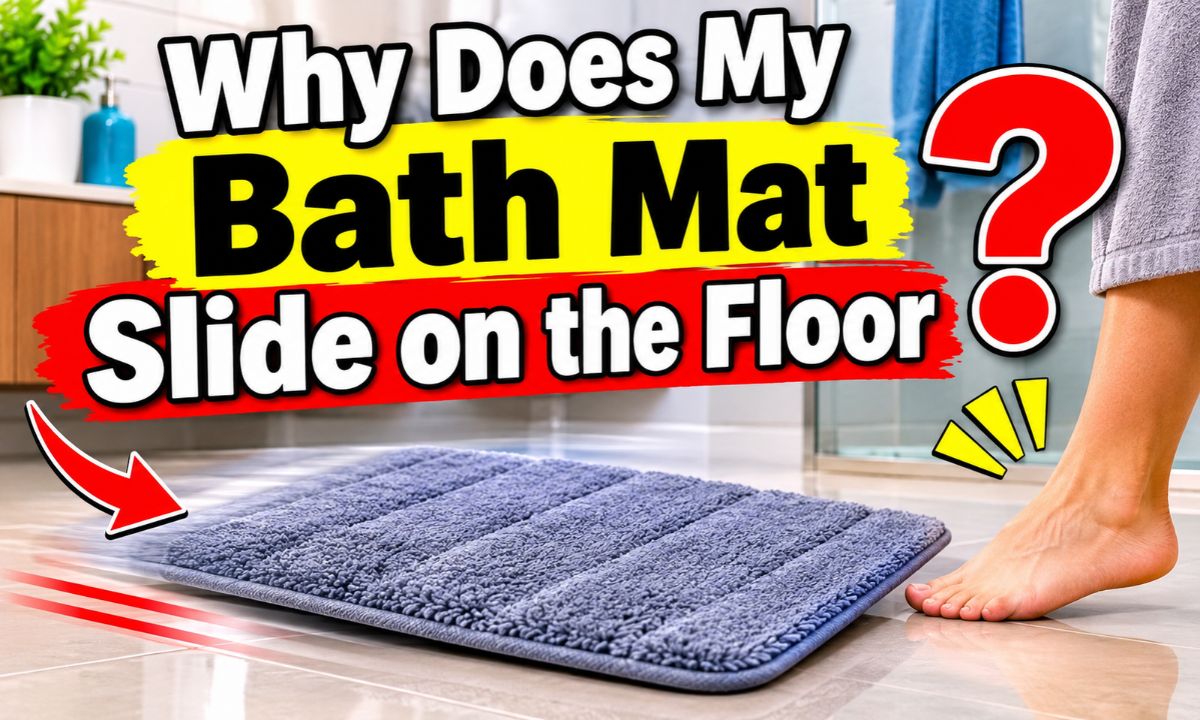
Your bath mat slides because its backing does not have enough grip on the floor. Water, soap residue, dust, worn rubber, and smooth tile can make the problem worse.
In American homes, bathroom floors often use ceramic tile, porcelain, vinyl, laminate, or natural stone. These surfaces are easy to clean, but some have very little grip for a loose bath mat. You may notice the problem when stepping out of a bathtub or shower, especially when the floor is damp.
A sliding bath mat is more than a small annoyance. It can bunch up, move under your feet, or create a raised edge that catches your toes. Older adults and people with balance problems may face an even greater risk. A CDC-indexed study of fall injuries among adults 65 and older found that bathrooms were a common location for injuries linked to rugs and carpets.
The good news is that you can often fix the problem without buying a new mat. Start by checking the floor and the underside of your mat. Clean both surfaces, let them dry, and inspect the backing. If the mat still moves, a suitable non-slip pad or a replacement mat may be a better choice.
The right solution depends on your floor type, the mat’s backing, and how much moisture collects in the area. A rubber–backed mat may work well on some tile floors but may not suit every vinyl or finished floor. This guide explains how to find the cause and choose a safe fix.
Your bath mat slides when the contact between its underside and the floor cannot resist the sideways force of your feet. A mat needs enough friction to stay in place when you walk across it. If the backing is smooth or the floor has a film of water, that grip can become weak.
Think of the backing as the sole of a shoe. A shoe with a worn, smooth sole can slide on a wet surface. A bath mat can behave in much the same way, even when the top feels soft and thick.
Several problems can cause this. Some are easy to fix with cleaning, while others mean the mat or its backing needs replacement.
Source: rosenberryrooms.com
Smooth bathroom flooring
Glazed ceramic and porcelain tiles have smooth surfaces. A fabric mat without a suitable grip layer may move easily across them.
Water underneath the mat
Water can collect between the floor and the backing. This makes it harder for the two surfaces to maintain stable contact.
Dirty or worn backing
Dust, hair, soap, and detergent residue can cover the grip surface. Older rubber or latex backing may also lose its texture.
Lightweight construction
A thin mat may shift when your feet push against it. Low weight alone is not always the cause, but it can make a weak backing problem more noticeable.
Incorrect floor compatibility
A backing that works on ceramic tile may react poorly with certain vinyl, laminate, or finished wood floors. Always check the flooring and mat instructions.
How the Floor Surface Affects Grip
Not every bathroom floor offers the same level of traction. Smooth glazed tile can let a loose fabric mat slide, while some textured tiles provide more resistance. Vinyl floors can also be smooth, but their surface finishes may react with certain rubber or plastic backings.
The floor’s condition matters, too. A layer of soap, body oil, cleaning product, or dust can reduce contact between the mat and the floor. Even a floor that looks clean may have a thin residue that affects grip.
Ceramic and porcelain tile
Check for a smooth glaze, water, and soap film. Use a backing or pad approved for the specific tile surface.
Vinyl flooring
Check the flooring manufacturer’s advice before using rubber-backed mats. Some backing materials can discolor or mark certain vinyl finishes.
Laminate flooring
Avoid trapping water beneath a mat. Choose a compatible backing and lift the mat regularly so the floor can dry.
Natural stone
Use products approved for the stone and its finish. Avoid unapproved adhesives and harsh cleaners.
2. Common Reasons Your Non-Slip Bath Mat Still Moves
A bath mat can slide even when its label says non-slip. That label does not mean the mat will grip every floor in every condition. The backing needs a clean, dry, suitable surface to work as intended.
If your mat used to stay in place but now moves, check for changes in its backing, cleaning routine, or floor condition. You may find that one small issue is affecting the whole mat.
Source: ar.pinterest.com
Water trapped underneath
Shower splashes and wet feet can leave water beneath the mat. If the water remains there, the backing may lose its grip.
Soap and shampoo residue
Bath products can spread across the floor and collect under the mat. This film may make both surfaces slippery.
Fabric softener buildup
Some laundry products can leave a coating on fabric and its backing. Follow the care label and avoid unapproved treatments.
Old or damaged rubber
Rubberized backing can become brittle, cracked, smooth, or sticky. These changes may reduce its ability to hold the floor.
Poor placement
A mat placed on an uneven transition, curled grout edge, or floor joint may not lie flat.
Why Does My Bath Mat Slide Even When the Floor Looks Dry?
A dry-looking floor is not always a clean floor. Soap scum, conditioner, body oil, and detergent residue can leave a thin film that you may not notice at first glance. This film can reduce the contact between the backing and the floor.
Lift the mat and run your hand over the floor and its underside. Look for a slippery feel, lint, hair, dust, or a dull coating. Clean the surfaces with products approved for the flooring and mat, then let them dry completely before testing the mat again.
Check the underside
Look for dirt, lint, hair, and areas where the grip texture has disappeared.
Check the floor
Look for cleaner residue, soap film, and moisture beneath the mat.
Check the corners
A curled or raised corner can point to backing damage or a mat that no longer lies flat.
Can Washing Make a Bath Mat More Slippery?
Yes, an incorrect washing or drying method can damage some bath mat backings. Excess heat may affect certain rubber, latex, or plastic materials. Harsh products and repeated washing can also wear down some grip surfaces.
Read the care label before putting a bath mat in the washing machine or dryer. Use the recommended water temperature, detergent, and drying method. If the backing has started peeling or cracking, washing will not restore the material to its original condition.
Follow the care label
Use only the washing and drying methods approved by the manufacturer.
Avoid unapproved fabric treatments
Do not add fabric softener or grip sprays unless the manufacturer allows them.
Inspect after washing
Check whether the backing remains flexible, even, and free from cracks or peeling.
3. How to Stop Your Bath Mat From Sliding
The best way to stop a bath mat from sliding is to clean the contact surfaces, inspect the backing, and use a compatible grip solution if needed. Start with the simplest checks before buying extra products.
You will need a clean cloth, a suitable floor cleaner, and enough time for the floor and mat to dry. Check the care instructions for both surfaces before using any cleaner or grip product.
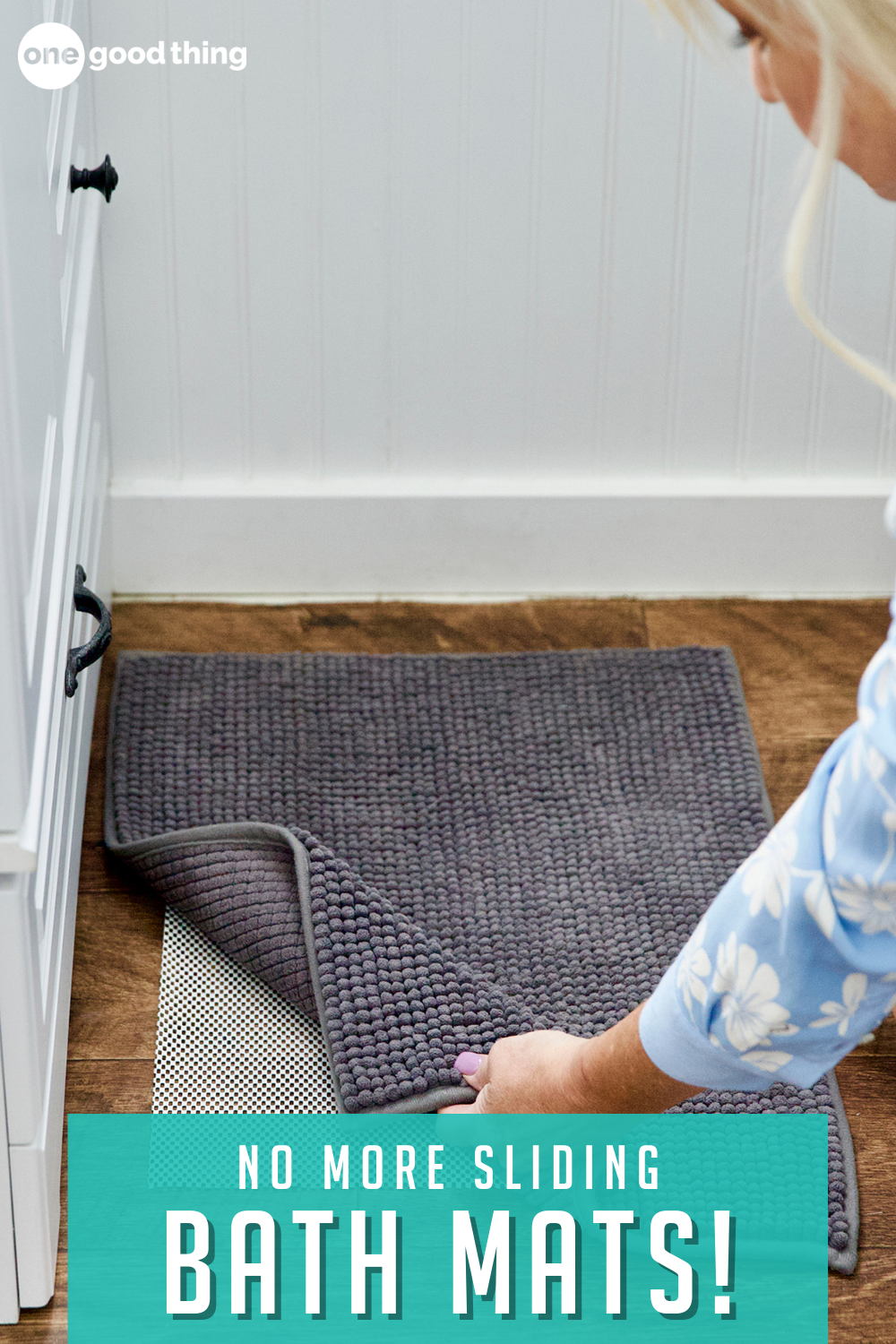
Source: www.onegoodthingbyjillee.com
What you need
A soft cloth, a floor-safe cleaning product, a clean towel, and a compatible non-slip pad if the mat needs extra support.
Before you begin
Move the mat away from the shower exit and keep people from walking over the wet or cleaned area.
Step 1: Lift the Mat and Check the Floor
Remove the bath mat and inspect the entire area beneath it. Look for puddles, damp patches, soap residue, hair, dust, and other debris. Check whether the mat has been covering an area that stays wet long after a shower.
If you find standing water, wipe it up before doing anything else. Do not place the mat back over a damp area and assume its backing will hold.
Look for moisture
Check the center, corners, and edges of the area beneath the mat.
Check for residue
Look for a slippery or sticky film left by soap and cleaning products.
Step 2: Clean the Bathroom Floor
Clean the floor with a product that is safe for its material. Follow the cleaner’s directions, including any rinsing instructions. Do not mix cleaning products, especially bleach and acidic cleaners.
Remove leftover cleaner if the label requires rinsing. Then dry the area with a clean towel and allow any remaining moisture to evaporate. A clean, dry floor gives the mat a better chance of gripping.
Use the right cleaner
Match the cleaning product to your tile, vinyl, laminate, or stone floor.
Remove cleaner residue
Follow the product directions so a leftover film does not affect the mat.
Allow full drying
Do not put the mat back while the floor is still damp.
Step 3: Clean and Inspect the Mat Backing
Turn the mat over and check its backing in good light. If it is dusty or dirty, clean it according to the care label. Some mats allow gentle washing, while others require a simple wipe with a damp cloth.
Pay close attention to the areas where your feet usually land. If these areas look smooth or have lost their original texture, the backing may no longer provide enough grip. Cracks, peeling, sticky patches, and loose rubber are also signs of damage.
Healthy backing
The backing remains intact, even, and in good condition.
Worn backing
The surface looks smooth, cracked, hardened, or patchy.
Damaged backing
The rubber or coating peels away, flakes, or feels unusually sticky.
Step 4: Let Everything Dry Completely
Dry the mat and floor before putting them together again. Hang the mat in a suitable place if its care instructions allow it. Make sure the underside is dry, not just the soft top fabric.
This step also helps prevent moisture from remaining trapped between the mat and floor. If your bathroom has poor airflow, use an exhaust fan or open a window when appropriate.
Dry both surfaces
Check the mat backing and floor separately before replacing the mat.
Improve airflow
Give the mat room to dry instead of leaving it flat on the bathroom floor.
Step 5: Add a Compatible Non-Slip Rug Pad
If your mat is still in good condition but continues to move, consider a non-slip rug pad. Choose one designed for hard floors and suitable for bathroom conditions. Check that the pad is compatible with both the floor finish and the mat backing.
Trim the pad according to its instructions so it does not extend beyond the mat. A pad that sticks out can create another edge to catch your feet. Follow the manufacturer’s installation directions and keep the pad clean and dry.
Some pads are designed for carpets rather than hard floors. Others are not suitable for damp rooms or certain floor finishes. Do not assume that any mesh or rubber pad will work safely in every bathroom.
Choose the correct type
Look for a product labeled for your exact floor surface and intended use.
Check the size
The pad should fit under the mat without exposed edges.
Follow care instructions
Lift and clean the pad as directed so moisture and dirt do not collect underneath.
Step 6: Place the Mat on a Flat Area
Place the mat on a level section of the floor where it can lie flat. Avoid putting an edge across an uneven transition or allowing a corner to fold beneath a door.
Keep the mat close enough to the shower or bathtub to serve its purpose, but do not place it where the door, toilet, or other fixtures can catch it. Leave a clear path for walking.
Flatten all corners
Make sure the mat lies evenly without folds or raised edges.
Check door clearance
Make sure the bathroom door does not push or catch the mat.
Keep the walking path clear
Avoid placing the mat where it creates a new obstacle.
Step 7: Check Whether the Mat Stays in Place
Once the surfaces are dry and the mat is correctly placed, gently nudge it from different sides. Check whether the mat or pad moves independently. This is a basic installation check, not proof that the mat is safe during wet use.
If it shifts, do not rely on it when stepping out of the shower. Try a compatible replacement pad or choose a mat with suitable built-in backing. Do not keep adding layers of tape to a combination that does not hold.
Signs of success
The mat lies flat, its corners stay down, and neither the mat nor pad shifts during a gentle hand check.
If it still moves
Stop using it in the shower exit area until you find a suitable replacement or compatible grip solution.
4. Which Non-Slip Solution Should You Choose?
The right solution depends on the condition of your mat and the material of your bathroom floor. A new mat with suitable backing may be enough for a smooth tile floor. An existing mat may only need a compatible pad or a better cleaning routine.
Avoid choosing a grip product based only on its label. Check the intended floor type, moisture limitations, installation directions, and cleaning needs before using it.
Source: mobilitywithease.com
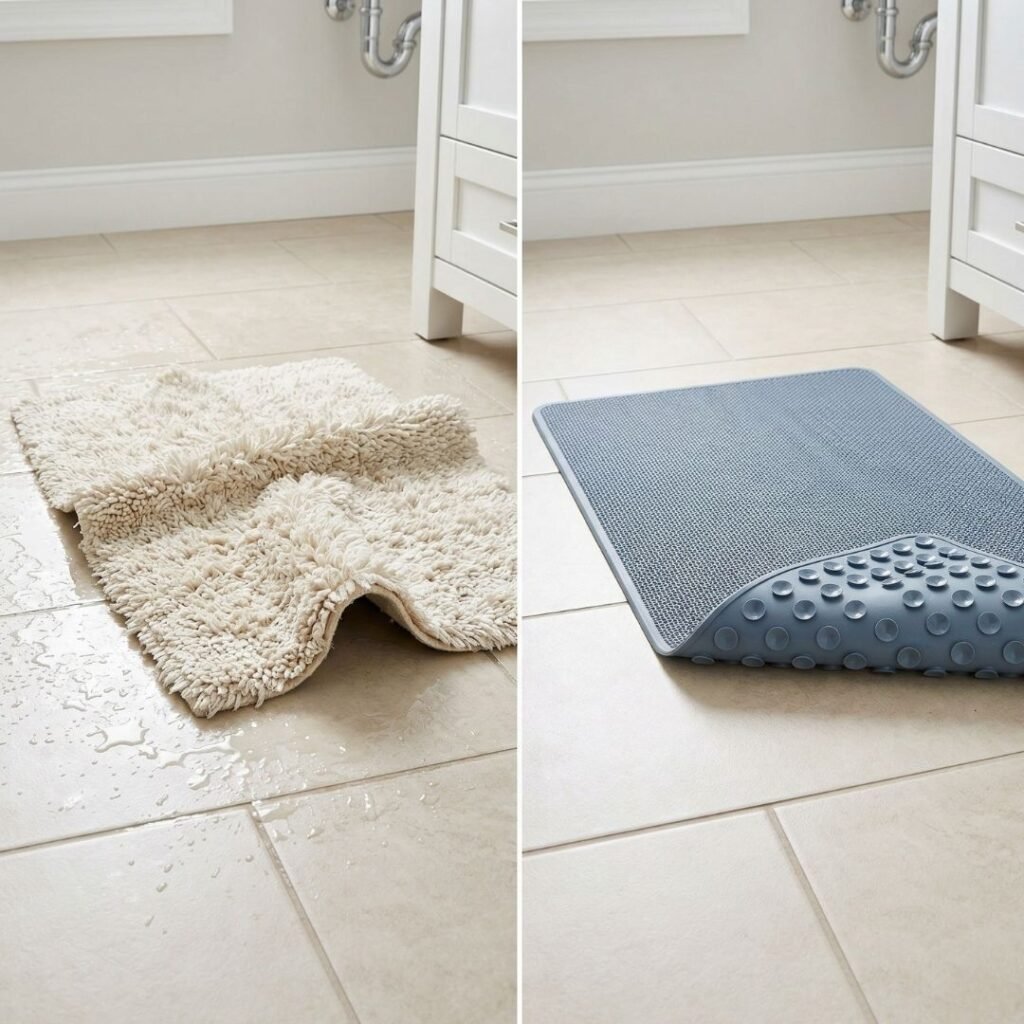
Built-in non-slip backing
A mat with an intact textured backing can be convenient because it does not need a separate pad. Confirm that the backing suits your floor.
Non-slip rug pad
A separate pad may help an existing mat stay in place. It must be compatible with the mat, floor, and bathroom environment.
Floor-safe corner grippers
Some grippers can help with small mats, but their adhesive may leave residue or affect certain floor finishes.
Replacement bath mat
A new mat is often the better option when the original backing is cracked, peeling, sticky, or worn smooth.
Is a Rubber-Backed Bath Mat Better?
A rubber-backed bath mat can provide useful grip on a compatible floor. The textured underside helps create friction and can reduce movement compared with a plain fabric backing.
However, rubber is not automatically safe for every floor. Certain rubber or plastic backings may stain or discolor some vinyl and finished surfaces. Check both the mat manufacturer’s instructions and the flooring manufacturer’s guidance before use.
Also, rubber backing needs care. Dirt, moisture, heat, and repeated washing can affect its condition. Inspect it regularly rather than assuming it will remain non-slip forever.
Main benefit
Built-in grip can reduce the need for a separate underlay.
Main limitation
Material compatibility and backing wear can affect performance.
Are Non-Slip Rug Pads Better Than Adhesive Tape?
A suitable non-slip rug pad may be a better option for an existing bath mat because it can provide support across a larger area. It also avoids placing adhesive directly on the floor when the pad relies on friction instead.
Adhesive rug tape and corner grippers can help with some small rugs, but bathroom moisture may affect the adhesive. Some products can leave residue or damage a floor finish when removed.
Neither option is suitable for every bathroom. Follow the product directions and do not use ordinary carpet tape or household glue unless the manufacturer specifically approves it for your flooring and intended use.
Choose a rug pad
When you need broader support and have confirmed that the pad suits the floor and mat.
Consider corner grippers
When the problem is limited to corners and the product is approved for the floor.
Replace the mat
When the backing itself has deteriorated or no longer stays flat.
5. How to Prevent Your Bath Mat From Sliding Again
Regular cleaning and proper drying can help prevent a bath mat from becoming slippery again. You do not need an elaborate routine. A few simple checks after showers and laundry days can help you catch problems early.
The main goal is to keep the backing in good condition and stop moisture or residue from building up beneath it.
Source: bestbathrugs.com
Lift the mat after use
Allow air to reach the floor and the underside instead of leaving moisture trapped beneath the mat.
Clean the floor regularly
Remove soap film, dust, hair, and cleaning product residue with a floor-safe method.
Wash the mat correctly
Follow the care label to avoid unnecessary damage to the backing.
Check the grip surface
Look for cracks, smooth patches, peeling, and unusual stickiness.
Dry the mat fully
Do not return a wet mat to the floor if it prevents the backing from making stable contact.
Check the rug pad
Lift it from time to time and clean or replace it according to its instructions.
Create a Simple Weekly Cleaning Routine
A weekly check can help you spot problems before the mat starts moving. Lift the mat, inspect the floor, and clean away any visible residue. If the bathroom gets heavy daily use, you may need to clean the area more often.
Wash the mat when needed and according to its care label. Give it enough time to dry before putting it back. If the backing begins to break down, replace the mat rather than trying to repair damaged material.
After showering
Remove excess water and lift the mat when practical so the floor can dry.
During weekly cleaning
Inspect the floor and mat backing for dirt, soap residue, and wear.
After laundering
Check the backing before returning the mat to the bathroom.
Improve Bathroom Airflow
Poor airflow can keep a bath mat damp for longer. A damp underside can encourage residue and odor buildup and may affect the mat’s grip. Use an exhaust fan during and after showers when available.
If possible, hang the mat over a suitable drying rack between uses. Avoid leaving it folded or bunched on the floor. Make sure it is fully dry before placing it back.
Use the exhaust fan
Help remove moisture from the room after a shower.
Hang the mat
Allow both sides to dry when the manufacturer’s care instructions permit it.
Avoid damp storage
Do not fold or store the mat while it is wet.
6. When Should You Replace a Sliding Bath Mat?
Replace your bath mat when its backing is damaged or when it continues to slide after proper cleaning and drying. A grip surface that has cracked, peeled, or worn smooth may no longer hold the floor reliably.
Adding another pad beneath a damaged mat may hide the problem rather than solve it. If loose pieces of backing continue to shed, the mat may also leave residue on the floor.
You do not need to replace every bath mat after a fixed number of months. Its condition, care history, and ability to stay in place are more useful signs than age alone.
Source: www.onegoodthingbyjillee.com
Cracked backing
Visible cracks may mean the material has lost its original structure.
Peeling rubber
Loose or flaking pieces can reduce grip and leave debris behind.
Sticky surface
A backing that remains sticky after proper cleaning may be deteriorating.
Persistent movement
If the mat still shifts on a clean, dry, compatible floor, replacement may be the safest option.
Raised or curled edges
A mat that no longer lies flat can create a trip hazard.
Should You Keep Using a Bath Mat That Moves Only a Little?
No. Even a small amount of movement can be a problem when you step onto the mat with wet feet. A mat can shift farther when your weight lands near an edge or when you turn to leave the shower.
Stop using a mat in that location until you have corrected the problem. If cleaning and a compatible grip solution do not work, choose a replacement that stays flat and is approved for your floor.
Do not ignore small movements
A mat that moves slightly during a hand check should not be trusted during a wet shower exit.
Remove damaged mats
Replace mats with badly worn backing or raised edges.
7. Why a Sliding Bath Mat Is a Bathroom Safety Concern
A sliding bath mat can increase the chance of a slip or fall because it may move when someone expects a firm surface. This is especially concerning near a shower or bathtub, where people may already be stepping onto a wet floor.
A study indexed by the CDC examined fall injuries associated with rugs and carpets among adults aged 65 and older. It identified bathrooms, wet rugs, and loose floor coverings as important concerns. The findings support checking and securing loose rugs rather than ignoring them.
The safest choice is not always to add more grip products. For someone with poor balance or limited mobility, removing a loose floor covering may be safer than trying several layers of pads or tape.
Source: ar.pinterest.com
Keep the floor dry
Wipe up water around the shower, bathtub, and sink as soon as possible.
Remove unstable mats
Do not leave a rug in a walking path if it cannot stay securely in place.
Keep edges flat
Replace mats that curl, bunch, or create raised edges.
Improve support
Consider professionally installed grab bars and other suitable bathroom safety equipment when needed.
Ask for a safety assessment
An occupational therapist can help assess bathroom risks for someone with a history of falls or difficulty moving safely.
What If an Older Adult Uses the Bathroom?
A loose bath mat can be particularly concerning for an older adult or anyone who has difficulty balancing. The bathroom often requires several movements, such as stepping over a tub edge, turning, and reaching for a towel.
If someone has fallen or feels unsteady, consider removing loose rugs from the walking path. A suitable non-slip floor surface, grab bars, better lighting, and a shower seat may also help. A health professional or occupational therapist can recommend changes based on the person’s needs.
Do not rely on a bath mat as a substitute for grab bars or other support equipment. A rug provides a surface underfoot, not a secure handhold.
Remove loose rugs
Clear unstable floor coverings from walking areas.
Add suitable support
Have grab bars installed correctly where support is needed.
Improve lighting
Make sure the bathroom and path to it are well lit.
Get professional advice
Seek an occupational therapy home safety assessment when falls or mobility problems are a concern.
Remember: A Bath Mat Outside the Shower Is Different From a Shower Mat
A fabric bath rug placed outside the bathtub or shower is different from a mat designed to sit inside a tub or shower. They have different uses and may need different safety features.
An inside-the-tub mat should be designed for that wet environment and used according to its instructions. For example, suction cups need a suitable smooth surface to hold properly. Do not assume that a fabric bath rug or an ordinary floor rug is safe inside a shower.
Keep these two products separate when shopping or troubleshooting. A rug pad designed for a dry room is not a substitute for a properly designed shower mat.
Outside the shower
Choose a stable floor mat with backing approved for your floor surface.
Inside the shower
Use a product specifically designed for the tub or shower surface.
Check the surface
Follow the product instructions for cleaning, placement, and inspection.
8. Common Mistakes to Avoid When Fixing a Sliding Bath Mat
Some quick fixes can make the problem worse. The most common mistake is adding a grip product without checking why the original mat moves. A damaged backing or wet floor will not become reliable simply because another layer has been added.
Take time to check the floor material, product instructions, and condition of the mat. A simple fix is useful only when it works with the surfaces involved.
Source: mobilitywithease.com
Putting the mat back on a wet floor
Moisture beneath the backing can reduce grip. Always dry the floor before replacing the mat.
Using any rubber pad
Not every rubber pad is safe for vinyl, laminate, or finished flooring. Check compatibility first.
Using household glue
Glue can damage the floor, leave a difficult residue, and create an uneven surface.
Using ordinary carpet tape
Some tape products are not designed for bathroom moisture or your specific floor finish.
Ignoring damaged backing
A cracked or peeling backing may need replacement rather than another layer of grip material.
Relying only on a hand test
A gentle hand check is useful for finding movement, but it cannot guarantee safe performance during wet use.
Why You Should Not Use a Heavy Bath Mat as the Only Fix
A heavier bath mat may move less than a thin one in some situations, but weight does not guarantee grip. If the underside is smooth or the floor is wet, even a thick mat can slide.
Instead of choosing a mat by weight alone, check the backing material, floor compatibility, construction, and care instructions. A stable backing is more useful than extra thickness when the main problem is poor contact with the floor.
Look for an intact, suitable grip surface rather than relying on the mat’s weight.
Check the floor
Clean and dry the contact area before deciding that the mat itself is the problem.
Frequently Asked Questions
Q
Why does my bath mat slide on a tile floor?
Your bath mat may slide on tile because the floor is smooth and the backing does not provide enough friction. Water, soap residue, dust, and worn rubber can make the problem worse.
Clean and dry the tile and mat backing first. If the mat still moves, consider a compatible non-slip rug pad or a replacement mat designed for your specific floor.
Q
How can I stop my bath mat from sliding without buying a new one?
Start by removing the mat and cleaning the floor and backing. Let both surfaces dry fully, then inspect the backing for damage.
If the mat is still in good condition, try a non-slip pad designed for your floor and mat. Make sure the pad fits underneath without exposed edges and follow its installation instructions.
Q
Does a rubber-backed bath mat stop slipping?
A rubber-backed mat can help reduce slipping when its backing is intact and compatible with the floor. It can provide more grip than a plain fabric backing on suitable surfaces.
However, rubber backing can wear out and may affect certain vinyl or finished floors. Check the flooring manufacturer’s advice before using it.
Q
Why does my bath mat slide after washing?
Your bath mat may slide after washing because detergent or fabric softener residue remains on the backing. The washing or drying process may also have damaged its grip material.
Check the care label, clean the backing as directed, and let it dry completely. If the backing is cracked, peeling, or smooth, replace the mat.
Q
Can I use double-sided tape under my bath mat?
You can use a suitable floor-safe rug tape only if its manufacturer approves it for your flooring and bathroom conditions. Ordinary carpet tape may not tolerate moisture and can leave adhesive residue.
Check the floor manufacturer’s recommendations before applying adhesive. A compatible non-slip pad may be a better option when you want to avoid sticking material directly to the floor.
Q
Why does my bath mat slide even with a non-slip backing?
A non-slip backing cannot work well when water, soap film, dust, or hair sits between it and the floor. The backing may also have lost its grip after repeated washing or normal wear.
Lift the mat, clean both surfaces, and inspect the backing. If the mat continues to move after everything is dry, it may need a compatible pad or replacement.
Q
Should I put a rug pad under a bathroom mat?
A rug pad can help keep a bathroom mat in place, but it must be suitable for the floor type, mat backing, and moisture conditions. A pad designed for a dry living room may not be appropriate for a bathroom.
Choose a product with clear compatibility instructions. Keep it clean, lift it regularly, and replace it if it no longer stays in place.
Q
When should I replace a non-slip bath mat?
Replace your bath mat when the backing cracks, peels, becomes sticky, or loses its grip. Also replace it if the corners curl or it continues to slide after cleaning and drying.
There is no single replacement schedule for every mat. Check its condition regularly and follow the manufacturer’s care guidance.
✦ Wrapping Up
Conclusion
If you have been wondering why your bath mat slides on the floor, the most likely reason is poor grip between the backing and the bathroom surface. Smooth tile, water, soap residue, dirt, and worn backing can all contribute to the problem.
Start with a simple check. Lift the mat, clean the floor, inspect the underside, and let both surfaces dry. If the backing remains in good condition, a compatible non-slip pad may help. If the mat is damaged or continues to move, replacing it is a better choice.
Most importantly, do not ignore a loose bath mat near your bathtub or shower. A mat that moves underfoot can create a fall risk. Keep the floor dry, check the backing regularly, and choose a product that suits your bathroom flooring.
💡 Key Takeaway
Today, lift your bath mat and check its underside and the floor beneath it. Clean and dry both surfaces, inspect the backing, and use a compatible non-slip pad or replace the mat if it still moves. Never rely on a sliding mat when stepping out of the shower.