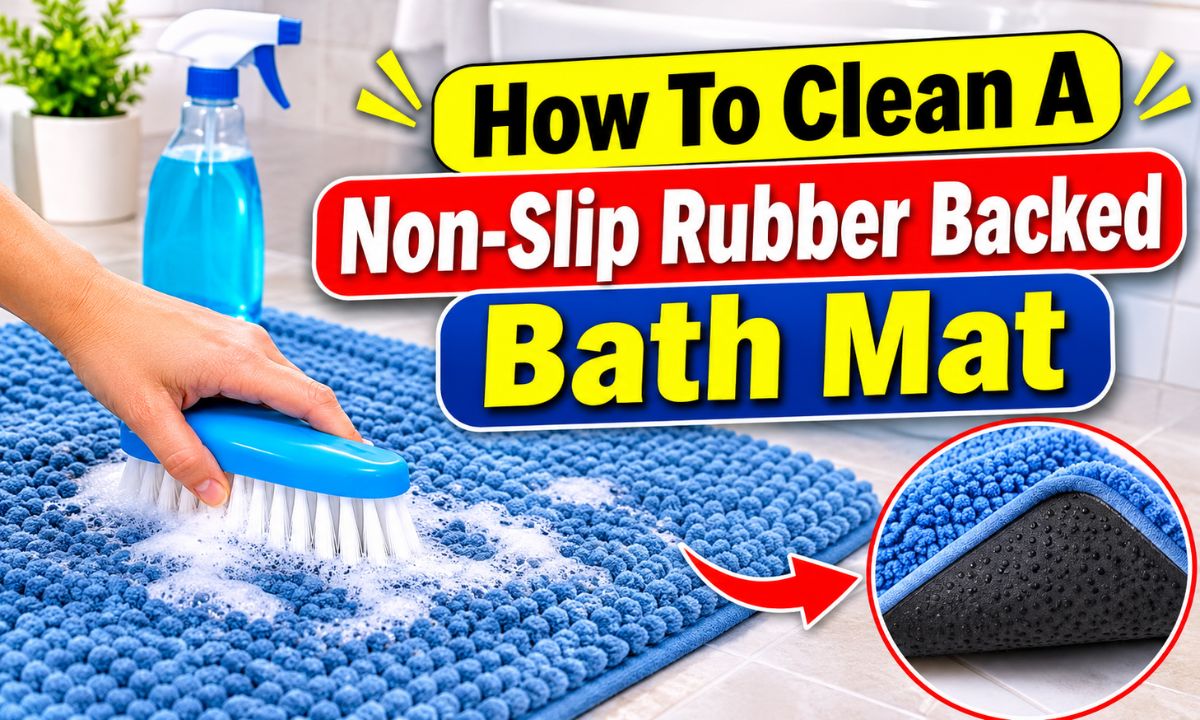
Clean a non-slip rubber backed bath mat with cool water, mild detergent, and a soft brush. Rinse it well and air-dry it fully before use.
In American homes, bath mats sit beside showers, bathtubs, and bathroom sinks. They catch water from wet feet and help keep bathroom floors dry. But the same damp setting can leave a mat with soap residue, body oils, dirt, and a musty smell.
A rubber-backed bath mat needs a little extra care. Its cloth top can often handle a gentle wash, but its non-slip backing may weaken when exposed to high heat, harsh cleaners, or rough scrubbing. The goal is to clean both sides without wearing away the material that helps the mat stay in place.
The safest starting point is to check the care label and inspect the backing. If the manufacturer allows machine washing, use the listed settings and a mild detergent. If the label is missing, hand washing with cool water is a cautious option. Never assume that every rubber-backed mat can go in the washer or dryer.
This guide explains how to remove everyday dirt, treat stains, deal with mildew, and dry the mat properly. It also covers what to do when the backing starts to peel or crumble. With a simple routine, you can keep your bathroom mat cleaner while helping it last longer.
A rubber-backed bath mat has two main parts. The top layer is usually made from cotton, polyester, microfiber, chenille, or a blend of fibers. The bottom layer has a rubber or latex coating that helps reduce movement on a bathroom floor.
These two layers do different jobs, so they do not always respond to cleaning in the same way. The fabric may need washing to remove dirt and body oils. The backing needs gentle treatment to prevent cracks, peeling, and loss of grip.
Some mats use a rubber coating, while others use latex or a different non-slip material. A solid rubber bathtub mat with suction cups is also different from a fabric bathroom rug with a rubber backing. Their cleaning needs are not identical.
Source: creativehomemaking.com
Fabric top
Collects dust, hair, skin oils, soap residue, and moisture. Its cleaning needs depend on the fiber type.
Rubber or latex backing
Helps the mat grip the floor but can deteriorate when exposed to unsuitable heat or cleaning chemicals.
Stitched edges
Hold the two layers together. Loose seams can allow water and dirt to collect between the layers.
Rubber-Backed Bath Rugs vs. Suction-Cup Bath Mats
A fabric bath rug with rubber backing usually sits outside the shower or tub. Its top absorbs water, while its underside helps limit sliding. A suction-cup bath mat usually sits inside a bathtub or shower and has a molded surface with small cups underneath.
For a fabric rug, clean the cloth and backing according to the care label. For a suction-cup mat, wash the whole surface with mild soap, paying close attention to the cups and textured areas. Do not use the instructions for one type as a substitute for the other.
Fabric rubber-backed mat
Usually needs gentle fabric cleaning and careful air drying.
Solid rubber bathtub mat
Usually needs surface cleaning, rinsing, and drying with the suction-cup side exposed.
What You Need Before Cleaning
Gather your cleaning supplies before wetting the mat. Simple household items are usually enough for routine dirt and light stains. You do not need a harsh chemical or a strong scrubber to clean most washable bath mats.
Choose tools that will not scratch the fabric or break down the rubber. A soft brush or microfiber cloth gives you better control than a stiff cleaning brush. A bathtub, large basin, or clean utility sink can provide enough room for hand washing.
Source: images.victorianplumbing.co.uk
Mild liquid detergent
Choose a regular laundry detergent that is suitable for the fabric and use only a modest amount.
Cool or lukewarm water
Use water within the temperature range stated on the care label. Avoid hot water when the instructions are unavailable.
Soft-bristled brush
Helps loosen dirt without scraping the rubber coating.
Microfiber cloth or sponge
Useful for wiping the backing, edges, and small stained areas.
Clean towel
Helps press out excess water without twisting or stretching the mat.
Drying rack
Allows air to move around the mat while it dries.
Check the Care Label First
Look for the manufacturer’s washing instructions before choosing a method. The label may state whether the mat is machine washable, what water temperature to use, and whether any dryer setting is allowed.
If you cannot find a label, check the product packaging or the manufacturer’s website. Search using the brand and model name when possible. Do not treat the fabric’s washing instructions as proof that the rubber backing can handle the same process.
Machine-wash approval
Confirms whether the whole mat can safely go through a washing machine.
Water temperature
Shows the permitted temperature for the fabric and backing.
Drying instructions
Tell you whether air drying or a specific dryer setting is permitted.
Inspect the Rubber Backing
Turn the mat over and look at the entire underside. A healthy backing should remain attached and should not shed loose pieces when you touch it gently.
Look for cracks, flaking, sticky patches, missing sections, and edges that have started to separate. If the backing is already breaking down, avoid machine washing because agitation may make the damage worse.
Good condition
The backing remains attached, flexible, and free from obvious damage.
Warning signs
Cracks, peeling, powdery residue, sticky areas, or loose rubber pieces.
How to Clean a Non-Slip Rubber Backed Bath Mat by Hand
Hand washing is a useful choice when the label does not confirm machine washing or when you want more control over the cleaning process. It limits the rough movement that can damage a weak backing. It also lets you focus on dirty spots without soaking the mat for longer than needed.
Use a clean bathtub, large basin, or utility sink. Make sure the surface is free from leftover bathroom cleaner before you begin. A clean space helps prevent new dirt or chemical residue from getting onto the mat.
Source: dormouselife.com
Step 1: Remove loose dirt
Take the mat outside and shake it gently. Remove hair, lint, dust, and loose debris before adding water.
Step 2: Prepare the wash water
Fill a basin with cool or lukewarm water. Add a small amount of mild liquid detergent and stir until it spreads through the water.
Step 3: Wet the fabric
Place the mat in the water and press it gently so the fabric becomes wet. Avoid forceful twisting or folding.
Step 4: Clean the surface
Use your hands or a soft brush to work the soapy water through the fabric. Pay attention to stained areas, edges, and spots that collect dirt.
Step 5: Clean the backing
Turn the mat over and wipe the rubber side with a soft cloth. Use gentle strokes to remove dirt without scraping the coating.
Step 6: Rinse thoroughly
Drain the dirty water and rinse with fresh cool water. Keep rinsing until the water runs clear and no slippery detergent film remains.
Step 7: Remove extra water
Press the mat gently against the basin or between clean towels. Do not wring, twist, or pull the edges.
Step 8: Air-dry completely
Place the mat on a drying rack or hang it as the manufacturer permits. Allow air to reach both sides before using it again.
How Long Should You Soak the Mat?
A short soak can help loosen ordinary dirt, but long soaking is not always helpful. Water may collect between the fabric and backing, especially if the layers have loose seams or small areas of separation.
For routine cleaning, wet the mat and begin washing rather than leaving it submerged for a long time. If the manufacturer gives a soaking limit, follow it. For a mat with damaged backing, skip soaking and consider replacing it.
Light dirt
Start cleaning after the fabric is fully wet.
Stubborn dirt
Use a little extra gentle brushing rather than a long soak.
Weak backing
Avoid prolonged soaking and rough handling.
Can You Machine Wash a Rubber Backed Bath Mat?
Some rubber-backed bath mats are machine washable, but not all of them are. The manufacturer’s instructions decide whether your mat can go into a washer. A mat with a delicate coating, loose seams, or a damaged backing may need hand washing instead.
If machine washing is approved, use the specified water temperature and cycle. A gentle cycle with mild detergent is a cautious general starting point only when the label allows it. Do not assume that a cold wash makes every mat machine safe.
A rubber-backed mat can also become heavy when wet. Check the washer’s load guidance and make sure the mat does not overload the drum. If it is too large or heavy for your machine, hand wash it or use a suitable larger washer.
Source: creativehomemaking.com
Check the washer instructions
Confirm that the machine can handle the mat’s size and wet weight.
Use approved settings
Follow the care label for water temperature, cycle, spin speed, and detergent.
Avoid harsh additives
Do not add chlorine bleach or strong cleaning chemicals unless the manufacturer specifically approves them.
Check after washing
Look for peeling, cracks, or loose rubber before drying and using the mat.
What If the Care Label Is Missing?
When you cannot confirm machine-wash approval, hand washing is the more cautious choice. It avoids exposing the backing to a washer’s repeated movement and high spin forces.
You can also contact the manufacturer with the product name or model number. Ask about the approved wash method and drying temperature. This is more reliable than copying instructions from a different mat that only looks similar.
Safest general approach
Use mild detergent, cool water, gentle hand cleaning, and complete air drying.
Avoid assumptions
Do not rely on another brand’s instructions or the appearance of the rubber coating.
Should You Add Towels to the Washer?
Some washer instructions suggest balancing a washable rug with suitable laundry items. However, a rubber-backed mat may need to be washed separately, depending on its care label and the washer’s load rules.
Do not add heavy towels simply to fill the drum. Follow the machine and mat instructions, and stop if the load becomes unbalanced. Never force an oversized mat into a small washer.
Follow the mat label
Use its instructions for separate washing or compatible laundry loads.
Protect the washer
Avoid excessive wet weight and stop a cycle if the machine repeatedly becomes unbalanced.
How to Remove Stains From a Rubber Backed Bath Mat
Treat stains before washing the whole mat. The right method depends on what caused the mark and whether the stain is on the fabric or rubber side. Start with mild detergent and water because stronger chemicals may damage the backing or change the fabric color.
Test any cleaning solution on a small hidden area first. Apply it with a soft cloth, wait briefly, and check for color changes or surface damage. Stop if the material becomes sticky, faded, rough, or discolored.
Source: i.pinimg.com
Soap residue
Wipe the area with a damp microfiber cloth and a little mild detergent. Rinse well to remove the film.
Body oil and everyday grime
Apply diluted mild detergent to the fabric and gently work it in with a soft brush.
Makeup stains
Blot away loose product first. Use a fabric-safe stain treatment only after checking that it is suitable for the mat.
Mud and dirt
Allow loose dirt to dry enough to brush away, then clean the remaining mark with mild soapy water.
Unknown marks
Begin with a small amount of mild detergent and water. Avoid mixing several stain removers.
Can Baking Soda Clean a Rubber Backed Bath Mat?
Baking soda can help absorb some odors and may provide mild cleaning action, but it is not necessary for every wash. If you want to try it, test a small amount on an inconspicuous fabric area first.
Do not scrub dry baking soda aggressively into the rubber backing. Its particles can act as an abrasive when rubbed hard. Rinse away all residue before drying the mat.
Use sparingly
Try a small amount on a compatible fabric area rather than covering the entire mat.
Rinse well
Remove all powder and residue so it does not remain trapped in the fibers.
Skip it on damaged rubber
Do not scrub a backing that is already peeling or shedding.
Should You Use Vinegar?
White vinegar is sometimes used in household cleaning, but it is not a universal treatment for rubber-backed bath mats. Its effect depends on the backing material, fabric, dye, and manufacturer’s instructions.
Do not mix vinegar with chlorine bleach or any cleaner containing bleach. The combination can release dangerous chlorine gas. If the care instructions do not approve vinegar, use mild detergent and water instead.
Check compatibility
Use vinegar only when the manufacturer permits it and a spot test shows no damage.
Never mix cleaners
Keep vinegar separate from bleach and other chemical cleaning products.
How to Remove Mold and Mildew From a Bath Mat
Dark spots, a musty smell, or slimy patches can mean that a bath mat is staying wet for too long. Bathrooms often have limited airflow, and water can remain trapped in thick fabric or along the edges of a rubber-backed mat.
Start by checking whether the marks are surface dirt or signs of material damage. Cleanable surface grime may respond to gentle washing. Mold that has spread into the layers, or a backing that is breaking down, may not be fully removable with household cleaning.
Wear household cleaning gloves if you are handling a visibly moldy mat. Avoid shaking a moldy mat indoors because this can spread loose particles. If the mat has extensive growth, a persistent odor, or damaged layers, replacing it is often more practical than trying repeated chemical treatments.
Source: upstairsdownstairscleaning.com
Step 1: Move it carefully
Take the mat to a well-ventilated cleaning area. Avoid vigorous shaking or brushing that can spread moldy debris.
Step 2: Check the backing
Look for cracks, peeling, sticky areas, and mold between the layers. Do not machine wash a deteriorating mat.
Step 3: Wash gently
If the mat is in sound condition, clean it with mild detergent and water using the approved hand-wash or machine-wash method.
Step 4: Rinse fully
Remove dirt and detergent from both the fabric and the underside.
Step 5: Dry completely
Place it where air can reach both sides. Do not return a damp mat to the floor.
When Should You Replace a Moldy Bath Mat?
A mat should be replaced when the rubber backing has started to crumble, peel, or lose its grip. These are signs that the material may no longer perform as intended.
Replacement is also worth considering when mold has penetrated the backing or the mat continues to smell musty after proper cleaning and full drying. A clean-looking top does not prove that the layers underneath are free from trapped moisture or damage.
Replace for backing damage
Loose rubber particles, deep cracks, or large peeling sections mean the mat may not stay in place.
Replace for persistent growth
Extensive or recurring mold that remains after appropriate cleaning may be difficult to remove completely.
Replace for lasting odor
A persistent musty smell can indicate moisture or contamination that routine surface cleaning has not resolved.
Why Does the Mat Smell Musty After Washing?
A musty smell after washing often means the mat has not dried fully. Thick fabric, folded edges, and the space between the top layer and backing can hold moisture.
Wash the mat again only if its condition and care instructions allow it. Rinse away excess detergent, then spread it out so air can reach both sides. If the smell returns despite complete drying, inspect the backing and seams for trapped moisture or deterioration.
Improve airflow
Use a drying rack instead of leaving the mat flat on a damp bathroom floor.
Check detergent residue
Use the correct detergent amount and rinse until no slippery film remains.
Inspect hidden layers
Look for damp seams, separation, and mold beneath the fabric.
How to Dry a Rubber Backed Bath Mat Without Damage
Drying is just as important as washing. A clean mat that stays damp can develop odors and mildew, while excessive heat can damage some rubber and latex coatings. The best method is to follow the product’s drying instructions and allow the mat to dry completely before use.
Air drying is a cautious choice when the label is missing or does not clearly approve a dryer. A drying rack is useful because it allows air to reach the top and bottom. If you hang the mat, support its weight so the wet fabric does not stretch or pull at the seams.
Source: images.victorianplumbing.co.uk
Remove excess water
Press the mat gently with a clean towel. Avoid twisting or wringing the rubber backing.
Spread it out
Place it over a rack or another clean surface that allows airflow around the mat.
Keep it away from direct heat
Avoid radiators, hot pipes, and other intense heat sources unless the manufacturer specifically permits them.
Check both sides
Feel the fabric, seams, and backing before putting the mat back on the floor.
Can You Put a Rubber Backed Bath Mat in the Dryer?
Do not put a rubber-backed bath mat in the dryer unless its manufacturer clearly permits machine drying and gives an approved heat setting. Heat can cause some rubber or latex coatings to crack, harden, peel, or lose their bond with the fabric.
When the instructions are missing, air dry the mat instead. A low dryer setting is not automatically safe for every backing material. The safest choice depends on the exact construction of the mat.
Follow the label
Use a dryer only when the manufacturer specifically allows it.
Avoid high heat
High temperatures can damage rubber and latex coatings.
Use air drying when uncertain
A well-ventilated rack is a cautious alternative when drying instructions are unclear.
How Do You Know the Mat Is Fully Dry?
Check the thickest part of the fabric, the corners, the stitched edges, and the underside. These areas may remain damp after the top feels dry.
If the mat feels cool and moist, has a damp smell, or releases moisture when gently pressed with a dry towel, give it more time. Do not place it on the bathroom floor until all parts are dry.
Dry fabric
The top feels dry throughout, including thick and folded areas.
Dry backing
No moisture remains along the rubber surface or seams.
No damp odor
The mat does not have a lingering wet or musty smell.
How Often Should You Clean a Rubber Backed Bath Mat?
Wash a frequently used bath mat about once a week or as needed, but adjust the schedule to the bathroom’s use and drying conditions. A mat used by several people each day may collect more moisture and dirt than one used in a guest bathroom.
The most useful sign is the mat’s condition between washes. If it stays damp, develops a smell, or shows visible grime, clean it sooner and improve its drying routine. A mat that dries fully after each use may need less frequent washing.
Source: tipsbulletin.com
Busy family bathroom
Check it often and consider weekly cleaning when it receives daily use from several people.
Guest bathroom
Clean it after regular use and whenever it becomes dirty or damp for long periods.
Humid bathroom
Allow extra drying time and clean sooner if odors or visible buildup appear.
Low-use bathroom
Use the mat’s condition and care label to decide when cleaning is needed.
A Simple Weekly Maintenance Routine
You do not need to wait for a full wash to care for the mat. Small habits can reduce the dirt and moisture that build up between cleanings.
After each shower, lift the mat from the floor and let air move around it. Once a week, inspect the top and backing, remove loose hair, and wash it if needed.
After each use
Hang or spread the mat so it can dry.
During the week
Remove loose hair and check for wet spots, dirt, or odor.
Weekly or as needed
Wash according to the care label and inspect the backing afterward.
Before reuse
Confirm that the mat is fully dry and still grips the floor.
Common Cleaning Mistakes That Can Damage the Backing
A bath mat can look sturdy but still have a delicate backing. Some cleaning habits remove dirt while slowly weakening the coating or the bond between the two layers. Avoid these mistakes to protect the mat and reduce the chance of slipping.
Source: creativehomemaking.com
Using hot water without approval
High temperatures may damage some rubber and latex coatings. Follow the product’s water-temperature instructions.
Using a hot dryer
Heat can cause backing materials to crack, harden, or peel. Air dry when dryer use is not approved.
Scrubbing with a hard brush
A stiff brush or abrasive pad may wear the fabric and damage the coating. Use a soft brush instead.
Adding too much detergent
Excess soap can remain trapped in the fibers and leave a slippery film. Follow the detergent directions.
Using chlorine bleach
Bleach can discolor fabric and damage some backing materials. Use it only if the manufacturer specifically approves the product and method.
Mixing cleaning chemicals
Never combine bleach with vinegar, ammonia, or other cleaners. Dangerous gases or reactions may result.
Putting a wet mat back on the floor
Trapped moisture can encourage odor and mildew. Wait until both sides are completely dry.
Ignoring loose rubber
A backing that sheds or peels may no longer hold the mat securely. Stop using a damaged mat.
Why Fabric Softener Is Usually Unnecessary
Fabric softener can leave a coating on textile fibers. That residue may reduce the fabric’s ability to absorb water and can make a bath mat feel coated or less fresh.
For routine cleaning, a suitable mild detergent and a thorough rinse are usually enough. Check the manufacturer’s instructions before adding any laundry treatment.
Skip unnecessary additives
Keep the wash routine simple unless the product instructions recommend another treatment.
Rinse thoroughly
Remove detergent residue before drying.
What to Do When Your Bath Mat Still Looks Dirty
If the mat still looks dirty after washing, identify the problem before repeating the cleaning process. A remaining stain, detergent film, damaged backing, and embedded mold need different responses. Repeating a harsh wash may cause more harm than good.
Start with a fresh inspection under good light. Check the fabric, seams, and rubber surface separately. Then choose the least aggressive method that fits the problem.
Source: dormouselife.com
The fabric still feels greasy
Try another gentle wash with the correct amount of mild detergent, if the care label permits it.
The mat feels slippery
Rinse again with clean water to remove possible soap residue. Check the backing for damage before reuse.
Dark spots remain
Determine whether they are surface stains or possible mold. Do not assume that stronger bleach will solve the problem.
The backing feels sticky
Stop cleaning and inspect the coating. Stickiness may indicate material deterioration.
The mat smells after drying
Check hidden seams and the underside for moisture, trapped dirt, or deterioration.
When Cleaning Is No Longer Enough
Cleaning cannot restore rubber that has broken down. If the coating has separated from the fabric, has deep cracks, or leaves rubber crumbs behind, replacing the mat is the sensible option.
The same applies when the mat repeatedly slides on a clean, dry floor. A non-slip label does not guarantee that an old or damaged mat will continue to grip. Do not rely on it until its condition has been checked.
Stop using a damaged mat
Do not place it on a wet floor if its backing no longer grips reliably.
Protect the washer
Do not machine wash a mat that sheds loose rubber or has peeling layers.
Choose a replacement carefully
Look for clear care instructions, suitable floor compatibility, and a backing that remains in good condition.
How to Keep Your Bath Mat Clean Between Washes
The easiest way to reduce dirt and mildew is to stop the mat from staying wet all day. A bath mat that dries between uses is less likely to develop a persistent damp smell. Good airflow also helps reduce the need for repeated deep cleaning.
Keep the mat off the floor after bathing when possible. A shower rod, drying rack, or suitable hook can help, provided it supports the wet mat without stretching it. Keep the bathroom ventilated with an exhaust fan or an open window when conditions allow.
Source: i.pinimg.com
Lift the mat after showering
Do not leave it pressed against a wet tile floor all day.
Let both sides breathe
Use a rack or another approved drying method that exposes the underside to air.
Keep the floor clean
Remove soap, dust, and hair from the floor before returning the mat.
Avoid folding it while wet
Folds can trap moisture and make drying slower.
Inspect it regularly
Look for loose edges, cracks, stains, and changes in grip.
Make Sure the Floor Is Dry Before Replacing the Mat
A clean mat can still slide if the floor beneath it is wet, so dry the floor before putting it back. Remove soap residue and any cleaning product that may leave the tile slick.
Once the mat is dry, place it flat and check that the backing makes even contact with the floor. Do not use it if the underside is damaged or if the mat moves easily under gentle pressure.
Dry the floor
Wipe away standing water and cleaning residue.
Flatten the mat
Make sure the corners and edges are not curled.
Check the grip
Confirm that the mat does not move easily before stepping onto it.
Cleaning Method Comparison: Hand Washing or Machine Washing?
Both methods can work, but the care label and backing condition decide which one is suitable. Hand washing gives you more control and is a cautious choice when instructions are unclear. Machine washing saves effort when the manufacturer confirms that the mat can handle it.
Source: upstairsdownstairscleaning.com
Hand washing
Best when you need gentle control, the mat is delicate, or machine-wash approval is unavailable.
Machine washing
Suitable only when the manufacturer allows it and the mat is in good condition.
Replacement
The right choice when the rubber backing is badly damaged or the mat cannot be cleaned effectively.
Which Cleaning Method Should You Choose?
Use this guide to make a practical decision. It is a cautious starting point, not a replacement for the manufacturer’s care instructions.
Label says machine washable
Use the approved cycle, water temperature, detergent, and drying method.
Label says hand wash only
Clean gently in a basin with mild detergent and water.
No label or instructions
Choose gentle hand washing and air drying unless the manufacturer confirms another method.
Backing is cracked or crumbling
Avoid machine washing and replace the mat if its grip or structure is compromised.
Extensive mold or persistent odor
Consider replacement if cleaning and full drying do not resolve the issue.
Frequently Asked Questions
Q
Can I clean a rubber backed bath mat with dish soap?
Yes, a small amount of mild dish soap diluted in water can help remove surface dirt when the manufacturer permits it. Apply it with a soft cloth or sponge, then rinse the mat thoroughly. Do not use concentrated dish soap or leave a slippery film behind.
Q
Can I use bleach on a non-slip bath mat?
Do not use chlorine bleach unless the manufacturer specifically approves it for the fabric and backing. Bleach can discolor fibers and damage some rubber or latex coatings. Never mix bleach with vinegar, ammonia, or other cleaning products.
Q
Can I wash a rubber backed bath mat with towels?
Only do so if the mat’s care instructions and washer instructions allow it. Some manufacturers recommend washing bath rugs separately, while some washer guidance allows suitable items to help balance a load. Avoid overloading the machine or mixing the mat with items that may damage it.
Q
Why is my rubber backed bath mat peeling?
Peeling can happen when the backing deteriorates or loses its bond with the fabric. Repeated heat exposure, harsh cleaning, age, and regular wear may contribute, depending on the material. Stop using a mat with large peeling areas or loose rubber because its grip may no longer be dependable.
Q
How do I clean the underside of a rubber backed bath mat?
Turn the mat over and wipe the backing with a soft cloth dipped in mild soapy water. Avoid hard scrubbing, abrasive pads, and strong solvents. Rinse with a clean damp cloth and dry the underside completely.
Q
How can I stop my bath mat from getting moldy?
Lift the mat after every shower and let air reach both sides. Keep the bathroom ventilated, dry the floor, and wash the mat when it becomes dirty or develops an odor. Do not leave it folded or pressed against a wet floor.
Q
Can I use a steam cleaner on a rubber backed bath mat?
Do not use steam unless the manufacturer specifically approves it. Steam exposes the backing to high heat and moisture, which may damage some rubber and latex materials. Gentle cleaning with mild detergent and water is a more cautious choice when instructions are unavailable.
Q
How do I know when to replace my non-slip bath mat?
Replace it when the backing cracks, crumbles, peels extensively, becomes sticky, or no longer grips the floor. Persistent mold or odor that remains after appropriate cleaning and complete drying is another reason to consider replacement. A damaged mat should not be trusted to prevent slipping.
✦ Wrapping Up
Conclusion
Cleaning a non-slip rubber backed bath mat does not have to be difficult. Use mild detergent, cool or lukewarm water, and a soft brush to remove everyday dirt without rough treatment. Check the care label before machine washing, and choose gentle hand washing when the instructions are missing.
Drying matters just as much as washing. Allow air to reach both sides, check the seams, and make sure the mat is fully dry before returning it to the bathroom floor. Avoid unapproved heat, harsh chemicals, and abrasive tools that can weaken the backing.
Most of all, inspect the mat regularly. A clean surface is not enough if the rubber underneath has started to peel or crumble. Replace a mat that no longer grips the floor, and keep the bathroom floor dry to help reduce the risk of slipping.
💡 Key Takeaway
For your next cleaning, inspect the backing, hand wash with mild detergent and cool water if machine washing is not approved, rinse thoroughly, and air-dry both sides completely before reuse.