Yes, diluted white vinegar can help clean some bathroom rugs, remove mild odors, and loosen certain stains, but it is not safe for every rug or backing.
Bathroom rugs in American homes deal with a lot. They collect wet footprints, soap drops, loose hair, dust, and bits of dirt from daily use. A rug near a shower or bathtub can also stay damp for hours if the room has poor airflow. Over time, that moisture can lead to a musty smell.
White vinegar is a common household cleaning option. Its mild acidity can help dissolve some mineral deposits and soap residue. It can also help with certain odors. However, vinegar is not a universal rug cleaner, and it does not replace proper washing or drying.
The right method depends on the rug’s material, color, care label, and backing. A cotton bath mat may tolerate a diluted vinegar solution, while a wool rug, delicate fabric, or rubber-backed mat may need a different approach. Always check the manufacturer’s care instructions before cleaning.
Yes, vinegar can clean certain bathroom rugs when you use it correctly. Plain white distilled vinegar contains acetic acid. This acid can help loosen some mineral deposits, light soap residue, and other water-soluble buildup. It can also help reduce some unpleasant smells.
However, vinegar works best as a limited cleaning aid. It does not remove every type of stain, and it cannot replace detergent when a rug contains body oils, heavy dirt, or greasy residue. A proper wash is often more effective for general cleaning.
The type of bathroom rug matters. Cotton, polyester, microfiber, wool, memory foam, and rubber-backed mats all respond differently to moisture and cleaning products. A solution that works on one mat may damage another.
Think of vinegar as one tool in your cleaning kit, not a magic solution. It can help with certain cleaning jobs, but the rug’s care label should always guide your method.
Source: inthewash.co.uk
Odor control
Diluted vinegar may help reduce some mild sour or stale smells by changing the conditions that create certain odors.
Soap residue
Its acidity can help loosen some alkaline soap deposits that build up on rug fibers.
Mineral deposits
Vinegar can dissolve some hard-water mineral deposits, although it should not be used on materials that acids can damage.
General dirt
Vinegar alone is not a strong substitute for laundry detergent when a rug contains body oils, dust, and heavy soil.
Why Does White Vinegar Work?
White vinegar contains acetic acid mixed with water. The acid reacts with some alkaline deposits and mineral buildup. This is why vinegar is commonly used to clean certain household surfaces.
Bathroom rugs can collect soap residue from showers and baths. When suitable fibers hold this residue, a diluted vinegar solution may help loosen it. Rinsing then removes the loosened material.
Vinegar does not work equally well on every stain. Oil, makeup, blood, and deep-set discoloration may need a different cleaner. The best choice depends on what caused the mark.
Useful for
Some mineral deposits, mild soap residue, and certain unpleasant odors.
Less useful for
Heavy grease, deep stains, embedded dirt, and serious mold contamination.
Does Vinegar Kill Bacteria in Bathroom Rugs?
Do not treat ordinary household vinegar as a reliable disinfectant. Although vinegar has antimicrobial activity under some conditions, a homemade vinegar mixture does not provide a verified level of disinfection for bathroom rugs.
Bathroom mats can collect moisture, skin cells, and dirt. These materials may support microbial growth when the rug stays wet. Regular washing with an appropriate laundry detergent and complete drying are better routine care steps.
If a rug needs disinfection, use a product specifically labeled for that purpose and check that its instructions allow use on the rug’s material. Follow the contact time and other directions on the label.
For routine care
Wash the rug as directed by its manufacturer.
For disinfection
Choose a suitable labeled product rather than assuming vinegar kills every harmful germ.
Which Bathroom Rugs Can You Clean With Vinegar?
You can use diluted vinegar on some washable bathroom rugs, but material compatibility comes first. Read the care label before preparing a cleaning mixture. If the manufacturer says to avoid acidic cleaners, follow that advice.
The rug’s backing matters just as much as its top fabric. Some bath mats have rubber or latex layers that can weaken, crack, peel, or lose their grip when exposed to unsuitable cleaning products or repeated soaking.
When the label is missing, start with a small hidden-area test. Use a little diluted solution, wait briefly, blot with a clean cloth, and check for color changes, texture changes, or damage after the area dries.
Source: checkappliance.co.uk
Cotton rugs
Many washable cotton rugs tolerate water-based cleaning. A mild diluted vinegar treatment may be suitable if the care label allows it.
Polyester rugs
Many polyester fibers are reasonably durable, but dyes, coatings, and backing materials can still react poorly to acidic cleaners.
Microfiber rugs
Check the manufacturer’s instructions. These rugs often need gentle washing and thorough rinsing to remove trapped dirt and cleaning residue.
Memory foam mats
Avoid soaking memory foam. Excess water may remain inside the foam and make drying difficult.
Wool rugs
Avoid using vinegar without specific manufacturer guidance. Wool is sensitive to unsuitable cleaning methods, and acidic solutions may affect dyes or finishes.
Rubber-backed mats
Use extra care. Do not soak the backing in vinegar, and avoid hot water or harsh chemicals that may weaken the material.
Can You Use Vinegar on Rubber-Backed Bathroom Rugs?
Rubber-backed bathroom rugs need special care because their backing helps keep them in place. Repeated exposure to excess moisture, heat, or unsuitable cleaners can make some backing materials brittle or cause them to separate from the fabric.
A diluted vinegar treatment on the fabric surface may be acceptable for some products, but that does not mean the entire mat should be soaked. Check the label first, especially if the backing is made from latex, natural rubber, or a coated material.
If the manufacturer does not approve vinegar, use a mild detergent and the recommended washing method. Keep the backing away from high heat and let the mat dry completely before returning it to the floor.
Avoid prolonged soaking
Do not leave a rubber-backed mat sitting in a bucket of vinegar and water.
Avoid high heat
Use the drying method recommended by the manufacturer.
Check for damage
Replace a mat if its backing cracks, flakes, peels, or no longer grips the floor.
Can You Use Vinegar on Colored Bathroom Rugs?
Colored bathroom rugs need a colorfastness test before vinegar cleaning. Some dyes may bleed or fade when exposed to acidic solutions. This risk can vary with the dye, fabric, concentration, and contact time.
Choose a hidden corner or underside area for the test. Apply a small amount of diluted vinegar with a white cloth. If color transfers to the cloth or the tested area changes, stop and use a cleaning method approved by the manufacturer.
White rugs
These may show yellowing or other discoloration if the material reacts with the cleaner.
Dark rugs
Watch for color transfer and faded patches.
Patterned rugs
Test several colors because different dyes may react differently.
How to Clean a Bathroom Rug With Vinegar
The safest way to use vinegar is to start with a care-label check and a small test. Do not assume that every bathroom mat can handle the same mixture. If the manufacturer approves diluted vinegar, you can use a gentle surface treatment for suitable rugs.
For a washable rug, regular laundering with a suitable detergent is usually the main cleaning step. Vinegar may be an optional aid for certain residue or odor problems, not a replacement for the wash.
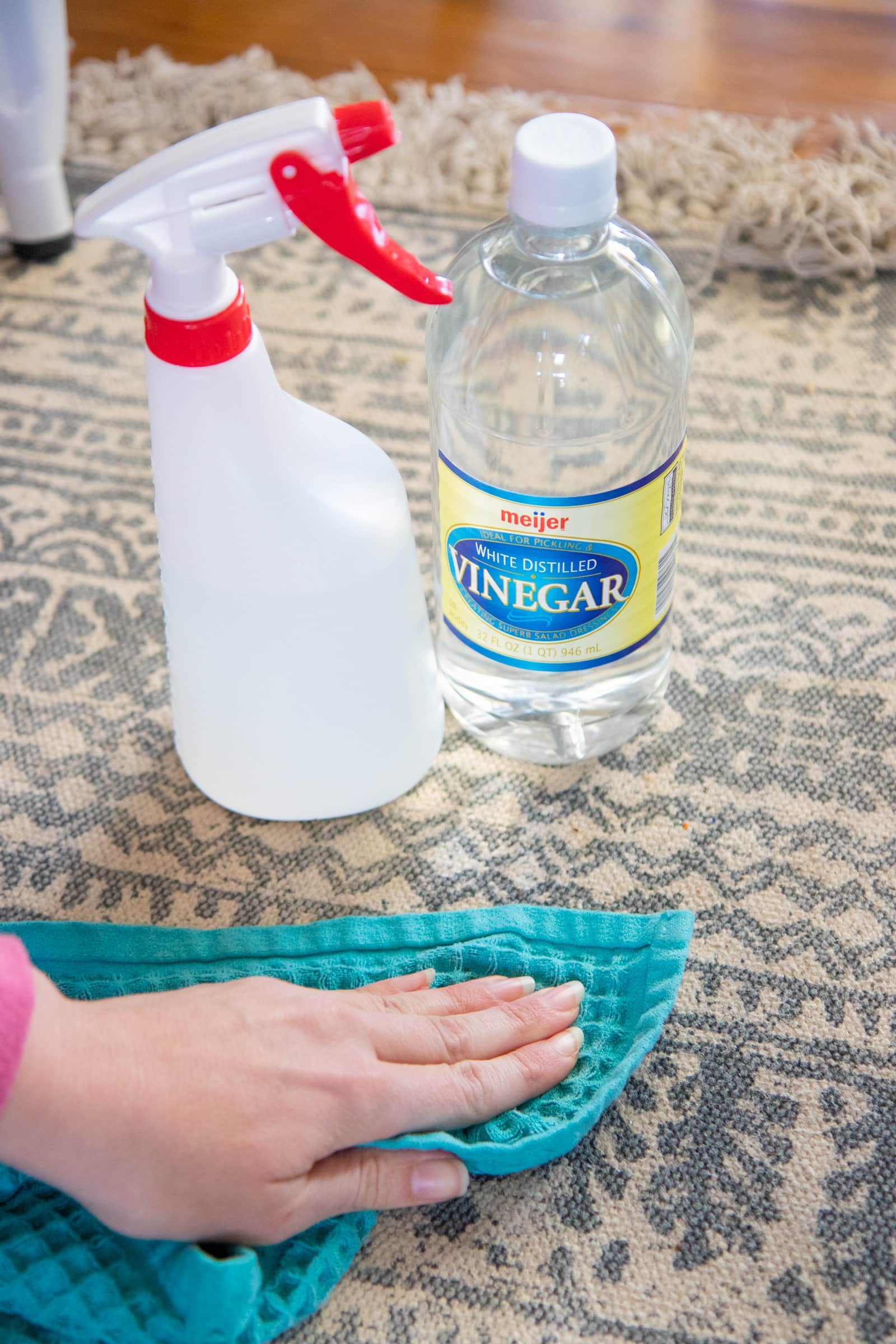
Gather your supplies before starting. You will need plain white distilled vinegar, cool or lukewarm water, a clean spray bottle or bowl, a soft cloth, and a clean towel. A mild laundry detergent may also be needed if the rug is washable.
Source: www.pinterest.com
Plain white distilled vinegar
Avoid colored or flavored vinegar because added ingredients may leave marks or residue.
Clean water
Use cool or lukewarm water unless the care label gives different instructions.
Soft cloth
A soft white cloth helps reduce the risk of color transfer and fiber damage.
Clean towel
Use it to blot away excess moisture after treatment.
Step 1: Read the Care Label
Check the rug for washing instructions, water temperature limits, drying directions, and cleaning restrictions. Look for warnings about bleach, acidic cleaners, machine washing, and tumble drying.
If the label says dry clean only or warns against vinegar, do not use a vinegar solution. Contact the manufacturer if the instructions are unclear.
Check the fabric
Identify whether the rug is cotton, microfiber, polyester, wool, or another material.
Check the backing
Look for rubber, latex, memory foam, or other materials that may need special care.
Step 2: Remove Loose Dirt
Take the rug outside and shake it gently to remove loose dust, hair, and debris. You can also vacuum a dry rug using a suitable setting if the care instructions allow it.
Removing loose dirt first helps prevent it from spreading when the rug becomes wet. Pay attention to the edges and corners, where hair and dust often collect.
Shake gently
Avoid pulling or stretching delicate fibers.
Vacuum carefully
Use a suitable attachment and avoid aggressive brush settings on delicate rugs.
Step 3: Prepare a Diluted Vinegar Solution
For a suitable rug, begin with a mild mixture of one part white distilled vinegar and four parts water. This is a cautious starting dilution, not a universal manufacturer-approved formula. Do not use it if the care label prohibits acidic cleaners.
Mix the solution in a clean bowl or spray bottle. Label the bottle if you plan to keep it for later use. Never add bleach, ammonia, toilet cleaner, or another household cleaning product.
Example mixture
Mix one-quarter cup of white vinegar with one cup of water for a small cleaning test.
Keep it diluted
Do not pour undiluted vinegar directly onto bathroom rug fibers or backing.
Step 4: Test a Hidden Area
Apply a small amount of the diluted solution to an inconspicuous part of the rug. Do not flood the area. Wait briefly, then blot it with a clean white cloth.
Let the test area dry and check for fading, bleeding, roughness, or changes to the backing. If you notice any change, stop using vinegar on that rug.
Good result
The fibers keep their original color and texture after drying.
Bad result
Color transfers, fibers become rough, or the backing changes in appearance or feel.
Step 5: Treat the Affected Area
If the test is successful, lightly dampen a clean cloth with the diluted mixture. Blot the affected area instead of scrubbing hard. Work from the outside of a stain toward its center to reduce spreading.
Use only enough liquid to treat the surface. Avoid soaking the rug, especially when it has a foam or rubber backing. Excess moisture can become trapped and cause a new odor problem.
Use gentle pressure
Hard scrubbing can damage fibers and make some stains harder to remove.
Avoid flooding
Keep the backing and inner layers as dry as the cleaning method allows.
Step 6: Rinse Away the Residue
Use a separate cloth dampened with clean water to blot the treated area. This helps remove loosened dirt and leftover vinegar. Repeat with a clean section of the cloth until the area no longer feels soapy or sticky.
If the rug is machine washable and the care label allows it, a regular wash with suitable detergent may be a better way to remove the remaining soil. Follow the stated temperature and cycle limits.
Use clean water
Do not leave a strong vinegar smell or visible cleaning residue in the fibers.
Do not wring harshly
Protect delicate fibers and any attached backing.
Step 7: Dry the Rug Completely
Drying is one of the most important parts of bathroom rug care. Press a clean towel against the wet area to absorb extra water. Then place the rug in a well-ventilated area according to its drying instructions.
A suitable drying rack can help air move around both sides of the rug. Keep the mat away from direct high heat unless the manufacturer permits it. Do not place a damp rug back on a bathroom floor.
Before using the rug again, check the top, underside, and backing. They should be completely dry, with no damp spots or sour smell.
Improve airflow
Open a window or use bathroom ventilation when practical.
Lift the rug
Allow air to reach the underside instead of leaving the mat flat on the floor.
Check before reuse
Make sure no moisture remains trapped inside thick fibers or foam.
Can Vinegar Remove Musty Smells From Bathroom Rugs?
Diluted vinegar may help reduce some mild odors, but a musty bathroom rug needs more than a quick spray. That smell often points to trapped moisture, incomplete drying, or buildup inside the fibers and backing.
If a rug smells sour after every shower, the problem may be the way it dries rather than the lack of a cleaning product. A thick bath mat placed on a damp floor may stay wet underneath even when its upper surface feels dry.
Start by washing the rug according to its care label. Use an appropriate detergent and rinse it well. If the manufacturer permits vinegar, a separate diluted treatment may help with certain lingering odors.
Do not use vinegar to cover up a strong mold or mildew smell. If the rug has visible mold, damaged backing, or a persistent smell after proper cleaning and drying, replacement may be the safer and more practical choice.
Source: www.express.co.uk
Wash the rug
Use the correct detergent and washing method for the material.
Dry both sides
Do not leave the underside against a wet floor.
Improve ventilation
Run the bathroom exhaust fan when available and allow fresh air to circulate.
Check the backing
Look for peeling, dark spots, or areas where moisture may remain trapped.
Why Does a Bathroom Rug Smell Musty Again After Cleaning?
A rug may smell fresh when wet and develop a musty odor again as it dries. This can happen when moisture remains deep inside the pile or backing. It can also happen when detergent or dirt is not rinsed out fully.
A poorly ventilated bathroom makes the problem worse. If the room stays humid, the rug may not dry between uses. Cleaning alone will not fix that cycle.
Try hanging the rug after every shower and washing it on a regular schedule that fits its use. If it remains damp for long periods, consider a thinner, quicker-drying mat.
Trapped moisture
Thick fibers and foam layers can hold water after the surface seems dry.
Poor airflow
A closed, humid bathroom slows evaporation.
Cleaning residue
Leftover soap can collect dirt and contribute to unpleasant odors.
Vinegar vs. Baking Soda vs. Laundry Detergent
Vinegar, baking soda, and laundry detergent have different cleaning roles. Choosing the right one depends on whether you are dealing with soap deposits, odors, loose dirt, or ordinary body oils.
Laundry detergent is usually the best starting point for a washable bathroom rug. It is made to remove common laundry soil, including oils and dirt. Vinegar may help with certain mineral deposits, while baking soda can absorb some odors when used appropriately.
Using more products does not always improve cleaning. Combining vinegar and baking soda creates a fizzing reaction, but the two substances largely react with each other. That reaction does not make a bathroom rug cleaner in every situation.
Source: detroitchinatown.org
White vinegar
May help with certain mineral deposits, soap residue, and mild odors on compatible materials.
Baking soda
Can help absorb some odors and provide mild abrasive action on suitable surfaces, but residue must be removed.
Laundry detergent
Usually the better choice for routine washing and removing body oils and everyday dirt from washable rugs.
Should You Mix Vinegar and Baking Soda to Clean a Bath Mat?
Mixing vinegar and baking soda creates bubbles because the acid and alkaline powder react. This can look like powerful cleaning action, but the fizz itself does not prove that the mixture removes more dirt.
The reaction also reduces the acidity of the vinegar as the ingredients neutralize each other. For this reason, using both together is not automatically better than using an appropriate cleaner on its own.
For routine rug care, wash with detergent if the label permits. Use vinegar separately only when the material allows it and there is a clear reason to do so. Avoid leaving baking soda powder trapped in thick fibers.
Do not combine products unnecessarily
Choose one suitable cleaning method based on the type of dirt or stain.
Rinse thoroughly
Remove cleaning residue before drying the mat.
Which Cleaner Should You Choose?
The table below compares the three common options by their main use. It is a general guide, not permission to use every product on every material.
For everyday dirt
Choose a suitable laundry detergent for a washable rug.
For certain mineral deposits
Consider diluted white vinegar only if the care instructions allow acidic cleaners.
For mild odor absorption
Baking soda may be useful on compatible dry materials if you can remove all powder afterward.
Common Mistakes to Avoid When Cleaning Bathroom Rugs With Vinegar
Most vinegar-cleaning problems happen when people use too much liquid, skip the care label, or combine cleaners. A bathroom rug may look simple, but its backing and internal layers can be more delicate than ordinary floor fabric.
A careful approach protects the fibers and helps prevent a second problem, such as a damaged backing or a rug that stays damp for too long. Keep the cleaning process simple and avoid unnecessary chemicals.
Source: diyinspired.com
Using undiluted vinegar
Strong vinegar can be too harsh for some dyes, finishes, and materials. Use only an approved diluted treatment.
Ignoring the care label
The manufacturer’s instructions take priority over general household cleaning advice.
Soaking the whole mat
Excess water can remain trapped inside foam and thick backing layers.
Scrubbing too hard
Aggressive scrubbing may pull fibers, damage the pile, or spread stains.
Leaving the rug wet
A damp rug can develop unpleasant odors and may support microbial growth.
Using vinegar with bleach
This can release dangerous chlorine gas. Never combine vinegar with chlorine bleach or bleach-based cleaners.
Using vinegar with other cleaners
Do not mix vinegar with ammonia, toilet cleaners, drain cleaners, or unknown chemical products.
Returning the rug too soon
A wet underside can trap moisture against the bathroom floor and create a slipping or odor problem.
Why Should You Never Mix Vinegar and Bleach?
Never mix vinegar with bleach. Vinegar is acidic, and contact with chlorine bleach can release chlorine gas. Breathing this gas can cause serious irritation and injury to the eyes and respiratory system.
Do not pour vinegar into a bucket, washing machine, or cleaning container that still contains bleach. If you have used one product, follow its label directions for rinsing before using another product. Do not experiment with chemical combinations.
If you accidentally mix vinegar and bleach and notice a strong irritating smell, leave the area immediately. Get fresh air and keep other people and pets away. Seek emergency help if anyone has trouble breathing, chest pain, or other serious symptoms.
Never mix
Keep vinegar separate from chlorine bleach and bleach-based cleaning products.
Avoid unknown combinations
Do not mix household cleaners unless their labels specifically permit the combination.
Protect your air
Use cleaning products in a ventilated space and follow their safety instructions.
How Often Should You Clean Bathroom Rugs?
Bathroom rugs need regular care because they collect moisture and dirt every day. The right washing schedule depends on how many people use the bathroom, how often the rug gets wet, and how quickly it dries.
A bath mat used by several family members may need more frequent washing than a small rug in a guest bathroom. A mat that stays damp or develops an odor should be cleaned and dried rather than left until the next planned wash.
There is no single schedule that works for every household. Follow the manufacturer’s care instructions and adjust based on visible dirt, odor, moisture, and actual use.
Source: rugsandpads.com
After each shower
Hang or lift the rug so air can reach the underside.
During routine bathroom cleaning
Check for loose hair, dust, damp patches, and early signs of odor.
Regular washing
Wash according to the label and how frequently the mat is used.
When it becomes dirty
Clean visible stains and spills promptly using a suitable method.
How Can You Keep a Bathroom Rug Fresh Between Washes?
Daily habits can reduce the amount of dirt and moisture that reaches the rug. Hang the mat after use instead of leaving it flat on the floor. This simple step helps air reach more of the fabric.
Keep the bathroom ventilated during and after showers. Run the exhaust fan if one is available. Wipe up puddles near the bathtub or shower so the rug does not sit in standing water.
Vacuum or shake the rug when it is fully dry and the care label allows it. This helps remove loose hair, dust, and debris before they become embedded in the fibers.
Hang after use
Do not leave the mat folded or bunched up while wet.
Improve airflow
Use bathroom ventilation to help reduce moisture.
Keep the floor dry
Remove standing water from around the mat.
Inspect the backing
Check for cracks, peeling, and loss of grip.
What If Vinegar Does Not Clean Your Bathroom Rug?
If vinegar does not solve the problem, do not keep adding more. A stubborn stain or smell may have a different cause, and repeated treatment can increase the risk of damage.
First, identify the problem. A greasy mark, mineral deposit, trapped moisture, and mold growth need different solutions. Choose a cleaning method that matches the problem and is allowed by the rug manufacturer.
Source: detroitchinatown.org
The rug still smells
Wash it with suitable detergent, rinse well, and dry both sides. Check whether the backing is holding moisture.
The stain remains
Identify the stain before choosing a suitable fabric cleaner. Follow the product label and test a hidden area.
The rug feels sticky
Rinse away leftover cleaning solution with clean water if the material allows it.
The rug feels rough
Stop using vinegar and check whether the fibers have been damaged by the treatment.
The backing is peeling
Stop using the mat if it no longer stays in place. Replace it when the backing is damaged.
When Should You Replace a Bathroom Rug Instead?
Some bathroom rugs are too damaged to clean effectively. If the backing has started to break apart, the fabric is thinning, or the mat keeps smelling musty after proper washing and drying, replacement may be the better option.
Visible mold that has spread into a thick or porous backing can be difficult to remove completely. Do not assume that a vinegar spray makes a mold-damaged mat safe to use again.
A bathroom rug should also be replaced if it becomes slippery. A damaged non-slip layer can create a fall risk, especially on smooth tile floors.
Persistent odor
The rug smells musty even after suitable washing and complete drying.
Visible mold
Mold remains in the fibers or backing after appropriate cleaning.
Damaged backing
The underside is cracked, peeling, brittle, or falling apart.
Loss of grip
The mat slides across the floor instead of staying in place.
Should You Use a Professional Rug Cleaner?
Professional cleaning may help when a valuable or delicate rug has a difficult stain and its care instructions allow professional treatment. Wool, specialty fibers, and rugs with unusual finishes may need a material-specific cleaning method.
Tell the cleaner what caused the stain and whether you have already used vinegar, detergent, or another product. This information can help prevent incompatible treatments.
For an inexpensive bath mat with damaged backing or deep contamination, replacement may cost less and involve less risk than professional treatment.
Consider professional help
Use a qualified cleaner for valuable, delicate, or difficult-to-treat rugs.
Consider replacement
Replace a badly damaged or persistently moldy bath mat when safe cleaning is uncertain.
A Simple Decision Guide for Bathroom Rug Cleaning
The best cleaning method depends on the problem and the rug material. Use the following guide to choose a reasonable next step before applying any household cleaner.
Source: stkittsvilla.com
Mild sour smell
Wash with suitable detergent, rinse thoroughly, and dry fully. Consider diluted vinegar only if the manufacturer allows it.
Soap residue
A suitable diluted vinegar treatment may help on compatible materials. Rinse the treated area afterward.
Everyday dirt
Use a suitable laundry detergent and the washing method stated on the care label.
Hard-water marks
Check whether the material tolerates mild acidic cleaning before using diluted vinegar.
Grease or makeup
Use a fabric-safe stain treatment designed for the material rather than relying on vinegar.
Visible mold
Do not rely on vinegar as a complete mold treatment. Consider replacement if contamination has reached the backing.
Peeling rubber backing
Replace the mat if the backing is damaged or the rug no longer grips the floor.
Frequently Asked Questions
Q
Can I Spray Vinegar Directly on a Bathroom Rug?
It is better to dilute vinegar with water and test a hidden area first. Direct application of undiluted vinegar may be too harsh for some dyes, fibers, and backing materials. If the manufacturer advises against acidic cleaners, do not use vinegar at all.
Q
Does White Vinegar Remove Urine Smell From Bathroom Rugs?
Diluted vinegar may help with some mild odors, but it may not remove urine odor completely. Urine can leave compounds deep inside rug fibers and backing. Wash the rug with a suitable detergent and use an enzyme-based fabric cleaner if its label and the rug’s care instructions permit it.
Q
Can I Put Vinegar in the Washing Machine With a Bathroom Rug?
Only do this if both the rug manufacturer and the washing machine instructions allow it. Do not assume vinegar is a suitable laundry additive for every machine or material. Never combine it with chlorine bleach or bleach-based products.
Q
Does Vinegar Remove Mold From Bathroom Rugs?
Vinegar may affect some microorganisms under certain conditions, but it is not a guaranteed mold treatment for bathroom rugs. Mold can grow inside thick fibers and porous backing materials. If visible mold remains or the rug has a strong persistent musty smell, replacement may be the safer option.
Q
How Much Vinegar Should I Use to Clean a Bathroom Rug?
If the care label permits vinegar, begin with a mild mixture of one part white vinegar and four parts water. Use a small amount on a hidden test area first. This is a cautious starting dilution, not a universal cleaning formula or a substitute for the manufacturer’s directions.
Q
Can I Use Apple Cider Vinegar Instead of White Vinegar?
White distilled vinegar is generally the better household cleaning choice. Apple cider vinegar has a color that may leave marks on light-colored fabric. It may also contain other substances that are not useful for rug cleaning.
Q
Does Vinegar Make Bathroom Rugs Soft Again?
Vinegar may help loosen certain mineral or soap deposits that make suitable fibers feel stiff. However, it cannot repair worn fibers or damaged backing. A proper wash and thorough rinse may improve the feel of some rugs, but follow the care instructions.
Q
Can I Use Vinegar on a Memory Foam Bath Mat?
Do not soak a memory foam bath mat in vinegar. Foam can hold water and take a long time to dry. Use only the surface-cleaning or washing method approved by the manufacturer, and make sure the mat dries completely before reuse.
Q
Will Vinegar Remove Yellow Stains From White Bathroom Rugs?
Not always. Yellow stains may come from body oils, product residue, dye transfer, rust, or other sources. Vinegar may help with certain mineral deposits, but it will not solve every cause. Identify the stain and use a compatible fabric cleaner.
Q
Is Vinegar Better Than Bleach for Cleaning Bathroom Rugs?
Neither is automatically the right choice. Vinegar is not a dependable disinfectant, while bleach can damage colors and fibers and may be unsuitable for some backings. Never mix the two. Use a cleaner that the rug manufacturer permits and follow its label.
✦ Wrapping Up
Conclusion
So, does vinegar clean bathroom rugs? Yes, diluted white vinegar can help with certain cleaning jobs, including some soap residue, mineral deposits, and mild odors. However, it is not a complete solution for every stain, fabric, or hygiene problem.
The most important step is to check the rug’s care label before cleaning. Cotton, polyester, microfiber, wool, memory foam, and rubber-backed mats have different needs. Test a hidden area, use a mild solution only when permitted, and rinse away any remaining cleaner.
For most washable bathroom rugs, suitable laundry detergent and complete drying should remain the main parts of routine care. Lift the mat after showers, improve bathroom airflow, and keep the underside dry. These habits can help prevent the damp conditions that often cause unpleasant smells.
Avoid using vinegar with bleach or other incompatible household cleaners. If the rug has visible mold, persistent odor, peeling backing, or poor grip, cleaning may not be enough. Replacing a damaged mat is often the more sensible choice.
💡 Key Takeaway
Check your bathroom rug’s care label today. If diluted vinegar is allowed, test one part white vinegar with four parts water on a hidden area. Blot gently, rinse with clean water, and dry the rug completely before using it again.