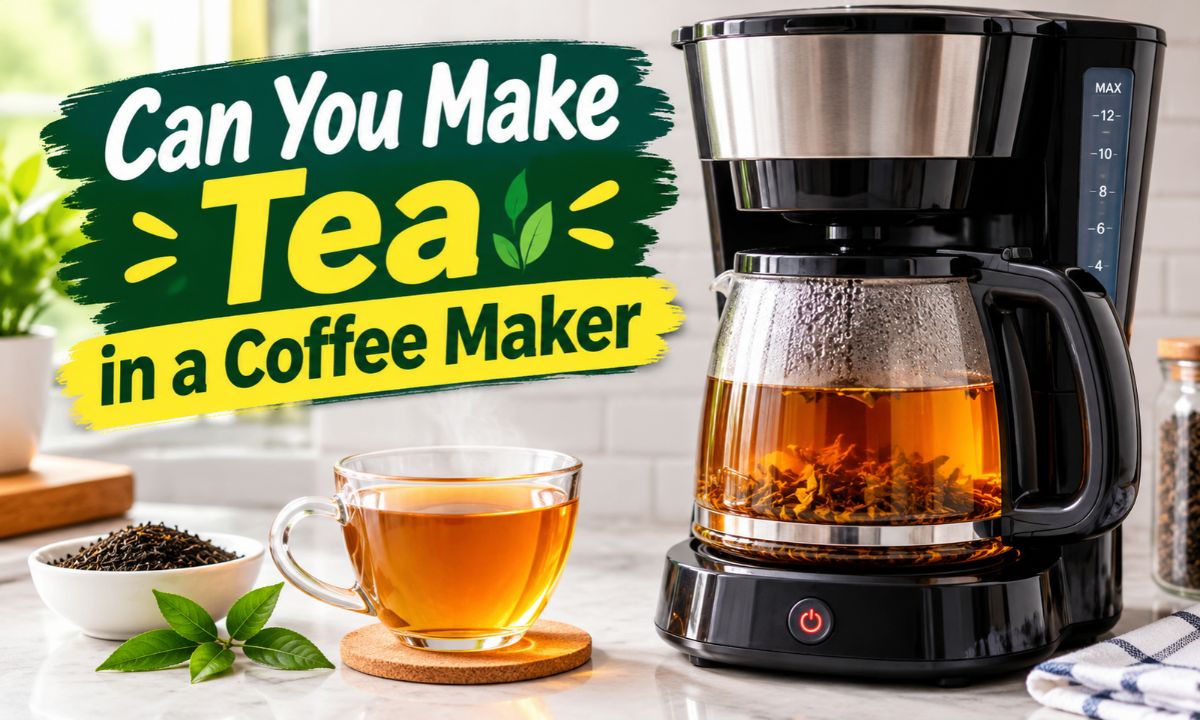
Yes, you can make tea in a coffee maker by running hot water through tea bags or loose tea, but the brewing method affects the flavor.
In the United States, a drip coffee maker is a common kitchen appliance for making a quick morning drink or preparing a pot for the family. If you run out of ways to boil water or want to make several cups of tea at once, your coffee maker may help. You can use it to heat water and brew tea without buying another appliance.
The best method depends on the type of coffee maker, the tea you use, and how strong you like your drink. A drip machine can heat water and move it through a filter basket, much as it does when brewing coffee. However, tea leaves need a suitable water temperature and enough time to release their flavor. A little care can help you avoid weak, bitter, or coffee-flavored tea.
This guide explains how to make tea in a standarddrip coffee maker, how much tea and water to use, which tea types work well, and what to do when the result tastes wrong. It also covers cleaning, safety, and the limits of using a coffee maker for tea.
Yes, you can make tea in a standard drip coffee maker. The machine heats water and sends it through a filter basket, where it can pass over tea bags or loose tea held in a suitable filter. The brewed liquid then collects in the carafe.
The main difference between coffee and tea is how each drink releases its flavor. Ground coffee is usually brewed by passing hot water through a bed of grounds. Tea leaves can also release flavor when hot water passes over them, but different tea types need different temperatures and contact times.
Most basic drip coffee makers do not let you set the exact water temperature or steeping time for tea. The water may also pass through the tea quickly instead of remaining in contact with it for several minutes. As a result, the tea may be weaker than expected or may taste different from tea brewed in a teapot.
Even with these limits, a coffee maker can be useful when you want to prepare multiple cups at once. It is especially practical for everyday black tea and some herbal teas, provided you use an appropriate brewing method and follow the tea package instructions.
Best for
Making several servings of everyday black tea, some green teas, or herbal infusions when convenience matters more than precise temperature control.
Main limitation
Many drip machines do not control tea-specific temperatures or provide a full steeping period, which can affect flavor and strength.
Important precaution
Use the filter basket for tea and keep the water reservoir free of tea leaves, honey, milk, sugar, and other ingredients.
How a Coffee Maker Brews Tea
A drip coffee maker typically heats water in an internal heating system and sends it through a tube to the showerhead above the filter basket. The water then flows through the basket and into the carafe.
When you place tea bags or loose tea in the basket, the hot water extracts flavor and color as it passes through. This can produce a drinkable cup of tea, although the contact time may be shorter than the steeping time recommended for that tea.
Some machines also continue heating the carafe after brewing. That feature may keep the tea warm, but prolonged heat can affect flavor. If your machine has a warming plate, transfer the tea to a suitable insulated container when possible.
Is Coffee Maker Tea the Same as Traditionally Brewed Tea?
Not always. A teapot or mug allows you to control how long the tea steeps and, with a kettle that has temperature settings, how hot the water becomes. A basic drip machine offers less control over both factors.
You can still make pleasant tea with a coffee maker. The key is to understand that convenience does not guarantee the same strength, aroma, or balance as a carefully brewed cup.
What You Need Before Making Tea
Before brewing tea in a coffee maker, gather the right ingredients and check that your machine is clean. A simple setup helps prevent unwanted flavors and makes it easier to control the amount of tea you use.
You do not need special tea-making equipment for a basic batch. However, a thermometer, a separate kettle, or a timer can help if you want greater control over water temperature and steeping time.
A clean drip coffee maker
Check the filter basket, carafe, and other removable parts for coffee residue. Clean them according to the manufacturer’s instructions before brewing tea.
Fresh drinking water
Use water that is suitable for drinking. If your tap water has a strong taste or smell, filtered water may produce a cleaner-tasting cup.
Tea bags or loose-leaf tea
Tea bags are easier to handle in a drip machine. Loose tea can also work if you use a suitable filter that keeps the leaves out of the finished drink.
A compatible filter
Use the paper or reusable filter approved for your coffee maker. Avoid overfilling it or blocking the basket’s normal flow.
A heat-safe carafe
Use the carafe designed for your machine. Do not substitute a container that may crack, melt, or fail under heat.
Choose the Right Tea
Black tea is often a practical starting point because it generally uses hot water and has a robust flavor. Tea bags are also easy to remove, which helps you control strength without handling loose leaves.
Green tea can work, but it is more sensitive to high temperatures. If your coffee maker runs very hot, the result may taste harsh or bitter. Consider heating the water separately if you want better control.
Herbal teas vary widely. Some use flowers, leaves, roots, spices, or fruit, so their brewing needs are not all the same. Follow the directions on the package, especially when the manufacturer specifies a longer steeping time.
Check Your Coffee Maker Manual
Most basic drip machines are designed for brewing coffee, so do not assume that every model is suitable for every tea-making method. Check the manufacturer’s instructions for approved uses, cleaning directions, and any restrictions on accessories.
If your appliance has a dedicated hot-water setting or a tea function, use that function according to the manual. A specialty machine may provide more control than a simple drip brewer.
How to Make Tea in a Drip Coffee Maker
The simplest method is to brew hot water through tea bags or loose tea in the filter basket. For the best result, start with a clean machine, measure the water, and check the tea before serving.
The following steps apply to a typical drip coffee maker. If your machine’s instructions differ, follow the manufacturer’s directions instead.
Step 1: Clean the machine
Wash the removable carafe and filter basket with warm water and dish soap, then rinse them well. Make sure no soap remains. If the machine needs descaling, follow the manufacturer’s cleaning instructions before brewing.
Step 2: Measure the water
Fill the reservoir with the amount of fresh water you want to brew. Check the markings on the machine because its cup measurements may not match a standard eight-fluid-ounce US cup.
Step 3: Prepare the filter basket
Insert the correct paper or reusable filter. If you use tea bags, place them flat in the basket without blocking the water outlet. If you use loose tea, measure it into the filter and make sure the leaves cannot escape into the carafe.
Step 4: Start the brewing cycle
Place the empty carafe correctly on the warming plate or base. Start the machine and let the water pass through the tea. Never open or reach into a hot machine while it is operating.
Step 5: Check the tea strength
When the brewing cycle ends, inspect the color and taste a small amount once it has cooled enough to sip safely. If the tea is weak, you can steep it longer in a separate heat-safe container.
Step 6: Remove the tea promptly
Take out the tea bags or remove the basket once it is safe to do so. Do not leave tea in contact with the leaves longer than needed, since excess steeping can make some teas bitter.
Step 7: Serve and clean
Pour the tea into heat-safe cups and add any desired ingredients. Once the appliance has cooled, clean the parts that touched the tea and let them dry.
How Much Tea Should You Use?
Start with the amount listed on the tea package. If the package recommends one tea bag per cup, use that direction as your starting point and adjust the number of bags to suit the amount of water you are brewing.
Loose-leaf tea often comes with a suggested amount per serving, but the right measurement depends on the leaf size and tea type. A teaspoon of bulky herbal tea does not necessarily weigh the same as a teaspoon of small, dense tea leaves.
For example, if the package recommends one tea bag for every eight fluid ounces of water, a hypothetical 32-fluid-ounce batch would start with four tea bags. This is a simple proportional calculation, not a universal rule for every tea.
Too little tea
The finished drink may look pale and taste weak or watery.
Too much tea
The tea may taste overly strong, dry, or bitter, especially if it remains in contact with hot water for too long.
What If the Coffee Maker Does Not Brew Strong Enough Tea?
A drip machine may move water through the tea too quickly to extract the flavor you want. Instead of adding large amounts of tea at once, let the brewed tea steep in a separate heat-safe container for a short additional period.
Taste it at intervals and stop when the strength suits you. Remove the tea bags or strain out the leaves before serving. This gives you more control without needing to run the same tea through the machine repeatedly.
The Best Water Temperature and Steeping Time for Tea
Water temperature and steeping time play a major role in the taste of tea. A coffee maker may not give you enough control over these factors, so it helps to know what your chosen tea needs before you start.
Different tea varieties release flavor at different rates. Black tea often tolerates hotter water, while many green teas taste better when brewed at a lower temperature. Herbal infusions may need hotter water and a longer steep, depending on their ingredients and package directions.
Black tea
Many black teas are brewed with water near boiling and steeped for about three to five minutes. Follow the package directions for the specific blend.
Green tea
Many green teas use water below boiling and steep for about one to three minutes, although the ideal range varies by variety.
White tea
White tea often benefits from somewhat cooler water and a short to moderate steep. Check the instructions for the leaves you have.
Oolong tea
Oolong tea varies in oxidation and style, so its brewing temperature and steeping time can differ considerably.
Herbal tea
Many herbal infusions use freshly boiled water and a steep of several minutes. Follow the label, especially for blends that specify a particular preparation method.
Why a Standard Coffee Maker May Struggle With Green Tea
Green tea can develop a bitter or harsh taste when brewed with water that is too hot or when the leaves steep for too long. A standard drip coffee maker usually does not let you choose a precise brewing temperature.
If green tea is your main choice, consider heating the water in a kettle and pouring it over the tea in a mug or teapot. This approach makes it easier to use cooler water and remove the leaves at the right time.
If you still want to use the coffee maker, test a small batch first. The taste can vary with the machine, the tea, and the amount of water, so avoid assuming that one brewing time works for every setup.
Does Longer Brewing Always Make Tea Better?
No. More time can make tea stronger, but it can also draw out flavors that make the drink taste dry or bitter. Strength and quality are not the same thing.
If your tea tastes weak, check the tea-to-water ratio before increasing the steeping time by a large amount. Using enough tea and following the recommended brewing range usually gives you a better starting point.
Can You Put Tea Bags Directly in a Coffee Maker?
Yes, tea bags can go in the coffee maker’s filter basket if the machine design allows the basket to hold them without blocking water flow. This is often the easiest way to make a small pot of tea.
Place the bags in the filter basket rather than the water reservoir. The reservoir is designed to hold water, and adding tea bags or loose leaves there may interfere with the appliance or contaminate its internal parts.
The main challenge is controlling how long the tea bags stay in contact with hot water. A machine may finish its brewing cycle before the tea reaches your preferred strength. You can let the finished tea steep a little longer in the carafe if the tea bags can be removed safely afterward.
Be careful when handling the basket. It can contain hot water and steam, and wet tea bags may be hotter than they look. Allow the machine to stop brewing and cool enough for safe handling before removing the basket.
Use a suitable filter basket
Make sure the tea bags fit without obstructing the outlet or interfering with the basket’s normal operation.
Keep tea bags out of the reservoir
Only put fresh water in the reservoir unless the appliance instructions explicitly allow another use.
Remove the bags when ready
Take the tea bags out once the desired strength is reached to reduce the risk of over-steeping.
Can You Use Loose-Leaf Tea in a Coffee Maker?
Yes, loose-leaf tea can work in a drip coffee maker when it is contained in a compatible filter. A paper coffee filter or approved reusable filter may keep the leaves from entering the carafe, provided the basket is designed for that setup.
Do not pack the filter basket tightly with tea. The water must be able to pass through freely. Too many leaves or a blocked filter can slow drainage and cause the basket to overflow.
Very fine tea particles may pass through some reusable filters. If you notice sediment in the cup, use a finer tea filter or strain the finished tea before serving.
Should You Run Tea Through a Coffee Filter Twice?
Running brewed tea through the coffee maker again is generally unnecessary and can lead to uneven results. The second cycle may expose the tea to additional heat without giving you the steeping control you need.
If the first batch is too weak, let it steep in a separate container or adjust the tea-to-water ratio in your next batch. This is easier to control than repeatedly running the same liquid through the appliance.
How to Make Iced Tea in a Coffee Maker
A drip coffee maker can also help you prepare tea for iced drinks. The basic method is to brew a concentrated batch, let it cool safely, and pour it over ice or chill it in the refrigerator.
Making a concentrated batch helps reduce the dilution that happens when ice melts. However, the right concentration depends on the tea type, the amount of ice, and how strong you want the final drink to taste.
Step 1: Choose a tea
Black tea is a common option for iced tea because its flavor can hold up well when chilled and diluted with ice.
Step 2: Measure the water and tea
Follow the package directions, then adjust the amount of tea to account for the ice you plan to add. Avoid assuming that every tea needs the same concentration.
Step 3: Brew the tea
Use the clean coffee maker to brew the tea through the filter basket. Do not add ice to the reservoir or the hot brewing system.
Step 4: Remove the tea bags or leaves
Once the brewing cycle ends, remove the tea from contact with the leaves when the desired strength is reached.
Step 5: Cool the tea safely
Place the tea in a suitable container and cool it promptly. Do not put a hot glass carafe into cold water or onto a cold surface if the temperature change could cause it to crack.
Step 6: Chill and serve
Refrigerate the tea in a clean, covered container, then serve it over ice. Add lemon or sweetener if desired.
How Long Can You Keep Homemade Iced Tea?
For safety and quality, refrigerate homemade tea promptly in a clean, covered container. Do not leave it sitting at room temperature for long periods, especially in a warm kitchen or during a summer gathering.
Plain brewed tea is best enjoyed while it tastes fresh. If it develops an unusual smell, appearance, or flavor, discard it rather than trying to rescue it. Sweetened tea and tea with added fruit should also be handled carefully because added ingredients can affect storage needs.
When preparing tea for a group, make only what you expect to use and keep the remaining batch refrigerated. Avoid topping up an old container with a fresh batch without washing it first.
Coffee Maker vs. Kettle and Teapot for Making Tea
A coffee maker is convenient for preparing several servings, while a kettle and teapot usually offer better control over tea brewing. The right choice depends on how often you make tea, what kind you drink, and how much attention you want to give the process.
If you already own a drip coffee maker, you can use it for an occasional pot of tea. If you drink delicate green, white, or specialty tea every day, a kettle with temperature control may make it easier to get consistent results.
Which Method Is Better for Different Needs?
The table below compares common ways to make tea at home. These are practical differences between the methods, not the results of a controlled product test.
Drip coffee maker
Useful for making several servings with little supervision. Temperature and steeping time may be harder to control.
Electric kettle and mug
Good for a single serving. You can heat the amount of water you need and remove the tea bag at the right time.
Temperature-controlled kettle and teapot
A strong option for people who brew different tea types and want more control over water temperature and steeping.
Microwave and mug
Can heat water when used with a suitable microwave-safe mug, but heating may be uneven. Follow safe microwave practices and steep the tea separately.
When Is a Coffee Maker the Better Choice?
A coffee maker makes sense when you want several cups without heating water in separate batches. It can be handy for a family breakfast, an office break room, or a small gathering where people prefer the same tea.
A kettle is often the better choice for a single cup or when you need a particular water temperature. It also avoids running tea through equipment that may hold coffee residue.
Common Mistakes When Making Tea in a Coffee Maker
Most problems with coffee maker tea come from poor temperature control, the wrong amount of tea, or leftover coffee residue. Small changes can often improve the result without requiring a new appliance.
If your first batch tastes disappointing, change one factor at a time. That makes it easier to identify whether the issue is the water, the tea, the brewing method, or the machine’s cleanliness.
Using a dirty coffee maker
Old coffee oils can leave a stale or roasted taste in tea. Wash removable parts and clean the appliance according to its manual before brewing.
Adding tea to the water reservoir
The reservoir is intended for water, not loose leaves, tea bags, sugar, or milk. Keep tea in the filter basket or a separate brewing vessel.
Using too much tea
An excessive amount can make the drink too strong or bitter. Start with the tea package’s recommended ratio and adjust in small steps.
Leaving tea bags in too long
Long contact with hot water can create a dry or harsh taste. Remove the bags when the tea reaches the desired strength.
Expecting every tea to brew the same way
Black, green, white, oolong, and herbal teas have different brewing needs. Check the instructions for the specific tea instead of using one rule for all types.
Keeping tea on the warming plate too long
Extended heat may flatten the flavor or make the tea taste stewed. Transfer it to a suitable insulated container when practical.
Why Does Tea Made in a Coffee Maker Taste Like Coffee?
The most likely reason is that coffee oils or residue remain in the filter basket, carafe, lid, or other parts that contact the drink. Even a small amount of residue can affect the aroma of a mild tea.
Wash the removable parts with warm water and dish soap, rinse them well, and clean the machine as directed by the manufacturer. If the appliance has a reusable filter that retains coffee oils, clean it thoroughly or use a new paper filter for tea.
If the coffee taste remains, inspect the parts you can safely remove and clean. Do not take apart the machine or use cleaning chemicals that are not approved by the manufacturer.
What If the Tea Tastes Bitter or Weak?
Bitter tea may result from water that is too hot for the tea type, too much tea, or excessive steeping. For delicate teas, a separate kettle can provide more control over the temperature.
Weak tea may mean you used too little tea, too much water, or too short a contact time. Try the recommended ratio first, then allow the finished tea to steep a little longer in a separate container if needed.
Cleaning a Coffee Maker After Brewing Tea
Cleaning the coffee maker after making tea helps prevent lingering flavors and keeps the machine ready for its next use. Tea may leave color or aroma in the filter basket and carafe, especially when you use strongly flavored blends.
Start by letting the machine cool and unplugging it if the manufacturer’s cleaning instructions call for that step. Remove the carafe, filter basket, and other removable parts, then wash them with warm water and dish soap when the manual permits.
Wash the carafe
Clean the inside and lid to remove tea residue. Rinse thoroughly so the next drink does not taste of soap.
Clean the filter basket
Remove tea bags, loose leaves, and any trapped particles. Wash the basket and approved reusable filter according to the instructions.
Wipe the exterior
Use a damp cloth on the outside of the machine. Do not immerse the coffee maker’s electrical base in water.
Descale only when needed
Mineral buildup can affect water flow and heating. Follow the manufacturer’s guidance on descaling products, frequency, and rinse cycles.
Let parts dry
Allow washed parts to dry fully before putting the machine away or using it again.
Do You Need to Run a Cleaning Cycle After Making Tea?
A full cleaning or descaling cycle is not usually needed after every pot of plain tea. Washing the parts that touch the drink is a sensible first step.
If you brew strongly scented herbal tea, use loose leaves that spill into the basket, or notice a lingering smell, inspect the machine and follow the cleaning instructions for your model. Do not pour dish soap into the reservoir or run an unapproved cleaner through the machine.
Descaling addresses mineral deposits from water, while washing removable parts addresses residue from the drink. They are different tasks, so use the right method for the problem.
Safety Tips for Making Tea in a Coffee Maker
Making tea in a coffee maker is generally a straightforward kitchen task when you use the appliance as directed. The main risks involve hot water, steam, electrical parts, and containers that are not designed for heat.
Keep the process simple and avoid modifying the machine. If the appliance leaks, smells like burning plastic, makes unusual electrical noises, or shows signs of damage, stop using it and follow the manufacturer’s safety guidance.
Use only the water reservoir for water
Do not add tea leaves, tea bags, milk, honey, sugar, or other ingredients to the reservoir unless the manual specifically permits the substance.
Avoid hot steam
Keep your face and hands away from the filter basket and showerhead during brewing. Hot steam can cause burns.
Do not overfill the filter basket
Excess tea or a blocked filter can interfere with drainage and may cause hot liquid to spill.
Use the correct carafe
Place the carafe designed for your machine on its base. A mismatched container may not fit correctly or tolerate the heat.
Handle hot glass carefully
Avoid sudden temperature changes that can crack glass. Do not place a hot carafe on a cold, wet, or unsuitable surface.
Keep electrical parts dry
Never immerse the machine’s electrical base in water. Unplug it before cleaning when the manufacturer’s directions require it.
Can You Put Milk or Sugar in a Coffee Maker to Make Tea?
No. Do not put milk, sugar, honey, or flavored syrups in the water reservoir. These ingredients can leave residue, interfere with the machine, and make cleaning more difficult.
Brew the tea with water first, then add milk or sweetener to the cup. Stir with a clean spoon and taste before adding more. This approach also makes it easy for each person to choose their preferred sweetness.
Can You Leave Tea in the Coffee Maker Overnight?
It is better not to leave brewed tea sitting in the carafe overnight at room temperature. The flavor may deteriorate, and the drink should not be treated as safe simply because it was made with hot water.
Transfer leftover tea to a clean container and refrigerate it promptly. If it has been left out for an extended period or its storage history is uncertain, the safer choice is to discard it.
Frequently Asked Questions
Q
Can you make tea in a regular drip coffee maker?
Yes. You can place tea bags or suitable filtered loose-leaf tea in the filter basket and run fresh water through the machine. The result depends on the tea type, the water temperature, and how long the tea remains in contact with the hot water.
Q
Can you use a coffee maker to boil water for tea?
A drip coffee maker heats water for brewing, but you should not assume that the water reaches a full boil. If your tea requires a particular temperature, use a kettle or another appliance designed to provide the needed control.
Q
Is it better to use tea bags or loose tea in a coffee maker?
Tea bags are usually easier because they are simple to measure and remove. Loose tea can work in a suitable filter, but very fine particles may pass through some filters. Avoid overfilling the basket or blocking water flow.
Q
Can you make green tea in a coffee maker?
Yes, but the results may be less predictable because many drip coffee makers do not offer precise temperature control. Green tea often tastes better with water below boiling, so a kettle and mug or teapot may be a better choice if you want to control bitterness.
Q
How many tea bags should you use in a coffee maker?
Start with the tea package’s recommended ratio. For example, if the directions call for one bag per eight fluid ounces, a hypothetical 32-fluid-ounce batch would use four bags. Adjust for your taste and the size of the servings.
Q
Will tea taste like coffee if I use the same machine?
It may if coffee oils or residue remain in the carafe, filter basket, or other parts. Wash the removable parts well, use a clean filter, and follow the machine’s cleaning instructions to reduce unwanted coffee flavor.
Q
Can you make iced tea in a coffee maker?
Yes. Brew the tea, remove the tea bags or leaves, cool it safely, and refrigerate it in a clean, covered container. Serve it over ice. Do not put ice in the water reservoir or expose a hot glass carafe to sudden temperature changes.
Q
Can you put loose tea leaves directly into the coffee maker’s water tank?
No. Keep the water reservoir for water unless the manufacturer specifically states otherwise. Place loose tea in a suitable filter basket or brew it in a separate teapot to prevent leaves from entering the machine’s internal system.
✦ Wrapping Up
Conclusion
You can make tea in a coffee maker, and it can be a handy way to prepare several cups with equipment you already own. Tea bags are usually the easiest option, while loose-leaf tea works when the filter can contain the leaves without blocking water flow.
The main challenge is that a standard drip coffee maker may not provide the temperature and steeping control that different teas need. Start with the package directions, use a clean machine, and taste the tea before adjusting its strength. If the flavor is weak or bitter, change the tea-to-water ratio or finish steeping in a separate container.
For occasional pots of black tea or simple herbal infusions, a coffee maker may be all you need. For delicate green tea or specialty blends, a kettle and teapot can offer better control. Whichever method you choose, keep the machine clean, handle hot water carefully, and never put tea or other ingredients into the water reservoir.
💡 Key Takeaway
To make your first pot, clean the coffee maker, measure fresh water, place the recommended number of tea bags in the filter basket, run one brewing cycle, and check the flavor before serving. Remove the bags when the tea reaches your preferred strength.