
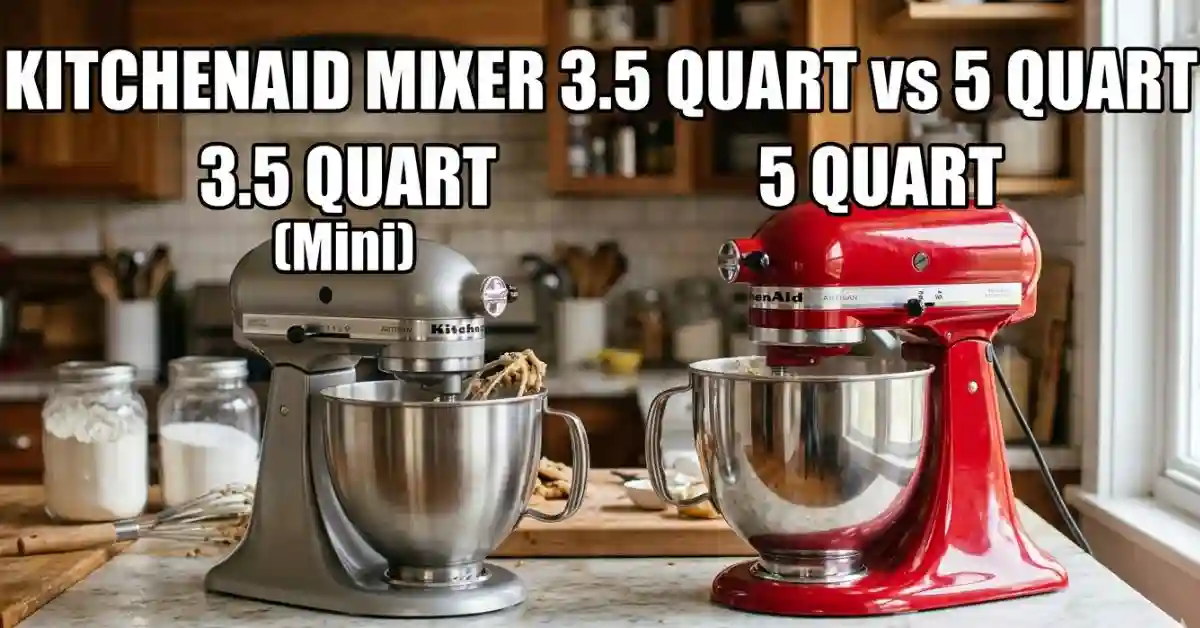
Picking between the Kitchenaid Mixer 3.5 Quart Vs 5 Quart can be tough. Both are great mixers, but they fit different needs. The 3.5-quart model is best for small batches and small kitchens, while the 5-quart model gives you more room for bread dough, cookies, and big family bakes. I have used mixers of both sizes, and the extra space in a 5-quart bowl can be a big help during busy baking days. In this guide, I’ll share the key differences so you can choose the KitchenAid mixer that fits your home and baking style.
KitchenAid Artisan 5-Qt Review
I have used the KitchenAid Artisan 5-Qt for many months. I bought it because I bake often and wanted to save time. After many batches of cookies, bread, and cake, I have a good idea of what it does well and where it falls short.
Why I Bought the KitchenAid Artisan 5-Qt
Before this mixer, I used a hand mixer for most jobs. For bread dough, I mixed by hand.
That worked, but it took a lot of time. It also made baking feel like hard work.
I wanted a stand mixer that could handle my weekly baking. I planned to use it for:
- Cookies
- Bread dough
- Pizza dough
- Cake batter
- Frosting
The KitchenAid Artisan 5-Qt looked like a good fit. It was large enough for family baking but not too large for daily use.
My First Impression
The first thing I noticed was the weight.
It felt heavy when I took it out of the box. At first, I did not like that. Later, I saw why it matters. The mixer stays in place when it runs.
The build felt strong and solid. Nothing felt cheap.
I liked the color I picked. It looked great on my kitchen counter.
The only issue was space. This mixer is not small. Make sure you have room for it before you buy it.
What I Tested It On
I wanted to see how it worked in real life.
Over time, I used it for:
- Chocolate chip cookies
- Oatmeal cookies
- Bread dough
- Pizza dough
- Cake batter
- Buttercream frosting
- Whipped cream
- Mashed potatoes
One weekend, I made two large batches of cookies. The mixer handled the thick dough with no trouble.
I also used it for pizza dough many times. The dough mixed fast and came out the same way each time.
Cake batter was smooth. Frosting was light and creamy. Whipped cream came together in just a few minutes.
Bowl Size and Daily Use
The bowl size is one of the best parts of this mixer.
The 5-quart bowl gave me enough room for:
- Large cookie batches
- Two loaves of bread
- Pizza dough for family meals
- Big batches of frosting
I never felt short on space.
At the same time, the bowl still worked well for small jobs.
That balance made daily baking easy.
Pros and Cons
| Pros | Cons |
| Strong mixing power | Heavy to move |
| Large 5-quart bowl | Costs more than basic mixers |
| Good for bread dough | Needs counter space |
| Many add-on tools | Add-ons cost extra |
| Strong metal build | Not ideal for tiny kitchens |
| Stays stable while mixing | Bowl may need a quick scrape |
How It Performed Over Time
I used this mixer at least once or twice each week.
I paid close attention to how it handled the same recipes over and over.
The results stayed very close each time.
Bread dough felt the same from batch to batch.
Cookie dough mixed well each time.
Cake batter stayed smooth and even.
That kind of steady performance gave me confidence when baking.
Things I Did Not Like
No mixer is perfect.
The biggest issue is the weight.
Once I put it on the counter, I did not want to move it again.
The price may also feel high for people who bake only a few times each year.
I also noticed that flour can stick to the side of the bowl at the start of mixing. A quick scrape fixes it, but it still happens.
Noise Level
Many people ask if it is loud.
For most jobs, I would say no.
Cookies, cake batter, frosting, and whipped cream were fairly quiet.
Bread dough made more noise because the mixer worked harder.
Even then, the sound never bothered me.
I could still talk with family while it was running.
Cleaning Experience
Cleaning was simple.
The stainless steel bowl washed up fast.
Most batter and dough came off with little effort.
The attachments were easy to clean too.
A quick wipe kept the mixer looking nice on the counter.
Long-Term Reliability
After months of use, the mixer still works the same as it did on day one.
The controls feel solid.
The motor sounds normal.
The mixing results stay the same.
I have not had any problems so far.
That has been one of the best parts of owning it.
Would I Buy It Again?
Yes, I would.
The KitchenAid Artisan 5-Qt has saved me time and made baking easier. It handles cookies, bread, cakes, frosting, and pizza dough with ease.
It is heavy. It costs more than some mixers. It also takes up space.
Still, after months of use, I feel it has been worth it. It gives steady results and feels built to last. For anyone who bakes often, it has been a great tool in my kitchen.
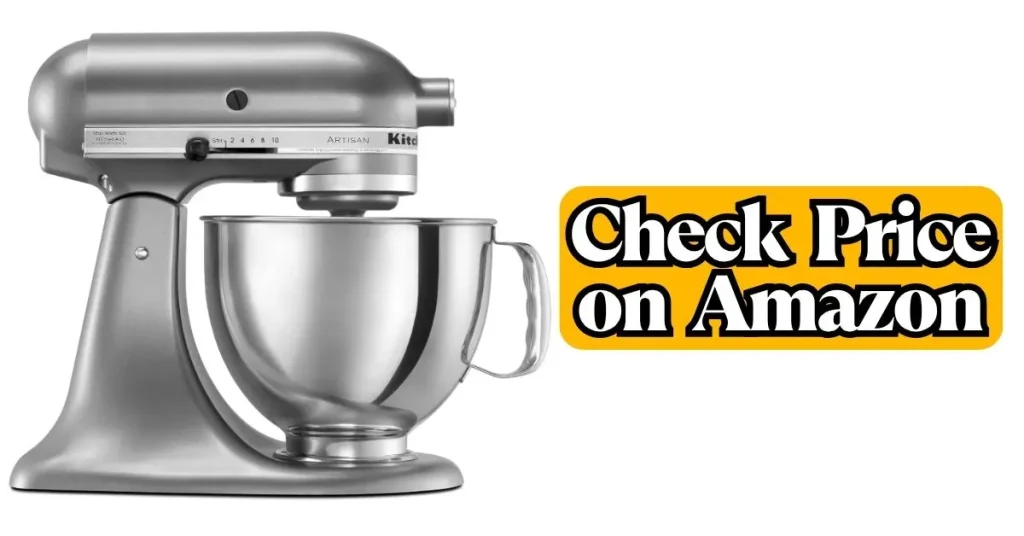
KitchenAid Artisan Mini 3.5-Qt Review
I have used the KitchenAid Artisan Mini 3.5-Qt in my kitchen for a few weeks. I bought it to replace hand mixing and save time on baking days. I tested it with small home recipes like cookies, cakes, and pizza dough. Here is what I saw in real use.
Why I Bought the KitchenAid Artisan Mini 3.5-Qt
Before this mixer, I used a hand mixer. For bread dough, I mixed by hand. It worked, but it took a lot of time and effort.
I wanted a stand mixer that would fit my small kitchen. I also did not want a large or heavy machine.
I chose the KitchenAid Artisan Mini 3.5-Qt because:
- I bake small batches
- My kitchen has little counter space
- I do not bake big holiday trays
- I wanted something easy to move
I planned to use it for:
- Cookies
- Cake batter
- Frosting
- Pizza dough
- Whipped cream
My First Impression
The first thing I noticed was the size. It is small and easy to handle.
It is much lighter than bigger KitchenAid mixers. I could lift it with one hand.
It still felt strong and well made. It did not feel cheap.
It also looked nice on my counter. It did not take too much space.
But I saw one clear limit. The bowl is small for big batches.
What I Tested It On
I used real recipes I cook at home.
I tested:
- Chocolate chip cookies
- Sugar cookies
- Brownies
- Cake batter
- Buttercream frosting
- Pizza dough
- Whipped cream
- Mashed potatoes
One day, I made cookie dough for a small group. The mixer handled thick dough without slowing down.
I also made pizza dough. The dough mixed fast and came out smooth.
Cake batter was soft and even. Frosting was light and easy.
Whipped cream came together in a few minutes.
Bowl Size in Real Use
The 3.5-quart bowl is best for small batches.
In my use, it handled:
- One batch of cookies
- One cake at a time
- Small pizza dough
- Small frosting batches
It worked well for daily baking.
But for big baking days, I had to split recipes.
So it is best for small homes or light baking.
Pros and Cons
| Pros | Cons |
| Small and easy to store | Small bowl size |
| Easy to lift and move | Not good for big batches |
| Good mixing power | Limited for bread dough |
| Good for daily baking | Needs extra batches for events |
| Same tool system as big models | Not for heavy use |
Real Use Over Time
I used it many times over a few weeks.
I made the same cookie recipe more than once. The result was almost the same each time.
Dough mixing stayed steady. It did not change from batch to batch.
Cake batter was smooth each time. Frosting stayed light and even.
I did need to scrape the bowl sometimes. This is normal for thick dough.
What I Did Not Like
The bowl size is the biggest limit.
It works fine for daily baking, but not for large groups.
I also feel the price is a bit high for a small mixer.
At times, flour sticks to the bowl. I just stop and scrape it down.
These are small issues, but worth knowing.
Noise Level
The mixer is not loud.
For cookies, cake, and frosting, it stays quiet.
For pizza dough, it gets a bit louder, but still fine.
I could still talk in the kitchen while using it.
Cleaning and Storage
Cleaning is easy.
The bowl rinses fast with warm water.
Most food comes off with no effort.
Attachments are also easy to clean.
Storage is very simple. I can lift it and store it in a cabinet when not in use.
This is very helpful in a small kitchen.
Long-Term Use
I have used the KitchenAid Artisan Mini 3.5-Qt many times.
So far, it works the same as day one.
The speed feels steady. The mixing is still smooth.
I have not seen any drop in performance.
Final Verdict
After using the KitchenAid Artisan Mini 3.5-Qt, I would buy it again.
It fits my kitchen well. It helps with daily baking. It saves time compared to hand mixing.
The only real limit is the bowl size.
If you bake small to medium batches, it works very well.
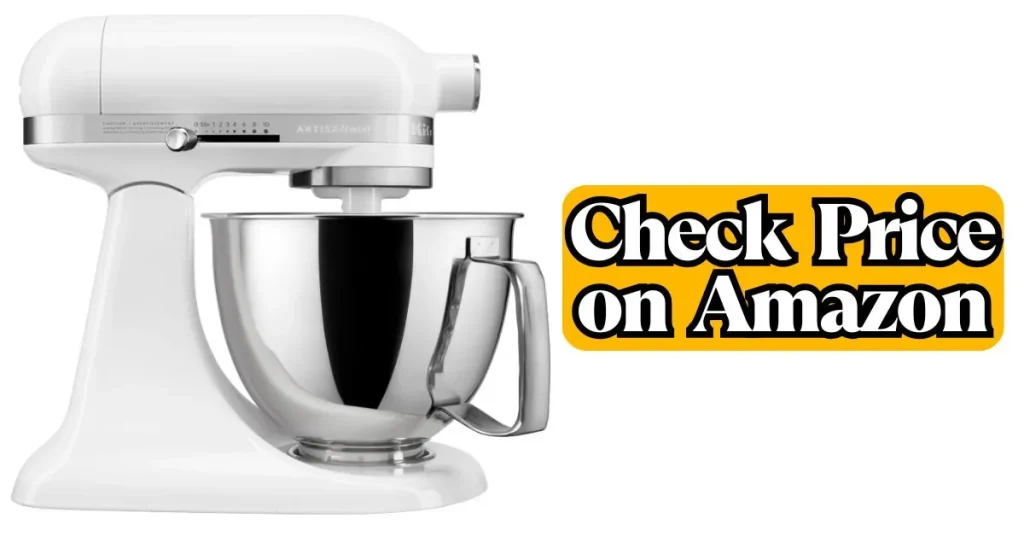
Details Comparison for Kitchenaid Mixer 3.5 Quart Vs 5 Quart
I have used both mixers at home. The Kitchenaid Mixer 3.5 Quart Vs 5 Quart shows clear differences in real use. It is not just about size. It changes how you bake every day. Here is what I saw in my kitchen.
Bowl Size and Batch Capacity
This is the biggest difference I noticed. The bowl size changes how much you can mix at one time.
| Feature | 3.5 Quart | 5 Quart |
| Cookie batches | Small batches | Large batches |
| Cake batter | One small cake | One or two cakes |
| Bread dough | Small loaf only | Bigger dough batches |
| Daily use | Limited space | More room |
The 3.5 qt worked fine for small baking. But I had to split recipes for guests. The 5 qt let me mix more at one time. It saved effort.
Real Baking Performance
Both mixers work well with soft batter. The difference shows with thick dough.
| Test | 3.5 Quart | 5 Quart |
| Cookie dough | Good | Very smooth |
| Pizza dough | Feels tight | Easy mixing |
| Bread dough | Small loads only | Handles better |
| Heavy mix | Small strain | Stable |
When I used thick dough in the 3.5 qt, it filled fast. The 5 qt stayed more relaxed. It felt easier to control.
Kitchen Space and Handling
Space is very important in a home kitchen. I noticed this right away.
| Feature | 3.5 Quart | 5 Quart |
| Weight | Light | Heavy |
| Storage | Easy | Needs space |
| Counter size | Small | Larger |
| Moving it | Very easy | Needs effort |
The 3.5 qt is easy to lift and move. I can store it fast. The 5 qt stays on the counter most of the time.
Ease of Use and Daily Feel
Daily use shows small but important differences.
| Feature | 3.5 Quart | 5 Quart |
| Mixing feel | Good for small jobs | Smooth for big jobs |
| Scraping bowl | Often | Less often |
| Noise | Low to medium | Medium |
| Control | Simple | More steady |
With the 3.5 qt, I stopped more often to scrape the bowl. With the 5 qt, I could mix longer without stopping.
Long-Term Value and Use Case
Over time, I saw which one fits better for each type of baker.
| Category | 3.5 Quart | 5 Quart |
| Best for | Small homes | Family baking |
| Baking style | Light use | Frequent use |
| Value | Good for basics | Better long-term |
| Future use | Can feel small | More flexible |
The 3.5 qt is nice for light baking. The 5 qt feels more ready for all kinds of recipes.
Conclusion
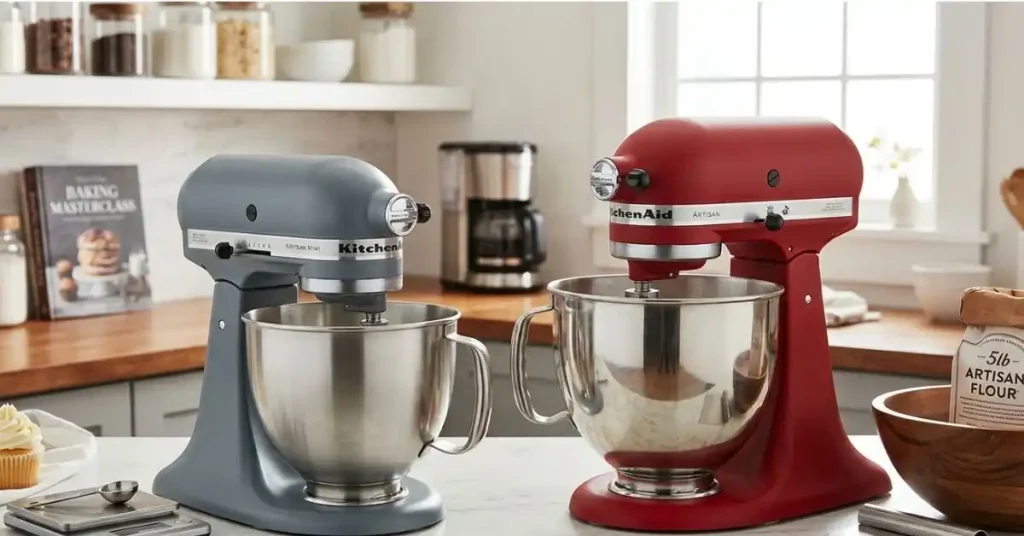
From my use of the Kitchenaid Mixer 3.5 Quart Vs 5 Quart, both are good tools. The 3.5 qt is best for small kitchens and simple baking. It is light and easy to use.
The 5 qt gives more space and less stress with big recipes. It feels easier when baking for family or guests.
If you bake small and simple, the 3.5 qt is enough. If you bake often, the 5 qt is the better long-term choice.
To Get More About Kitchen Accessories Product You Can Visit Our Site. If You Found our Posts Helpful Leave a Comment Below