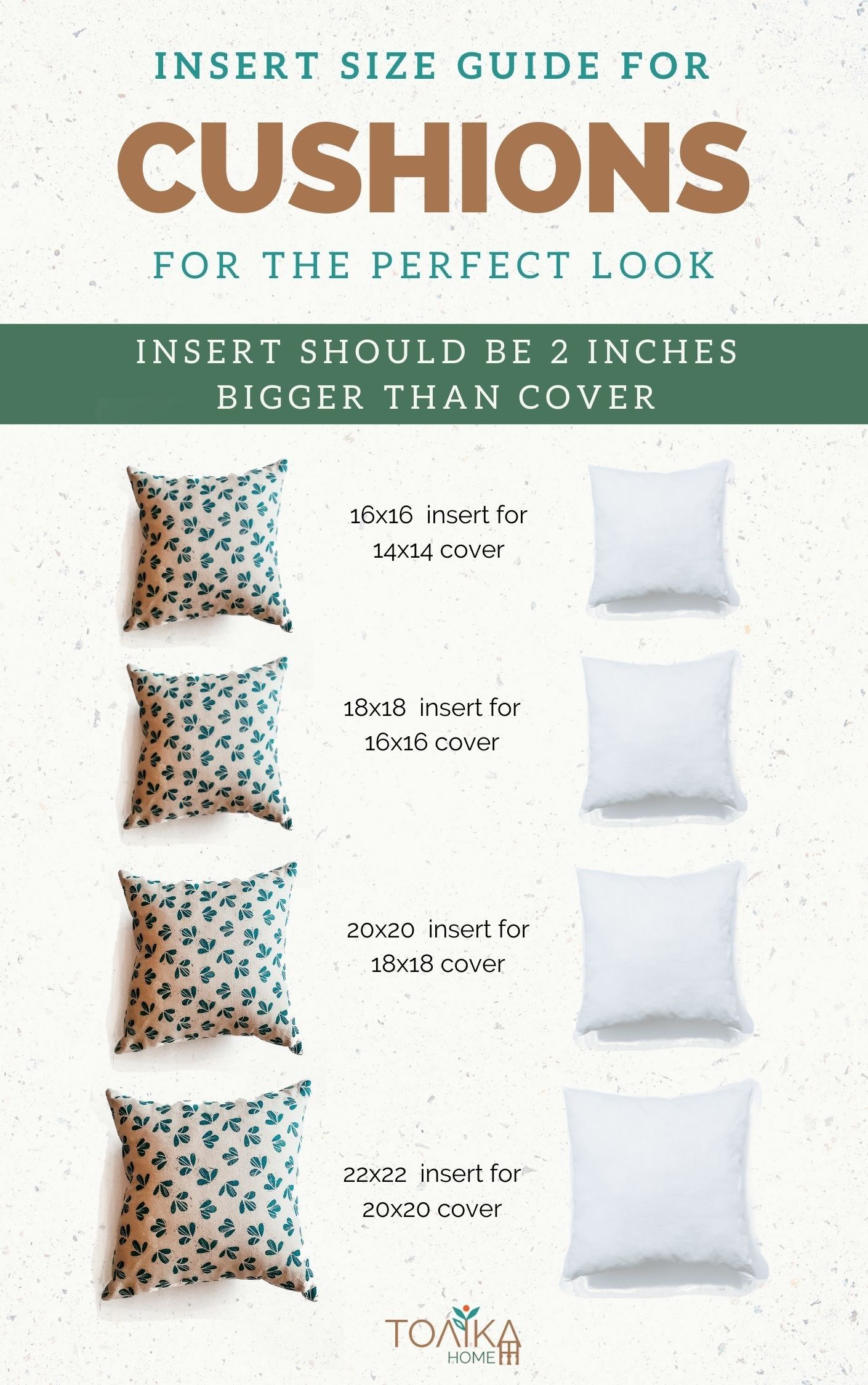
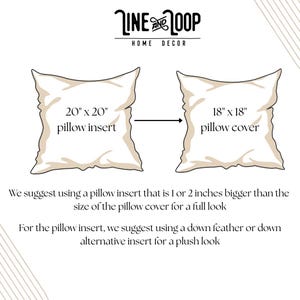
Yes. For most decorative throw pillows, choose an insert 1 to 2 inches larger than the cover for a fuller shape.
A comfortable, well-styled home often has a few throw pillows on the sofa, a bed, or an accent chair. In American homes, these small details can make a living room feel warm and inviting. But even a beautiful pillow cover can look flat when the insert inside it is too small.
The simple fix is to choose an insert that is slightly larger than the cover. For example, an 18-by-18-inch decorative cover will often look fuller with a 20-by-20-inch insert. The extra filling helps push the fabric into the corners and gives the pillow a neat, rounded shape.
However, bigger is not always better. The right size depends on the insert filling, the cover fabric, the pillow shape, and the look you want. A firm insert inside a small cover can make the fabric look stretched and may put too much pressure on the seams or zipper.
This guide explains how much larger to go, how to measure both pieces, and how to choose a good fit. You will also learn when a same-size insert makes sense and how to fix a pillow that looks flat, lumpy, or too tight.
Yes, in most cases, a decorative pillow insert should be slightly bigger than its cover. A difference of 1 to 2 inches is a useful starting point for many square throw pillows. This gives the filling room to push against the fabric and helps the finished pillow keep its shape.
For example, if you have an 18-by-18-inch cover, a 20-by-20-inch insert is a common choice. The insert compresses as it goes inside, then expands to fill the cover. This helps the pillow look fuller than it would with an insert that matches the cover exactly.
The main goal is not to pack as much filling as possible into the cover. It is to create a balanced shape with filled corners, smooth fabric, and enough softness for comfortable use. A pillow should look full without feeling like a hard block.
Source: i.etsystatic.com
Better corner coverage
A slightly larger insert helps fill the corners instead of leaving them empty or floppy.
A fuller appearance
Extra volume helps a decorative pillow keep a rounded, finished shape on a sofa or bed.
Less loose fabric
A suitable insert reduces sagging and excess fabric across the front of the cover.
Improved shape
The filling supports the cover and helps it keep its intended outline.
Why Does a Same-Size Insert Sometimes Look Flat?
A pillow cover is a fabric shell, while an insert is a filled object with depth and volume. When both have the same stated measurements, the insert may not spread enough filling into the cover’s corners. This is especially noticeable with soft or loosely filled inserts.
Think of the cover as a small bag. If the filling does not reach the edges, the fabric can sag and fold. A slightly larger insert adds gentle pressure from the inside and helps the pillow look more complete.
Still, a same-size insert is not automatically wrong. A firm, well-filled insert may fit a matching cover quite well. The result depends on its actual loft and construction, not just the numbers on the label.
Flat corners
The insert may not contain enough filling to reach the cover’s corners.
Loose front fabric
The cover may have more room than the insert can fill.
Weak shape
A soft or worn insert may not hold the pillow’s outline.
Does a Bigger Insert Make the Pillow Smaller?
It can make the finished pillow look more compact and rounded. The cover has a fixed amount of fabric, so adding more filling pushes the fabric outward and creates a fuller shape. The pillow may appear smaller across its flat face because the fabric curves around the filling.
This is normal when the fit is balanced. The important thing is that the pillow still closes easily, has no strained seams, and remains comfortable to use.
How Much Bigger Should a Pillow Insert Be?
For many square decorative pillows, start with an insert that is 1 to 2 inches larger than the cover in both directions. A 2-inch difference is a common choice for a full look, while a 1-inch difference may work better with firm filling or less flexible fabric.
The difference applies to the width and height, not just the total measurement. For example, a 20-by-20-inch cover paired with a 22-by-22-inch insert has 2 extra inches in width and 2 extra inches in height.
Some manufacturers and cover makers use their own sizing methods. A cover listed as fitting a 20-inch insert may actually be sewn smaller than 20 inches. Always check whether the seller lists the finished cover size or the insert size it is designed to fit.
Source: st.hzcdn.com
Small square covers
Try a 1-inch increase first. A large increase can make a small pillow too tight.
Medium square covers
A 2-inch increase is a useful starting point for a fuller decorative shape.
Large square covers
A 2-inch increase may work well, but filling and fabric still matter.
Rectangular covers
Consider a 1-inch increase in each direction, then adjust based on the insert’s firmness and the cover’s shape.
Pillow Insert Size Chart
Use this chart as a starting point when shopping for common decorative pillow sizes. It shows a typical 2-inch increase in both dimensions for square covers. Smaller pillows may need less extra size, while firm inserts may need a closer match.
These are general suggestions rather than fixed rules. Check the product’s actual measurements and the manufacturer’s fit instructions before ordering.
14-by-14-inch cover
Try a 15-by-15-inch insert for a slightly fuller fit.
16-by-16-inch cover
An 18-by-18-inch insert is a common option for added fullness.
18-by-18-inch cover
A 20-by-20-inch insert is a popular choice for a full throw pillow.
20-by-20-inch cover
Try a 22-by-22-inch insert for a plump appearance.
22-by-22-inch cover
A 24-by-24-inch insert may give the pillow a fuller shape.
24-by-24-inch cover
Try a 26-by-26-inch insert if the cover and filling can handle the extra volume.
12-by-20-inch lumbar cover
A 13-by-21-inch or 14-by-22-inch insert may work, depending on the filling and desired firmness.
14-by-22-inch lumbar cover
A 15-by-23-inch or 16-by-24-inch insert may suit a fuller shape.
Is a 2-Inch Difference Always Best?
No. The 2-inch rule is a useful starting point, but it does not work for every cover. A small 12-inch pillow with a firm insert may become too tight if you increase both dimensions by 2 inches.
A large, soft feather insert may compress enough to fit a cover that is 2 inches smaller. A firm polyester or foam insert may not compress as easily. This is why the filling type and cover construction matter just as much as the listed size.
If you are unsure, begin with the smaller size increase. You can compare the fit before deciding whether the next size up is worth trying.
Choose 1 inch larger
This is a sensible starting point for small covers, firm inserts, and stiff fabrics.
Choose 2 inches larger
This often works for medium square decorative pillows with compressible filling.
Consider more than 2 inches
Only consider a larger increase when the insert is very compressible and the cover maker allows it.
How to Measure a Pillow Cover and Insert
Measure both pieces before buying a new insert. This helps prevent a common problem: ordering a size based on the label when the actual cover or insert has different measurements.
You will need a flexible measuring tape and a flat surface. Remove the old insert from the cover before measuring. Do not measure a stuffed pillow and assume that its outside width is the same as its empty cover size.
For the most useful comparison, measure the cover from seam to seam while it is flat. Measure the insert along its seams without squeezing the filling. This gives you a better idea of how much extra size the insert can provide.
Source: m.media-amazon.com
What you need
A flexible tape measure, the empty cover, and the insert you plan to use.
Before you begin
Check the cover for damage, shrinkage, thick seams, and a narrow zipper opening.
Step 1: Measure the Empty Cover
Remove the insert and lay the cover flat on a table or clean floor. Smooth out the fabric without pulling it hard. Measure from the inside edge of one seam to the inside edge of the opposite seam.
Record the width and height separately. For example, you may find that a cover labeled 20 by 20 inches measures slightly less when laid flat. Use the actual measurement when choosing an insert.
If the cover has a decorative border, flange, or fringe, measure the part that holds the insert. Do not include extra decorative fabric that does not add space inside the cover.
Keep the cover flat
Smooth wrinkles without stretching the material.
Measure seam to seam
Use the inside seams to find the usable space.
Record both dimensions
Write down the width and height so you can compare them with the insert.
Step 2: Measure the Insert
Take the insert out of its packaging or cover and find its outer seams. Hold opposite corners gently and measure from one seam to the other. Avoid pressing down on the filling, because this can give you a false measurement.
A soft insert may look smaller when it is compressed by hand. Let it return to its normal shape before measuring. If it has been stored for a long time, fluff it first and allow the filling to expand.
Some inserts have a gusset, which is an extra strip of fabric around the sides that gives the pillow more depth. A gusseted insert may behave differently from a flat knife-edge insert, so compare the product’s shape and depth as well as its width and height.
Measure along the seams
Do not measure only across the fullest part of a rounded insert.
Avoid compressing the fill
A squeezed insert can appear smaller than its normal size.
Check the construction
Note whether the insert has flat edges or a gusset.
Step 3: Compare the Measurements
Subtract the cover measurement from the insert measurement in each direction. If your cover measures 18 inches and your insert measures 20 inches, the difference is 2 inches.
For example, an 18-by-18-inch cover and a 20-by-20-inch insert have a 2-inch increase in width and height. This is a common combination for a full decorative pillow.
If the difference is much larger, check the insert’s firmness before trying to put it inside. A soft feather insert may compress enough, but a rigid foam insert may not.
Compare width
Subtract the cover’s width from the insert’s width.
Compare height
Repeat the same check for the height.
Check the material
Decide whether the filling can compress enough to fit.
Step 4: Test the Fit
Place the insert inside the cover and guide each corner into its matching corner. Smooth the front and back with your hands. Check whether the fabric looks full without being pulled too tightly.
The zipper should close without a struggle. The seams should lie flat, and the pillow should still feel soft enough for its intended use. If the cover is under too much pressure, remove the insert and try a smaller size.
A good fit should look neat from the front and the sides. If the pillow has empty corners or loose fabric, try a larger or fuller insert. If it looks hard and stretched, go down a size.
Good sign
The corners are filled, the surface is smooth, and the cover closes without force.
Too small
The fabric sags, the corners look empty, or the pillow loses its shape.
Too large
The cover strains, the zipper is difficult to close, or the pillow feels overly firm.
How Insert Filling Affects the Right Size
The filling inside a pillow insert can change how much larger it should be than the cover. Some materials compress easily, while others hold their shape and resist pressure. This means two inserts with the same listed dimensions may produce different results.
Before choosing a size, think about how the pillow will be used. A decorative pillow on a sofa may benefit from extra volume. A pillow used for daily support may need a softer, less crowded feel.
Source: savvyapron.com
Down and feather
These fills can compress and shift, so a slightly larger insert may help create a full appearance.
Polyester fiberfill
This fill can vary in firmness and density. Check how much the insert compresses before sizing up.
Foam
Firm foam is less compressible, so a close size match is often more practical.
Down alternative
The feel and compression vary by construction and fill density. Follow the product’s sizing guidance.
Down and Feather Inserts
Down and feather inserts are popular for decorative pillows because they can feel soft and flexible. They can also be shaped by hand. When you press them, the filling moves and compresses, which can help a larger insert fit into a smaller cover.
For an 18-by-18-inch cover, a 20-by-20-inch feather insert may create a full, rounded appearance. A down-heavy insert may compress even more, depending on its fill amount and construction.
However, a larger size is not a guarantee of better results. An insert with too little filling may still look flat, while an overfilled one may feel too firm. Check the actual loft and the maker’s sizing advice.
Main benefit
The filling can shift toward empty corners and be reshaped by hand.
Possible drawback
The pillow may need regular fluffing to maintain its shape.
Polyester Fiberfill Inserts
Polyester fiberfill is common in affordable decorative inserts. It can feel light and springy, but the density varies from one product to another. Some inserts compress easily, while others feel firm and resist being pushed into a smaller cover.
If your polyester insert already feels full, do not automatically order a size that is 2 inches larger. A 1-inch increase or a same-size insert may be a better starting point, especially for a thick cover.
Over time, some fiberfill inserts may become lumpy or lose their original loft. If the pillow looks flat even after fluffing, the problem may be worn filling rather than an incorrect cover size.
Check firmness
A dense insert may need less extra size than a soft, loose one.
Check recovery
The insert should regain its shape after gentle compression.
Foam and Firm Inserts
Foam inserts hold their shape more firmly than many loose-fill options. This can be useful when you want a neat, structured pillow, but it also means that a large size increase may make fitting difficult.
For firm foam, start with the cover’s stated matching size or a small increase if the manufacturer permits it. Do not force a foam insert into a cover that is too small.
If the foam is designed for a specific cover, use the recommended dimensions. The shape and depth of the foam may matter as much as its width and height.
Best approach
Use a close size match and check the foam’s shape before buying.
Avoid
Do not bend or force a rigid insert into a cover that cannot accommodate it.
Down-Alternative Inserts
Down-alternative inserts are made to provide a soft feel without using natural down. Many use polyester fibers, but the construction and amount of filling can differ widely.
Some feel soft and compressible, while others are dense and springy. Read the product details and check whether the maker recommends matching the cover size or choosing a larger insert.
The name alone does not tell you how much the insert will compress. Its actual thickness, fill amount, and construction are more useful when choosing the right size.
Check the fill density
A fuller insert may need less extra room than a soft, lightly filled one.
Follow the size guide
Use the manufacturer’s advice when the insert has a special construction.
How Pillow Cover Fabric Changes the Fit
The cover fabric affects how much pressure the insert can place on the pillow. A soft, flexible fabric may stretch slightly, while a thick or stiff fabric may resist movement. This can change whether a 1-inch or 2-inch increase works best.
The seams and zipper also matter. Even if the fabric itself has some give, a narrow zipper or weak stitching can become a problem when the insert is too large.
Before buying a larger insert, check the fabric, seams, closure, and care label. A good fit should not depend on pulling the cover hard or forcing the zipper closed.
Source: i.pinimg.com
Cotton
Cotton covers can vary in thickness and weave. Check whether the fabric has enough give for a larger insert.
Linen
Linen can have a firm feel and may wrinkle or soften with use. A modest size increase is a useful starting point.
Velvet
Velvet covers can feel thick and may have limited stretch. Avoid overfilling them.
Canvas
Heavy canvas is often firm, so a large insert may create too much pressure.
Stretch fabric
A flexible knit may accommodate a little extra filling, but the seams still need protection.
Thick and Heavy Fabrics
Heavy fabrics can make a pillow look structured, but they may not stretch much around the insert. If you use a very large insert, the fabric can pull at the seams and make the zipper difficult to close.
Start with a 1-inch increase for a stiff cover. Test the fit before going larger. If the pillow already looks full, there is no reason to add more filling.
Watch the seams
Look for pulled stitching or fabric that appears unusually tight.
Check the closure
The zipper should move freely without force.
Soft and Flexible Fabrics
Some soft fabrics can accommodate a slightly larger insert more easily. This can help create a fuller appearance, especially when the insert has compressible filling.
However, a stretchy cover can also hide an insert that is too large until the pillow is used or washed. Do not rely on stretch alone. Check that the finished pillow remains comfortable and that the seams are not under strain.
Check the final shape
The cover should look smooth rather than pulled into sharp ridges.
Keep the pillow comfortable
The insert should not make the cover feel stiff or hard.
Do Zippers Affect Pillow Insert Size?
Yes. A zipper opening can be narrower than the pillow itself, so a large insert may be hard to put inside even when its final dimensions seem suitable. The zipper can also be damaged if you pull it across an overfilled cover.
Fold a soft insert gently and guide it through the opening. Do not pull hard on the zipper ends or use the zipper to compress the filling. If the insert will not fit without force, choose a smaller size.
An envelope-style cover has no zipper, but it still needs enough room for the insert to fit without stretching the fabric or pulling the overlapping panels apart.
Use gentle pressure
Compress a soft insert only enough to guide it through the opening.
Protect the zipper
Keep the filling and fabric away from the zipper teeth.
Never force the closure
Choose a smaller insert if the cover will not close easily.
Should You Use the Same-Size Insert and Cover?
Yes, a same-size insert can be a good choice when you want a softer, more relaxed pillow. Not every decorative pillow needs a firm, rounded shape. Some covers are designed to look loose and casual, especially when used on a bed or a deep sofa.
A same-size insert may also work well when the filling is already dense or when the cover has very little stretch. In these cases, adding 2 inches could make the pillow too tight.
The best choice depends on the finished look and feel. If you prefer a relaxed pillow that folds easily, use a matching size. If you want a full decorative shape, test an insert that is slightly larger.
Source: i.pinimg.com
Choose the same size for a relaxed look
This can suit casual pillows that should feel soft and easy to shape.
Choose a slightly larger insert for fullness
This can help fill the corners and reduce loose fabric.
Choose a close match for firm foam
Rigid filling may not compress enough to fit a much smaller cover.
Follow special product instructions
Some covers are designed for a specific insert size rather than a general size increase.
When a Same-Size Insert Is Better
A matching insert and cover can work well for casual bedroom pillows, soft lumbar pillows, and covers made from thick fabric. It can also suit a pillow that is meant to fold or bend rather than stand upright.
If the insert already fills the cover from corner to corner, a larger size may add pressure without improving the shape. In that case, keep the existing size.
Relaxed styling
Use a matching size when you want a soft, loose appearance.
Firm filling
A same-size insert may be enough when the filling already holds its shape.
Limited cover space
A small opening or thick fabric may not allow a larger insert.
When a Larger Insert Is Better
A larger insert is often useful for decorative pillows that sit upright on a sofa or bed. It helps the fabric hold a fuller shape and can prevent the corners from looking empty.
This option is especially useful when the cover is designed to look plump. Just make sure the filling is compressible enough and the cover has room for it.
Full decorative look
Choose a larger insert when you want rounded corners and a well-filled face.
Soft filling
Compressible inserts can often fit a cover that is slightly smaller.
Loose cover
A larger insert can reduce excess fabric and improve the finished shape.
Common Pillow Insert Sizing Mistakes
Choosing the wrong insert can leave a pillow flat, lumpy, or too tight. Many problems come from trusting the label without checking the actual size or the filling type.
A few simple checks can help you avoid these issues. Measure first, compare the materials, and test the fit before removing the packaging or washing the cover.
Source: cdn.shopify.com
Buying an insert that is too small
A small insert may leave loose fabric and empty corners.
Choosing the largest available size
A very large insert may stretch the fabric and put pressure on the seams.
Ignoring the filling
A firm foam insert and a soft feather insert may need different sizing.
Measuring the stuffed pillow
The filled shape does not show the true flat size of the empty cover.
Ignoring the zipper
A narrow opening can make an otherwise suitable insert difficult to fit.
Mistake 1: Buying Based Only on the Label
A pillow labeled 20 by 20 inches may not have the exact same finished dimensions as another pillow with the same label. Some sellers list the insert size a cover is designed to fit, while others list the actual finished cover measurement.
Read the product description carefully. Look for terms such as finished cover size, fits a 20-inch insert, and insert dimensions. If the listing is unclear, ask the seller before ordering.
Check the size description
Confirm whether the listed number refers to the cover or the insert.
Read the fit guide
Follow the maker’s sizing chart when available.
Mistake 2: Ignoring Old or Flat Filling
A pillow may look flat even when its insert is the correct size. This can happen when the filling has lost loft, become uneven, or formed lumps after repeated use.
Remove the insert and fluff it gently. If the filling does not regain its shape, replacing it may be more useful than buying a larger size. A bigger insert with worn filling will not always solve the problem.
Fluff first
Redistribute loose filling before deciding that the insert is too small.
Inspect for lumps
Look for areas that have become thin or uneven.
Replace when needed
Consider a new insert if the filling no longer holds its shape.
Mistake 3: Forcing an Oversized Insert Inside
An insert should fit with gentle handling. If you need to pull the cover hard, stretch the seams, or force the zipper, the insert is probably too large or too firm for that cover.
Stop rather than risk damage. Remove the insert and try a smaller one. A pillow that closes easily will usually last longer than one that stays under constant pressure.
Stop if the zipper resists
Do not pull the zipper harder to close an overfilled cover.
Check the seam
Look for stretched stitching or fabric that pulls sharply.
Choose a better fit
Use a smaller or more compressible insert.
How to Fix a Pillow That Does Not Fit Properly
You do not always need to replace the cover and insert when the fit looks wrong. First, identify the problem. A flat pillow, a tight pillow, and a lumpy pillow each need a different fix.
Remove the insert and inspect both pieces. Check the seams, filling, and measurements before making another purchase. This simple process can help you avoid spending money on the wrong size.
Source: cdn.shopify.com
Flat pillow
Check for a small insert, low fill volume, or worn filling.
Overstuffed pillow
Try a smaller or softer insert.
Lumpy pillow
Redistribute the filling or replace an insert that has lost its shape.
Empty corners
Guide the insert into each corner and check whether it needs more volume.
Problem: The Pillow Looks Flat
A flat pillow often has too little filling for its cover. Start by checking the actual dimensions. If the insert is smaller than the cover, try a slightly larger one.
If the measurements are already suitable, inspect the filling. Fluff a feather insert or gently redistribute loose fiberfill. If it stays flat, the filling may have worn out.
First fix
Fluff the insert and move the filling toward the corners.
Second fix
Try a slightly larger insert if the current one is undersized.
Last option
Replace filling that no longer holds its shape.
Problem: The Pillow Is Too Tight
A tight pillow may have an insert that is too large or too firm. Look for stretched fabric, pulled seams, and a zipper that is hard to close. These signs suggest that the cover is under too much pressure.
Remove the insert and try a smaller size. If the filling is firm, a smaller insert may be a better choice even when a soft insert of the same dimensions would fit.
Reduce the size
Try an insert that is closer to the cover’s actual measurements.
Check the filling
Choose a more compressible option if the cover allows it.
Protect the cover
Do not continue using an insert that strains the seams.
Problem: The Pillow Has Empty Corners
Empty corners may mean the insert is too small or the filling has shifted toward the middle. Before buying a new insert, reach inside the cover and gently guide the existing filling toward each corner.
If the corners remain empty, compare the insert and cover measurements. A slightly larger insert may help, provided the filling can compress and the cover is not already tight.
Redistribute filling
Move loose filling into the corners by hand.
Check the size
Compare the insert with the empty cover.
Consider a replacement
Choose a fuller insert if the current one cannot fill the cover.
Problem: The Pillow Looks Lumpy
Lumps can result from uneven filling, poor recovery, or a cover that is too small for a firm insert. Take the insert out and inspect it before changing the size.
If the filling can be moved, spread it evenly across the pillow. If it has formed permanent clumps, replacing the insert may be the better option.
Fluff the insert
Gently shake and redistribute the filling.
Check the cover
Make sure the fabric is not squeezing the filling into uneven sections.
Replace damaged filling
Use a new insert if the old one cannot return to a smooth shape.
Choosing Inserts for Different Pillow Shapes
Square, rectangular, round, and bolster pillows do not all need the same sizing approach. Their shapes affect how filling spreads inside the cover. A rule that works for a square throw pillow may not work as well for a narrow lumbar pillow.
For any shape, compare the insert’s width and height with the cover’s usable space. Also check the depth and construction when the pillow is not flat.
Source: cdn.shopify.com
Square pillows
A 1-to-2-inch increase in both dimensions is a useful starting point.
Rectangular pillows
Try a modest increase in both dimensions and check the final outline.
Lumbar pillows
A small increase may help, but avoid making the pillow too thick.
Bolster pillows
Match the insert to the cover’s length and circumference.
Round pillows
Check diameter and depth instead of applying a square-pillow rule.
Square Throw Pillows
Square throw pillows are the easiest shape to size. For a full look, start with an insert 1 to 2 inches larger in both directions. An 18-by-18-inch cover with a 20-by-20-inch insert is a common example.
Check the fabric and fill before going larger. A soft feather insert may compress well, while a firm foam insert may need a closer match.
Rectangular and Lumbar Pillows
Rectangular and lumbar pillows often need a more careful fit because their long, narrow shape can become bulky when overfilled. A modest increase may add fullness without making the pillow look too thick.
For a 12-by-20-inch cover, a 13-by-21-inch insert may be a reasonable starting point. A 14-by-22-inch insert may also work with soft, compressible filling and a cover designed to accommodate it.
Check the ends and center after inserting the filling. The pillow should have an even shape rather than a thick middle with empty ends.
Check the ends
Make sure the filling reaches both short sides.
Check the center
Avoid a thick, rounded center that makes the pillow look uneven.
Bolster and Round Pillows
Bolster and round pillows have a different shape from standard square cushions. Their depth and circumference affect the fit, so a simple 2-inch increase may not apply.
For these shapes, follow the cover maker’s recommended insert size. If the insert is custom-made, compare its diameter, length, and overall volume with the cover’s internal measurements.
Check diameter
Measure across the round section of the pillow.
Check length
Make sure the insert fills the cover without bunching at the ends.
Follow the maker’s guide
Use product-specific sizing for unusual shapes.
How to Get a Neat, Full Pillow Without Overstuffing
A good-looking pillow needs more than a large insert. It also needs even filling, well-positioned corners, and a cover that fits without strain. A few simple steps can help you get a smooth result.
After inserting the filling, place the pillow on a flat surface. Move the fill toward the corners, smooth the front, and check the sides. If the pillow has a feather insert, a gentle shake can help spread the filling.
Start with the right size
Choose an insert that suits the cover and filling type.
Fill the corners
Guide each corner of the insert into the matching corner of the cover.
Smooth the surface
Move the filling evenly across the front and back.
Check the side view
Look for an even shape without excessive bulging.
Test comfort
Press the pillow gently to make sure it still feels suitable for its purpose.
Should You Fluff a Pillow Insert Before Using It?
Yes. Fluffing a new insert can help it regain its shape after shipping or storage. Some products arrive compressed in packaging, so give them time to expand according to the care instructions.
Shake a soft insert gently and spread the filling with your hands. Avoid pulling hard on the seams or using heat unless the care label allows it.
Check the care label
Follow the manufacturer’s instructions for fluffing and handling.
Allow recovery time
Let compressed filling return to its normal shape before measuring.
How Should You Position the Insert?
Once the insert is inside the cover, use your hands to guide each corner into place. Pull the cover gently around the insert rather than tugging at one corner.
Smooth the fabric from the center toward the edges. If the filling has shifted, move it back toward the areas that look thin. This helps create a balanced shape.
Position all corners
Make sure the insert reaches each corner of the cover.
Spread the filling
Move loose filling away from thick areas and into thin ones.
Close gently
Keep fabric and filling away from the zipper teeth.
Frequently Asked Questions
Q
Should pillow inserts be 2 inches bigger than covers?
A 2-inch increase is a common starting point for medium square decorative pillows. For example, a 20-by-20-inch cover often pairs well with a 22-by-22-inch insert. However, the right difference depends on the filling, fabric, and desired firmness. Small covers and firm inserts may need a smaller increase.
Q
Can I use a pillow insert that is the same size as the cover?
Yes. A same-size insert can work well when you want a soft, relaxed appearance or when the insert already has plenty of filling. It may also be the better choice for firm foam inserts and thick covers. Check the finished shape rather than relying only on the size label.
Q
Should a down pillow insert be bigger than its cover?
A down insert may benefit from extra size because down compresses easily. A slightly larger insert can help fill the cover and create a fuller shape. The exact size depends on the amount of down, the insert’s construction, and the cover fabric.
Q
Should lumbar pillow inserts be bigger than covers?
They can be slightly larger, but avoid applying the square-pillow rule without checking the shape. A 1-inch increase in each direction may be a useful starting point for some lumbar covers. The pillow should fill its ends evenly without becoming too thick or stiff.
Q
What happens if a pillow insert is too big?
An oversized insert can stretch the cover, pull at the seams, and make the zipper difficult to close. It may also make the pillow too firm for comfortable use. Remove it and try a smaller or more compressible insert instead of forcing it into the cover.
Q
Why does my pillow still look flat with a larger insert?
The insert may have low fill volume, worn filling, or unevenly distributed material. The cover may also be larger than expected. Fluff the insert, check the actual measurements, and inspect the filling. If it no longer regains its shape, replacing it may help more than sizing up.
Q
How do I know if my pillow insert is too small?
Look for loose fabric, empty corners, a sagging center, and a pillow that does not hold its intended shape. Remove the insert and compare its measurements with the empty cover. If the insert is noticeably smaller, try a slightly larger size that suits the fabric and filling.
Q
Can a pillow insert be 3 inches bigger than its cover?
Sometimes, but it is not a safe general rule for every pillow. A soft, compressible insert may fit a cover that is 3 inches smaller, while a firm insert may be too large. Check the manufacturer’s sizing instructions and test the fit without forcing the zipper or seams.
✦ Wrapping Up
Conclusion
Pillow inserts should usually be slightly bigger than their covers when you want a full, well-shaped decorative pillow. For many square throw pillows, an increase of 1 to 2 inches in both dimensions is a useful starting point. An 18-by-18-inch cover with a 20-by-20-inch insert is one common example.
Still, the largest insert is not always the best choice. Down, feather, polyester, foam, and down-alternative filling can behave differently. Thick fabric, narrow zippers, and small covers can also change the ideal fit.
Measure the empty cover and the insert before buying. Test the fit, fill the corners, and check that the zipper closes easily. A good pillow should look full without stretched fabric, strained seams, or a hard feel.
💡 Key Takeaway
Before ordering, measure your empty pillow cover from seam to seam. Start with an insert 1 to 2 inches larger for a fuller look, then adjust for the filling, fabric, and closure. If the cover strains or the zipper will not close easily, choose a smaller insert.