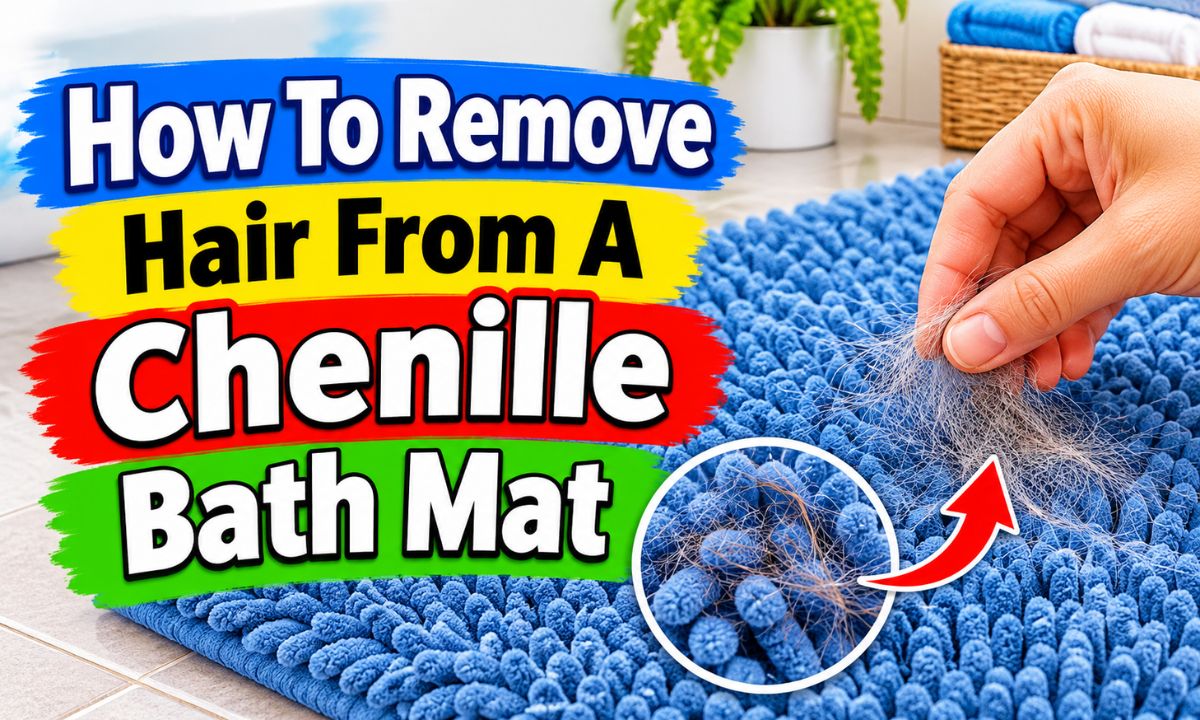
Remove hair from a chenille bath mat by shaking it outside, vacuuming with a gentle attachment, and lifting trapped strands with a slightly damp microfiber cloth or rubber glove.
In American homes, bathroom rugs often collect hair from daily showers, morning grooming, shaving, and pets walking through the bathroom. A chenille bath mat feels soft and cozy under your feet, but its thick, fluffy surface can trap loose strands deep between its fibers. This can make an ordinary cleaning job feel surprisingly difficult.
The best way to remove hair is to start with a dry mat. Shake out loose strands, use a vacuum with gentle suction, and then work on stubborn hair with a soft rubber glove or microfiber cloth. These methods help lift hair without pulling too hard on the chenille pile.
You do not need strong chemicals or rough cleaning tools for this job. In fact, hard scrubbing, stiff brushes, and aggressive scraping can damage the soft surface. A few gentle steps can make your mat look much cleaner and help it stay soft for longer.
Before cleaning, check the care label and look at the backing. Some chenille mats have a rubber or latex base, while others have a simple fabric backing. This small detail matters because the right cleaning and drying method depends on the materials used.
Why Does a Chenille Bath Mat Collect So Much Hair?
A chenille bath mat collects hair because of its soft, raised surface. Chenille is made with short fibers that create a fluffy, textured feel. These fibers form many small spaces where loose strands can settle.
When someone steps on the mat, the fibers press together. Hair can become caught between them, especially when the mat is damp. This makes the strands harder to remove with a quick shake.
Human hair and pet hair can both collect on the same mat. Long hair may wrap around the fibers, while short pet hair can settle deep in the pile. Fine strands may also cling to the surface because of static electricity.
Bathroom moisture adds another challenge. Hair that is mixed with damp dust or body oils can stick to the fabric instead of falling away. This is why dry hair removal is usually easier than trying to clean a wet mat.
Long human hair
Long strands can wrap around chenille loops and form small tangles. They often need to be lifted by hand or with a soft rubber tool.
Short pet hair
Short hairs can settle between the raised fibers. A vacuum attachment or slightly damp rubber glove may help gather them.
Damp hair
Wet strands may cling to the pile and collect dust. Allow the mat to dry before trying to remove most of the hair.
Static and dust
Dry fibers may attract fine hair and lint. A gentle wipe with a barely damp microfiber cloth can help collect loose particles.
Does Chenille Fabric Trap More Hair Than Flat Bath Mats?
It can. A flat cotton bath mat has a smoother surface, so loose strands may be easier to see and pick up. Chenille has a raised pile that creates more places for hair to settle.
This does not mean chenille is difficult to maintain. It simply needs a cleaning method that reaches between the fibers without pulling them apart. Regular dry cleaning can prevent hair from building up.
What You Need Before Removing Hair
Gather a few gentle cleaning tools before you begin. You do not need every item on this list. Choose one or two tools based on the type of hair and how deeply it is trapped.
A good cleaning tool should lift hair without catching, cutting, or pulling the chenille fibers. If you are unsure about a tool, test it on a small corner first.
Vacuum cleaner
Choose a vacuum with an upholstery attachment or a soft brush head. Adjustable suction is helpful because strong suction may pull at loose fibers.
Rubber cleaning glove
A clean household rubber glove can gather loose hair through gentle friction. Use a soft glove without rough cleaning pads.
Microfiber cloth
A clean microfiber cloth can collect fine hair and lint. It works best when it is slightly damp rather than soaking wet.
Lint roller
A reusable or disposable lint roller can lift surface hair. Choose a gentle adhesive and avoid pressing hard into the pile.
Wide-tooth comb
A wide-tooth plastic comb may help lift a few long strands caught between fibers. Use it carefully and never force it through a tight tangle.
Clean towel
A dry towel helps absorb moisture after spot cleaning and provides a clean surface for handling the mat.
Which Tool Is Best for Different Types of Hair?
The best tool depends on how the hair sits in the mat. A vacuum is useful for loose surface hair, while a rubber glove can help gather strands that cling to the fibers.
For long hair wrapped around chenille loops, use your fingers first. Gently lift the strand rather than pulling it across the fabric.
Loose hair
Start with shaking or vacuuming.
Fine pet hair
Try a slightly damp microfiber cloth or soft rubber glove.
Long tangled strands
Lift them gently with your fingers or a wide-tooth comb.
Small amounts of surface hair
Use a gentle lint roller with light pressure.
How To Remove Hair From A Chenille Bath Mat Step By Step
The safest approach is to remove loose hair first and then deal with strands trapped in the pile. Work slowly instead of trying to remove everything with one strong cleaning action.
Make sure the mat is dry before starting. If it is damp from a shower, hang or lay it in a well-ventilated area until the surface is dry. Do not place a wet mat on a dirty floor while cleaning it.
Step 1: Take the Mat Outside and Shake It
Pick up the bath mat and take it outside to a clean, open area. Hold two corners and shake it gently several times. This helps release loose hair, dust, lint, and small pieces of debris.
You can also hold the mat over a clean outdoor surface and pat the back lightly with your hand. Avoid hitting it against a hard wall or railing because repeated force may loosen the fibers or damage the backing.
After shaking, look at the surface. If most of the visible hair is gone, you may only need a quick vacuum or cloth wipe.
Helpful sign
Loose hair falls away easily and the pile looks less covered.
Step 2: Vacuum the Chenille Surface Gently
Place the dry mat on a flat surface. Attach an upholstery tool or soft brush attachment to your vacuum. If your vacuum has adjustable suction, choose a low setting.
Move the attachment slowly across the mat. Follow the direction of the fibers instead of pushing against them repeatedly. Use light pressure and avoid dragging a hard vacuum head over the chenille.
For thick chenille noodles or long loops, test a small area first. If the vacuum catches the fibers, stop and switch to a gentler method. Never use a rotating brush roll unless the care instructions specifically allow it.
Turn the mat over and vacuum the backing only if the manufacturer permits it. This can help remove hair that has passed through the surface and settled underneath.
Helpful sign
The surface has fewer loose strands and the fibers remain in place.
Step 3: Use a Rubber Glove to Lift Stubborn Hair
Put on a clean, dry rubber glove. Place your hand flat on the chenille surface and move it gently in one direction. The friction can gather loose hair into small clumps that are easier to pick up.
Work in short sections. When hair collects on the glove, remove it with your fingers and continue. Do not rub rapidly or press hard because excessive friction may rough up the pile.
If the strands are still difficult to collect, lightly dampen the glove with clean water. It should feel barely damp, not wet. Too much water can make hair cling to the mat.
Helpful sign
Hair gathers into small groups and lifts away without pulling the chenille fibers.
Step 4: Wipe the Surface With a Microfiber Cloth
A microfiber cloth is useful for fine strands that remain after vacuuming and glove cleaning. Dampen the cloth slightly with clean water and squeeze out the extra moisture.
Wipe the mat in short, gentle strokes. Work in the direction of the pile and rinse the cloth when it becomes covered with hair. A dirty cloth can spread loose strands from one area to another.
For a stubborn patch, hold the cloth over the hair for a moment and lift it slowly. Avoid scrubbing the same area again and again. If the hair does not release, let the mat dry and try a different gentle tool.
Helpful sign
Fine hair and lint collect on the cloth while the chenille surface stays soft.
Step 5: Remove Long Strands by Hand
Long hair can become wrapped around individual chenille loops. Look closely at the affected area and find the loose end of each strand.
Hold the fabric near the trapped hair with one hand. Use the other hand to lift the strand slowly. This reduces stress on the fibers and helps prevent accidental pulling.
A wide-tooth plastic comb can help with a loose tangle. Place the teeth near the surface and lift gently. Do not push the comb deep into the mat or use a fine-tooth comb that may catch the pile.
If a strand is tightly wrapped, use your fingers to loosen it rather than pulling harder. Never cut hair from the mat with scissors unless you can clearly separate it from the fabric.
Helpful sign
The strand comes away without visible damage, loose loops, or pulled fibers.
Step 6: Use a Lint Roller for the Final Cleanup
A lint roller can pick up the small amount of surface hair left behind. Roll it lightly across the mat without pressing it deep into the pile.
Check the adhesive as you work. If it becomes covered with hair, remove the used sheet or clean the reusable roller according to its instructions.
Some chenille fabrics have delicate or loosely attached fibers. If the roller pulls at the pile, stop using it and finish with a microfiber cloth instead.
Helpful sign
The visible surface looks clean, with no large hair clumps or sticky residue.
Step 7: Check the Backing and Let the Mat Air Out
Turn the mat over and inspect the backing. Remove loose hair from the underside with your fingers or a soft cloth. Do not scrape a rubber or latex backing with a hard tool.
If you used a damp cloth, allow the mat to dry fully in a well-ventilated area. Keep it away from excessive heat and direct high-temperature drying surfaces.
Once both sides are dry, return the mat to a clean, dry bathroom floor. Check that the backing still lies flat and has no cracks, peeling areas, or other signs of damage.
Helpful sign
The mat is dry, the pile looks even, and the backing remains intact.
How to Remove Pet Hair From a Chenille Bath Mat
Pet hair can be more difficult to remove than loose human hair because short strands may settle deep between the chenille fibers. Dogs and cats can also leave hair on the mat when they walk through the bathroom or lie near the shower.
Start with a completely dry mat. Shake it outdoors, then use a vacuum attachment with gentle suction. This removes loose hair before you try a rubber glove or cloth.
For fine pet hair, a slightly damp rubber glove may work well. Move your hand in one direction and collect the hair as it forms small clumps. Clean the glove often so that you do not spread hair back across the mat.
If your pet has thick or long hair, inspect the chenille loops for wrapped strands. Lift them by hand rather than dragging a comb through the fabric. This helps protect the soft pile.
Clean the mat more often
If pets regularly enter the bathroom, remove visible hair before it builds up.
Brush pets away from the bathroom
Regular grooming in a separate area may reduce the amount of loose hair that reaches the mat.
Keep the floor clean
Vacuum or sweep the bathroom floor so that loose hair does not transfer back to the rug.
Avoid rough pet-hair tools
Hard scraping edges and sharp grooming combs can catch and pull chenille fibers.
What If Pet Hair Is Deep Inside the Chenille Pile?
If the hair remains after surface cleaning, work on a small section at a time. Gently spread the pile with your fingers to expose the trapped strands. Lift them out without pulling on the surrounding fibers.
A vacuum may help after the hair has been loosened. Use a soft attachment and low suction. If the strands remain firmly caught, repeat the gentle glove method instead of increasing the vacuum power.
Avoid soaking the mat just to loosen pet hair. Wet fibers may make the strands harder to separate and can make the mat heavier to handle.
Can You Wash a Chenille Bath Mat to Remove Hair?
Yes, washing may remove hair that remains after dry cleaning, but it should not be your first step. A washer is useful for cleaning dirt, body oils, and residue as well as loose hair. It may not remove strands tightly wrapped around the pile.
Always read the care label first. Chenille mats can be made from cotton, polyester, or blended fibers. Some have rubber, latex, PVC, or other non-slip backing materials that need special care.
If the label allows machine washing, remove as much loose hair as possible before placing the mat in the washer. This helps limit the amount of hair left in the washing machine and reduces the chance of hair spreading to other laundry.
Use the water temperature and cycle listed on the care label. A cold, gentle cycle with mild detergent is a common option for washable chenille mats, but the manufacturer’s directions take priority.
Avoid fabric softener unless the manufacturer specifically recommends it. Some chenille products may shed more or lose their useful surface feel when fabric softener is used. Do not assume that all mats have the same washing requirements.
How to Prepare the Mat for Washing
First, shake the mat outside and remove visible hair by hand or with a vacuum. Check the corners and edges, where strands may collect around seams.
Look at the backing for peeling, cracks, or loose sections. If the backing is damaged, machine washing may make the problem worse. Spot cleaning or replacing a badly worn mat may be a better choice.
Place the mat in the washer only if the care label allows it. Wash it separately or with suitable similar items if the manufacturer’s instructions permit. Avoid mixing it with clothing that has hooks, zippers, or rough parts that may catch the chenille.
Check the material
Cotton and polyester may have different care needs.
Check the backing
Rubber and latex-backed mats may not tolerate machine drying.
Use mild detergent
Follow the amount and product guidance on the detergent and mat labels.
Skip unnecessary additives
Avoid fabric softener and harsh cleaners unless the care instructions specifically allow them.
How to Dry the Mat After Washing
Drying is just as important as washing. A damp bath mat can hold moisture in its thick pile and backing. This can lead to an unpleasant smell if the mat is put back on the floor too soon.
If the care label allows tumble drying, use only the permitted heat setting. For a rubber or latex-backed mat, air drying is generally the more cautious option unless the manufacturer states otherwise.
Lay the mat flat or hang it in a way that does not stretch or distort the material. Make sure air can reach both sides. Do not put it back on the floor until the backing and pile are completely dry.
Cleaning Methods You Should Avoid
Not every hair-removal tool is suitable for chenille. A tool that works on a carpet or a sturdy upholstery fabric may damage the delicate raised fibers of a bath mat.
The goal is to lift hair, not scrape it out. Use light pressure and stop if you notice pulled loops, shedding, rough patches, or changes in the backing.
Stiff wire brushes
Wire bristles can catch and pull the chenille loops. They may leave rough or damaged areas.
Sharp blades
Razors and sharp scraping tools can cut the fibers or damage the backing. They are not suitable for routine hair removal.
High-powered vacuum settings
Strong suction and rotating brush rolls may pull at loose fibers. Use a gentler attachment.
Excessive water
Soaking the mat can make hair cling to the pile and may affect some backing materials.
Strong adhesive tape
Very sticky tape may pull out loose chenille fibers or leave residue. A gentle lint roller is a better option when the fabric tolerates it.
Hard scrubbing
Aggressive rubbing can tangle the pile and make the surface look uneven.
High heat
Excessive dryer heat can damage some synthetic fibers and weaken rubber or latex backing.
Is Baking Soda or Vinegar Needed for Hair Removal?
No. Baking soda and vinegar are not necessary for removing ordinary human or pet hair from chenille. Hair is a physical material, so lifting it with a suitable tool is usually more useful than applying a cleaning solution.
Baking soda may leave fine powder between the fibers if it is not removed fully. Vinegar may also be unsuitable for certain backing materials or finishes. Avoid using either product without a clear cleaning need and confirmation that the mat can tolerate it.
For basic hair removal, a dry shake, gentle vacuum, rubber glove, and microfiber cloth are usually enough.
How to Prevent Hair From Building Up on Your Bath Mat
Regular light cleaning is easier than removing a thick layer of trapped hair. A few small habits can keep your chenille bath mat looking tidy without frequent deep washing.
If your bathroom gets heavy use, check the mat every few days. Homes with pets or several people sharing one bathroom may need more frequent cleaning than a bathroom used by one person.
Shake the mat regularly
Take it outside and shake it to release loose hair and dust before they settle into the pile.
Vacuum the surface
Use a soft attachment when visible hair starts to collect. Avoid aggressive brush rolls.
Groom pets in another room
Brushing a dog or cat away from the bathroom can reduce loose hair on the floor and mat.
Keep the bathroom floor clean
Sweep or vacuum around the mat so hair does not transfer back onto its surface.
Allow the mat to dry
Hang or lay it out after use when possible. A dry surface is easier to clean than one covered with damp hair.
Wash only when needed
Follow the care label and avoid repeated washing when a simple dry cleanup is enough.
How Often Should You Remove Hair?
There is no single schedule for every home. A bathroom used by several people or pets may collect hair much faster than a guest bathroom used occasionally.
A quick visual check every few days is a useful starting point. Remove visible hair when you see it, and use a deeper cleaning method when hair remains trapped after shaking or vacuuming.
Do not wait until the mat looks completely covered. Small, regular cleanups take less effort and reduce the need for strong cleaning methods.
Check the mat every few days and remove hair before it builds up.
Bathroom used by pets
Check more often, especially during periods of heavy shedding.
Can a Bath Mat Be Placed in the Washing Machine Every Week?
Not every chenille mat needs weekly machine washing. Frequent washing can add wear to the fibers and backing, especially when the wrong cycle or drying method is used.
For routine hair removal, use dry methods first. Wash the mat based on its care instructions, how heavily it is used, and whether it has accumulated dirt or odor.
Troubleshooting: Why Is Hair Still Stuck in the Chenille Mat?
If the usual cleaning methods do not work, the problem may be the type of hair, the condition of the pile, or the tool you are using. Check the surface before trying a stronger method.
The following table connects common problems with practical next steps. Start with the gentlest option and stop if the fabric begins to change.
Common Hair Removal Problems and Solutions
Use this guide when the mat still looks hairy after your first cleaning attempt.
Hair sticks even after vacuuming
Try a slightly damp microfiber cloth or rubber glove. Fine hair may cling to the pile instead of lifting with suction.
Long hair keeps wrapping around the loops
Find the loose end and lift it by hand. Do not pull hard or drag a comb across the surface.
The mat is damp
Let it dry fully before removing most of the hair. Moisture can make strands cling to the fibers.
The vacuum catches the fabric
Stop immediately. Switch to a soft cloth or glove and use less pressure.
The lint roller pulls fibers
Stop using adhesive tools. Try a clean microfiber cloth instead.
Hair returns after cleaning
Clean the surrounding bathroom floor and check whether pets or loose hair are transferring back onto the mat.
The chenille looks rough or thin
Avoid further brushing or scraping. Check for worn fibers and consider replacing the mat if the pile or backing is badly damaged.
When Should You Replace the Bath Mat?
A few trapped hairs do not mean that your bath mat needs replacing. However, a mat with severe shedding, bald patches, loose seams, or a damaged backing may no longer be suitable for regular use.
Pay special attention to the non-slip backing. If it becomes cracked, sticky, brittle, or starts peeling, the mat may not stay in place as intended. Stop using it if it becomes unstable on the bathroom floor.
A persistent musty smell after proper cleaning and full drying may also suggest that moisture is trapped in the backing or that the material has deteriorated. If washing and drying according to the care label do not help, replacement may be the practical choice.
Quick Comparison of Hair Removal Methods
Different tools solve different hair problems. This comparison can help you choose a suitable method without trying every option.
Shaking
Best for loose hair, dust, and surface debris. It is a good first step and requires no cleaning solution.
Gentle vacuuming
Best for loose strands spread across the surface. Use low suction and a soft attachment.
Rubber glove
Best for hair that clings to the pile. Move in one direction with light pressure.
Microfiber cloth
Best for fine hair and lint. Use it barely damp and rinse it often.
Lint roller
Best for small amounts of surface hair. Test first because adhesive may pull delicate fibers.
Hand removal
Best for long strands wrapped around individual loops. Lift slowly to avoid damaging the fabric.
Which Method Should You Try First?
For most chenille bath mats, start by shaking the mat and then vacuuming it gently. If fine strands remain, use a rubber glove or microfiber cloth.
Save hand removal for long strands that are clearly wrapped around the pile. This order reduces unnecessary contact with the fabric and helps keep the cleaning process simple.
Frequently Asked Questions
Q
What is the easiest way to remove hair from a chenille bath mat?
The easiest method is to shake the dry mat outside and then use a vacuum with a soft upholstery attachment. For hair that remains trapped, wipe the surface with a slightly damp microfiber cloth or use a clean rubber glove. Work gently in the direction of the fibers.
Q
Can I use a lint roller on a chenille bath mat?
Yes, if the fabric tolerates it. A lint roller can collect loose surface hair, but some chenille mats have delicate fibers that may stick to the adhesive. Test a small hidden area first and use light pressure. Stop if the roller pulls at the pile.
Q
Does a rubber glove remove pet hair from chenille?
A clean rubber glove can help remove pet hair because gentle friction gathers loose strands into small clumps. Move your hand in one direction instead of rubbing back and forth. A slightly damp glove may help with fine hair, but avoid making the mat wet.
Q
Can I use a regular carpet brush on a chenille bath mat?
A stiff carpet brush is not a good first choice. Its bristles may catch the chenille loops and pull out fibers. Use a soft upholstery attachment, microfiber cloth, or rubber glove instead. If you try any brush, test it gently on a small area first.
Q
Why does my chenille bath mat still have hair after washing?
Washing does not always release hair that is wrapped around individual fibers. Wet hair may also cling to the pile. Let the mat dry, then use a rubber glove or microfiber cloth to lift the remaining strands. Always remove loose hair before washing when possible.
Q
Can I put a chenille bath mat in the dryer after removing hair?
It depends on the fiber and backing. Some washable polyester or cotton chenille mats allow low-heat tumble drying, while rubber or latex-backed mats may require air drying. Follow the care label rather than assuming every chenille mat can go in the dryer.
Q
Does fabric softener help remove hair from chenille?
No. Fabric softener is not a hair-removal product. It may coat the fibers and affect the texture or absorbency of some chenille mats. Use gentle physical cleaning methods and follow the manufacturer’s laundry instructions.
Q
How do I remove short human hair from a fluffy bathroom rug?
Start with a dry vacuum using a soft attachment. Then use a slightly damp microfiber cloth or rubber glove to collect fine strands. Clean small sections at a time and rinse the cloth when it gathers too much hair.
Q
How can I stop my chenille bath mat from collecting so much hair?
Shake the mat regularly, keep the bathroom floor clean, and remove visible hair before it becomes trapped. If you have pets, groom them in another room and check the mat more often. Allow the mat to dry between uses.
Q
Should I use a washing machine to remove every strand of hair?
No. Dry cleaning methods are usually a better first step. A washing machine may remove some remaining debris, but it is not guaranteed to release tangled hair. Repeated washing can also wear the fibers and backing. Follow the care label and wash only when the mat needs a deeper clean.
✦ Wrapping Up
Conclusion
Removing hair from a chenille bath mat does not need to be difficult. The key is to use gentle methods that lift loose strands without pulling on the soft fibers. Start by shaking the mat outside, vacuum it with a soft attachment, and use a rubber glove or slightly damp microfiber cloth for stubborn hair.
For long strands wrapped around the chenille loops, take your time and remove them by hand. Avoid stiff brushes, sharp tools, strong adhesive tape, and excessive scrubbing. These methods can damage the surface and make the mat look worn.
Remember to check the care label before washing or drying your mat. The type of fiber and backing can change which cleaning methods are suitable. A little regular care can help keep the mat clean, soft, and pleasant to use.
💡 Key Takeaway
Start with a dry shake and gentle vacuum. Use a clean rubber glove for trapped hair, then let the mat dry fully before returning it to the bathroom floor.