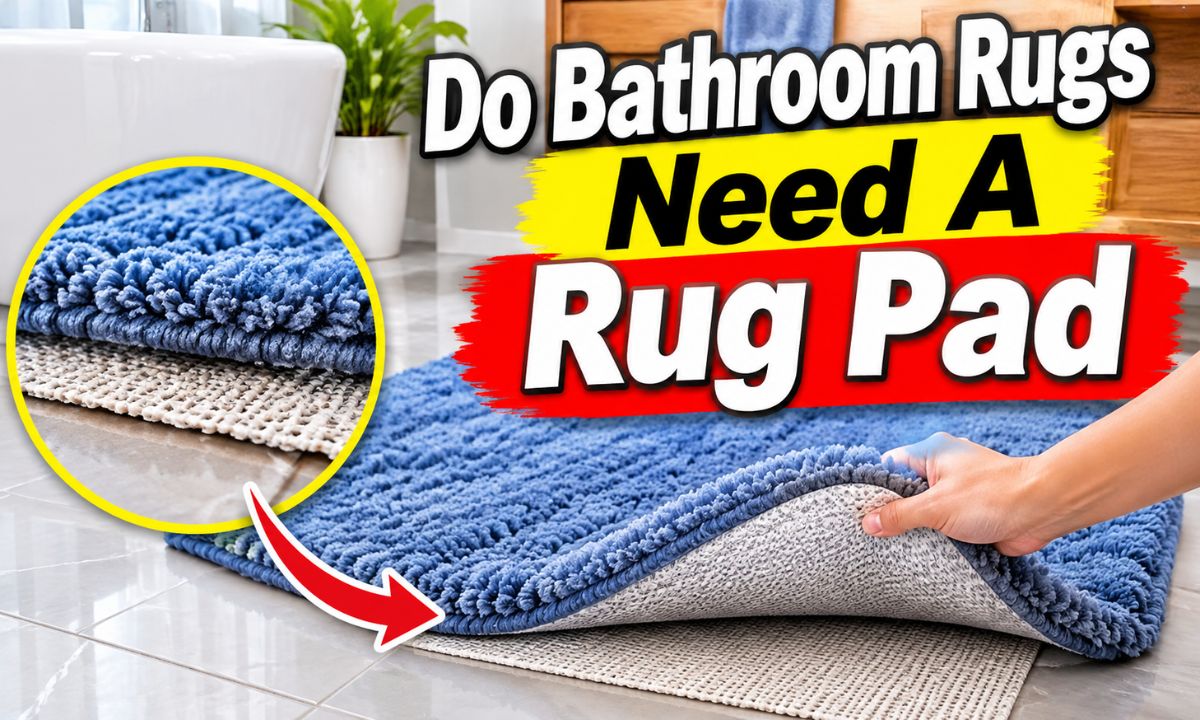
Most bathroom rugs do not need a separate rug pad if they already have a secure non-slip backing. Rugs without grip often need one, especially on smooth tile, vinyl, or hardwood floors.
In American homes, bathroom rugs serve several purposes. They keep cold tile floors more comfortable, soak up water after showers, and add a soft touch to bathrooms with tubs, walk-in showers, and double vanities. But a rug that slides across the floor can create a safety problem. That is why choosing the right backing matters as much as choosing the right fabric.
A separate rug pad can help keep a bathroom rug in place. It can also add cushioning and protect some floor surfaces from scratches. However, not every bathroom rug needs one. Many modern bath mats already have rubber, latex, silicone, or other non-slip backing built into their design.
The best choice depends on your rug, floor type, bathroom moisture, and daily use. A thin cotton rug on smooth porcelain tile may need extra grip, while a thick bath mat with a sound non-slip backing may work well on its own. You should also consider whether the pad can handle moisture and whether its material is safe for your flooring.
This guide explains when to use a separate rug pad, how to choose the right type, and how to install and care for it. You will also learn when a rug pad can cause problems and how to keep your bathroom floor clean, dry, and safe.
No, bathroom rugs do not always need a separate rug pad. The main reason to use one is to stop a rug from sliding. If your rug already has a reliable non-slip backing and stays firmly in place on your bathroom floor, another layer may be unnecessary.
A rug pad becomes more useful when the rug has a smooth fabric underside, a worn backing, or very little weight. These rugs can move when someone steps on them, especially on polished tile or smooth vinyl. A thin grip pad can add friction between the rug and the floor.
Think of a rug pad as an extra layer of support rather than a required bathroom accessory. It solves a specific problem, but it is not automatically better to place one under every rug. In a damp room, adding another layer also means you have one more surface to clean and dry.
Before buying a pad, turn your bathroom rug over and inspect its underside. Look for a rubber coating, silicone dots, latex backing, or another surface designed to prevent movement. Then test the rug on a completely dry floor by pressing and gently pushing its edges.
Source: casolia.com
Use a pad when the rug slides.
A rug that moves under normal foot pressure needs better grip. A suitable non-slip pad can help hold it in place.
Skip the extra pad when backing works.
If the rug has an intact gripping layer and stays flat, a second pad may add unnecessary height.
Replace damaged backing.
Cracked, peeling, or hardened backing may no longer grip properly. Replace the rug or use a compatible solution if the manufacturer allows it.
Consider floor compatibility.
The right pad must work with the rug and the floor underneath it. A gripping material that damages vinyl is not a good solution.
Bathroom Rugs With Built-In Non-Slip Backing
Many bathroom rugs come with a gripping underside. Some use small silicone dots, while others have a continuous rubber or latex coating. These designs provide friction between the rug and the floor without requiring a separate accessory.
If the backing is in good condition, it may provide all the grip your rug needs. Follow the care label because high dryer heat, harsh cleaners, and repeated wear can damage some backing materials. Also, remember that even a non-slip rug can move if water collects underneath it.
Silicone dots
Small grip points help reduce movement while leaving spaces between them. Check that the dots remain intact after washing.
Rubber or latex backing
A coated underside can provide broad contact with the floor, but compatibility with vinyl and certain floor finishes must be checked.
Textured synthetic backing
Some rugs use a textured base to improve friction. Its performance depends on the floor and the condition of the material.
Bathroom Rugs Without Non-Slip Backing
Traditional cotton rugs, woven mats, and decorative bathroom rugs may have plain fabric undersides. These styles can feel comfortable, but they may slide on smooth floors. A properly matched non-slip pad can provide the missing grip.
This is especially useful for small rugs beside a bathtub or vanity. These rugs are easy to move because they are light and have little weight holding them down. Choose a thin pad that grips both the rug and the floor without making the edges rise.
Benefits Of Using A Rug Pad Under A Bathroom Rug
A suitable rug pad can improve grip, comfort, and floor protection. These benefits matter most when you use a lightweight rug on a smooth surface or have a bathroom with frequent foot traffic.
However, a pad is only useful when it suits the room. A thick living room pad may not be suitable for a bathroom because moisture, cleaning needs, and low-clearance doors change the requirements. Choose a simple product designed for the rug and floor combination.
Source: storage.googleapis.com
Better stability
A gripping pad can reduce unwanted movement on smooth, dry floors.
More cushioning
A suitable thin or medium pad may improve comfort underfoot.
Less direct rubbing
A pad can separate the rug backing from the floor and help reduce friction-related wear.
1. Helps Prevent Rug Movement
The biggest benefit of a non-slip rug pad is improved stability. It adds friction between the floor and rug, making it harder for the rug to slide when someone steps on it.
This can be helpful near showers, bathtubs, and bathroom sinks. These are places where people often step with damp feet. A rug that shifts suddenly can contribute to a fall, so keeping it firmly in place is important.
Still, a rug pad does not make a wet bathroom floor safe by itself. Water can collect between the layers and reduce grip. Keep the floor dry and check the rug regularly.
2. Adds Comfort Underfoot
Some rug pads add a small amount of cushioning. This can make a thin bathroom rug feel softer on hard tile, stone, or concrete flooring. The extra layer may also make standing at a vanity more comfortable.
The amount of comfort depends on the pad’s material and thickness. A thin grip pad mainly helps with stability, while a cushioned pad provides more softness. For bathrooms, avoid excessive thickness because it can raise the rug and create uneven edges.
3. Helps Protect The Floor
A pad can reduce direct contact between a rough rug underside and the floor. This may help limit scratches caused by movement, grit, or rough backing materials.
It can also help keep dirt from rubbing directly against some floor finishes. However, a pad is not a guarantee against damage. Dust and sand can collect between the rug, pad, and floor, so regular cleaning is still necessary.
4. May Reduce Wear On The Rug
When a rug moves every time someone steps on it, its fibers and edges can experience extra friction. A suitable pad can reduce that movement and help the rug stay in its proper position.
Some pads also provide light cushioning that reduces direct pressure against hard flooring. This can help protect certain rugs from wear, although the benefit depends on the rug’s construction and how often people use the bathroom.
5. Helps Keep The Rug Flat
A thin, properly fitted pad can help support a rug that tends to shift or bunch. This is useful for lightweight rugs placed in open areas where furniture does not hold them down.
However, the pad must not extend beyond the rug. An exposed pad can catch toes, collect dirt, or look untidy. If the rug still curls after installation, check its backing and edges rather than adding more layers.
Which Bathroom Floors Need A Rug Pad?
The type of flooring in your bathroom plays a major role in deciding whether you need a separate pad. Smooth surfaces often allow lightweight rugs to slide, but some flooring materials also have special care needs.
A pad that works well on ceramic tile may not be suitable for luxury vinyl plank or finished hardwood. Always check the flooring manufacturer’s instructions before placing rubber, latex, PVC, or other synthetic materials against the floor.
Use the following table as a starting point. It shows the main concern for common bathroom floors and the type of solution worth considering.
Source: storage.googleapis.com
Ceramic and porcelain tile
These surfaces can become very slippery when wet. A compatible thin non-slip pad may help a rug without built-in grip stay in place.
Vinyl and luxury vinyl plank
Check the floor manufacturer’s compatibility rules. Some rubber or latex backings can cause discoloration or marks.
Sealed hardwood
Choose a floor-compatible pad and avoid trapped moisture. Keep both surfaces clean and dry.
Laminate flooring
Use a compatible non-staining pad and avoid letting water collect beneath the rug.
Natural stone
Check the stone and sealant care instructions. Choose a pad that will not scratch, stain, or react with the surface.
Bathroom Rugs On Tile Floors
Tile is common in American bathrooms because it is easy to clean and handles everyday moisture well when properly installed and maintained. However, smooth porcelain and glazed ceramic can become slick when wet.
If your rug has no gripping underside, a thin non-slip pad may help. Make sure the pad is approved for tile and does not create a raised edge. Lift the rug often to remove water and dirt from underneath.
Bathroom Rugs On Vinyl Floors
Vinyl flooring needs extra care when selecting a rug pad. Certain rubber and latex materials may react with vinyl finishes or ingredients in the flooring and leave yellow, brown, or other discolored marks.
Do not assume every rubber-backed rug or pad is safe for every vinyl floor. Check the flooring manufacturer’s guidance and look for a pad specifically approved for your floor type. A latex-free option may be appropriate, but its exact material and compatibility still matter.
If the manufacturer does not approve a particular pad, do not use it just because its label says non-slip. Floor compatibility is more important than a broad marketing claim.
Bathroom Rugs On Hardwood And Laminate
Wood and laminate floors can be affected by moisture trapped beneath a rug. Even a suitable non-slip pad can create problems if water remains between the layers for long periods.
Choose a compatible pad that does not damage the finish. Lift the rug and pad regularly, clean away dust, and allow both surfaces to dry fully before putting them back.
For hardwood, pay special attention to the floor’s finish and the pad manufacturer’s instructions. For laminate, avoid standing water because moisture can affect joints and edges.
How To Choose The Right Rug Pad For A Bathroom
The best bathroom rug pad is thin, stable, easy to clean, and compatible with both the rug and the floor. You do not need a thick, expensive pad designed for a large living room rug.
Start by checking the rug’s backing and measuring its full dimensions. Then check the floor type and choose a pad that can provide grip without raising the rug too much.
A bathroom is a damp space, so moisture management should be part of your decision. Avoid products that are difficult to lift, clean, or dry.
Source: dressmycrib.com
Choose A Suitable Pad Material
Rug pads are made from different materials. Their grip, flexibility, cushioning, and floor compatibility can vary. There is no single material that works best for every bathroom.
Read the product label carefully. Look for clear information about the floor types it supports, whether it can be trimmed, and how it should be cleaned.
Natural rubber
Natural rubber can provide strong grip on some floors. However, it may not be suitable for vinyl and certain finished surfaces. Check the flooring manufacturer’s instructions first.
Felt
Felt adds cushioning and helps protect some surfaces from direct abrasion. Felt alone may not provide enough grip for a small bathroom rug on smooth tile.
Felt and rubber combinations
These products combine cushioning with a gripping surface. Choose one only when both materials are approved for your flooring and the product is suitable for a moisture-prone room.
Synthetic grip mesh
Thin mesh-style pads can provide friction without adding much height. Check the material, floor compatibility, and cleaning instructions.
Silicone-based grip products
Some silicone products offer a low-profile gripping surface. Confirm that the product is intended for your floor and rug combination.
Pick The Correct Thickness
A bathroom rug pad should not make the rug feel like a raised platform. Thick padding can create uneven edges and increase the chance of catching a toe.
For most small bathroom rugs, a thin grip pad is a sensible starting point. A slightly thicker option may work under a larger decorative rug, but only if it stays flat and does not interfere with doors or nearby fixtures.
The goal is to improve stability without changing how safely you can step onto the rug.
Choose A Pad That Handles Cleaning
Bathroom rugs often need regular washing, and the area beneath them needs regular cleaning too. A pad that cannot be lifted easily can make maintenance harder.
Look for clear cleaning instructions. Some pads can be wiped clean, while others may require hand washing or replacement when damaged. Do not put a pad in the washing machine unless its manufacturer specifically allows it.
How To Install A Rug Pad Under A Bathroom Rug
Installing a bathroom rug pad is usually simple. You need a suitable pad, a tape measure, scissors if trimming is allowed, and a clean, dry floor.
Before you begin, read the instructions for both the rug and the pad. Some rugs already have special backing, and some manufacturers advise against adding another layer.
Source: ar.inspiredpencil.com
Sign of success
The rug stays flat, the pad remains hidden, and neither layer shifts during normal use.
If the rug still slips
Clean and dry both surfaces, check the pad orientation, and confirm material compatibility. Replace the pad if it is worn or damaged.
If the edges rise
Check the pad size and thickness. Remove the extra layer if it creates a raised or uneven edge.
Step 1: Clean The Floor
Remove the bathroom rug and clean the floor beneath it. Sweep or vacuum away hair, dust, and small particles that could collect between the pad and floor.
Wipe the area with a suitable floor cleaner if needed. Allow the floor to dry completely before installing the pad. A damp surface can reduce grip and trap moisture.
Step 2: Measure The Bathroom Rug
Measure the length and width of your rug. The pad should be slightly smaller so that it remains hidden beneath the rug.
For example, if your rug measures 24 by 36 inches, you could start by considering a pad around 22 by 34 inches, provided the pad manufacturer’s sizing guidance allows it. This leaves roughly one inch of rug extending beyond each side.
Step 3: Trim The Pad If Needed
If the pad is larger than your rug, trim it only if the manufacturer says it is safe to cut. Use sharp scissors and make smooth edges.
Do not leave loose strips or uneven sections. A poorly trimmed pad can fold or stick out from beneath the rug.
Step 4: Position The Pad Correctly
Place the pad on the dry floor in the intended position. Follow the manufacturer’s instructions to identify which side faces the floor and which side faces the rug.
Some products have different textures on each side. Reversing them may reduce grip or cause the rug to move.
Step 5: Place The Rug And Check Its Edges
Lay the rug over the pad and smooth it from the center toward the edges. Make sure the pad does not show and that the rug lies flat.
Check that bathroom doors open freely. Also look for raised corners, wrinkles, and uneven areas that could catch your feet.
Step 6: Test The Rug Before Regular Use
Press down on the rug with your hand and gently push it in different directions. It should remain in place without bunching or shifting.
If it still moves, check whether the pad is reversed, dirty, too large, or incompatible with the rug. Do not rely on a pad that fails this basic check.
Common Mistakes To Avoid When Using Bathroom Rug Pads
A rug pad can solve a slipping problem, but the wrong product or poor maintenance can create new ones. Bathroom conditions are different from those in a dry living room, so a little extra care is useful.
Pay attention to moisture, floor compatibility, and rug height. These details can affect both safety and the life of your flooring.
Source: www.pinterest.com
Using A Pad That Is Too Thick
A thick pad may make a bathroom rug feel softer, but it can also raise the edges and create an uneven surface. This can be especially troublesome near doors, toilets, and narrow walkways.
Choose a low-profile option that keeps the rug close to the floor. If the rug becomes unstable after adding a pad, remove it and reassess the setup.
Ignoring Water Trapped Under The Rug
One of the biggest mistakes is leaving a wet rug and pad on the floor for long periods. Water can collect between the layers, creating an environment where unpleasant odors and mildew may develop.
After showers, lift the rug when needed and allow the underside to dry. This is particularly important in small bathrooms with poor ventilation or high humidity.
Using The Wrong Material On Vinyl
Not every rubber or latex product is suitable for vinyl flooring. Some materials can leave permanent marks or discoloration after prolonged contact.
Check the flooring manufacturer’s instructions before using any separate pad. Do not assume that a product labeled non-slip is automatically safe for every floor.
Placing A Pad Over A Dirty Floor
Dust, hair, and grit can collect beneath a bathroom rug. When trapped between the pad and floor, these particles may contribute to scratches and make cleaning harder.
Clean the floor before installation and lift the layers regularly. A pad should not become a permanent barrier that hides dirt and moisture.
Assuming A Pad Makes Every Wet Floor Safe
A non-slip pad can help keep a rug from moving on a suitable dry surface. It does not replace proper bathroom safety measures or guarantee traction when water collects underneath.
Wipe up spills, keep shower exits dry, and use a suitable bath or shower mat designed for its intended purpose. A bathroom rug placed outside a shower is not a substitute for a non-slip mat inside a bathtub.
How To Maintain A Bathroom Rug And Its Rug Pad
Regular care helps keep both the rug and pad in good condition. Bathroom floors collect water, soap residue, dust, and hair, so cleaning beneath the rug is just as important as washing the rug itself.
Create a simple routine based on how often you use the bathroom. A shared family bathroom may need more frequent cleaning than a guest bathroom that is used only occasionally.
Daily
Remove visible water, hang the rug when it becomes very wet, and check that the walking area remains clear.
Weekly or as needed
Lift the rug, clean the floor beneath it, and check for moisture or trapped debris.
During regular washing
Clean the rug according to its care label and inspect its backing before putting it back.
Periodically
Check the pad for wear, material damage, and reduced grip. Follow the manufacturer’s maintenance instructions.
Wash The Rug According To Its Care Label
Check the rug’s care label before washing it. Cotton, microfiber, and chenille rugs may have different cleaning needs. Some are machine washable, while others require gentle hand washing.
If the rug has rubber or latex backing, avoid high dryer heat unless the manufacturer specifically permits it. Heat can weaken certain backing materials and reduce their ability to grip the floor.
Clean The Pad Separately
A separate rug pad does not always need washing as often as the rug. However, it still needs attention because dust, hair, and moisture can collect on its surface.
Follow the pad’s care instructions. If the manufacturer recommends wiping it with a damp cloth, use that method and allow it to dry completely before putting it back.
Let Both Layers Dry Completely
Never place a damp rug and pad back on the bathroom floor. Moisture trapped between them can contribute to musty odors and may affect certain flooring materials.
Hang the rug over a suitable rack or shower rod when the care label allows it. Place the pad in a ventilated area and make sure both sides are dry.
Inspect The Backing And Pad
Check the underside of the rug from time to time. Look for peeling, cracks, hard spots, missing grip dots, or areas where the backing has separated from the fabric.
Also inspect the pad for tears, curling, and loss of grip. Replace damaged parts rather than continuing to use a setup that allows the rug to move.
When Should You Replace A Bathroom Rug Pad?
Replace a bathroom rug pad when it no longer provides reliable grip or shows signs of damage. A pad does not need to last forever, especially in a room where it faces frequent moisture and cleaning.
There is no universal replacement schedule for every material. The useful approach is to inspect its condition instead of relying only on how long you have owned it.
The pad has lost its grip.
If the rug slides even after both surfaces are clean and dry, the pad may have worn out.
The material is torn or cracked.
Damaged sections may fold, shift, or create uneven support beneath the rug.
The edges curl.
A curled pad can make the rug uneven and increase the risk of catching a foot.
The pad has a persistent odor.
If cleaning and complete drying do not remove a musty smell, moisture or contamination may have damaged the material.
The pad leaves marks on the floor.
Remove it immediately and check the flooring manufacturer’s guidance before choosing another material.
Can You Reuse An Old Rug Pad?
You may be able to reuse an old rug pad if it is clean, flat, undamaged, and compatible with the new rug and floor. Check its surface for worn areas and test whether it still provides enough grip.
Do not reuse a pad simply because it looks acceptable from above. Turn it over and inspect both sides. If it has become brittle, sticky, stained, or uneven, replacing it is the better option.
Do Bathroom Rugs Need A Pad If They Have A Non-Slip Backing?
Usually, no. A bathroom rug with a properly designed, intact non-slip backing generally does not need another pad underneath. Its built-in grip is intended to reduce movement on compatible flooring.
Adding a second layer may create unnecessary height or interfere with the way the original backing contacts the floor. It can also make cleaning more complicated because you now have two surfaces that can collect moisture.
There are a few exceptions. You may want extra cushioning if the rug is very thin, but only if the rug manufacturer allows a separate pad and the added layer does not make the rug unstable.
If the built-in backing has become worn, first check whether the rug needs replacing. A separate pad may help in some cases, but it should not be used to hide a damaged or unsafe rug.
Built-in backing works well.
Skip the separate pad if the rug stays flat and does not move on the intended floor.
Extra softness is needed.
Consider a compatible thin cushioning layer only when the rug and pad manufacturers permit it.
Built-in grip is failing.
Replace the rug or choose an approved alternative instead of relying on damaged backing.
What If A Bathroom Rug Still Slides With A Rug Pad?
If your bathroom rug still slides after you add a pad, do not assume that a thicker pad will solve the problem. The issue may be dirt, water, incorrect placement, or an incompatible material.
Start with the simplest checks. Remove both layers, clean them according to their care instructions, and allow everything to dry fully. Then inspect the pad and check whether it is positioned in the correct direction.
Check For Moisture
Water between the floor and pad can reduce friction. This is especially likely near showers and bathtubs, where splashes may reach the rug’s underside.
Dry the floor and both layers completely. If the bathroom has poor ventilation, improve airflow and avoid leaving wet rugs on the floor.
Check The Pad Material
Some pads work well on one type of floor but poorly on another. A pad designed for carpet may not provide the same grip on smooth porcelain tile.
Read the product details and confirm that it is intended for your specific floor surface. Replace an unsuitable pad rather than stacking multiple products.
Check The Rug Size And Shape
A very small rug may shift more easily because it has less surface area in contact with the pad. A curled or uneven rug may also move even when the pad itself is secure.
Choose a rug that fits the space and lies flat. Keep it away from door swings and narrow walking paths where its edges could catch a foot.
Replace A Worn Rug Or Pad
If the rug continues to move after cleaning and repositioning, its backing or the pad may have reached the end of its useful life. Replace the damaged part with a compatible product.
Do not keep using a rug that slides in a bathroom walking area. Stability matters more than keeping an old rug in service.
A Simple Decision Guide: Should You Buy A Bathroom Rug Pad?
You can make this decision without buying extra accessories right away. First, look at the rug’s underside, then consider the floor and how the rug behaves during normal use.
The following guide summarizes the most common situations and the practical choice for each one.
Small cotton rug with no backing on tile
A thin, tile-compatible non-slip pad is worth considering because the rug may slide on a smooth surface.
Thick bath mat with intact grip backing
A separate pad is usually unnecessary. Check that the built-in backing works and stays compatible with the floor.
Decorative rug on vinyl flooring
Check the vinyl manufacturer’s rules before choosing a pad. Avoid unapproved rubber or latex materials.
A thin compatible pad may help if the rug has no grip. Make sure all edges remain flat and doors can open freely.
Rug on a bathroom floor that stays damp
Focus on drying and ventilation first. Adding a pad without fixing the moisture problem can make maintenance harder.
Rug with cracked or peeling backing
Replace the rug or use a manufacturer-approved alternative. Do not depend on damaged backing for safety.
A Practical Example
Imagine you have a 24-by-36-inch cotton rug outside your shower. Its underside is plain fabric, and it moves when you step onto it. Your bathroom has smooth porcelain tile.
In this case, a thin pad designed for tile may help. You could consider a pad measuring approximately 22 by 34 inches, subject to the product’s sizing instructions. This keeps the pad hidden while allowing the rug edges to lie flat.
Now imagine a different setup. You have a thick microfiber bath mat with an intact silicone-dot backing, and it stays firmly in place on the same tile floor. Adding another pad would probably provide little benefit and might create unnecessary height.
These examples show why the rug and floor should be considered together. Buying a pad just because one is available does not always improve the bathroom.
Frequently Asked Questions
Q
Do all bathroom rugs need a rug pad?
No. Bathroom rugs with effective built-in non-slip backing usually do not need a separate pad. Rugs with plain fabric undersides may need one when placed on smooth tile, vinyl, hardwood, or laminate.
Check the rug’s backing and test its grip on a clean, dry floor before buying an additional accessory.
Q
Can I put a regular rug pad under a bathroom rug?
You can use a regular rug pad only if its material is suitable for the bathroom rug and flooring. Some traditional rug pads are designed for dry rooms and may not be ideal for frequent moisture.
Choose a low-profile product that is easy to lift and clean. Check the manufacturer’s instructions before using it in a bathroom.
Q
Should a bathroom rug pad be smaller than the rug?
Yes. A separate pad should generally be slightly smaller than the rug so it remains hidden beneath the edges. Many general rug-pad guides recommend leaving about one inch of rug exposed on each side, although the exact sizing depends on the product.
A properly sized pad should not stick out, bunch up, or make the rug edges uneven.
Q
Can a rug pad damage bathroom flooring?
Yes, an incompatible rug pad can sometimes stain, scratch, or affect a floor finish. Certain rubber and latex materials may discolor vinyl, while trapped grit and moisture can cause other problems.
Check the flooring manufacturer’s recommendations before choosing a pad. Lift the rug regularly and keep the floor beneath it clean and dry.
Q
Can I use double-sided tape instead of a rug pad?
Double-sided tape is not the best general solution for bathroom rugs. Moisture can affect adhesives, and some tapes leave residue or damage floor finishes when removed.
A removable, floor-compatible non-slip pad is usually a more practical choice. If you consider an adhesive product, check its instructions and confirm that it is approved for your specific flooring.
Q
Can I wash a bathroom rug with its rug pad attached?
Usually, you should separate them unless the rug manufacturer specifically says the pad can be washed with the rug. Many pads are not designed for washing machines and may become damaged during a wash cycle.
Wash the rug according to its care label and clean the pad separately using its recommended method. Dry both completely before putting them back together.
Q
Do bathroom rugs need a pad on hardwood floors?
A separate pad may be useful if the rug slides on hardwood, but it must be compatible with the floor’s finish. Choose a product approved for sealed hardwood and avoid materials that can leave marks.
Keep moisture from collecting beneath the rug and pad. Lift both layers regularly to clean and dry the floor.
Q
Are non-slip bathroom rugs safer than rugs with separate pads?
Neither option is automatically safer in every bathroom. A well-made rug with intact non-slip backing can work without an extra layer, while a compatible separate pad can improve grip under a rug that has no backing.
The important factors are stable contact, floor compatibility, proper placement, and regular drying. Neither setup guarantees safety on a wet floor.
✦ Wrapping Up
Conclusion
Bathroom rugs do not always need a separate rug pad. If your rug already has an effective non-slip backing and stays firmly in place, another layer is usually unnecessary. However, a rug with a plain fabric underside may benefit from a thin grip pad, especially on smooth tile or other hard flooring.
Before choosing a pad, consider your floor material, rug size, backing, and bathroom moisture. A pad that works on ceramic tile may not be suitable for vinyl or finished hardwood. Always check compatibility and avoid thick products that raise the rug’s edges.
Regular maintenance is just as important as choosing the right material. Lift the rug, clean beneath it, and allow both the rug and pad to dry completely. Replace damaged backing or worn pads when they no longer provide reliable grip.
The goal is simple: keep your bathroom rug stable, comfortable, and easy to maintain without creating another problem for your floor. You do not need an extra accessory unless it solves a real issue in your bathroom.
💡 Key Takeaway
Turn your bathroom rug over today and check its backing. If it slides on your clean, dry floor, choose a thin non-slip pad approved for your flooring. If the built-in backing already works, skip the extra layer and focus on keeping the rug and floor clean and dry.