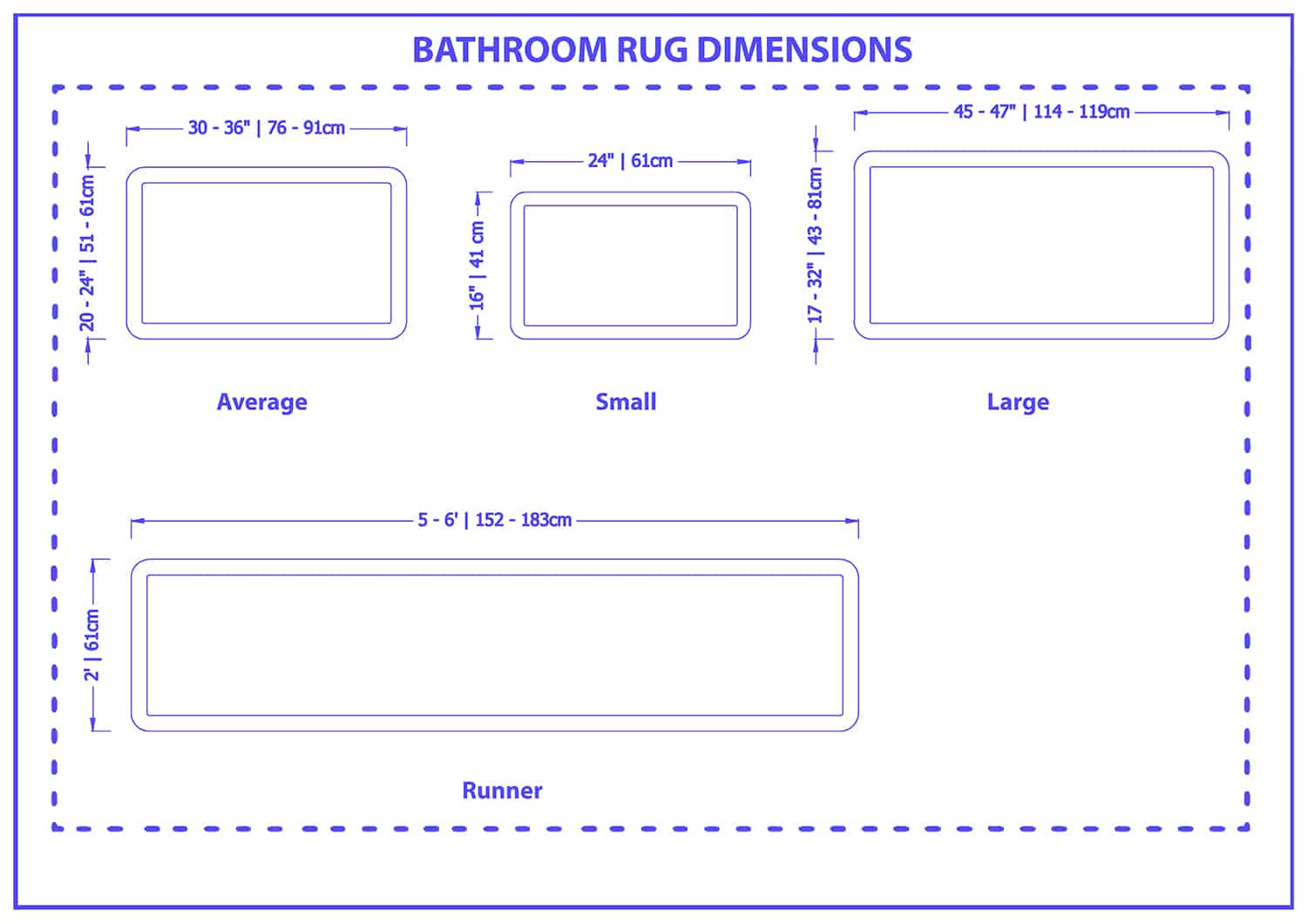
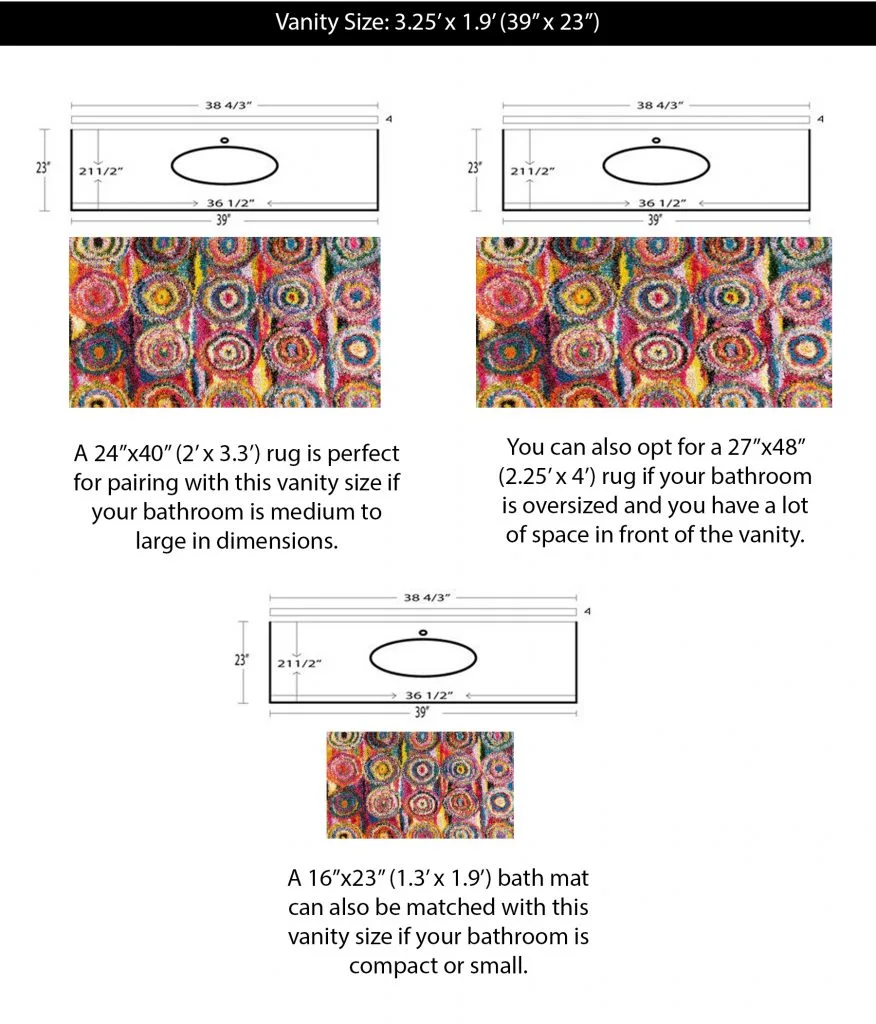
For most double vanities, a 24 x 60-inch or 24 x 72-inch runner works well. Choose the length based on your cabinet width, floor space, and door clearance.
In American homes, a double vanity is a common feature in a shared primary bathroom. It gives two people room to brush their teeth, wash their faces, and get ready at the same time. But the long cabinet can make choosing a bathroom rug a little tricky. A small bath mat may look lost in front of two sinks, while a large rug can crowd the floor.
The right rug should cover the main standing area without filling every inch of open floor. A long runner is often the easiest choice because it creates one neat space in front of both sinks. A pair of smaller rugs can also work when you want to give each person a separate spot or when the room has limited floor space.
Before you buy, measure the full vanity, the distance from the cabinet to the opposite wall, and any nearby door swings. These simple steps help you find a rug that looks balanced and feels good underfoot. You should also think about how easy it will be to wash and dry the rug, since bathroom floors often collect water.
What Is the Best Bathroom Rug Size for a Double Vanity?
For most double vanities, a 24 x 60-inch runner is a practical starting size. It gives both sink areas a shared rug without taking up too much floor space. If your vanity is longer and your bathroom has enough open floor, a 24 x 72-inch runner may provide better coverage.
There is no single size that works for every bathroom. Some double vanities are about 60 inches wide, while others extend to 72 inches or more. The rug should relate to the full cabinet, not just one sink basin.
A good fit should look balanced from the doorway. It should also give people enough room to stand while using either sink. If the rug is too short, it may look like a small mat placed in the middle of a long cabinet. If it is too wide or deep, it may block the walkway.
Source: homenish.com
24 x 60 inches
A useful runner size for many standard double vanities. It provides a shared standing area while keeping the floor fairly open.
24 x 72 inches
A longer option for a wide vanity or a bathroom with enough room at both ends of the cabinet.
20 x 30 inches
A smaller rug that can work as one of two matching mats placed in front of separate sinks.
21 x 34 inches
A common bath mat size that offers more standing space than a very small mat.
30 x 60 inches
A wider option for a spacious bathroom where two people need more room to stand side by side.
Why Is a Runner Often the Best Choice?
A runner creates one continuous area along the vanity. This makes the bathroom look neat and helps both people step onto the same soft surface. It can also make a long cabinet feel more connected to the rest of the room.
A runner is especially useful when the sinks sit far apart. Two small rugs may leave a large strip of bare tile between them. A long rug fills that gap and gives the vanity a more balanced look.
However, a runner is not always the best answer. A narrow bathroom, an inward-opening door, or a large cabinet toe kick may limit the size you can use. Always check the real floor space before choosing a longer rug.
Choose one continuous look
Use a runner when you want both sink areas to feel like one shared space.
Check the floor width
Make sure the runner does not leave too little room for safe walking.
When Should You Choose Two Separate Rugs?
Two separate rugs are a good choice when each person has a clearly defined sink area. You can place one mat in front of each basin and leave a small strip of floor between them. This layout works well in bathrooms where the sinks have a wide gap or the vanity has a center cabinet.
Matching rugs can still create a balanced look. Choose the same color, shape, thickness, and material for both mats. Before buying, check that each mat fits within its own sink area without touching the vanity sides or nearby fixtures.
Better for separate sink spaces
Each person gets a rug in front of their own basin.
Easier to wash
Two smaller rugs may fit more easily in a regular home washing machine.
How to Measure Your Double Vanity for a Bathroom Rug
Measure the vanity and the open floor before shopping. The cabinet width tells you how long the rug should be, while the floor depth tells you how wide it can be. Both measurements matter because a rug that fits the cabinet may still crowd the bathroom.
You only need a tape measure, a pencil, and a sheet of paper. Write down the measurements in inches so you can compare them with rug sizes in stores. Do not rely on the number of sinks alone, since two-sink cabinets can have very different layouts.
Source: homelyrugs.com
Step 1: Measure the Full Vanity Width
Measure from the far left edge of the vanity cabinet to the far right edge. Include the full cabinet width rather than measuring from the center of one sink to the center of the other. If the countertop extends beyond the cabinet, note both measurements.
The countertop width can help you judge the overall visual balance. The cabinet width is useful for checking where the rug will sit on the floor. Record both if they differ.
60-inch vanity
Start by comparing 24 x 60-inch runners and shorter rugs that fit the available floor.
72-inch vanity
Compare 24 x 60-inch and 24 x 72-inch runners based on the space at each end.
84-inch vanity
Consider a longer custom runner or two separate rugs if a single rug would be too large.
Step 2: Measure the Available Floor Depth
Measure from the front of the vanity to the nearest opposite obstacle. This may be a wall, bathtub, toilet, shower enclosure, or another cabinet. The result tells you how much room you have for the rug and a clear walking path.
For example, if the open floor depth is 48 inches, a 24-inch-wide rug may fit comfortably. You would still need to check how much room remains for walking and whether another fixture uses that space. Do not choose a rug based on depth alone.
Step 3: Check Doors and Drawers
Open the bathroom door fully and look at the area it covers. If the door swings over the rug location, a thick or long rug may catch beneath it. You may need a thinner style or a shorter rug.
Open every vanity drawer and cabinet door as well. Some bathroom cabinets have low drawers or doors that extend close to the floor. A thick rug can get in their way or become creased each time you open them.
Also check the toilet and shower doors. The rug should not interfere with their normal use.
Step 4: Mark the Planned Rug Size
Use painter’s tape to mark the rug’s length and width on the floor. This gives you a clear picture of how the finished layout will look. Walk through the room, open the doors, and stand in front of both sinks.
If the taped area feels too large, reduce the width or length. If it leaves too much bare floor between the sink areas, try a longer runner. This simple test can prevent an expensive sizing mistake.
Bathroom Rug Size Chart for Different Double Vanities
Use the following chart as a starting point when comparing rug sizes. It shows practical options for different vanity widths, but your available floor space should make the final decision. The suggested sizes are layout ideas, not fixed rules.
A rug does not have to match the exact width of the vanity. A slightly shorter runner can look balanced when it is centered, while a longer rug can work if there is enough room at both ends. The goal is to cover the useful standing area without making the bathroom feel packed.
Source: homelyrugs.com
60-inch double vanity
Try a 24 x 60-inch runner or two 20 x 30-inch mats. A 24 x 72-inch rug may extend too far beyond the cabinet in a compact room.
66-inch double vanity
A 24 x 60-inch runner is a good starting point. A longer option may work if the room has open floor at both ends.
72-inch double vanity
Compare a 24 x 60-inch runner with a 24 x 72-inch runner. The longer size gives more continuous coverage.
84-inch double vanity
Look at a 24 x 72-inch runner or two matching rugs. A custom size may be useful when the sink areas are spread far apart.
Vanity wider than 84 inches
Consider two separate rugs or a custom runner. Check washing and drying needs before choosing a very large rug.
Example: Choosing a Rug for a 60-Inch Vanity
Imagine a bathroom with a 60-inch double vanity and a clear floor area of 42 inches from the cabinet to the opposite wall. A 24 x 60-inch runner could provide a shared standing area in front of both sinks. It would also leave room for the rest of the floor to remain visible.
If you prefer two separate rugs, you could use two 20 x 30-inch mats. Place one under each sink area and leave a small gap between them. This creates two clear standing zones without covering the entire cabinet width.
Example: Choosing a Rug for a 72-Inch Vanity
Now consider a 72-inch vanity with a wide, open floor. A 24 x 72-inch runner can create a continuous look from one sink to the other. It may also give both users enough space to stand on the rug at the same time.
If the bathroom is narrow, a 24 x 60-inch runner may be more suitable. Center it in front of the vanity and allow some bare floor to show at both ends. A shorter rug can look intentional when its placement is balanced.
Should You Choose a Runner, Two Rugs, or One Large Rug?
The best layout depends on how you use the bathroom and how much open floor you have. A runner gives both sinks one shared rug. Two smaller rugs create separate standing areas, while one large rug can work in a spacious primary bathroom.
Think about daily use before choosing a style. If two people get ready at the same time, continuous coverage may be useful. If one person uses each sink at different times, separate mats may be easier to handle and wash.
Source: myikeabedroom.com
Option 1: One Long Runner
A long runner is often the simplest layout for a double vanity. It runs parallel to the cabinet and gives both sink areas a shared soft surface. A 24 x 60-inch or 24 x 72-inch runner is worth comparing for many bathrooms.
Choose a runner when you want a clean line beneath the entire vanity. A simple pattern or solid color can make the room feel calm. Just make sure the rug does not extend into a door path or block another fixture.
Option 2: Two Matching Bath Rugs
Two matching bath rugs can look neat and balanced. Each rug sits in front of one sink, with a small gap between them. This option can be helpful when the vanity has a center section that makes one long rug less practical.
Try two rugs around 20 x 30 inches or 21 x 34 inches, depending on the width of each sink station. Leave enough space between the mats so they do not overlap or bunch together. Matching the color and material helps the layout look planned.
Option 3: One Large Bathroom Rug
A larger rug can work in a spacious primary bathroom with plenty of open floor. Sizes such as 3 x 5 feet may help connect the vanity with the wider room. However, this type of rug may be too large for a narrow bathroom.
A large rug also needs more care. It may take longer to dry and may not fit in a regular washing machine. Choose a washable construction and check the care label before purchasing.
How Wide and Thick Should a Double Vanity Rug Be?
The length of the rug helps it cover both sinks, but the width controls how much standing room it provides. Many bathroom runners are about 20 to 24 inches wide. This is often enough for a narrow standing area without taking over the walkway.
A wider rug may feel more comfortable if two people use the vanity together. However, more width is not always better. You need enough bare floor for walking, opening doors, and reaching other bathroom fixtures.
Source: swankyden.com
Choosing the Right Rug Width
A 20-inch-wide runner can suit a narrow bathroom where floor space is limited. A 24-inch-wide runner gives a little more coverage and can work well in front of a standard vanity. A 30-inch-wide rug may be useful in a larger room with more open space.
Stand in front of the sink and check where your feet normally rest. The rug should cover the main standing area rather than stretch across the entire bathroom. If the rug reaches too close to the toilet or shower, choose a narrower option.
Choosing the Right Rug Thickness
Rug thickness affects comfort, drying, and door clearance. A plush rug can feel soft under bare feet, but a thick pile may catch beneath a door or create a raised edge. A low-profile rug is often easier to use in a busy shared bathroom.
Check the total thickness, including the backing. A rug may look thin from the top but still have a thick rubber base. If your bathroom door has little floor clearance, test the rug before using it every day.
Low-pile rugs
Useful for bathrooms with tight door clearance and frequent foot traffic.
Plush rugs
Offer a softer feel but may take longer to dry and may catch beneath low doors.
Flat-weave rugs
Can be easier to move and store, but check whether they absorb water well enough for your needs.
Which Material Is Best for a Double Vanity Bathroom Rug?
Choose a rug that can handle daily moisture, regular foot traffic, and frequent washing. The best material depends on whether you care most about softness, water absorption, quick drying, or easy cleaning. A rug that looks good but stays damp for hours may not be a good fit for a shared bathroom.
Bathrooms often have less airflow than living rooms. Water from handwashing, face washing, and wet feet can reach the rug throughout the day. A suitable material should handle this moisture without becoming difficult to maintain.
Source: remotestylist.com
Cotton Bathroom Rugs
Cotton is a common choice because it feels soft and absorbs water well. It is also available in many colors and simple designs. Many cotton rugs can be machine washed, but you should follow the care label.
The main drawback is drying time. A thick cotton rug may hold moisture, especially in a bathroom with poor ventilation. Hang it up when it becomes wet and allow it to dry fully.
Microfiber and Chenille Rugs
Microfiber and chenille rugs are soft and comfortable underfoot. Their textured surfaces can feel pleasant when you stand at the sink. They are available in many shapes and sizes, including long runners for double vanities.
Check the backing and washing instructions before buying. Some styles use materials that can be damaged by high heat. Follow the manufacturer’s drying directions to help the rug keep its shape.
Memory Foam Bathroom Rugs
Memory foam rugs provide a cushioned feel when you stand at the vanity. They can be comfortable for people who spend extra time getting ready. However, the foam core and fabric cover may need more time to dry.
Check whether the whole rug is washable or only the cover can be removed. Do not assume that every memory foam rug can go in a washing machine. Use the care instructions supplied with the rug.
Synthetic and Flat-Weave Rugs
Some synthetic rugs are designed to dry faster than thick cotton styles. Flat-weave designs can also be easier to move and clean. However, not every decorative rug is suitable for a wet bathroom floor.
Look for clear washing instructions and a backing that is suitable for your floor type. If you choose a regular area rug, make sure it is designed to handle bathroom moisture and has a suitable non-slip solution.
Bathroom Rug Placement Tips for a Double Vanity
Correct placement makes a bathroom rug look better and helps keep it useful. A runner should sit parallel to the vanity and cover the main standing zone. Avoid pushing it against every nearby fixture just to fill the available floor.
Leave a small strip of visible floor around the rug when possible. This creates a clear edge and helps the room look less crowded. The exact gap depends on the room, so use the cabinet and surrounding fixtures as your guide.
Source: homelyrugs.com
Center the Runner Under Both Sinks
Place the runner so it lines up with the center of the full vanity. This gives both sink areas a balanced look. If one sink is used more often, you can shift the rug slightly toward that side, as long as it still looks natural.
Do not center the rug only under one basin. That can make the other sink look disconnected from the layout. Use the full cabinet as your reference point.
Keep the Rug Away From the Toilet Base
A vanity runner should not crowd the toilet area. If the toilet sits close to the vanity, leave enough open floor for comfortable access and cleaning. You do not need to cover every part of the bathroom with rugs.
If you want a separate mat near the toilet, consider whether it will make the room too crowded. In many bathrooms, one vanity rug and one shower mat are enough.
Leave Room for the Shower and Bathtub
A vanity rug does not always need to reach the shower or bathtub. These areas have their own water needs, and a separate absorbent bath mat may be more useful near the shower exit.
Keep enough space between rugs so their edges do not overlap. Overlapping mats can bunch up and create a trip hazard.
Common Mistakes When Buying a Rug for a Double Vanity
A rug can have the right color and still be the wrong size. Many problems happen because people choose a style before checking the floor measurements. A few simple checks can help you avoid buying a rug that is too short, too wide, or difficult to maintain.
Source: myikeabedroom.com
Buying a standard single bath mat for both sinks
A 20 x 30-inch or 21 x 34-inch mat usually covers only one small standing area. Use a runner or two matching mats if you want coverage for both sinks.
Choosing a rug that is too long
A runner that extends too far beyond the cabinet can look unbalanced. Measure the space at both ends before choosing a longer size.
Ignoring the door swing
A thick rug can catch under a bathroom door. Check the full door path and rug thickness before buying.
Choosing too much width
A wide rug can block the walkway or crowd nearby fixtures. Measure the available floor depth and leave enough room to move.
Ignoring the rug backing
Some backings may not suit certain floor finishes. Check the manufacturer’s guidance, especially if you have vinyl, luxury vinyl plank, or finished wood.
Forgetting about washing
A very large or thick rug may not fit in your home washing machine. Check its care label and your machine capacity.
Buying a rug only for its appearance
A decorative rug may not absorb water or provide enough grip. Check its intended use before placing it in a wet area.
What If Your Bathroom Is Too Small for a Runner?
You do not need to force a long runner into a small bathroom. Two compact mats may fit better in front of the sinks. You can also use one smaller rug in the main standing area if the sinks are close together.
If every rug size feels too large, choose a low-profile mat that does not interfere with walking or opening doors. Comfort matters, but clear floor space matters too.
What If Your Vanity Is Wider Than Standard Rug Sizes?
For a very wide vanity, look at longer runners or two matching mats. A custom-size rug may also be an option if you need one continuous surface. Before ordering a custom rug, confirm its washing and drying requirements.
You can also leave some floor visible at each end. A rug does not have to cover the full cabinet width to look balanced.
How to Keep a Double Vanity Rug Clean and Safe
A bathroom rug needs regular care because it can collect water, dust, hair, and soap residue. A clean rug also helps the bathroom feel fresh. The best care routine depends on its material, backing, and washing instructions.
Do not leave a wet rug flat on the floor for long periods. Lift it when it becomes damp and allow air to reach both sides. This helps reduce the chance of musty odors and moisture building up underneath.
Source: swankyden.com
Wash the Rug Based on Its Care Label
Check the label before washing. Some rugs can go in a washing machine, while others need gentle hand washing or spot cleaning. Use the water temperature and detergent recommended by the manufacturer.
Avoid high heat unless the care label allows it. Excess heat can damage some backing materials and may affect the rug’s shape. Dry the rug fully before putting it back on the floor.
Use a Suitable Non-Slip Backing
Bathroom floors can become slippery when wet. A rug that slides when you step on it can create a fall risk. Choose a rug with a suitable non-slip backing or use a compatible rug pad when the manufacturer allows it.
The right backing also depends on the floor. Some rubber-backed products may react with or mark certain vinyl and finished surfaces. Check the flooring manufacturer’s instructions and the rug maker’s guidance before use.
Keep the Floor Under the Rug Dry
Lift the rug from time to time and check the floor underneath. If you find moisture, dry the floor before putting the rug back. This is especially important in bathrooms with poor ventilation or floors that receive frequent splashes.
If the rug develops a lasting musty smell, inspect both sides and the floor beneath it. Wash it according to its care label and let it dry fully. If the backing is damaged or the odor remains after proper cleaning, replacement may be the better option.
How to Know If You Have Chosen the Right Size
The right rug should make the vanity area easier to use, not harder. It should provide a soft standing surface for both sinks and leave enough room for normal movement. The edges should sit flat, and the rug should stay in place when someone walks across it.
After placing the rug, test the bathroom as you normally use it. Stand at both sinks, open the doors, pull out the drawers, and walk toward the shower. If the rug moves, curls, or blocks anything, adjust the layout or choose another size.
Both sink areas feel covered
People can stand at the sinks without feeling that the rug is too short or poorly placed.
The rug looks balanced
Its length works with the vanity width, and the space around it does not look crowded.
Doors and drawers move freely
The rug does not catch beneath doors or prevent cabinets from opening.
The walkway stays clear
People can move between the vanity, toilet, tub, and shower without stepping over raised edges.
The rug stays flat
The corners do not curl, and the rug does not slide when someone steps on it.
Cleaning is manageable
The rug can be washed and dried using the care method available in your home.
Frequently Asked Questions
Q
Is a 2 x 6 rug big enough for a double vanity?
Yes. A 2 x 6-foot rug measures 24 x 72 inches and can work well in front of many double vanities. It provides a continuous surface for both sink areas. However, check the vanity width and available floor space before buying.
If your vanity is only 60 inches wide, a 72-inch rug may extend beyond the cabinet. That can still work if the room has enough space at both ends and the extra length looks balanced.
Q
Should a bathroom rug be as wide as the double vanity?
Not necessarily. The rug can be slightly shorter than the vanity and still look balanced. A centered runner that covers the main standing area often works better than a rug that stretches too far into nearby spaces.
Measure the full vanity and compare the rug length with the cabinet. Leave enough floor around the rug so it does not look crowded.
Q
Can I use two 2 x 3 rugs in front of a double vanity?
Yes. Two 2 x 3-foot rugs measure 24 x 36 inches each and can work well when each sink has its own standing area. This layout is useful when a long runner does not fit the bathroom or when the vanity has a center section.
Place one rug in front of each sink and keep the mats aligned. Matching colors and materials will help the two rugs look like part of one design.
Q
Should the bathroom rug touch the vanity?
It does not need to touch the vanity. Leaving a small gap can make cleaning easier and prevent the rug from being pushed beneath the cabinet. The right distance depends on the rug’s thickness and the cabinet design.
Avoid pushing a thick rug under the toe kick if it interferes with drawers or traps moisture. A flat rug placed neatly in front of the vanity is often easier to maintain.
Q
How much space should I leave around a bathroom rug?
There is no fixed clearance that works for every bathroom. Leave enough visible floor around the rug to keep the layout balanced and allow easy movement. A few inches of open floor at the ends can be useful when the room allows it.
Give extra attention to doors, shower openings, and narrow walkways. A clear path is more important than following an exact decorative spacing rule.
Q
Is a 3 x 5 rug too big for a double vanity?
A 3 x 5-foot rug measures 36 x 60 inches. It may work in a large primary bathroom with plenty of open floor, but it can be too wide for a narrow vanity area.
Measure from the vanity to the opposite fixture before choosing this size. Make sure the rug does not block the shower, toilet, or bathroom door.
Q
What is the best rug shape for a double vanity?
A rectangular runner is often the easiest shape to use because it follows the long line of a double vanity. It can cover both sink areas and create a clean, balanced look.
Two rectangular mats are another good option when you want separate standing areas. Round rugs are less common in front of long vanities because they may leave too much of the sink area uncovered.
Q
Can I put a bathroom runner on vinyl flooring?
Yes, but check the backing before placing it on vinyl or luxury vinyl flooring. Some rubber-backed rugs can react with certain floor finishes and leave marks or stains.
Choose a backing that the flooring manufacturer considers suitable. Avoid assuming that every non-slip rug is safe for every floor type.
Q
Is a thick or thin rug better for a double vanity?
A thin or low-profile rug is often easier to use when the bathroom has limited door clearance. It is also easier to move when cleaning the floor. A thick rug may feel softer, but it can take longer to dry and may catch beneath a door.
Choose based on comfort, drying needs, and the space available. Always test the rug with the bathroom door and cabinet drawers before using it regularly.
Q
How many rugs should a bathroom with a double vanity have?
One long runner can cover both sink areas. You may also use two separate mats in front of the sinks and another absorbent mat near the shower or bathtub.
The number depends on your bathroom layout and cleaning routine. You do not need a rug in every open area. Too many mats can crowd the floor and make cleaning harder.
✦ Wrapping Up
Conclusion
For most double vanities, a 24 x 60-inch or 24 x 72-inch bathroom runner is a useful place to start. Both sizes can create a shared standing area in front of two sinks. The best choice depends on the full vanity width, the room’s floor space, and the position of nearby doors and fixtures.
If you prefer separate spaces, two matching 20 x 30-inch or 21 x 34-inch rugs can work just as well. This layout is also useful when the vanity has a wide center section or the bathroom cannot fit one long runner. In a large primary bathroom, a wider rug may offer more coverage, but it should not block the walkway.
Remember that size is only one part of the decision. Look for a rug that absorbs water, dries well, stays in place, and is easy to wash. Check its backing against your floor type and make sure the doors and drawers can move freely.
💡 Key Takeaway
Measure your full vanity width and available floor depth first. Then compare a 24 x 60-inch and a 24 x 72-inch runner using painter’s tape on the floor. Choose the size that covers both sink areas while leaving a clear walkway and enough room for doors to open.