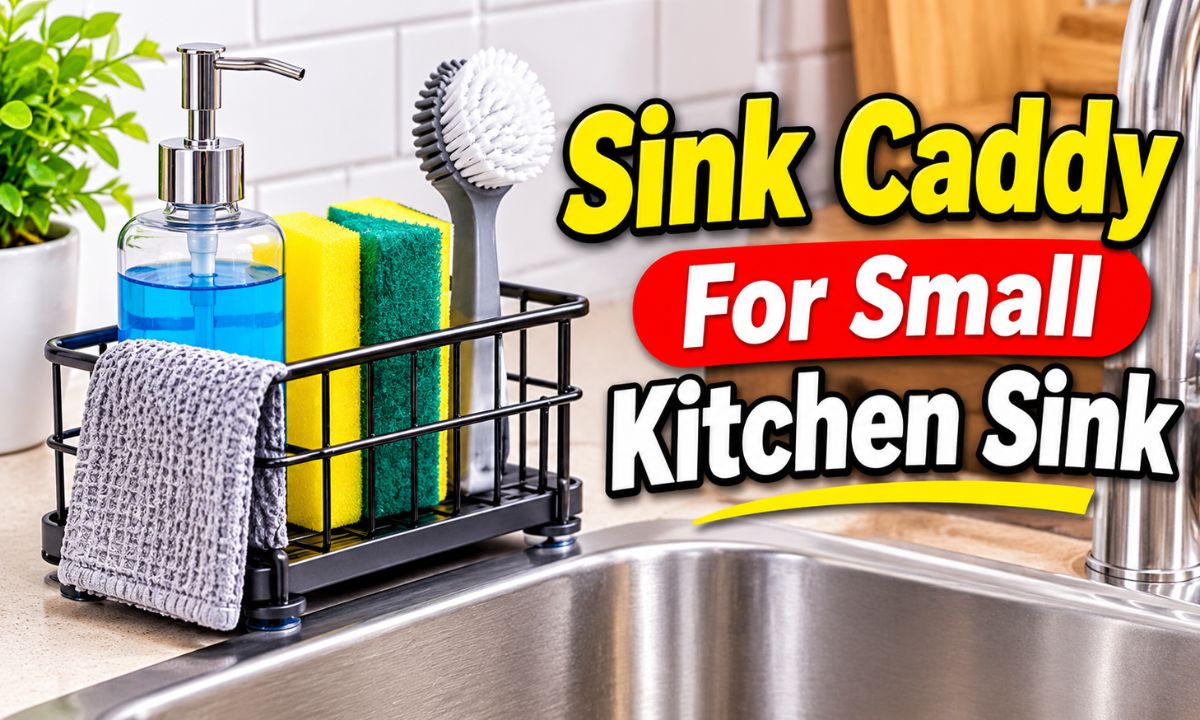
The best sink caddy for a small kitchen sink is compact, easy to clean, well-drained, and sized to fit your available counter or basin space.
In many American homes, the kitchen sink does more than one job. It handles daily dishwashing, food prep cleanup, and quick rinses after breakfast or dinner. In apartments, condos, and smaller homes across the United States, limited counter space can make this busy area feel crowded fast.
A sink caddy can help keep dish sponges, scrub brushes, dish soap, and cleaning cloths in one place. However, a large organizer may take up more room than the items it holds. The better choice is a small design that fits your sink layout without blocking the faucet, drain, or space needed to wash dishes.
Before buying one, measure the area around your sink and decide what you really need to store. Some caddies sit beside the basin, while others attach inside the sink, hang over the faucet, or rest across a sink divider. Each style has a different fit, drainage method, and set of limits.
This guide explains how to choose a compact sink organizer, compare materials, check mounting options, and keep the area clean. It also covers common fit problems so you can avoid buying a caddy that creates more clutter instead of solving it.
A compact sink caddy gives everyday dishwashing tools a set place without taking over the sink area. It can hold a sponge, dish brush, scrub pad, or small soap bottle. This keeps these items close when you need them and makes the counter easier to wipe.
Without a holder, wet sponges often end up beside the faucet or in a corner of the basin. Brushes may lie on the counter, while soap bottles take up useful work space. A small organizer brings these items together and can help reduce the mess.
The main benefit is not extra storage. It is better use of the space you already have. A holder that fits neatly beside or inside the sink can make a small kitchen easier to use during daily cleanup.
Still, adding a caddy does not always improve a cramped sink. If the holder blocks a large pan, limits faucet movement, or makes it hard to clean the counter, it may be better to use a smaller sponge holder instead.
Source: m.media-amazon.com
Less counter clutter
Keep sponges, scrubbers, and brushes together instead of spreading them around the faucet.
Better drainage
An open basket or draining tray can help water leave wet cleaning tools rather than collecting beneath them.
Easy access
Store the items you use every day within reach of the sink.
Simple cleanup
A removable caddy is easier to lift and clean than several separate holders.
What Should a Small Sink Caddy Hold?
Start with the items you reach for during a normal dishwashing session. For most small kitchens, a sponge, one dish brush, and a small soap bottle are enough. If you use a scrub pad, check whether it can fit without covering the drainage openings.
Avoid filling the holder with spare cloths, large bottles, and extra cleaning products. These items add weight and can stop air from moving around wet tools. Keep backup supplies in a nearby cabinet instead.
Daily items
A sponge, dish brush, and small scrub pad are useful items to keep close.
Optional items
A small dish soap bottle or sink stopper may fit if the holder has a stable, separate space.
Measure Your Sink Before Choosing a Caddy
Measuring your sink area is the most useful step before buying an organizer. A product may look small in a listing photo but still take up too much room beside a faucet or along a narrow counter. Check the full dimensions, including hooks, handles, suction cups, and removable trays.
Use a tape measure and record the space where you plan to place the caddy. Also check the distance between the faucet and backsplash. If the holder will sit near a cabinet, window, or wall shelf, measure the available height.
For an over-sink holder, measure the inside width of the basin and the area where its supports will rest. For a holder that hangs over the faucet, check the faucet shape and the room needed to move its handle or pull-out spray head.
Leave a little extra room around the holder. A caddy that fits exactly into a gap may still be hard to lift, empty, or clean. A good fit should allow normal sink use without constant adjustments.
Source: m.media-amazon.com
Available width
Measure the clear counter or ledge space from the faucet base to the sink edge.
Available depth
Measure from the sink edge toward the wall or backsplash. The caddy should sit within this space.
Available height
Check for windows, shelves, cabinets, and faucet parts that may limit the holder height.
Operating clearance
Make sure you can turn the faucet, pump the soap bottle, and remove the caddy without hitting nearby items.
A Simple Example of Measuring
Suppose the counter beside your sink has 8 inches of clear width and 5 inches of depth. A caddy measuring 7 inches wide and 4 inches deep may fit on paper. However, you should still leave room to reach the faucet and lift the holder for cleaning.
You may find that a smaller 6-inch holder works better, even if it stores fewer items. The goal is to keep the sink usable, not to fill every open inch with storage.
Measure the product
Use the listed outside dimensions, not just the size of the storage basket.
Check the full setup
Include the drip tray, mounting parts, and any parts that extend beyond the main body.
Best Types of Sink Caddies for Small Kitchen Sinks
The best caddy style depends on where you have free space. A narrow counter may need a vertical holder, while a sink with smooth inside walls may work well with a suction-mounted basket. If there is no room beside the basin, an over-sink design may be more useful.
Do not choose a style only because it looks compact. Think about how often you use the faucet, how much room you need for dishes, and how easy it will be to remove the holder for cleaning.
The following options cover the main designs used in small kitchens. Each has a practical purpose, but none works equally well for every sink.
Source: i5.walmartimages.com
Countertop caddy
A small freestanding organizer sits beside the sink. It is simple to move and does not need suction cups or adhesive.
In-sink caddy
This holder attaches inside the basin or hangs over its edge, keeping cleaning tools away from the counter.
Faucet-mounted caddy
A compact rack uses space around the faucet, although it must match the faucet shape and leave room for normal operation.
Over-sink caddy
This style rests across the basin and can provide storage without using counter space.
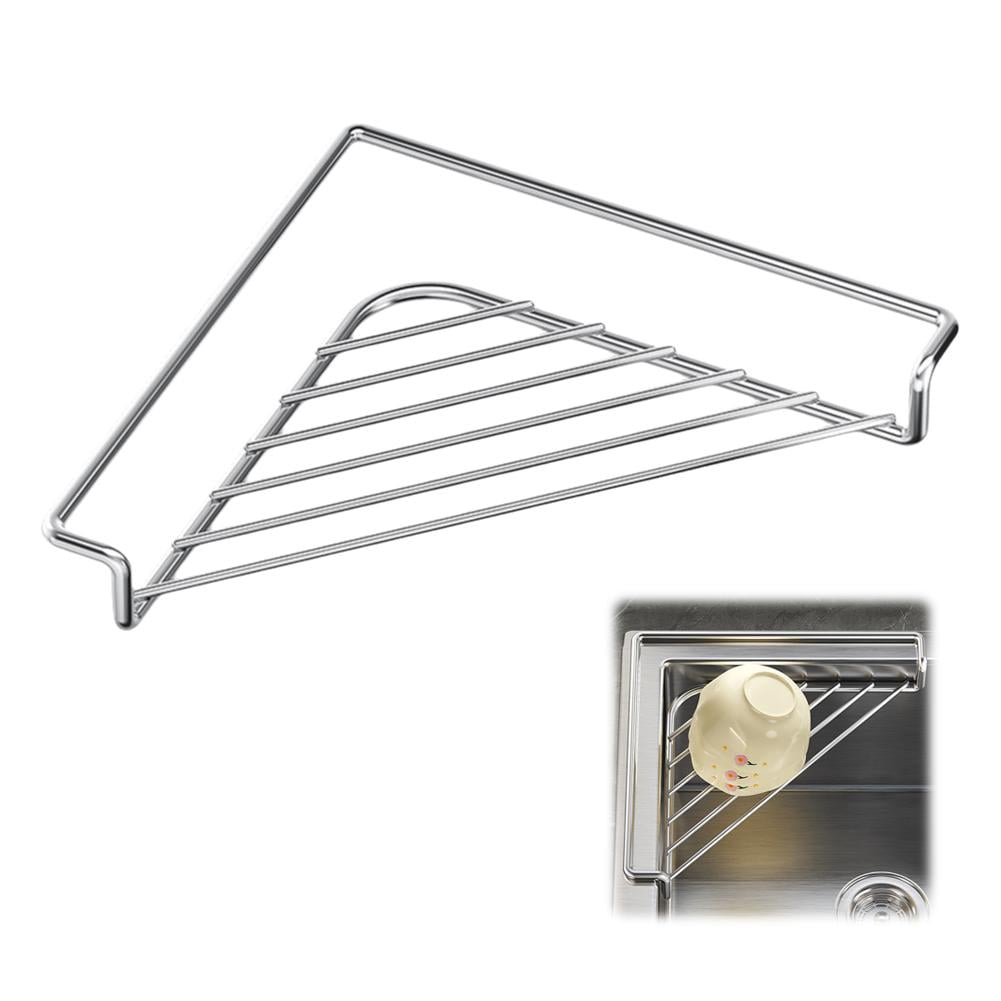
Corner caddy
A triangular or narrow holder makes use of an unused sink corner.
Countertop Sink Caddies
A countertop caddy is a practical choice when you have a small strip of space beside the sink. It usually has a base, one or more storage sections, and sometimes a removable drip tray. You can move it when wiping the counter or cleaning behind the faucet.
Choose a narrow design with a stable base. A tall organizer may hold more tools, but it can tip if a heavy brush or soap bottle makes it unbalanced. Check that the bottom does not trap water against the counter.
Best for
Kitchens with a small but usable counter area beside the basin.
Main limit
It still uses counter space and may need regular drip-tray cleaning.
Suction-Mounted Sink Caddies
A suction caddy attaches to a smooth surface inside the sink or on a suitable backsplash. It can hold a sponge or scrub pad above the basin floor, allowing water to drain into the sink.
Suction cups work best on clean, smooth, flat, nonporous surfaces. They may not stay attached to textured stainless steel, rough stone, grout, or curved sink walls. Check the product instructions before mounting one.
Clean and dry the surface before installation. Press the suction cups firmly into place and follow the maker’s instructions about how long to wait before loading the holder. Check the attachment often, especially if the caddy holds a brush or soap bottle.
Best for
Small sinks with a suitable smooth inside wall and very little counter space.
Main limit
Suction strength depends on the surface, cup design, weight, and installation.
Over-the-Faucet Sink Caddies
An over-faucet caddy hangs from or attaches around the faucet. This design can be useful when there is no clear counter space beside the sink. Some models have separate areas for a sponge, brush, and dishcloth.
The main concern is compatibility. A holder designed for a round faucet neck may not fit a square faucet or a large pull-down model. It can also get in the way of faucet handles, spray controls, or a moving hose.
Before buying one, check the faucet diameter, shape, and mounting instructions. Make sure the organizer will not twist or swing when you turn on the water.
Best for
Very small counters where the faucet design provides a suitable mounting point.
Main limit
Some faucet styles are not compatible, and a poorly fitted rack can move during use.
Over-Sink and Sink-Divider Caddies
An over-sink caddy rests across the basin, while a divider caddy sits on the center wall of a double-bowl sink. Both can free up counter space and allow wet tools to drain directly into the basin.
These designs need careful measuring. Check the sink opening, rim shape, divider width, and faucet position. A holder that blocks the center of the basin may make it harder to wash large pots, pans, and baking sheets.
Choose an adjustable model only if its support arms can lock or rest securely. Do not use an unstable holder that shifts when you remove a brush.
Best for
Double-bowl sinks or basins with a suitable ledge or divider.
Main limit
The holder may reduce usable sink space or interfere with large dishes.
Which Material Is Best for a Small Sink Organizer?
Plastic, stainless steel, and silicone are common materials for kitchen sink caddies. The right choice depends on your cleaning habits, budget, and the amount of water the holder will face each day.
A material name alone does not tell you how long a caddy will last. Construction quality, joints, coatings, drainage, and care instructions also matter. For example, a metal holder may resist rust but still develop corrosion if its finish is damaged or water remains trapped in a joint.
Look for a smooth design that is easy to rinse. Avoid holders with many narrow gaps that collect soap, food bits, and grime.
Plastic
Lightweight and often affordable. It does not rust, but some designs can stain, crack, or warp if exposed to unsuitable heat.
Stainless steel
A sturdy option for wet areas. Its corrosion resistance depends on the steel grade, construction, finish, and care.
Silicone
Flexible and easy to move. It may be useful for simple sponge holders and small draining mats.
Coated metal
Can provide a neat finish, but scratches or damaged coatings may expose the metal underneath.
Is Stainless Steel a Good Choice?
Stainless steel can be a good choice when you want a firm, durable holder. It is often used for open baskets, brush racks, and countertop organizers. The open construction can also help wet tools drain and dry.
However, stainless steel is not completely immune to corrosion. The exact grade and quality matter, and low-quality joints or damaged finishes may develop rust spots. Rinse away soap residue and dry the holder when needed.
If a listing states that the caddy uses a specific stainless steel grade, check whether the claim applies to the entire product or only selected parts. Do not assume that a black metal organizer is stainless steel just because it has a metal finish.
Look for
Smooth welded joints, open drainage, a stable base, and clear material information.
Avoid
Rough seams, chipped coatings, and areas where water remains trapped.
When Is Plastic the Better Option?
Plastic is useful when you want a light holder that is easy to lift and rinse. It can also work well for suction-mounted sponge baskets because the material is light and does not create a rust problem.
Check the product’s cleaning instructions before using hot water or placing it in a dishwasher. Not every plastic organizer is dishwasher-safe. A simple hand wash with mild dish soap is often a suitable routine when the manufacturer recommends it.
Good choice
For basic sponge storage, lightweight mounting, and simple everyday cleaning.
Check first
Look for firm suction cups, smooth edges, and clear care instructions.
Important Features to Look for Before Buying
A useful sink caddy should solve a real storage problem without adding a new one. Drainage, size, stability, and cleaning access matter more than extra compartments or decorative details.
Think about how the holder will work during a normal day. You should be able to take out a sponge, return a brush, and reach the soap without moving several items. The organizer should also stay clear of the drain and leave enough room for dishes.
Use the following features as a buying checklist. You do not need every feature, but the main ones should match your sink and routine.
Compact footprint
Choose a narrow design that fits the measured space and leaves room for regular sink use.
Open drainage
Look for holes, slots, or a sloped tray that lets water drain away from wet tools.
Removable parts
A tray or basket that lifts out makes cleaning easier.
Stable construction
The holder should not tip when you remove a brush or press a soap pump.
Smooth edges
Rounded, finished edges help make daily handling and cleaning easier.
Suitable mounting
Choose suction, adhesive, faucet, or countertop mounting based on the actual surface and sink shape.
Enough airflow
Avoid tightly packed compartments that keep sponges and cloths wet.
Why Drainage Matters
A sponge holder should allow excess water to escape. If water collects under a sponge, the sponge can remain wet for longer and the holder may develop a slimy film or unpleasant smell.
An open basket provides space for air to move around the sponge. A sloped tray can direct water toward a drain opening, while a removable tray may need to be emptied by hand.
No caddy makes a sponge clean by itself. Rinse the sponge after use, remove food debris, and let it dry as fully as possible between uses. Replace it when it becomes worn or develops an odor that cleaning does not remove.
Choose open slots
Open sides and bases allow water to escape and help improve airflow.
Check the tray
Make sure a drip tray can be removed and emptied without spilling water.
Do You Need a Separate Brush Holder?
A separate brush section is useful if you use a dish brush every day. It keeps the handle upright and helps prevent the bristles from resting on a wet counter.
If you only use a sponge, a simple one-compartment holder may be enough. There is no need to buy a larger caddy just to get extra storage that you will rarely use.
Choose a brush compartment
If your brush has a long handle, check the opening width and total holder height.
Choose a simple sponge holder
If your cleaning routine uses only one sponge, a small in-sink basket may save more space.
How to Set Up a Sink Caddy Correctly
Correct setup helps a caddy stay in place and makes it easier to keep the sink clean. Start by reading the product instructions and checking whether the mounting method suits your sink surface.
Do not install an organizer over a dirty, oily, or wet surface if the mounting system requires a clean, dry one. Also, do not add heavy bottles or brushes until the holder is properly secured.
Step 1: Clear the area
Remove old sponge holders, soap bottles, and loose cleaning tools. Wash away soap residue and food debris.
Step 2: Measure again
Place the empty caddy in the planned position and check faucet access, sink clearance, and cleaning space.
Step 3: Prepare the surface
For suction or adhesive mounting, follow the maker’s cleaning and drying instructions. Do not use an unsuitable cleaner on delicate finishes.
Step 4: Attach the holder
Fit the suction cups, adhesive pads, or mounting parts as directed. Do not improvise a mounting method.
Step 5: Check stability
Test the empty holder gently before adding your cleaning tools. Make sure it does not move or interfere with the faucet.
Step 6: Add only useful items
Place the sponge, brush, and soap in their intended spaces. Avoid overloading the organizer.
How to Install a Suction Caddy
First, check that the inside wall of the sink is smooth enough for the suction cups. Wash the surface, remove soap film, and dry it as directed by the manufacturer.
Press each cup firmly against the surface. Some designs use a locking lever or twist mechanism, so follow the exact fitting method supplied with the product.
Allow any required setting time before adding items. If a cup keeps releasing, check for a curved surface, dirt, damaged rubber, or a load that exceeds the holder’s stated limit. Move to a different suitable mounting style if the surface does not support suction.
Sign of success
The empty caddy stays firmly attached and does not slide when touched gently.
If it fails
Remove it, inspect the cup and surface, and follow the fitting instructions again. Do not rely on a loose holder.
How to Arrange Items Inside the Caddy
Put the lightest daily-use sponge in the most open section. Keep a dish brush upright if the caddy has a suitable holder. Place soap only in a compartment designed to support its weight.
Keep the drainage openings clear. A sponge or cloth should not cover the holes or block a drainage channel. If the organizer becomes crowded, remove spare items instead of forcing everything inside.
Keep wet items separate
Give sponges and brushes enough room to drain and dry.
Keep the drain clear
Position the holder so it does not block the sink strainer or drain opening.
How to Keep a Small Sink Caddy Clean
A sink caddy needs regular cleaning because it sits near food scraps, soap, dirty dishes, and standing water. A holder that looks tidy from the front may still collect grime underneath its tray or around its mounting points.
The exact cleaning method depends on the material. Most basic plastic and metal holders can be washed with mild dish soap and water when the manufacturer allows it. Avoid harsh chemicals or abrasive pads that may damage a coating.
A simple routine can keep the organizer easier to manage. Remove the items, rinse away debris, wash the holder, and dry it before putting it back in place.
Daily care
Rinse food particles from the holder and remove excess water from the sponge area.
Regular washing
Wash the basket, tray, and removable parts with a suitable cleaner.
Check the underside
Lift the caddy and clean the counter or sink surface beneath it.
Inspect the mounting
Check suction cups, adhesive pads, clips, and joints for damage or buildup.
How to Prevent Rust on a Metal Sink Caddy
Choose a well-made metal caddy with clear material details and a smooth finish. Stainless steel generally resists corrosion better than ordinary untreated steel, but it can still develop spots under poor conditions.
Rinse off dish soap and food residue. Dry the caddy when water collects around joints, seams, or coated areas. Avoid leaving a damaged metal holder in constant contact with standing water.
If you see a small rust spot, check the product care instructions before cleaning it. A soft cloth and a suitable cleaner may help with surface residue, but a badly corroded or flaking holder should be replaced.
Avoid damaged finishes
Scratches and chipped coatings may expose the metal beneath.
Keep drainage clear
Remove soap buildup and debris that can hold moisture against the metal.
Dry hidden areas
Pay attention to joints, corners, and the underside of removable trays.
How to Prevent a Musty Sponge Smell
A musty smell often means a sponge remains damp or contains trapped food debris. A draining caddy can help, but it cannot replace proper sponge care.
Rinse the sponge well after washing dishes. Remove visible food bits, squeeze out excess water, and place it in an open holder where air can reach it. Do not leave it pressed against the bottom of a wet tray.
Replace a sponge that stays smelly, breaks down, or cannot be cleaned properly. Also wash the caddy, because residue on the holder can transfer back to a fresh sponge.
Rinse well
Remove food particles and soap residue after use.
Allow airflow
Store the sponge on its edge or in an open basket when the design permits.
Replace when needed
Do not keep using a worn or persistently unpleasant-smelling sponge.
Common Mistakes When Choosing a Small Sink Caddy
Many sink organizer problems begin before installation. Buyers often focus on appearance or the number of compartments and overlook the actual size of the sink, mounting surface, and drainage system.
A small caddy should make daily cleanup easier. Avoid designs that add work, create hidden wet areas, or make it harder to wash larger dishes.
Buying without measuring
A holder that is too wide or deep can crowd the sink. Measure the complete product and leave enough operating space.
Choosing the wrong mounting system
Suction cups may fail on textured surfaces, while faucet-mounted designs may not fit every tap.
Ignoring drainage
A closed container can hold water around wet sponges. Choose an open or well-drained design.
Overloading the holder
Too many tools can block airflow and make a small organizer unstable.
Ignoring cleaning access
A holder that cannot be lifted or cleaned underneath may collect grime.
Assuming every metal caddy is rustproof
Check the material, coating, joints, and care instructions instead of relying on appearance.
What If the Caddy Takes Up Too Much Space?
If your new caddy makes dishwashing harder, first remove items you do not use every day. You may be able to solve the problem without replacing the holder.
If the organizer still blocks the basin, move to a smaller sponge holder or an in-sink design. A single-purpose holder may be more useful than a large organizer with empty compartments.
Reduce stored items
Keep spare brushes, extra sponges, and backup soap in a cabinet.
Change the position
Try another suitable area that does not block the faucet or sink drain.
Choose a smaller style
Use a narrow sponge holder if you only need space for one cleaning tool.
How to Choose the Right Caddy for Your Sink Layout
The best design changes with the sink layout. A single-bowl sink, double-bowl sink, corner sink, and small apartment sink each have different storage limits.
Use the available surface and your daily routine to guide the choice. The following comparison gives a simple starting point.
Single-bowl sink
Try a narrow countertop caddy or a small holder attached to a suitable inside wall.
Double-bowl sink
Consider a divider caddy if the center wall supports it and the holder does not block dishwashing.
Sink with no side counter
Look at a compatible faucet-mounted or in-sink holder.
Sink with a narrow backsplash
A shallow countertop caddy may fit better than a tall or deep organizer.
Small apartment kitchen
A simple sponge holder or compact vertical caddy may be enough.
Best Setup for a Very Small Sink
For a very small sink, start with one sponge holder rather than a large storage rack. An in-sink basket can keep the sponge off the counter while leaving most of the basin open.
If the sink has a suitable faucet or divider, a small hanging organizer may also work. Check that it does not interfere with the faucet controls or make it difficult to place dishes in the basin.
Keep dish soap on a separate shelf or in a cabinet if there is no safe space for a bottle near the sink. Moving one item away can make the whole area feel less crowded.
Smallest practical setup
One sponge holder with open drainage and enough room for airflow.
For more tools
Use a narrow brush holder only if the sink has enough clearance.
Best Setup for a Rental Kitchen
Renters may prefer a freestanding or removable organizer that does not need drilling. Suction holders can also be useful when the sink surface is compatible.
Adhesive organizers may offer another option, but check the adhesive type, surface requirements, and removal instructions first. Some adhesives can leave residue or damage delicate finishes when removed.
If you are unsure about the surface or rental rules, choose a freestanding caddy. It is easy to move and does not require a permanent change to the kitchen.
Simple option
A small countertop holder with a removable drip tray.
Space-saving option
A compatible suction holder that can be removed without drilling.
A Practical Buying Checklist
Before you order a caddy, compare the product dimensions with your measurements. Read the material and care details, and check the mounting method. Product photographs can show how a holder looks, but they do not prove that it will fit your faucet or sink.
A useful purchase should solve your main problem without adding unnecessary parts. If you only need a place for one sponge, a small holder is often more sensible than a large organizer.
Dimensions
Check the complete width, depth, and height in inches.
Mounting method
Confirm that the holder suits your counter, sink wall, faucet, or divider.
Storage capacity
Make sure it holds the items you use without becoming crowded.
Drainage
Look for open slots, drainage holes, or an easy-to-empty tray.
Cleaning
Check whether the parts can be removed and which cleaning methods are allowed.
Material
Review the exact material and finish rather than relying on general product claims.
Stability
Check the base, clips, suction cups, and stated load limits.
Returns
Review the seller’s current return terms in case the dimensions or mounting style do not work.
Should You Buy a Caddy With a Drip Tray?
A drip tray is useful when you place the caddy on a countertop. It can catch water that falls from a sponge or brush and help keep the counter dry.
However, the tray needs regular emptying and cleaning. A tray that holds water for too long may become dirty and create another damp area. A self-draining design may be more convenient if it directs water safely into the sink.
For an in-sink holder, a separate drip tray may not be needed because water can drain into the basin. Choose the design based on where the holder will sit.
Choose a tray
When the organizer sits on the counter and you need to catch drips.
Choose direct drainage
When the holder can safely drain into the sink.
Frequently Asked Questions
Q
What is the best sink caddy for a very small kitchen sink?
A small in-sink sponge holder or a narrow countertop caddy is often the most practical choice. An in-sink design saves counter space, while a countertop model is easier to move and clean. Measure your sink and check the available mounting surface before choosing.
Q
How wide should a small kitchen sink caddy be?
There is no single ideal width for every sink. Choose a holder that fits the available space while leaving room for the faucet, dishes, and cleaning access. Measure the area first and compare it with the product’s full outside dimensions.
Q
Are suction cup sink caddies worth buying?
They can be useful when you have a smooth, clean, nonporous sink surface. They keep sponges off the counter and allow water to drain into the basin. However, suction cups may not hold well on textured, curved, or uneven surfaces, so check compatibility before buying.
Q
Can I put a sink caddy over my kitchen faucet?
Yes, if the holder is designed for your faucet shape and size. Check the mounting instructions and make sure the organizer does not block the handle, pull-out spray head, or hose. Avoid a holder that swings or moves when you turn on the water.
Q
What material is best for a kitchen sink caddy?
Plastic is light and does not rust. Stainless steel can offer a sturdy structure and good corrosion resistance when properly made and cared for. Silicone is flexible and useful for simple sponge holders. The best choice depends on the construction, finish, drainage, and cleaning instructions.
Q
How often should I clean my sink caddy?
Remove food debris and excess water during daily cleanup. Wash the caddy and removable tray regularly, and clean beneath it so moisture and soap residue do not collect. The exact schedule depends on how often you use the sink and how quickly the holder becomes dirty.
Q
How do I stop my sink caddy from falling off?
Check that the mounting surface is suitable, clean, and prepared according to the product instructions. Make sure the suction cups or clips are undamaged and avoid exceeding the stated weight limit. If the surface is unsuitable, use a countertop or another compatible holder instead.
Q
Does a sink caddy help prevent mold?
A well-drained, open caddy can help wet sponges dry by allowing better airflow. It does not guarantee that mold will not grow. Rinse and dry cleaning tools between uses, clean the holder, and remove standing water. Replace sponges that remain dirty or develop a persistent smell.
Q
Can I use a sink caddy on a granite countertop?
A freestanding caddy is usually the simplest option for a granite countertop. Do not assume that suction cups or adhesive pads will work on every stone finish. Check the product and surface care instructions before attaching anything that could leave residue or affect the finish.
Q
Is a sink caddy better than a sponge holder?
A sink caddy is useful when you need room for several cleaning tools, such as a sponge, brush, and soap bottle. A sponge holder is better when space is very limited and you only need one storage spot. Choose the smallest design that meets your daily needs.
✦ Wrapping Up
Conclusion
A good sink organizer should make a small kitchen easier to use. It should keep your daily cleaning tools together, allow water to drain, and leave enough space for washing dishes. The right size and mounting style matter more than the number of compartments.
Start by measuring your sink area and deciding which items need a place near the faucet. Choose a narrow countertop caddy if you have a little free counter space, or consider an in-sink holder if the surface supports secure mounting. A faucet-mounted or over-sink model may also work when its dimensions and design match your setup.
Pay attention to drainage, material quality, stability, and cleaning access. A simple holder that is easy to wash and fits your routine can be more useful than a large organizer that crowds the sink.
💡 Key Takeaway
Measure your available sink space, list the two or three cleaning tools you use most, and choose the smallest well-drained caddy that fits without blocking the faucet or basin.