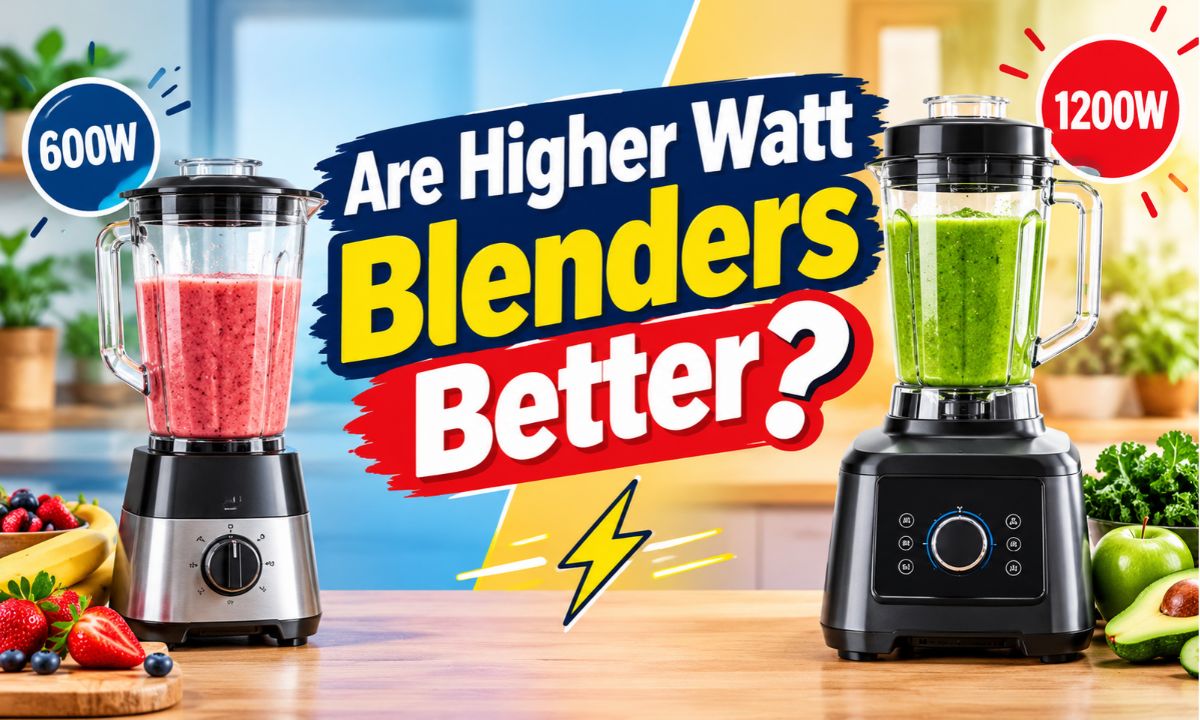
Higher watt blenders can handle tough foods better, but more watts alone do not guarantee better results.
In American kitchens, blenders help make breakfast smoothies, frozen drinks, sauces, soups, and nut butters. Some people use one every day, while others bring it out only for a quick shake or a batch of salsa. The right motor power depends on what you blend, how often you use it, and how much you want to spend.
A blender with more watts can supply more electrical power to its motor. This can help when crushing ice, blending frozen fruit, or mixing thick foods. Still, blade shape, jar design, motor control, cooling, and the way you load the blender all affect the final result. A well-designed lower-watt model may work better for simple tasks than a poorly designed model with a larger number on its label.
Blender wattage tells you how much electrical power the appliance is designed to draw under stated operating conditions. A watt is a unit of power. In simple terms, a blender rated at 1,000 watts can draw more electrical power than one rated at 500 watts when both operate at their rated loads.
That number does not tell you exactly how much useful blending work reaches the food. Some power is lost as heat, sound, friction, and other forms of energy. Motor design and the blade system affect how well the blender turns electrical power into movement that breaks down food.
Product labels may also use terms such as rated watts, input watts, and peak watts. These terms do not always describe the same thing. Rated power usually refers to a specified operating rating, while peak power may describe a brief maximum under particular conditions. Check the manual or product specifications before comparing two models.
Source: longroadhomeproject.com
Electrical power
Watts describe the rate at which the blender uses electrical energy. They do not directly measure how smooth a drink will be.
Motor output
The power available to turn the blades depends on motor efficiency, design, load, and operating conditions.
Blending performance
Performance includes how well the blender moves food, breaks down ingredients, maintains speed, and produces a consistent texture.
Why Peak Watts Can Be Misleading
A peak-watt figure can look impressive, but a brief peak does not tell you how the blender performs during a long or demanding task. A motor may reach a high power level for a short time without sustaining that level throughout the blend.
When comparing blenders, look for clearly stated rated power and the manufacturer’s guidance for ice, frozen foods, and thick mixtures. If one model lists rated watts and another lists peak watts, do not assume the larger figure means the stronger everyday performer.
Compare like with like
Use the same type of power rating when possible, and check whether the figures describe input power or another measure.
Read the task limits
A manual may set limits for ice, dough-like mixtures, or long blending sessions. Those limits matter more than a headline number.
Are Higher Watt Blenders Better for Everyday Use?
Higher watt blenders can be better when your recipes put a heavy load on the motor. They may have more power available to keep the blades moving through dense ingredients. This can be useful for frozen fruit, ice, thick smoothies, and large batches, provided the jar and blade system are designed for those jobs.
For easy tasks, the difference may be small. A basic blender can often mix milk, soft fruit, yogurt, and protein powder without needing a powerful motor. Paying extra for more watts may not improve a drink that already blends smoothly in a smaller machine.
The best choice depends on the work you expect the blender to do. Think of wattage as one part of the tool, much like engine power in a car. More power can help under load, but it cannot make up for poor design, unsuitable parts, or the wrong method.
Source: i5.walmartimages.com
A higher-watt model may suit you if
You often crush ice, blend frozen fruit, prepare thick mixtures, or make several batches in a row.
A lower-watt model may suit you if
You mostly mix soft foods, make single servings, or blend thin liquids with small amounts of fruit.
A different design may matter more if
You need a narrow personal cup, a large family-size jar, simple cleaning, or controls that are easy to use.
For Smoothies and Protein Shakes
For a simple protein shake made with milk or water and protein powder, a high-watt motor is rarely essential. Soft banana, yogurt, and other tender ingredients are also easy to blend in many everyday machines.
Frozen berries, fibrous greens, seeds, and large amounts of ice create a harder task. A stronger motor can help, but the result still depends on the blade shape, the flow of food in the jar, and the amount of liquid. Add enough liquid for the recipe and blend in stages if the mixture stops moving.
Simple shakes
Focus on ease of cleaning, cup size, and convenient controls rather than buying the highest wattage.
Thick frozen smoothies
Look for a blender designed for frozen ingredients, with enough power and a jar that moves food toward the blades.
For Ice and Frozen Fruit
Ice and frozen fruit are harder to process than soft, fresh fruit. A motor with more available power may be better able to keep the blades turning as these ingredients resist movement. However, not every blender is designed to crush ice, and a high watt rating alone does not prove that it can do so well.
Check the product instructions for ice-crushing use. Some blenders need a certain amount of liquid, a specific ice size, or short pulses. Do not run a blender with dry, hard ingredients for longer than the manual allows. Stop the machine if the blades stall or the motor smells hot.
Use the right setting
Pulse or ice modes can help break hard ingredients into smaller pieces without running the motor continuously.
Avoid overfilling
Leave room for ingredients to move and follow the jar’s maximum fill line.
How Much Wattage Do You Need?
There is no single wattage that makes a blender right for every home. The useful range depends on the type of motor, the jar, the blade system, and the jobs the maker says the unit can handle. The guide below offers broad starting points for comparing common household blender types, not strict performance guarantees.
Always check whether a listed number is rated power or peak power before using it to compare products. Two blenders with the same wattage may behave very differently, and two blenders with different ratings may both handle your usual recipes well.
Source: lookatworth.com
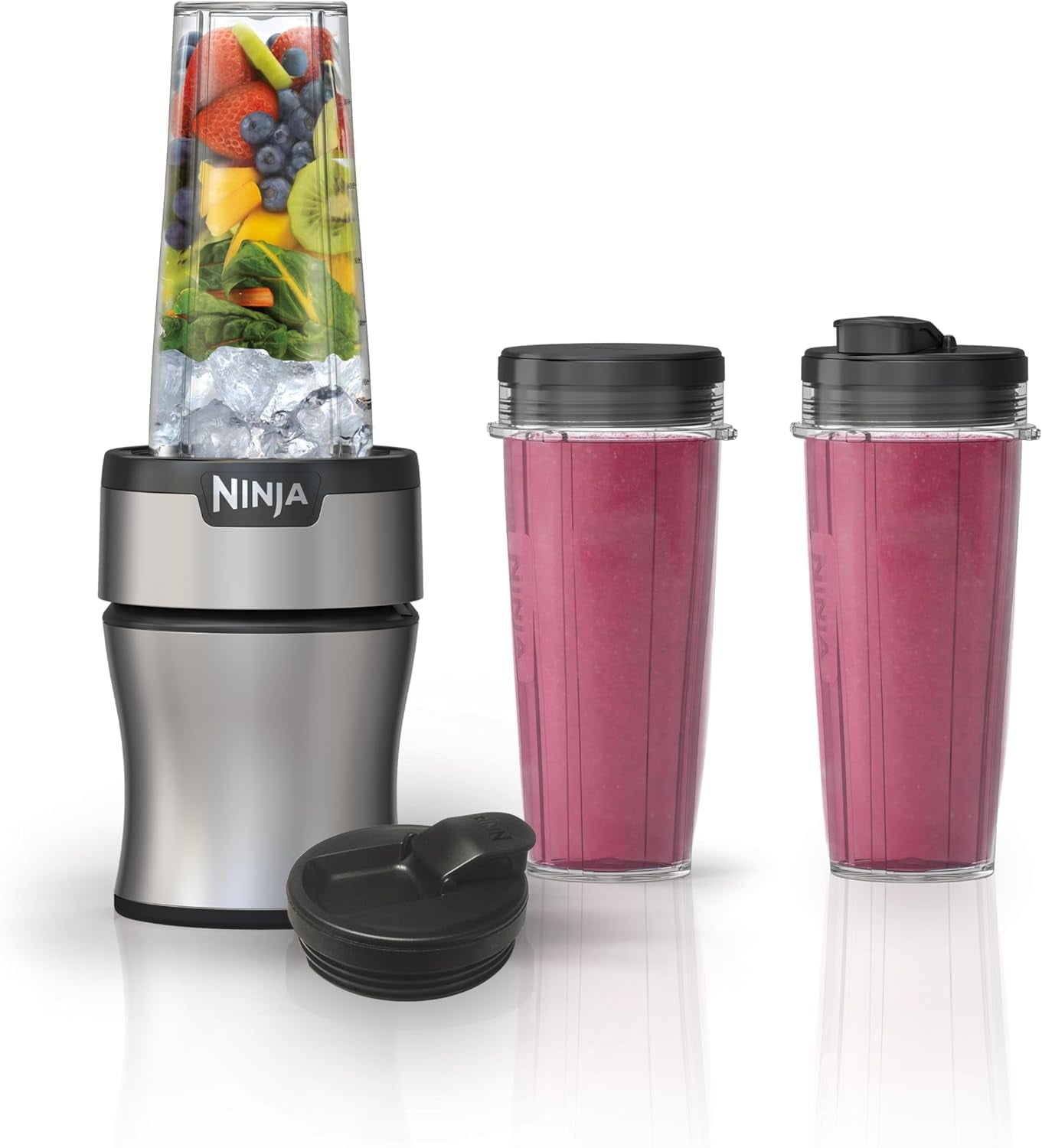
Small personal blenders
Often suit soft fruit, protein shakes, and single servings. Check the manual before using hard or frozen ingredients.
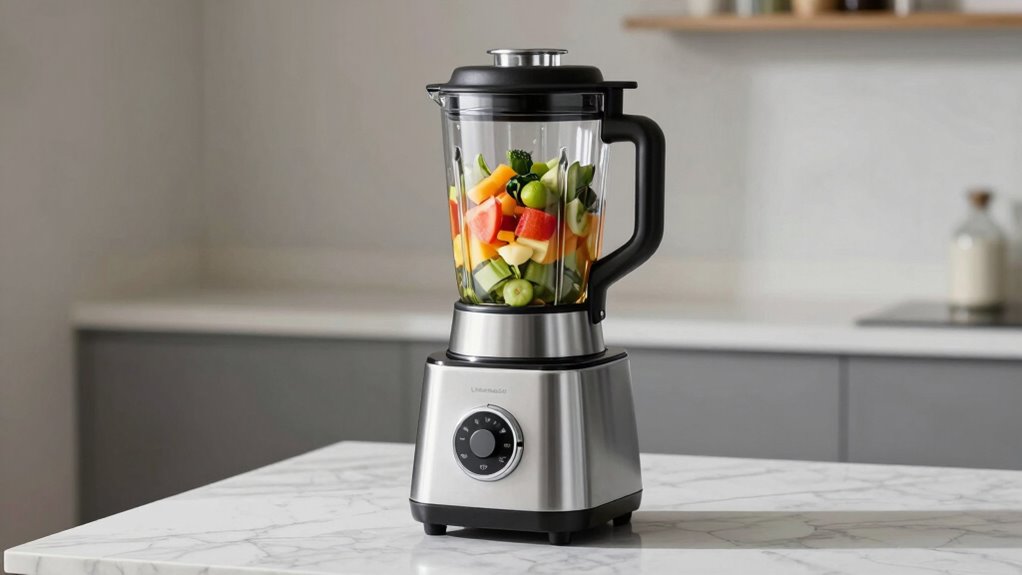
Everyday countertop blenders
Can be a practical middle ground for smoothies, sauces, dips, and occasional frozen drinks.
High-power countertop blenders
May be worth considering for frequent ice crushing, dense blends, larger batches, and demanding recipes.
A Practical Wattage Comparison
The figures below are rough shopping categories, not official industry standards. They are most useful when the product specifications use comparable ratings and the blender is intended for the task listed.
Under about 500 watts
May be enough for simple shakes, soft fruit, and small portions in a blender designed for those uses.
About 500 to 900 watts
Can suit many routine kitchen tasks, including ordinary smoothies and sauces, depending on the design.
About 900 to 1,500 watts
May offer more headroom for frozen ingredients and thicker blends when the motor and jar are built for them.
Above about 1,500 watts
May appeal to people who blend dense foods or large batches often, but the extra power may go unused in a kitchen that mostly makes thin drinks.
Choose by Recipe, Not by Number
If you make one fruit smoothie each morning, a simple blender that handles your ingredients is likely enough. If you regularly make thick frozen bowls, crush ice, or blend large batches, a stronger model designed for those tasks may be worth the added cost.
If you are unsure, list your three most common recipes and the hardest ingredient in each. Use that list to compare motor rating, jar capacity, blade design, and the manufacturer’s stated limits. This gives you a more useful answer than picking a model with the biggest number.
For thin drinks
Prioritize easy cleaning, a useful container size, and steady blending.
For thick mixtures
Look for suitable motor power, effective food movement, and clear instructions for heavy loads.
What Matters Besides Wattage?
Wattage is only one part of blender performance. The shape of the jar, the blade assembly, the motor’s ability to manage a changing load, and the way ingredients circulate all affect the final blend. A blender must do more than spin fast; it must keep food moving through the cutting area.
These design details help explain why a high-watt blender may still leave chunks in a smoothie. If ingredients sit above the blades or stick to the sides, the motor may have plenty of power but little contact with the food. A lower-watt model with better circulation can sometimes produce a more even result for the same recipe.
Source: leangrammar.com
Blade design
Blade shape and placement affect how ingredients are cut and moved. More blades do not automatically mean better blending.
Jar shape
The jar helps guide food back toward the blades. Its shape and width can affect circulation, especially with small portions.
Speed control
Variable speeds and pulse control can help handle different textures and reduce the need to run at full speed all the time.
Motor cooling
A motor needs to shed heat during use. Cooling design and stated duty limits affect how well a blender handles repeated or long blends.
Build quality
The jar, lid, drive parts, controls, and seals all affect everyday use and maintenance.
Why Blade Speed Is Not the Whole Story
A fast-spinning blade can cut ingredients quickly, but speed alone does not tell you how well the food reaches the blade. The flow inside the jar matters. If ingredients form an air pocket or cling to the walls, the blender may spin without mixing the full batch.
Some machines use jar shapes or blade systems designed to improve circulation. Others include a tamper for thick mixtures. Use a tamper only when the manufacturer provides one and the instructions allow it. Never put a spoon, spatula, or hand into a running blender.
Watch the mixture
A steady swirl usually suggests that the ingredients are moving through the blades.
Adjust safely
Stop the motor and unplug the unit before scraping the sides or freeing stuck food, unless the manual specifies a safe built-in method.
Can a High-Watt Blender Last Longer?
A higher watt rating does not prove that a blender will last longer. Lifespan depends on the motor, bearings, drive parts, seals, cooling, materials, maintenance, and how often the machine is pushed beyond its intended use.
A powerful blender may have more capacity for tough jobs, but using it for long periods without rest can still cause heat buildup. A smaller machine used within its limits may serve its owner well for years. Look for a clear warranty, available replacement parts, and instructions for cleaning and cooling.
Check the warranty
Read what is covered, how long coverage lasts, and whether the terms differ for parts and labor.
Follow the duty limits
If the manual calls for pauses between blends, allow the motor to cool as directed.
Keep parts clean
Food residue around seals and drive parts can affect operation. Clean only as the manufacturer permits.
Do Higher Watt Blenders Use More Electricity?
A higher-watt blender can use more electricity while running at a higher power draw. However, the total energy used depends on both the power draw and the length of time the blender runs. Since most home blending jobs take seconds or a few minutes, the energy used for one batch is often modest.
You can estimate electricity use with a simple formula: energy in kilowatt-hours equals power in watts divided by 1,000, multiplied by running time in hours. This calculation assumes the blender draws the stated power throughout that period. Actual use can vary with speed, ingredients, and load.
For example, a hypothetical 1,000-watt blender running for two minutes at that power would use about 0.033 kilowatt-hours. A hypothetical 500-watt blender running for the same two minutes would use about 0.017 kilowatt-hours. These are estimates, not measured readings from specific appliances.
Source: blenderjunkie.com
Estimate energy
Divide the watt rating by 1,000, then multiply by the hours of operation.
Estimate cost
Multiply the estimated kilowatt-hours by the electricity price on your bill.
Compare real use
A more powerful blender that finishes a task faster may use less energy than a weaker model that runs much longer, but the result depends on actual power draw and time.
A Simple Electricity Cost Example
Suppose electricity costs 16 cents per kilowatt-hour. If a blender uses 0.033 kilowatt-hours for one two-minute blend, the estimated cost is about half a cent. The rate is hypothetical and is included only to show how the math works.
For a more accurate estimate, use the electricity rate on your own bill and measure the appliance’s actual energy use with a suitable plug-in power meter, if the meter is rated for the load and the appliance is compatible. Do not open the blender or alter its electrical parts to measure consumption.
For occasional use
Blending time is usually a key part of the estimate, so focus on your actual minutes of use.
For frequent use
Add up the estimated energy for your usual daily or weekly blends to compare longer-term use.
Are Higher Watt Blenders Louder?
A high-watt blender can be loud, but wattage alone cannot predict its noise level. Motor speed, blade movement, jar shape, vibration, the countertop, and the ingredients all affect the sound. Some high-power machines use design features intended to control vibration or reduce noise, while some smaller models are still quite loud.
If noise matters in your home, look for a documented noise rating measured under stated conditions. If no comparable rating is available, reviews may offer clues, but reported noise depends on the recipe, room, and recording method. Do not assume that two models are comparable because one sounds quieter in a short online clip.
Place the blender on a stable, level counter and follow the manual’s setup instructions. Keep the base and vents clear. A rattling sound may come from an uneven surface, a poorly seated jar, or a damaged part, so check those issues before assuming the motor itself is the cause.
Source: blenderjunkie.com
For early mornings
Consider noise information, jar size, and the time needed to blend rather than choosing by wattage alone.
For unusual noise
Stop the blender if it grinds, rattles sharply, or vibrates more than usual. Inspect the jar and base only after switching off and unplugging the appliance.
Common Mistakes When Comparing Blender Power
The most common mistake is treating wattage as a complete score for quality. A power rating is useful, but it cannot tell you whether the jar suits your recipes, whether the blender can crush ice, or whether it can handle thick mixtures for long periods.
Another mistake is comparing peak watts from one model with rated watts from another. The figures may describe different operating conditions, so the comparison can make one blender seem stronger without showing how either performs in normal use.
It is also easy to blame low wattage for every blending problem. A mixture that stalls may need more liquid, a smaller batch, or a pause to move ingredients safely. Repeatedly running a stalled motor can cause excess heat, even in a high-power machine.
Source: longroadhomeproject.com
Mistake: Buying the biggest number
Correction: Match the power rating to the ingredients, batch size, and frequency of use.
Mistake: Ignoring the jar
Correction: Check capacity, shape, material, and whether the jar is designed for your usual serving size.
Mistake: Filling the jar to the top
Correction: Follow the fill line and leave room for food to circulate.
Mistake: Running a stalled blender
Correction: Turn it off and unplug it before checking the ingredients or adjusting the load.
Mistake: Assuming more power means longer life
Correction: Review cooling, duty limits, warranty terms, repair options, and care instructions.
What to Do If Your Blender Leaves Chunks
If a smoothie contains chunks, first check whether the ingredients are too large, too frozen, or packed too tightly. Cut large pieces into smaller chunks and follow the maker’s instructions for frozen foods. Adding the recommended amount of liquid may also help ingredients circulate.
If the blades spin but the food does not move, stop the motor. Unplug the blender before using a spatula to move food away from the sides or blades. If the problem continues with a suitable load, check the manual for troubleshooting steps and inspect the jar, lid, and drive connection for visible damage.
If the motor smells burnt, the base becomes unusually hot, or the blender repeatedly stops, do not keep trying to force it through the mixture. Allow it to cool as directed and contact the maker or a qualified repair service if the problem remains.
Start with the load
Use smaller pieces and a batch size within the manual’s limits.
Check liquid and flow
Use the recipe’s recommended liquid and a suitable speed or pulse setting.
Check the machine
Stop using it if there are signs of overheating, electrical damage, or a failing drive part.
How to Choose the Right Blender for Your Kitchen
Start with your recipes, then compare blenders that can safely handle them. Think about the hardest ingredient you use, the size of a typical batch, and how often you blend. This simple check helps you avoid paying for power you will rarely use or buying a machine that struggles with your regular meals.
Next, compare specifications that affect daily use. Jar capacity, speed controls, cleaning needs, warranty terms, and replacement parts may matter more than a small difference in wattage. For a household with several people, a larger jar may save time. For one person making a quick shake, a compact cup may be easier to clean and store.
Finally, read the manual or product details for the exact model. Look for clear guidance on ice, frozen fruit, hot liquids, and thick mixtures. Product claims are useful when they describe a specific task, but a general phrase such as powerful motor does not replace a clear performance limit or an appropriate design.
Source: s.alicdn.com
List your usual recipes
Write down whether you mostly make shakes, fruit smoothies, sauces, soups, ice drinks, or thick blends.
Choose a suitable capacity
Match the jar to your normal batch size and available counter or cabinet space.
Compare the power rating
Use the same rating type where possible and check the maker’s guidance for your toughest recipe.
Review care and warranty
Check cleaning instructions, replacement-part availability, coverage, and any limits on continuous operation.
Consider the full cost
Include the purchase price and likely replacement parts, not just the motor rating.
A Quick Decision Guide
If you mainly make thin drinks with soft ingredients, start with a basic model that fits your batch size. If you often use frozen fruit and ice, compare models that specifically support those tasks. If you blend thick foods or large batches several times a week, consider a higher-power model with suitable cooling and clear instructions for heavy use.
If you are buying a blender for a shared home, also think about noise, storage, cleaning, and how easy it is for others to use. The best appliance is the one that fits your real routine and handles your most demanding regular task without forcing you to work around its limits.
Choose basic power
For simple shakes, soft fruit, and small batches, when the model is rated for those tasks.
Choose a stronger model
For frequent frozen blends or thick recipes, when its documented capabilities match the load.
Choose by overall design
When noise, cleaning, capacity, storage, and repair support matter as much as raw power.
Frequently Asked Questions
Q
Is a 1,000-watt blender better than a 500-watt blender?
A 1,000-watt blender may have more power available for tough ingredients, but it is not automatically better. For simple shakes and soft fruit, a well-designed 500-watt model may be enough. Compare the power ratings on the same basis, the jar and blade design, and the tasks each maker supports.
Q
Does higher wattage make smoothies smoother?
It can help when a smoothie contains frozen fruit, ice, or fibrous ingredients, but smoothness also depends on blade design, jar shape, liquid amount, and ingredient size. For a thin smoothie with soft fruit, more watts may make little practical difference. Use a blender suited to your recipe and follow its instructions.
Q
Can a high-watt blender crush ice?
Some high-watt blenders are designed to crush ice, but the watt rating alone is not enough to confirm that capability. Check the exact model’s manual for ice-crushing guidance, batch limits, and recommended settings. Do not use ice in a blender if the maker warns against it.
Q
Do high-watt blenders use much more electricity?
A higher-watt blender can draw more power while running, but total energy use depends on how long it runs and its actual power draw. A short blend may use little electricity even in a powerful machine. Estimate use by multiplying kilowatts by running time in hours, then multiply the result by your electricity rate.
Q
Does a higher-watt blender last longer?
Not necessarily. Durability depends on the motor and drive parts, cooling, materials, maintenance, and whether the blender is used within its limits. A higher-power model may suit demanding tasks, but it still needs proper care and rest periods when the manual calls for them.
Q
Is a high-watt blender always louder?
No. Noise depends on motor speed, blade design, vibration, jar shape, ingredients, and the surface under the blender. If quiet operation matters, look for comparable noise measurements or credible reports about the exact model and the conditions in which it was used.
Q
What is more important than wattage when buying a blender?
The jar and blade design, food circulation, speed controls, motor cooling, capacity, cleaning needs, and warranty can all affect how well a blender fits your kitchen. Start with the recipes you make most often, then choose a model whose documented capabilities match the hardest task you expect it to handle.
✦ Wrapping Up
Conclusion
Higher watt blenders can be better for ice, frozen fruit, thick mixtures, and frequent heavy use. More electrical power can give the motor extra capacity under load, but it does not guarantee a smoother blend, lower noise, longer life, or better value. Jar shape, blades, motor control, cooling, and build quality all help determine the result.
For simple shakes and soft fruit, a modest blender may meet your needs without the added cost of a high-power model. For demanding recipes, choose a stronger blender that is specifically designed for those tasks. Check the exact power rating and follow the maker’s instructions rather than relying on the largest number on the box.
💡 Key Takeaway
Before buying, list your three most common blender recipes, identify the hardest ingredient, and compare models by rated power, documented task limits, jar design, cleaning, warranty, and total cost.