Cook whole eggs in an air fryer at 270°F for about 15 to 17 minutes, then cool them in an ice bath for easier peeling.
Hard boiled eggs are a handy food in American homes. You can eat them for breakfast, pack them for work, add them to a lunch salad, or keep them ready for a quick snack. An air fryer offers another way to cook them without boiling a pot of water on the stove.
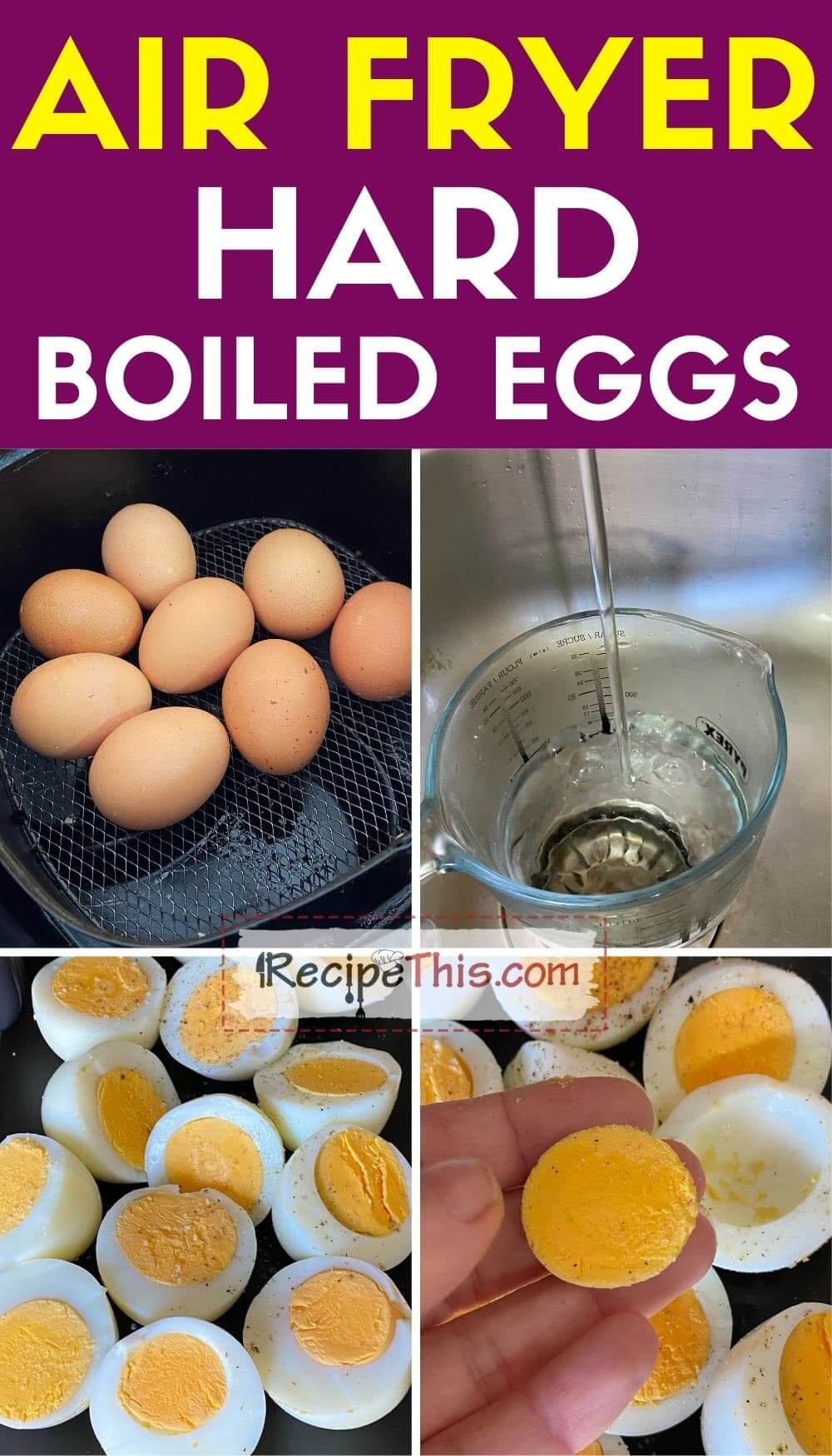
To make hard boiled eggs in an air fryer, place cold eggs in the basket in a single layer. Set the air fryer to 270°F and start with 15 to 17 minutes of cooking time. Move the eggs to a bowl of ice water as soon as they finish cooking. The exact time may vary with the air fryer, egg size, starting temperature, and desired yolk texture.
This method uses hot air rather than boiling water. That means you do not need to watch a pot or wait for water to boil. However, air fryers vary, so treat the first batch as a test and adjust the time for your own machine. The goal is a fully cooked white and yolk, with no unpleasant green ring or dry texture.
You only need a few basic items to make hard boiled eggs in an air fryer. The eggs cook in their shells, so there is no need for oil, butter, or water in the cooking basket. An ice bath is useful after cooking because it cools the eggs quickly.
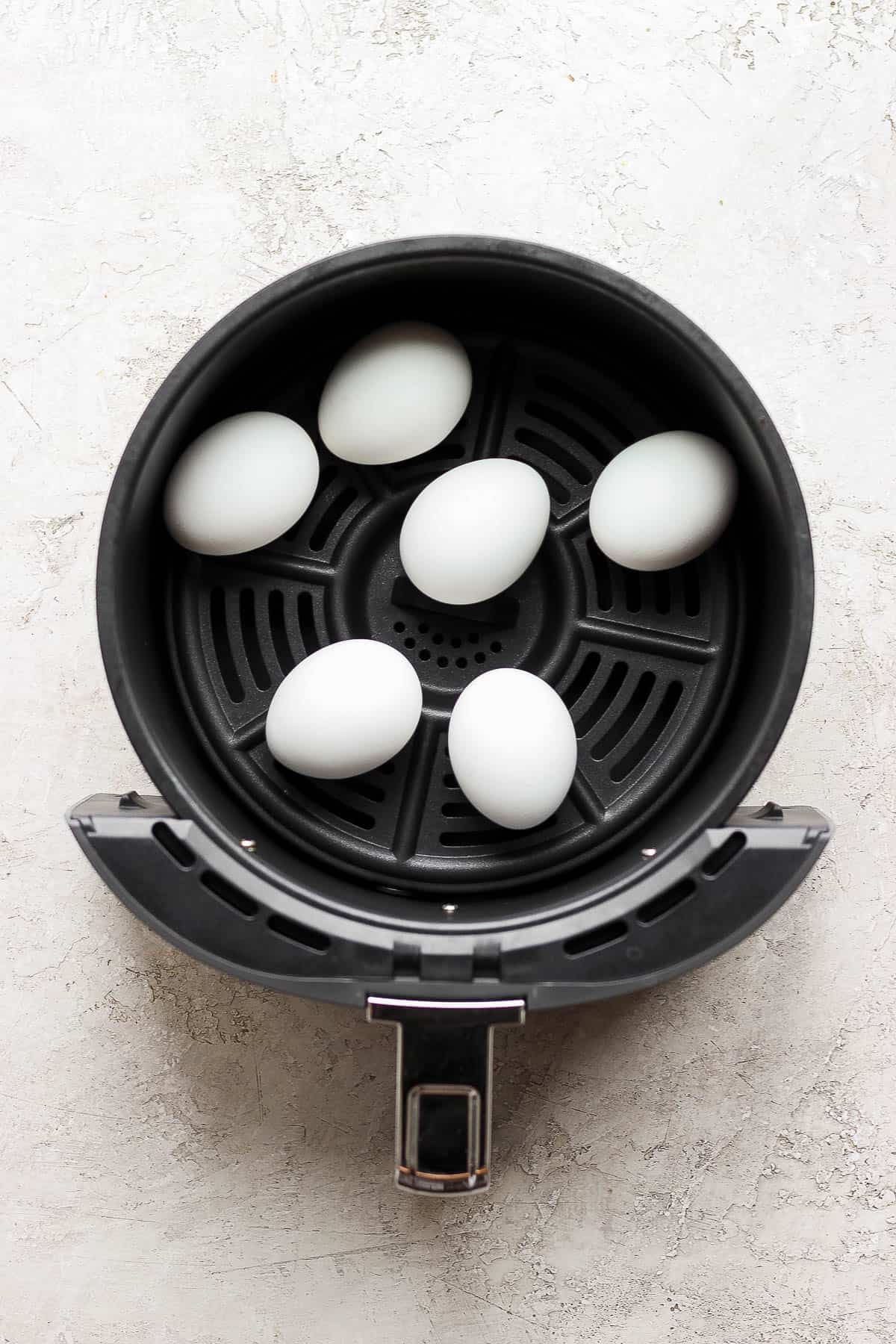
For your first batch, use a small number of eggs. Four eggs are a practical starting point if your basket has enough room for them to sit apart. Once you know how your air fryer cooks, you can make more at a time without crowding the basket.
Source: thefoodieaffair.com
Whole eggs
Use large eggs as a standard starting point. You can cook smaller or extra-large eggs, but you may need to adjust the time.
Air fryer
A basket-style or oven-style air fryer may work. Check the manufacturer’s instructions for egg cooking and temperature limits.
Bowl of ice water
Prepare cold water and ice before the cooking cycle ends so you can cool the eggs right away.
Tongs or a spoon
Use a suitable tool to move hot eggs. The shells and basket can be very hot when cooking ends.
Timer
A timer helps you repeat the same cooking time and compare results between batches.
Should You Use Cold Eggs or Room-Temperature Eggs?
Cold eggs straight from the refrigerator are a convenient starting point because many home cooks keep eggs chilled. Use the same starting condition each time while you test your air fryer. This makes it easier to tell whether a change in cooking time affects the result.
Do not leave eggs sitting at room temperature for a long period just to warm them before cooking. Also, avoid sudden temperature changes that could cause shells to crack. If you choose room-temperature eggs, expect the cooking time to differ from a batch that starts cold.
Best starting practice
Use refrigerated large eggs and record the time that works in your appliance.
Avoid damaged eggs
Check for cracked shells before cooking. Discard eggs with damaged shells if their safety is uncertain.
How to Make Hard Boiled Eggs in Air Fryer Step by Step
The basic process is simple: place the eggs in the basket, cook them, and cool them quickly. Start at 270°F for 15 to 17 minutes if your air fryer allows that setting. Since appliances differ, do not assume that one cooking time will work exactly the same way in every kitchen.
Keep the eggs in their shells during cooking. Do not crack them into a bowl or place peeled eggs directly on the basket for this method. The shell protects the egg during cooking, although it does not guarantee that every egg will remain uncracked.
Source: feelslikehomeblog.com
Step 1: Preheat if needed
Check your air fryer’s instructions. If preheating is recommended, preheat it before adding the eggs. If your model does not require preheating, follow its normal operating directions.
Step 2: Place the eggs in the basket
Arrange whole eggs in one layer. Leave a little space between them so they do not press against one another or the basket walls.
Step 3: Set the temperature
Set the air fryer to 270°F. If your appliance cannot maintain that setting, use a temperature supported by the manufacturer and expect to adjust the time.
Step 4: Cook for 15 to 17 minutes
Start with 15 minutes for the first batch. If the eggs are not fully cooked, add time in short increments on a later test batch.
Step 5: Move the eggs to ice water
When the timer ends, use tongs or a spoon to move the eggs into a bowl of ice water. Avoid handling hot eggs with bare hands.
Step 6: Cool for 5 to 10 minutes
Let the eggs cool until they are comfortable to handle. The cold water also helps limit continued cooking from the heat held inside the egg.
Step 7: Peel and check
Tap the shell gently on a firm surface, roll the egg to loosen the shell, and peel it. Cut one egg open to check that the white and yolk have reached the texture you want.
How Do You Know When the Eggs Are Done?
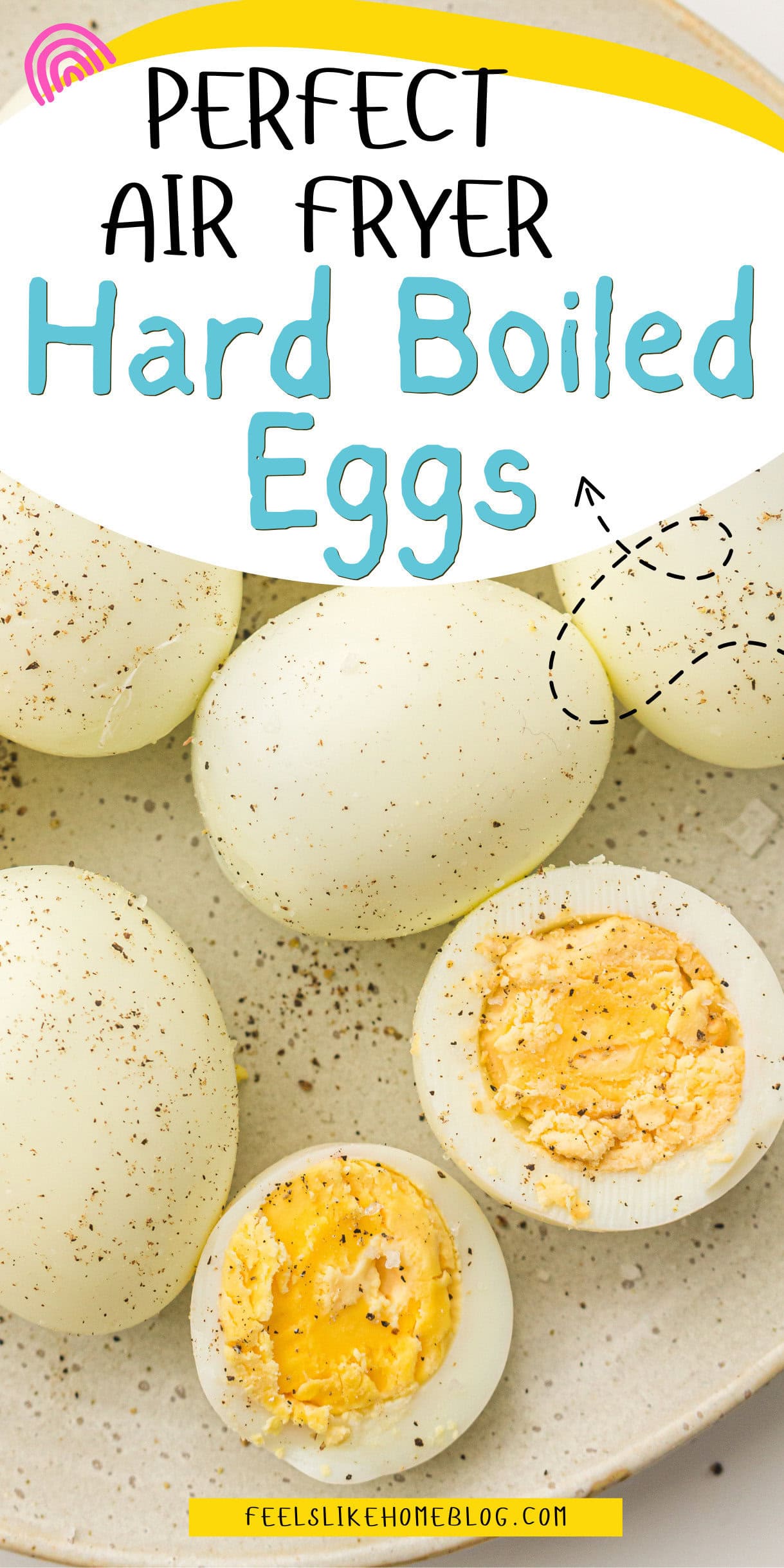
A cooked egg should have a firm white and a yolk that matches your chosen doneness. For a hard boiled egg, the yolk should be firm rather than liquid. The only reliable way to confirm the result from an unfamiliar air fryer is to open an egg from the test batch and inspect it.
If the center is still soft or wet, increase the cooking time for the next batch. If the yolk is very dry or has a green-gray ring, reduce the time slightly or cool the eggs more quickly. A green ring can form when eggs are overcooked, but its presence alone does not mean the egg is unsafe.
Firm white
The egg white should be set throughout, with no clear or runny section.
Firm yolk
The yolk should be set from the center to the outer edge for a hard boiled result.
Easy adjustment
Change the cooking time in small steps rather than making a large adjustment after one batch.
Air Fryer Hard Boiled Egg Cooking Time and Temperature
Cooking time is the main variable when making eggs in an air fryer. A starting temperature of 270°F and a time of 15 to 17 minutes can be useful for refrigerated large eggs, but the result is not guaranteed across all models. Heating design, basket size, airflow, preheating, and egg size can all affect the outcome.
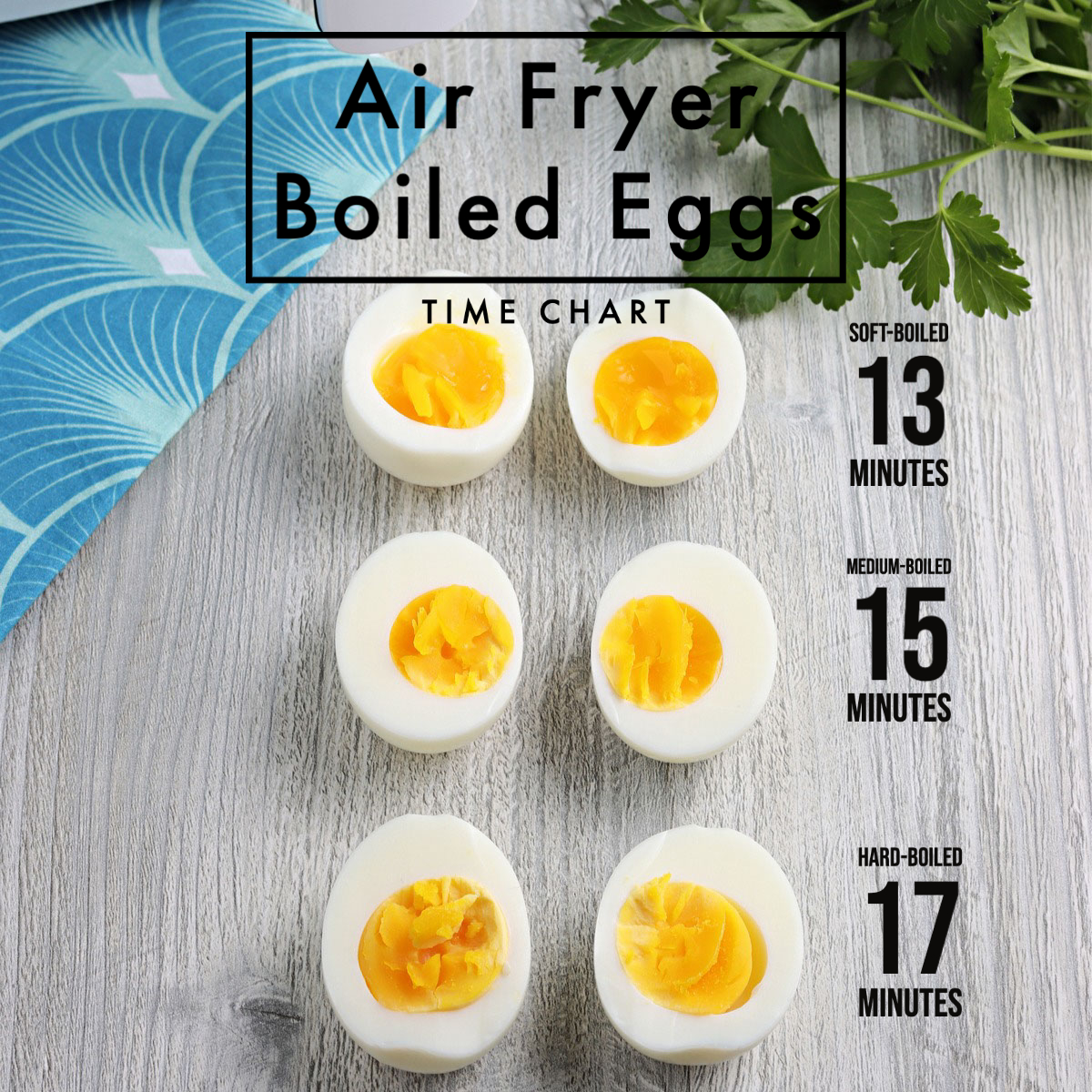
Use the table below as a starting guide rather than a universal chart. The times are practical test ranges, not results from a controlled test of every air fryer. If your first batch is undercooked or overcooked, adjust your next batch and write down the result.
Source: i.pinimg.com
For a firm yolk
Begin with the full 15-to-17-minute range and check the center of an egg before relying on the timing.
For smaller eggs
They may cook faster than large eggs, so inspect an early test batch before using the same time for every size.
For extra-large eggs
They may need more time. Add time gradually until the white and yolk are fully set.
For a new air fryer
Treat the first batch as calibration. Do not assume a temperature and time from another appliance will give identical results.
Suggested Starting Times for Different Results
Some people prefer a yolk that is just set, while others want a dry, firm center for egg salad or deviled eggs. A shorter cooking time may produce a softer yolk, but the exact result depends on the appliance. If you need a fully hard cooked egg for meal prep, prioritize a firm center over a specific minute count.
Use the following table to plan your test batch. Keep the temperature near 270°F where supported, and remember that the shorter times are only starting points for experimenting with texture. If you are cooking for someone at higher risk from foodborne illness, use fully cooked eggs rather than a soft-centered result.
About 12 to 14 minutes
A possible test range for a less firm yolk in some air fryers. Do not assume the egg is safe or fully cooked based on time alone.
About 15 to 17 minutes
A practical starting range for a firm yolk in many home air fryer recipes. Check the first batch.
About 18 to 20 minutes
A possible adjustment if the first batch remains undercooked. Longer is not automatically better, so inspect the result before repeating.
Why Air Fryer Models Need Different Times
Air fryers heat food by circulating hot air, but they do not all move or distribute that air in the same way. A compact basket model may behave differently from a larger oven-style unit. Even two batches in the same appliance can differ if one has more eggs or uses eggs of a different size.
The displayed temperature is a setting, not proof that every part of the basket stays at exactly that temperature. For repeatable results, keep the egg size, starting temperature, placement, and cooking time as consistent as possible.
Basket size
A crowded basket may change airflow and make results less consistent.
Preheating
A preheated appliance starts cooking under different conditions from a cold one.
Egg size
The amount of food inside the shell affects how long the center takes to heat.
Why Use an Air Fryer Instead of a Pot?
An air fryer can be convenient when you want a small batch of eggs without heating a pot of water. You can place the eggs in the basket, set the timer, and prepare other parts of breakfast while they cook. The method may also help when your stovetop is busy.
However, an air fryer is not automatically faster or more energy efficient than every other cooking method. The total time includes preheating when needed, cooking, and cooling. A stovetop pot or electric egg cooker may suit your kitchen better if you make eggs often or need a large batch.
Source: recipethis.com
Less water during cooking
The eggs cook in their shells without being submerged in a pot of water.
There is no pot of boiling water to drain, although you still need to clean the basket if an egg cracks.
Hands-off cooking
Once the timer is set, you do not need to watch a pot for boiling or manage the heat on a burner.
Model-dependent results
You may need a few trial batches to find the best time for your appliance.
Does an Air Fryer Use Less Electricity?
It depends on the wattage of the appliance, how long it runs, and the cooking method used for comparison. You can estimate electricity use by multiplying the air fryer’s rated wattage in kilowatts by its operating time in hours. This gives an approximate energy figure, not a guaranteed bill saving.
For example, a hypothetical 1,500-watt air fryer running for 17 minutes would use about 0.425 kilowatt-hours if it drew its full rated power for the entire period. Actual use may be lower because the heating element can cycle on and off. A fair comparison also needs to include the energy used to heat water on a stove or in another appliance.
Estimate
Energy in kilowatt-hours equals power in kilowatts multiplied by running time in hours.
Do not assume savings
Compare actual wattage and total cooking time before deciding which method costs less.
How to Peel Air Fryer Hard Boiled Eggs Easily
Cooling the eggs in ice water is a useful first step toward easier peeling. It stops the cooking process and cools the shell enough to handle. The ice bath does not guarantee a flawless peel every time, because freshness and the condition of the egg also affect how the shell separates.
Peel the eggs after they have cooled. If you plan to store them for later, you can leave them in their shells and peel them when you are ready to eat. Keeping the shell intact can help protect the egg during storage.
Source: thewoodenskillet.com
Step 1: Tap the wide end
Gently crack the wider end of the egg against a clean, firm surface.
Step 2: Roll the shell
Roll the egg lightly under your palm to make a network of small cracks around the shell.
Step 3: Start peeling
Use your fingers to lift small pieces of shell. Work slowly to avoid tearing the white.
Step 4: Use a little water
Peel under a gentle stream of cool running water if small shell pieces cling to the egg.
Step 5: Check the surface
Remove any remaining shell fragments before slicing or serving the egg.
Why Are the Shells Hard to Remove?
Egg freshness can affect peeling. Very fresh eggs often have shells that are more difficult to remove cleanly after cooking. The age and storage history of the egg, the cooking process, and the cooling method can all play a part.
If your eggs are difficult to peel, do not assume you cooked them incorrectly. Try cooling them fully, cracking the shell all over, and peeling from the wider end. A small amount of water between the shell and egg can help loosen stubborn pieces.
Shell sticks to the white
Cool the egg thoroughly and remove the shell in small pieces instead of pulling off large sections.
White tears during peeling
Use gentler pressure and start where the shell is already cracked.
Small shell fragments remain
Rinse the peeled egg under cool running water and check the surface.
Common Problems and How to Fix Them
Most problems with air fryer eggs come down to cooking time, temperature, egg size, or cooling. The easiest way to troubleshoot is to cut one egg open after the first batch. That gives you a direct look at the result instead of relying only on the timer.
Change one variable at a time. If you change the temperature, egg size, and cooking time together, you will not know which change helped. Record your settings so you can repeat a successful batch.
Source: everydayfamilycooking.com
The yolk is still soft
Increase the cooking time slightly on the next batch. If you need a fully cooked egg, continue testing until the center is firm.
The yolk is dry
Reduce the cooking time slightly and cool the eggs promptly after cooking.
A green ring appears around the yolk
This can result from overcooking or slow cooling. Adjust the time and use an ice bath.
The shell cracks
Check the eggs before cooking, avoid rough handling, and make sure they are not crowded or pressed against the basket.
Some eggs cook differently
Use eggs of similar size and temperature, keep them in one layer, and check that the basket is not overloaded.
The eggs have an unusual smell
Do not taste an egg that smells spoiled or has other signs of spoilage. Discard it and check how the remaining eggs were stored.
Can Eggs Explode in an Air Fryer?
Eggs can crack during cooking, and their contents may leak into the basket. Whole eggs heated in their shells are not the same as eggs cooked in boiling water, so results can vary with the appliance and the conditions. Do not assume that a shell will always stay intact.
Follow the air fryer manufacturer’s guidance before cooking eggs in their shells. Do not use damaged eggs, and do not put eggs into a setting that exceeds the appliance’s recommended limits. If an egg cracks and leaks, turn the appliance off before cleaning and allow the basket to cool.
Inspect first
Use eggs with intact shells and handle them gently.
Avoid excessive heat
Use a moderate setting supported by your air fryer rather than raising the temperature to shorten the cooking time.
Clean safely
Let hot parts cool before removing cooked egg residue. Follow the appliance’s cleaning instructions.
Food Safety and Proper Egg Storage
Cooked eggs need careful handling even when the shells look clean and unbroken. In the United States, eggs should be kept refrigerated, and cooked eggs should not sit at room temperature for long periods. The standard food safety limit is two hours at room temperature, reduced to one hour when the surrounding temperature is above 90°F.
Move cooked eggs into the refrigerator promptly after cooling. Do not leave a large batch on the counter while you prepare other food. If the eggs will not be eaten soon, refrigerate them in a clean, covered container and keep the refrigerator at 40°F or below.
Source: recipesfromapantry.com
Refrigerate promptly
Place cooked eggs in the refrigerator within two hours, or within one hour when the temperature is above 90°F.
Use within one week
Hard cooked eggs, whether peeled or unpeeled, can generally be kept refrigerated for up to one week.
Keep them covered
Store eggs in a clean, covered container to protect them from other foods and odors.
Avoid leaving them in a warm car
If you pack eggs for lunch or travel, use an insulated cooler with ice packs to keep them cold.
Discard uncertain eggs
When cooked eggs have been left out too long or their storage history is unclear, discard them instead of tasting them to check safety.
Are Air Fryer Hard Boiled Eggs Safe for Meal Prep?
Yes, they can be a useful meal prep food when cooked fully and stored correctly. You can prepare a few eggs at the start of the week and use them for breakfast, salads, sandwiches, or snacks. Keep them cold until you are ready to eat them.
For people at higher risk of foodborne illness, including pregnant people, older adults, young children, and people with weakened immune systems, fully cooked eggs are the safer choice. Avoid soft or runny centers when preparing eggs for someone who needs extra food safety care.
For breakfast
Serve a peeled egg with toast, fruit, or another breakfast food.
For salads
Slice fully cooled eggs and add them just before serving.
For packed lunches
Keep the eggs chilled in an insulated lunch bag with a cold source.
Ways to Serve Air Fryer Hard Boiled Eggs
Hard boiled eggs are easy to use in everyday meals because they are already cooked and simple to portion. Their mild taste works with vegetables, bread, salads, and many seasonings. Let the eggs cool fully before slicing them for a cold dish.
If you are making several servings, keep the eggs chilled until you are ready to prepare the meal. Peel only what you need when practical, and use clean utensils and surfaces when cutting or mixing the eggs.
Source: i.pinimg.com
Classic breakfast
Serve an egg with whole-grain toast, fruit, or oatmeal for a simple morning meal.
Egg salad
Chop the eggs and mix them with mayonnaise, mustard, celery, or seasonings you enjoy. Refrigerate the finished salad promptly.
Green salad
Add sliced eggs to lettuce, tomatoes, cucumbers, and your favorite dressing.
Deviled eggs
Halve the cooked eggs, mash the yolks with a suitable filling, and spoon or pipe the mixture back into the whites.
Quick snack
Cut an egg in half and add a small amount of salt, pepper, or another seasoning.
Sandwich filling
Slice the eggs for a sandwich or chop them into a filling with herbs and a little dressing.
How Many Eggs Should You Cook at Once?
The right number depends on the size of your air fryer and how much room the eggs need. Four eggs are a sensible first test batch for many home kitchens, but you can use fewer if your basket is small. Keep the eggs in one layer rather than stacking them.
When you need more eggs, cook another batch if the basket would otherwise be crowded. A larger batch may change airflow and make the results less consistent. Once you have confirmed that your appliance cooks a certain quantity evenly, use that quantity as your normal batch size.
Small batch
Useful for testing cooking time and making breakfast for one or two people.
Family batch
Add eggs only while there is enough room to arrange them in a single layer.
Weekly meal prep
Make several batches if needed, then cool and refrigerate the eggs promptly.
Frequently Asked Questions
Q
How long does it take to make hard boiled eggs in an air fryer?
A practical starting point is 15 to 17 minutes at 270°F for refrigerated large eggs. Your air fryer, egg size, and starting temperature can change the result, so check one egg from the first batch and adjust the time if needed.
Q
Do you need to add water to an air fryer to cook eggs?
No. Whole eggs cook in their shells using the air fryer’s circulating hot air, so water is not needed in the basket for this method. Use an ice water bath after cooking to cool the eggs.
Q
Should I preheat my air fryer before cooking eggs?
Follow your air fryer’s instructions. Some models recommend preheating, while others allow food to be added before the heating cycle begins. Keep the same preheating method when testing cooking times so your results are easier to repeat.
Q
Can I cook eggs straight from the refrigerator?
Yes, refrigerated eggs are a convenient starting point. Use eggs with intact shells and handle them gently. Because cold eggs may cook differently from room-temperature eggs, keep the starting temperature consistent when adjusting your timing.
Q
Why are my air fryer hard boiled eggs not fully cooked?
The cooking time may be too short for your appliance, egg size, or starting temperature. Increase the time slightly on the next batch and check that the white and yolk are firm. Do not rely on a recipe’s timing alone when using an unfamiliar air fryer.
Q
How do I stop the yolks from turning green?
A green-gray ring can develop when eggs are overcooked. Try reducing the cooking time slightly and moving the eggs into an ice bath as soon as the cycle ends. The ring is usually a reaction between compounds in the egg and is not, by itself, a sign that the egg is unsafe.
Q
Can I cook peeled eggs in the air fryer?
The method in this guide is designed for whole eggs in their shells. Peeled eggs are more exposed to direct heat and may dry out or become damaged. For predictable results, cook whole eggs, cool them, and peel them afterward.
Q
How long do air fryer hard boiled eggs last in the refrigerator?
Hard cooked eggs can generally be refrigerated for up to one week when stored properly. Keep the refrigerator at 40°F or below and place the eggs in the refrigerator within two hours of cooking, or within one hour if the temperature is above 90°F.
✦ Wrapping Up
Conclusion
Making hard boiled eggs in an air fryer is a simple way to prepare eggs for breakfast, snacks, salads, and meal prep. Start with whole refrigerated eggs, arrange them in one layer, and try 270°F for 15 to 17 minutes. Cool them in ice water for 5 to 10 minutes, then peel one to check the result.
The key is to adjust the timing to your own appliance instead of treating one recipe as a rule for every air fryer. Egg size, preheating, airflow, and starting temperature can change how quickly the center cooks. Once you find a setting that gives you a firm white and yolk, write it down and use it as your starting point for future batches.
Handle the finished eggs with care. Refrigerate them promptly, keep them cold until serving, and use them within one week. With a little testing, you can make a batch that suits your kitchen and have ready-to-eat eggs on hand throughout the week.
💡 Key Takeaway
For your first batch, cook four refrigerated large eggs at 270°F for 15 to 17 minutes, cool them in ice water, and cut one open to check the center before choosing a regular cooking time.