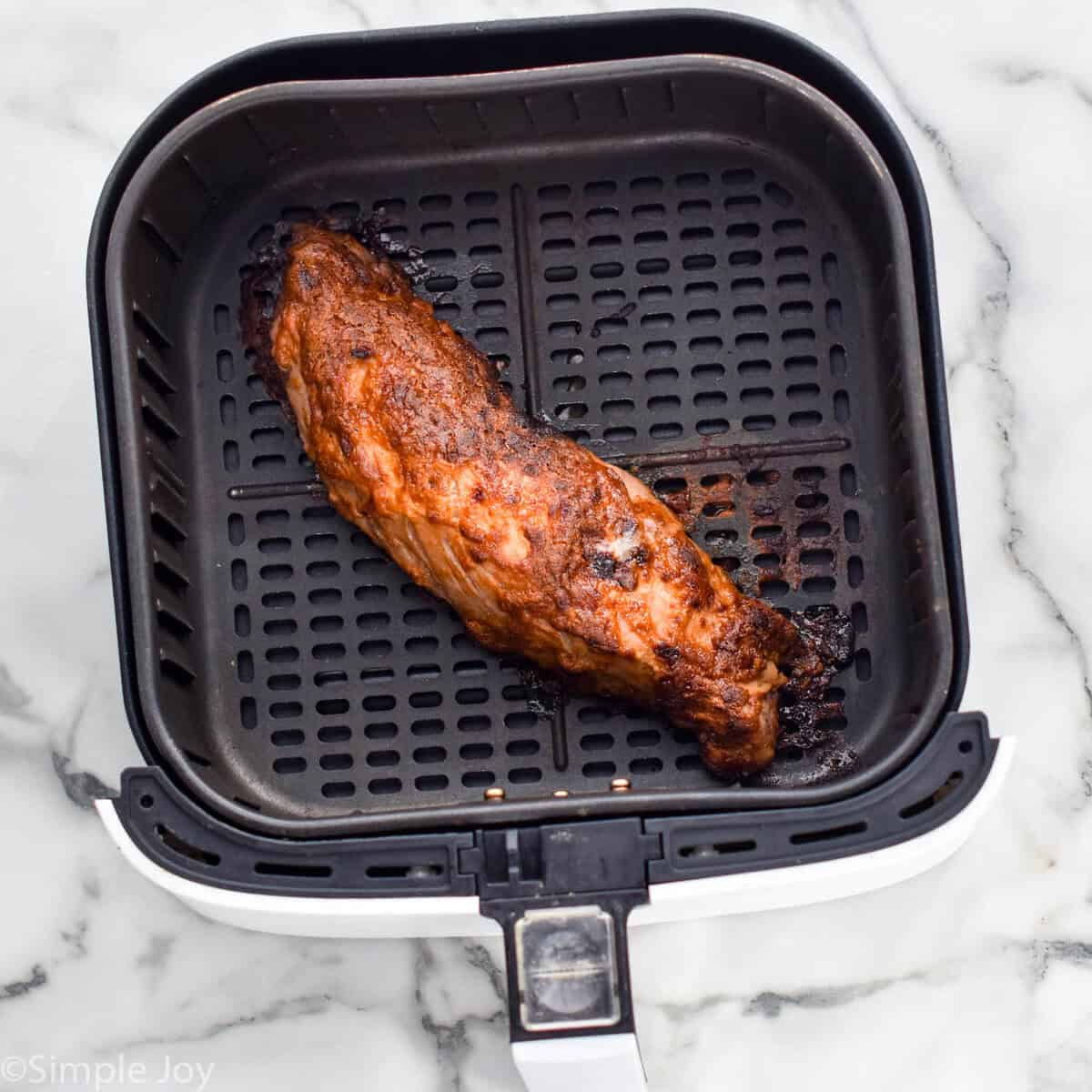
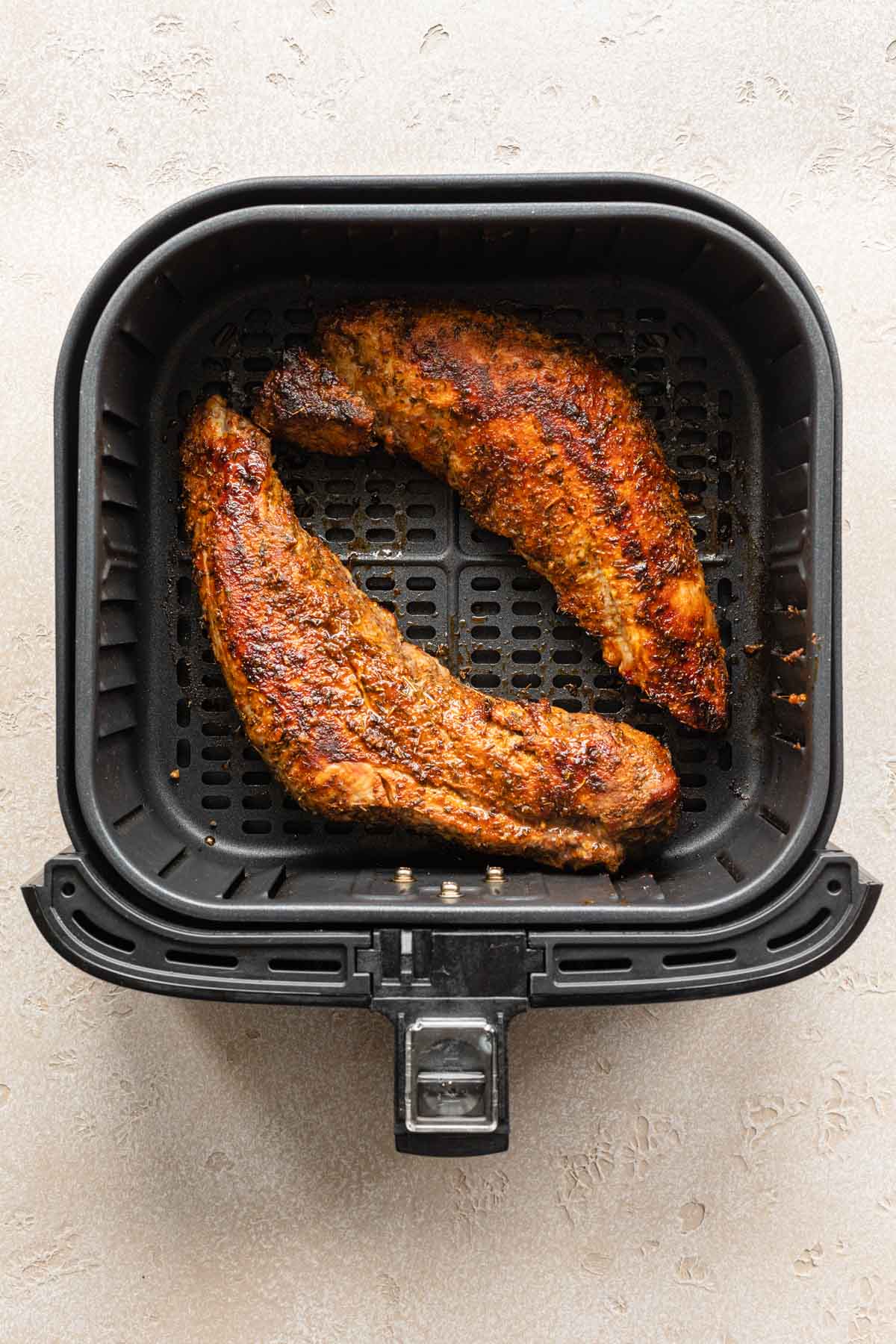
Cook a typical 1-pound pork tenderloin in an air fryer at 400°F for about 18 to 22 minutes, turning halfway, then check that the center reaches 145°F and rest for at least 3 minutes.
In American homes, an air fryer can make pork tenderloin a practical choice for a quick weeknight dinner. It heats the meat with fast-moving hot air, helps brown the outside, and leaves room for easy sides such as green beans, roasted potatoes, or corn. The key is to match the cooking time to the size of the tenderloin and check the center with a meat thermometer.
Cooking time is a guide, not a guarantee. A thin tenderloin may finish before a thick one, and different air fryers can cook at different rates. For a juicy result, cook the pork to a safe internal temperature, let it rest, and avoid leaving it in the basket longer than needed.
How Long Does Pork Tenderloin Take in an Air Fryer?
A pork tenderloin weighing about 1 pound often needs 18 to 22 minutes in an air fryer set to 400°F. Turn it halfway through cooking if your appliance and basket design allow easy access. Start checking the internal temperature before the end of the estimated cooking window.
The exact time depends on the tenderloin’s weight, thickness, starting temperature, seasoning, and air fryer model. A narrow piece may cook faster than a thick one of the same weight. A crowded basket or a low cooking temperature may also change the result.
Use the timing table as a starting point for a fresh, fully thawed tenderloin cooked at 400°F. These ranges are practical estimates, not tested guarantees for every appliance. Confirm doneness with a food thermometer rather than relying on appearance or time alone.
Source: simplejoy.com
Small tenderloin
For a piece around 3/4 pound, begin checking at about 14 to 16 minutes. The final time may vary with its thickness.
Standard tenderloin
For a piece around 1 pound, allow roughly 18 to 22 minutes, checking the thickest area before the end of that range.
Larger tenderloin
For a piece around 1 1/2 pounds, begin checking at about 22 to 26 minutes. Add time only as needed to reach the safe internal temperature.
Two tenderloins
Two pieces may take longer if they reduce airflow or crowd the basket. Arrange them with space between them and check each one separately.
Air Fryer Pork Tenderloin Cooking Time Chart
This chart gives approximate starting ranges for whole, thawed pork tenderloin cooked at 400°F. Weight alone cannot predict the exact finish time because thickness and appliance performance also matter. The thermometer reading is the final check.
3/4 pound
Begin checking at 14 to 16 minutes.
1 pound
Begin checking at 18 to 22 minutes.
1 1/4 pounds
Begin checking at about 20 to 24 minutes.
1 1/2 pounds
Begin checking at about 22 to 26 minutes.
Why Cooking Time Can Vary
The shape of the meat matters as much as its weight. A short, thick tenderloin may need more time in the center than a long, narrow one. A cold tenderloin taken straight from the refrigerator may also take longer than one that has spent a short time out while you prepare the seasoning.
Air fryers vary in fan strength, basket shape, heating pattern, and temperature accuracy. A model that runs hot may brown the surface early while the center still needs time. Check the meat early, then use short additional cooking intervals to avoid overshooting the target.
Thickness
Check the thickest section because it is often the last part to reach the target temperature.
Starting temperature
Cook the pork from a refrigerated state according to safe handling practices. Do not leave raw meat out for a long period to speed up cooking.
Airflow
Leave room around the meat and avoid stacking pieces.
Appliance differences
Use the first cook as a guide for your own air fryer, while still checking every tenderloin with a thermometer.
What Temperature Should You Use?
Set the air fryer to 400°F for a balance of browning and cooking speed. This temperature works as a useful starting point for a whole pork tenderloin, but it does not replace an internal temperature check. If the outside browns too quickly, lower the heat slightly and continue cooking until the center reaches the safe target.
The cooking temperature shown on the air fryer is different from the final temperature inside the pork. The appliance may be set to 400°F, while the center of the meat rises gradually as heat moves inward. A food thermometer tells you when the pork itself is ready.
The USDA recommends cooking whole cuts of pork to 145°F, followed by a rest of at least 3 minutes. Properly cooked pork can still look pink in the center. Color alone is not a reliable way to confirm safety.
Source: storables.com
Recommended starting setting
Use 400°F for a typical whole, thawed pork tenderloin.
Safe internal temperature
Check for 145°F in the thickest part of the meat, avoiding contact with the basket or any bone if present.
Resting period
Let the pork rest for at least 3 minutes after it reaches 145°F.
When the exterior browns too fast
Reduce the air fryer setting modestly and continue cooking, checking the center often.
Can Pork Tenderloin Be Slightly Pink?
Yes. Pork tenderloin can be slightly pink in the middle and still be safe when a thermometer confirms that it has reached 145°F and it rests for at least 3 minutes. The color of cooked pork can vary with the meat itself and the cooking process.
Do not judge safety by whether the center looks white, pink, or brown. Insert the thermometer into the thickest part and take a proper reading. If the reading is below 145°F, return the pork to the air fryer and check again after a short interval.
Use a thermometer
A digital instant-read thermometer makes it easier to check the center accurately.
Avoid shallow readings
Place the probe far enough into the thickest section to measure the center rather than the hot outer layer.
Should You Preheat the Air Fryer?
Preheating can help the air fryer start at a more consistent temperature. If your model has a preheat function, follow the manufacturer’s directions. If it does not, you can still cook pork tenderloin successfully, but the timing may differ.
Do not assume that a preheated appliance makes the cooking time exact. Basket size, meat thickness, and airflow still affect the result. Use the thermometer to decide when the pork is ready.
Preheat when appropriate
Use the preheat setting or instructions provided for your specific appliance.
Adjust your timing
Begin checking according to the expected finish time, not a fixed minute count.
Pork Tenderloin vs. Pork Loin: Know the Difference
Pork tenderloin is a small, lean cut from along the backbone. It is usually long and narrow, which makes it suitable for relatively quick cooking. Pork loin is a larger and thicker cut that may be sold as a roast or in chops.
The names sound similar, but the cuts are not interchangeable. A whole pork loin roast can need much longer to cook than a tenderloin. If you use tenderloin timing for a thick loin roast, the center may remain undercooked even when the surface looks ready.
Check the package label before setting the timer. If the package says pork loin roast, pork loin filet, or another cut, verify the cut and use a cooking method suited to its size. The same safe internal temperature for whole pork cuts applies, but the cooking time can be quite different.
Source: i.pinimg.com
Pork tenderloin
A narrow, lean cut that often cooks in about 18 to 22 minutes for a 1-pound piece at 400°F.
Pork loin roast
A larger, thicker cut that usually requires a different timing plan based on its dimensions and weight.
Pork medallions
Slices cut from a tenderloin cook much faster than the whole piece, so start checking them early.
What If the Package Calls It a Filet?
Retail labels can vary, so read the full product description. Some packages use the word filet for a trimmed pork tenderloin, while others may describe a different pork cut. The shape and package instructions can help you identify what you have.
If the cut is unclear, do not rely on a time chart alone. Follow the package guidance where suitable, measure the thickest part, and confirm that the meat reaches 145°F before resting.
Check the label
Look for the full cut name and the weight.
Check the shape
A narrow, tapered piece is typical of tenderloin, while a broad, thick roast may be pork loin.
How to Cook Pork Tenderloin in an Air Fryer Step by Step
A good result starts before the air fryer turns on. Trim away loose silver skin if needed, dry the surface, and add a thin coat of oil with your preferred seasoning. Keep the preparation simple so the pork can brown without excess moisture or burnt spices.
Use a clean work area and keep raw pork and its juices away from cooked food. Wash your hands after handling the raw meat, and clean any board, plate, or utensil that touched it before using that item for the finished dish.
Source: wellplated.com
Step 1: Prepare the pork
Remove the package, pat the tenderloin dry with paper towels, and trim loose silver skin or excess fat if needed.
Step 2: Add oil and seasoning
Rub a small amount of oil over the surface. Add salt, black pepper, garlic powder, paprika, or dried herbs as desired.
Step 3: Preheat if recommended
Use your air fryer’s preheat function if the manual recommends it or if your model provides one.
Step 4: Place the tenderloin in the basket
Lay it in a single layer, leaving room for hot air to circulate. Cut it into shorter sections only if needed to fit, and remember that separate pieces may finish at different times.
Step 5: Cook at 400°F
Start with the estimated time for the weight and shape. Turn the pork about halfway through if practical.
Step 6: Check the center
Insert a food thermometer into the thickest part. Continue cooking if the reading is below 145°F.
Step 7: Rest and slice
Once the pork reaches 145°F, place it on a clean plate or cutting board and rest it for at least 3 minutes before slicing.
How to Season Pork Tenderloin Without Burning It
A thin coating of oil helps dry seasonings stick to the pork and encourages browning. Garlic powder, paprika, black pepper, thyme, rosemary, and a modest amount of salt all work well. Use a light hand with sugar-heavy rubs because sweet ingredients can darken quickly at high heat.
If you want a glaze made with honey, maple syrup, or barbecue sauce, add it near the end of cooking rather than coating the meat heavily from the start. Check the pork temperature as usual, since a browned glaze does not prove that the center is cooked.
For a simple savory flavor
Combine salt, pepper, garlic powder, and paprika.
For an herb flavor
Use thyme or rosemary with black pepper and a small amount of oil.
For a sweet glaze
Brush on a thin layer near the end, then watch closely to prevent excessive browning.
Should You Flip Pork Tenderloin Halfway Through?
Turning the tenderloin halfway through can help expose more of its surface to the circulating heat. It is especially useful in air fryers that brown more strongly on one side. Some appliances cook evenly enough that turning is less important, so follow the instructions for your model.
Use tongs rather than piercing the meat repeatedly with a fork. If the tenderloin is awkward to turn, move it carefully without touching hot basket surfaces. Always check the thickest part before deciding that cooking is complete.
Turn when practical
Flip the pork around the midpoint of the expected cooking time.
Avoid overcrowding
Cook in batches if the meat blocks airflow or touches other large pieces.
How to Keep Air Fryer Pork Tenderloin Juicy
Pork tenderloin is lean, so it can become dry if it cooks too long. The best way to keep it juicy is to monitor the internal temperature, avoid excessive cooking after it reaches the target, and allow it to rest before slicing. Extra oil cannot make up for a center that has been overcooked.
Dry meat is often the result of too much heat exposure, but uneven cooking can also cause trouble. The outside may look done while the center remains cool, tempting you to leave it in for a long time. A thermometer helps you make smaller, more precise decisions.
Source: i.pinimg.com
Dry the surface first
Pat the tenderloin dry before adding oil and seasoning. A dry surface can brown more readily than one covered in moisture.
Use only a thin layer of oil
A small amount can support browning without making the surface greasy.
Check before the maximum time
Begin checking early enough to catch the moment the center reaches 145°F.
Rest before slicing
Rest the pork for at least 3 minutes after cooking.
Slice across the grain
Cut across the direction of the visible muscle fibers to make each bite easier to chew.
Why Resting Matters
Resting gives the meat a short period to settle after heating and makes it easier to slice neatly. If you cut the tenderloin immediately, more liquid may run onto the cutting board. A brief rest does not repair overcooked meat, but it is a useful final step.
For food safety, the USDA guidance for whole cuts of pork is 145°F followed by a rest of at least 3 minutes. Do not treat resting as a way to rescue meat that has not reached the required temperature.
Use a clean surface
Transfer the cooked tenderloin to a clean plate or board, not the one that held the raw pork.
Keep the rest brief
Allow at least 3 minutes before slicing and serving.
What to Do If the Pork Is Dry
If the pork is already overcooked, more cooking will not make it tender again. Slice it thinly across the grain and serve it with a little warm pan sauce, gravy, broth, or another suitable sauce to improve the eating experience. Avoid soaking the slices in a large amount of liquid, which can make their texture unpleasant.
For the next cook, start checking sooner and use the thermometer to stop at the safe target. Record the approximate time that worked in your air fryer, but continue to check each new piece because size and shape can differ.
For the current meal
Slice thinly and serve with a sauce or moist side.
For the next attempt
Check earlier, avoid a long hold at high heat, and confirm the internal temperature.
Common Mistakes That Affect Cooking Time
Most air fryer pork tenderloin problems come from using the wrong cut, crowding the basket, guessing doneness, or cooking too long. These mistakes can cause uneven browning, a dry texture, or an undercooked center. Fix the cause rather than adding a large amount of extra cooking time without checking the meat.
When the result is not right, look at the symptom first. A dark exterior with a cool center calls for a different response than pale meat that has already reached 145°F. The following checks help you choose a useful next step.
Source: cycookery.com
Mistake: Using pork loin timing
A thick loin roast needs a different timing plan from a narrow tenderloin. Confirm the cut before cooking.
Mistake: Trusting the timer alone
Time estimates cannot confirm the center temperature. Use a food thermometer.
Mistake: Filling the basket too tightly
Crowded meat can block airflow and cook unevenly. Leave space or work in batches.
Mistake: Applying too much sweet sauce early
Sugar can darken before the center is ready. Add a sweet glaze closer to the end.
Mistake: Skipping the rest
Resting is part of the recommended safe cooking guidance for whole pork cuts and helps with slicing.
Mistake: Cutting the meat to check it
Repeated cuts release juices and still do not provide a reliable temperature reading. Use a thermometer instead.
The Outside Is Brown but the Center Is Undercooked
A browned surface does not mean the center has reached 145°F. If the outside is dark but the thickest section is still below the target, lower the cooking temperature modestly and continue in short intervals. Check the center again after each interval.
This issue can occur with a thick tenderloin, a hot-running air fryer, or a heavy coating that darkens quickly. Avoid wrapping the pork tightly in foil inside the basket unless your appliance instructions specifically permit the method, because it can interfere with airflow.
Lower the heat if needed
Use a somewhat lower setting to give the center more time without rapidly darkening the surface.
Check more often
Use short intervals and measure the thickest section each time.
The Pork Is Pale but Has Reached 145°F
If the center has reached 145°F and the required rest is complete, additional cooking is not needed for safety under the USDA whole-cut guidance. Pale color alone is not a reason to keep cooking the pork.
For more browning next time, pat the surface dry, use a light coating of oil, and avoid crowding. Do not extend cooking for a long period just to achieve a darker crust.
Prioritize safe temperature
Use the measured internal temperature rather than surface color.
Improve browning on the next cook
Dry the meat well and give hot air room to circulate.
The Pork Is Still Below 145°F After the Estimated Time
Keep cooking the tenderloin rather than serving it early. Return it to the basket, cook for a few more minutes, and check the thickest part again. Repeat as needed until the thermometer confirms 145°F.
If the surface is already dark, reduce the heat to limit further browning. If the reading seems unusual, reposition the probe and take another reading from the thickest section.
Continue in short intervals
Add a few minutes rather than restarting the timer for a long period.
Check probe placement
Ensure the thermometer is measuring the center rather than the hot outer layer.
Can You Cook Frozen Pork Tenderloin in an Air Fryer?
A fully frozen pork tenderloin is harder to cook evenly because the outside heats long before the center thaws. For the most predictable result, thaw the pork safely in the refrigerator before air frying it. This makes it easier to season the meat, judge the shape, and check the center as cooking progresses.
Do not assume that the usual 18-to-22-minute range applies to frozen pork. Frozen meat may need substantially more time, and the surface may brown before the center is ready. If you choose to cook it from frozen, follow reliable guidance suited to the cut and appliance, and verify the internal temperature carefully before serving.
For refrigerator thawing, keep the pork in a container that catches any juices. A microwave can also be used for thawing if its instructions permit, but pork thawed in the microwave should be cooked immediately. Do not thaw raw pork on the counter at room temperature.
Source: cycookery.com
Best option
Thaw the tenderloin in the refrigerator before cooking for more predictable timing.
Avoid counter thawing
Do not leave raw pork at room temperature to thaw.
Check frozen meat carefully
If cooking from frozen, do not rely on the standard fresh-meat time chart. Confirm the center temperature.
How to Thaw Pork Safely
The refrigerator is a reliable way to thaw pork while keeping it cold. Place the wrapped tenderloin on a plate or in a leakproof container on a low shelf so juices cannot drip onto other food. The time needed depends on the size and how cold the refrigerator is.
For a faster method, use the microwave’s defrost setting according to its manual and cook the meat immediately afterward. Keep raw pork separate from ready-to-eat food, and clean any surface that comes into contact with its juices.
Refrigerator
Thaw in a container that catches liquid and keeps the meat separate from other foods.
Microwave
Follow the appliance instructions and cook immediately after microwave thawing.
What to Serve With Air Fryer Pork Tenderloin
Pork tenderloin pairs well with simple sides that can be prepared while the meat cooks. Green beans, broccoli, carrots, mashed potatoes, rice, and a fresh salad all work well. Choose sides that match the time you have rather than making the main dish more complicated.
If you want to cook vegetables in the air fryer too, consider their cooking time and the space they need. Vegetables added alongside the pork may release moisture or crowd the basket, which can change how the meat browns. Cooking them separately is often easier when you want predictable results.
Source: thereciperebel.com
For a quick dinner
Serve sliced pork with a bagged salad and microwave-steamed vegetables.
For a classic meal
Pair the pork with mashed potatoes and green beans.
For a lighter plate
Choose roasted broccoli, carrots, or a crisp salad.
For leftovers
Slice the cooled pork for sandwiches, wraps, grain bowls, or salads.
Can You Cook Potatoes With the Pork?
You can cook potatoes in an air fryer meal plan with pork tenderloin, but both foods need enough space for hot air to circulate. Small potato pieces may take a different amount of time from the tenderloin, so check them separately for tenderness and doneness.
For the most reliable pork result, cook the tenderloin on its own if the basket is small. Prepare the potatoes before or after the meat, then let the pork rest while you finish the sides.
Check space first
Avoid stacking food or blocking the airflow around the tenderloin.
Check each food separately
The pork needs a temperature check, while potatoes need to be tender all the way through.
How to Store and Reheat Leftover Pork Tenderloin
Store leftover pork tenderloin promptly in a clean, shallow, covered container in the refrigerator. The USDA advises refrigerating perishable food within 2 hours, or within 1 hour when the surrounding temperature is above 90°F. Use refrigerated cooked pork within 3 to 4 days.
For longer storage, freeze the leftovers in a well-sealed, freezer-safe container or bag. Label the package with the date so you can track how long it has been stored. For quality, remove as much excess air as practical and divide large portions into smaller amounts that are easy to reheat.
Reheat leftovers until they reach 165°F. Use a food thermometer to check the center, especially when reheating a thick piece. The air fryer can help restore some surface texture, but a low or moderate setting and short intervals can help prevent the lean meat from drying out.
Source: cycookery.com
Refrigerator storage
Keep cooked pork covered and use it within 3 to 4 days.
Freezer storage
Freeze leftovers in a suitable sealed container for longer storage and better quality.
Reheating temperature
Reheat leftovers to 165°F, checking the center with a thermometer.
Prevent dryness
Reheat in short intervals and stop when the required temperature is reached.
How to Reheat Pork Tenderloin in an Air Fryer
For refrigerated slices, set the air fryer to a moderate temperature and heat them in short intervals until the center reaches 165°F. The exact time depends on slice thickness, portion size, and appliance performance, so do not rely on one fixed time for every leftover portion.
For a whole leftover section, check the center carefully because the outside may warm much faster than the middle. A small amount of suitable sauce can help the slices feel less dry, but it does not replace the required reheating temperature.
Reheat small portions
Spread slices in a single layer and check them early.
Reheat a thick piece
Use short intervals and confirm that the center reaches 165°F.
A Simple Checklist Before Serving
Before serving pork tenderloin, check the cut, the thickest section, and the internal temperature. These checks help prevent the most common errors and are more reliable than judging the outside color. A few extra seconds with a thermometer can save the whole meal from being undercooked or dry.
Use this checklist as a final review after cooking. If any safety check fails, return the pork to the air fryer and continue cooking before serving.
Confirm the cut
Make sure you are cooking pork tenderloin rather than a larger pork loin roast.
Check the thickest area
Measure the center with a food thermometer.
Reach 145°F
Continue cooking if the center is below the recommended temperature for whole pork cuts.
Rest for at least 3 minutes
Allow the pork to rest after reaching the safe temperature.
Use clean serving tools
Keep cooked pork away from plates and utensils that touched raw meat.
Store leftovers promptly
Refrigerate leftovers within the recommended food safety window.
Quick Decision Guide
If the pork is below 145°F, cook it longer and recheck. If it reaches 145°F but looks slightly pink, follow the temperature and rest guidance rather than relying on color. If the exterior is too dark while the center is still below target, lower the heat and continue in short intervals.
If the meat is dry, do not keep cooking it in an attempt to fix the texture. Slice it thinly and serve with a sauce, then adjust the timing and temperature checks on the next cook.
Center below 145°F
Continue cooking and check again.
Center at 145°F
Remove the pork and rest it for at least 3 minutes.
Outside dark, center cool
Reduce the heat and continue cooking until the center reaches the target.
Meat already dry
Serve with sauce and avoid further cooking unless the safe temperature has not been reached.
Frequently Asked Questions
Q
How long does a 1-pound pork tenderloin take in an air fryer at 400°F?
A 1-pound pork tenderloin often takes about 18 to 22 minutes at 400°F. Begin checking before the end of that range, since thickness and air fryer performance can change the timing. Remove it when the thickest part reaches 145°F, then rest it for at least 3 minutes.
Q
What is the safest internal temperature for pork tenderloin?
The USDA recommends 145°F for whole cuts of pork, followed by a rest of at least 3 minutes. Measure the thickest part with a food thermometer. Ground pork has a different recommended temperature, so do not apply the whole-cut guidance to ground pork dishes.
Q
Should I wrap pork tenderloin in foil in the air fryer?
Wrapping the tenderloin is usually unnecessary when the goal is a browned exterior. Foil can restrict airflow, and loose foil may move toward the heating element. If your appliance manual allows foil, follow its instructions and make sure the foil is secured and does not block airflow or touch the heating element.
Q
Can I cook two pork tenderloins at the same time?
Yes, if both pieces fit without crowding the basket. Leave room for hot air to circulate and avoid stacking the meat. Check each tenderloin separately because one may be thicker or finish sooner than the other.
Q
Why is my air fryer pork tenderloin tough?
Overcooking is a common reason pork tenderloin becomes tough or dry. Other factors include cutting with the grain or confusing tenderloin with another pork cut. Use a thermometer, stop cooking once the center reaches 145°F, rest for at least 3 minutes, and slice across the grain.
Q
Do I need to turn pork tenderloin during air frying?
Turning it halfway through can help the surface brown more evenly, especially in an air fryer that heats one side more strongly. Follow the instructions for your model and turn the meat carefully with tongs. A thermometer remains necessary even when the surface looks evenly browned.
Q
Can I use a marinade or barbecue sauce?
Yes. A marinade can add flavor, but excess liquid should be removed from the surface before cooking if you want better browning. Add sugary barbecue sauce or glaze near the end so it has less time to burn, and always check the internal temperature.
Q
How long can cooked pork tenderloin stay in the refrigerator?
Refrigerate cooked pork promptly and use it within 3 to 4 days. Keep it in a covered container at a safe refrigerator temperature. Reheat leftovers to 165°F and discard food that has been held too long at room temperature.
✦ Wrapping Up
Conclusion
For a typical 1-pound pork tenderloin, start with about 18 to 22 minutes at 400°F in the air fryer. Treat that range as a guide because the meat’s thickness and your appliance can change the result. A food thermometer is the most useful tool for knowing when the center is ready.
The main safety rule is simple: cook whole pork tenderloin to 145°F and let it rest for at least 3 minutes. Dry the surface, season it lightly, leave room in the basket, and check the thickest section before serving. These steps help you avoid both an undercooked center and meat that stays in the air fryer too long.
💡 Key Takeaway
Set your air fryer to 400°F, begin checking a 1-pound tenderloin at about 18 minutes, cook until the center reaches 145°F, and rest for at least 3 minutes before slicing.