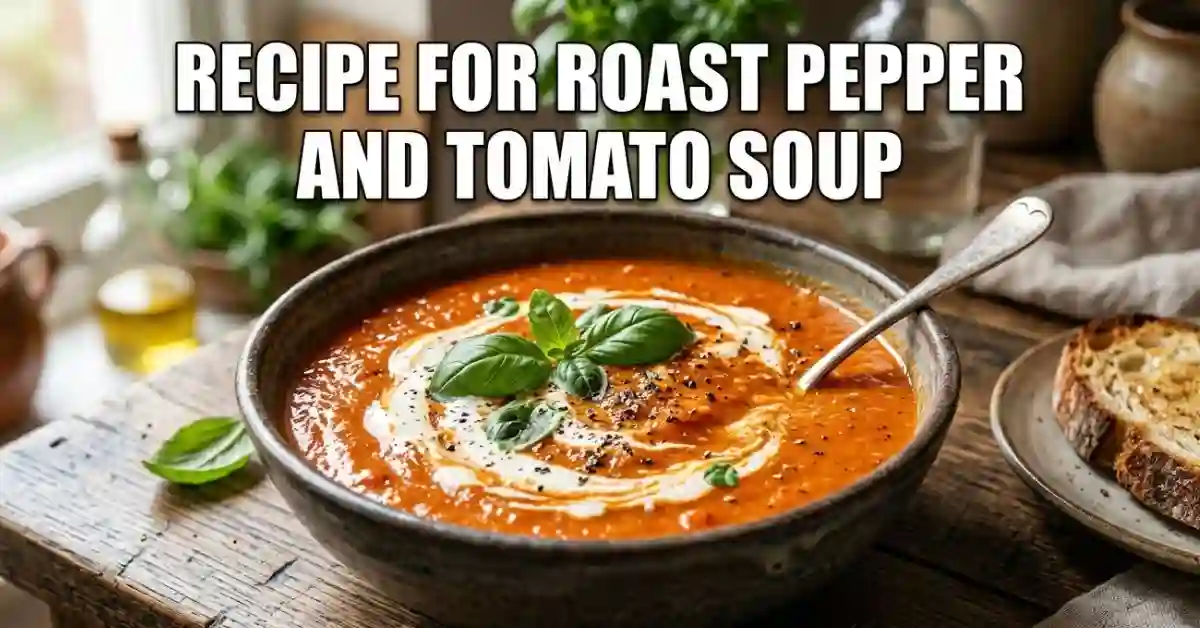
Some days call for comfort food, and this is mine. My Recipe For Roast Pepper And Tomato Soup started on a cold Midwest night, when I wanted something warm, simple, and full of real flavor. The sweet roasted peppers, rich tomatoes, and smoky aroma make every spoonful feel cozy—like homemade soup should.
What Is Roast Pepper and Tomato Soup?
The first time I made this recipe for roast pepper and tomato soup, it was on a chilly Thursday evening. I had a few ripe tomatoes on the counter, two red peppers that needed using, and honestly, not much energy left. I roasted everything, blended it up, and somehow ended up with a bowl that tasted far better than the effort I put in.
That is the beauty of this soup.
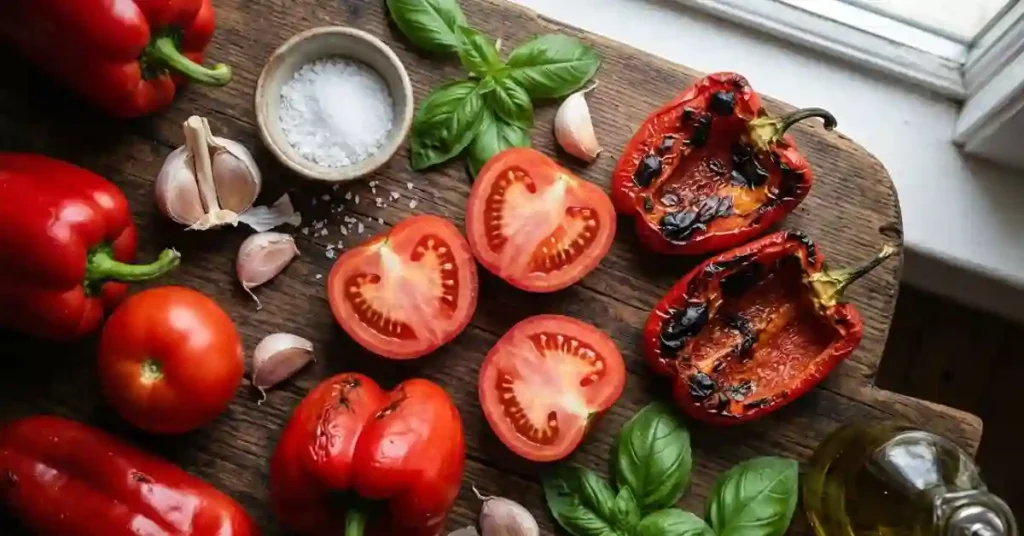
At its core, roast pepper and tomato soup is a smooth mix of roasted red peppers, ripe tomatoes, onion, garlic, and broth. Sounds simple. It is simple. But once those vegetables hit the oven, something changes. The tomatoes turn sweet. The peppers get soft and smoky. Even the garlic mellows out and becomes rich and almost buttery.
The result tastes layered. Deep. Cozy. Like something you would order at a little café and wonder how they made it taste so good.
Why people love it
I get why this soup has become a repeat recipe in my kitchen.
It checks a lot of boxes.
- Rich but not heavy — it feels comforting, but it does not sit like a brick.
- Naturally sweet and savory — the roasted tomatoes and red peppers do most of the work.
- Easy to make ahead — I often make a batch on Sunday and eat it all week.
- Great for lunch or dinner — it works any time hunger hits.
- Perfect with bread or grilled cheese — honestly, that combo is hard to beat.
And yes, I have absolutely stood at the stove eating it straight from the ladle. No shame.
What makes roasting important
Roasting is the part you do not want to skip.
I tried rushing it once. Big mistake. The soup was fine… but only fine. Not memorable.
When you roast the vegetables, a few important things happen:
- Tomatoes caramelize and their sweetness gets stronger.
- Peppers soften and blend into a silky texture.
- A smoky flavor develops that raw vegetables simply cannot give.
- The color gets deeper and the aroma fills the kitchen.
That smell alone is worth it. It starts about 20 minutes in. First sweet, then smoky, then suddenly your whole house smells like dinner is going to be very good.
That is when you know you are on the right track.
Ingredients for Roasted Red Pepper and Tomato Soup
I learned this the hard way on a rushed Monday night—great soup starts before the pot even goes on the stove.
I once made this recipe for roast pepper and tomato soup with bland winter tomatoes because that was all I had. It was still good. But it was not great. The next time, I used ripe tomatoes from a local market. Big difference. The flavor was brighter. Sweeter. Much more alive.
That is why I always say this—fresh matters here.
If your tomatoes smell like summer when you pick them up, grab them. If your peppers feel firm and glossy, even better. Good ingredients do a lot of the work for you.
Main ingredients
These are the basics I use every time. Nothing fancy. Just real ingredients that work.
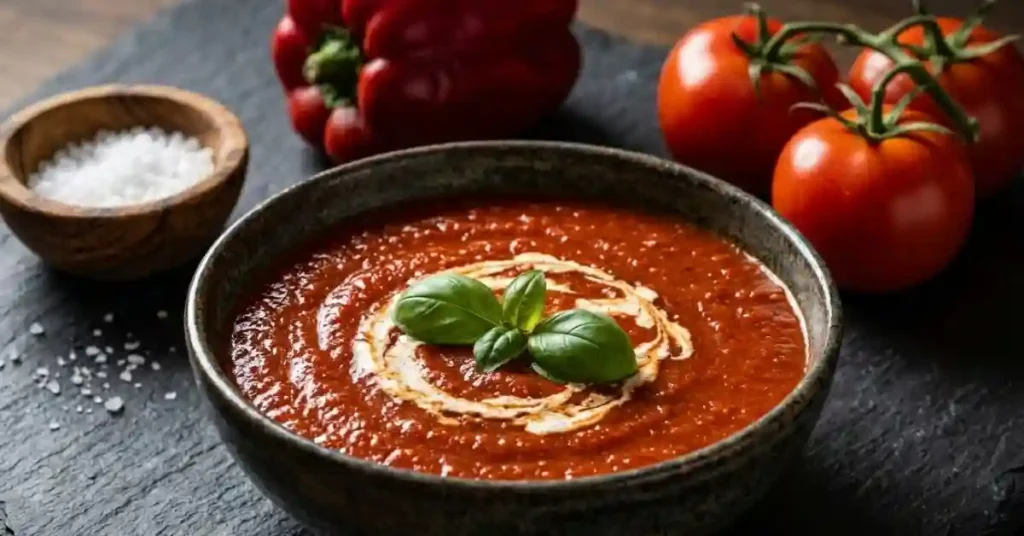
- Fresh tomatoes — I like Roma or vine-ripened tomatoes best. They roast well and bring that deep tomato flavor you want in roasted red pepper and tomato soup.
- Red bell peppers — these are the star. Once roasted, they turn sweet, soft, and slightly smoky.
- Yellow onion — adds body and a gentle sweetness.
- Garlic cloves — fresh is best. Roasted garlic becomes mellow and almost creamy.
- Olive oil — helps everything roast and adds richness.
- Vegetable or chicken broth — both work. I use vegetable broth when I want the tomato and pepper flavor to shine.
- Salt and black pepper — simple, but important. Taste as you go.
One small habit I have now? I always slice one extra tomato. Somehow one piece always disappears while I am prepping. Chef’s snack. It is a rule.
Optional flavor boosters
The base soup is already good. These little extras just let you tweak it.
- Fresh basil — adds a bright, fresh finish. I toss some on right before serving.
- Heavy cream — for days when I want the soup extra silky and rich.
- Red pepper flakes — just a pinch wakes everything up.
- Parmesan — a little on top adds salty depth and makes it feel special.
My honest take? Do not add all the extras at once. I tried that once. It turned into flavor chaos. Pick one or two. Let the roasted peppers and tomatoes stay the star.
Best Tomatoes and Peppers to Use
Not all vegetables behave the same in the oven. I learned that one cold January afternoon when I made this recipe for roast pepper and tomato soup with cheap supermarket tomatoes.
The soup looked good. It smelled good.
But the flavor? Just okay.
It lacked that deep, rich taste I wanted. That day taught me a simple lesson—your ingredients matter more than you think.
You do not need fancy produce. But choosing the right tomatoes and peppers makes a big difference in roasted red pepper and tomato soup.
Best tomatoes
Tomatoes are the heart of this soup. They bring sweetness, body, and that rich tomato flavor.
These are my go-to choices:
- Roma tomatoes — my usual pick. They have less water, so the soup stays thick and rich.
- Plum tomatoes — very similar to Roma. They roast well and taste bold.
- Fresh garden tomatoes — my favorite in summer. If you have homegrown tomatoes, use them. The flavor is hard to beat.
One small warning. Very juicy tomatoes can work, but they need more roasting time. I learned that after pulling them out too early once. Watery soup. Sad dinner.
Best peppers
For this easy tomato and red pepper soup, red peppers are not just a side ingredient. They are the soul of the bowl.
Here is what I use:
- Large red bell peppers — always my first choice. They roast into something sweet, smoky, and silky.
- Jarred roasted peppers — helpful on busy nights. I use them when life gets hectic. The soup is still good, just a little less smoky.
My honest tip? Pick peppers that feel heavy and firm. If the skin looks shiny, that is usually a good sign.
And yes, I absolutely squeeze every pepper at the store like I am choosing avocados. No regrets.
How to Roast the Vegetables Properly
This is where the magic happens in this recipe for roast pepper and tomato soup.
And yes, I mean real magic.
I learned that on a rainy Saturday when I rushed the roasting step because I was hungry and impatient. Big mistake. The soup was fine, but it lacked that deep, smoky flavor I wanted.
Now I never rush this part.
Roasting is what turns simple vegetables into something special. It brings out sweetness. It builds flavor. It makes your kitchen smell so good that people start wandering in to ask, “What are you making?”
Roasting steps
This is my simple routine. I follow it every time.
- Preheat your oven to 425°F — give it time to get fully hot. A hot oven matters.
- Cut the tomatoes and peppers in half — this helps them roast evenly and faster.
- Remove the pepper seeds — less mess later, and the texture stays smoother.
- Toss everything with olive oil and salt — not too much. Just enough to coat.
- Roast for 25 to 35 minutes — let the edges char a little. That is where the flavor lives.
One small habit I have? I always sneak a roasted tomato off the tray. It burns my fingers every time. I never learn.
Signs they are ready
Do not watch the clock too closely. Watch the vegetables.
Here is what I look for:
- Tomato edges look caramelized — darker spots mean more flavor.
- Pepper skins blister — that slight char is exactly what you want.
- Your kitchen smells amazing — sweet, smoky, and warm. Trust your nose.
That smell usually hits around minute twenty.
First comes the garlic.
Then the tomatoes.
Then suddenly the whole house smells like homemade roasted red pepper and tomato soup is on the way.
That is when I know I got it right.
Step-by-Step Recipe For Roast Pepper And Tomato Soup
Now comes my favorite part.
This is where your kitchen starts to smell amazing, your confidence goes up, and suddenly you feel like you know exactly what you are doing. Even if you are still wearing yesterday’s hoodie and cooking on a Wednesday night. No judgment. I have been there.
The good news? This recipe for roast pepper and tomato soup is easy once the vegetables are roasted. After that, it is mostly blending, simmering, and tasting—which is my favorite kind of cooking.
Step 1: Roast everything
Start with your tray of tomatoes, red peppers, onion, and garlic.
Spread them out so they have space. Crowded vegetables steam. Spaced vegetables roast.
That little detail matters.
Slide the tray into the oven and let everything roast until soft and slightly charred. I usually peek once or twice, mostly because I cannot resist the smell.
When the edges darken and the garlic turns golden, you are ready.
Step 2: Blend
Now transfer the roasted vegetables into a blender.
Add your broth and blend until smooth.
And I mean smooth. Let it run a little longer than you think. That is how you get that silky roasted red pepper and tomato soup texture.
One important lesson from my own kitchen mistakes—let the vegetables cool for a few minutes first.
Hot soup plus a sealed blender lid can create drama.
I learned that once.
My ceiling remembers.
Step 3: Simmer
Pour the blended soup into a large pot.
Set it over low to medium heat and let it simmer for 10 to 15 minutes.
This step seems small, but it matters.
It gives the flavors time to settle in and get friendly with each other.
I usually stir slowly and take a few spoonfuls during this part. Quality control. Very important.
Step 4: Taste and adjust
This is where you make the soup yours.
Take one spoonful and ask, “What does it need?”
Maybe:
- More salt if the flavor feels flat
- More broth if the soup feels too thick
- A splash of cream if you want it extra silky
Trust your taste buds here.
That is how the best easy tomato and red pepper soup happens—not by following rules perfectly, but by adjusting until it tastes right to you.
That last spoonful before serving? That is always the reward.
Easy Tomato and Red Pepper Soup Variations
One reason I keep this recipe for roast pepper and tomato soup in my weekly meal plan is simple—it adapts.
Some Sundays I want it rich and creamy.
Some cold nights I want more heat.
And some days? I just want it rustic and simple, with less blending and more texture.
That is the beauty of easy tomato and red pepper soup. One base recipe. Lots of ways to make it feel new.
Creamy version
This is my rainy-day version.
The kind I make when I want comfort in a bowl and maybe an excuse to wear fuzzy socks all day.
To make it creamier, I add one of these:
- Heavy cream — my favorite for a silky, rich finish.
- Coconut milk — great if you want dairy-free soup. It adds a subtle sweetness.
- Greek yogurt — tangy, creamy, and a little lighter.
My honest tip? Start small. Add a little, stir, then taste. I once poured in too much cream and turned my bright red soup into pale pink soup. Still tasty. Not exactly the look I wanted.
Spicy version
Some days need a little heat.
Especially in winter. I do not know why, but spicy soup just feels right when it is cold outside.
Try adding:
- Chili flakes — easy and quick. Just a pinch works.
- Cayenne — stronger, so go slow.
- Smoked paprika — one of my favorites. It adds heat and extra smoky flavor.
I usually add the spice after blending. That way I can taste as I go and avoid making accidental fire soup.
Yes, that has happened.
Rustic chunky version
Not every bowl of roasted red pepper and tomato soup needs to be perfectly smooth.
Sometimes I want texture.
A little bite.
A little character.
For that, I only blend half the soup. Then I stir the chunky half back in.
It feels more rustic. More homemade. Almost like something you would get in a small countryside café.
And honestly? On lazy Friday nights, that is exactly the vibe I want.
Roasted Red Pepper and Tomato Soup With Fresh Tomatoes
Fresh tomatoes changed this recipe for roast pepper and tomato soup for me.
I realized that one August afternoon after bringing home a bag of garden tomatoes from a local farm stand. I had planned to make my usual roasted red pepper and tomato soup. Nothing fancy.
But the first spoonful surprised me.
It tasted brighter. Fresher. More alive.
The roasted red peppers still brought that deep, smoky flavor. But the fresh tomatoes added something extra—real garden sweetness. The kind you notice right away.
Now, when tomatoes are in season, this is how I make it every time.
Tips for fresh tomatoes
Fresh tomatoes are wonderful, but they need a little care.
Here is what I have learned from making this easy tomato and red pepper soup many times:
- Use ripe tomatoes only — if they smell sweet and feel slightly soft, they are ready. Hard, pale tomatoes will not give you the same flavor.
- Remove tough cores — I skip this only once. Then I remember why I should not. Those tough bits do not blend well.
- Roast longer if they are very juicy — some fresh tomatoes hold more water. Give them extra oven time so your soup stays rich, not watery.
My personal test? I always taste one tomato slice while chopping.
If it tastes good raw, it usually makes great soup.
Chef logic.
Can you use canned?
Yes. Absolutely.
I use canned tomatoes every winter.
When fresh tomatoes are out of season, whole peeled canned tomatoes work really well in roasted red pepper and tomato soup.
They are picked and packed at peak ripeness, so the flavor is often better than bland winter tomatoes.
Just roast your red peppers as usual, then use the canned tomatoes in place of fresh.
Is it exactly the same?
No.
Fresh tomatoes give more brightness.
Canned tomatoes give a deeper, richer tomato flavor.
Both make a very good soup.
And honestly, on a cold January night, I am happy with either one.
What to Serve With Roast Pepper and Tomato Soup
I usually make this recipe for roast pepper and tomato soup on quiet evenings when I do not feel like overthinking dinner. But I quickly learned something important—this soup is good on its own, but it becomes even better when you pair it with the right sides.
Most of the time, I am standing in the kitchen with a warm bowl in one hand and something crunchy or cheesy in the other. It feels simple, but very satisfying.
Soup really does love company.
Best pairings
The first time I made roasted red pepper and tomato soup, I ate it with plain bread. It was fine. But over time, I started testing different sides, usually based on what I had at home.
Here is what I keep coming back to:
- Grilled cheese sandwich (Grilled cheese) — This is my go-to. The crispy bread with melted cheese and the warm soup just works. I still remember a rainy night when I dipped it too fast and burned my tongue. Worth it.
- Crusty sourdough bread (Sourdough) — I like tearing off pieces and dipping them slowly. The texture holds up well with the smooth soup.
- Garlic toast — I make this when I want something a bit stronger in flavor. The garlic adds a nice contrast to the sweet roasted tomatoes.
- Side salad — I use this when I want balance. After a rich bowl of soup, something fresh and light feels right.
Toppings to try
Toppings are where I usually play around. Small changes can make a simple bowl feel different every time.
Here is what I’ve added over the years while making easy tomato and red pepper soup:
- Fresh basil — I add this at the end. It reminds me of summer, even in colder months.
- Croutons (Crouton) — I like the crunch. Sometimes I make extra just so I can snack on them while cooking.
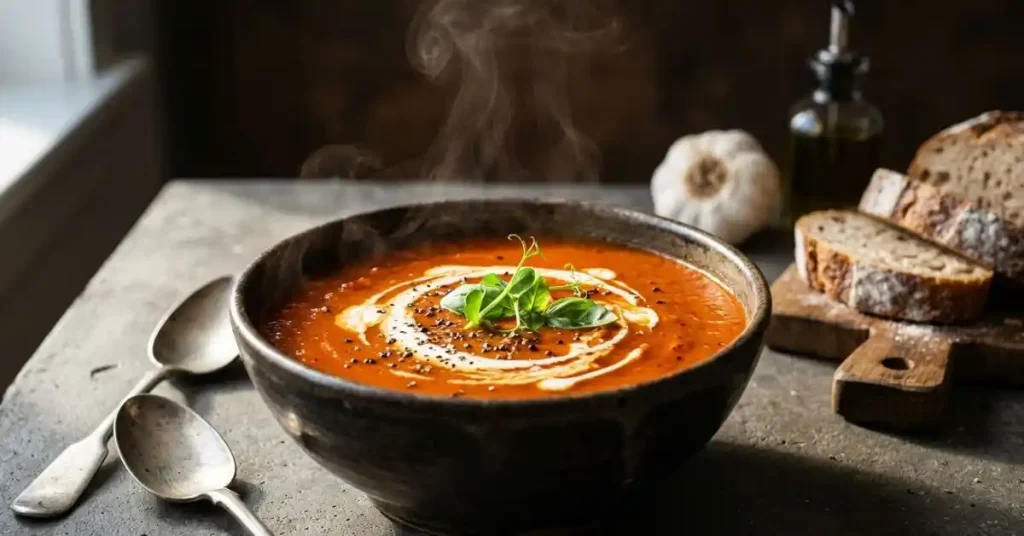
- Cream swirl — I drizzle a little cream on top when I want it richer. It also makes the soup look nicer, even if I am just eating alone.
- Toasted pumpkin seeds — I started using these one fall. They add a light crunch and a nutty flavor that surprised me in a good way.
Some nights I keep it simple. Other nights I build a full plate around the soup. Either way, this roasted red pepper and tomato soup always feels a bit more complete when something is served alongside it.
Storage and Reheating Tips for Recipe For Roast Pepper And Tomato Soup
I learned something simple with this recipe for roast pepper and tomato soup. The flavor actually gets better after a night in the fridge. The smoky taste settles in, and the soup feels even richer the next day.
It became my usual routine after a few batches. I started making extra on purpose, especially on quiet Sundays.
In the fridge
When I store roasted red pepper and tomato soup in the fridge, I keep it simple:
- I let the soup cool first
- Then I pour it into an airtight container
- It stays good for up to 4 days
One time I forgot it at the back of the fridge for a bit too long, and I learned to always label the container. Now I never skip that step.
In the freezer
Freezing works really well for this soup. I do it often when I want quick meals later.
- I freeze it for up to 3 months
- I always leave a little space at the top of the container
- The soup expands as it freezes
I once filled a jar too full and it cracked. That taught me to always leave space.
Reheat gently
When I reheat roasted red pepper and tomato soup, I take it slow.
- I warm it on the stove over low heat
- I stir often so it heats evenly
- I avoid high heat so the flavor stays smooth
Some days I even taste it while reheating. It feels like the flavors wake up again, especially after a day or two in the fridge.
Common Mistakes to Avoid in Recipe For Roast Pepper And Tomato Soup
When I first started making this recipe for roast pepper and tomato soup, I thought it was almost impossible to mess up. It is simple, right? Roast, blend, simmer.
But I learned the hard way that a few small mistakes can quietly flatten the flavor. The soup still looks fine. But it loses that deep, smoky taste I love.
Now I watch for these every time I cook it.
A few small mistakes can flatten the flavor.
Avoid these
- Under-roasting vegetables
I used to pull the tray out too early because I was hungry. Big mistake. The tomatoes were soft, but not caramelized. The peppers were cooked, but not smoky. Now I wait until I see real char on the edges. That is where the flavor builds in roasted red pepper and tomato soup. - Using unripe tomatoes
I once grabbed pale, hard tomatoes from a store in winter. The soup turned out flat and a little sour. Now I always check for ripeness. If they do not smell sweet, I skip them. It makes a big difference in the final taste. - Skipping seasoning
I learned this after tasting a whole batch that felt “empty.” Everything looked right, but I forgot to season properly at each stage. Salt matters more than I expected in this soup. I now season before roasting and again after blending. - Adding too much broth too early
I used to pour in broth without thinking. The soup turned thin and lost that rich, velvety feel. Now I add a little first, blend, then adjust slowly. It keeps the texture right for this easy tomato and red pepper soup.
These small details sound simple, but they changed everything for me. Once I fixed them, the soup finally tasted like the cozy bowl I was trying to make from the start.
Why This Roasted Red Pepper and Tomato Soup Recipe Works
When I first started making this recipe for roast pepper and tomato soup, I honestly thought it was just another simple soup. Roast some vegetables, blend, done. I did not expect much.
But after a few tries—some better than others—I started to understand why it works so well. It is not about complicated steps. It is about how each step builds real flavor.
There were nights in my kitchen where I rushed it after a long day, and the result still surprised me. Warm, rich, and comforting in a way that felt like it took more effort than it did.
That is when I realized the truth.
It is simple food done well.
You roast. You blend. You simmer. That is it.
But what I learned over time is that each step has a purpose. Roasting builds that smoky depth in roasted red pepper and tomato soup. Blending gives it that smooth, café-style texture. And simmering brings everything together so the flavors feel balanced, not rushed.
And even when I made small mistakes—like under-roasting or adding too much broth—it still came out decent. But when I do it right, it feels like something you would get in a small kitchen on a rainy evening.
But the result tastes like you worked much harder than you did—and honestly, those are the kinds of meals I keep coming back to.
FAQs: Recipe For Roast Pepper And Tomato Soup
Can I make recipe for roast pepper and tomato soup ahead of time?
Yes. This roasted red pepper and tomato soup tastes even better after a day. Store it in the fridge and reheat gently before serving.
Can I use canned tomatoes in roasted red pepper and tomato soup?
Yes. I use canned tomatoes in winter. They still give rich flavor and work well when fresh tomatoes are not in season.
How do I make roast pepper and tomato soup more creamy?
Add a small splash of cream, coconut milk, or Greek yogurt. I add it slowly so the texture stays smooth and balanced.
Do I really need to roast vegetables for this tomato and red pepper soup?
Yes. Roasting builds the smoky flavor. I noticed the soup tastes flat when I skip this step or rush the roasting time.
How long does roasted red pepper and tomato soup last in the fridge?
It lasts up to 4 days in a sealed container. I store it once cooled and reheat it slowly for the best taste and texture.
To Get More About Home & Kitchen Product You Can Visit Our Site. If You Found our Posts Helpful Leave a Comment Below