
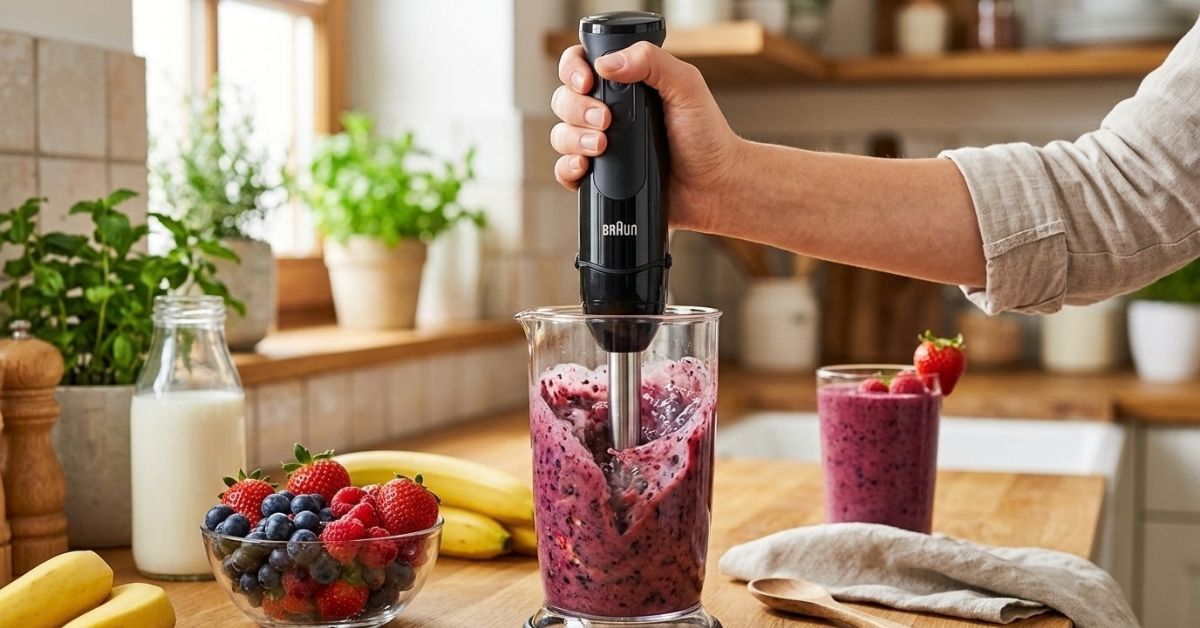
Yes, you can use an immersion blender for smoothies. I’ve found it works well for soft fruit, yogurt, milk, and other easy-to-blend ingredients, especially when I only want one serving and do not want to wash a full blender.
The catch is that an immersion blender is not quite as powerful or convenient for every smoothie. Frozen fruit, ice, thick mixtures, and large batches can push a stick blender too far. After using one for quick drinks, I learned that the ingredients and the container matter almost as much as the blender itself.
Can You Use an Immersion Blender for Smoothies?
You can use an immersion blender to make many types of smoothies. It works best when the ingredients are soft, chopped into small pieces, and surrounded by enough liquid.
I like this method for small portions. I can blend right in a tall cup, drink from the same cup, and clean the blender shaft in a minute.
| Smoothie ingredient | How well it works | Helpful tip |
| Fresh banana | Excellent | Slice before blending |
| Fresh berries | Very good | Add enough liquid |
| Yogurt | Excellent | Use a tall container |
| Frozen fruit | Good | Let it soften a little |
| Ice cubes | Limited | Check your model first |
The biggest mistake I made at first was treating an immersion blender like a full-size countertop blender. It can blend a smoothie, but it needs a little more help from you.
What Makes an Immersion Blender Good for Smoothies?
An immersion blender has a long shaft with a small blade at the bottom. You place that blade into the food and blend it in the container.
That design makes it handy for small smoothies. There is no large pitcher to set up. There is no blender jar full of parts to scrub afterward.
Why I Like It for Small Smoothies
For one person, the simple setup is hard to beat. I can add a banana, berries, yogurt, and milk to a tall cup and blend.
It also takes up very little space.
| Feature | Why it helps with smoothies |
| Small size | Easy to store |
| Direct blending | Fewer dishes |
| Tall blending cup | Good for one serving |
| Simple controls | Easy for quick drinks |
There is also less temptation to make a giant batch when I only want a quick breakfast.
Where It Starts to Struggle
The small blade is not ideal for every ingredient. Large frozen fruit pieces can stop the mixture from moving well.
A thick smoothie can also sit around the blade instead of flowing toward it. When that happens, I usually add a little more milk or juice and move the blender slowly through the mixture.
How to Make a Smoothie With an Immersion Blender
The order of the ingredients matters more than I expected. Adding everything at once can make blending harder.
I usually start with liquid, then add soft ingredients and finish with frozen fruit or smaller pieces.
My Simple Immersion Blender Smoothie Method
- Add milk, juice, or another liquid to a tall cup.
- Add yogurt or other soft ingredients.
- Add fresh fruit.
- Add small pieces of frozen fruit.
- Put the blender head fully into the mixture.
- Start on low speed.
- Move the blender gently up and down.
- Increase the speed if needed.
- Stop when the texture looks smooth.
Do not lift the blade above the liquid while it is running. That can create a messy spray. I learned this the annoying way.
| Step | What I do | Why |
| Liquid first | Add milk or juice | Helps the blade move |
| Soft foods next | Add yogurt and banana | Blends quickly |
| Frozen foods last | Add small pieces | Reduces strain |
For a very thick smoothie, I pause and stir the mixture if needed. That is often faster than forcing the blender through a stubborn lump.
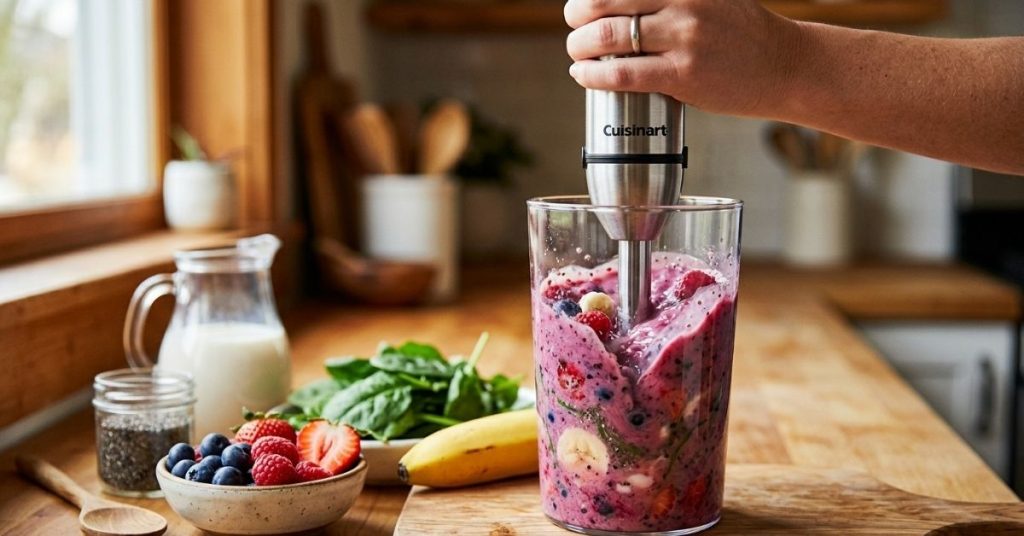
Can an Immersion Blender Crush Frozen Fruit and Ice?
It depends on the blender. Some immersion blenders can handle small amounts of frozen fruit, but ice is a different story.
I would not assume that every stick blender can crush ice. The motor, blade design, and manufacturer instructions all matter.
Frozen Fruit Is Easier Than Ice
Frozen berries and banana pieces can work well when they are small. Large frozen chunks can make the blade struggle.
If the fruit is rock hard, I let it sit for a few minutes before blending. This small step can make a big difference.
| Ingredient | My approach |
| Frozen berries | Use small pieces |
| Frozen banana | Slice before freezing |
| Large frozen mango | Cut smaller |
| Ice cubes | Avoid unless the model allows it |
If your manual says not to blend ice or hard frozen foods, follow it. A smoothie is not worth damaging the motor.
Which Smoothie Ingredients Work Best With an Immersion Blender?
The easiest ingredients are soft fruits and liquids. Bananas, ripe peaches, yogurt, milk, and fresh berries are especially simple.
I also like using nut butter because it mixes well once there is enough liquid in the cup.
Ingredients That Blend Easily
Soft ingredients help the blade work without much effort.
| Ingredient | Result |
| Banana | Very smooth |
| Yogurt | Thick and creamy |
| Strawberries | Smooth with enough liquid |
| Ripe mango | Very creamy |
| Nut butter | Blends well in thin smoothies |
Leafy greens can work too, but they may need more blending. Tough stems can leave small pieces behind.
For spinach, I usually add enough liquid and blend longer. Baby spinach tends to be easier than thick, mature leaves.
Ingredients That Need More Care
Hard apples, large frozen chunks, seeds, and ice can make the job harder.
This does not mean you can never use them. It means you should prepare them first.
Cut hard fruit into small pieces. Remove tough parts. Use enough liquid. And check the blender’s instructions before adding very hard ingredients.
What Container Should You Use With an Immersion Blender?
A tall, narrow container usually works better than a wide bowl.
The narrow shape keeps the ingredients closer to the blade. It also helps reduce splashing.
I used to think the biggest cup was the easiest choice. It was not. A wide container can make the blender work harder because the ingredients spread away from the blade.
| Container | How it works |
| Tall narrow cup | Best choice |
| Smoothie cup | Great for one serving |
| Wide bowl | More splashing |
| Shallow container | Poor choice |
Leave some space at the top. Smoothies move around while you blend, and a nearly full container can turn into a kitchen cleanup job very quickly.
Common Immersion Blender Smoothie Mistakes
Most problems are not caused by the smoothie recipe. They come from using the blender in the wrong way.
I made several of these mistakes before I got the hang of it.
Using Too Little Liquid
A thick mixture may barely move around the blade. The blender can sound like it is working hard without making much progress.
Add a small amount of milk, water, juice, or another suitable liquid. You can always add more later.
Adding Huge Pieces of Frozen Fruit
Large frozen chunks can block the blade. Smaller pieces are much easier to blend.
I now slice bananas before freezing them. It takes almost no extra time and makes smoothie prep much easier.
Filling the Cup Too High
An immersion blender needs room to move the mixture. A packed cup can also cause splashing.
For a large batch, I would rather use a countertop blender.
| Mistake | Better approach |
| Too little liquid | Add a small splash |
| Huge frozen pieces | Cut them smaller |
| Full container | Leave room at the top |
| Fast movement | Start slowly |
| Lifting while running | Keep blade submerged |
Moving the Blender Too Fast
You do not need to whip the blender around the cup.
I get better results by keeping the blade near the bottom first. Then I slowly move it through different parts of the smoothie.
That gives the ingredients time to reach the blades.
Immersion Blender vs Regular Blender for Smoothies
Both can make smoothies, but they suit different jobs.
A countertop blender usually wins when I want a very smooth drink, hard ingredients, ice, or several servings.
An immersion blender wins when I want something quick and simple.
| Smoothie need | Immersion blender | Countertop blender |
| One serving | Great | Good |
| Large batch | Limited | Better |
| Soft fruit | Great | Great |
| Heavy frozen mix | Limited | Better |
| Easy cleanup | Excellent | More work |
For everyday breakfast smoothies, the immersion blender can be surprisingly useful. For thick smoothie bowls or icy drinks, a regular blender makes more sense.
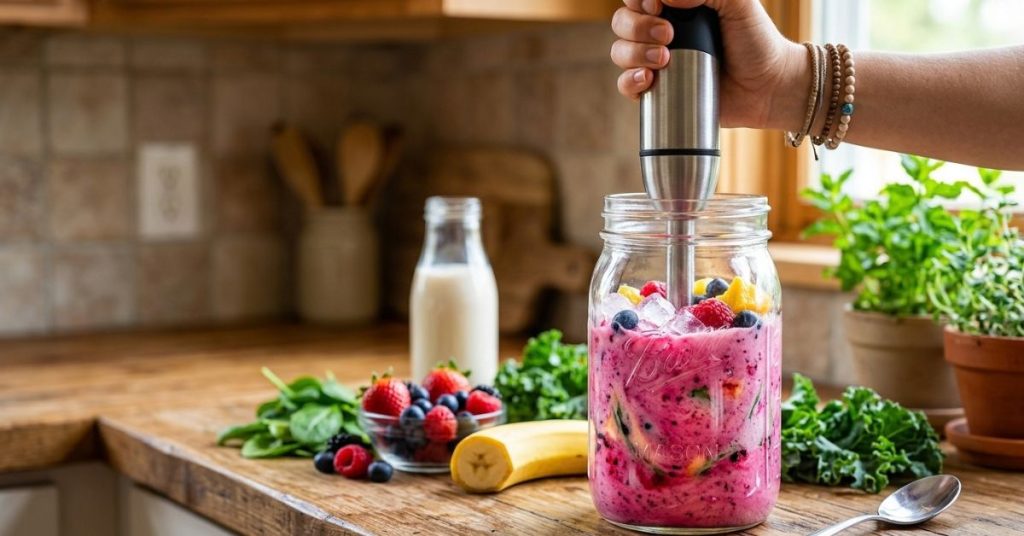
Can an Immersion Blender Make Thick Smoothies?
Yes, but thickness is where technique becomes important.
A very thick smoothie may not move around the blade well. You might end up with a smooth area at the bottom and chunks sitting above it.
When that happens, I add liquid in small amounts. I also stop the blender before scraping or stirring the mixture.
A Better Trick for Thick Smoothies
Start with a thinner mixture. Blend the soft ingredients first, then add frozen fruit slowly.
This gives the blade a smoother path.
I also avoid packing the cup with frozen ingredients. More frozen fruit does not always mean a better smoothie. Sometimes it just means a motor that sounds unhappy.
Are Immersion Blender Smoothies Really Smooth?
They can be, but the texture depends on the ingredients.
A banana and yogurt smoothie can become very smooth. Berries may leave tiny seeds. Greens can leave small bits. Ice may create an uneven texture.
| Texture problem | Likely reason | Fix |
| Small fruit bits | Pieces too large | Cut smaller |
| Grainy texture | Seeds or fibrous foods | Blend longer |
| Thick lumps | Not enough liquid | Add liquid |
| Uneven blend | Ingredients not moving | Stir and blend again |
This is one area where I think expectations matter. An immersion blender can make a very good smoothie, but “very good” does not always mean the same silky texture you get from a powerful countertop blender.
Is an Immersion Blender Good for Daily Smoothies?
For one or two small smoothies, I think it can be a very practical choice.
The main advantage is convenience. I do not need to pull out a large blender, attach a pitcher, and wash several pieces.
It is especially useful in a small kitchen or when I am making breakfast for one.
When I Would Choose an Immersion Blender
Use one when you want:
- One or two servings
- Soft fruit
- Yogurt-based smoothies
- Quick cleanup
- Minimal storage space
- A simple breakfast drink
When I Would Use a Regular Blender
I would switch to a countertop blender for:
- Large batches
- Lots of ice
- Very thick smoothie bowls
- Large frozen fruit pieces
- Tough ingredients
- Very silky textures
That simple distinction saves a lot of frustration.
Is It Safe to Use an Immersion Blender in a Smoothie Cup?
Yes, if the cup is tall enough and the blender head fits comfortably inside it.
The blade should stay below the surface while running. Avoid using a very shallow or wide container.
Also, do not blend in a container that could be damaged by the blade. Some immersion blenders come with their own blending cup, which can make things easier.
I prefer a sturdy, tall cup with enough room for the ingredients to move. It keeps the process cleaner and gives the blade a better working area.
Final Thoughts
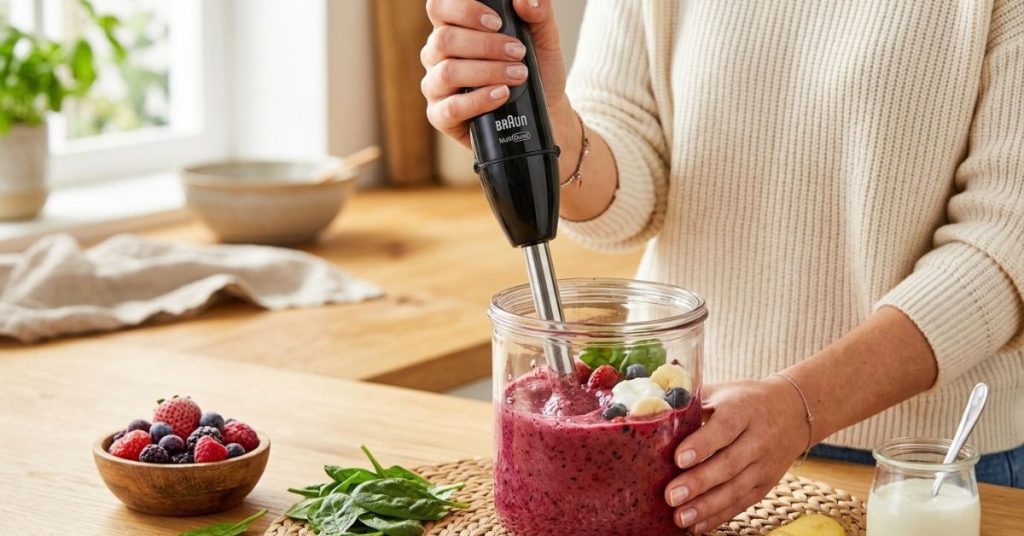
So, can you use an immersion blender for smoothies? Absolutely. It is a handy option for small smoothies made with soft fruit, yogurt, milk, and similar ingredients. It is quick, compact, and much easier to clean than a full blender.
Just do not expect it to handle every smoothie the same way. Keep frozen ingredients small, use enough liquid, choose a tall container, and keep the blade submerged. Once I stopped treating my immersion blender like a tiny countertop blender, smoothie making became much easier.
To Get More About Home, Kitchen Accessories Product You Can Visit Our Site. If You Found our Posts Helpful Leave a Comment Below