Remove mildew from a bath mat by scrubbing it with mild detergent and water, rinsing it well, and drying it completely. Choose a cleaning method that matches the mat’s material.
A bath mat can look clean on top but hide mildew underneath. This is common in American homes where a busy bathroom stays damp after showers, baths, and daily use. Water, soap, skin oils, and poor airflow can create the right conditions for mildew to grow. A mat left flat on a wet bathroom floor may stay damp for hours.
The good news is that many bath mats can be cleaned at home. Rubber, plastic, cotton, microfiber, and chenille mats each need a slightly different approach. Before using a strong cleaner, check the care label and look at the affected area. Mild soap and water are a good starting point for washable surfaces, while badly damaged or deeply moldy mats may need replacement.
This guide explains how to remove mildew from a bath mat without damaging its surface or backing. You will learn how to clean rubber shower mats, wash fabric bath rugs, handle stubborn spots, and stop mildew from returning. The most important step comes after cleaning: let both sides dry fully before using the mat again.
Mildew grows when moisture stays on a surface long enough for mold fungi to develop. Bathrooms offer a good place for this because showers create warm, damp air. Bath mats also collect water from wet feet and hold soap, dirt, and body oils.
A mat that stays wet between uses can develop dark spots, a musty smell, or a slimy film. The underside may be worse than the top because it sits against the tub or floor. Rubber suction cups and textured surfaces can trap water and small bits of dirt.
Mildew is often used as a common name for surface mold growth. You do not need to identify the exact type before cleaning it. The useful question is whether the growth is limited to a washable surface or has spread into material that cannot be cleaned fully.
Source: storage.googleapis.com
Poor air circulation
A closed bathroom with little airflow dries mats slowly. Moist air can also collect around the tub and shower.
Water trapped underneath
A bath mat left flat on a wet floor can hold water against its backing. This can lead to dark spots and unpleasant odors.
Soap and dirt buildup
Soap residue, body oils, and loose dirt give grime a place to collect. These deposits also make regular cleaning harder.
Infrequent washing
A mat used every day needs regular cleaning. Rinsing it after each shower does not remove all dirt and residue.
How to Recognize Mildew on a Bath Mat
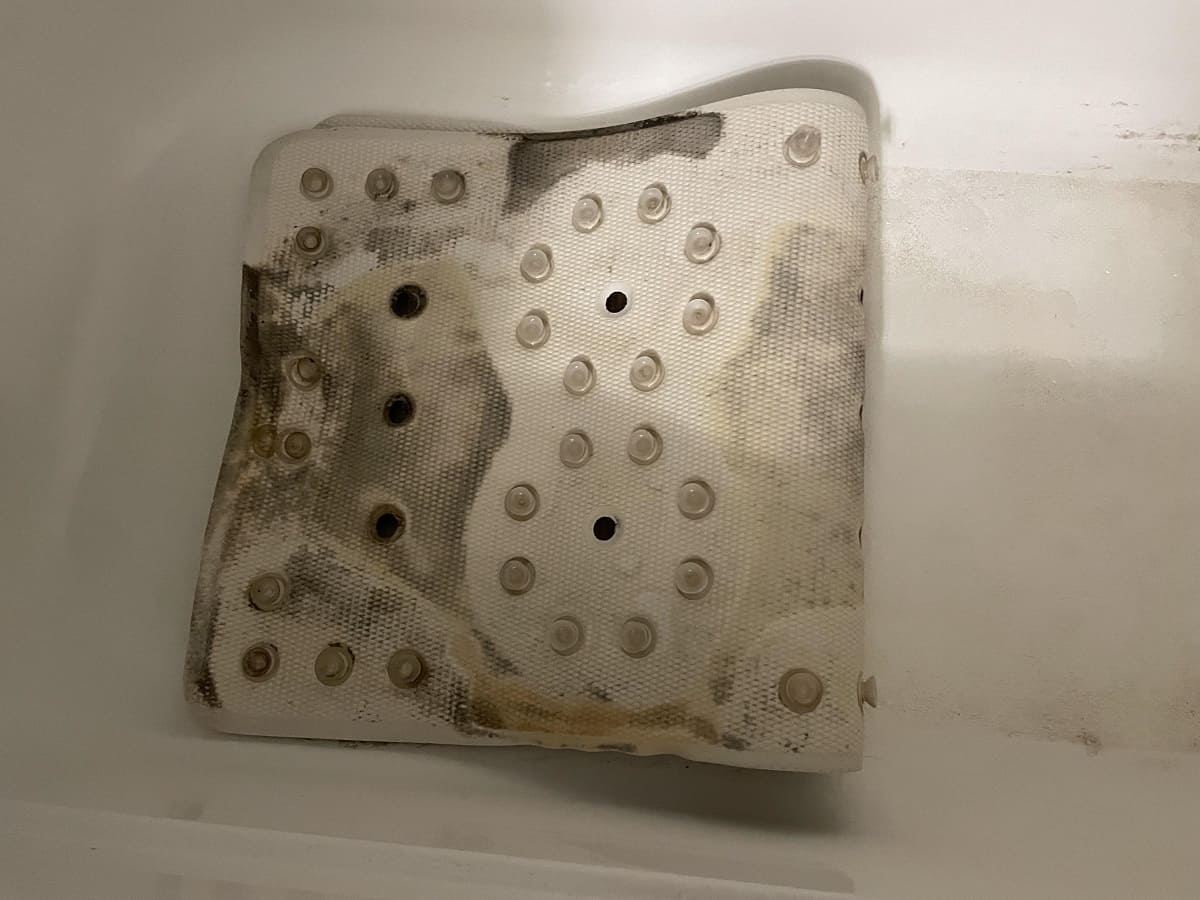
Look for small gray, black, brown, or greenish spots. Some growth appears as a thin film, while other patches look fuzzy or spread along seams and edges. A musty smell is another warning sign, even when visible spots are small.
A slippery feeling can also point to soap buildup or other grime. It does not prove that mildew is present. Wash the mat and inspect it closely rather than relying on smell or texture alone.
Dark patches
Small spots may appear around suction cups, stitched edges, or the underside.
Musty odor
A damp, stale smell that remains after rinsing can signal trapped moisture or mildew.
Stubborn discoloration
Old growth can leave stains even after the surface has been cleaned.
What You Need Before Cleaning a Mildewed Bath Mat
Gather your supplies before removing the mat. A simple cleaning setup is often enough for light mildew and ordinary bathroom grime. You do not need several strong cleaners to get started.
Wear household cleaning gloves and keep the room well ventilated. If you are sensitive to mold, have asthma, or have another condition that makes exposure risky, avoid handling a heavily moldy mat yourself. Ask someone else to clean it or replace it when appropriate.
Take the mat outside or to a suitable cleaning area if you can do so without spreading loose material through the home. Avoid shaking a visibly moldy mat, since this can send particles into the air.
Source: dormouselife.com
Mild dish soap or laundry detergent
Use a basic detergent that is suitable for the mat’s material. It helps loosen soap film, dirt, and surface growth.
Soft cleaning brush
Choose a soft-bristled brush or an old toothbrush for seams, grooves, and suction cups.
Clean water
Use water for making the cleaning solution and rinsing away loosened dirt and detergent.
Cleaning gloves
Wear waterproof gloves to reduce direct contact with mold and cleaning products.
Clean towels
Use towels to remove extra water before air-drying the mat.
Drying rack or clothesline
Choose a place where air can reach both sides of the mat.
Check the Material and Care Label First
The care label should guide your cleaning method. Some cotton mats can go in a washing machine, while some rubber-backed mats need hand cleaning. Memory foam, bamboo, and natural materials may need special care.
Do not assume that every bath mat can handle hot water, bleach, or a dryer. These can damage rubber backing, fade fabric, or change the shape of the mat. If the label is missing, choose a gentle hand-cleaning method and test it on a small hidden area.
Rubber or plastic
Use mild soap, water, and a soft brush. Avoid high heat and follow the manufacturer’s instructions.
Cotton or microfiber
Machine wash only if the label allows it. Use the recommended cycle and drying method.
Rubber-backed fabric
Check both the fabric and backing instructions. Hand washing may be safer when machine washing is not approved.
Memory foam or bamboo
Follow the specific care instructions. Avoid soaking or machine washing unless the manufacturer permits it.
How to Remove Mildew From a Bath Mat Step by Step
For a washable bath mat with light or moderate surface mildew, start with mild detergent and water. This method removes visible dirt and growth without relying on harsh chemicals. Adjust the process if the care label gives different instructions.
The main goal is to remove the growth, rinse away the cleaning solution, and dry the mat fully. Simply spraying a cleaner over the spots and leaving the mat wet will not solve the moisture problem.
Source: renoaider.com
Step 1: Remove the mat
Lift the mat from the tub or floor. If it has suction cups, release them carefully instead of pulling hard on one edge.
Step 2: Inspect both sides
Look for spots, trapped dirt, damaged backing, and growth around seams or suction cups. Decide whether the mat is suitable for cleaning.
Step 3: Prepare a cleaning solution
Mix mild dish soap or suitable laundry detergent with warm water. Follow the product directions and avoid adding other cleaners.
Step 4: Scrub the affected areas
Dip a soft brush into the solution and gently scrub the visible mildew. Work across grooves, edges, and the underside.
Step 5: Clean the full mat
Wash the surrounding surface too. This helps remove soap film and dirt that may not be visible.
Step 6: Rinse thoroughly
Use clean water to remove loose dirt and all remaining detergent. Pay special attention to textured areas.
Step 7: Remove extra water
Shake off excess water gently or press the mat between clean towels. Do not twist or stretch delicate materials.
Step 8: Dry completely
Hang or lay the mat in a well-ventilated area. Make sure both sides are dry before returning it to the bathroom.
How to Know Whether the Cleaning Worked
A successfully cleaned mat should have no visible loose mildew, no remaining detergent film, and no strong musty odor. Its surface should feel clean rather than slimy. The backing should also remain intact and should not feel sticky or brittle.
Some old stains may remain after the growth has been removed. This does not always mean the cleaning failed. However, persistent growth, a strong odor, or a damaged backing means the mat may not be suitable for continued use.
No visible growth
The spots and surface debris have been removed as far as practical.
No cleaning residue
The mat feels free of soap and slippery film after rinsing.
No persistent musty smell
The odor has disappeared after the mat has dried fully.
Sound material
The surface and backing remain firm, flexible where appropriate, and safe to use.
How to Clean Mildew From a Rubber Bath Mat
Rubber bath mats need extra attention because their textured surfaces and suction cups can trap water. Mildew and soap residue often collect in the small spaces between the cups. A careful hand wash is a practical starting point.
Remove the mat from the bathtub and place it on a surface where you can reach both sides. Use warm water and mild dish soap. Scrub gently with a soft brush, paying attention to the suction cups and textured areas.
Rinse the mat until the water runs clear and no slippery soap film remains. Turn it over and inspect the underside. Any remaining dirt around the cups can be loosened with a small brush.
Let the rubber mat air-dry fully. Hang it over a shower rod or drying rack if the material allows it. Avoid a hot clothes dryer, radiator, or other strong heat source because heat can damage rubber.
Source: creativehomemaking.com
Clean the suction cups
Use an old toothbrush to reach dirt and mildew around each cup. These areas often hold moisture.
Avoid rough tools
Do not use metal scrapers, wire brushes, or abrasive pads. They may scratch or damage the mat.
Rinse the bottom
Remove all soap residue from the suction cups. Leftover cleaner can affect grip.
Check suction and flexibility
Replace the mat if its cups no longer grip properly or its rubber has become cracked, hard, or crumbly.
Can You Use Vinegar on a Rubber Bath Mat?
White vinegar is sometimes used to help loosen mineral deposits and reduce light odors. However, it should not be treated as a guaranteed mold remover or a substitute for scrubbing and rinsing.
If the mat manufacturer permits vinegar, test a small hidden area first. Use it by itself, rinse thoroughly, and never combine it with chlorine bleach or another cleaning product. If you plan to use a different cleaner, remove the vinegar completely first and follow the product label.
Use only when permitted
Some rubber materials and finishes may react poorly to acidic cleaners.
Do not mix cleaners
Combining vinegar with bleach can release dangerous chlorine gas.
What If the Rubber Mat Still Has Black Spots?
Black spots may be old stains, embedded growth, or discoloration from material damage. Scrubbing can remove surface growth, but it may not restore the original color.
If the spots remain inside cracks, seams, or damaged rubber, replacing the mat is often the more sensible option. Do not keep using a mat that has lost its grip or has a persistent mold problem.
How to Remove Mildew From a Fabric Bath Mat
Fabric bath mats can often be cleaned in a washing machine, but the care label must allow it. Cotton, microfiber, and chenille mats may have different washing and drying needs. Rubber-backed fabric mats need special care because heat and strong agitation can damage the backing.
Start by taking the mat outside or shaking it gently in a well-ventilated area if it has only light surface dirt and no loose mold. Remove hair and debris without creating dust. If you see substantial mold growth, avoid shaking it and consider replacement.
Pretreat small affected areas with a little suitable liquid detergent and gently work it into the fibers. Place the mat in the washer only if the care label permits machine washing. Use the recommended temperature and a suitable detergent.
After washing, remove the mat promptly. Hang it or lay it flat in a well-ventilated area. Never assume that a mat is dry because its top feels dry. Thick fibers and backing can retain moisture underneath.
Source: housewifehowtos.com
Cotton bath mats
Wash according to the care label. Some plain cotton mats can handle a regular machine wash, while others need a gentle cycle.
Microfiber bath mats
Use the recommended gentle wash settings. Avoid fabric softener if the manufacturer advises against it.
Chenille bath mats
Use a gentle method to protect the soft fibers. Avoid harsh scrubbing that can pull or damage the pile.
Rubber-backed bath rugs
Check the backing before washing. Hand clean when machine washing is not allowed, and keep the mat away from high dryer heat.
Should You Add Bleach to the Washing Machine?
Do not add chlorine bleach automatically when washing a mildewed bath mat. Bleach can fade colored fibers and damage some rubber or latex backings. Use it only when the mat label and the cleaning product instructions both allow it.
The U.S. Environmental Protection Agency does not recommend routine use of biocides, such as chlorine bleach, for every mold cleanup. Removing visible growth and controlling moisture are the key steps. If a suitable product is needed, follow its label carefully and ventilate the room.
White cotton without backing
Bleach may be suitable if the care label permits it and the product directions are followed.
Colored fabric
Avoid chlorine bleach unless the manufacturer specifically approves it. A color-safe laundry product may be more suitable.
Rubber-backed fabric
Avoid chlorine bleach unless both the mat and product instructions explicitly permit it.
How to Remove Stubborn Mildew Stains and Bad Smells
Stubborn stains need a closer look before you choose another cleaner. A dark mark may remain even after surface growth has been removed. Mold can leave lasting discoloration, especially in porous fibers and worn rubber.
First, clean the mat with a suitable detergent and rinse it well. Allow it to dry completely before checking the stain and smell again. This helps you avoid confusing wet material or leftover soap with a continuing mildew problem.
If the odor remains, inspect the underside, seams, and any foam or backing layers. A smell that continues after proper washing and drying may mean that moisture or contamination remains inside the material. Repeated cleaning is unlikely to solve a problem that has spread deep into a porous mat.
Source: storage.googleapis.com
For light surface stains
Repeat a gentle detergent wash if the mat’s care instructions allow it. Use a soft brush rather than a rough scrubber.
For lingering odors
Check whether the underside is still damp. Give the mat more time to dry in a place with good airflow.
For old discoloration
Accept that some stains may be permanent. A clean but discolored mat is different from a mat with active growth.
For deep growth
Replace a porous mat when growth has spread into the filling or backing and cannot be cleaned thoroughly.
Why You Should Not Keep Adding Strong Cleaners
Using several products one after another can create a chemical hazard. Bleach must never be mixed with vinegar, ammonia, toilet bowl cleaner, or other household cleaning products. Some combinations can release dangerous gases.
Choose one suitable cleaning method at a time. Rinse thoroughly before considering another product, and follow all label instructions. Never use a chemical mixture simply because a stain did not disappear on the first attempt.
Never mix bleach and vinegar
This combination can release toxic chlorine gas.
Never mix bleach and ammonia
This can produce dangerous chloramine vapors.
Avoid mixing drain cleaners and bathroom cleaners
Different formulas can react and produce harmful fumes.
Follow the product label
Use the correct dilution, contact time, ventilation, and protective equipment.
Common Cleaning Mistakes That Can Damage a Bath Mat
A cleaning method can remove dirt but still damage the mat. Rubber, foam, and soft fabric do not all respond to heat, chemicals, or rough scrubbing in the same way. Avoid shortcuts that make the mat less safe or shorten its useful life.
The best approach is to use the mildest method that can clean the surface. Increase the effort only when the material allows it. If the mat is badly damaged, replacing it is better than trying to save it with stronger chemicals.
Source: storage.googleapis.com
Using boiling water
Very hot water can deform some plastic and rubber mats. Follow the recommended washing temperature instead.
Scrubbing with a wire brush
A rough brush can scratch plastic, tear fabric, and weaken rubber. Use a soft brush.
Leaving soap behind
Soap residue can make a bath mat slippery and attract more dirt. Rinse until the surface feels clean.
Using the dryer without checking
Heat may crack or weaken rubber backing. Air-dry mats when the label requires it.
Placing the wet mat back on the floor
A damp underside can trap moisture again. Wait until the full mat is dry.
Covering up the odor
Air fresheners do not remove mildew or solve trapped moisture. Clean the mat and fix the drying problem.
Can You Save a Bath Mat With Permanent Mildew Stains?
Sometimes. A stain may remain after the surface has been cleaned. If the mat has no active growth, no persistent musty odor, and no material damage, the discoloration alone may not mean that it must be discarded.
However, do not keep a mat with deep growth, crumbling backing, or poor suction just because you want to avoid buying another one. A bath mat must remain clean and secure under wet feet.
How to Prevent Mildew From Returning
The most reliable way to prevent mildew is to stop moisture from staying on the mat. Cleaning removes existing dirt and growth, but a wet mat can develop the same problem again. Make drying part of your normal bathroom routine.
After every shower, remove the rubber mat from the tub or shower floor. Rinse away soap and hair, then hang it so air can reach both sides. For a fabric mat, lift it from the floor and hang it or place it on a drying rack when it becomes damp.
Keep the bathroom ventilated while showering and for a while afterward. Use the exhaust fan if one is installed, or open a window when outdoor conditions allow. If the room stays humid, a suitable dehumidifier may also help.
Wash the mat regularly according to its material and care instructions. A mat used by several people each day may need more frequent washing than one used occasionally. Check the underside during routine cleaning because early spots are easier to address than widespread growth.
Source: housewifehowtos.com
Hang the mat after each use
Do not leave a rubber shower mat flat against the tub. Hang it so both sides can dry.
Keep the bathroom ventilated
Run the exhaust fan during and after showers. Open a window when practical and safe.
Clean the mat regularly
Wash it according to the care label and how often it is used.
Clean the tub or shower floor
Remove soap scum and dirt from the surface underneath the mat.
Check the underside
Look for damp patches, dark spots, and trapped debris during routine cleaning.
Store spare mats dry
Keep unused mats in a clean, dry place instead of folding or storing them while damp.
How Often Should You Wash a Bath Mat?
There is no single washing schedule that fits every household. Usage, humidity, ventilation, material, and how quickly the mat dries all affect its cleaning needs.
A practical routine is to inspect the mat after use, rinse rubber shower mats when needed, and wash fabric mats regularly. Clean it sooner if you notice a musty smell, visible spots, or soap buildup. Always follow the manufacturer’s instructions.
After every shower
Rinse a shower mat if needed and hang it to dry.
During weekly bathroom cleaning
Inspect both sides and clean visible dirt or soap residue.
When an odor develops
Wash the mat promptly and check whether the underside or backing stays damp.
Before seasonal storage
Wash and dry the mat completely before putting it away.
Does Bathroom Ventilation Really Help?
Yes. Ventilation helps remove moisture from the air, which supports faster drying. The U.S. Environmental Protection Agency recommends improving bathroom ventilation when mold keeps returning in damp areas.
A working exhaust fan can help, but it cannot replace proper cleaning or fix a plumbing leak. If the bathroom remains damp for long periods, look for the source of the moisture and address it.
When Should You Throw Away a Mildewed Bath Mat?
Not every stained bath mat needs to go in the trash. Light surface growth on a washable mat may come off with proper cleaning. However, some mats hold moisture and growth deep inside their fibers, foam, or backing.
The U.S. Environmental Protection Agency explains that mold can be difficult or impossible to remove fully from some porous materials. This matters for thick bath rugs and mats with foam or absorbent backing. If the growth has spread into those layers, replacement is often the better choice.
You should also replace a rubber bath mat when the surface becomes brittle, the suction cups fail, or the backing starts peeling. A clean-looking mat is not useful if it slides around in the tub.
Source: renoaider.com
Mildew keeps returning
Repeated growth after proper cleaning and drying may mean the material is holding moisture or contamination.
Strong odor remains
A persistent musty smell after thorough washing and complete drying can signal a deeper problem.
The backing is damaged
Cracks, peeling, sticky patches, or crumbling rubber are reasons to replace the mat.
The mat no longer grips
Failed suction cups or a slippery backing can increase the risk of slipping.
Growth has spread into the filling
Deep contamination in foam or thick absorbent material may not be removable through normal household washing.
What If the Mildew Covers a Large Area?
If a bath mat has widespread growth, avoid shaking it or brushing it aggressively indoors. Place it in a bag for disposal if replacement is appropriate, and clean the surrounding surface using a suitable method.
If mold also appears on bathroom walls, flooring, or other building materials, address the wider moisture problem. The EPA generally advises professional help when indoor mold growth covers more than about 10 square feet or when water damage is extensive. Contaminated water, such as sewage, also calls for qualified cleanup.
For one badly affected mat
Replacement is often more practical than repeated chemical treatments.
For growth across the bathroom
Find and repair leaks, improve ventilation, and consider a qualified mold remediation professional.
For health concerns
People with asthma, allergies, or weakened immune systems should avoid unnecessary exposure and seek appropriate medical advice.
Choosing the Right Cleaning Method for Your Bath Mat
The best method depends on the material, the amount of mildew, and the condition of the backing. A simple comparison can help you avoid using a cleaning product that damages the mat.
Use the care label as the final guide. The suggestions below are general starting points, not a guarantee that every mat made from the same material can handle the same treatment.
Source: creativehomemaking.com
Rubber shower mat
Hand wash with mild detergent and water. Scrub the suction cups gently and air-dry.
Plastic shower mat
Wash with mild soap and water. Use a soft brush for textured areas and rinse well.
Cotton bath rug
Machine wash if the label permits it. Use the approved temperature and drying method.
Microfiber bath mat
Use a suitable detergent and gentle settings when machine washing is allowed.
Rubber-backed bath rug
Check the backing instructions and consider hand washing to protect the rubber.
Memory foam bath mat
Follow the specific care instructions. Avoid soaking or machine washing the foam unless approved.
Bamboo bath mat
Wipe with a suitable damp cloth and dry promptly. Avoid prolonged soaking unless the manufacturer allows it.
Which Cleaning Method Is Best for a Frequently Wet Shower Mat?
A removable rubber or plastic shower mat is often easiest to maintain when you can lift it after every use. Rinsing it and hanging it to dry helps prevent water from remaining around suction cups.
For a fabric bath rug, choose a washable design with care instructions that match your household laundry routine. If your bathroom stays humid, a mat that dries quickly and can be lifted easily may be more practical than a thick rug that stays damp.
Frequently Asked Questions
Q
Can I use baking soda to remove mildew from a bath mat?
Yes, baking soda can help loosen some surface dirt and reduce odors. Make a light paste with water and gently rub it onto a compatible mat with a soft brush. Rinse thoroughly afterward.
Baking soda is not a guaranteed mold treatment. If growth has spread deep into the material, cleaning the surface may not be enough. Follow the care label and replace a badly affected mat when necessary.
Q
Does white vinegar kill mildew on a bath mat?
White vinegar may help with some light residue and odors, but it should not be treated as a guaranteed way to remove all mold. Scrubbing with a suitable detergent, rinsing, and drying are important parts of the cleaning process.
Check whether the mat can tolerate vinegar before using it. Never combine vinegar with chlorine bleach because the mixture can release dangerous gas.
Q
Can I put a moldy bath mat in the washing machine?
You can wash a mildly affected fabric bath mat in a washing machine if its care label allows it. Use a suitable detergent and the recommended cycle. Dry the mat completely after washing.
Do not put every rubber or rubber-backed mat in the washer. Some can crack, peel, or lose their shape during machine washing. If growth is widespread or embedded in the backing, replacement may be safer than machine washing.
Q
How do I remove black mold from a rubber bath mat?
Start by washing the rubber mat with mild detergent and warm water. Use a soft brush to clean the suction cups, grooves, and underside. Rinse well and air-dry both sides.
If black discoloration remains, it may be a stain or growth embedded in damaged rubber. Do not keep scrubbing with stronger chemicals. Replace the mat if it has deep growth, a persistent odor, cracks, or poor suction.
Q
Why does my bath mat smell musty even after washing?
A musty smell can remain when water is trapped in thick fibers, foam, seams, or rubber backing. Detergent residue and a damp bathroom can also contribute to the odor.
Inspect both sides and let the mat dry completely in a well-ventilated area. If the smell remains after proper washing and drying, the material may contain deeper growth. Replacing it may be the better choice.
Q
How long should I let a bath mat dry after cleaning?
There is no fixed drying time for every bath mat. A thin plastic mat may dry faster than a thick cotton rug or a foam-backed mat. Humidity, airflow, and room temperature also affect drying.
Wait until the entire mat is dry, including its underside and backing. Do not return it to a wet bathroom floor while moisture remains.
Q
Can I use hydrogen peroxide on a mildewed bath mat?
Hydrogen peroxide may affect some stains and surface growth, but it can also discolor certain fabrics and damage some finishes. Check the manufacturer’s cleaning instructions and test a small hidden area before using it.
Never mix hydrogen peroxide with other household cleaners. Use one product at a time, follow its label, and rinse as directed.
Q
Is it safe to use a bath mat after removing mildew?
A washable mat may be suitable for reuse when visible growth has been removed, the mat has been rinsed thoroughly, and it has dried completely. Its backing and non-slip features should also remain in good condition.
Do not reuse a mat with deep mold growth, a persistent musty smell, damaged suction cups, or crumbling rubber. A replacement is a better option when the mat cannot be cleaned reliably.
✦ Wrapping Up
Conclusion
Removing mildew from a bath mat starts with knowing what the mat is made of. Mild detergent and water can clean many washable mats, while a soft brush helps remove dirt from rubber grooves and suction cups. Fabric mats may be machine washable, but rubber-backed and foam mats need closer attention to their care instructions.
Cleaning is only half the job. Rinse away all residue, dry both sides completely, and improve airflow in the bathroom. Hanging a shower mat after every use is a simple habit that can make a big difference.
If mildew keeps returning, the mat smells musty after proper cleaning, or its backing is damaged, replacement may be the safest choice. Do not risk a slippery or deeply contaminated mat just to save it.
💡 Key Takeaway
Check your bath mat’s care label today. Clean it with a suitable detergent, rinse it well, and hang it until both sides are completely dry. Keep it off wet bathroom floors between uses to help prevent mildew from returning.