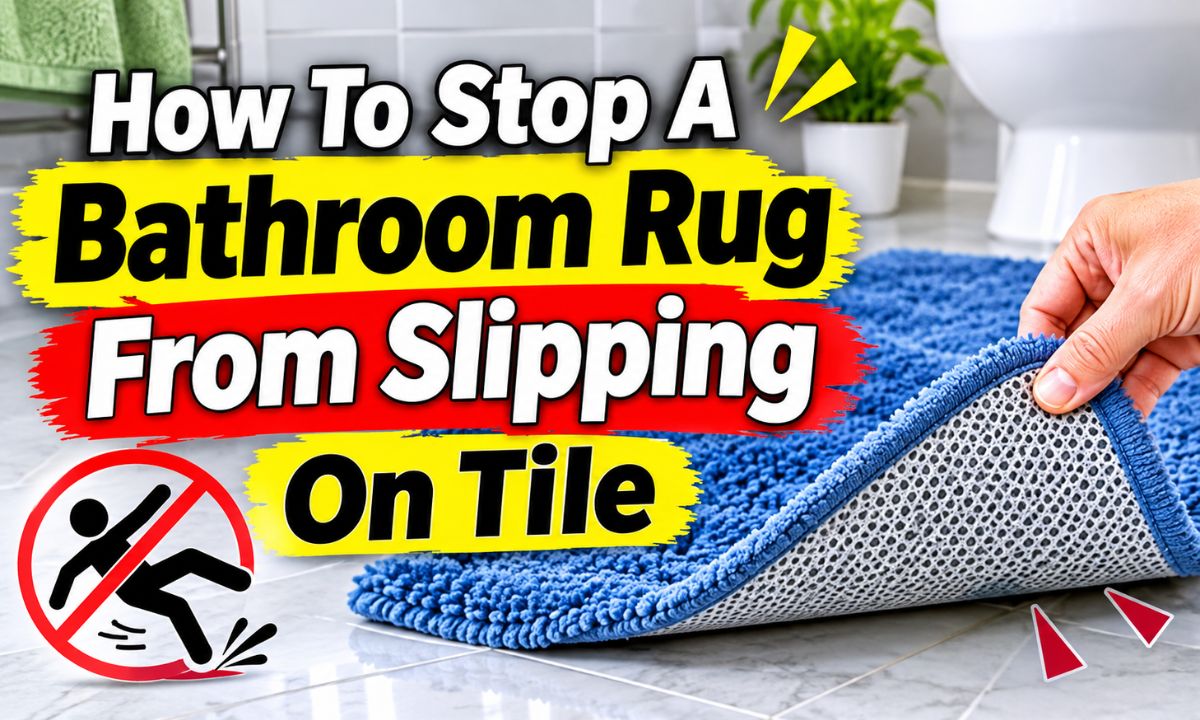
To stop a bathroom rug from slipping on tile, place a tile-safe non-slip rug pad underneath it, clean and dry the floor, and check that the rug stays flat.
Bathroom rugs are common in homes across the United States. People place them beside showers, bathtubs, sinks, and toilets to keep their feet warm and help soak up water. But a rug that slides across a smooth tile floor can quickly become a safety problem. One small movement under your foot can cause you to lose your balance.
The good news is that you do not always need to buy a new bathroom rug. A proper non-slip rug pad, reusable rug grippers, or a suitable rug backing can help hold your current rug in place. The right choice depends on the rug material, tile surface, moisture level, and floor finish.
Start by lifting the rug and checking its underside. If it has no grip, is worn, or has a smooth fabric backing, it may need extra support. Also check the tile for soap, dust, hair, and moisture because these can reduce the grip between the rug and floor.
This guide explains practical ways to keep a bathroom rug in place. You will learn how to choose a rug pad, use rug tape, clean the floor, care for rubber backing, and check whether your fix is working. Each method has limits, so choose one that suits your bathroom and follow the product and flooring care instructions.
A bathroom rug slips when there is not enough friction between its backing and the tile floor. Smooth ceramic and porcelain tiles can offer very little resistance to a rug with a plain fabric underside. When someone steps on it, the rug may move forward, backward, or sideways.
Water can make this problem worse. A wet rug may become heavier, while water, soap, shampoo, and body lotion can leave a slippery film on the floor. Dust and hair can also collect under the rug and affect contact with the tile.
Some rugs have a backing that loses grip as it ages. Rubber, latex, or other grip materials may wear down, crack, peel, or become less effective after repeated washing. A rug that once stayed in place may start moving even when the floor looks clean.
The shape and size of the rug matter too. A small, lightweight rug may move more easily than a larger, heavier one. A curled corner or uneven edge can also catch your foot and make the rug shift.
Source: i.pinimg.com
Smooth tile
Polished or glazed tile gives a plain fabric backing little resistance, so the rug can slide when someone steps on it.
Wet surfaces
Water and bath product residue can reduce friction between the rug and the floor.
Worn backing
Old or damaged rubber and latex backing may lose its ability to grip the tile.
Wrong rug size
A small, thin, or lightweight rug may move more easily under normal foot pressure.
Poor placement
A rug placed partly on grout lines, floor transitions, or uneven surfaces may not sit flat.
How Can You Tell If Your Rug Is Losing Its Grip?
Watch how the rug behaves during normal use. If it moves away from the shower after each step, bunches near the sink, or develops curled corners, its backing may not be gripping well. You may also notice that the rug slides more when it is damp.
Turn the rug over and inspect the underside. Look for missing grip dots, peeling layers, cracked rubber, or smooth patches where the backing has worn away. If the rug has a strong odor, feels sticky, or sheds pieces of its backing, it may be time to replace it.
Visible movement
The rug changes position after someone steps on it.
Curled edges
The corners lift and create a possible trip hazard.
Uneven backing
Parts of the underside feel smooth, rough, cracked, or loose.
1. Use a Non-Slip Rug Pad Under the Bathroom Rug
A non-slip rug pad is one of the most practical ways to stop a bathroom rug from moving on tile. It sits between the rug and the floor and adds a layer of grip. Some pads use rubber, while others use materials such as PVC or other synthetic compounds.
Choose a pad made for hard floors and suitable for bathroom conditions. A pad designed for a living room rug may not be suitable for repeated moisture exposure. Check the product label for approved surfaces, cleaning instructions, and any limits on wet areas.
The pad should be slightly smaller than the rug. This keeps it hidden and helps prevent its edges from showing or catching your toes. A pad that is too large can create an uneven edge around the rug.
For a small bathroom rug, a thin, flexible grip pad may be enough. A larger or heavier rug may need a full-size pad with more surface contact. The goal is to support the whole rug rather than hold only one corner.
Source: m.media-amazon.com
Check the material
Look for a non-slip material that the pad maker approves for your tile and bathroom conditions.
Measure the rug
Choose a pad that fits beneath the rug without extending past its edges.
Check moisture guidance
Make sure the pad can be used in a room where water and humidity are common.
Avoid damaged pads
Replace a pad that has become brittle, torn, sticky, or uneven.
How to Install a Non-Slip Rug Pad
First, remove the bathroom rug and clean the tile below it. Use a floor-safe cleaner to remove dust, hair, soap film, and other residue. Rinse if the cleaner requires it, then let the floor dry completely.
Next, place the rug pad on the dry floor. Make sure it lies flat and does not fold or curl. If the pad needs trimming, follow the manufacturer’s cutting instructions and keep the cut edges inside the rug’s outline.
Place the bathroom rug on top of the pad. Smooth the surface with your hands so the rug and pad make full contact. Check every corner and edge to make sure nothing sticks out.
Finally, test the setup before using it. Push the rug gently from different sides and check whether it moves. If it shifts, remove it and inspect the pad, floor, and rug backing before trying again.
Step 1
Lift the rug and clean the floor beneath it.
Step 2
Dry the tile fully before placing the pad.
Step 3
Cut the pad to the correct size if the product allows trimming.
Step 4
Lay the rug flat over the pad and smooth out wrinkles.
Step 5
Check the edges and test for movement before walking on it.
Can You Use a Shelf Liner as a Rug Pad?
A common shelf liner may seem like a cheap way to add grip, but it is not always made for floor use. Some liners can move, curl, hold moisture, or leave marks on certain surfaces. They may also lack the strength needed to support a rug that gets wet.
A floor-rated rug pad is usually a better choice because its maker provides instructions for floor contact and use. Do not assume that a product is safe simply because it feels rubbery or has a textured surface.
Best choice
Use a rug pad labeled for hard floors and approved for the bathroom conditions in your home.
Use with care
Avoid ordinary shelf liners unless their manufacturer clearly approves floor use and the specific surface.
2. Apply Rug Tape or Non-Slip Rug Grippers
Rug tape and non-slip grippers can help hold a bathroom rug in place when a full rug pad is not practical. These products attach to the rug or create extra grip between the rug and tile. Some use adhesive, while others use reusable gripping surfaces.
Choose a product that is specifically labeled for bathroom rugs and your type of tile. Not all double-sided tapes are suitable for damp rooms. Some adhesives can weaken when exposed to moisture, while others may leave residue or damage a floor finish.
Before applying tape, check the instructions and test it in a hidden area if the manufacturer allows this. A small test can help you spot possible residue or surface changes before covering a larger area.
Rug grippers can be useful when the rug moves mostly at its corners. If the entire rug slides, however, a properly sized non-slip pad may offer more complete support.
Source: cybergolduk.com
Corner grippers
These can help keep corners from lifting or moving when the rest of the rug is already stable.
Double-sided rug tape
This can hold the rug against a compatible floor, but the adhesive must be approved for the surface and moisture conditions.
Reusable rug grips
These may be removed, cleaned, and repositioned according to the product instructions.
How to Apply Rug Tape Correctly
Begin by lifting the rug and cleaning the tile. Remove any dust, hair, and soap residue. Allow the floor to dry before applying the product because moisture can affect adhesive contact.
Cut the tape to the length recommended by the manufacturer. Apply it to the rug backing or floor as directed. Do not place extra layers on top of one another to make the bond stronger.
Press the rug into place and smooth it out. Pay close attention to the corners and edges. Follow any waiting time or pressure instructions on the package before testing the rug.
If the tape begins to peel, collect dirt, or leave residue, remove it according to the manufacturer’s directions. Do not scrape the tile with a sharp tool or use a strong solvent without checking that it is safe for the floor.
Clean first
Remove dust and residue from the tile and rug backing.
Use approved tape
Choose a product made for the exact floor surface and bathroom conditions.
Follow application directions
Use the correct amount and allow the recommended setting time.
Check regularly
Replace or remove tape when it loses grip or becomes dirty.
When Should You Avoid Rug Tape?
Avoid using adhesive tape if the tile or floor manufacturer warns against it. Be careful with delicate finishes, natural stone, coated tile, and floors with an unknown surface treatment. An adhesive that works on one tile may react differently with another.
Also avoid tape when the rug needs frequent washing and the adhesive is not designed for repeated removal. In a busy family bathroom, a removable non-slip pad may be easier to clean and maintain.
Unknown floor finish
Check the flooring instructions before using any adhesive product.
Frequent washing
Choose a removable solution if you often take the rug up for cleaning.
Damp tile
Never apply adhesive to a wet or soapy surface unless the product specifically permits it.
3. Clean the Tile and Rug Backing to Restore Grip
Sometimes a bathroom rug slips because the tile or its backing is dirty rather than because the rug needs another product. Soap, shampoo, body oil, dust, and hair can build up under a rug. This layer can reduce contact and make the surface more slippery.
Cleaning both surfaces is a simple first step. It also helps you find out whether the rug has a real backing problem. If the rug still moves after both surfaces are clean and dry, you may need a pad or a replacement rug.
Use a cleaner that is approved for your tile. Some cleaners can damage grout, natural stone, sealants, or special floor finishes. Avoid mixing cleaning chemicals, especially bleach with ammonia or acidic cleaners.
Source: i.pinimg.com
Remove loose dirt
Sweep or vacuum the area to remove dust, hair, and small particles.
Wash the tile
Use a floor-safe cleaner to remove soap film and other residue.
Clean the rug backing
Follow the rug care label to remove dirt without harming its grip material.
Dry both surfaces
Allow the tile and rug backing to dry completely before putting the rug back.
Step-by-Step Cleaning Method
Take the rug out of the bathroom or move it to a clean area. Shake it outside to remove loose dirt. Check its care label before washing it because some rugs have backing that can break down with hot water, bleach, or high dryer heat.
Clean the tile with a suitable floor cleaner and a soft cloth or mop. Pay attention to the area where the rug normally sits. If the floor has visible soap film, clean it according to the floor maker’s instructions.
If the rug is washable, clean it using the method on its care label. Do not assume that every rubber-backed rug can go in a washing machine. Some backing materials need gentle washing or air drying.
Let the rug dry fully. Then check the underside for loose fibers, cracked backing, or remaining residue. Put it back only when both the rug and tile are dry.
Use gentle tools
A soft cloth or mop can clean tile without unnecessary scratching.
Follow care labels
Use the washing and drying method approved for the rug’s material.
Allow full drying
Do not place a damp rug back on the tile.
How Often Should You Clean Under a Bathroom Rug?
The right cleaning schedule depends on how often the bathroom is used. A family bathroom may need more frequent attention than a guest bathroom. If the rug gets wet every day, lift it regularly to check for moisture and trapped dirt.
Clean the tile whenever you notice a film, odor, or buildup. Wash the rug according to its care label and let it dry fully between uses. Regular care can help prevent odors, mildew, and loss of grip.
Daily check
Look for wet spots, curled edges, and visible movement.
Weekly care
Shake or clean the rug as its care instructions allow and check the floor below it.
As needed
Wash the rug and clean the tile when you notice dirt, soap film, or a musty smell.
4. Replace a Worn Rug With a Non-Slip Bathroom Rug
If the rug has a damaged backing or keeps sliding after cleaning and adding a suitable pad, replacing it may be the simplest long-term option. A new rug with a built-in non-slip backing can reduce the need for extra tape or separate grip pieces.
Look for a bathroom rug with a backing made for hard floors. Some products use rubber, latex, or thermoplastic rubber, often called TPR. These materials are used to add grip, but their performance depends on the design, floor surface, and care.
Do not choose a rug based on the words non-slip alone. Check the product instructions and make sure the backing is suitable for your tile. Also consider how the rug handles moisture and whether it can be washed without damaging the backing.
A rug that dries quickly is often easier to maintain in a bathroom. Very thick rugs may feel soft, but they can hold more water and take longer to dry. A low or medium pile may be easier to care for in a bathroom that gets frequent use.
Source: bathroomexplorer.com
Built-in grip
Look for a backing designed to stay in place on compatible hard floors.
Washable material
Choose a rug with clear cleaning instructions that fit your routine.
Quick drying
Consider a material and pile that do not hold excess moisture for long periods.
Suitable size
Choose a rug that fits the space without blocking doors or creating raised edges.
Rubber, Latex, and TPR Backing: What Is the Difference?
Rubber backing uses a flexible rubber material to add friction between the rug and floor. Latex backing is another common option, although people may use the word latex for different types of backing. TPR is a synthetic material used in many products that need flexible grip.
None of these names guarantees that a rug will work on every tile floor. The backing must be compatible with the surface and kept clean. Some materials can also be affected by heat, washing, age, and long periods of moisture.
If you have natural stone, a special tile coating, or a floor with a manufacturer’s care restriction, check compatibility before buying a rug. The floor maker’s instructions should guide your choice.
Rubber
Can provide friction, but the exact material and floor compatibility matter.
Latex
Common in rug backing, but it can age or break down with unsuitable care.
TPR
A flexible synthetic material used in some non-slip rug designs. Check the maker’s care and surface guidance.
When Is It Time to Replace the Rug?
Replace a bathroom rug when its backing peels, cracks, becomes brittle, or no longer grips the floor. A rug that stays damp for long periods or develops a persistent musty smell may also need replacing if proper cleaning and drying do not solve the problem.
Do not keep using a rug that slides under normal foot pressure. A low-cost replacement is preferable to relying on a damaged rug that may cause someone to fall.
Replace damaged backing
Cracks, missing grip areas, and peeling layers can reduce stability.
Replace persistent problem rugs
A rug that remains damp, smells bad, or moves after cleaning may no longer be suitable.
5. Avoid Common Mistakes That Make Bathroom Rugs Slip
A non-slip product cannot solve every problem if the rug, floor, or installation method is wrong. Some quick fixes may hold a rug for a short time but create other problems. Choosing the right material and following the instructions are just as important as adding grip.
One common mistake is putting a rug on wet tile. Even a good pad may not perform as intended when water or soap sits between the surfaces. Another mistake is using a product made for a bathtub on a bathroom floor.
Some bath mats have suction cups on the underside. These are often designed for use inside a bathtub or shower, where the cups can attach to a smooth, approved surface. They are not automatically suitable for the floor outside the tub. Follow the manufacturer’s instructions and warnings.
Avoid using household glue, hot glue, or random adhesive products as a quick fix. These may damage the rug, leave residue, or create hard spots that make the rug uneven. A purpose-made rug pad is easier to inspect and remove.
Source: aqviz.com
Do not use a wet rug
Allow the rug and floor to dry before putting them together.
Do not use the wrong suction mat
A bathtub mat may not be approved for use on a bathroom floor.
Do not ignore damaged backing
A worn rug may continue to slide even if the floor is clean.
Do not use random glue
Unapproved adhesives can damage the backing or flooring.
Do not cover a loose edge
A curled or raised edge needs to be corrected rather than hidden under another layer.
Does Silicone Caulk Stop a Bathroom Rug From Slipping?
Some people apply small dots of silicone caulk to the underside of a fabric rug to create extra grip. This method may work with certain rugs, but it is not a universal fix. The result depends on the rug material, caulk type, application, and drying time.
There are also practical concerns. Silicone may change the texture of the backing, affect washing, or create uneven spots. A sealed or poorly ventilated underside may also slow drying if moisture becomes trapped.
If you consider this method, check the rug and caulk manufacturer’s instructions first. Do not apply caulk to a rug that cannot tolerate it or use the rug before the material has fully cured. For most households, a removable pad made for bathroom use is easier to inspect and maintain.
Possible benefit
Small silicone dots may add friction to some fabric rug backings.
Possible problem
The caulk may affect washing, drying, or the rug’s original backing.
Safer practical choice
Use a purpose-made non-slip rug pad when it is compatible with the floor.
Can a Heavy Rug Stay in Place Without a Pad?
A heavier rug may move less than a lightweight one, but weight alone does not make it non-slip. A thick cotton rug can still slide on smooth tile, especially when the underside is wet or worn.
Do not depend on weight as the main safety measure. Use a suitable grip backing or pad and check that the rug remains flat during normal use.
Weight helps only in some cases
A heavier rug may resist small movements but can still slide under foot pressure.
Grip matters more
A compatible non-slip layer provides friction between the rug and tile.
How to Choose the Right Fix for Your Bathroom Rug
The best solution depends on why the rug is moving. A clean rug with a plain fabric backing may need a non-slip pad. A rug with damaged rubber may need replacing. A rug that moves only at the corners may need compatible corner grippers.
Before buying anything, check your floor type, rug material, and bathroom conditions. Ceramic and porcelain tile are not the only surfaces found in American bathrooms. Some homes have natural stone, vinyl, or tile with special coatings. A product suitable for one surface may not be suitable for another.
The table below compares common solutions. It is a practical guide, not a guarantee of performance. Always check the instructions for the exact rug, pad, tape, and flooring.
Source: cybergolduk.com
For a rug with no backing
Start with a full non-slip rug pad approved for the floor.
For loose corners
Consider compatible corner grippers or rug tape.
For worn rubber
Replace the rug if the backing is cracked or peeling.
For a dirty floor
Clean and dry the tile and rug backing before adding another product.
Comparison of Common Non-Slip Solutions
Each method has a different purpose. A full pad supports more of the rug, while corner grippers focus on the edges. Tape can provide a closer attachment, but its adhesive may be affected by water and can leave residue. A rug with built-in backing avoids the need for a separate pad when its material is compatible with the floor.
Non-slip rug pad
Best starting point for many rugs with a plain backing. It is removable and can support a large part of the rug.
Rug tape
Useful for certain compatible surfaces and rugs, but adhesive care and moisture limits matter.
Corner grippers
Useful when movement is limited to the corners or edges.
Built-in rubber or TPR backing
A convenient option when buying a replacement rug, provided the backing suits the floor.
Silicone backing dots
A possible DIY option for certain rugs, but it has more care and compatibility limits.
What If the Rug Still Slides After You Add a Pad?
If the rug still moves, do not keep adding more grip products without finding the cause. Lift the rug and check whether the pad itself is sliding, folding, or becoming damp. A pad that does not match the rug’s backing or the tile surface may not provide enough friction.
Check whether the rug is too large for the space or has an edge resting on a raised transition. Also look for soap residue and water beneath the pad. Clean the surfaces, dry them, and reinstall the setup according to the product instructions.
If the rug continues to move after these checks, stop using it until you can choose a compatible replacement or secure it correctly. Do not assume that a rug is safe because it moves only a little.
Pad moves with the rug
Check the pad’s floor compatibility, condition, and contact with the tile.
Rug moves on the pad
Check the rug backing and whether the pad is suitable for that material.
Rug moves when wet
Improve drying and check whether the products are approved for damp bathroom conditions.
Edges keep lifting
Check for curled backing, poor sizing, and uneven floor contact.
Frequently Asked Questions
Q
What Is the Best Way to Stop a Bathroom Rug From Sliding on Tile?
A properly sized non-slip rug pad made for hard floors is a practical first choice for many bathroom rugs. It adds friction between the rug and tile without requiring permanent adhesive. Make sure the pad is suitable for bathroom moisture and compatible with your flooring.
Clean and dry the tile before installing it. Then check that the rug lies flat and does not move when gently pushed.
Q
Can I Use Double-Sided Tape Under a Bathroom Rug?
Yes, you can use double-sided rug tape if its manufacturer approves it for your floor type and bathroom conditions. Some tapes lose grip when exposed to moisture, while others may leave sticky residue or affect certain floor finishes.
Clean and dry the surface before applying the tape. Follow the package instructions and test a small hidden area when permitted.
Q
Can I Put a Rubber-Backed Rug on Ceramic Tile?
Many rubber-backed bathroom rugs are designed for smooth hard floors, including some ceramic tiles. However, the exact backing material and tile finish matter. Check the rug label and floor manufacturer’s guidance before using it.
Keep the rug and floor clean and dry. Inspect the backing from time to time for cracks, peeling, and signs of wear.
Q
Why Does My Bathroom Rug Slide Even With a Non-Slip Backing?
A non-slip rug can still move if its backing is dirty, worn, damp, or incompatible with the tile. Soap film and dust may also reduce grip. In some cases, the rug is too lightweight or its backing has started to break down.
Lift the rug, clean both surfaces, and allow them to dry. If it still moves, try a compatible rug pad or replace the damaged rug.
Q
Do Suction Cup Bath Mats Work on Bathroom Floors?
Not always. Many suction cup mats are designed for use inside a bathtub or shower, not on the bathroom floor. Their grip depends on the surface and the manufacturer’s intended use.
Check the product warnings before using one. If it is designed only for a tub, do not place it outside the tub as a substitute for a floor rug pad.
Q
Can I Use Hot Glue to Stop a Bathroom Rug From Moving?
Hot glue is not a good general solution for a bathroom rug. It may create uneven spots, affect the backing, and make the rug harder to wash. It may also fail when exposed to moisture and repeated cleaning.
A removable non-slip rug pad is usually easier to maintain. Choose one that is approved for your tile and the rug material.
Q
How Do I Keep a Bathroom Rug From Getting Moldy Underneath?
Lift the rug regularly and let both the rug and floor dry. Wash the rug according to its care label and avoid leaving it on a wet floor for long periods. A bathroom fan or open window can also help reduce indoor moisture.
If the rug stays damp, consider a thinner, faster-drying rug. Replace it if a persistent musty smell or visible damage remains after proper cleaning.
Q
Should a Non-Slip Rug Pad Be the Same Size as the Rug?
Usually, the pad should be slightly smaller than the rug so it remains hidden underneath. A pad that sticks out can create an uneven edge or catch your feet.
Follow the pad maker’s sizing instructions. Make sure the pad still supports enough of the rug to prevent movement.
✦ Wrapping Up
Conclusion
A bathroom rug that slides on tile is more than a small household annoyance. It can move under your feet, bunch up, and create a risk of falling. The best fix is to give the rug a stable base and make sure both the rug and floor are clean and dry.
For many bathrooms, a non-slip rug pad made for hard floors is a useful starting point. Rug tape and corner grippers can help in certain situations, while a replacement rug with suitable built-in backing may be the better choice when the old backing is worn.
Always check product instructions before using rubber, latex, adhesive, or other grip materials on your floor. Remember that no backing can replace good bathroom care. Lift the rug, remove trapped moisture, clean it as needed, and check for damage.
If a rug still slides after cleaning and installing a suitable grip product, stop using it until the problem is fixed. A stable, flat, dry rug is a better choice than one that looks nice but moves whenever someone steps on it.
💡 Key Takeaway
Start by removing your bathroom rug and cleaning the tile. Let both surfaces dry, place a compatible non-slip rug pad underneath, and test the rug for movement before using it. Check the setup regularly and replace any worn or damaged backing.