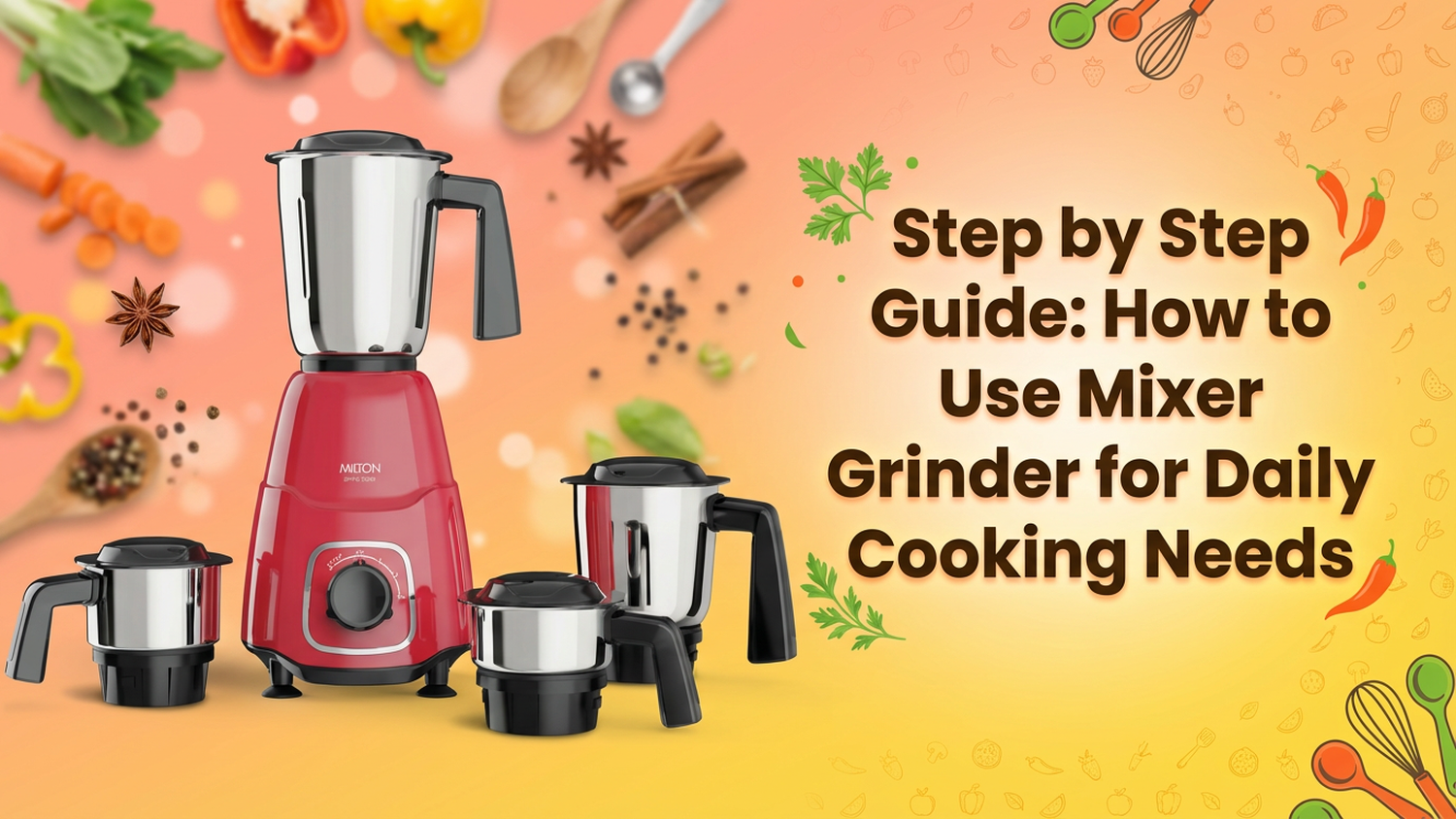
To use pulse mode, press or hold the pulse button in short bursts, then release it to stop the blades and check the food texture.
In American kitchens, a mixer grinder can help with everyday food prep, from crushing nuts for homemade desserts to chopping vegetables for salsa and grinding spices for dinner. If you have a mixer grinder with a pulse button, you can control the blades in short bursts instead of running the motor without a break. This simple setting gives you more control over the texture of your food.
Pulse mode is useful when you want coarse pieces instead of a smooth paste. It can also help you avoid over-processing soft foods, nuts, herbs, and other ingredients. However, each mixer grinder may use a different control system, so check the owner’s manual before using this feature.
The basic method is simple: add the right amount of food, secure the lid, connect the appliance, and use brief pulses. Stop between bursts to check the texture. This guide explains how the setting works, which foods suit it, how long to pulse, and what to do if the mixer grinder does not respond as expected.
Pulse mode is a setting that makes the blades spin in short bursts. Instead of running the motor continuously, you activate it for a brief moment and then stop it. You can repeat this action until the food reaches the texture you want.
Think of pulse mode as tapping the accelerator in a car rather than holding it down. Each press gives the blades a short period of movement. Releasing the button stops the pulse, allowing you to check the food before continuing.
Many mixer grinders have a dedicated pulse button. Some use a rotary control that moves to a pulse position. Others use a momentary switch that works only while you press it. The exact operation depends on the model.
Source: clikonworld.com
Short operation
The motor runs for a brief period when you activate the pulse control.
Better texture control
You can stop between bursts and check whether the food is coarse, medium, or finely processed.
Less continuous blending
The motor does not need to run without a break while you check the food’s progress.
Flexible food preparation
Pulse mode can help with chopping, crushing, and rough grinding when the food and appliance are suitable.
How Is Pulse Mode Different From Normal Speed?
Normal speed keeps the blades moving while the selected setting remains active. This is useful when you want a smooth mixture, such as a puree, batter, or liquid sauce. Pulse mode gives you separate bursts of movement instead.
For example, continuous blending may turn chopped tomatoes into a thin mixture. A few short pulses can leave small tomato pieces for a chunky salsa. The result depends on the ingredients, blade design, jar shape, and length of each burst.
Pulse mode
Best when you want short bursts and closer control over the final texture.
Low speed
Useful for steady processing when you need a consistent, slower blade movement.
High speed
Useful for suitable foods that need more continuous and finer processing.
How To Use Pulse Mode In Mixer Grinder Step By Step
You can use pulse mode with a few simple steps. The key is to prepare the ingredients, secure the jar, and work in short bursts. Never rush the process by filling the jar too much or keeping the motor running longer than the manual allows.
Before starting, place the mixer grinder on a dry, flat, and stable counter. Check that the jar, blade assembly, lid, and locking parts are in good condition. If the appliance has a damaged cord, cracked jar, or loose blade assembly, do not operate it.
Source: milton.in
Step 1: Read the owner’s manual
Find out how your model activates pulse mode. Check whether you need to hold a button, turn a dial, or move a switch to a marked position. Also check the jar capacity and motor-use limits.
Step 2: Prepare the ingredients
Wash and dry ingredients when needed. Remove hard pits, stems, bones, and other unsuitable parts. Cut large vegetables and fruits into smaller pieces that fit the jar safely.
Step 3: Choose the correct jar
Use the jar designed for the task. A dry grinding jar may suit spices and nuts, while a wet grinding jar may be better for suitable sauces and pastes. Follow the appliance instructions.
Step 4: Add the food
Place the ingredients inside without exceeding the marked maximum fill line. Leave enough room for the food to move around the blades. Avoid packing ingredients tightly.
Step 5: Secure the lid
Fit the lid firmly and check that the jar locks into the motor base. Do not try to run the appliance with an open or poorly fitted lid.
Step 6: Activate pulse mode
Connect the appliance according to its instructions. Press or hold the pulse button briefly. If your model has a rotary pulse setting, use it as directed in the manual.
Step 7: Release and inspect
Stop the motor and check the food through the jar. Look for large pieces, uneven grinding, or the texture you want. Do not open the jar while the blades are moving.
Step 8: Repeat if needed
Use another short burst if the food needs more processing. Repeat until you reach the desired texture without exceeding the motor’s permitted operating time.
Turn off and unplug the appliance before removing the jar or handling its contents near the blades. Clean and dry the parts according to the manufacturer’s instructions.
How Long Should You Press The Pulse Button?
There is no single pulse time that works for every mixer grinder. Motor power, blade shape, jar size, food hardness, and ingredient quantity all affect the result. Follow your owner’s manual and begin with very brief presses.
For many ordinary chopping tasks, a short press followed by a visual check is a useful starting method. Do not treat any suggested time as a universal motor limit. If your manual gives a maximum operating time or rest period, that instruction takes priority.
A good rule is to use the fewest bursts needed to get the desired texture. More pulses are not always better. Soft ingredients can become watery, while nuts can quickly turn into a thick paste.
Start small
Use a brief activation first so you can see how quickly your machine processes the ingredients.
Check between bursts
Stop the blades and inspect the food before deciding whether another pulse is needed.
Allow cooling when required
Follow the rest periods in the manual, especially when processing several batches.
How Do You Know When The Food Is Ready?
The right texture depends on what you are preparing. Chopped nuts should have visible pieces if you want a crunchy topping. A coarse spice mix should contain small particles rather than a uniform powder. Salsa should retain some pieces of tomato and other vegetables.
Stop processing when the food reaches the texture required by your recipe. If the result looks too fine, more pulse cycles will not bring the larger pieces back. This is why checking between bursts matters.
Even processing
Most pieces should have a similar size for the intended recipe.
No unwanted liquid
Soft foods should retain the texture you want rather than becoming a thin puree.
Suitable ingredients should be processed enough to meet the recipe’s needs without forcing the motor.
What Foods Can You Process With Pulse Mode?
Pulse mode works well for many foods that need chopping or coarse grinding. It is especially helpful when you want to keep some texture instead of making a smooth paste. However, the right jar and blade matter just as much as the setting.
Always check the food limits in your appliance manual. A mixer grinder is not designed to process every hard, sticky, or fibrous ingredient. Do not assume that a powerful motor makes an unsuitable task safe.
Source: i.ytimg.com
Nuts
Use short bursts to chop almonds, walnuts, peanuts, or similar nuts for toppings and recipes. Stop often because too much processing can release oil and create nut butter.
Fresh vegetables
Pulse suitable pieces of onion, tomato, bell pepper, and carrots for chunky mixtures. Cut large pieces first and avoid overfilling the jar.
Herbs
Pulse suitable fresh herbs when you need a rough chop. Very wet herbs may stick to the sides, so prepare them as your recipe and appliance instructions require.
Dry spices
Pulse suitable whole spices to make a coarse seasoning mix. Use a dry jar and make sure the jar is designed for grinding these ingredients.
Breadcrumbs
Break suitable pieces of dry bread into smaller chunks before processing. Short bursts can help create coarse crumbs for coatings and toppings.
Cookies and crackers
Use brief pulses to make coarse crumbs for dessert bases or toppings. Avoid adding too much at once, as the pieces may collect around the blade.
Cooked vegetables
Pulse suitable cooked vegetables when making a chunky dip or filling. Let hot food cool as directed by the appliance manual before processing.
Using Pulse Mode For Homemade Salsa
Salsa is a good example of why pulse mode can be useful. A smooth mixture may work for some sauces, but chunky salsa needs visible pieces of tomato, onion, and pepper. Continuous blending can break these ingredients down too much.
Cut the vegetables into manageable pieces and add them to a suitable jar. Secure the lid and use brief pulses. Stop and check the mixture after each burst until the pieces look right for your recipe.
If the salsa becomes too watery, avoid adding more vegetables and blending again without a plan. Instead, adjust the remaining ingredients separately or use a different batch for a chunkier result.
For chunky salsa
Use a few short bursts and check the size of the vegetable pieces after each one.
For smoother salsa
Use a suitable continuous speed only if your recipe calls for a finer consistency.
For less watery results
Prepare ingredients well and avoid excessive processing, especially with juicy tomatoes.
Using Pulse Mode To Crush Nuts And Spices
Nuts and spices need different levels of processing. Nuts can release natural oils when ground for too long. Spices may need more processing to become fine enough for a recipe, but a coarse mix can be useful for rubs, marinades, and seasoning blends.
Choose the correct dry grinding jar and add only the amount allowed by the manufacturer. Use brief bursts, inspect the result, and stop before the ingredients become finer than needed.
Never place fingers or a utensil inside the jar to move stuck food while the appliance is connected. Unplug it first and use an appropriate tool only when the manual permits it.
Coarse nut pieces
Stop when the nuts have the size needed for a topping or recipe.
Rough spice blends
Use pulse mode when you want small but visible spice particles.
If the recipe requires powder, use the suitable grinding setting and jar rather than relying on pulse mode alone.
Pulse Mode Vs Normal Grinding: Which Should You Use?
Choose pulse mode when you need control over the size of food pieces. Choose a normal speed when the recipe needs steady processing or a smoother result. The best setting depends on the ingredient and the final texture you want.
The table below gives practical examples. These are general preparation suggestions, not guaranteed results for every machine. Your mixer grinder’s blade design and manual determine which tasks it can handle.
Source: i.ytimg.com
Choose pulse mode
Use it for short chopping tasks, rough crushing, and recipes where you want visible pieces.
Choose continuous speed
Use it for suitable mixtures that need a steady, smooth texture.
Choose low speed
Use it when the manual provides a low-speed option for gentle or controlled processing.
Practical Setting Comparison
The following examples can help you select a setting before you begin. Always check whether the manufacturer permits the task and whether the correct jar is fitted.
Chunky salsa
Pulse mode is generally more suitable because it helps retain pieces of vegetables.
Smooth tomato puree
A suitable continuous setting may work better when you want a uniform mixture.
Chopped almonds
Pulse mode helps you stop before the nuts turn into a paste.
Fine spice powder
Use the manufacturer’s recommended dry grinding method and inspect the texture during processing.
Smooth sauce
A suitable continuous speed may produce a more even result than separate short bursts.
Coarse breadcrumbs
Pulse mode helps retain small crumbs instead of producing very fine dust.
Important Safety Tips When Using Pulse Mode
Pulse mode is not a safety feature by itself. The blades can still move at high speed, and the jar can become dangerous if the lid or blade assembly is not fitted correctly. Use the appliance only as the manufacturer designed it.
A few basic precautions can help prevent spills, damage, and injuries. Keep children away from the running appliance and never reach into the jar while the motor is connected.
Source: i.ytimg.com
Check the power supply
Use a mixer grinder that is rated for your local electrical supply. In the United States, check that the appliance is suitable for the household supply, commonly 120 volts. An imported appliance may need a compatible power arrangement; do not assume a simple plug adapter changes its voltage rating.
Keep the jar locked
Make sure the jar is firmly seated on the base before activating the motor.
Secure the lid
A loose lid can allow food to spill or splash out during operation.
Avoid overfilling
Leave enough space for the ingredients to move and stay within the marked capacity.
Keep hands away from blades
Never touch the blades while the appliance is connected, even when the motor appears to have stopped.
Unplug before cleaning
Disconnect the power before removing stuck food, handling the blade assembly, or washing detachable parts.
Watch for overheating
Stop if you notice unusual heat, a burning smell, smoke, or abnormal noise. Disconnect the appliance if it is safe to do so and follow the manufacturer’s troubleshooting instructions.
Use suitable ingredients
Do not grind bones, large hard pits, frozen blocks, or other materials unless the manufacturer specifically permits them.
Can You Use Pulse Mode For Hot Food?
Do not assume that pulse mode makes hot-food processing safe. Hot ingredients can create steam and pressure inside a closed jar. This may force the lid open or cause hot food to escape.
Check the owner’s manual for its hot-food instructions. If the appliance is not approved for hot ingredients, let the food cool before processing. Never fill a closed jar with steaming food unless the manufacturer specifically provides a safe method.
Let food cool when required
Follow the cooling instructions supplied with your appliance.
Do not trap steam
Never seal hot food in a jar that is not designed for hot processing.
Use a suitable appliance
Choose equipment specifically designed for hot blending when the recipe requires it.
Common Pulse Mode Problems And How To Fix Them
If pulse mode does not work as expected, check the simple causes first. A poorly seated jar, loose lid, incorrect control setting, or overloaded container may prevent normal operation. Do not open the motor housing or attempt electrical repairs yourself.
Stop using the appliance if it makes unusual sounds, produces smoke, smells burnt, or shows signs of electrical damage. Disconnect it when safe and contact the manufacturer or a qualified repair professional.
Source: bestmixie.in
The pulse button does not work
Check whether the appliance is plugged into a working outlet and whether the jar is correctly locked. Confirm that you are using the correct pulse control method for your model.
The food is not chopped evenly
The jar may be overloaded, the pieces may be too large, or the ingredients may not move freely. Stop, unplug the machine, and reduce the batch size if the manual allows it.
The food becomes too smooth
You may be using too many bursts or holding the control for too long. Use shorter activations and inspect the texture more often.
The blades appear stuck
Switch off and unplug the appliance. Never try to free the blades with your fingers while the jar is connected. Check for unsuitable or tightly packed ingredients only after the machine is disconnected.
The motor becomes hot
Stop processing and follow the cooling period in the owner’s manual. Repeatedly activating the motor without the required rest can cause overheating.
The appliance vibrates too much
Stop the motor and check the jar position, lid, base, and counter surface. Do not continue if the jar or blade assembly appears damaged.
What If Pulse Mode Makes A Loud Noise?
Some motor noise and vibration are normal during grinding, but a sudden change in sound deserves attention. A hard object, unsuitable ingredient, loose jar, damaged blade, or motor problem may be responsible.
Turn off the appliance and unplug it. Check the outside of the jar and its seating position. If you see damage or the unusual sound continues after correcting a simple setup issue, stop using the machine and arrange service.
Normal operating sound
A steady motor sound that matches the appliance’s usual operation may be normal.
Rattling or knocking
Check for a loose lid, poorly seated jar, or damaged removable part after disconnecting the appliance.
Grinding or burning sounds
Stop using the appliance and seek qualified service if the sound suggests a mechanical or electrical fault.
Why Does Food Stick To The Jar?
Soft, sticky, or very small quantities of food may collect around the sides instead of moving toward the blades. This can happen with nut mixtures, thick pastes, and some herbs.
Stop the machine and unplug it before checking the contents. If your manual permits it, use a suitable spatula to move the food away from the sides. Never use a metal utensil near the blades or try to scrape the jar while the motor is running.
Reduce the batch
A smaller quantity may move more freely in the jar.
Prepare ingredients
Cut large pieces into smaller portions before grinding.
Check the jar type
Use the jar designed for the ingredient and task.
Common Mistakes To Avoid When Using Pulse Mode
Even a simple pulse setting can produce poor results when you use it the wrong way. Most problems come from overfilling, processing for too long, choosing the wrong jar, or ignoring the appliance instructions.
The best approach is to start with a small batch and check the food often. This gives you more control and helps you avoid unnecessary strain on the motor.
Source: m.media-amazon.com
Holding the button for too long
Long activation can turn coarse ingredients into a paste or powder. It can also increase motor heat. Use short bursts within the operating limits in the manual.
Filling the jar to the top
Overfilling leaves little room for ingredients to move and can cause uneven processing. Stay below the marked maximum fill line.
Using the wrong jar
A wet grinding jar and a dry grinding jar may have different designs and intended uses. Choose the one recommended for the task.
Adding unsuitable hard objects
Hard pits, bones, and other unapproved materials can damage the blades or motor. Check the manual before processing unfamiliar ingredients.
Ignoring motor rest periods
Repeated operation without the required cooling time may cause overheating. Follow the specified duty cycle and rest instructions.
Opening the lid too soon
Wait until the blades have fully stopped before removing the lid. Disconnect the appliance before handling the contents near the blades.
Using pulse mode for every recipe
Some foods need steady blending rather than separate bursts. Select the setting that matches the texture and task.
How To Get More Even Results
Even grinding starts before you switch on the appliance. Prepare ingredients in similar sizes, avoid overloading the jar, and choose a suitable blade assembly. These steps help the food move more consistently during processing.
Use short bursts and inspect the mixture between them. If the ingredients are sticking or collecting in one area, stop the appliance and unplug it before making any adjustments.
Keep pieces similar in size
Uniform pieces can help the blades process ingredients more evenly.
Use suitable batch sizes
Follow the jar capacity and ingredient limits in the manual.
Check the blade assembly
Use only clean, correctly fitted, undamaged blades.
Inspect the food regularly
Stop as soon as the desired texture is reached.
How To Clean And Maintain A Mixer Grinder After Pulse Use
Cleaning your mixer grinder after use helps prevent food buildup, odors, and residue around the blades. Dry spices, nuts, herbs, and wet mixtures can leave different types of residue, so clean the jar according to the ingredients you processed.
Always switch off and unplug the appliance before cleaning. Never place the motor base under running water or immerse it in water. Check the manual to learn which parts are dishwasher-safe and which need hand washing.
Source: i.ytimg.com
Step 1: Disconnect the appliance
Unplug the power cord and wait until the blades have stopped completely.
Step 2: Remove the jar
Detach the jar from the motor base as directed by the manufacturer.
Step 3: Empty the contents
Remove the processed food carefully without touching the sharp blade edges.
Step 4: Wash removable parts
Clean the jar, lid, and other washable components with suitable cleaning materials.
Step 5: Remove food residue
Check around the lid and jar edges for trapped food. Follow the manual when cleaning around the blade assembly.
Step 6: Dry the parts
Allow washable components to dry fully before reassembling or storing them.
Step 7: Wipe the motor base
Use a slightly damp cloth to clean the outside of the base, then dry it. Keep water away from electrical openings.
How Often Should You Clean The Jar?
Clean the jar after each use, especially when you process wet foods, spices, or sticky mixtures. Food left around the blade assembly can dry and become harder to remove.
If you switch from strong-smelling ingredients such as garlic or spices to a mild food, clean the jar before the next task. This helps prevent unwanted flavor and odor transfer.
After wet grinding
Wash the jar and lid soon after use so food residue does not dry on the surfaces.
After dry grinding
Remove loose powder and wash the jar when the manufacturer permits it.
Before storage
Make sure all parts are clean and dry to reduce the chance of unpleasant odors.
Frequently Asked Questions
Q
What Is The Main Purpose Of Pulse Mode In A Mixer Grinder?
The main purpose of pulse mode is to process food in short bursts. It gives you more control over chopping, crushing, and coarse grinding. You can stop between bursts to check the texture and avoid processing the ingredients more than necessary.
Q
Can I Use Pulse Mode To Grind Spices?
Yes, you can use pulse mode for suitable whole spices when your mixer grinder has a compatible dry grinding jar. Short bursts help you make a coarse spice blend. If you need a fine powder, use the grinding method recommended by the manufacturer and check the result during processing.
Q
Is Pulse Mode Better Than Normal Speed?
Neither setting is always better. Pulse mode is useful for coarse textures and controlled chopping, while normal speed is useful for steady blending and smoother mixtures. Choose the setting based on the food, recipe, and appliance instructions.
Q
Can I Use Pulse Mode For Ice?
Only use a mixer grinder to crush ice if its manufacturer specifically allows that task and identifies the correct jar and method. Ice can damage unsuitable blades, jars, or motor assemblies. A pulse button does not make every appliance suitable for crushing ice.
Q
Why Does My Mixer Grinder Stop When I Use Pulse Mode?
The appliance may have a jar-lock safety feature, an overload protector, or a control issue. Check the power connection, jar position, and instructions for the pulse switch. If the motor stops because of overheating, let it cool as directed. If the problem continues, contact the manufacturer or a qualified repair professional.
Q
Can I Run Pulse Mode Without Food In The Jar?
Avoid running the mixer grinder with an empty jar unless the manufacturer specifically permits it for a stated purpose. Empty operation may place unnecessary strain on some blade and motor designs. Add the appropriate ingredients before processing.
Q
Does Pulse Mode Save Electricity?
Pulse mode may reduce the time the motor runs when a task can be completed in a few short bursts. However, actual electricity use depends on the motor, workload, processing time, and appliance design. It is not possible to promise a specific energy saving for every mixer grinder.
Q
Can I Use Pulse Mode To Make Smoothies?
You can use pulse mode to break up suitable fruit pieces at the start of preparation if your appliance permits it. However, a smooth smoothie usually needs steady blending at an appropriate speed. Follow the manufacturer’s instructions for liquids, frozen ingredients, and jar capacity.
✦ Wrapping Up
Conclusion
Pulse mode is a simple but useful feature that gives you more control over food preparation. It works by running the blades in short bursts, allowing you to stop and check the texture before processing the ingredients again. This makes it helpful for chopping vegetables, crushing suitable nuts, making coarse spice blends, and preparing chunky sauces.
The best way to use it is to start with a small batch, secure the lid, and activate the pulse control briefly. Check the food after each burst and stop when you reach the texture your recipe needs. Avoid overfilling the jar, processing unsuitable ingredients, or ignoring the motor’s cooling instructions.
Your mixer grinder’s owner’s manual should always guide the exact operating method, jar choice, food limits, and motor rest periods. With the right setup and careful use, pulse mode can make everyday food preparation easier and more controlled.
💡 Key Takeaway
For your next grinding task, choose the correct jar, add a small batch, secure the lid, and try one brief pulse. Stop to inspect the texture before repeating. Always unplug the mixer grinder before touching the blades or adjusting stuck food.